Garden trellis ideas should start with the plant and the space, not with the prettiest structure. A light annual vine, a mature flowering climber, a cucumber, and a privacy screen all place different demands on the support.
For Florida yards, also think about humidity, wind, strong sun, salt exposure near the coast, and how easily you can prune the plant before storm season. The best trellis gives the plant support without blocking paths, trapping moisture against walls, or creating more maintenance than the garden needs.
Choose a Trellis by Plant, Weight, and Space
Choose a Trellis by Plant Weight
1. Lightweight Wire Grid for Delicate Climbers
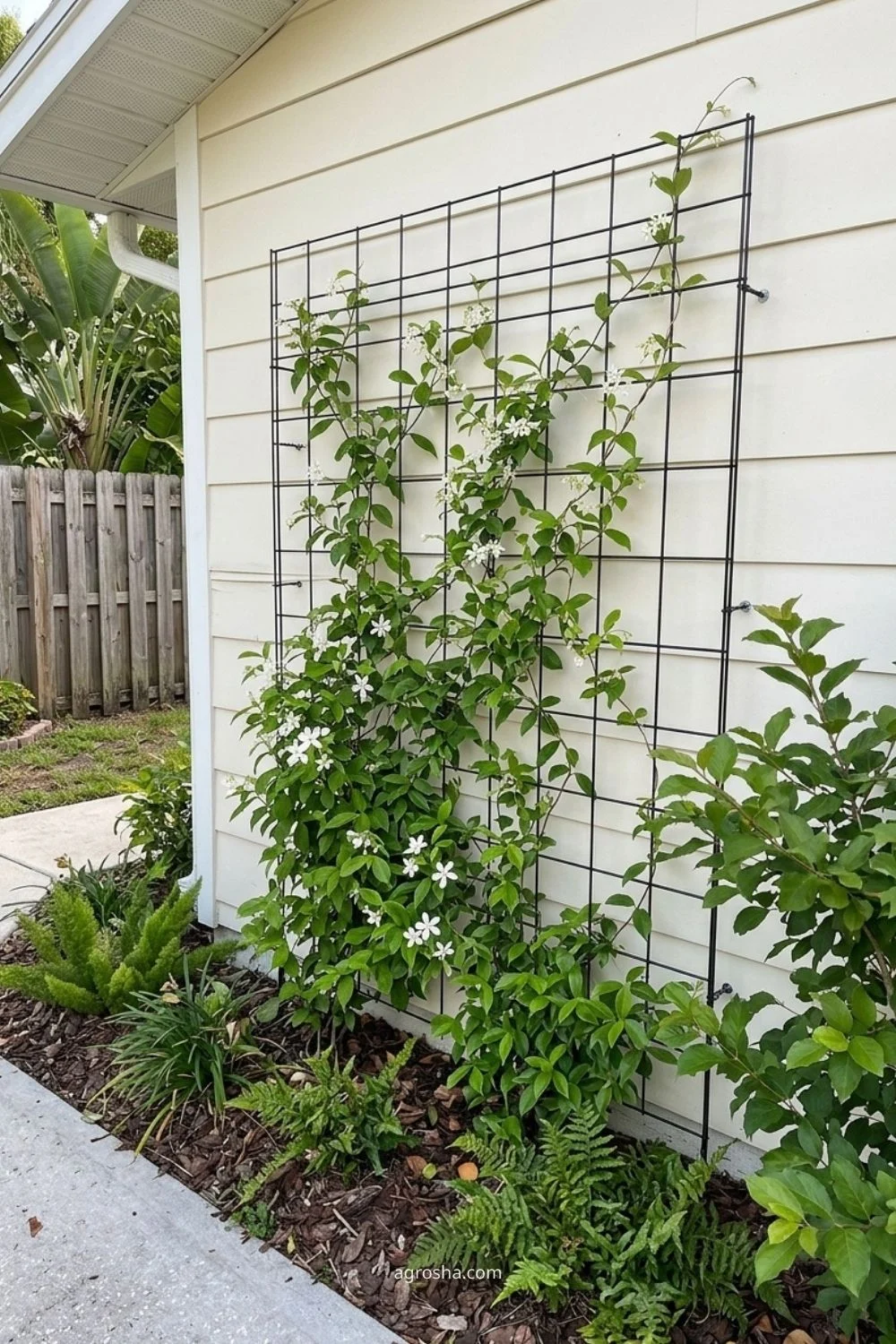
A slim wire grid works well for light flowering vines and small annual climbers. Keep the grid a few inches away from a wall so air can move behind the leaves. In Florida humidity, airflow matters, and removable clips make it easier to clean or repaint the wall later.
2. Wood Lattice for Medium-Weight Vines
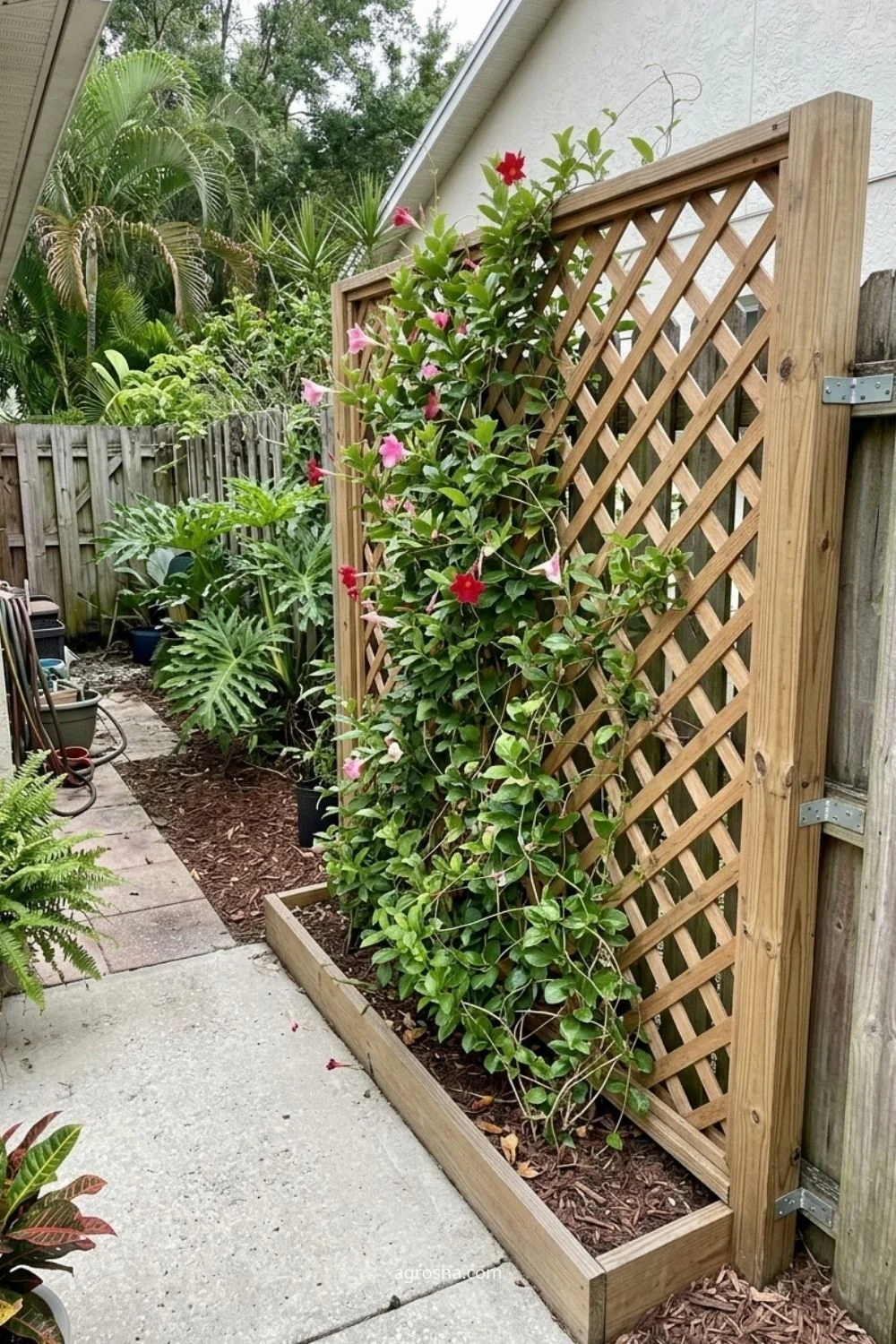
Wood lattice gives many grab points and creates a softer backdrop than bare metal. Use exterior-rated wood and anchor the frame independently instead of relying on the plant to hold it together. Leave enough gap from siding or a fence for pruning and inspection.
3. Heavy-Duty Panel for Vigorous Vines

Large, woody or heavy vines need a stronger frame than a decorative fan trellis. Use a rigid panel, stout posts, and corrosion-resistant fasteners. Match the structure to the mature plant, not the small nursery pot, and keep heavy vines away from weak fences or gutters.
4. Cable Trellis for a Clean Modern Wall
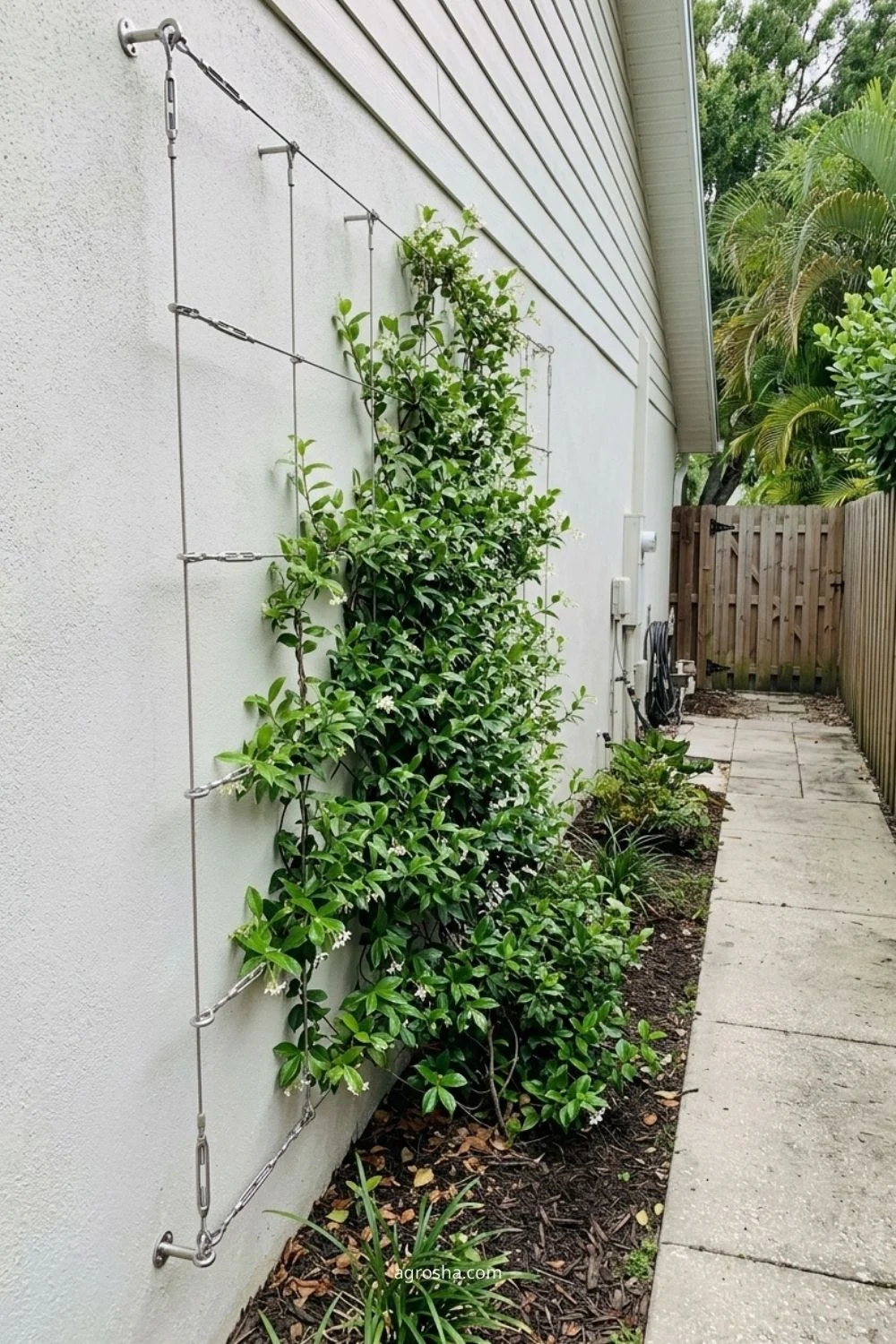
Stainless or coated cable systems can create an almost invisible support pattern on a masonry wall or sturdy frame. The plant becomes the main visual element. Keep cables taut, use rated anchors, and leave access for repainting, pruning, or hurricane preparation.
5. Freestanding Trellis for Renters or Flexible Layouts
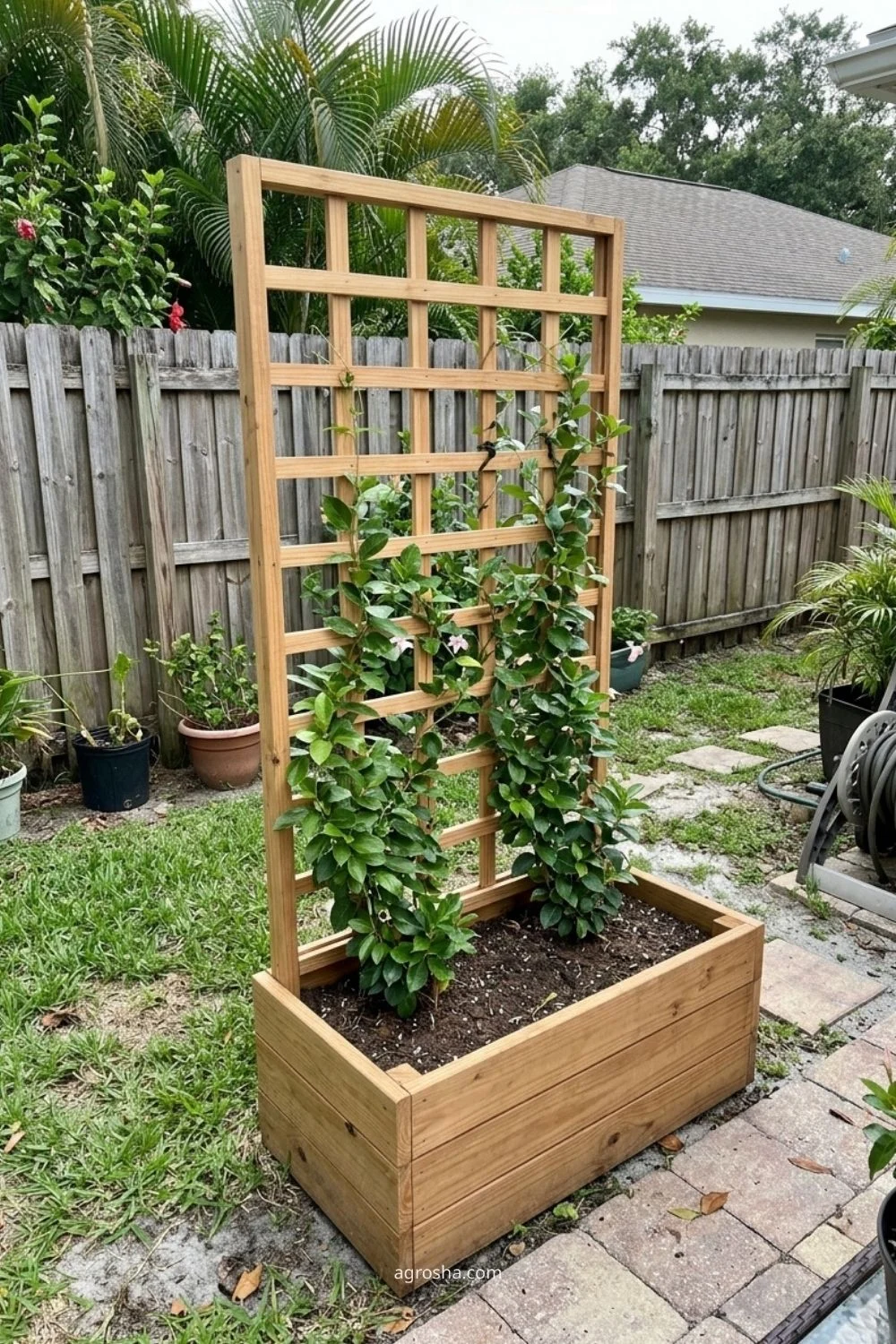
A freestanding panel can screen a patio, support a vine, and move when the garden changes. Use a wide stable base or weighted planters so wind cannot tip it. For container-based setups, our container gardening guide can help with scale and drainage.
Trellis Ideas for Flowers and Ornamentals
Flowering vines are often chosen for appearance first, but support strength and pruning access still matter. A Florida trellis should leave air around the plant, keep growth away from roofs and gutters, and make it possible to remove storm-damaged stems without dismantling the whole feature.
6. Arch Trellis for a Garden Entrance
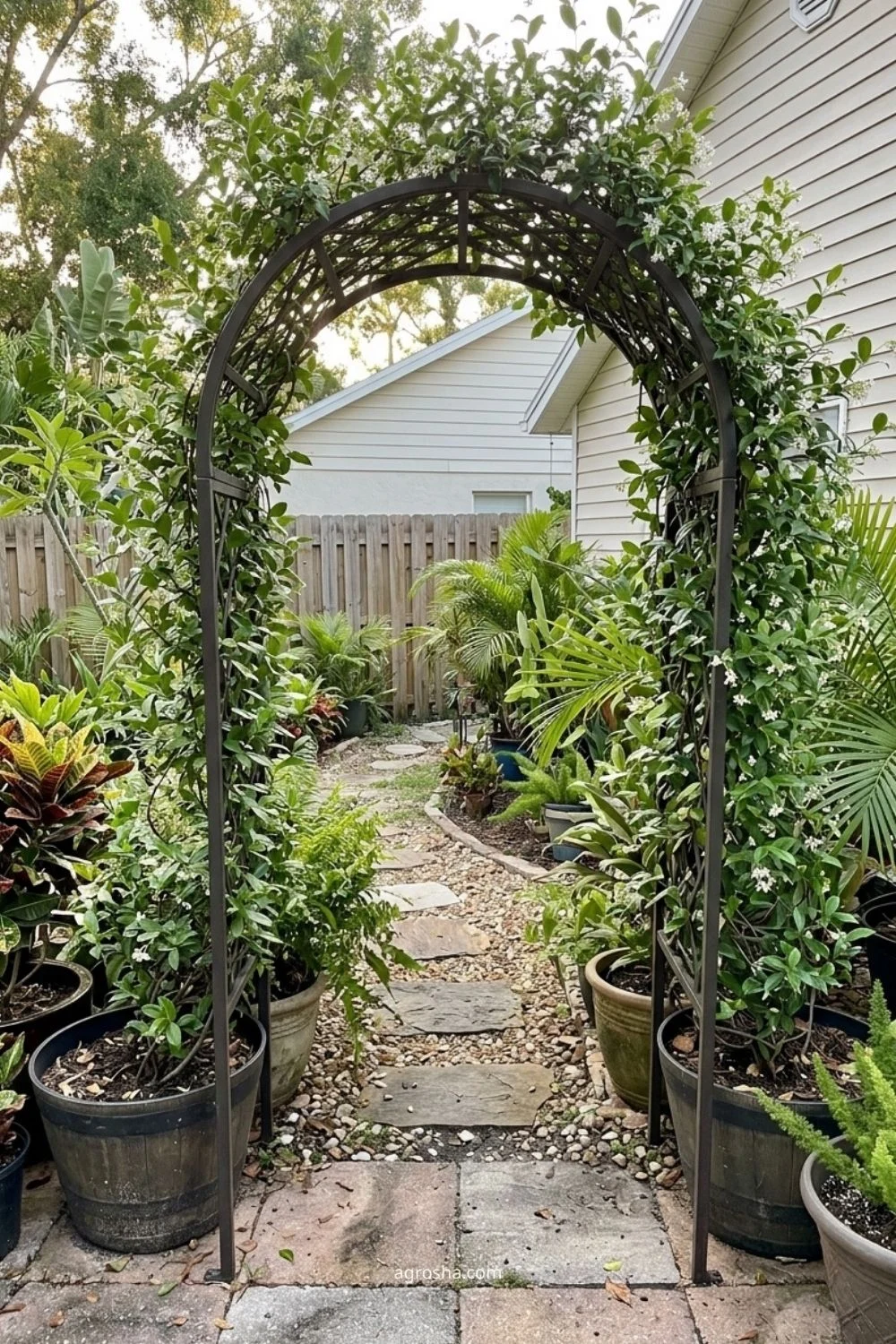
An arch over a path can make a small garden feel like it has a destination. Choose a vine that suits the sun and mature size, and keep the arch tall and wide enough that growth does not brush people in the face. The path should remain easy to use even when the plant is full.
7. Fan Trellis for a Narrow Wall
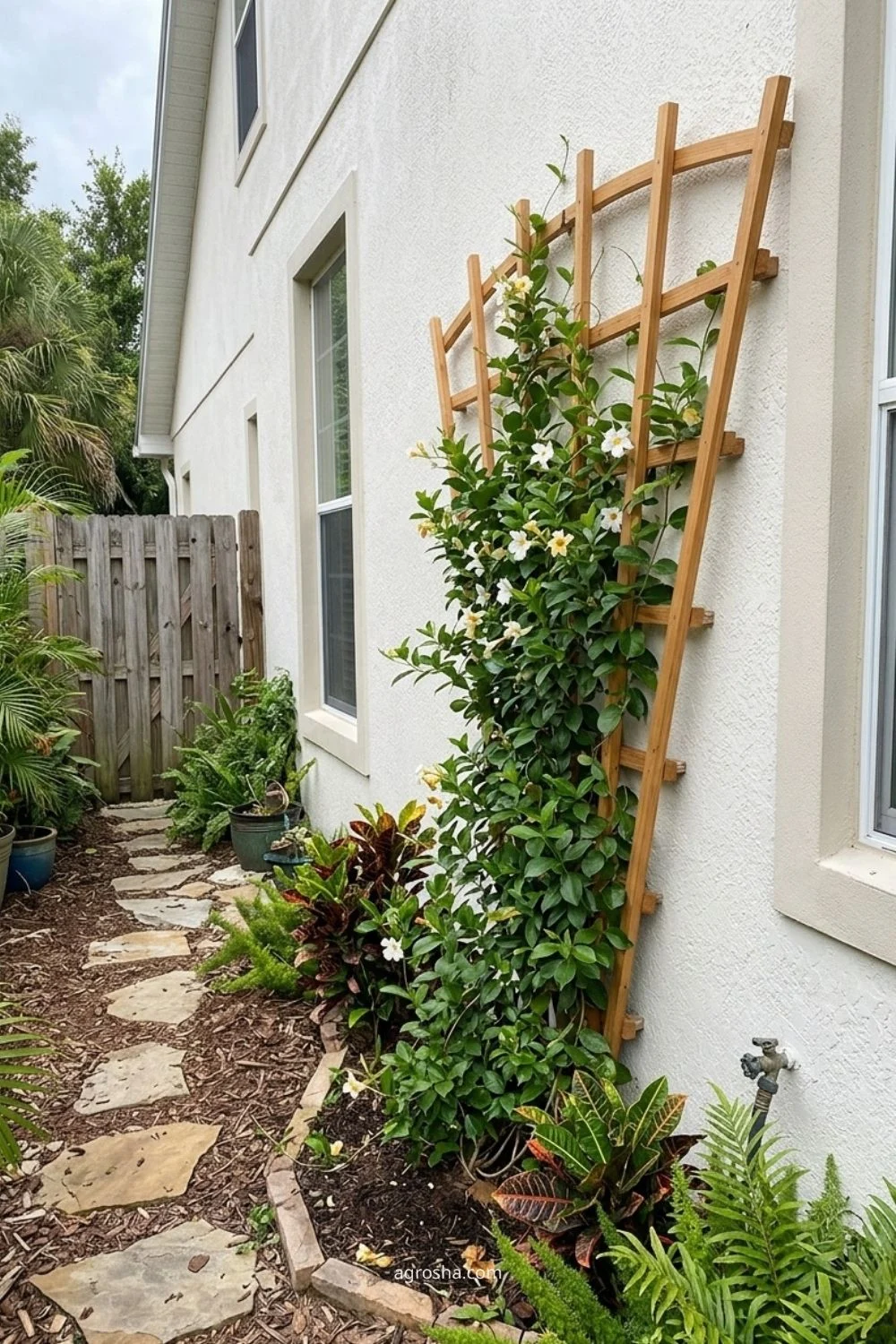
A fan-shaped trellis spreads growth outward without taking much floor space. It works well on a porch wall, fence panel, or narrow side yard. Mount it securely and keep the base visible so you can water, weed, and train new stems without reaching through a dense plant.
8. Obelisk Trellis for a Flower Bed

A narrow obelisk adds vertical structure in the middle or back of a bed. It is useful for lighter flowering vines and creates height without needing a wall. Keep the base stable in sandy soil and avoid placing a sharp-topped structure beside a busy walkway.
9. Pergola-Style Trellis Over a Seating Edge
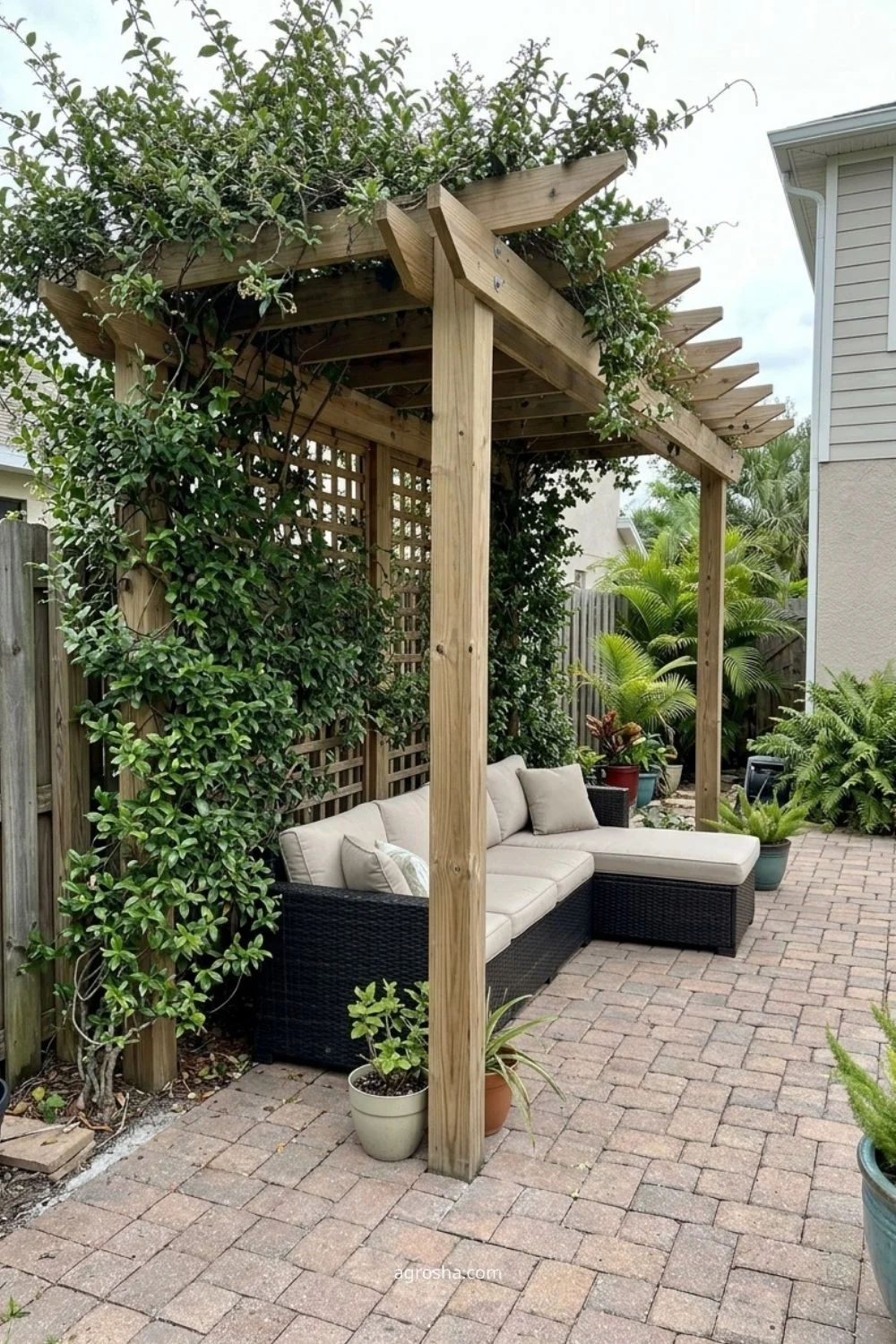
A short pergola or overhead trellis can support flowering vines while defining a patio edge. In Florida, use it carefully so dense foliage does not trap heat or block needed airflow. Choose a structure that can handle wind and prune vines away from the roofline.
10. Trellis Panel Behind a Mixed Flower Border
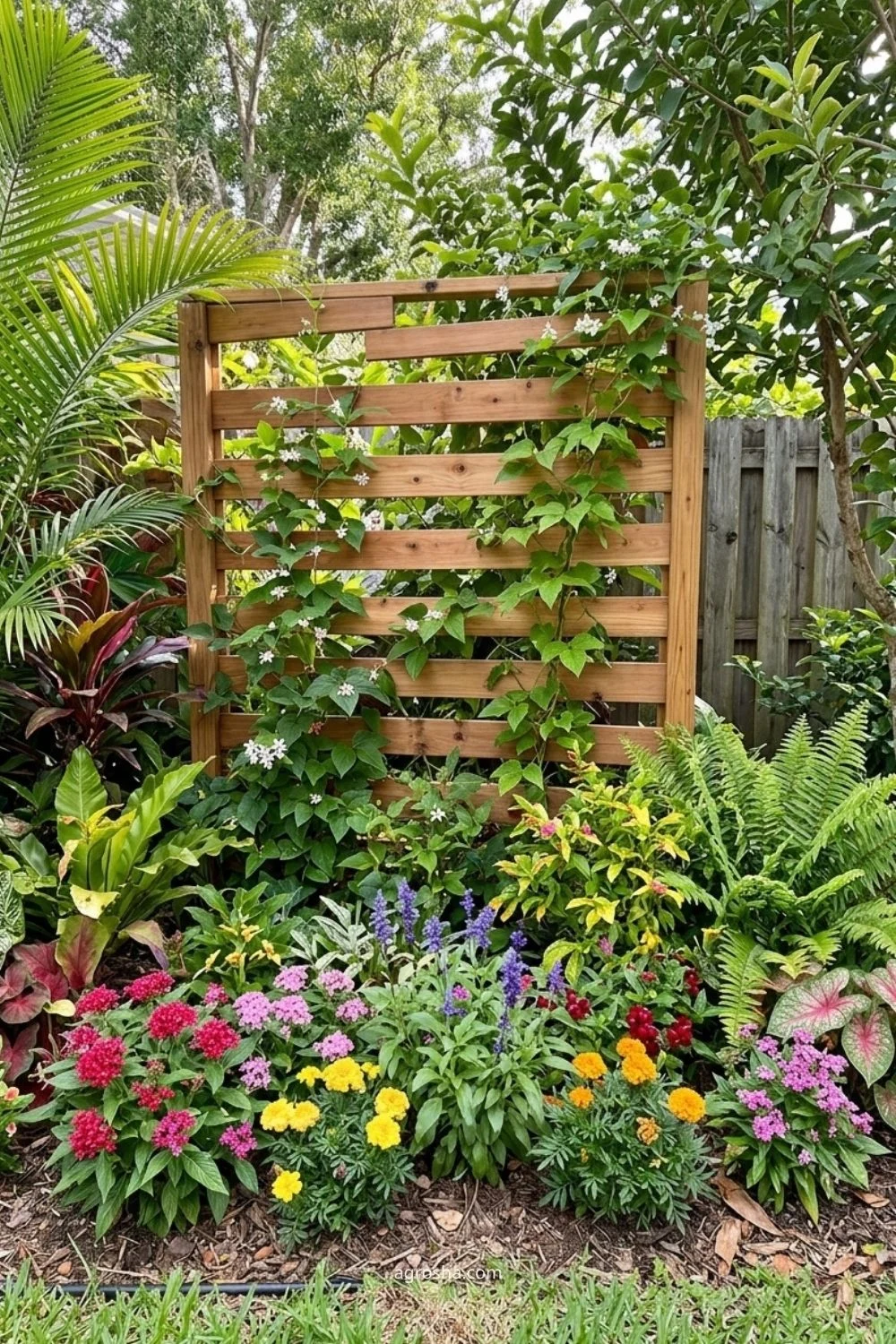
A dark or natural wood panel behind flowers can add depth while giving one vine a place to climb. Keep the front planting lower so the trellis stays visible. This works well when you want a layered border without building a full privacy fence.
Privacy and Screening Trellises
Privacy trellises work best when they interrupt one view rather than create a dense wall around the yard. Decide the height from the seated and standing viewpoints, then choose a plant that will not become too heavy for the frame. Filtered privacy usually preserves more breeze and daylight.
11. Horizontal Slat Trellis With Vine Gaps
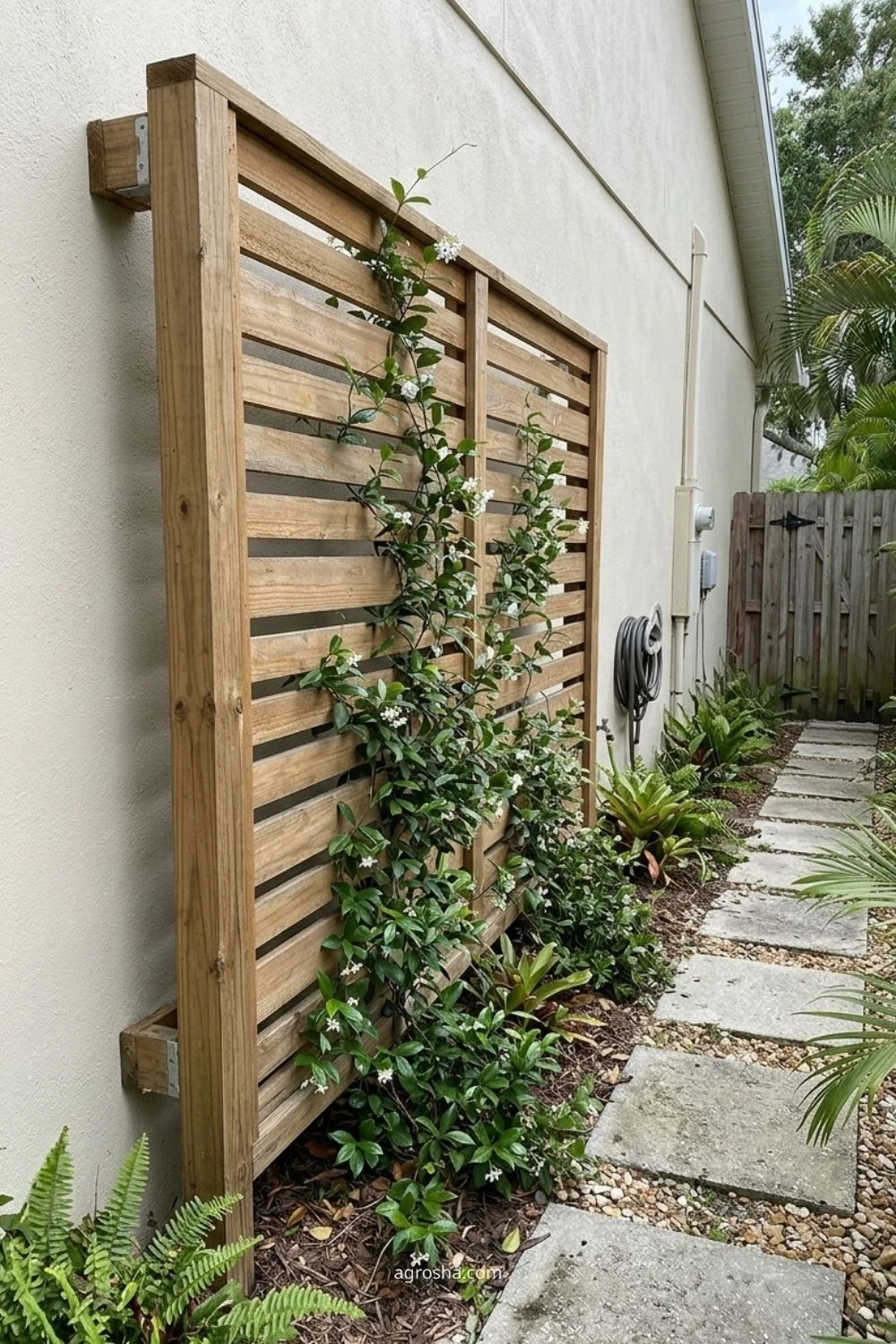
A slatted screen can provide partial privacy before vines fully cover it. Space slats so light and airflow still pass through. Use climbing plants only where their mature weight and maintenance fit the structure. For more screening options, see our backyard garden privacy ideas.
12. Narrow Trellis Between Patio and Neighbor View
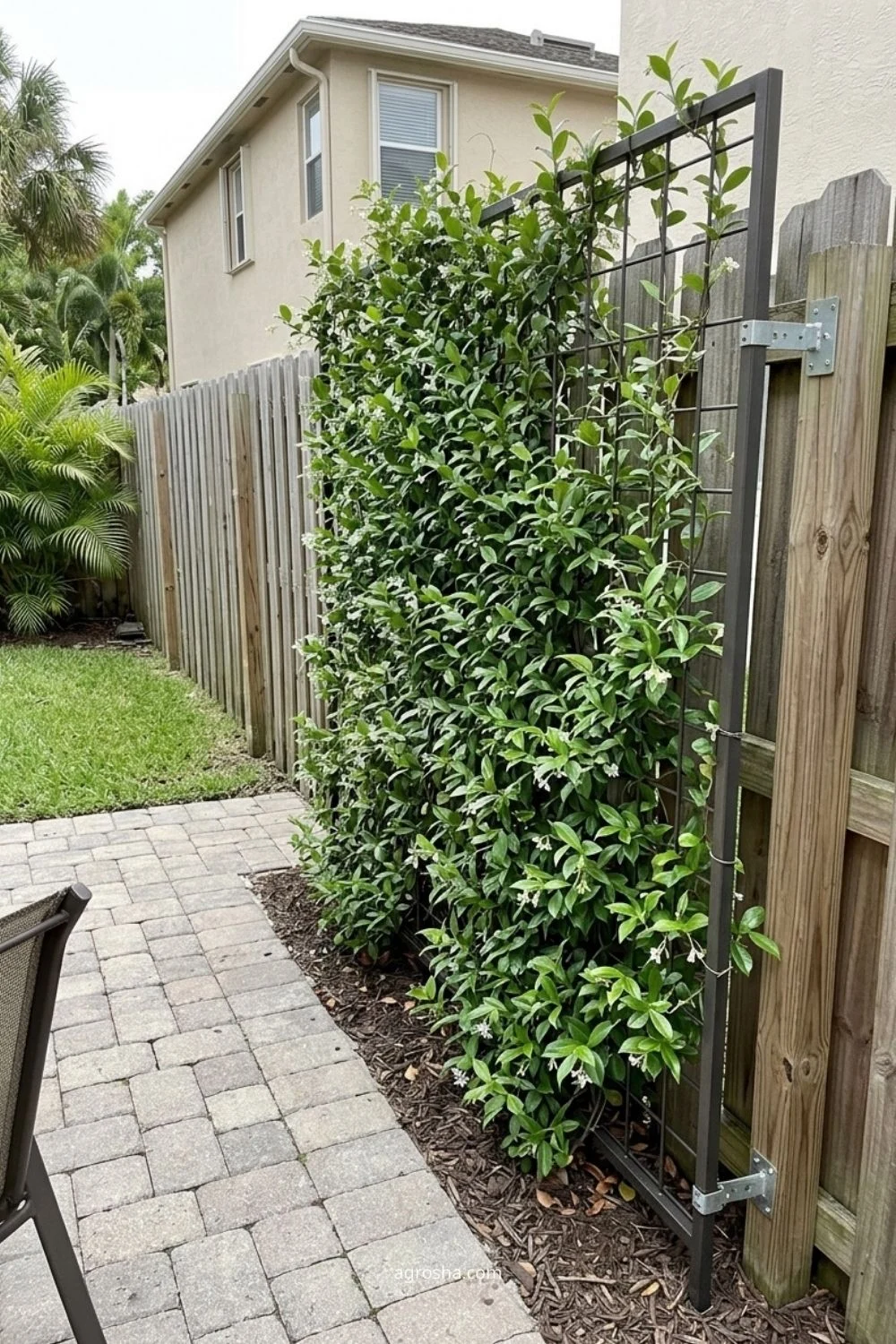
If only one sightline is a problem, use a narrow trellis instead of enclosing the entire yard. Position it where it blocks the view from the seating area, then add a vine or tall planter for softness. This can keep a small patio feeling open.
13. Corner Trellis for Two Fence Lines
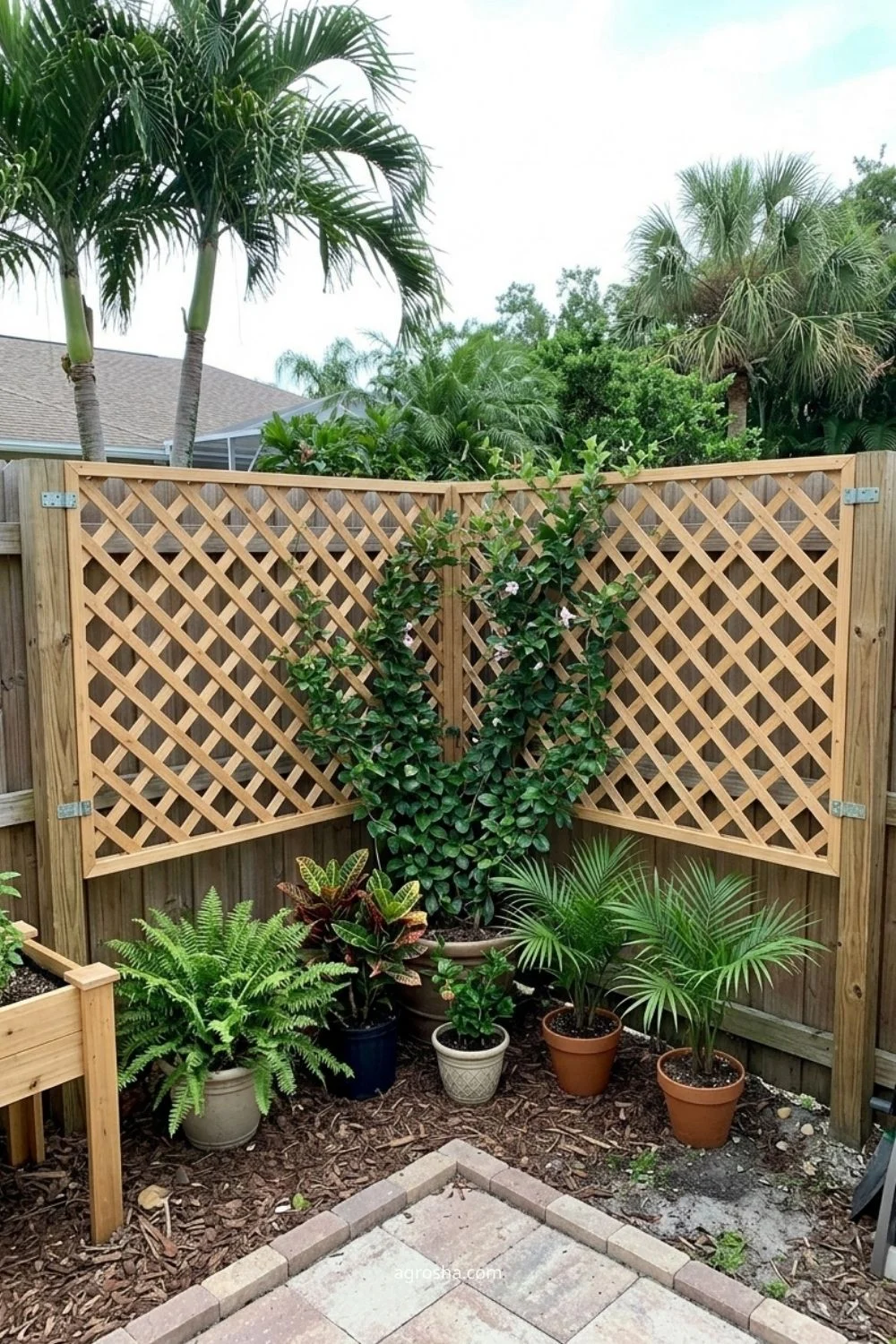
A V-shaped or L-shaped trellis can soften a hard backyard corner and create a focal planting without filling the center of the yard. Keep both sides reachable for pruning. This pairs well with the ideas in our small backyard garden ideas when the corner is part of a compact-yard layout.
14. Trellis With Integrated Planter Box
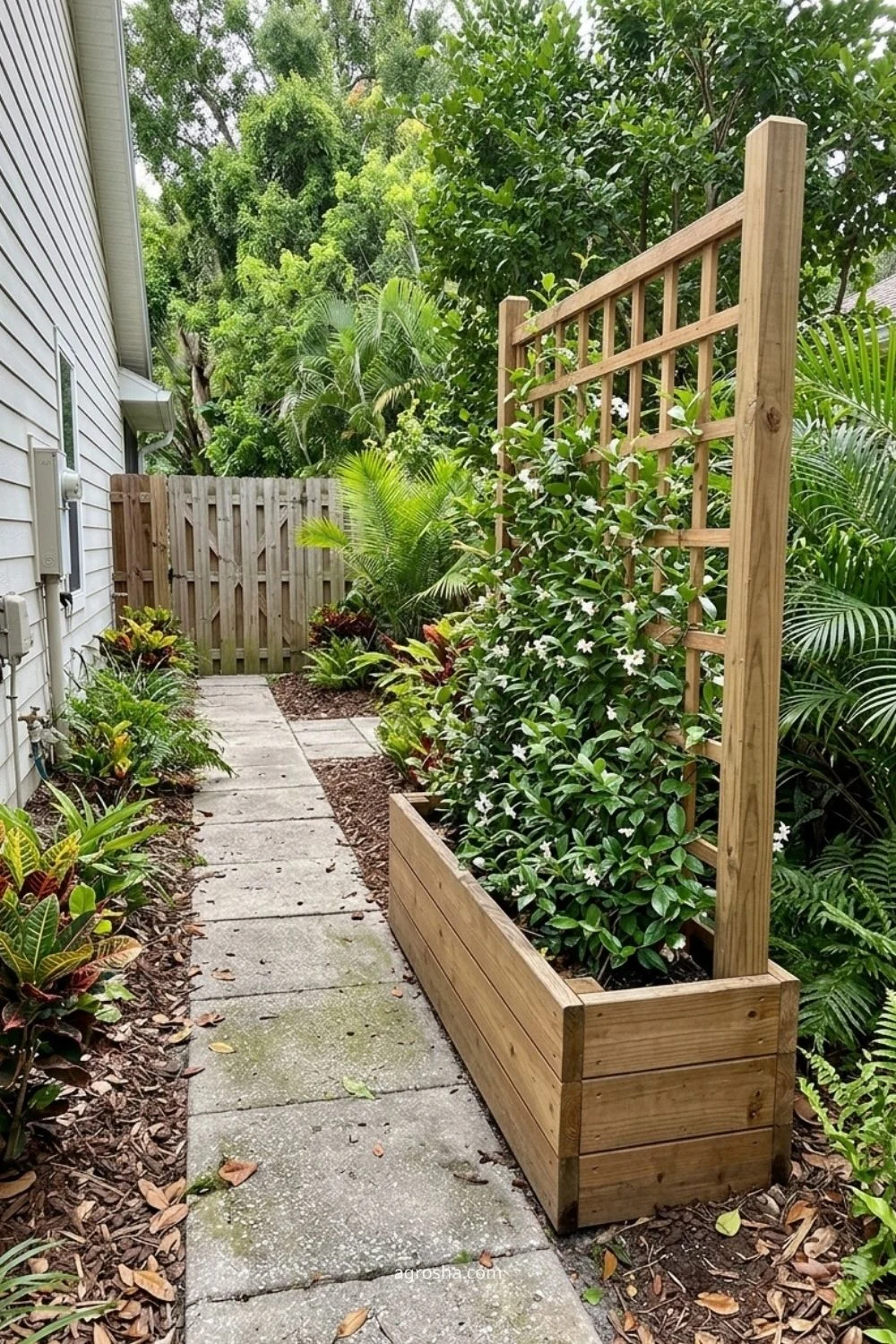
A planter base can stabilize a screen where digging is not practical. Size the container for the plant’s mature roots and total top weight. In Florida heat, larger soil volume is easier to keep evenly moist than a narrow decorative box.
15. Hinged Trellis Panels for Adjustable Screening
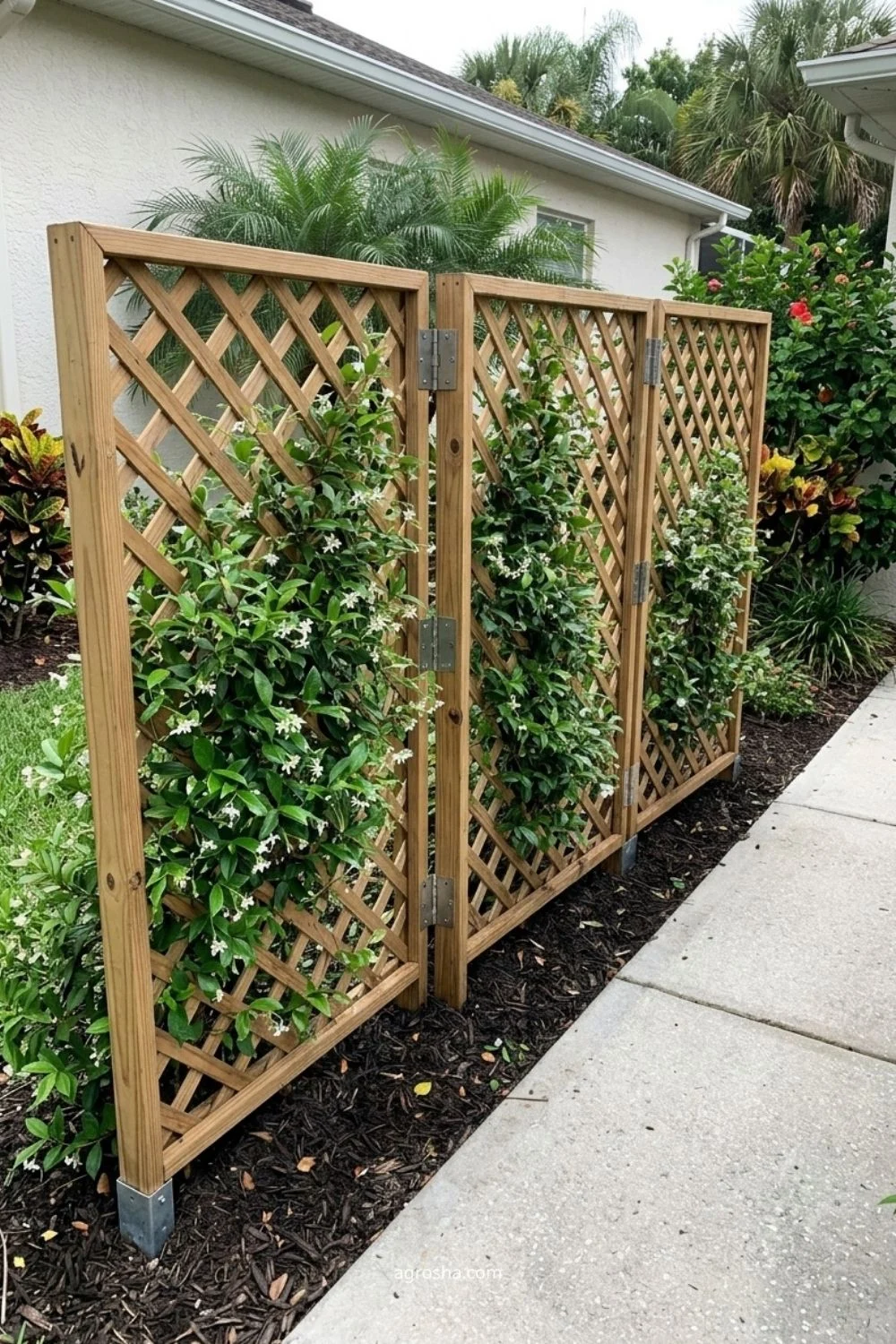
Two or three hinged panels can change angle as privacy needs change. Use exterior hardware and anchor the panels when storms are expected. This works best for light vines or as a mostly architectural screen rather than a support for very heavy woody plants.
Trellises for Edible Gardens
Edible crops differ in how they climb. Beans twine, peas use tendrils, cucumbers grip but become heavier with fruit, and tomatoes usually need ties. Build the support for the mature crop and harvest routine so the structure remains reachable when the garden is at peak growth.
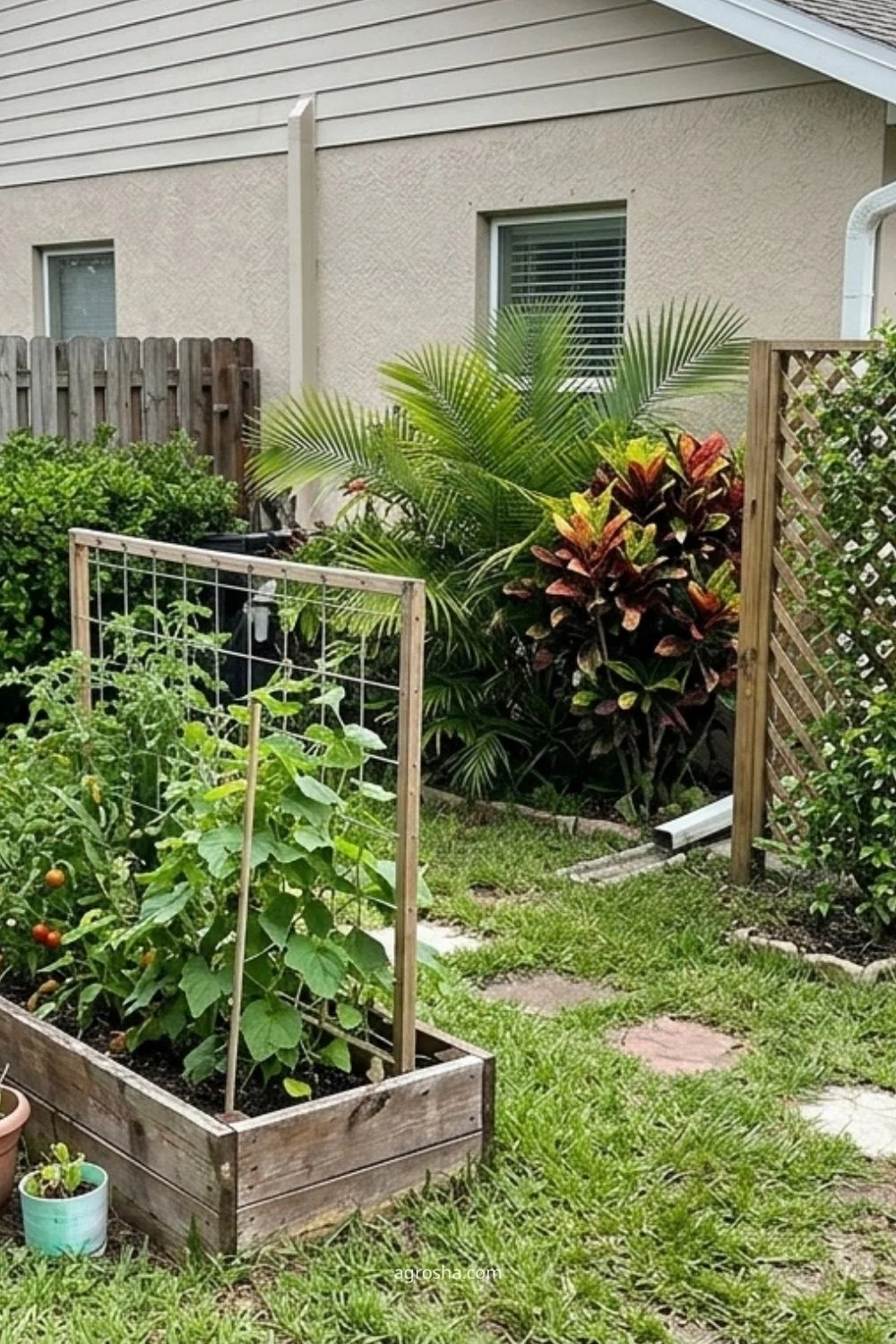
16. Cucumber Panel in a Raised Bed
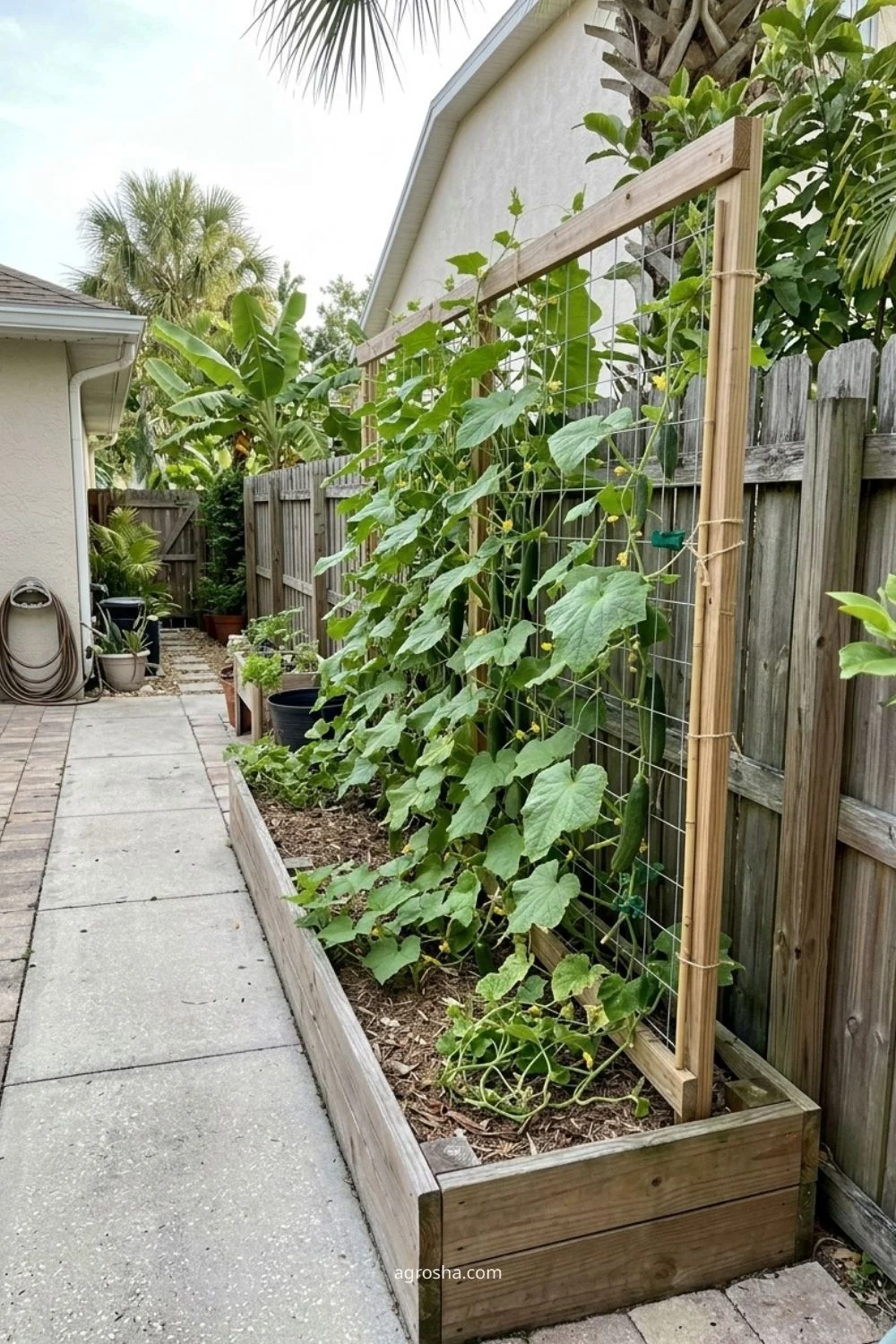
A rigid panel at the back of a raised bed can lift cucumbers off the soil and free space for lower crops. Keep the panel reachable from both sides if possible. For more vegetable-specific support ideas, use our vegetable garden trellis guide.
17. Pole Bean Teepee
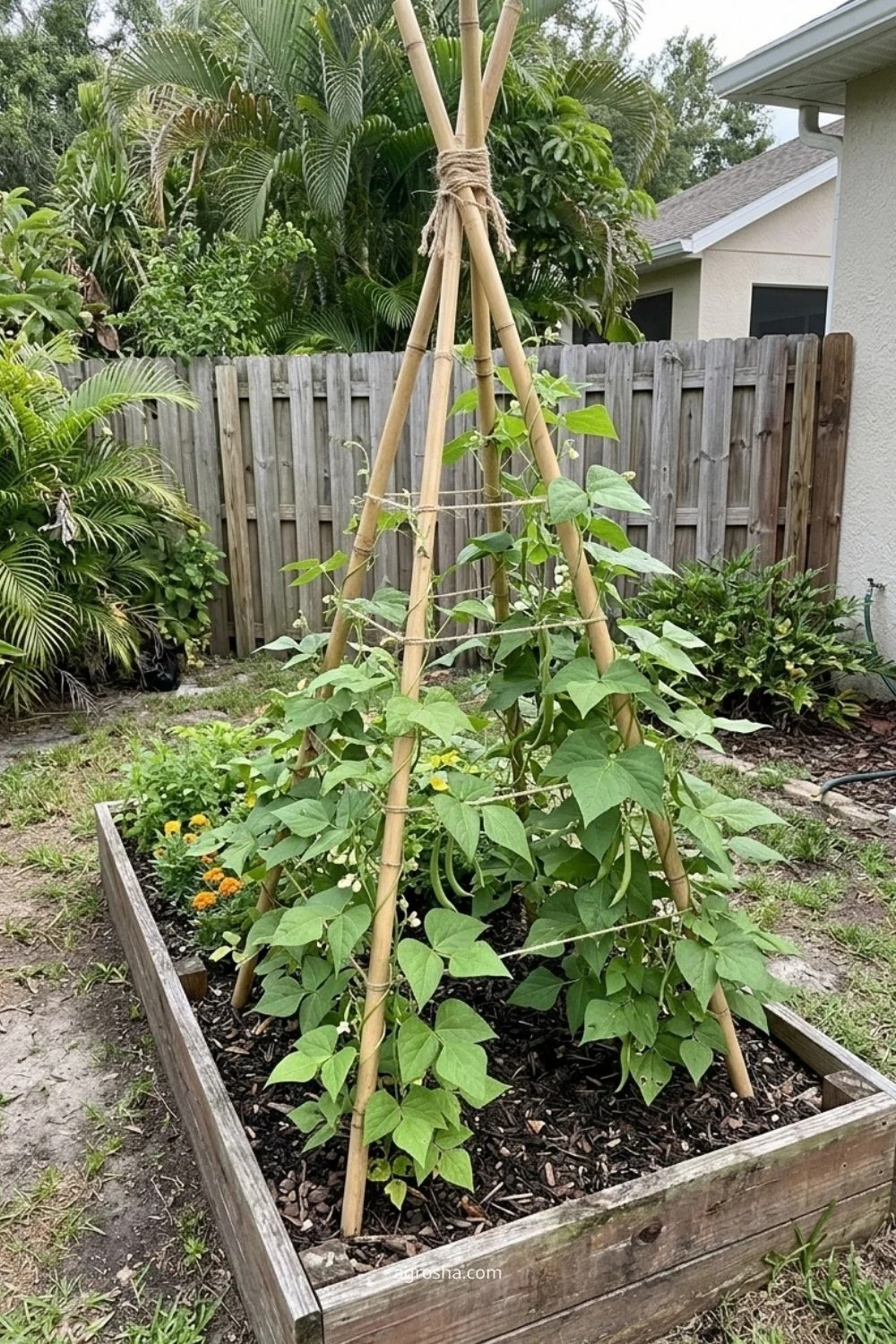
A teepee of strong poles gives beans multiple climbing lines in a small footprint. Push the poles deep enough to resist wind and tie the top securely. Keep the center open for airflow and position the teepee where it will not shade shorter vegetables all day.
18. Pea Netting on a Simple Frame
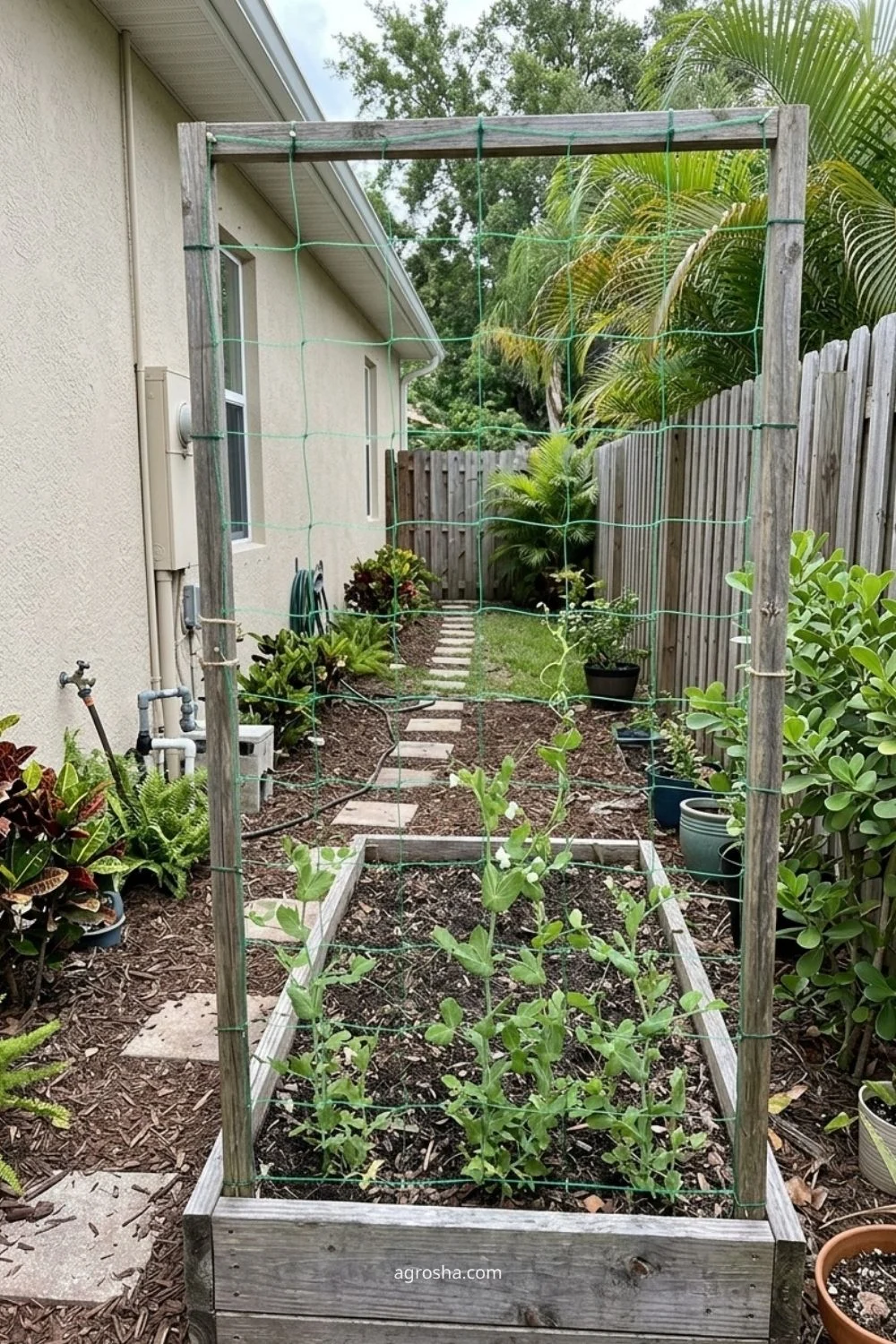
Peas can use lighter support than cucumbers or mature tomato vines. Stretch garden netting or twine on a sturdy frame and keep it taut. Use mesh openings large enough to harvest through without damaging the plants.
19. Tomato String Trellis
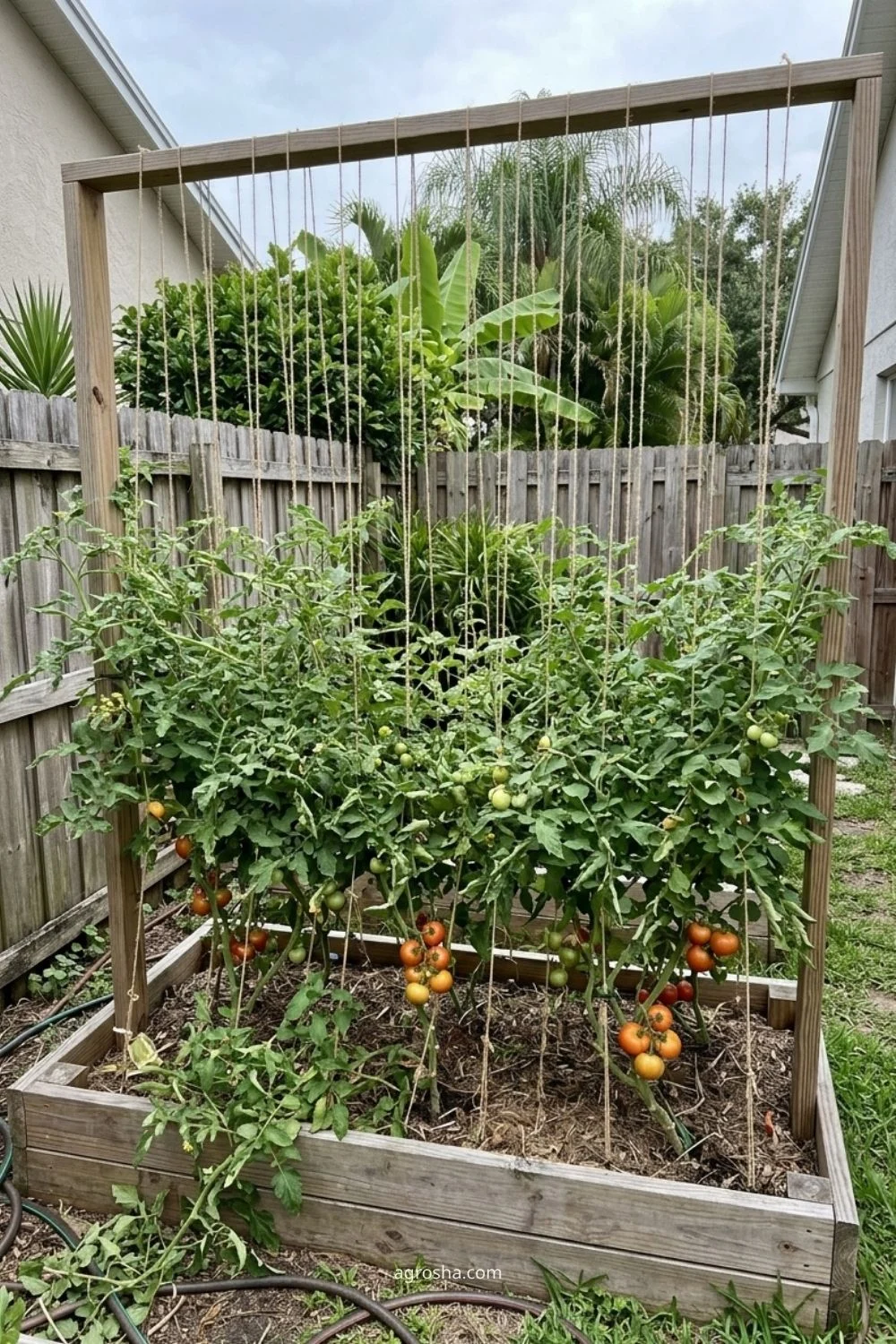
Indeterminate tomatoes can be trained vertically on strings attached to a strong overhead support. This is different from a vine that climbs on its own; tomatoes need clips or ties. Keep the system tall enough for growth but easy enough to reach safely.
20. Squash Arch for Smaller Vining Types
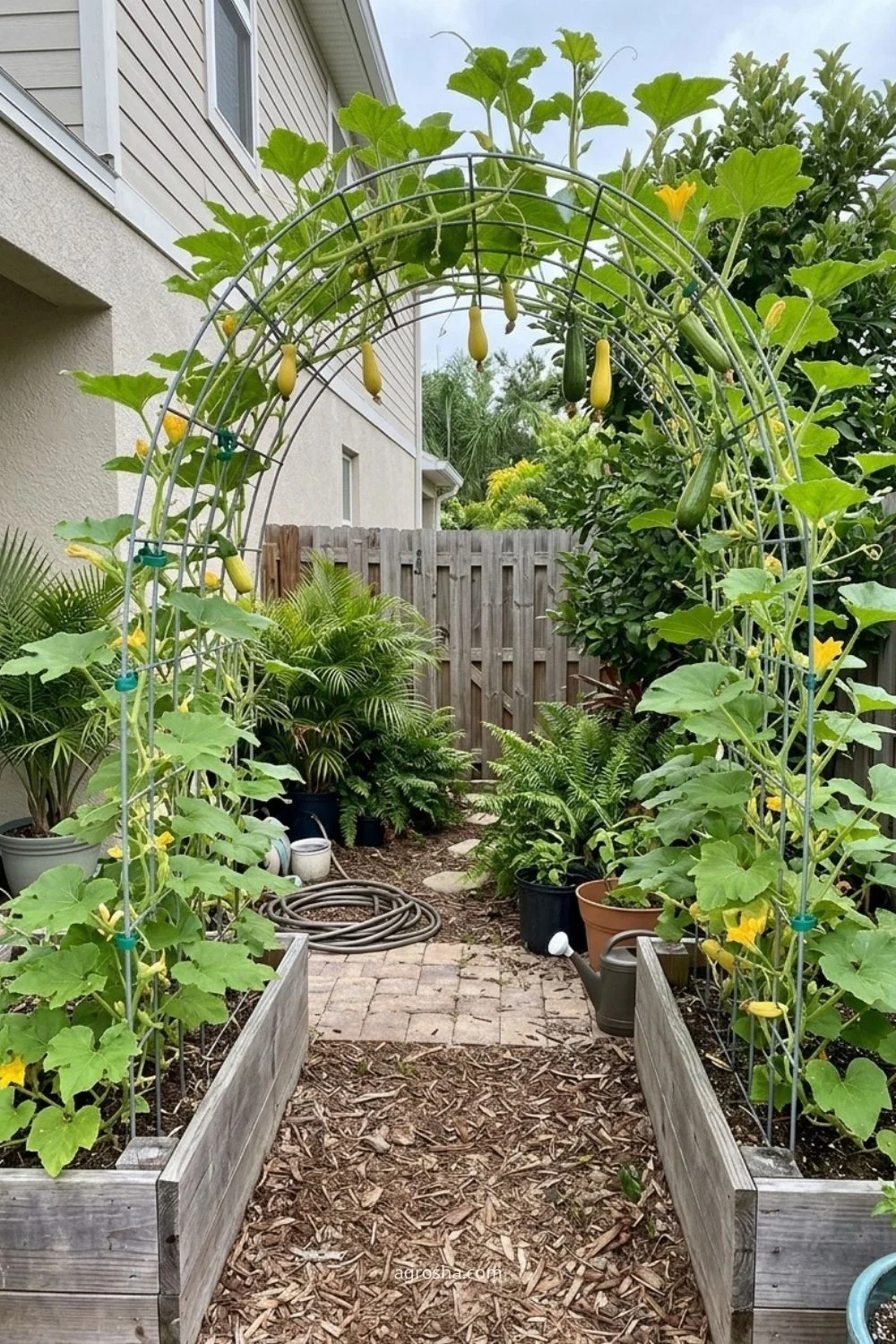
A strong arch can carry smaller vining squash or gourds while opening a path beneath. Use a panel or frame rated for the mature crop weight and support heavy fruit if necessary. Avoid hanging large fruit over a walkway where it could become a hazard.
Trellises for Small Spaces and Containers
Small spaces reward narrow, movable structures, but wind and tipping become more important as the trellis gets taller. Use containers with enough weight and root volume, preserve the walking path, and avoid attaching heavy structures to railings or walls that were not designed to carry them.
21. Pot-Mounted Mini Obelisk
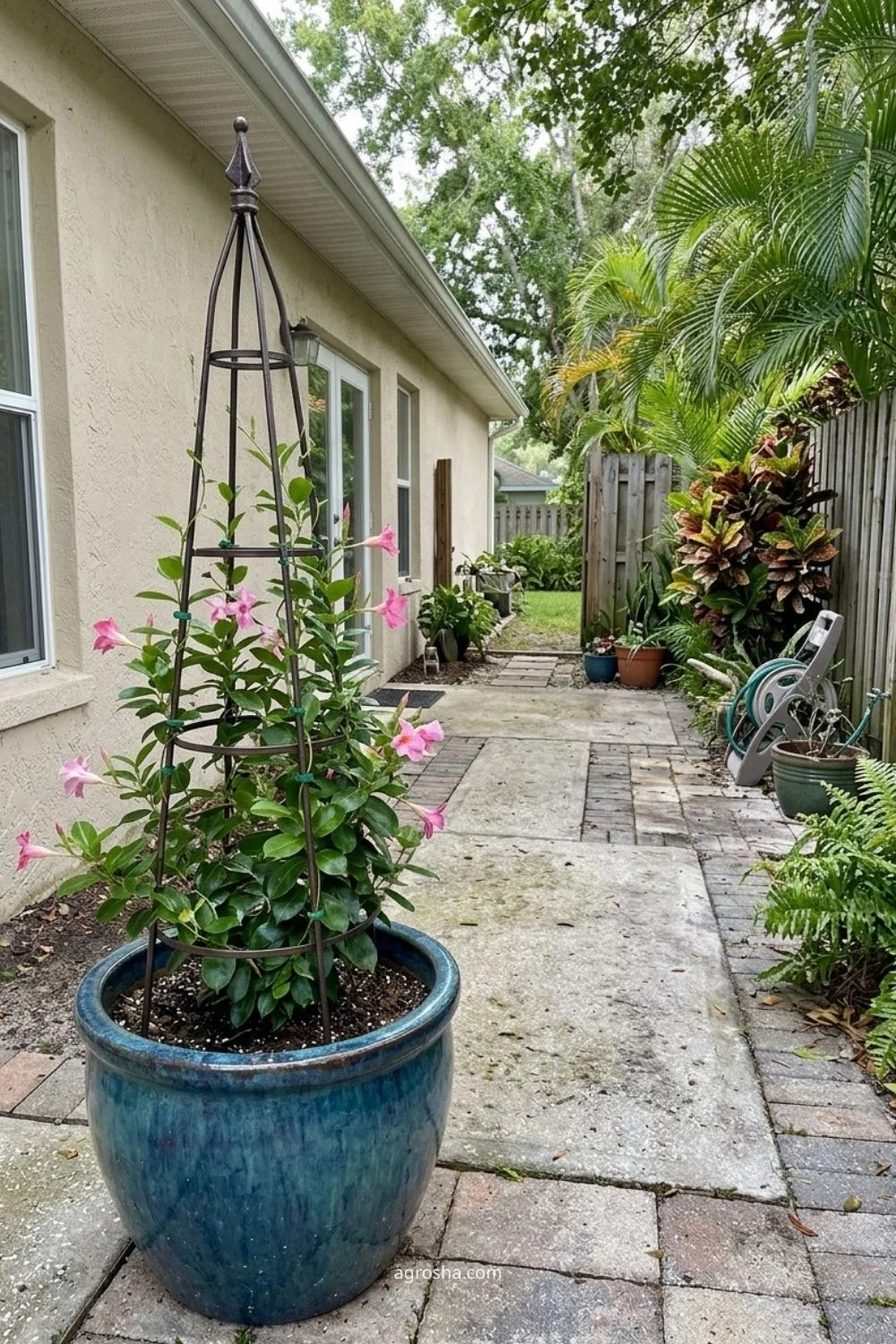
A compact obelisk can support a single vine in a large container. Make sure the pot is heavy enough that wind and plant growth cannot tip it. The support should be proportional to the container, not several feet wider than the root zone.
22. Ladder Trellis Behind Patio Pots
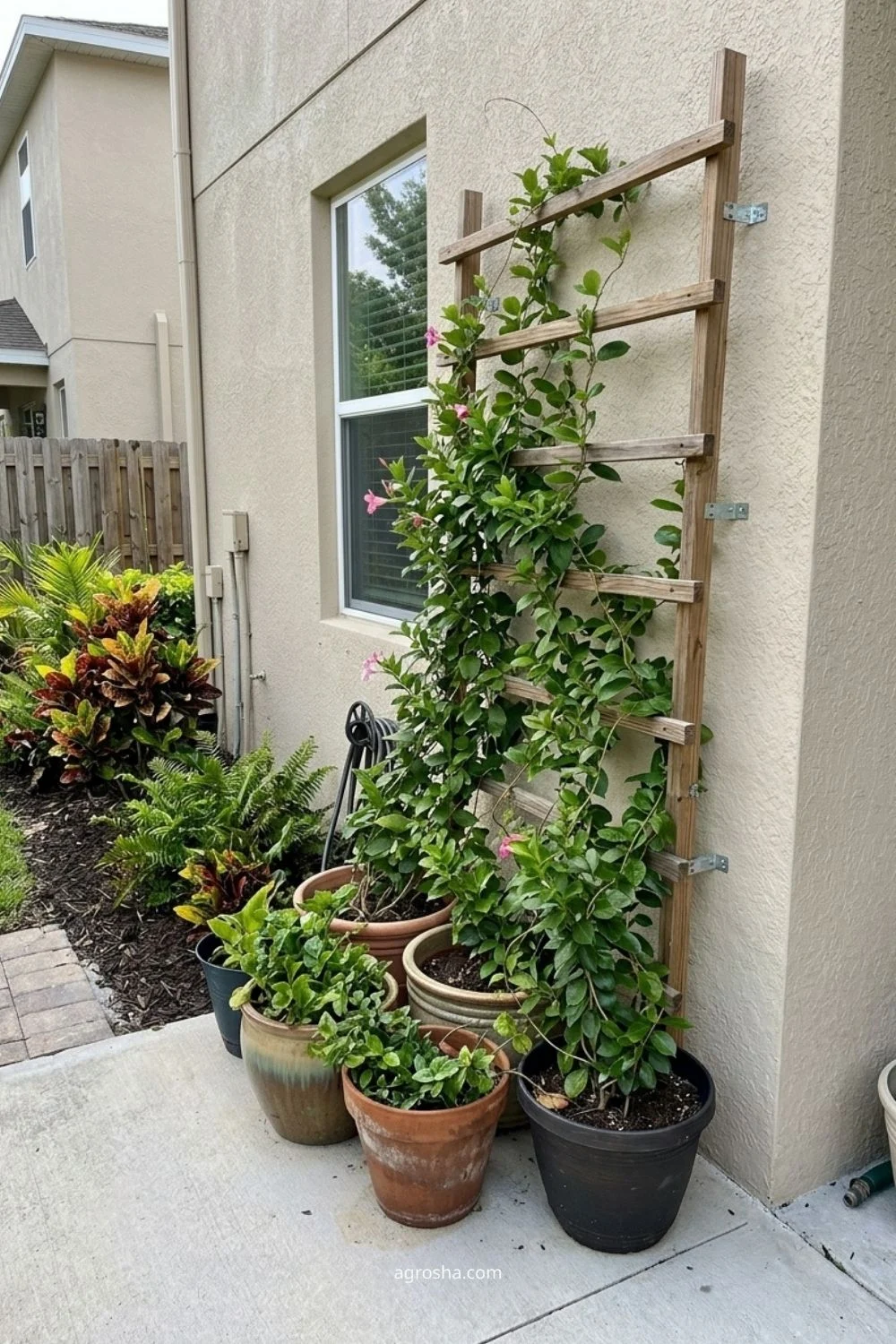
A narrow ladder-style trellis can stand behind a row of containers and visually connect them. Use only one or two climbing plants so the setup does not become a tangled wall. Keep access to drainage saucers and hose connections.
23. Railing-Side Trellis Without Blocking the Walk
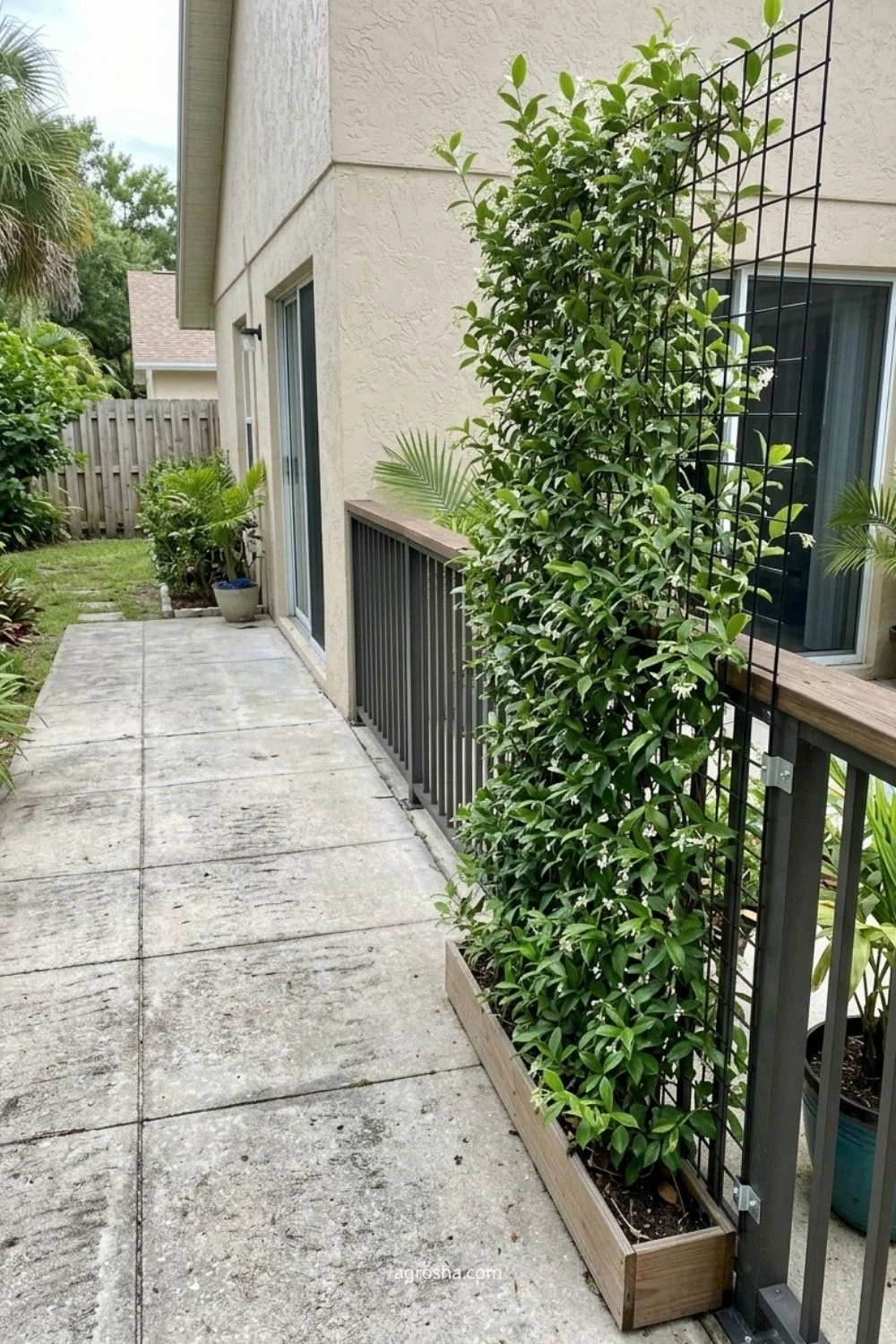
On a patio or balcony, a slim freestanding trellis can sit near a railing without using the main walking space. Do not attach heavy structures to railings unless the building or system is designed for it. Keep wind exposure in mind.
24. Folding Trellis for Seasonal Crops

A folding wood or metal trellis can open for summer vines and store flat when the season ends. This works well in compact gardens where permanent structures feel bulky. Check hinges each year and anchor the trellis when plants become heavy.
25. Wall Trellis for a Side Yard
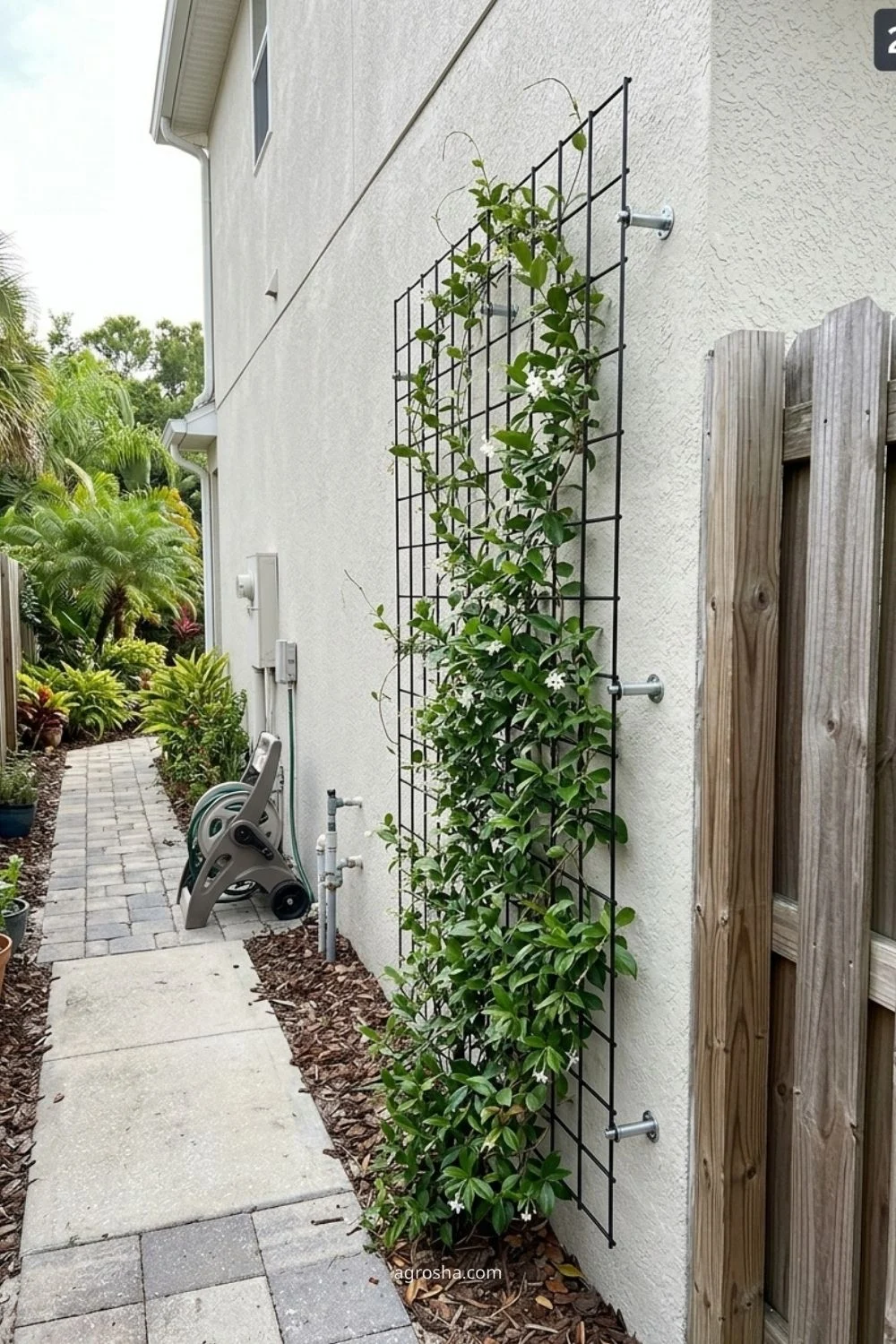
A side-yard wall can support a vertical planting while keeping the narrow path open. Use a low-profile grid and keep the vine trained close enough to avoid brushing people. Preserve access to meters, hose bibs, and AC equipment.
Material, Placement, and Maintenance
Wood, metal, bamboo-style poles, and cable systems each change the look and maintenance of a trellis. Before choosing, think about sun direction, wall access, corrosion, pruning, and storm cleanup. The best material is the one you can inspect and maintain after vines cover most of it.
26. Cedar Trellis for a Softer Natural Look

Cedar or another exterior-suitable wood can blend into a garden without feeling industrial. Use enough thickness for the plant load and seal or allow it to weather naturally. Check ground contact points because Florida moisture speeds deterioration in poorly drained areas.
27. Powder-Coated Metal Trellis for Long-Term Structure

A coated metal trellis gives crisp lines and needs less refinishing than many wood designs. Inspect chips and fasteners over time, especially near salt air. Dark metal can get hot in direct sun, so avoid pressing delicate stems tightly against it.
28. Bamboo-Style Trellis for Lightweight Plants
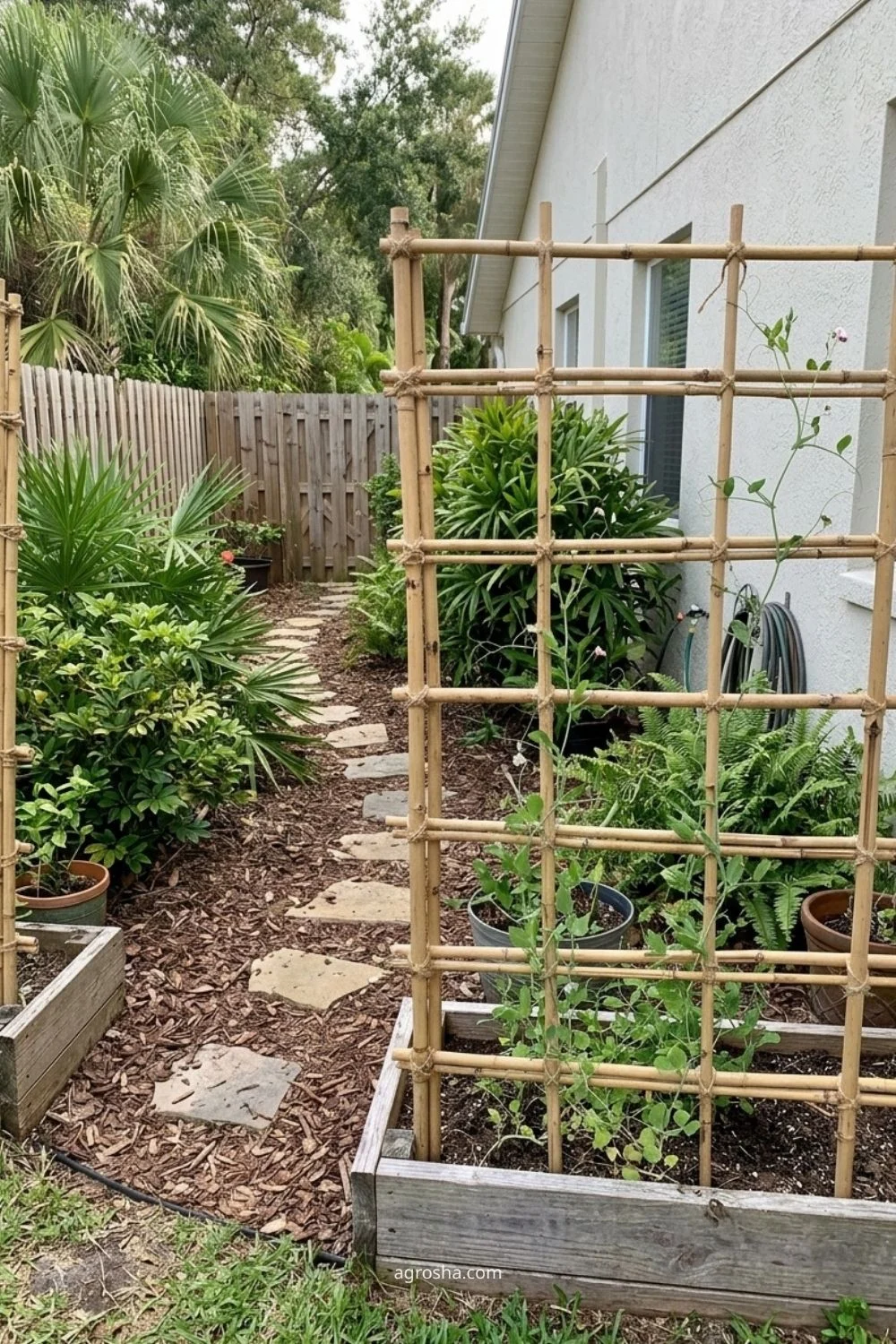
A simple bamboo-style frame is fast to assemble for annual vines. Tie joints securely and replace poles that split or weaken. Use it as a seasonal support rather than expecting a lightweight frame to carry a mature woody vine for years.
29. Trellis Placed to Avoid Unwanted Shade
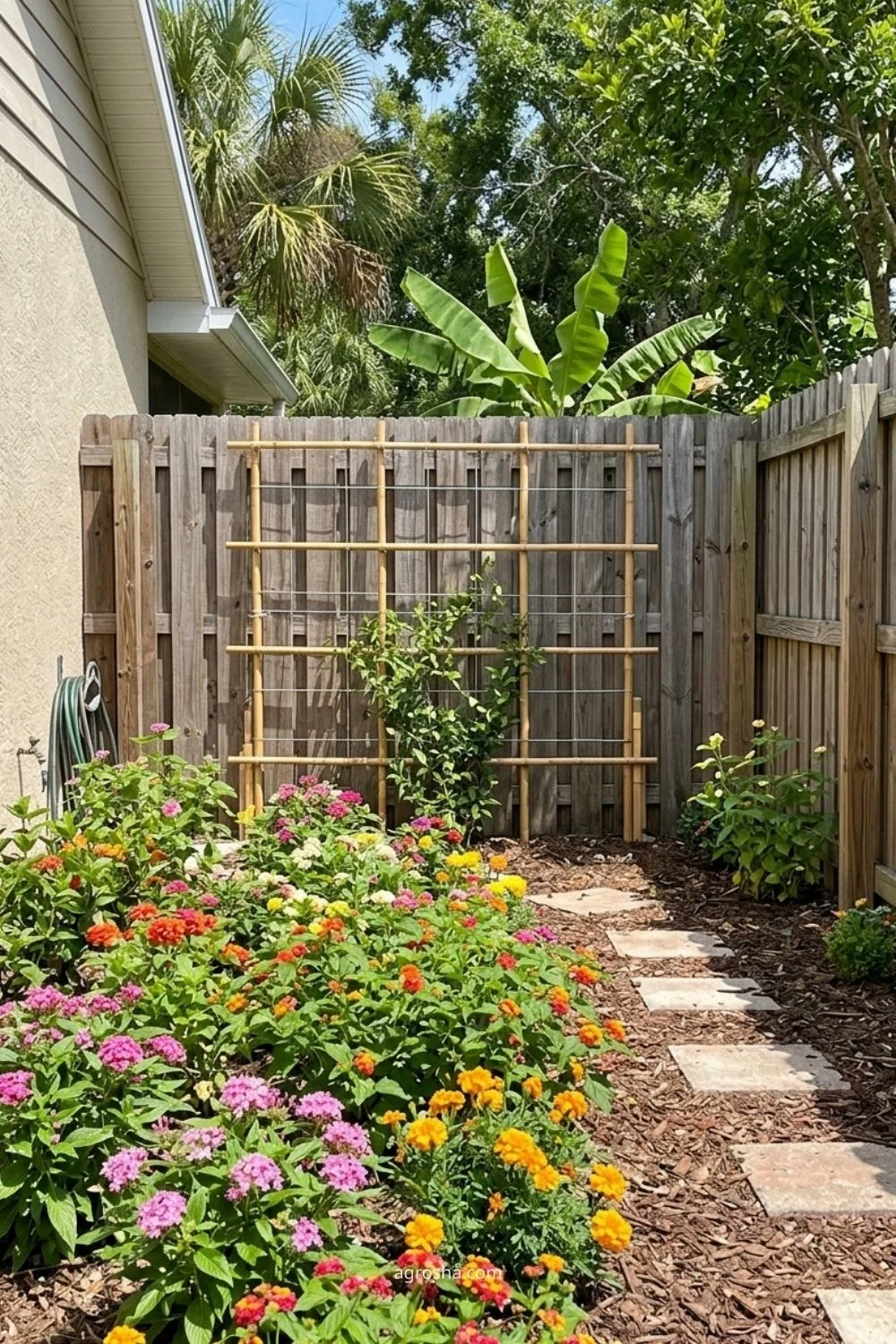
A beautiful trellis can still create problems if it blocks sun from the rest of the bed. Watch the yard for a full day before installing tall support. In vegetable beds, the north or back side often works well, but the actual site should decide.
30. Build for Storm Cleanup and Access
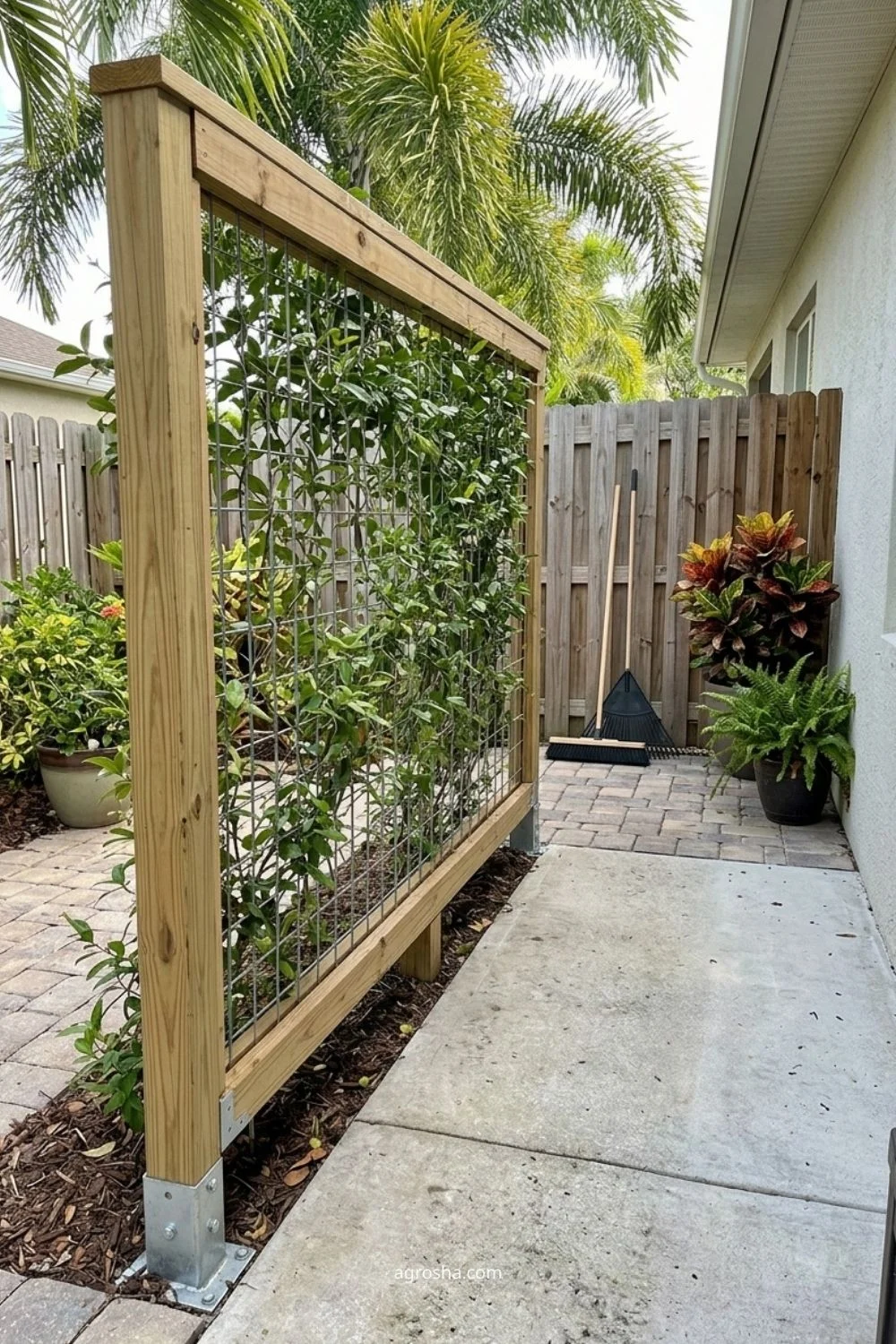
Florida gardens need structures that can be inspected and cleared before severe weather. Keep vines from hiding loose fasteners, do not block gates or service areas, and choose a system you can prune without a ladder whenever possible. Easy access makes the trellis safer and easier to maintain.
Frequently Asked Questions
What type of trellis is best for climbing plants?
Use a support matched to the mature plant weight and climbing habit. Light annual vines can use twine or light grids, while heavy woody vines need strong posts and rigid panels. Vegetables such as tomatoes may need tying rather than a surface they climb on themselves.
How far should a trellis sit from a wall?
Leave enough space for air movement, pruning, and wall maintenance. The exact gap depends on the plant and structure, but pressing dense foliage directly against siding usually makes inspection and drying harder.
Can a trellis be used for privacy?
Yes. A trellis can block one view while preserving light and airflow better than a solid wall. Use a freestanding screen, slatted panel, or vine-covered frame where privacy is actually needed.
What is the difference between this guide and a vegetable trellis guide?
This article compares trellis forms for flowers, privacy, patios, walls, containers, and edible gardens. For crop-specific structures and 30 vegetable-focused examples, see our vegetable garden trellis ideas.
Final Thoughts
A trellis works best when the structure, plant, and location are planned together. Match strength to mature weight, keep air and access around walls, place tall structures where shade will not become a problem, and use materials that make sense for Florida sun, rain, and wind. The right trellis should make the garden easier to use, not harder.