Driveway border landscaping ideas should make the entrance feel greener without interfering with cars, sightlines, drainage, or daily access. In Florida, the strip beside a driveway can be one of the hottest parts of the yard because pavement reflects sun and dries nearby soil quickly.
Start by keeping the street end low and open. Then add more planting height closer to the house, where visibility is less critical. Use repeated plant groups, clean edging, and enough setback from the pavement so mature foliage does not need constant trimming.
30 Driveway Border Landscaping Ideas for Florida Homes
Start With Driveway Sightlines and Heat
1. Low Evergreen Border Near the Street

Keep plants low where the driveway meets the street so drivers can see pedestrians, cyclists, and traffic. Use compact evergreen structure rather than a tall hedge. The border can still look polished without creating a visibility problem.
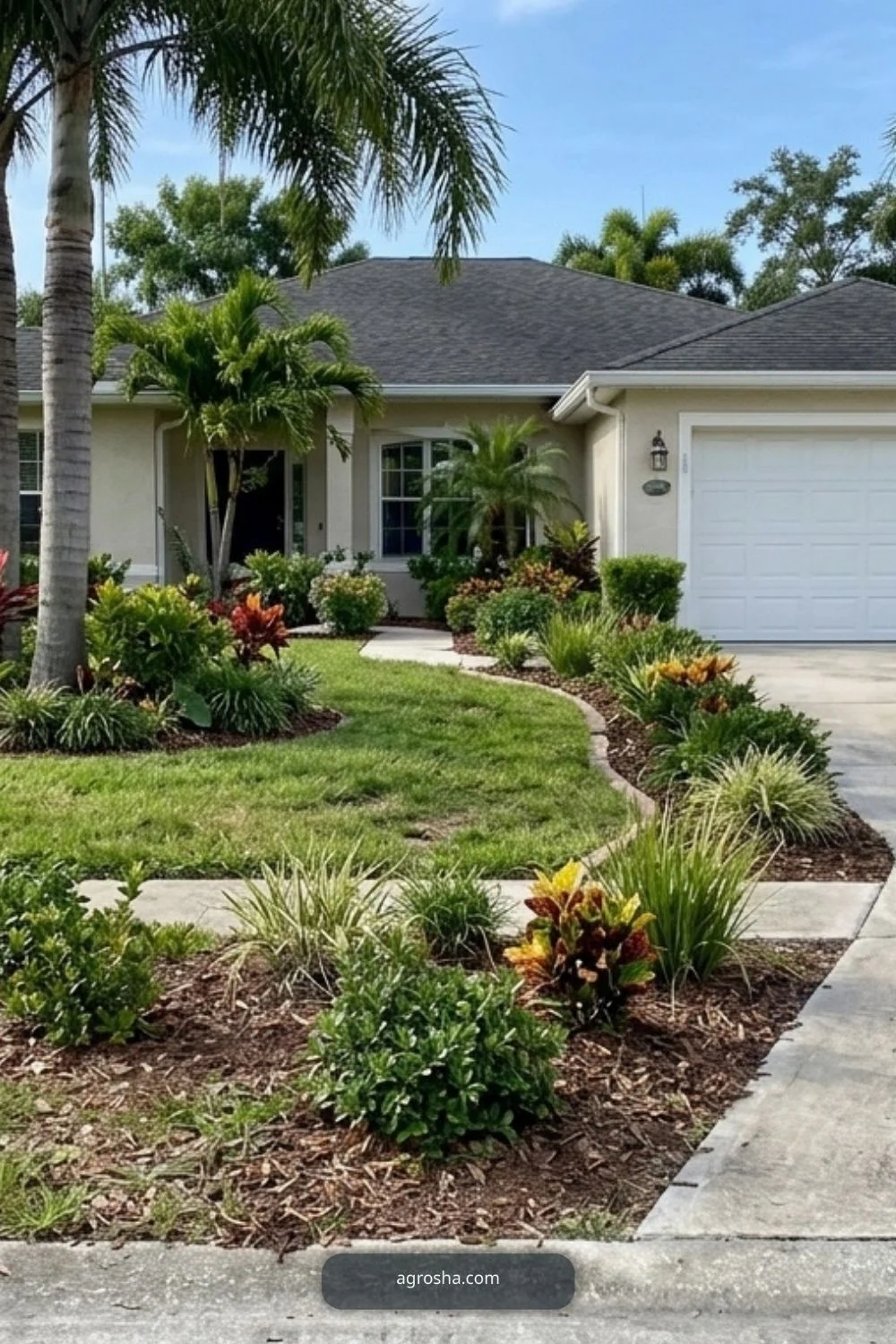
2. Wider Planting Beds Closer to the House

The planting strip can become taller and fuller as it moves away from the street. Use shrubs and grasses closer to the house where sightlines are less critical. This creates depth while keeping the driveway entrance open.
3. Heat-Tolerant Planting Beside Concrete
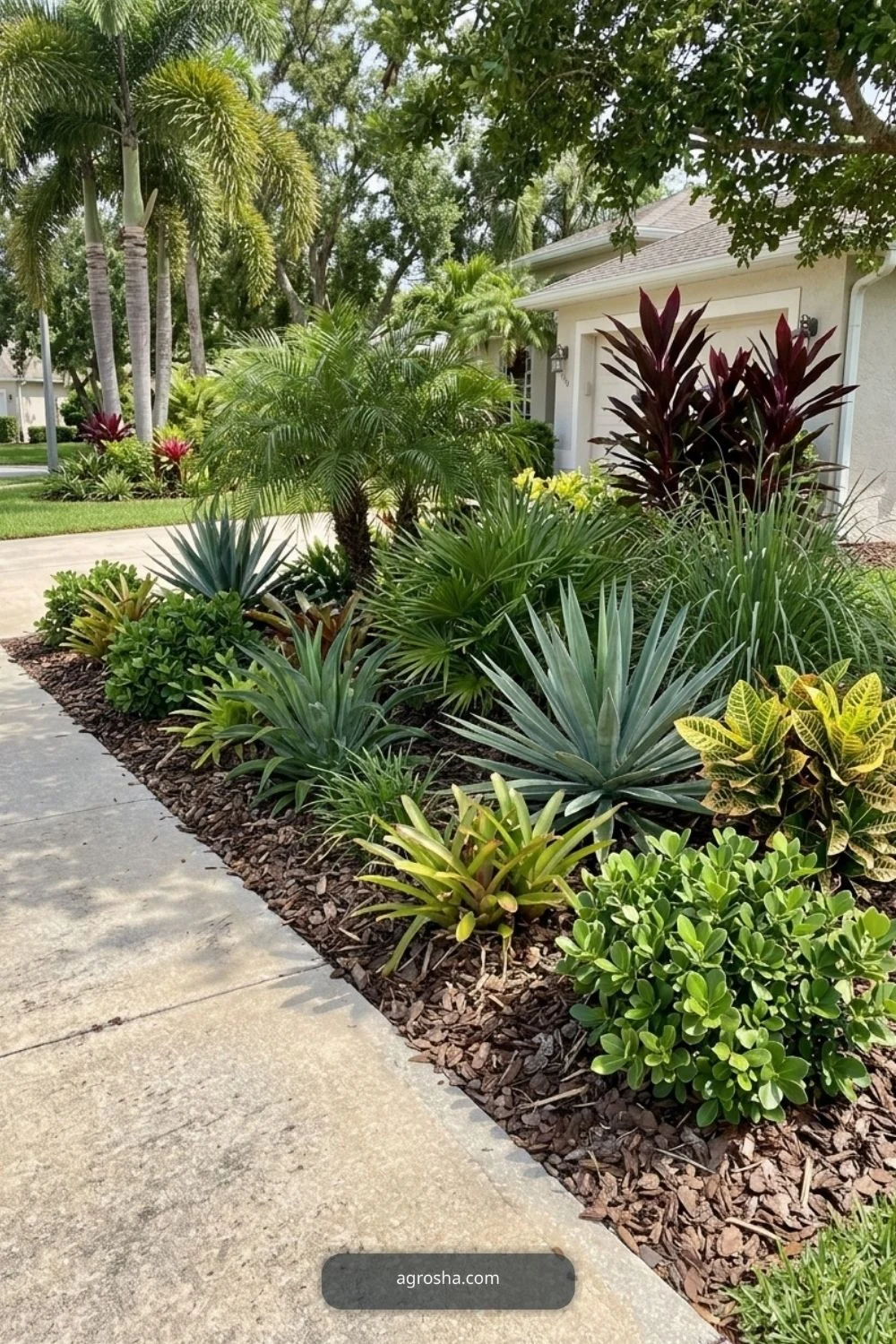
Concrete and pavers reflect heat into nearby soil. Choose plants that can handle full sun and faster drying, then use mulch to reduce bare soil exposure. Avoid delicate shade plants directly beside a west-facing driveway.
4. Shade-Tolerant Border Under Mature Trees
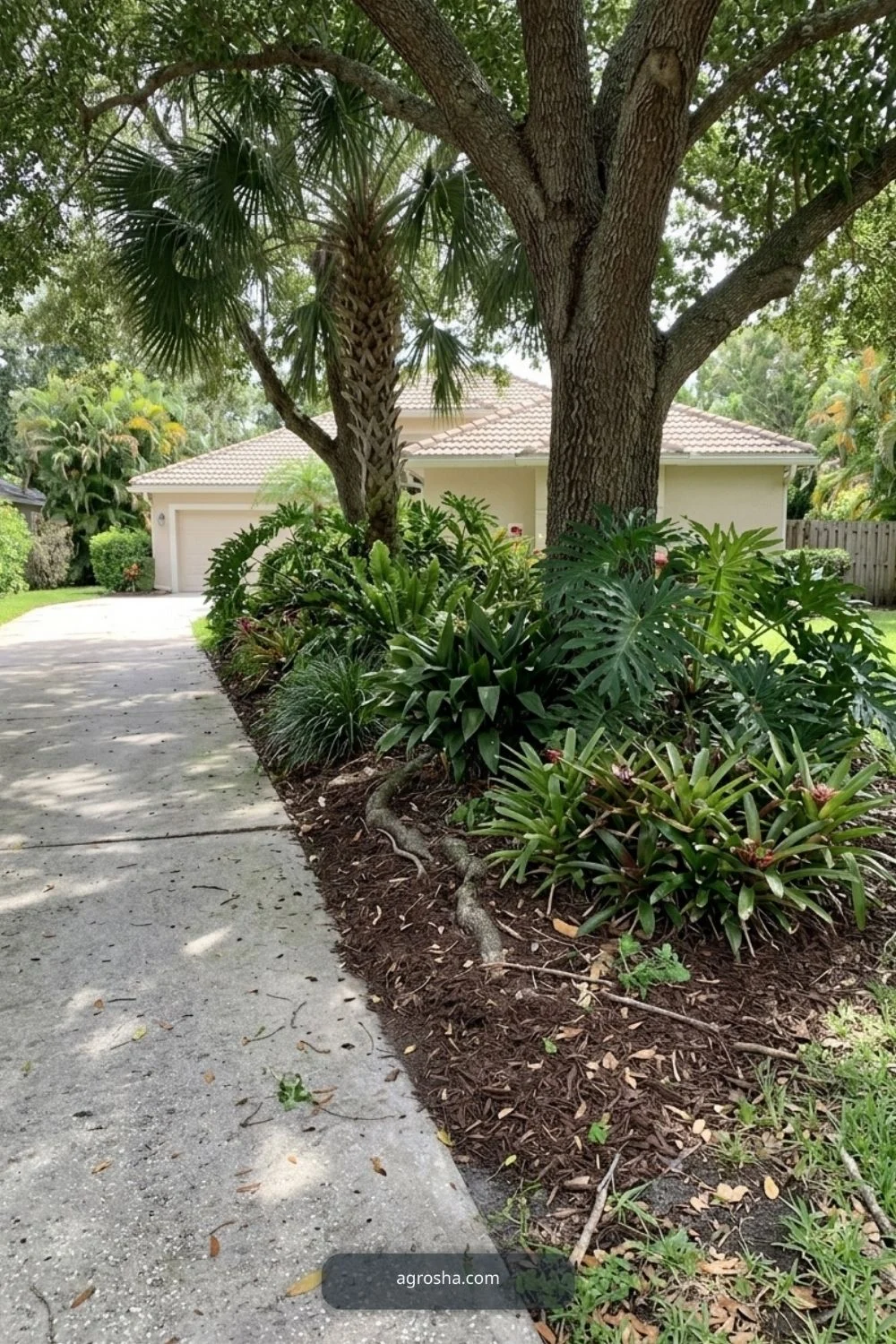
If one side of the drive sits under an oak or other mature tree, work with the shade instead of forcing the same plants on both sides. Use a lower foliage-based border and protect major surface roots during installation.
5. Open Corner at the Garage Apron

Leave extra clearance where cars turn into the garage or parking pad. Keep boulders, planters, and shrubs far enough back that doors can open and tires do not clip the edge. Function comes before symmetry here.
Low-Maintenance Planting Strips
Long driveway borders can become expensive and time-consuming if every few feet uses a different plant. Repeat a small palette of heat-tolerant shrubs, grasses, and groundcovers. Use mulch and mature spacing so the bed remains clear of the pavement without constant clipping.
6. Repeated Clumping Grasses

A row of clumping grasses can soften a long driveway without needing the hard line of a hedge. Choose a noninvasive type suited to your Florida region and keep mature width away from pavement. Repetition makes the strip feel intentional.
7. Compact Shrub Groups Instead of One Hedge

Use small groups of three or five shrubs with gaps for groundcover instead of one continuous clipped hedge. This reduces constant shearing and creates more natural texture. Choose plants that stay near the target size.
8. Groundcover Between Driveway and Fence
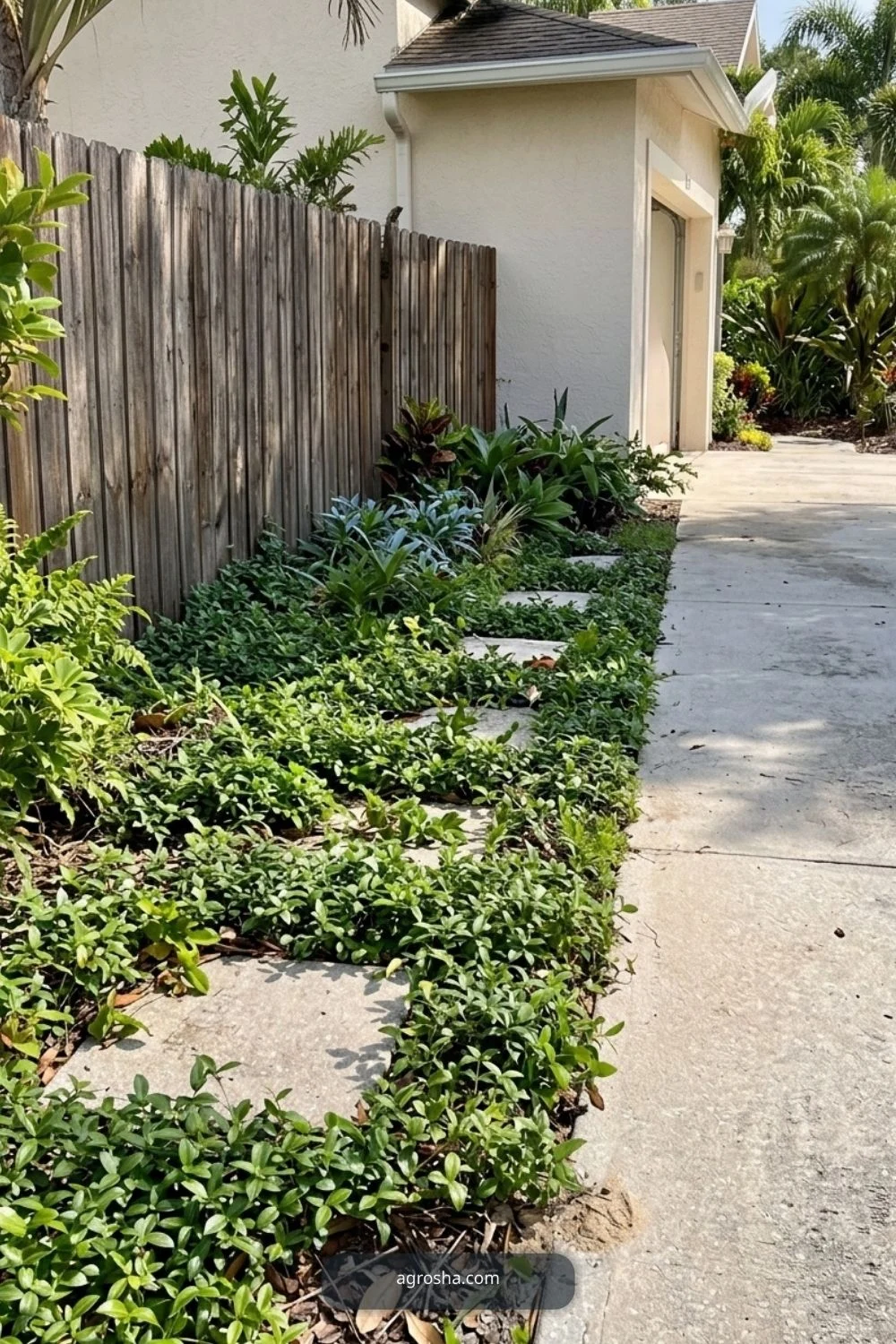
A narrow strip may be too tight for shrubs. Use a low groundcover matched to sun and moisture, then keep it edged so it does not creep over the pavement. This can remove a difficult-to-mow turf strip.
9. Native Flowering Accent Groups
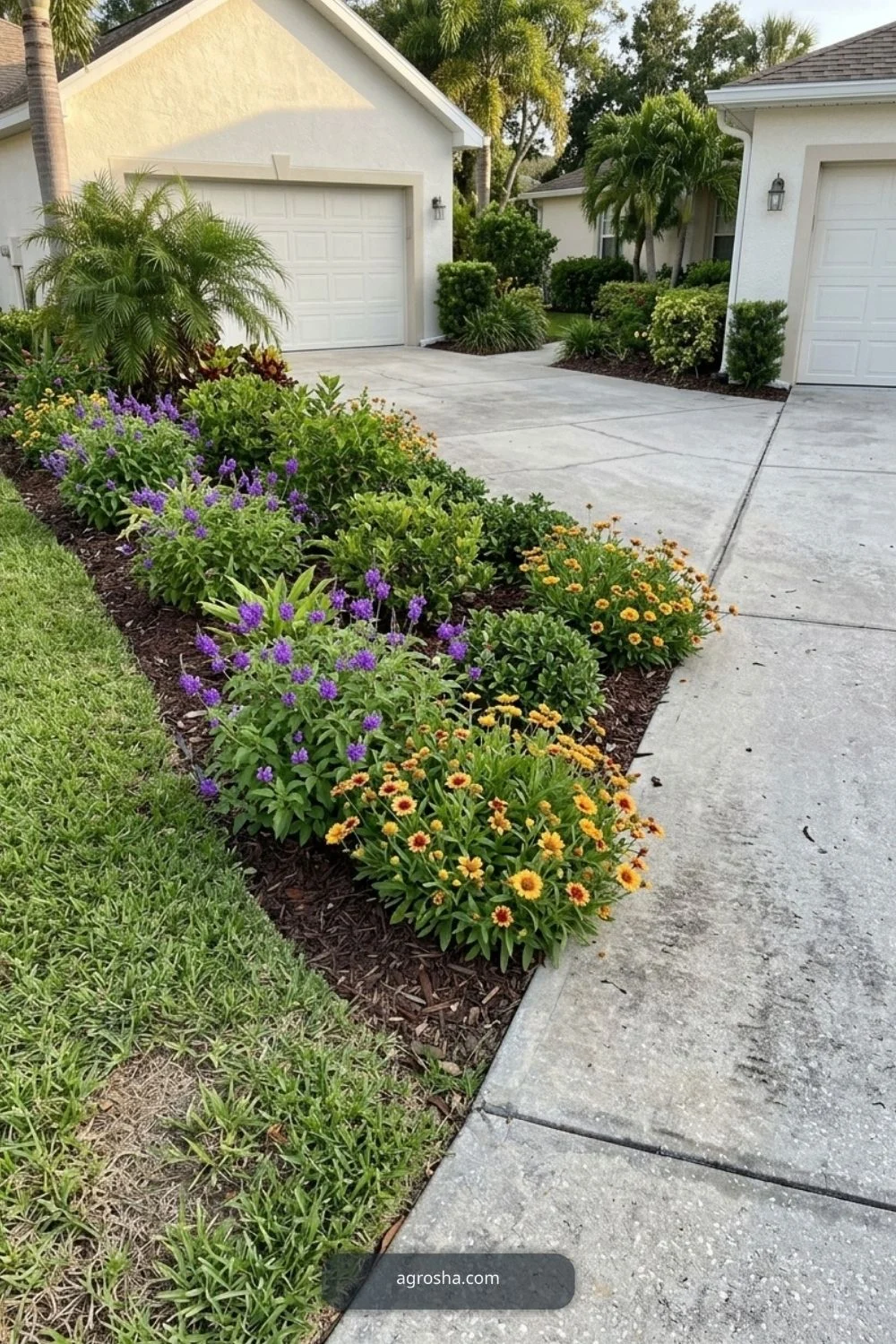
Small groups of regionally appropriate Florida flowers can add seasonal color without lining the entire driveway in annuals. Repeat the same palette every few yards and leave calmer green sections between them.
10. Mulched Bed With One Plant Palette

A long driveway border often looks better with fewer plant types. Use one shrub, one grass or groundcover, and a clean mulch edge. Our low-maintenance landscaping ideas show why repetition reduces maintenance.
Edging, Mulch, and Hardscape Accents
Hardscape should help contain the planting, not become the main subject. A flush brick strip, thin metal edge, or small gravel transition can make maintenance easier. Keep boulders and tall curbs out of car-door and tire zones, especially near turns.
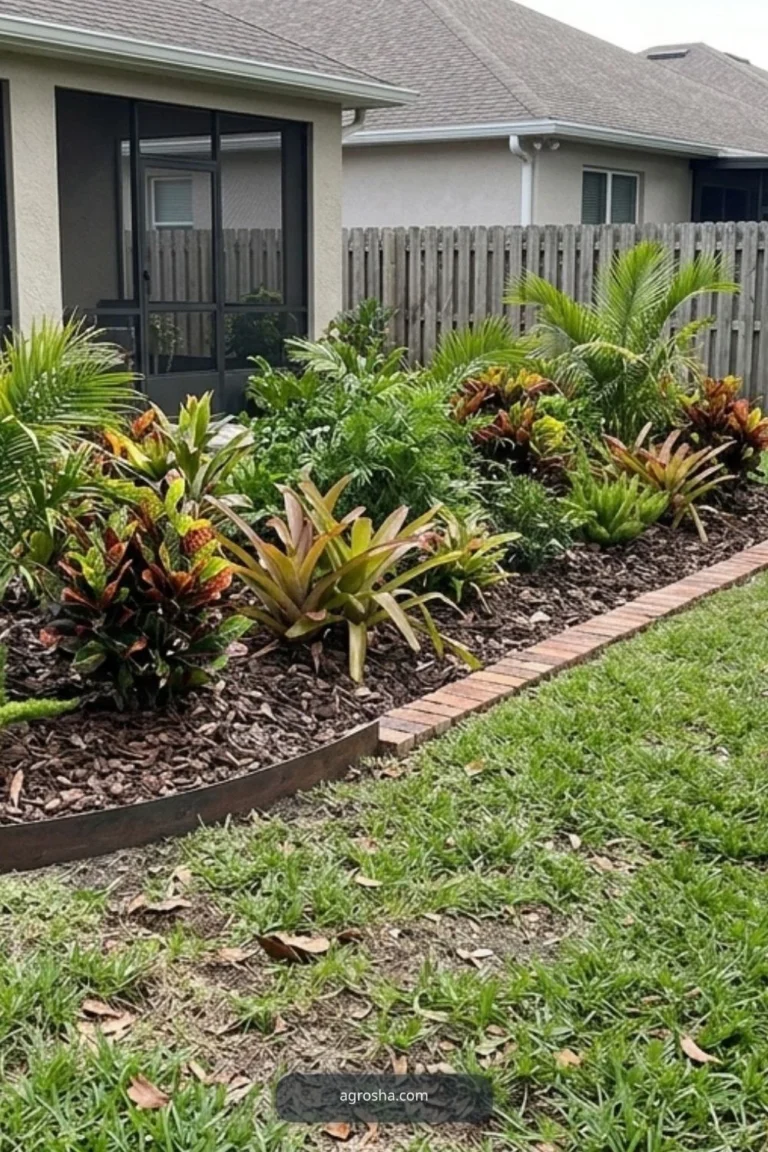
11. Flush Brick Mowing Strip
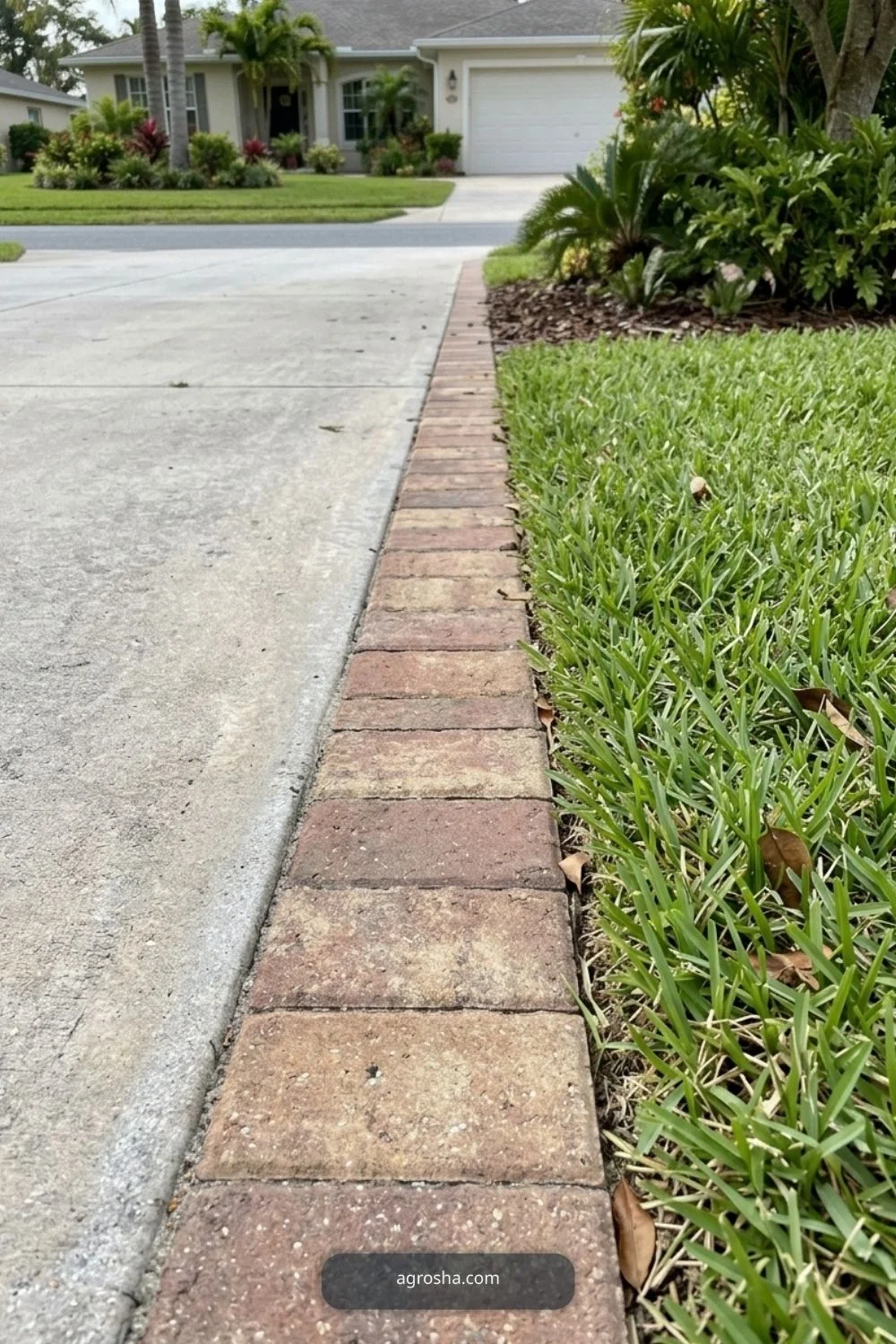
A brick strip level with the lawn can separate turf from the driveway border and reduce trimming. Use a stable base so the bricks do not sink after heavy rain. Repeat the same brick near the entry path for continuity.
12. Thin Metal Edge Around Mulched Beds
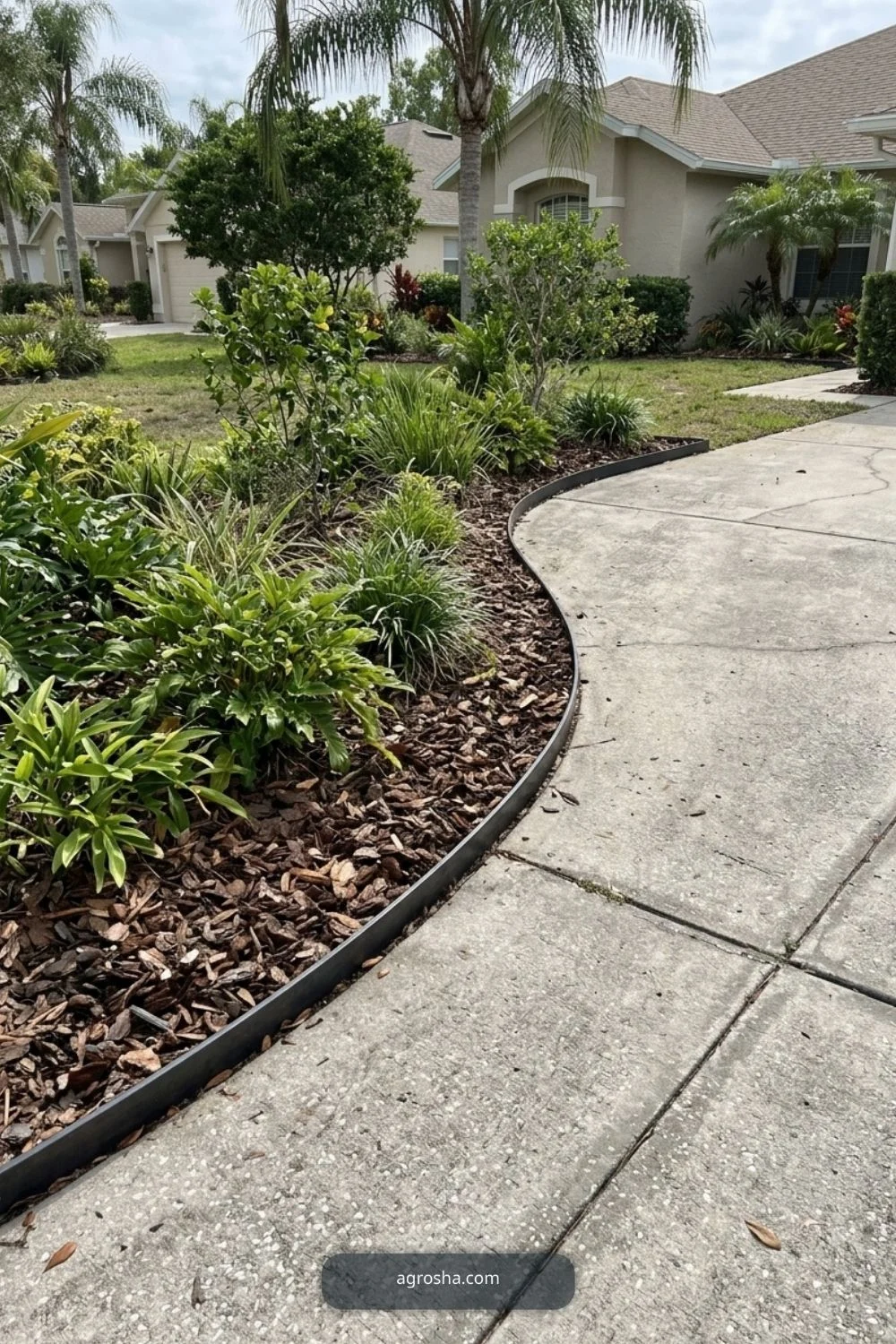
A low steel or aluminum edge can keep mulch out of the driveway without creating a tall curb. Keep it nearly flush and use a finish suited to Florida humidity. It works best where the planting bed shape is already settled.
13. Natural Stone Accent at the Entrance

One or two low boulders can mark the start of a planting bed, but keep them outside the vehicle clear zone. Use stone as a focal accent, not a continuous obstacle along the entire driveway.
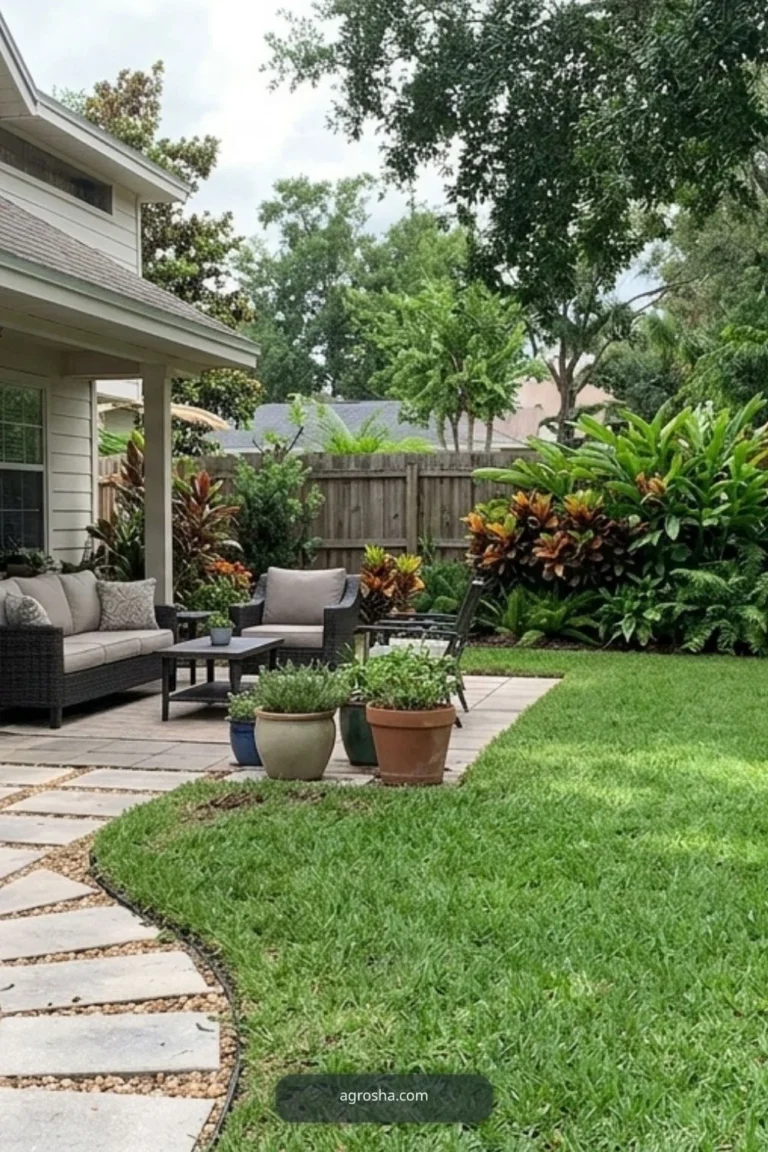
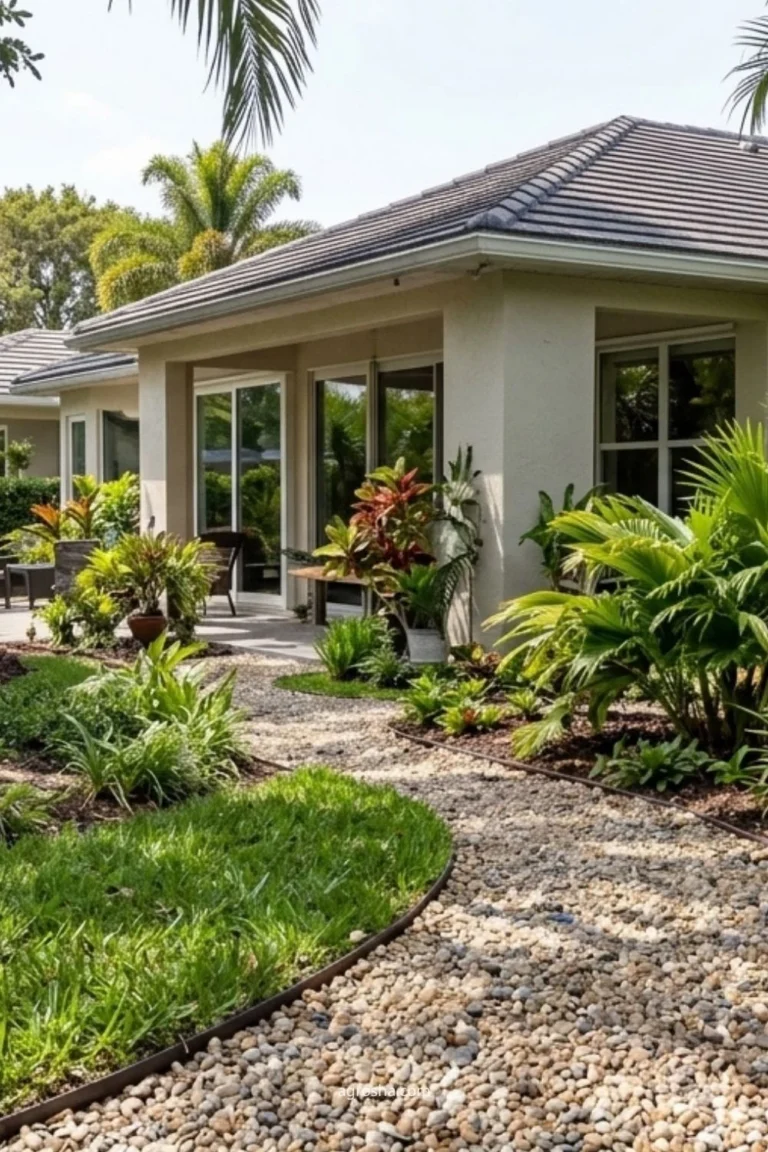
14. Gravel Transition Strip Beside Pavers
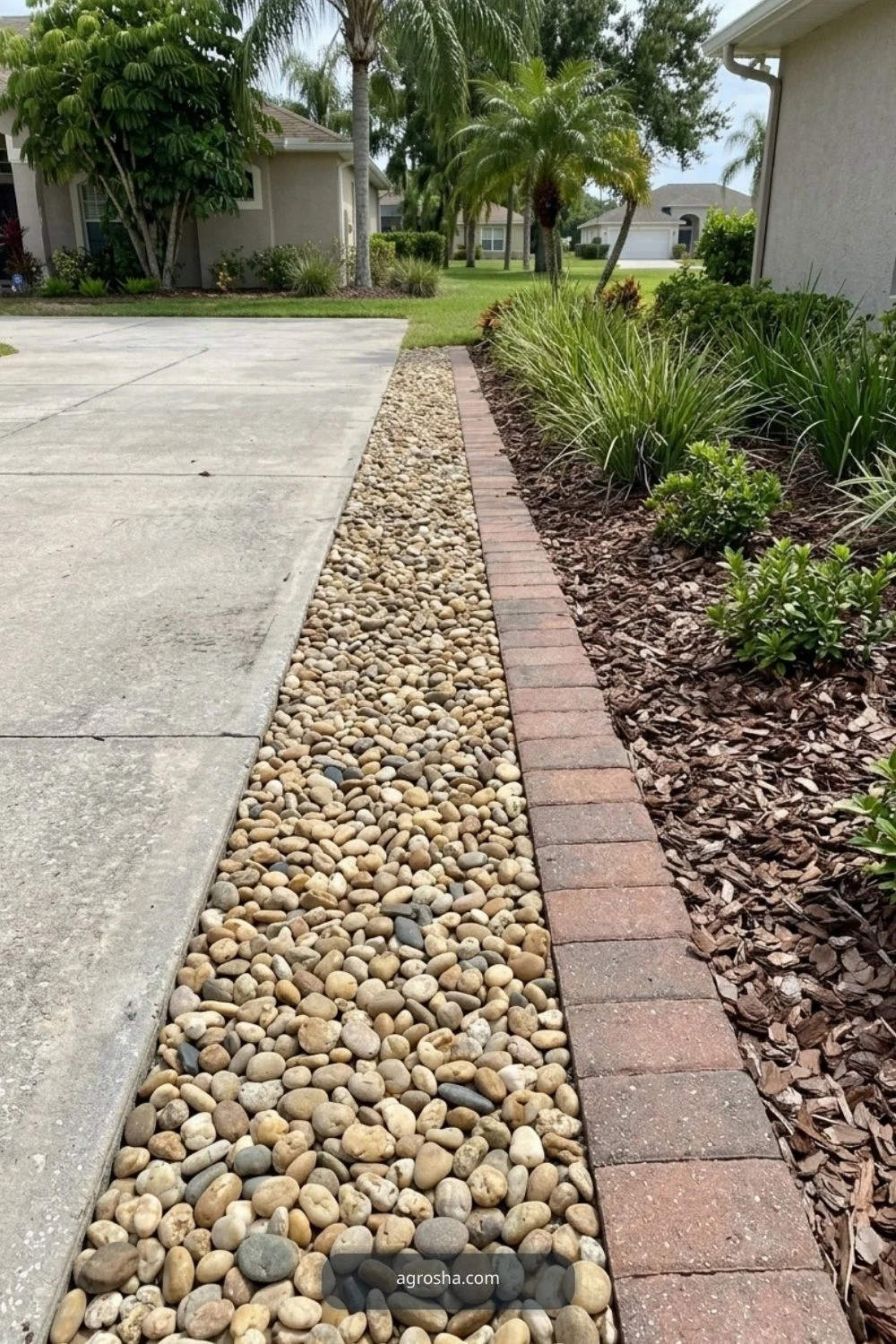
A narrow gravel band can catch mulch and visually separate a bed from a wide paved drive. Use edging so gravel does not spread onto the driving surface. Keep plant root zones mulched rather than converting the whole border to hot stone.
15. Brick or Stone Edge Around a Curved Bed
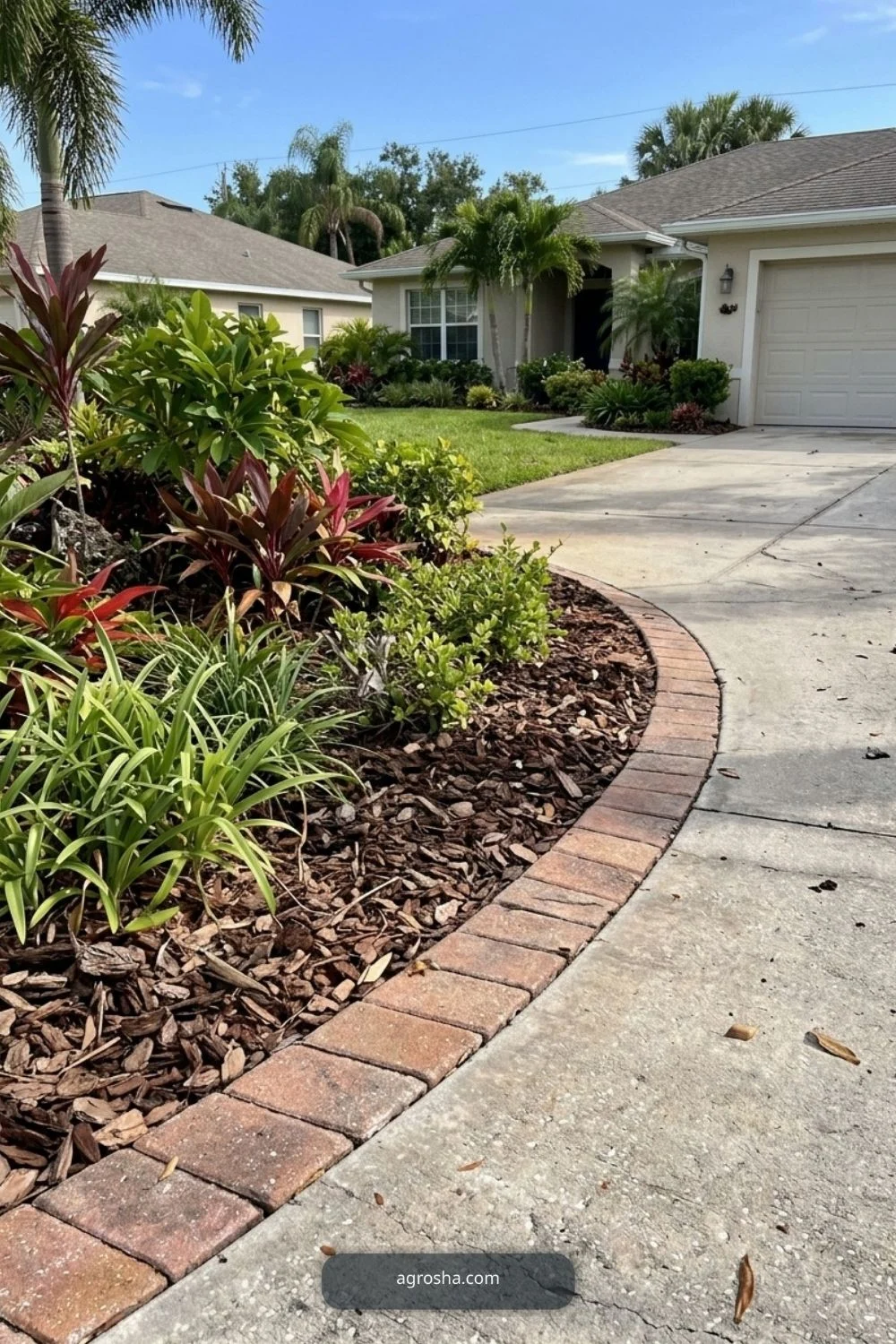
A defined curve can soften a straight driveway, but the shape should still be simple enough to mow and maintain. Use one broad arc rather than many small scallops. See our flower bed border ideas for cleaner edge planning.
Driveway Entrance Focal Points
The street end of the driveway needs restraint because visibility and turning space are more important than decoration. Use low plant groups, one small focal tree set back from the road, or a simple color accent. Increase height gradually toward the house.
16. One Small Ornamental Tree Set Back From the Road
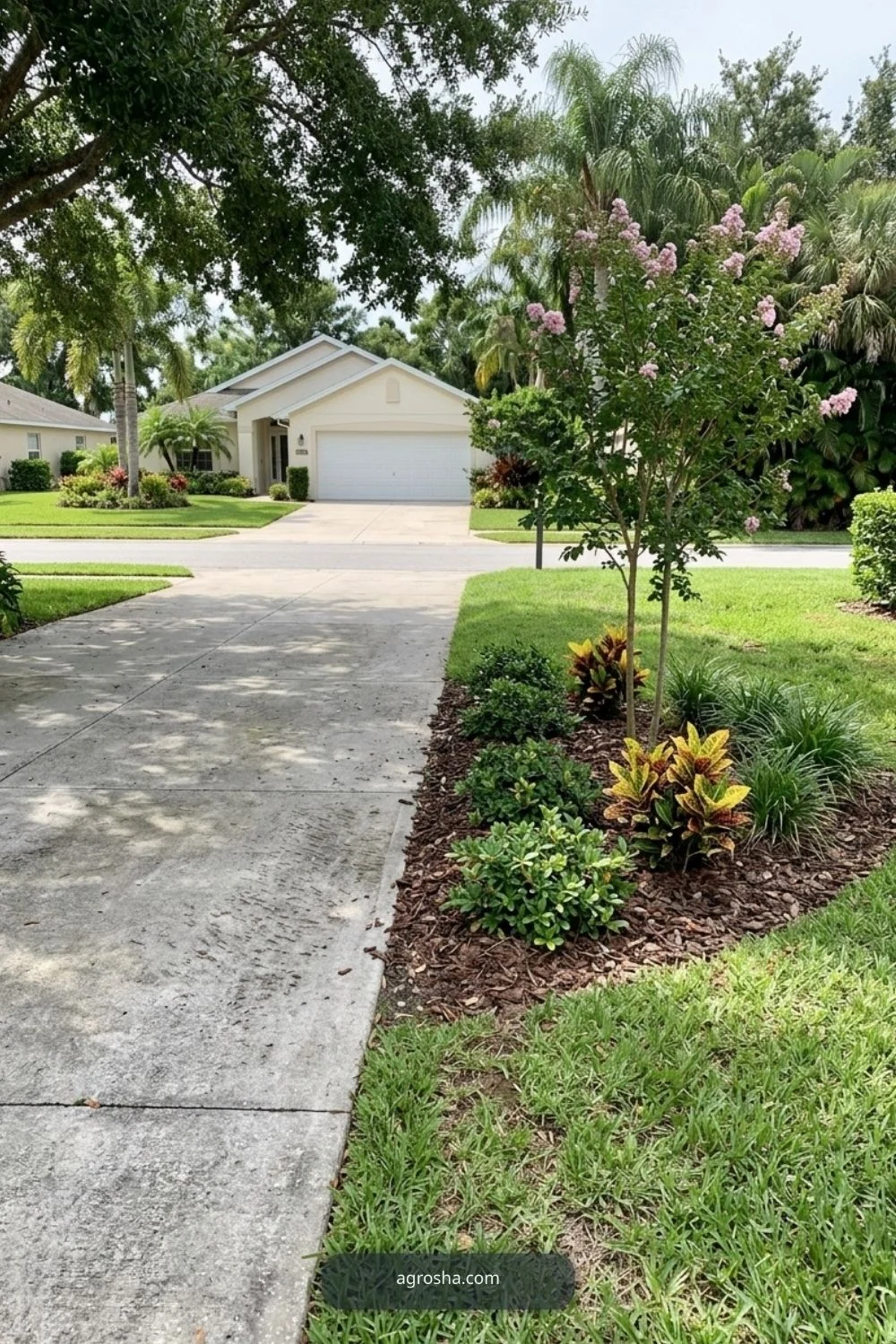
A small tree can anchor the entrance if it is placed far enough from pavement, utilities, and sight triangles. Choose mature size carefully and keep lower branches from blocking visibility. Avoid planting a future large canopy tree in a narrow strip.
17. Matching Low Planting on Both Sides
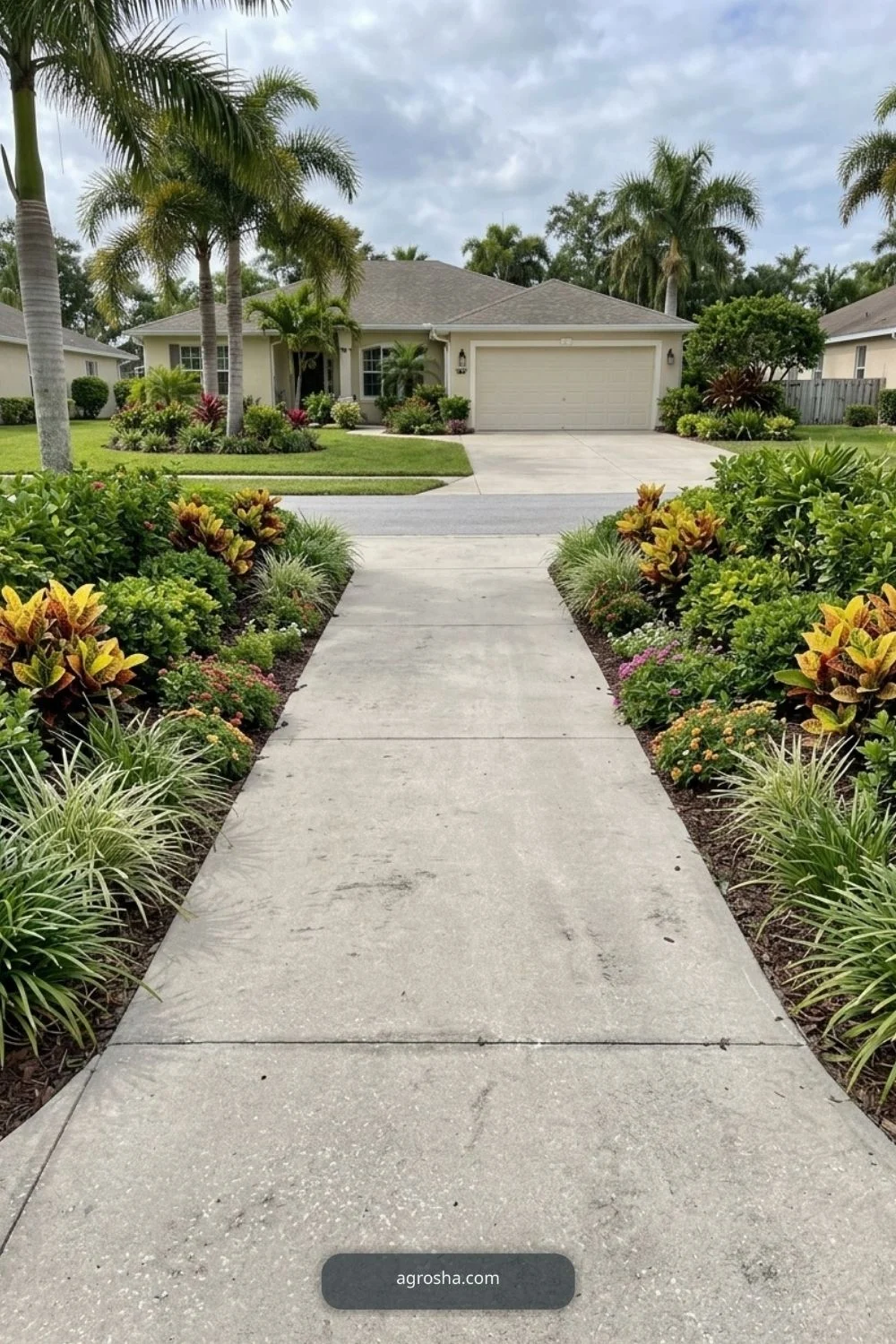
A symmetrical pair of low shrub groups can frame the driveway without looking formal or heavy. Keep the plant mass outside turning areas and choose varieties that do not require constant clipping to stay below sightline height.
18. One Large Planter Near the House, Not the Street
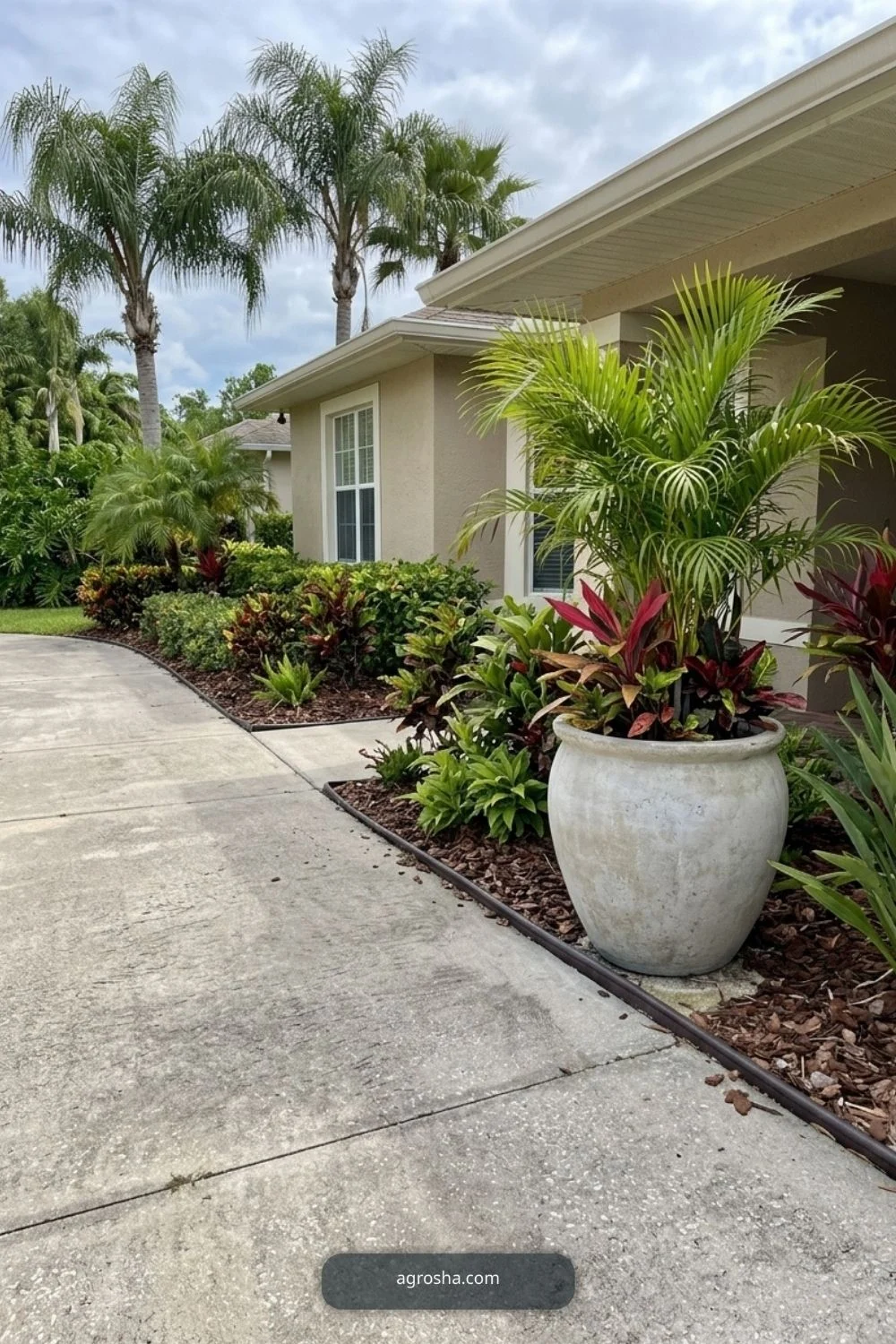
A large planter can mark the driveway-to-entry transition near the porch or garage. Keep it away from vehicle swing and use a stable, heavy container. This is safer and more practical than placing decorative pots at the street edge.
19. Low Seasonal Color Near the Mailbox Zone
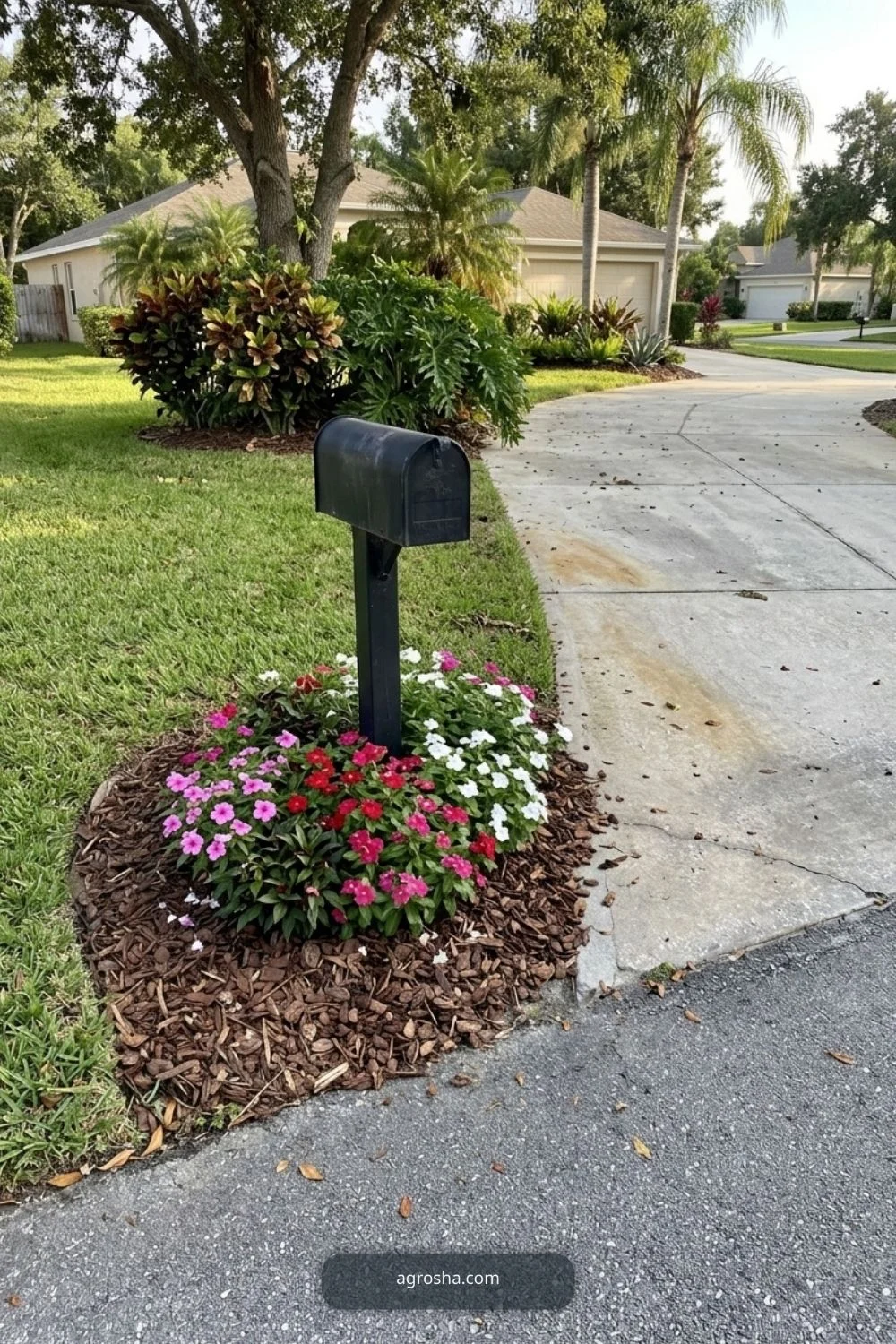
A small patch of seasonal color can brighten the entrance if it does not interfere with mail access or road visibility. Keep the bed compact, use a clear mulch edge, and choose plants that can handle reflected heat.
20. Simple Lighting at the Walkway Connection

One shielded light where the driveway meets the front walk can improve orientation after dark. Keep fixtures out of tire paths and avoid lining both driveway edges with bright stakes. The focus should remain on the plants and entry route.
Narrow and Special Driveway Conditions
Narrow strips, slopes, coastal sites, and drainage swales require different solutions. Do not copy a symmetrical border if the two sides have different conditions. Fit plants to heat, salt, water, and available width, while preserving service access and runoff.
21. Narrow Side Strip With Upright Plants
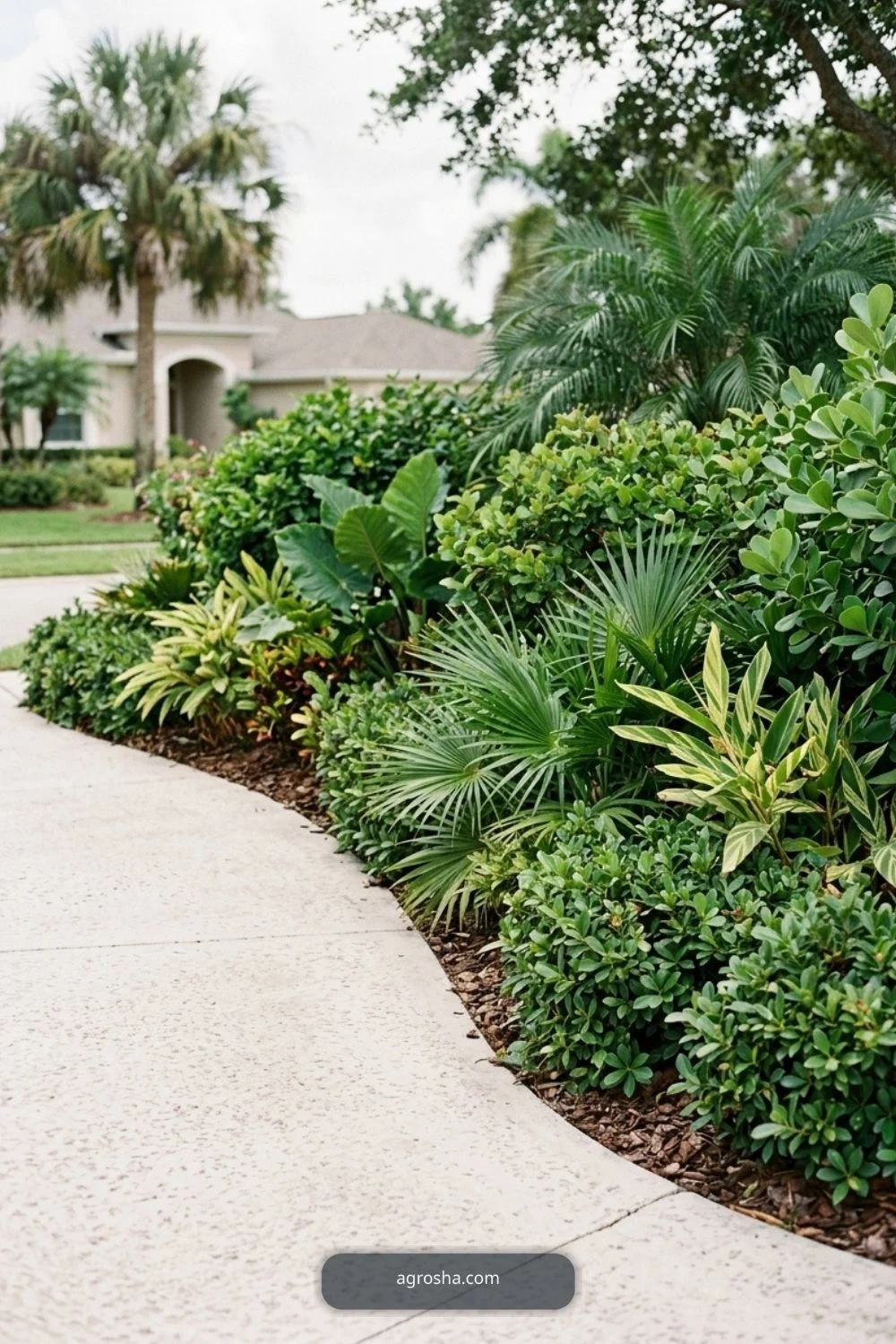
Where the drive sits close to a fence or wall, use slim upright plants that do not spill into car doors. Keep a maintenance gap from the wall and choose plants that tolerate reflected heat.
22. Sloped Driveway Border With Groundcovers

On a slope, low groundcovers and clumping plants can stabilize the visual edge better than loose mulch alone. Keep runoff moving safely and avoid placing loose stone where it will wash onto the driveway. Significant erosion needs drainage planning first.
23. Coastal Driveway With Salt-Tolerant Plants

Near the coast, select plants for salt spray, sandy soil, and wind rather than using inland favorites that need constant replacement. Keep the layout low and open at the entrance and use repeated, sturdy plant forms.
24. Driveway Border Beside a Drainage Swale
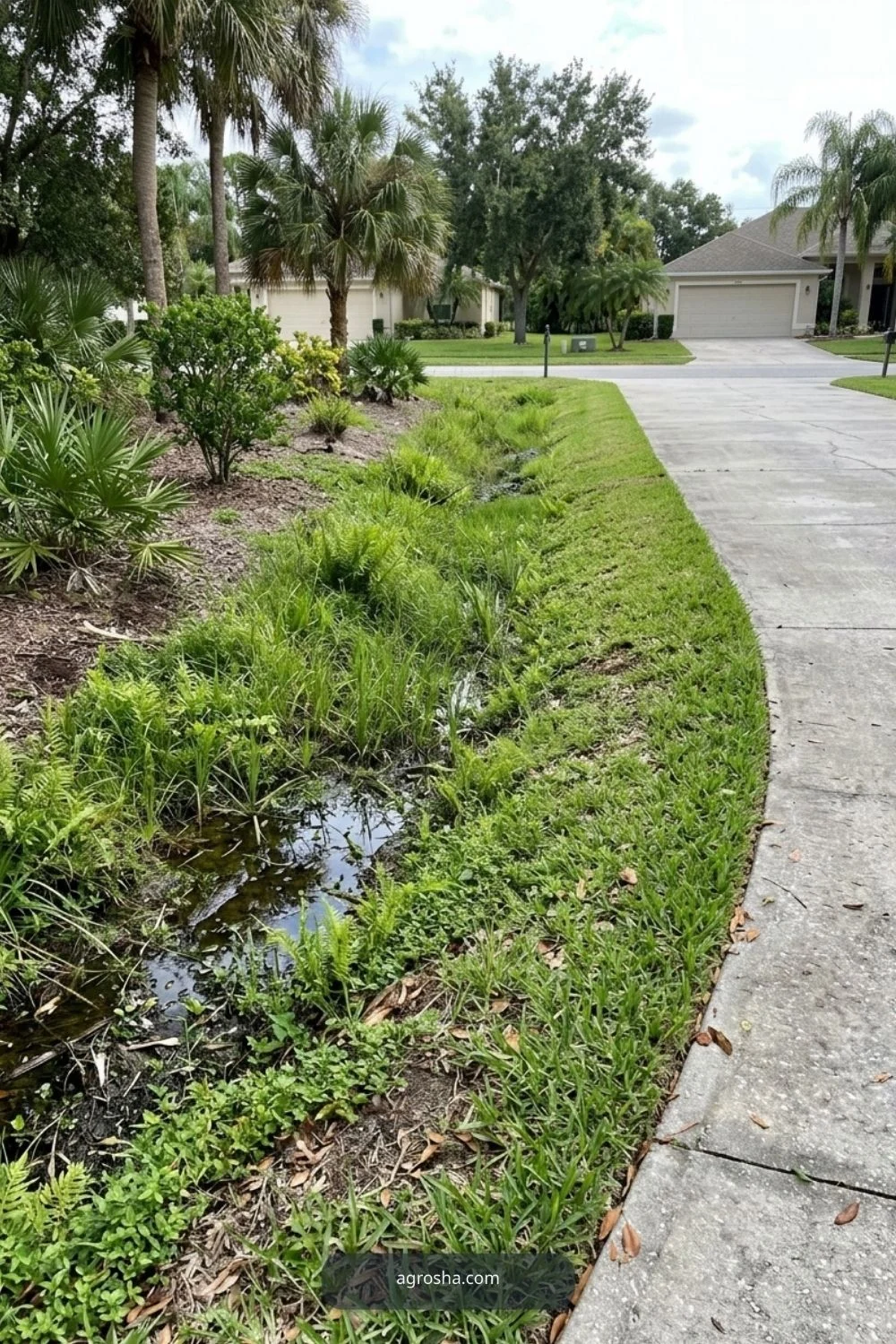
Do not fill or block a swale with decorative beds. Keep planting on the higher edge and use species that tolerate nearby wet-dry cycles. Preserve the designed flow path so stormwater can move away from pavement and structures.
25. Shared Driveway Edge With a Soft Plant Buffer
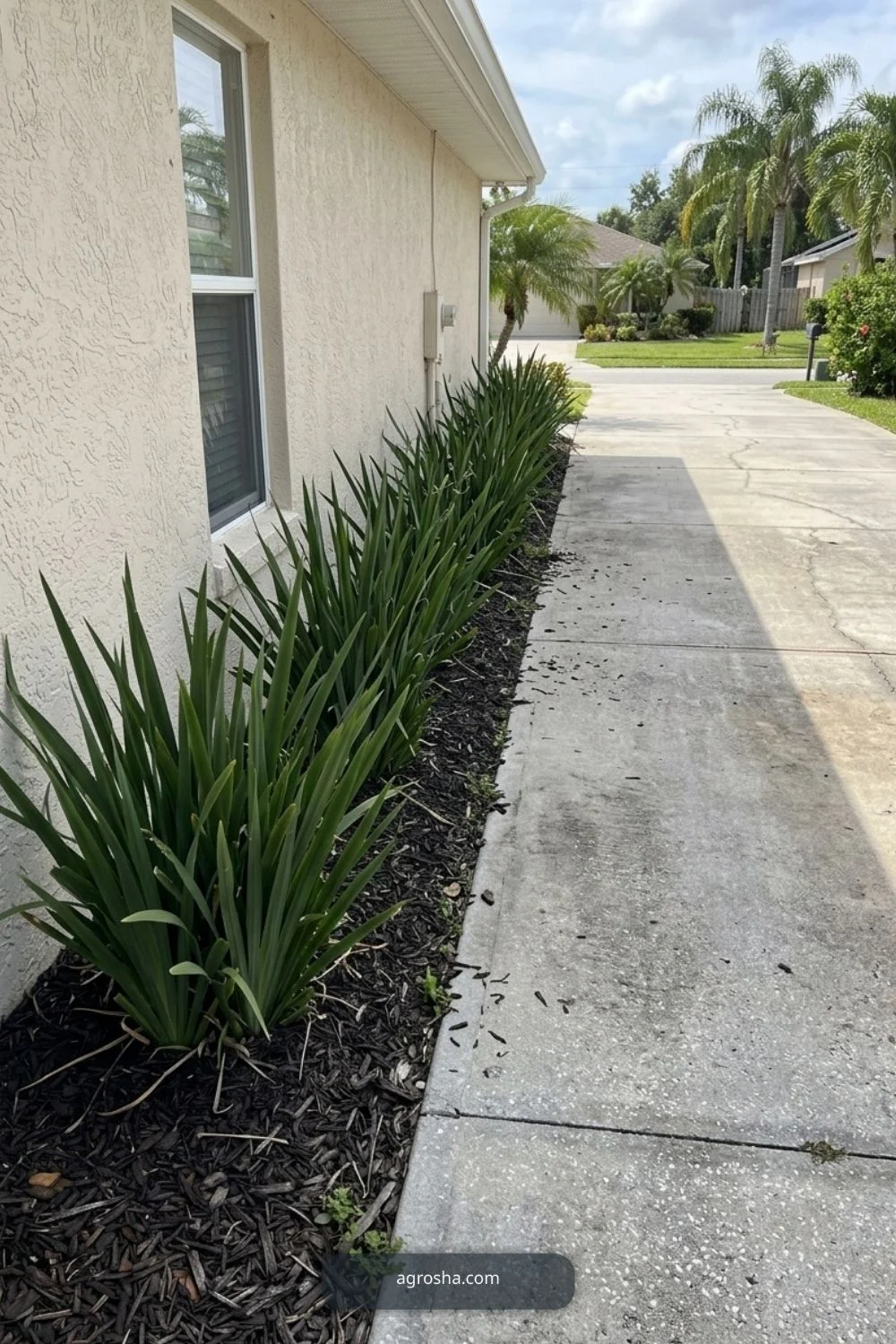
If a driveway sits near a neighbor or shared access, use a low, clear planting strip instead of a tall wall unless privacy is truly needed. Soft grasses and compact shrubs can define your side without making the shared space feel narrow.
Keep the Focus on Plants
A driveway is already a large hard surface, so the border benefits from calm, repeated planting. Foliage structure should carry the design through the year, with flowers used as accents. Leave a small breathing strip at the pavement so mature plants can stay natural.
26. Monochromatic Flower Strip
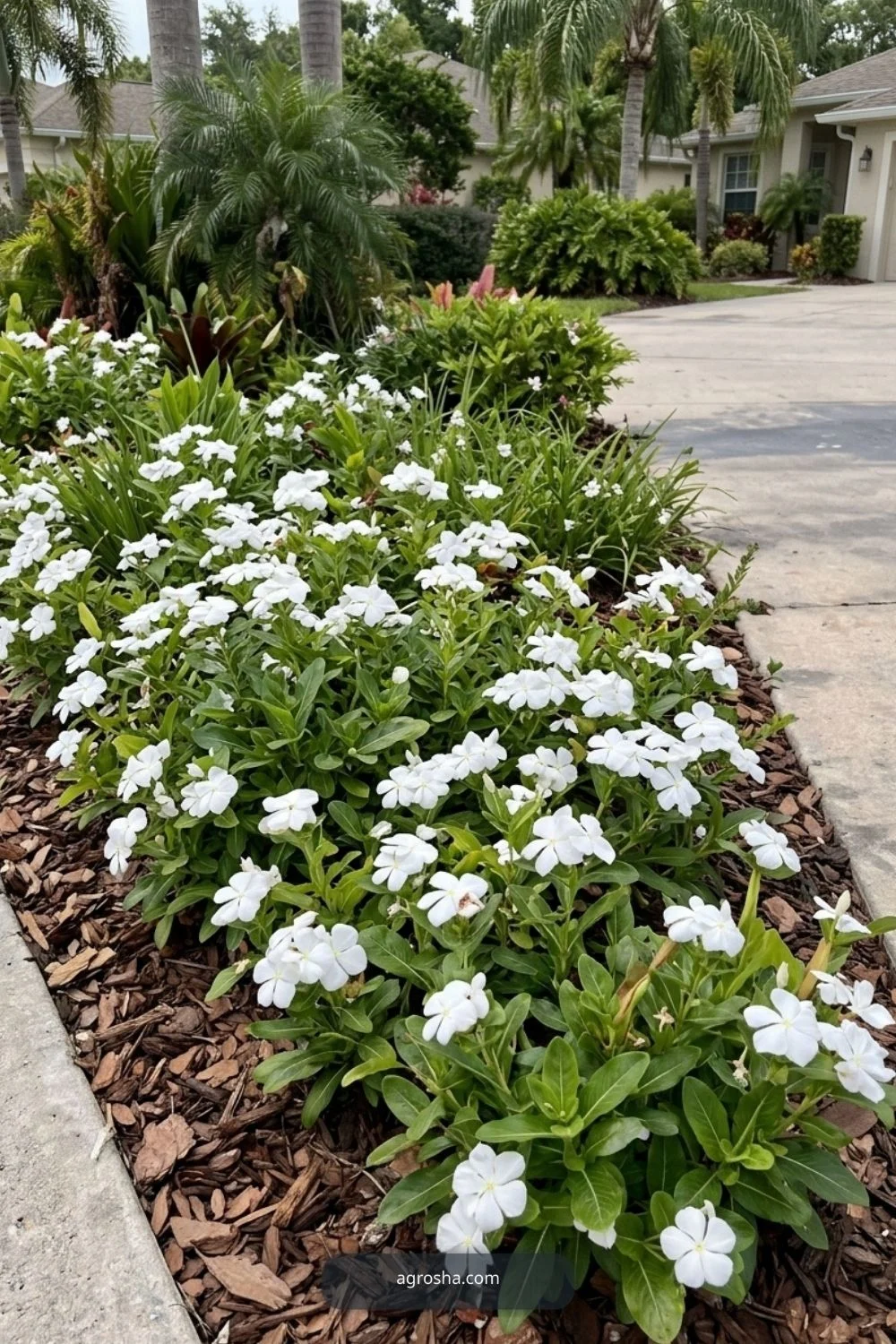
Choose one flower color repeated in small groups rather than mixing every available annual. The restrained palette keeps the border cohesive from the street and lets foliage texture do more of the work.
27. Foliage-First Driveway Border
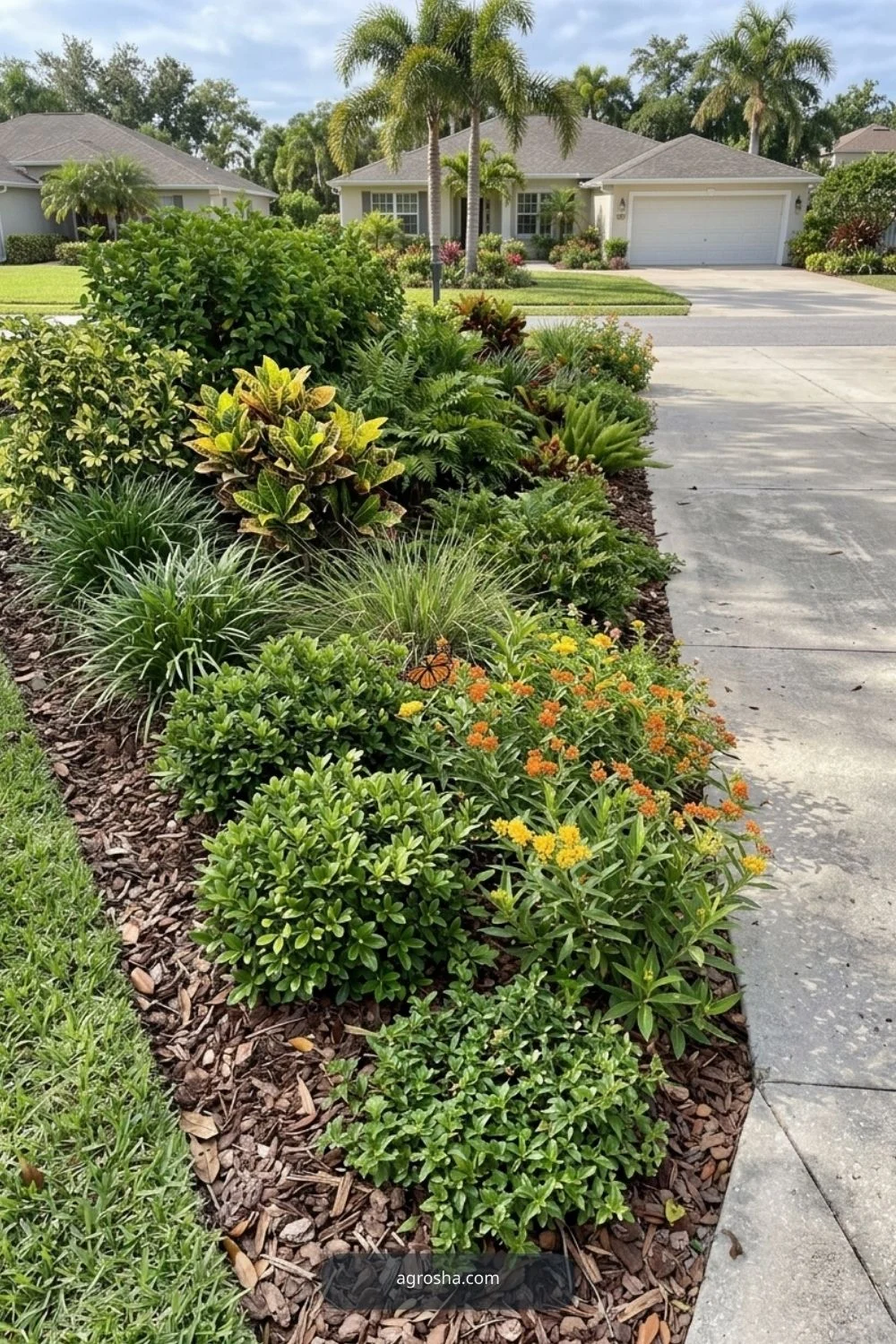
Use leaf color and texture as the year-round structure, then add small seasonal blooms. This is more reliable than depending on constant flowers. Compact shrubs and grasses can create a polished border even between bloom cycles.
28. Pollinator-Friendly Border Set Back From Traffic

A wider inner section of the driveway bed can support pollinator plants where flowers will not brush vehicles or block visibility. Keep the street end lower and simpler, then increase plant density closer to the house.
29. Repeat the Front-Yard Plant Palette
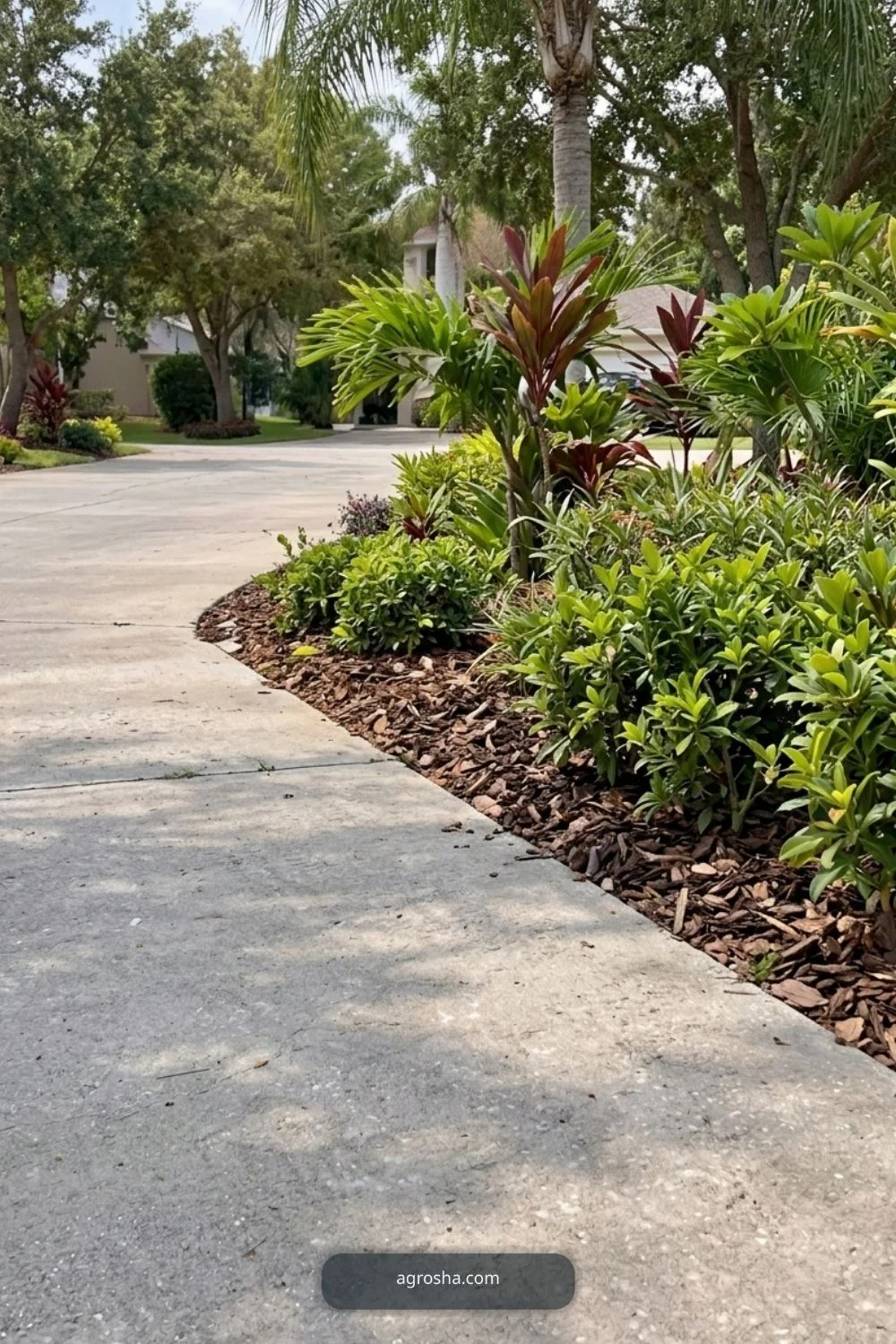
Use the same key shrubs or grasses from the foundation beds along the driveway. This visually links the drive to the rest of the landscape. Our front yard garden ideas can help keep the house and entry as the main focus.
30. Leave Breathing Room at the Pavement Edge
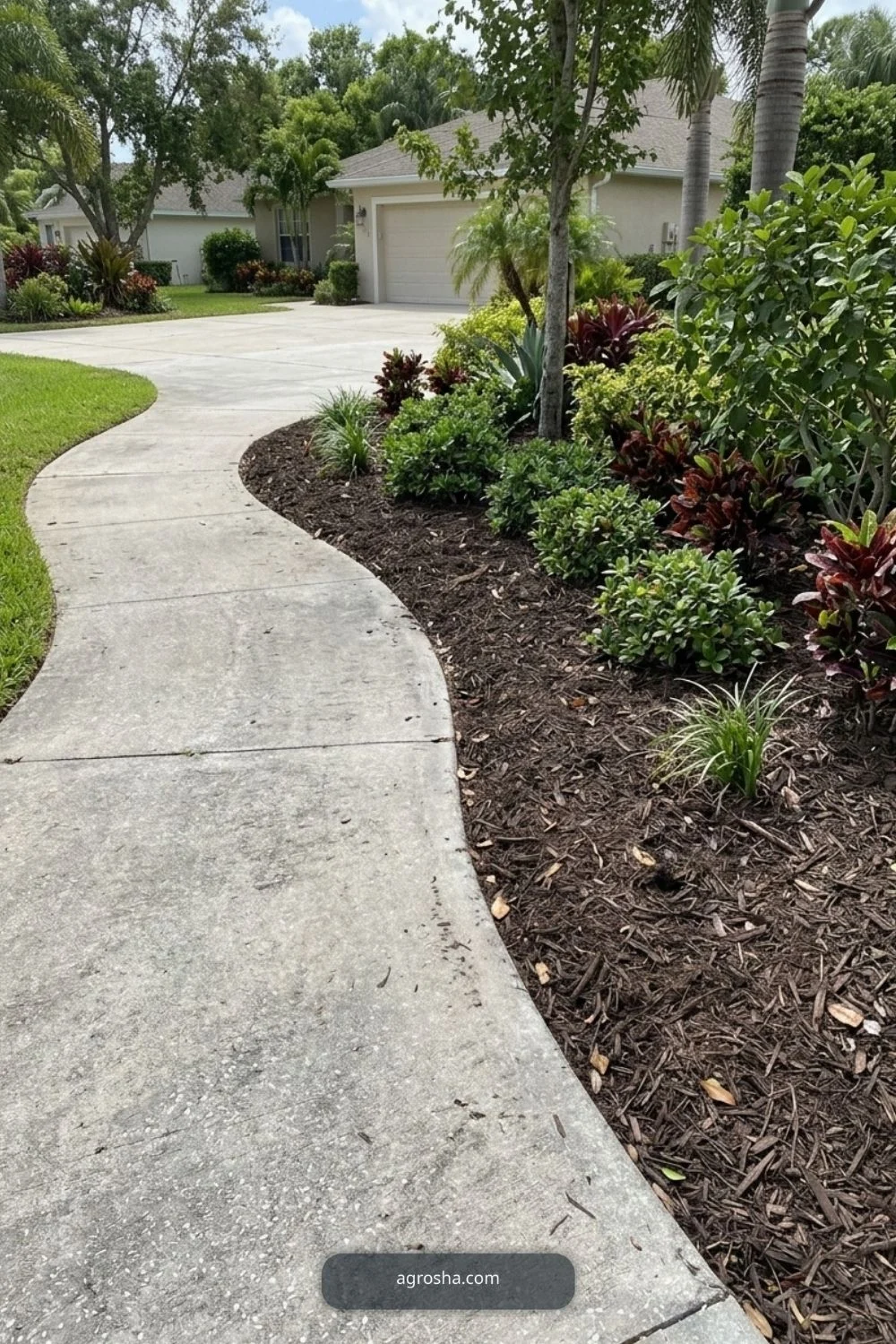
Do not plant right against the tire line. Leave a small mulch, gravel, or edging buffer so foliage can reach mature size without being crushed or constantly pruned. A little open space makes the border safer and easier to maintain.
Frequently Asked Questions
What plants are best next to a driveway?
Choose plants that tolerate the site’s sun, heat, water, and mature space. Low compact shrubs, clumping grasses, groundcovers, and selected flowering plants often work well when they stay clear of vehicle paths and sightlines.
How wide should a driveway planting strip be?
Wide enough for the mature plants plus a buffer from pavement. If the strip is too narrow for the plant’s natural width, choose a smaller plant rather than planning to shear it constantly.
Should driveway borders be symmetrical?
Not necessarily. Matching low groups can frame a formal entrance, but many properties have different sun, drainage, or space on each side. Use related plants and materials even when the layout is asymmetrical.
How do I keep mulch off the driveway?
Use a low edge or shallow trench and keep the finished mulch level below the pavement edge. Fix downspout or slope runoff that repeatedly washes material onto the driveway.
Final Thoughts
The best driveway border keeps the entrance safe and easy to use while improving curb appeal. Keep street sightlines open, set plants back from tires and doors, choose for reflected heat, and repeat a simple plant palette toward the house. A clean, practical border will usually look better than a crowded decorative strip.