
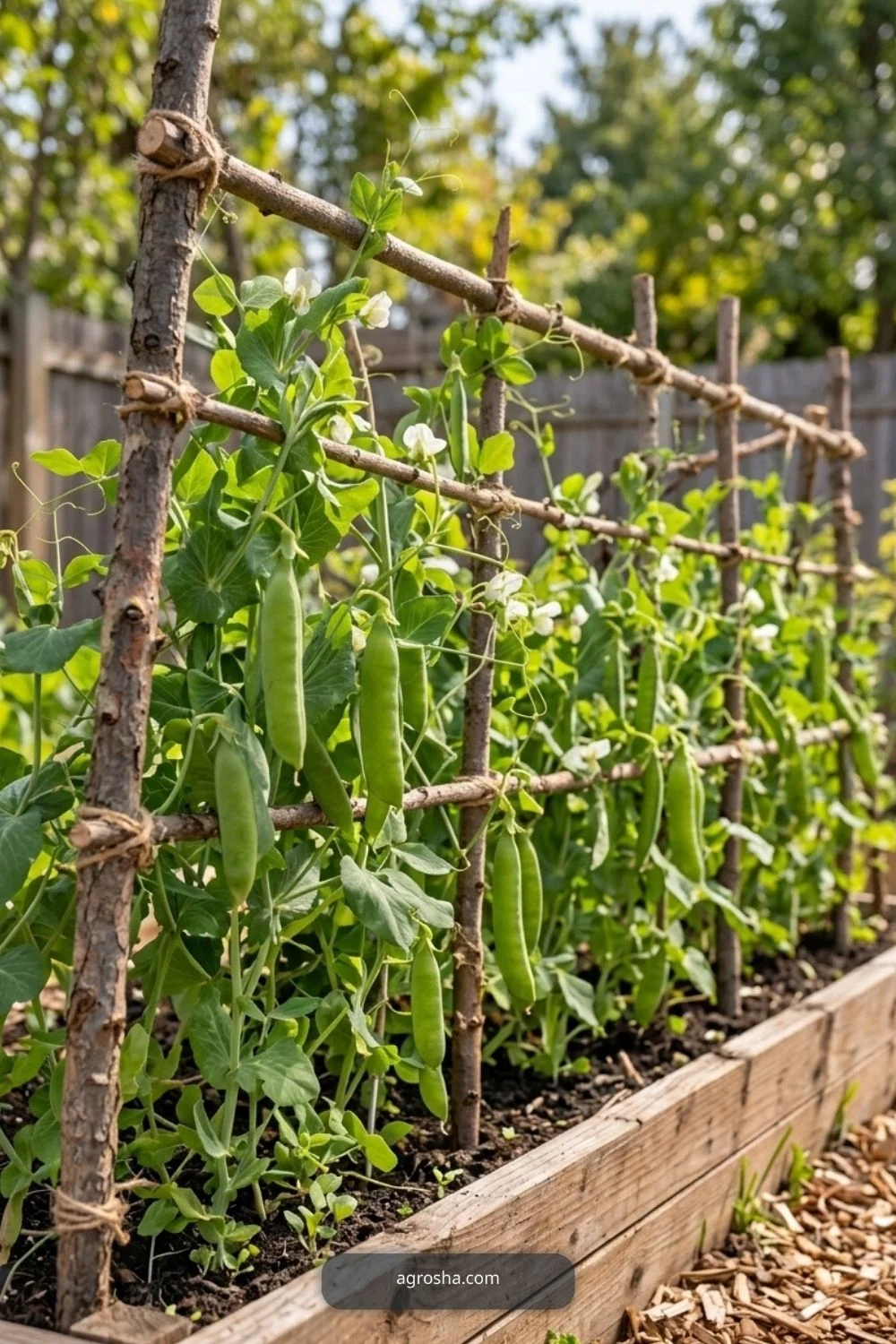
A DIY pea trellis from branches can be useful for a short row of peas when you have sound straight prunings from your yard. Instead of trying to create decorative perfection, use branches that will support tender stems and survive spring weather. A small woven or ladder-style panel is approachable for beginners and easy to take apart after harvest.
Quick Answer
Choose sturdy clean branches for uprights, thinner pieces for crossbars, and outdoor twine for lashings. Set two upright stakes firmly in the soil, fix horizontal pieces at useful intervals, and lead pea tendrils toward the frame while the plants are young. Size the support for the actual pea variety.
Our vegetable garden trellis ideas compare additional options for climbing crops when a branch frame is not sturdy enough.
Before You Build: Check Your Site
A sound diy pea trellis from branches starts with the garden you actually have. Choose the location for access, sunlight or shade, weather, and the way this project will be used. Think about maintenance and how you will remove or repair components when the season changes.
- Know whether the peas are dwarf or climbing varieties.
- Reject diseased, rotten, brittle or treated wood.
- Avoid freshly cut thorny branches or protruding sharp tips.
- Set support before vines tangle and before working damages roots.
Materials and Tools
The following is a practical starting list rather than a guaranteed one-size-fits-all kit. Choose dimensions and fastening methods only after measuring the actual site and checking product instructions.
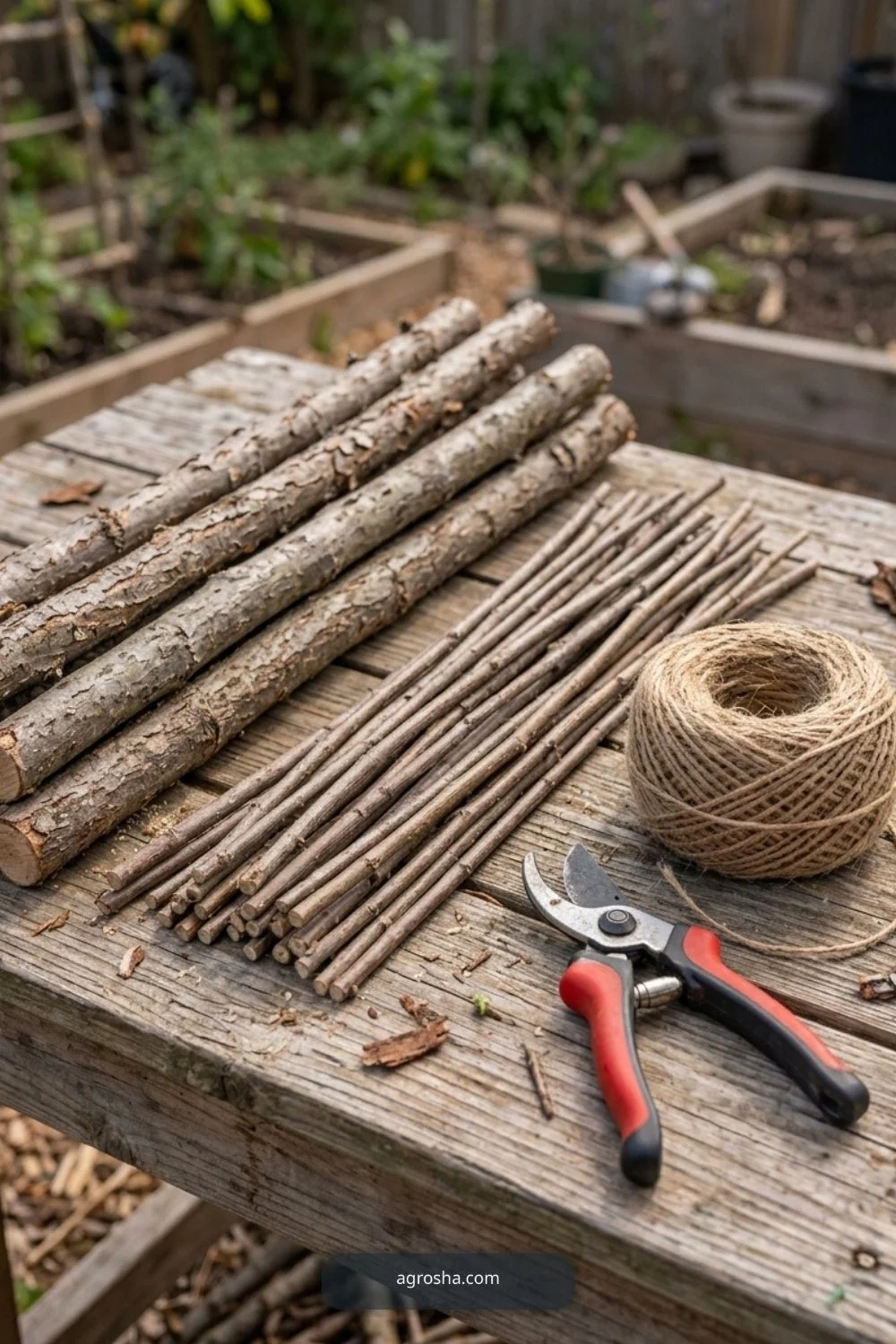
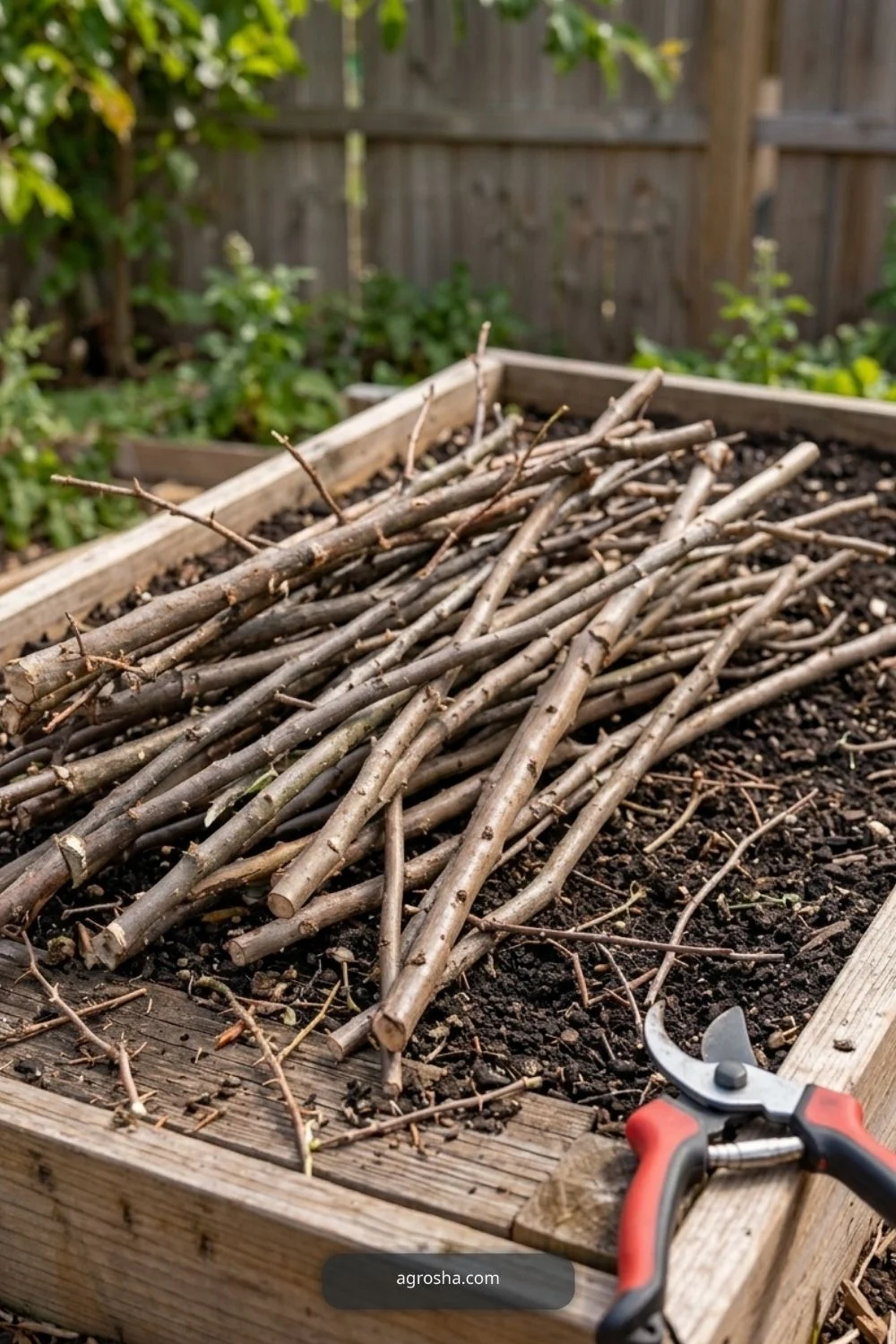
- Two or more straight sound woody branches for main uprights
- Smaller flexible branches for crossbars or woven twigs
- Natural garden twine or weather-resistant soft lashing cord
- Pruners or a hand saw suitable for branch diameter
- Gloves and a measuring tape
- Optional slender stakes for exposed or loose soil
Step-by-Step: Build a Practical Version
Work on a stable surface, wear suitable protection, and stop if an attachment or material seems unsafe. The steps describe a representative small-yard build, not an engineered specification.
1. Walk the planting row
Decide where harvest access will remain open. Put the support where climbing peas will receive light but not block another crop. Check that moving a hose or reaching the back of the bed will still be comfortable.
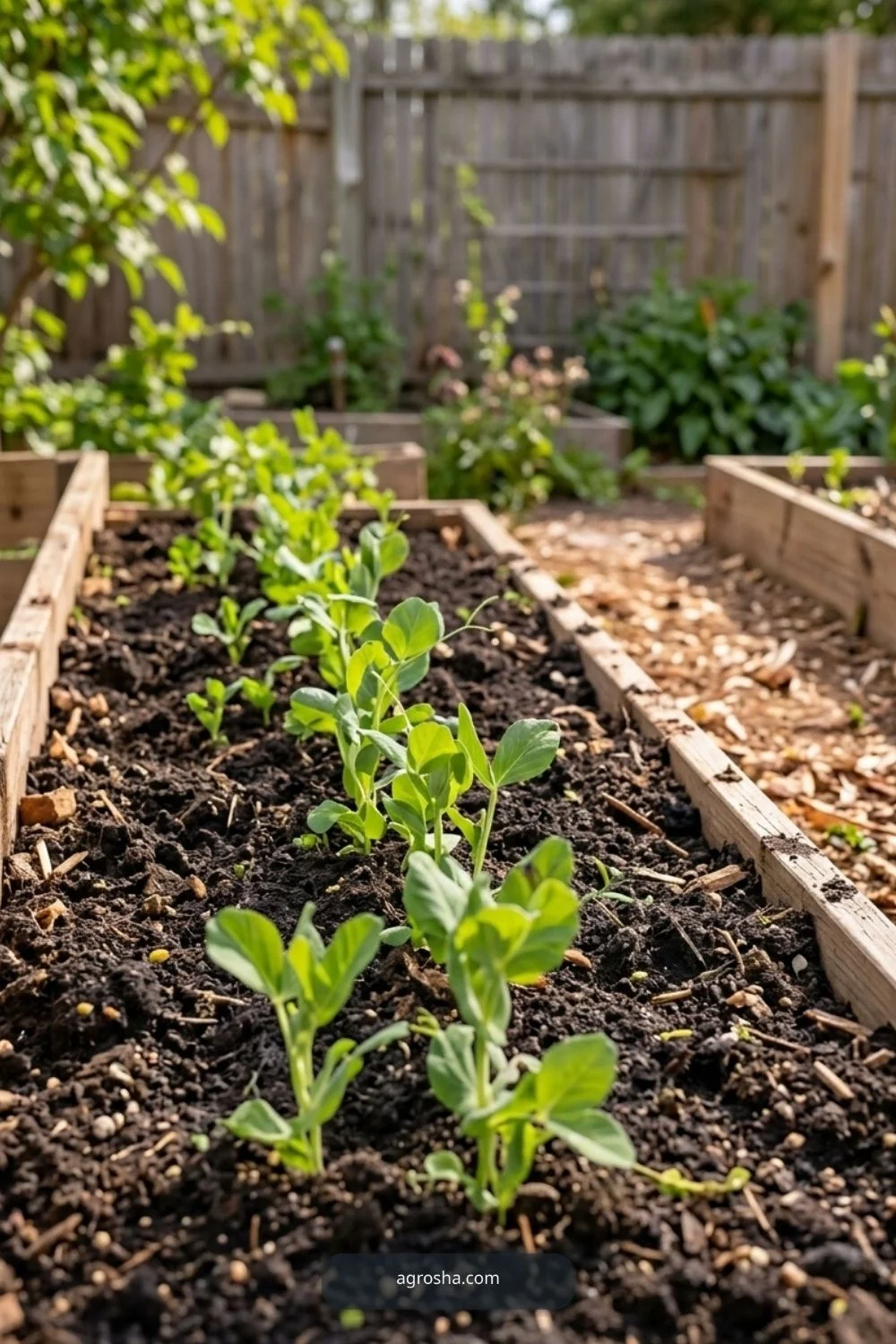
2. Sort branches by strength
Use the stiffest branches for uprights and reserve thin flexible stems for rungs. Inspect each piece for rot, cracks, thorns and insect damage. Remove unsafe side shoots without stripping away every natural irregularity.
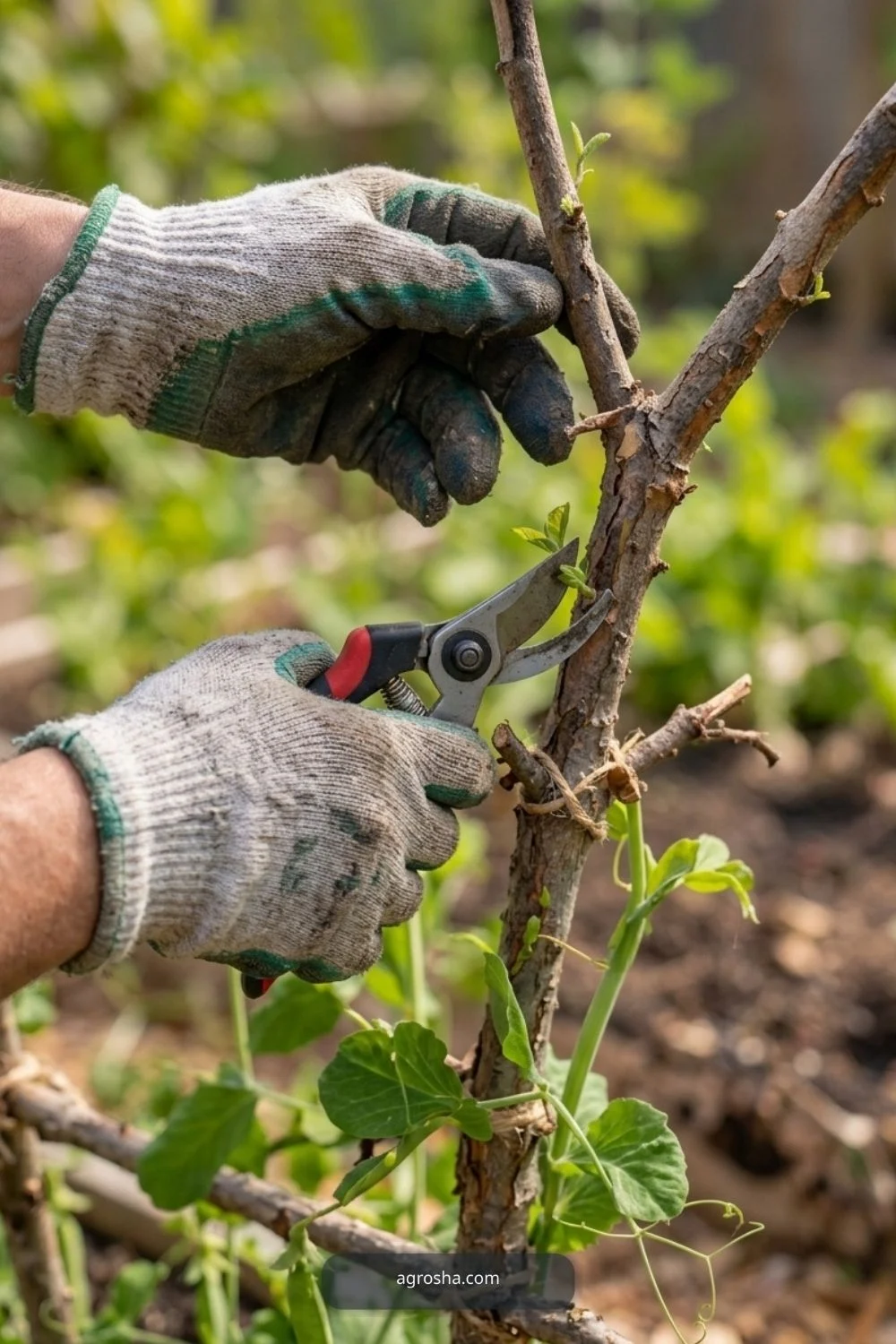
3. Trim to practical height
Cut branches so the finished panel roughly matches the variety’s mature growth habit and your reach. Make smooth ends, keep your cutting hand away from the blade and do not aim for an unnecessarily tall frame. A taller structure needs stronger uprights.
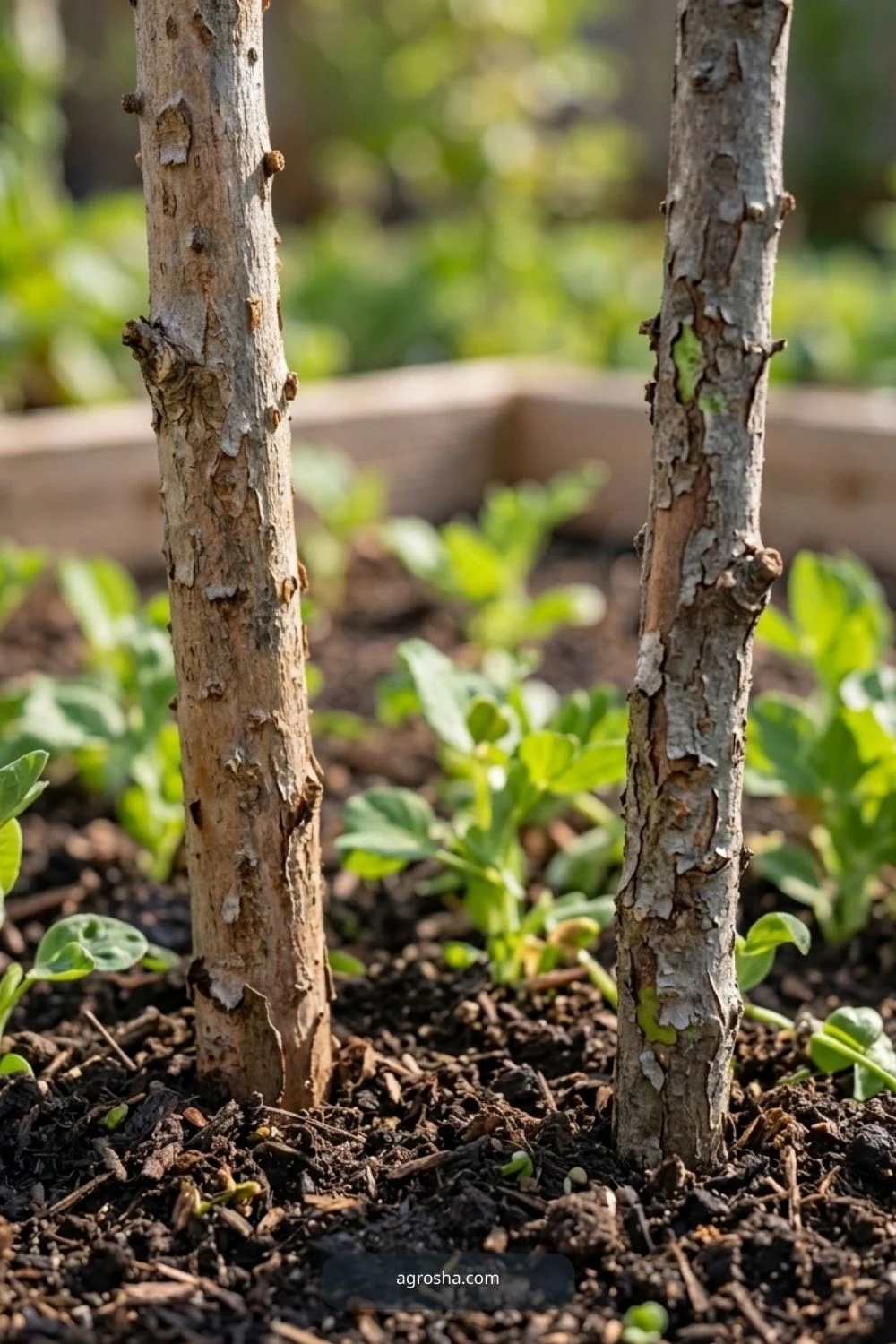
4. Set the main uprights
Place posts along the row at a spread that resists wobble. Push or set them into sound soil and add a center upright if the panel flexes. Tug lightly now; do not wait for vines to load it before discovering weak supports.
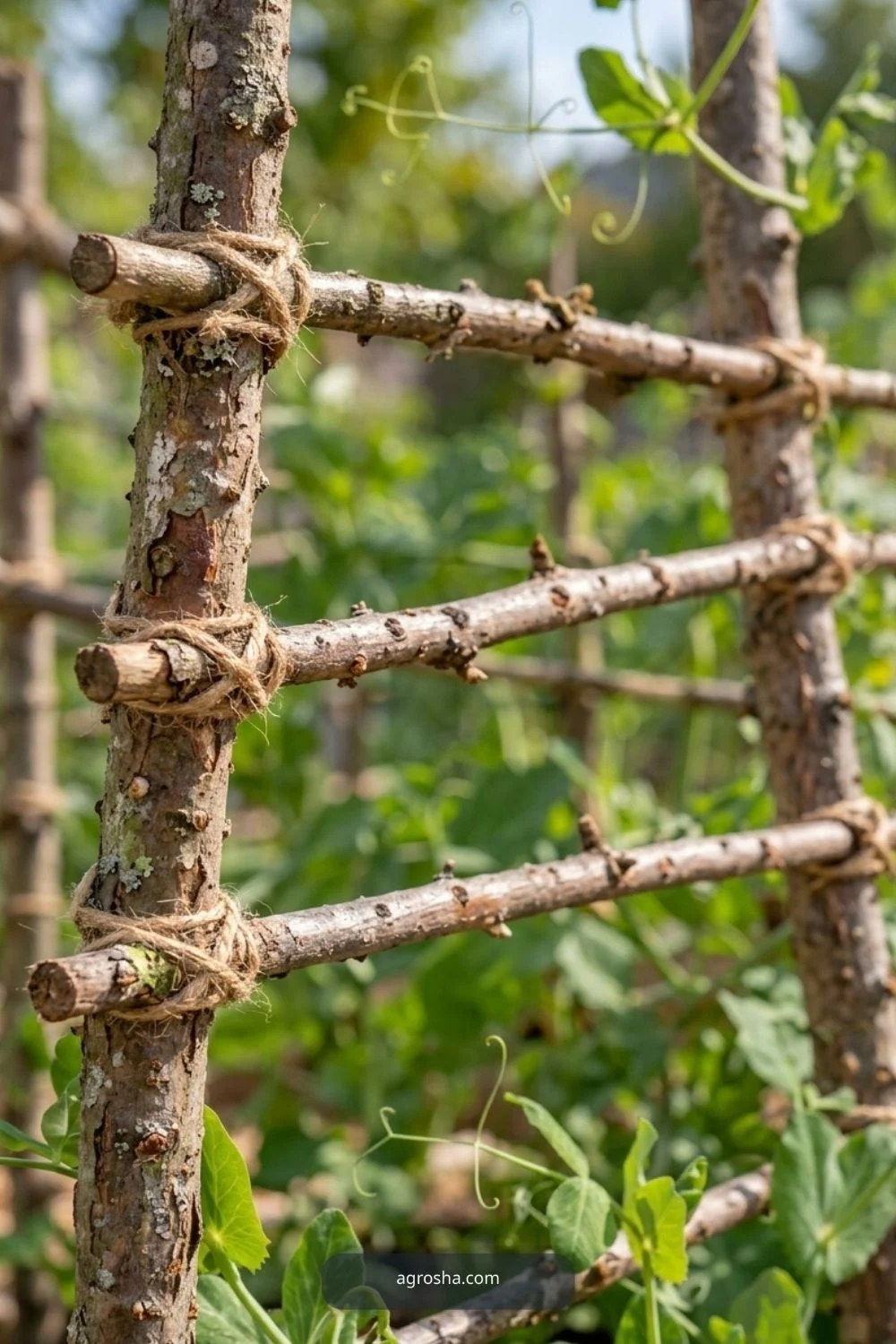
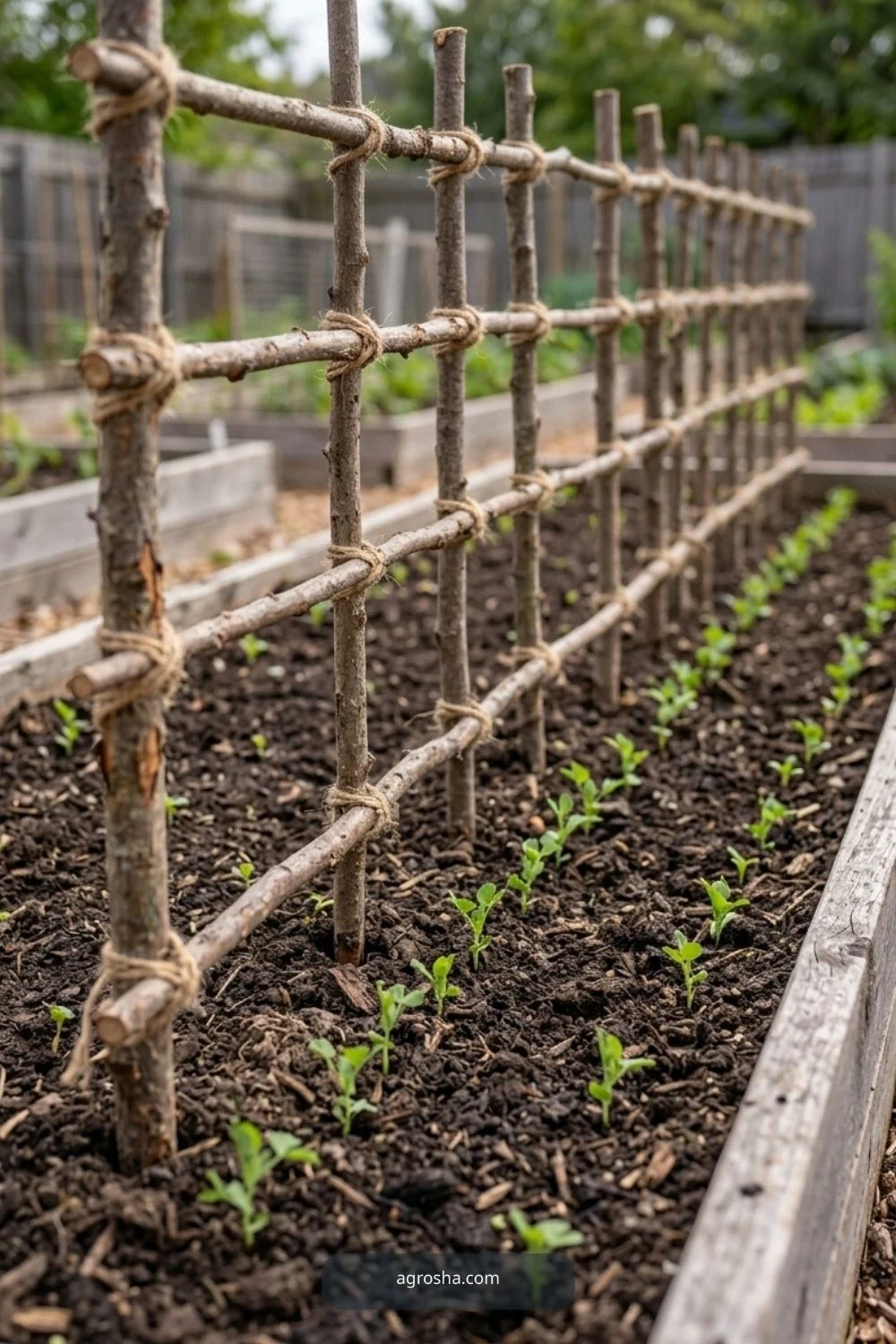
5. Attach or weave the crosspieces
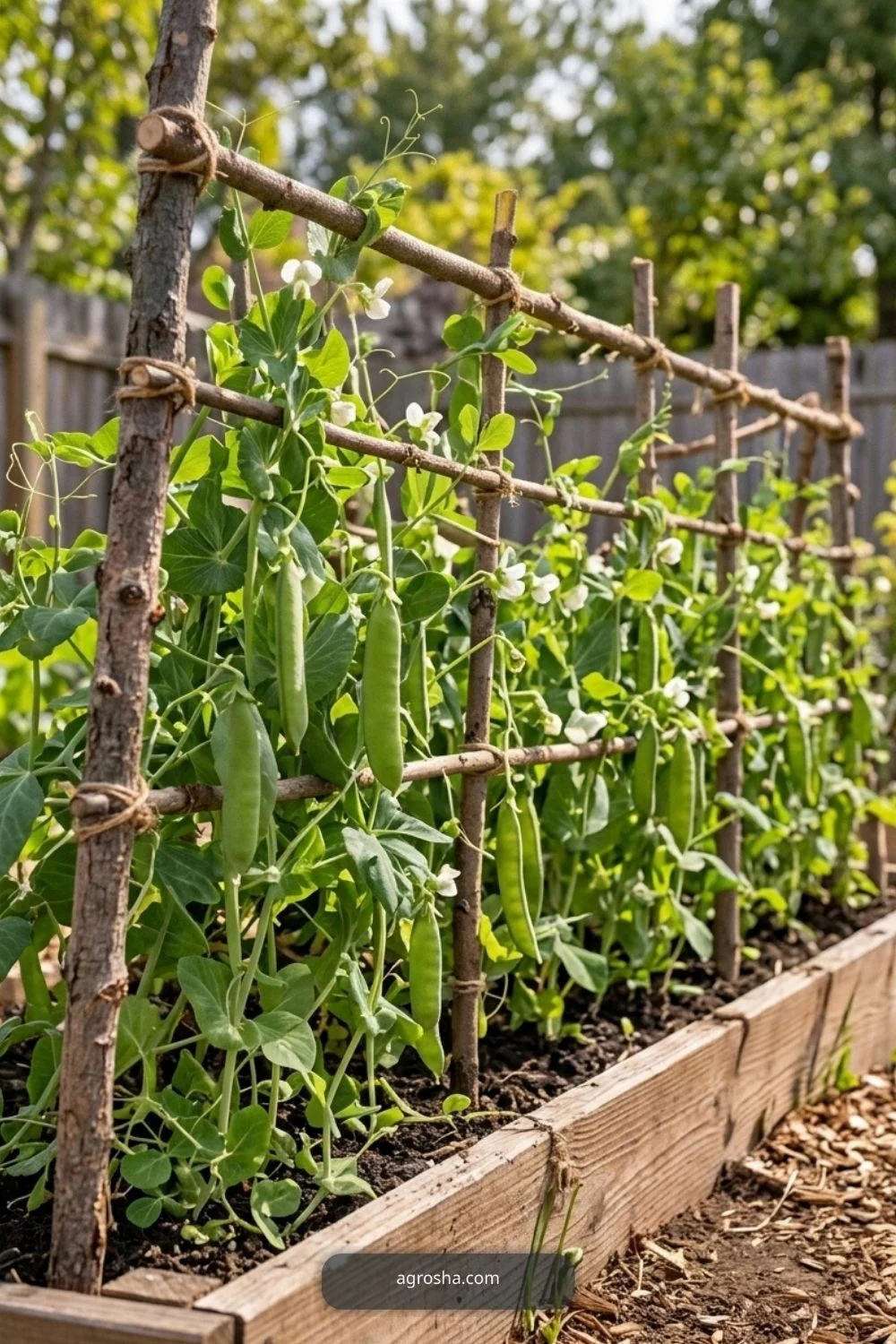
Lash horizontal branches between uprights or weave flexible pieces into a simple open mesh. Give pea tendrils several contact points but keep openings large enough to harvest. Avoid overly tight, decorative knots that split fragile twigs.
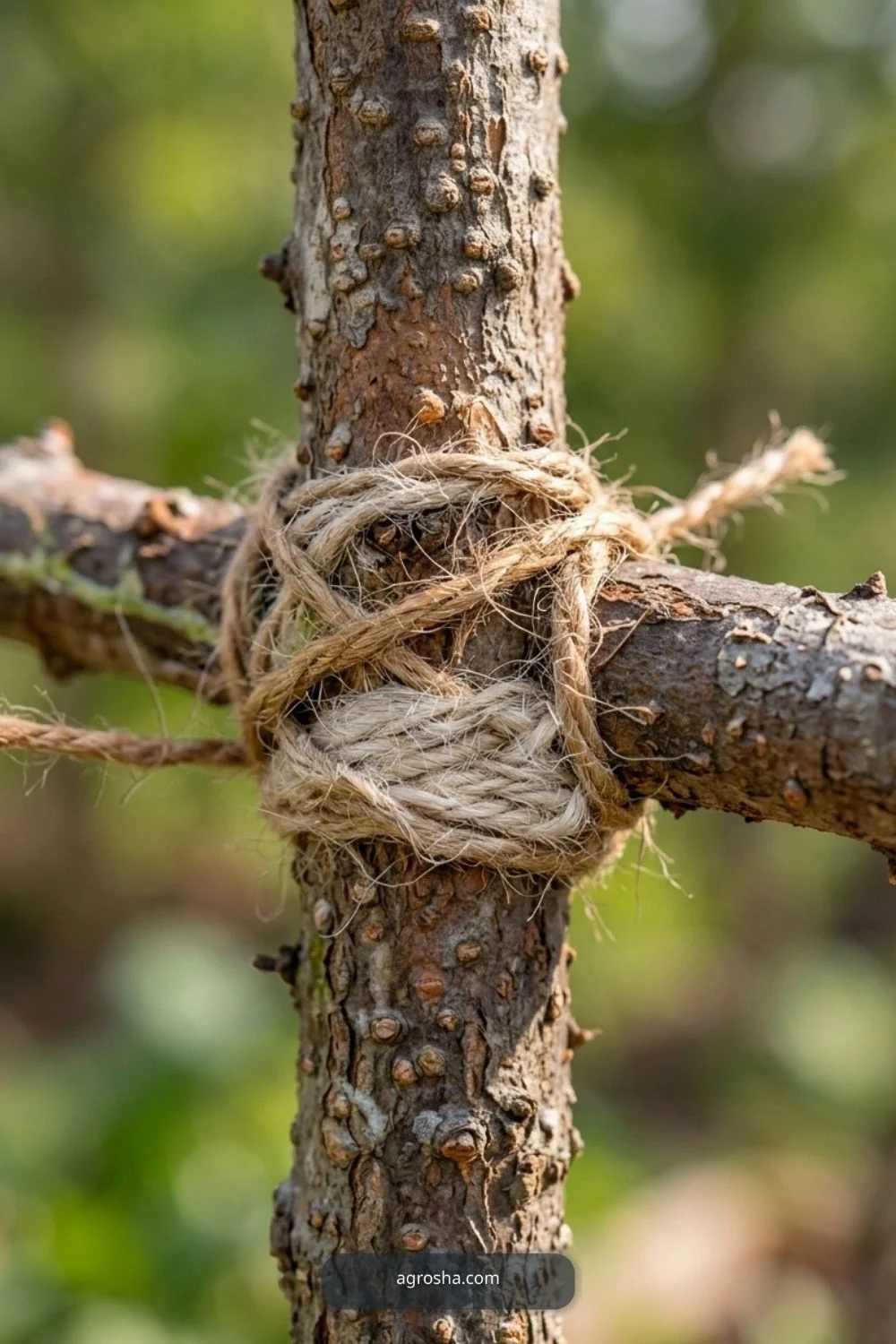
6. Check joints and sharp projections
Twist the panel gently to find loose connections. Tie again wherever a joint slips, and trim protruding tips that could catch sleeves or scratch skin. Keep small loose twigs out of paths.

7. Guide the earliest vines
As peas reach the first crosspiece, loosely point their tips toward the trellis. Do not force tendrils around thick branches or tie stems tightly. Inspect during rapid spring growth and correct wandering stems while they are flexible.
8. Clean up after harvest
Remove spent vines carefully, examine the branches, and compost only suitable untreated plant material. Discard diseased plant matter under local guidance, store reusable sound pieces dry, and rebuild weak joints before the next sowing.
Which Version Makes Sense for Your Garden?
Choose the version that solves the actual garden problem rather than copying the most elaborate photograph. The alternatives below differ in accessibility, maintenance, and the degree of support needed.
| Option | Good for | Watch out for |
|---|---|---|
| Branch ladder | Straight short rows and easy repairs | Fewer contact points for delicate tendrils |
| Woven twig panel | Many thin grips for peas | Takes longer to weave |
| Branch teepee | Small circular plant grouping | Can be difficult to pick from middle |
Practical Mistakes to Avoid
Most preventable problems begin when the project looks finished but is awkward or unsafe to use. Check these issues before calling the build done.
- Using rotten or brittle branches for load-bearing stakes
- Waiting to install the support until peas are tangled
- Choosing a panel too dense to harvest through
- Forcing stems around thick wood instead of giving fine grip points
- Using thorny or splintered prunings
- Assuming all pea varieties have the same height
Ongoing Care and Seasonal Maintenance
A diy pea trellis from branches is not a one-time photo project. Recheck connections, material wear, growing conditions and access after heavy weather. Remove or repair loose components promptly, and adapt to local climate rather than relying on a fixed calendar. If you do not know whether your material or setup is safe, pause and confirm with the manufacturer or local extension office.
Practical Visual Guide: Additional Build and Use Details
These added views explain flexible young pea tendrils, thorn-free supports, shallow root protection, and harvest access; each is tied to a separate garden task, material decision or construction step.
Sound upright prunings
The sound upright prunings matters for a practical branch pea trellis. For sound upright prunings, check usable scale and accessible connections in this pea branch trellis, not decorative objects. Treat this as a practical decision rather than a decoration. Measure the space, identify what the plant or gardener must reach, and inspect the joint or covering after ordinary weather. A simple accessible solution is easier to repair than a complicated arrangement that hides the working parts.
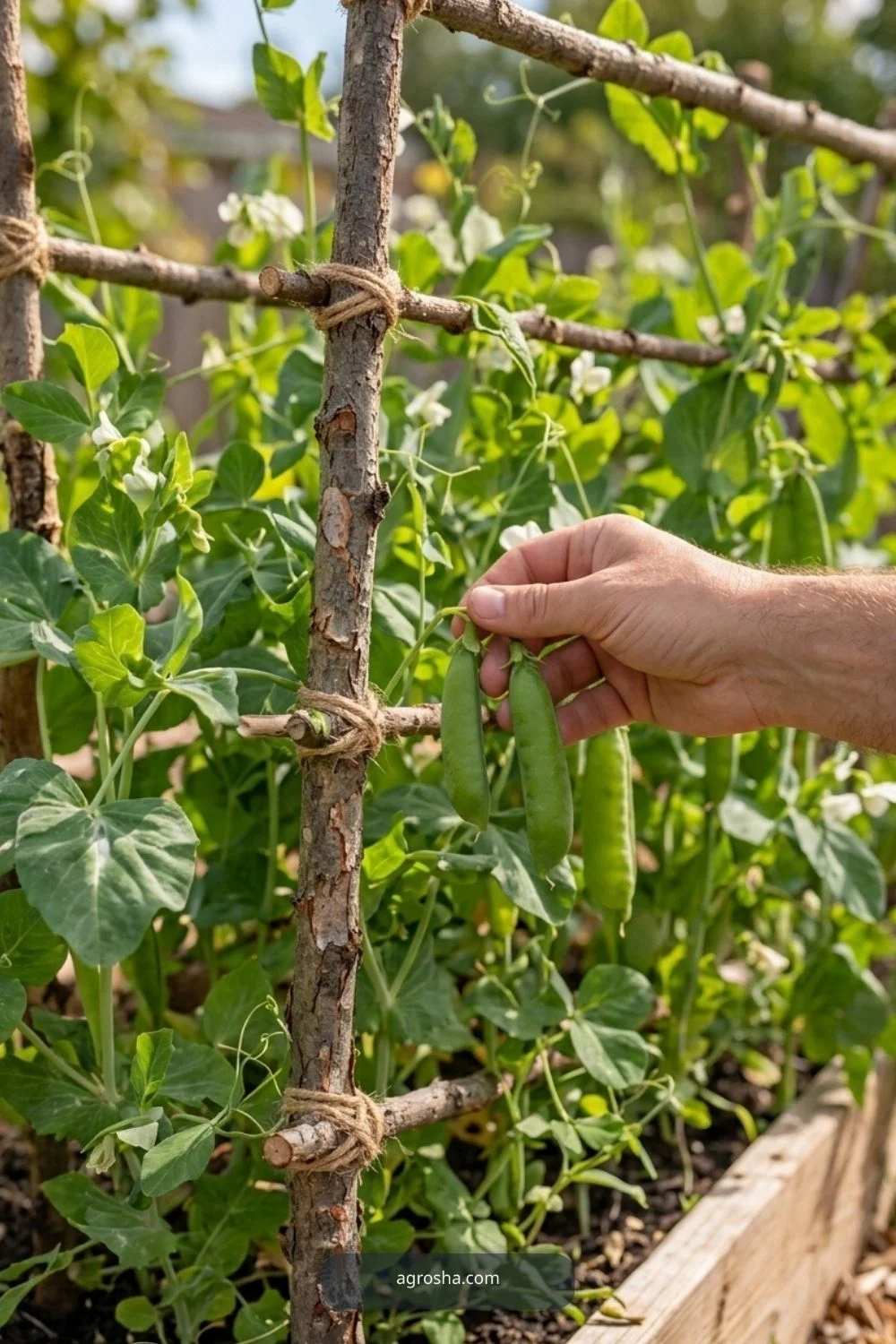
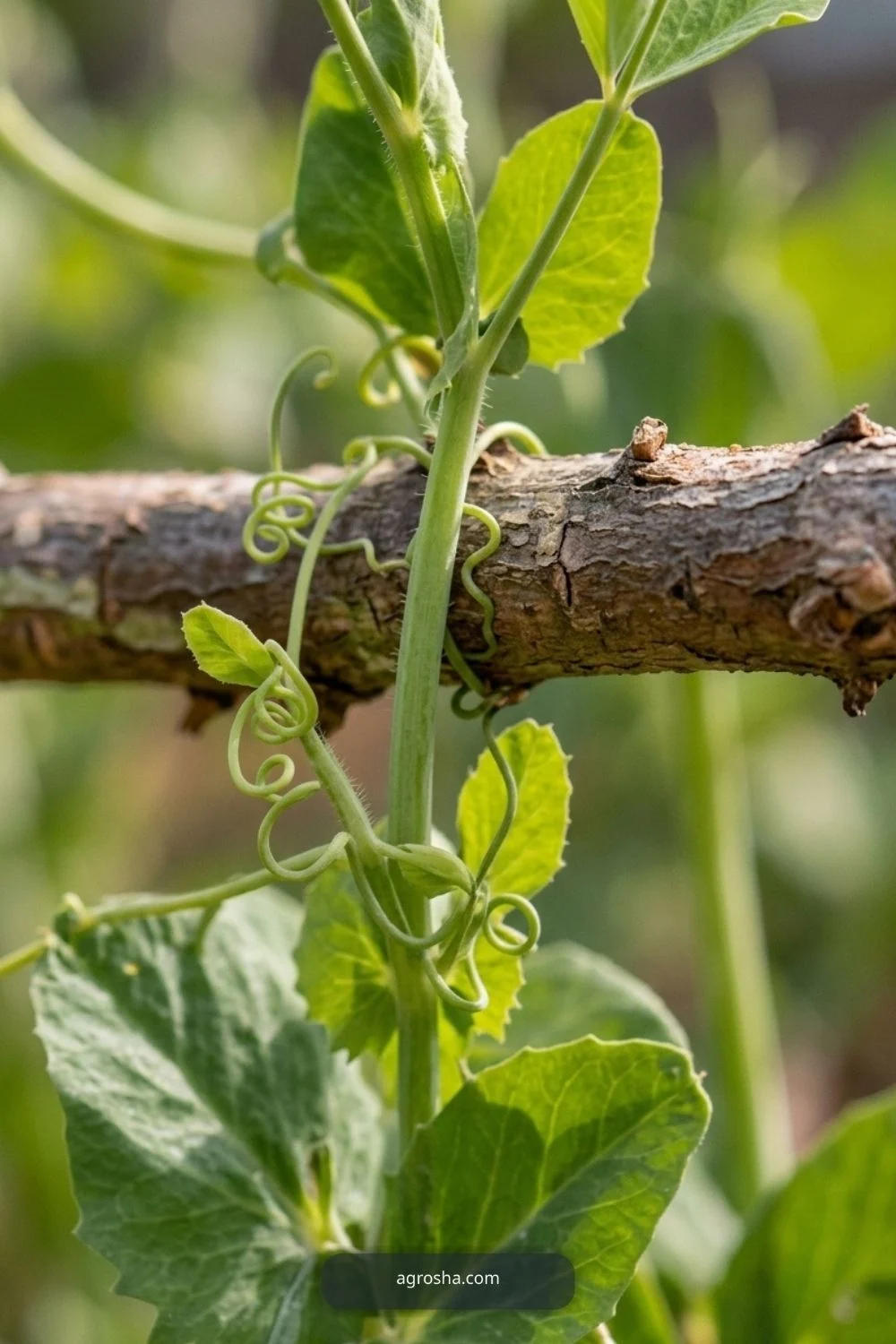
Thin tendril grips
The thin tendril grips matters for a practical branch pea trellis. For thin tendril grips, check usable scale and accessible connections in this pea branch trellis, not decorative objects. This view is useful because it reveals where material meets the real garden. Before copying it, consider wet soil, sunlight, seasonal growth and how the component can be removed without damage. Check clearances again when the crop becomes larger or the container fills.
Woven versus ladder shape
The woven versus ladder shape matters for a practical branch pea trellis. For woven versus ladder shape, check usable scale and accessible connections in this pea branch trellis, not decorative objects. Small differences in spacing and support can matter more than a beautiful finish. Use suitable materials and confirm the actual site conditions rather than guessing dimensions from a photograph. Leave enough room for watering, inspection and safe hand access throughout the season.

Remove thorny branches
The remove thorny branches matters for a practical branch pea trellis. For remove thorny branches, check usable scale and accessible connections in this pea branch trellis, not decorative objects. Choose this detail only where it solves a genuine issue in the yard. A compact home project should remain stable when handled and uncomplicated to clean, harvest or repair. Notice any sharp edge, loose connection or blocked route before putting the structure into regular use.
Anchor spring stakes
The anchor spring stakes matters for a practical branch pea trellis. For anchor spring stakes, check usable scale and accessible connections in this pea branch trellis, not decorative objects. The purpose is to make the next practical task easier. Check how the gardener approaches the area with a hose, gloves, pot or harvest basket. If a decorative feature blocks that task, simplify the build rather than moving useful plants to match a styled picture.

Open harvest windows
The open harvest windows matters for a practical branch pea trellis. For open harvest windows, check usable scale and accessible connections in this pea branch trellis, not decorative objects. An outdoor component needs maintenance after the first weekend. Look for moisture, movement, worn ties and changed plant weight as conditions shift. The correct adjustment depends on the crop and environment; no single arrangement automatically fits every U.S. garden.

Twine crossing close-up
The twine crossing close-up matters for a practical branch pea trellis. For twine crossing close-up, check usable scale and accessible connections in this pea branch trellis, not decorative objects. Treat this as a practical decision rather than a decoration. Measure the space, identify what the plant or gardener must reach, and inspect the joint or covering after ordinary weather. A simple accessible solution is easier to repair than a complicated arrangement that hides the working parts.

Install before peas grow
The install before peas grow matters for a practical branch pea trellis. For install before peas grow, check usable scale and accessible connections in this pea branch trellis, not decorative objects. This view is useful because it reveals where material meets the real garden. Before copying it, consider wet soil, sunlight, seasonal growth and how the component can be removed without damage. Check clearances again when the crop becomes larger or the container fills.
Dwarf pea alternative
The dwarf pea alternative matters for a practical branch pea trellis. For dwarf pea alternative, check usable scale and accessible connections in this pea branch trellis, not decorative objects. Small differences in spacing and support can matter more than a beautiful finish. Use suitable materials and confirm the actual site conditions rather than guessing dimensions from a photograph. Leave enough room for watering, inspection and safe hand access throughout the season.
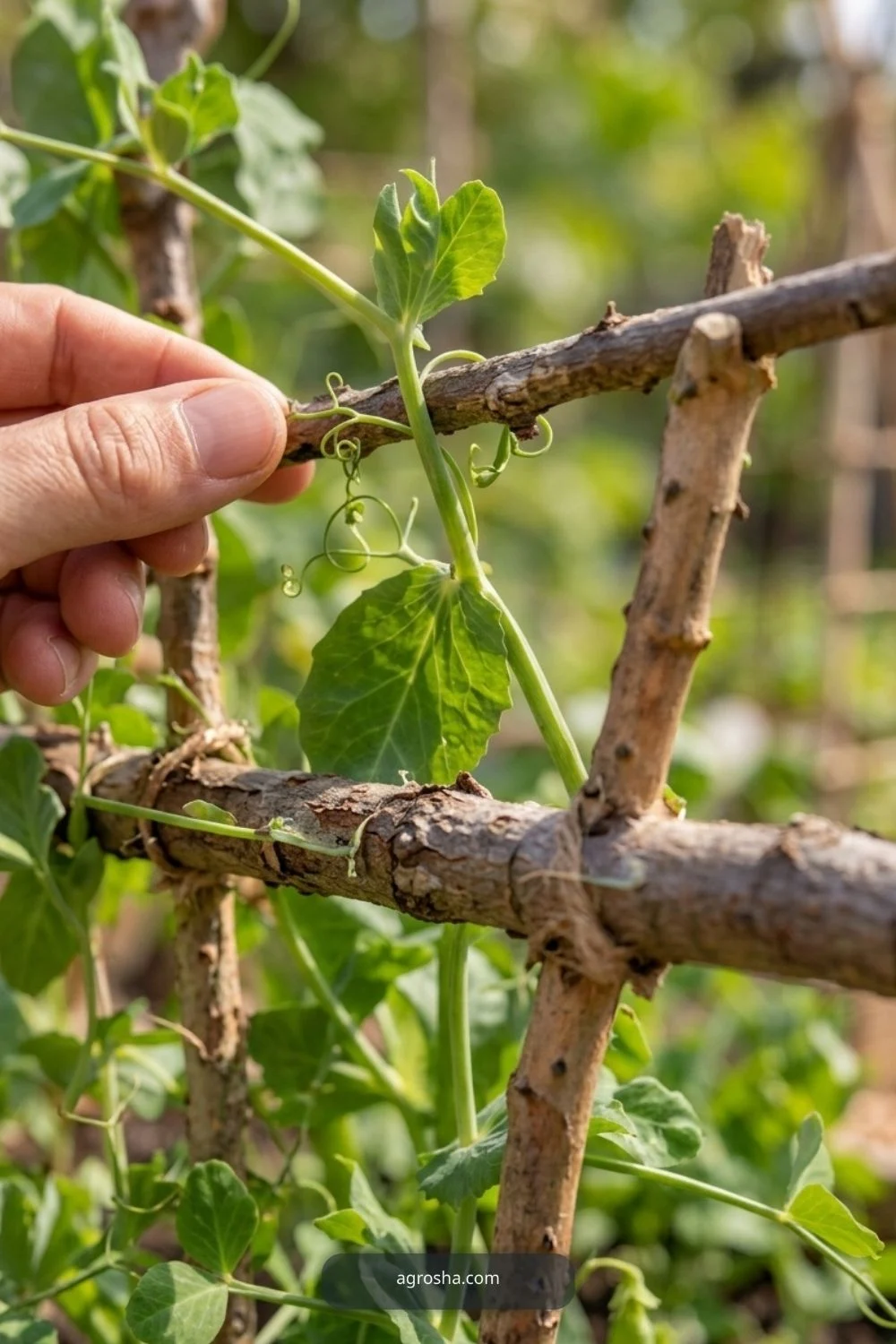
Guide first tendrils
The guide first tendrils matters for a practical branch pea trellis. For guide first tendrils, check usable scale and accessible connections in this pea branch trellis, not decorative objects. Choose this detail only where it solves a genuine issue in the yard. A compact home project should remain stable when handled and uncomplicated to clean, harvest or repair. Notice any sharp edge, loose connection or blocked route before putting the structure into regular use.
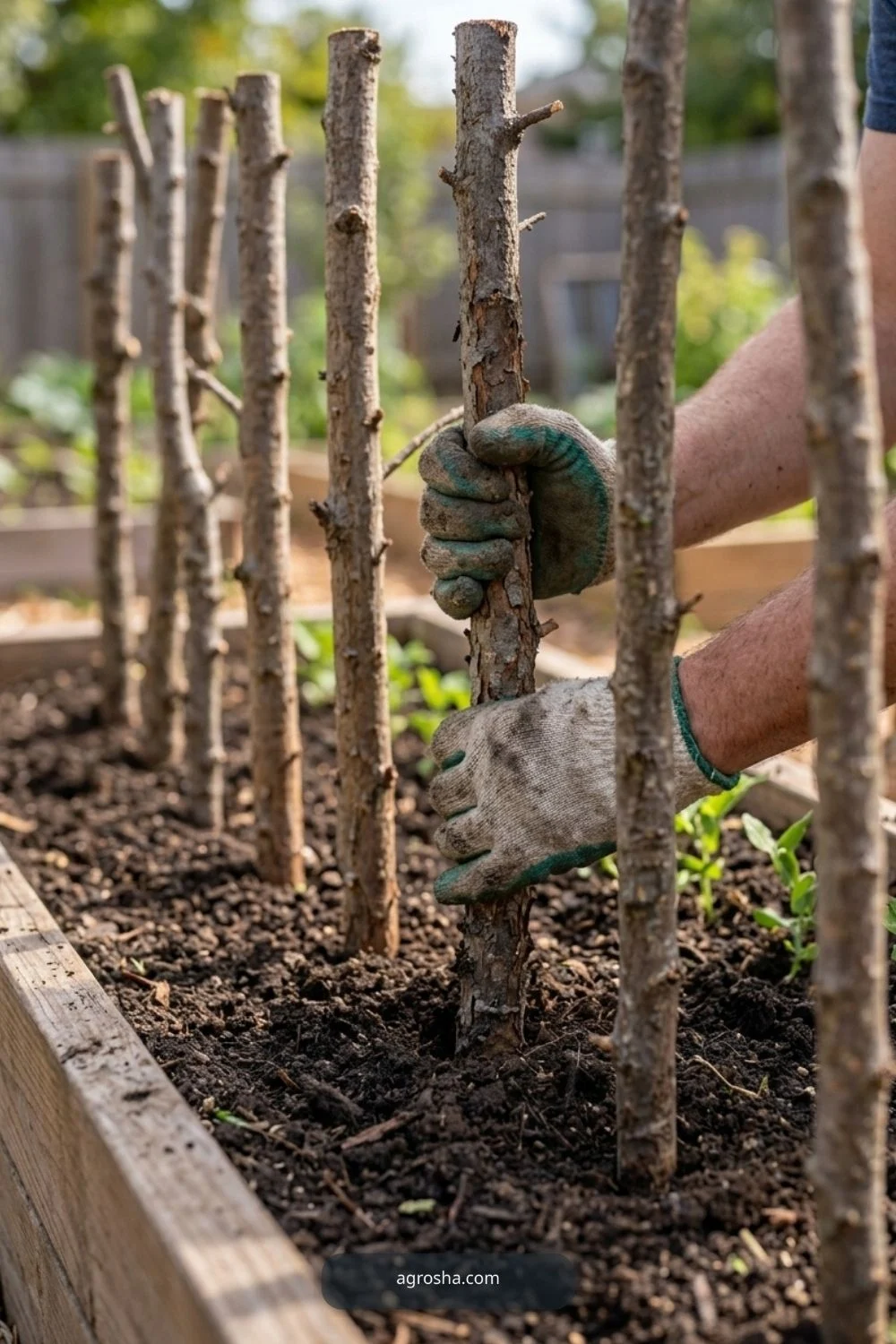
Teepee versus panel
The teepee versus panel matters for a practical branch pea trellis. For teepee versus panel, check usable scale and accessible connections in this pea branch trellis, not decorative objects. The purpose is to make the next practical task easier. Check how the gardener approaches the area with a hose, gloves, pot or harvest basket. If a decorative feature blocks that task, simplify the build rather than moving useful plants to match a styled picture.

Tidy loose string
The tidy loose string matters for a practical branch pea trellis. For tidy loose string, check usable scale and accessible connections in this pea branch trellis, not decorative objects. An outdoor component needs maintenance after the first weekend. Look for moisture, movement, worn ties and changed plant weight as conditions shift. The correct adjustment depends on the crop and environment; no single arrangement automatically fits every U.S. garden.
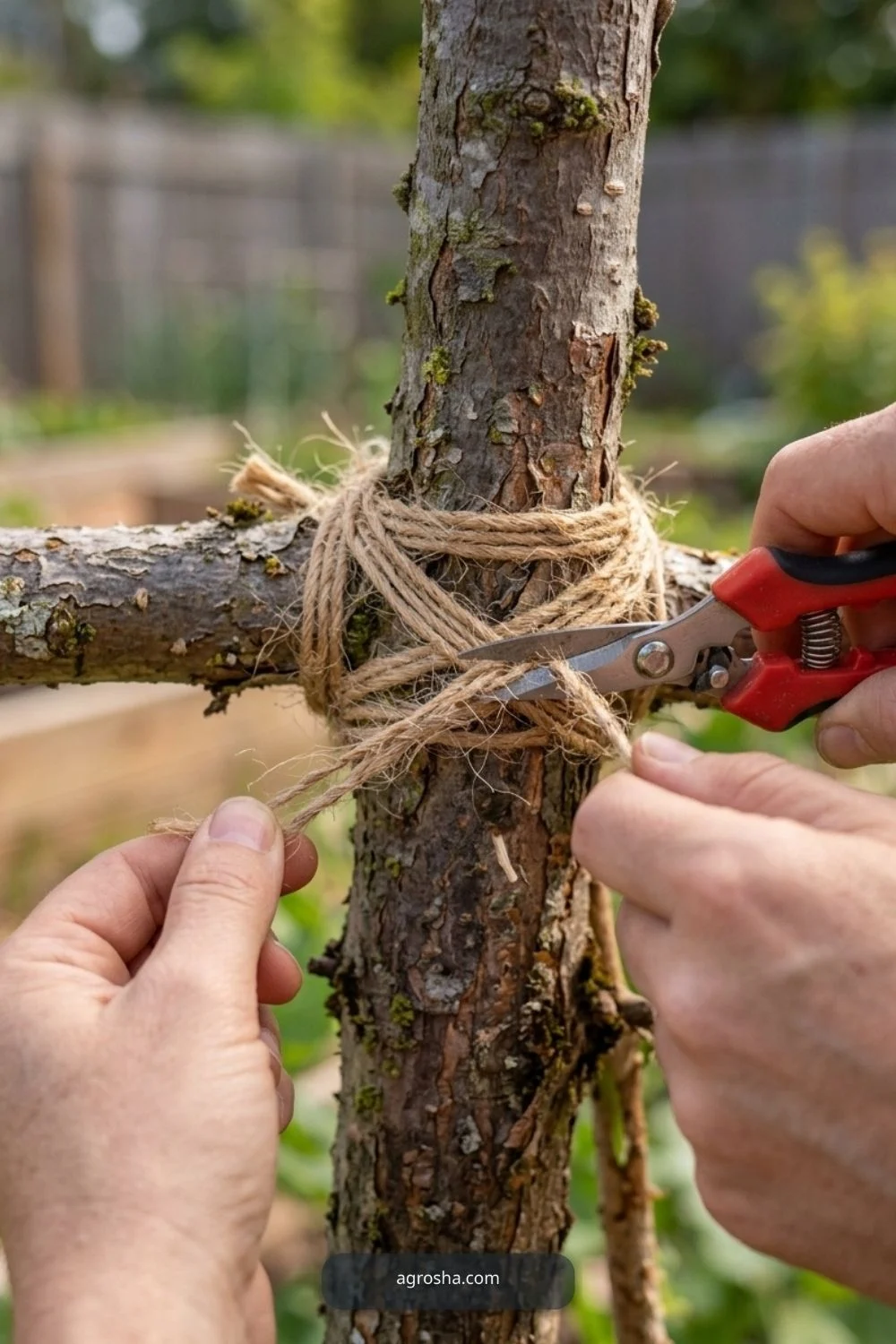
Check storm damage
The check storm damage matters for a practical branch pea trellis. For check storm damage, check usable scale and accessible connections in this pea branch trellis, not decorative objects. Treat this as a practical decision rather than a decoration. Measure the space, identify what the plant or gardener must reach, and inspect the joint or covering after ordinary weather. A simple accessible solution is easier to repair than a complicated arrangement that hides the working parts.
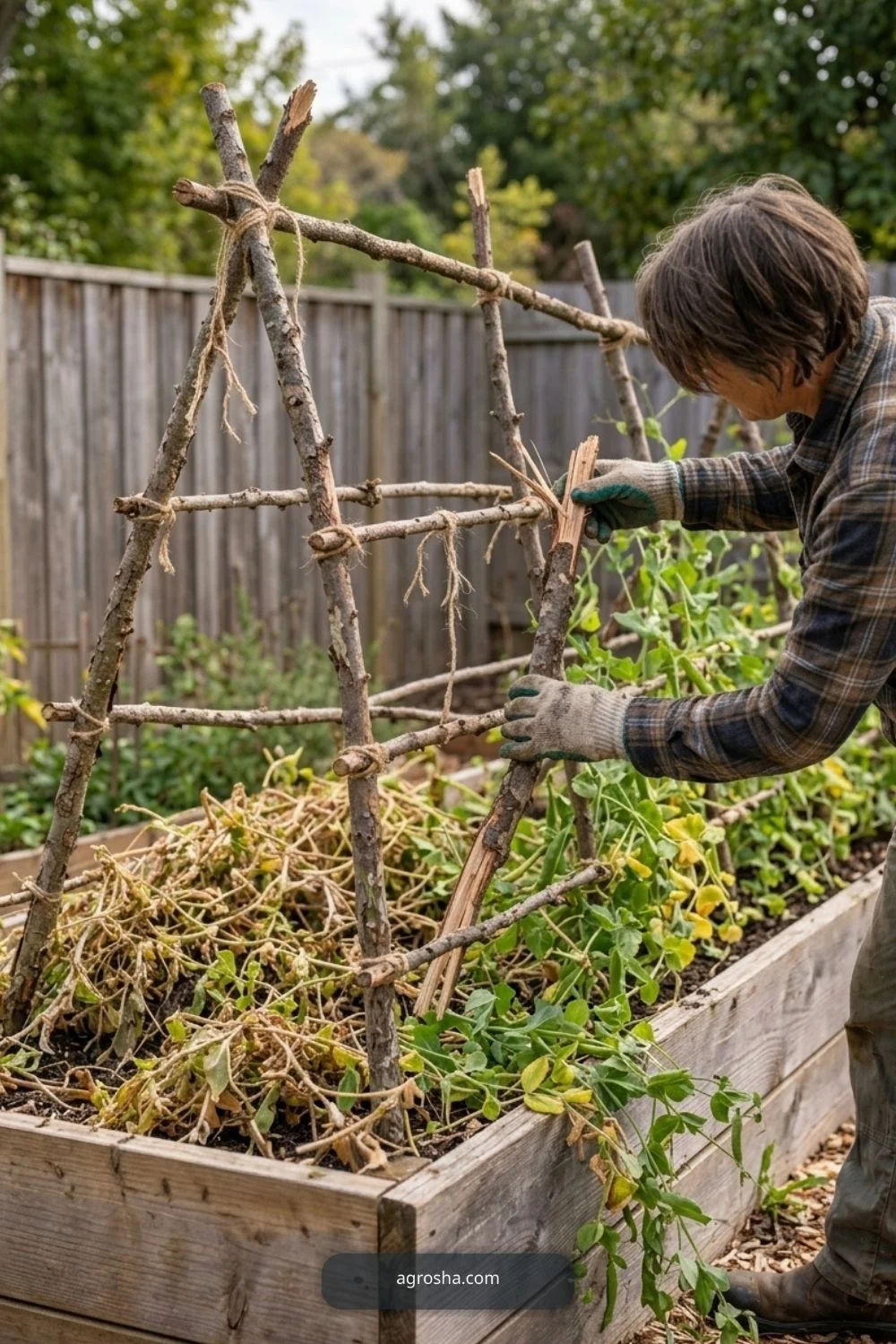
Remove spent vines
The remove spent vines matters for a practical branch pea trellis. For remove spent vines, check usable scale and accessible connections in this pea branch trellis, not decorative objects. This view is useful because it reveals where material meets the real garden. Before copying it, consider wet soil, sunlight, seasonal growth and how the component can be removed without damage. Check clearances again when the crop becomes larger or the container fills.
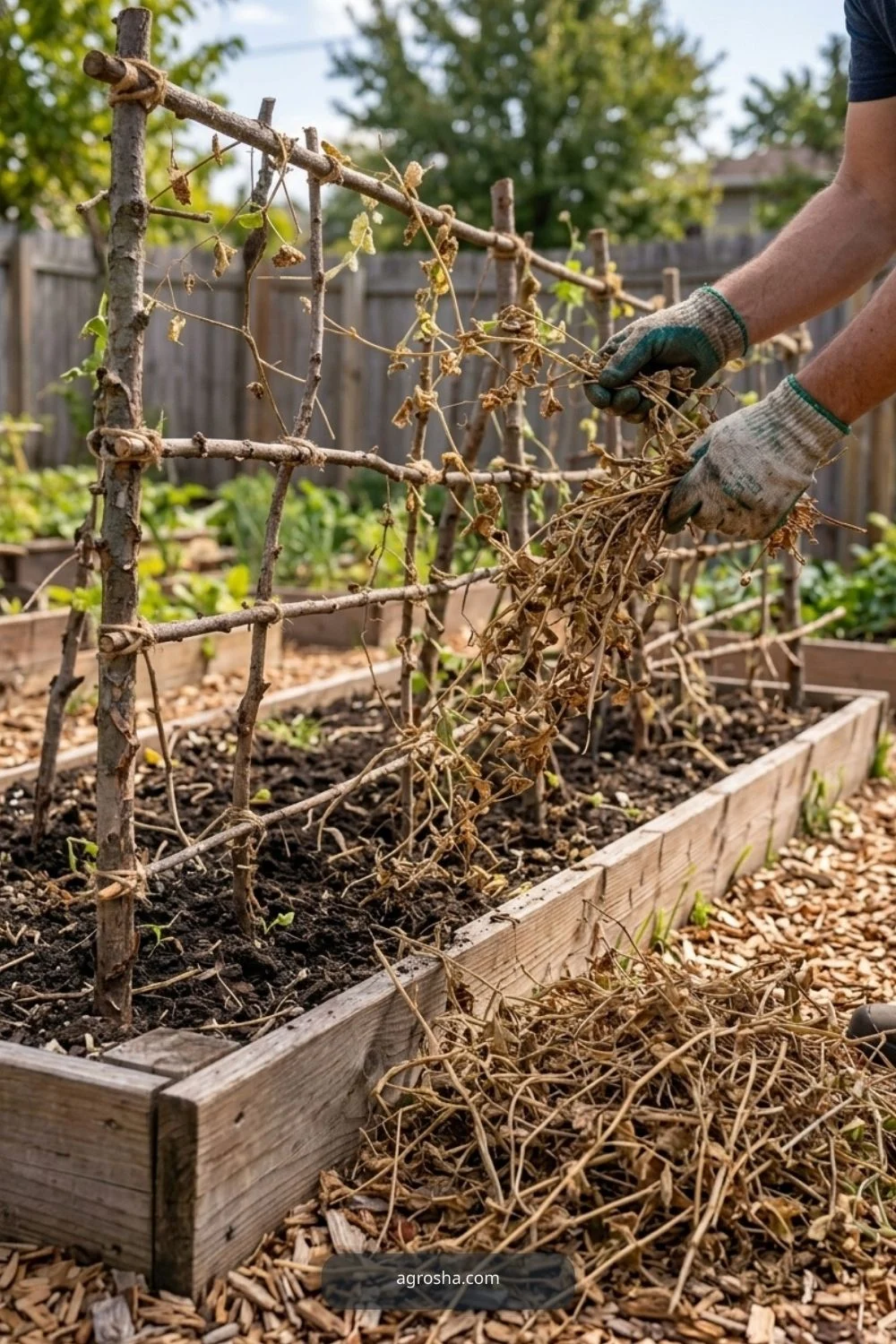
Store sound branches
The store sound branches matters for a practical branch pea trellis. For store sound branches, check usable scale and accessible connections in this pea branch trellis, not decorative objects. Small differences in spacing and support can matter more than a beautiful finish. Use suitable materials and confirm the actual site conditions rather than guessing dimensions from a photograph. Leave enough room for watering, inspection and safe hand access throughout the season.
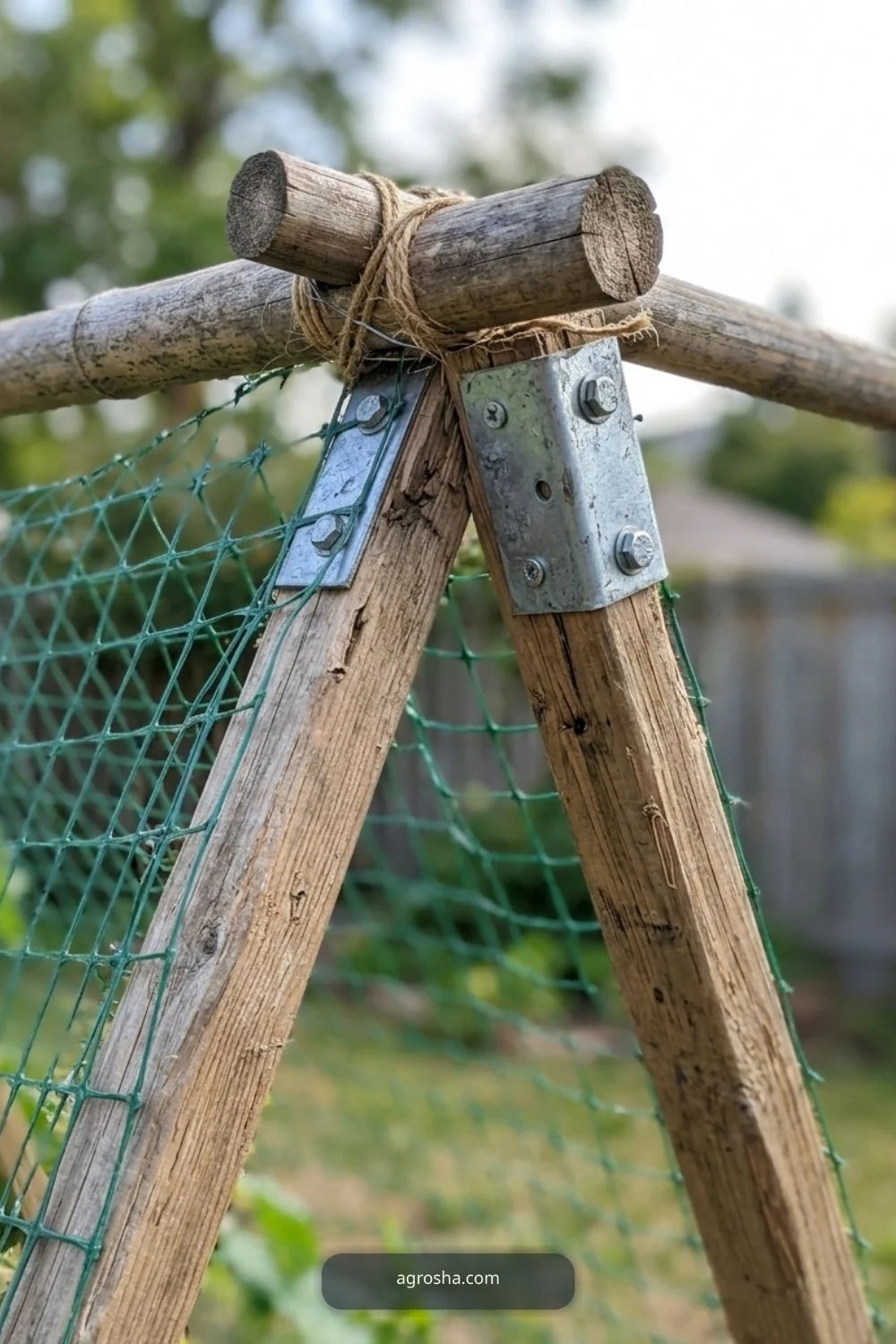
Natural bark texture
The natural bark texture matters for a practical branch pea trellis. For natural bark texture, check usable scale and accessible connections in this pea branch trellis, not decorative objects. Choose this detail only where it solves a genuine issue in the yard. A compact home project should remain stable when handled and uncomplicated to clean, harvest or repair. Notice any sharp edge, loose connection or blocked route before putting the structure into regular use.

Make the simplest version first and test how it works in your own garden. Confirm which materials are appropriate, how the main parts join together, and what must remain accessible during routine care. If a connection becomes difficult to inspect, it can also become difficult to repair before something fails. The branch pea trellis should also account for flexible young pea tendrils, thorn-free supports, shallow root protection, and harvest access.
Look beyond the finished appearance to the way weather changes the project. Heavy rain, reflected summer heat, strong wind and a rapidly growing plant can alter a comfortable layout. Monitor the actual site rather than assuming a photographed arrangement will work without changes in a different climate. The branch pea trellis should also account for flexible young pea tendrils, thorn-free supports, shallow root protection, and harvest access.
Consider the people using the yard. Clear access makes it easier to water, feed, turn compost, harvest or replace a broken piece without stepping over an obstacle. If a proposed addition reduces safe access, leave it out until its necessity is clear. The branch pea trellis should also account for flexible young pea tendrils, thorn-free supports, shallow root protection, and harvest access.
Do not guess material safety from appearance. Reused materials may have unknown residues, weather damage, loose fasteners or coatings. Check their history where possible, remove sharp edges, and choose replacement parts suited to outdoor exposure and the actual weight they must handle. The branch pea trellis should also account for flexible young pea tendrils, thorn-free supports, shallow root protection, and harvest access.
Use photos as practical explanations, not structural certification. A picture can show visible placement, plant condition and construction stages, but cannot prove a hidden connection is properly rated or a foundation suits the local wind. Follow relevant manufacturer guidance and seek local expertise for structural uncertainty. The branch pea trellis should also account for flexible young pea tendrils, thorn-free supports, shallow root protection, and harvest access.
Think about how the project finishes the season. An easy-to-remove support or accessible container can be cleaned and reused, while an overcomplicated permanent structure may become an obstacle. Inspect stored parts before using them again with new seedlings or tools. The branch pea trellis should also account for flexible young pea tendrils, thorn-free supports, shallow root protection, and harvest access.
Choose details that help the plants and garden tasks rather than filling a picture with extra decoration. Natural wear and irregularity are ordinary, but rotting supports, blocked openings or material rubbing against foliage are reasons to intervene. The result should be believable and manageable. The branch pea trellis should also account for flexible young pea tendrils, thorn-free supports, shallow root protection, and harvest access.
Check the project from more than one position. A setup that looks convenient from the front may hide a problem behind the plant, enclosure or panel. Walk around it and rehearse the routine job it was built for before calling the plan complete. The branch pea trellis should also account for flexible young pea tendrils, thorn-free supports, shallow root protection, and harvest access.
Leave room for adaptation. Different cultivars, household routines, seasons and yards need different solutions. Removable fixings, accessible joints and realistic footprints make those changes less disruptive and reduce unnecessary replacement. The branch pea trellis should also account for flexible young pea tendrils, thorn-free supports, shallow root protection, and harvest access.
A practical maintenance habit is to notice small changes early: a sagging support, damp corner, tearing cover, loose fastener or hard-to-reach area. Correct the underlying cause before the problem grows. This is more dependable than adding another layer to hide it. The branch pea trellis should also account for flexible young pea tendrils, thorn-free supports, shallow root protection, and harvest access.
Frequently Asked Questions
Do all peas need a trellis?
Not equally. Dwarf varieties may need little support, while taller climbers benefit from a suitable structure.
Can I use freshly cut green branches?
Use sound branches, but consider whether fresh material will shrink, bend or decay; test stiffness and recheck lashings.
What is the best shape for a small raised bed?
A short ladder or open twig panel along one edge is often easiest to reach and maintain.
Will pea tendrils grab thick branches?
They tend to grab finer supports more readily; add thin twigs or twine if the main uprights are thick.
Can I reuse the trellis?
Yes if the wood remains sound, dry and free of serious damage. Retie joints and replace weak pieces.
Reliable Guidance and Further Reading
For additional technical context, consult University of Minnesota Extension. Use local extension advice for climate and conditions rather than expecting a single design to fit every region.
Final Thoughts
Replace brittle ties and remove branches that crack under load. A good pea trellis gives tendrils regular handholds without crowding the planting bed.