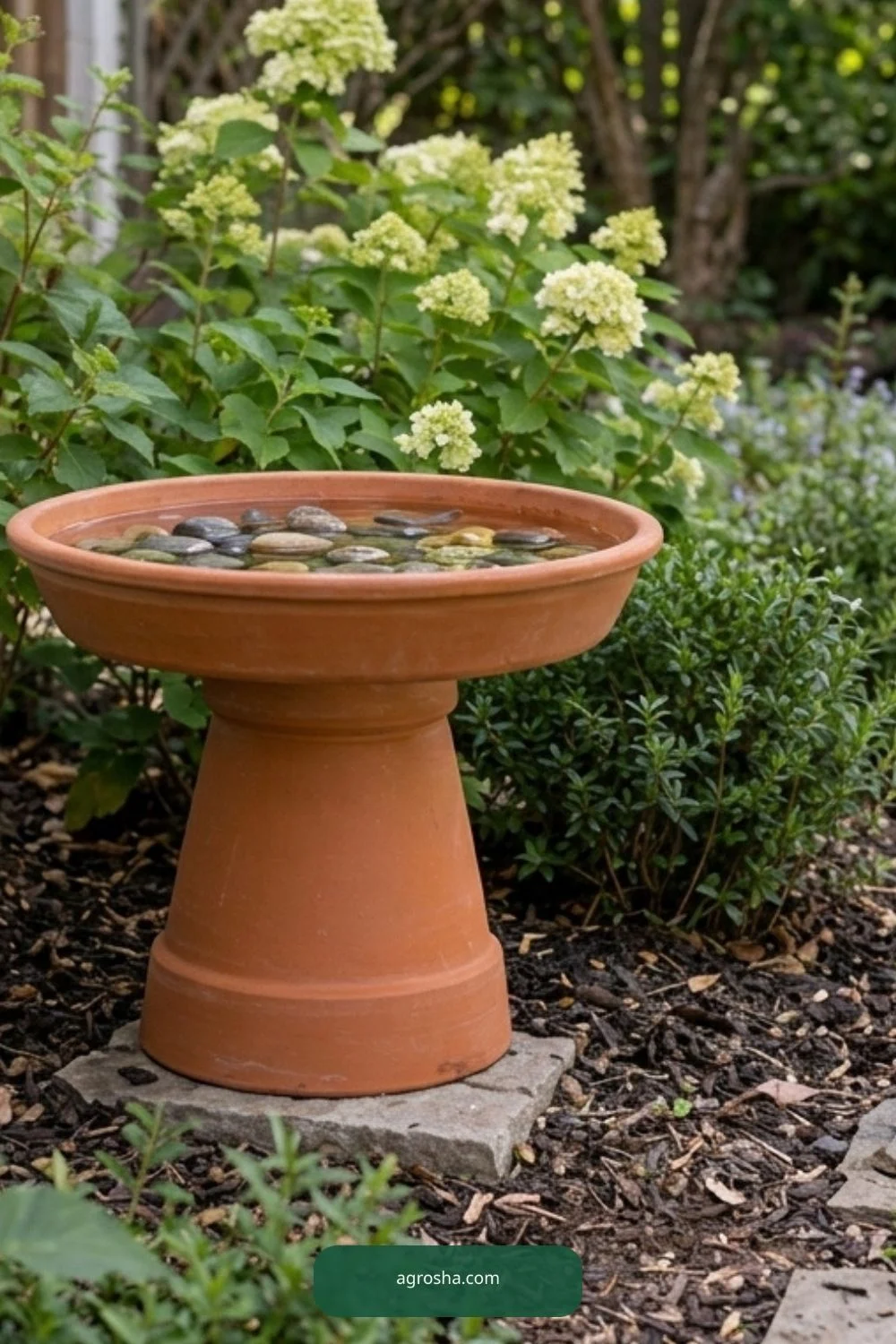
A terracotta pot bird bath can turn an ordinary patio or garden corner into a convenient place for birds to drink and splash. The useful version is not a tower of precariously stacked pots. It is a clean, stable clay-pot base supporting a removable shallow saucer, positioned where birds can approach and leave safely. This project focuses on the simple arrangement you can inspect, refill, and wash without lifting an unstable column.
Quick Answer
To make a DIY terracotta pot bird bath, set a sound, wide clay-pot base on level ground, fit a broad removable shallow saucer securely on top, add a few clean flat stones for footing, and use only a small depth of fresh water. Check the base for wobble, then empty and scrub the bowl routinely.
For planted shelter around a bird bath, explore our shade garden ideas and consider both visibility and safe escape routes for birds.
Plan the Site Before You Build
Choose a spot visible from the house but away from dense cover where a lurking cat could hide. Nearby trees or shrubs can offer escape routes, but do not place a bath where predators can easily rush birds. The ground should be level and firm in both dry weather and after rain. Measure the actual support rim and saucer rather than assuming pieces sold as the same nominal size will nest safely.
Water must remain shallow and easy to replace. Audubon’s DIY guidance suggests a shallow vessel no deeper than about two inches and water commonly around one to one-and-a-half inches deep, with rocks to help birds judge depth. Do not glue the removable drinking basin permanently if doing so prevents effective cleaning. Skip decorative paint or unknown sealants on surfaces birds drink from; use materials whose suitability you can confirm.
Materials and Tools
- One sound, broad terracotta flowerpot or a purpose-built stable clay support
- One clean, shallow, removable terracotta saucer with a rim that rests securely
- A few clean, smooth stones for grip and varied shallow depth
- Level ground or a flat, sound paving slab sized for the base
- Tape measure, gloves, clean soft brush and water
- Optional safe non-slip support only if the actual fit requires it
A heavy saucer is not automatically safe on a narrow tall pot. Test the fit without water while the support is close to the ground. Avoid tall stacks of inverted pots; the higher the water bowl sits, the more important stability becomes. If a broad ceramic saucer cannot be supported reliably, use it directly at ground level on a stable slab.

Step-by-Step Build and Setup
1. Measure the intended location
Stand in the proposed corner and check whether you can walk up to the bowl with a watering can and cleaning brush. Move the site away from busy paths, hanging branches that drop debris, or an uneven edge of a raised bed. The location must remain reachable without standing in planting soil.
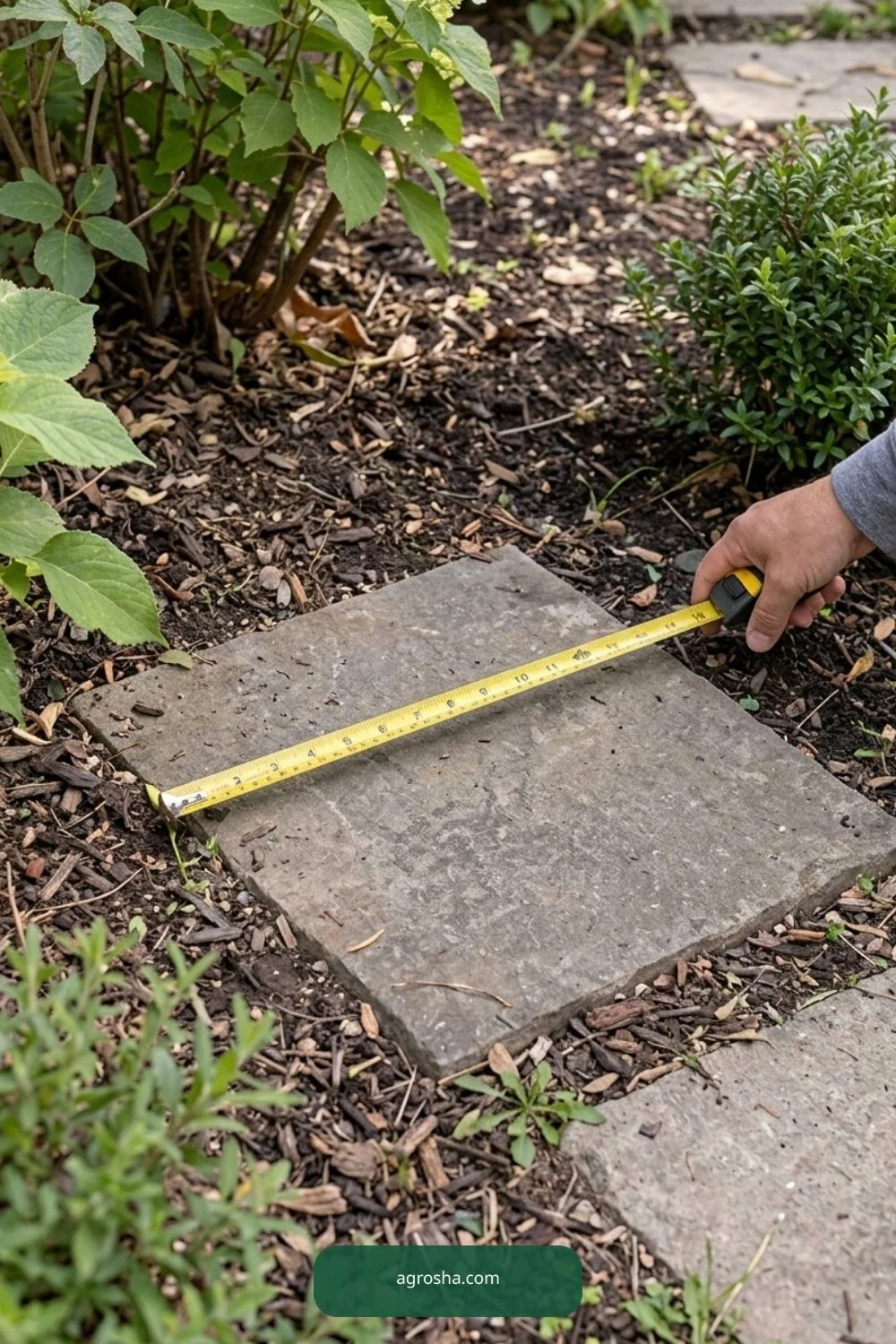
Check the site after watering the surrounding garden. If the surface softens or tilts, improve the location rather than balancing the bath with loose shims.
2. Inspect the clay pieces
Look closely for hairline cracks, chipped rims and rough broken edges. Place the saucer over the intended base while both are empty; its center should be supported, and it should not rock when you press gently at the edge. Reject mismatched pieces rather than trying to conceal poor contact.

Run a finger carefully around the underside rim while wearing gloves. Small cracks can become larger during seasonal handling or freezing conditions.
3. Level and prepare the base
Clear loose leaves, pebbles and soft debris from the spot. A flat paving slab can create a predictable resting surface when soil is uneven, provided the slab itself is supported on firm ground. Check level from two directions and step back to judge whether the chosen location obstructs a walkway.

After the slab is placed, apply light pressure at its edges. If it rocks now, a water-filled bowl above it will not fix the problem.
4. Position the pot support
Set the pot or designed clay pedestal centrally on the prepared surface. A broad footprint is preferable to a tall narrow silhouette. If using a single pot upside down, verify its rim and shoulders were designed to bear the saucer without sliding or chipping. Do not improvise fragile stacked assemblies.

Walk around the support and check it from the garden path. The top must be easy to reach without leaning across the bed.
5. Fit the shallow saucer
Lower the bowl onto its support with both hands and make sure its base contacts the support predictably. Keep the saucer removable for washing. An overhanging saucer is acceptable only if the whole arrangement stays stable when a bird lands at the edge; test gently with the bowl empty first.
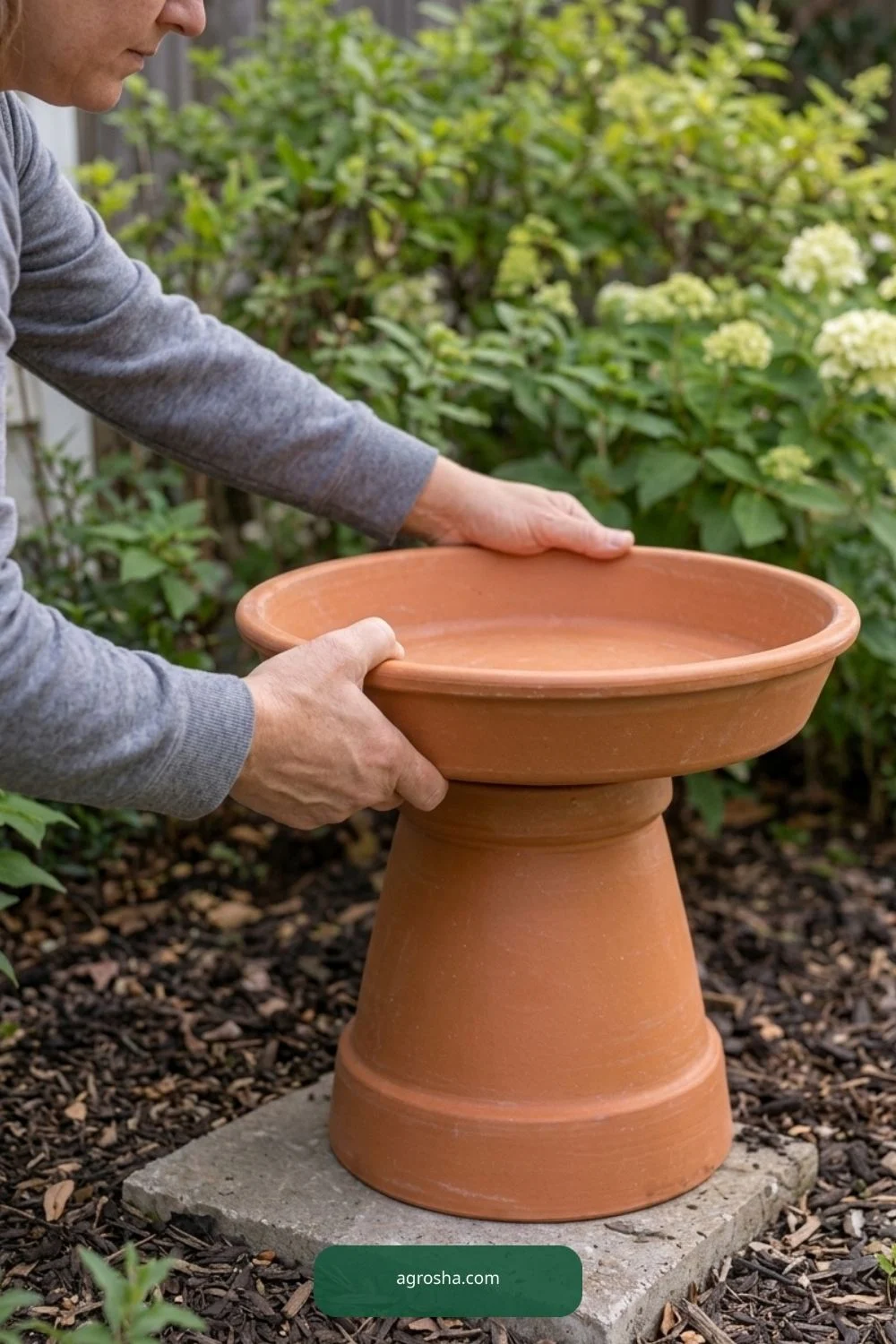
Press lightly around the perimeter rather than putting force on one spot. Stop and resize the support if any edge starts to tip.
6. Add safe footing stones
Select a few clean smooth stones that sit below or slightly above the intended water surface. Their purpose is to give small birds a perch and a visible change of depth, not to fill the saucer with slippery ornaments. Wash dusty stones before placing them and leave open water space for bathing.
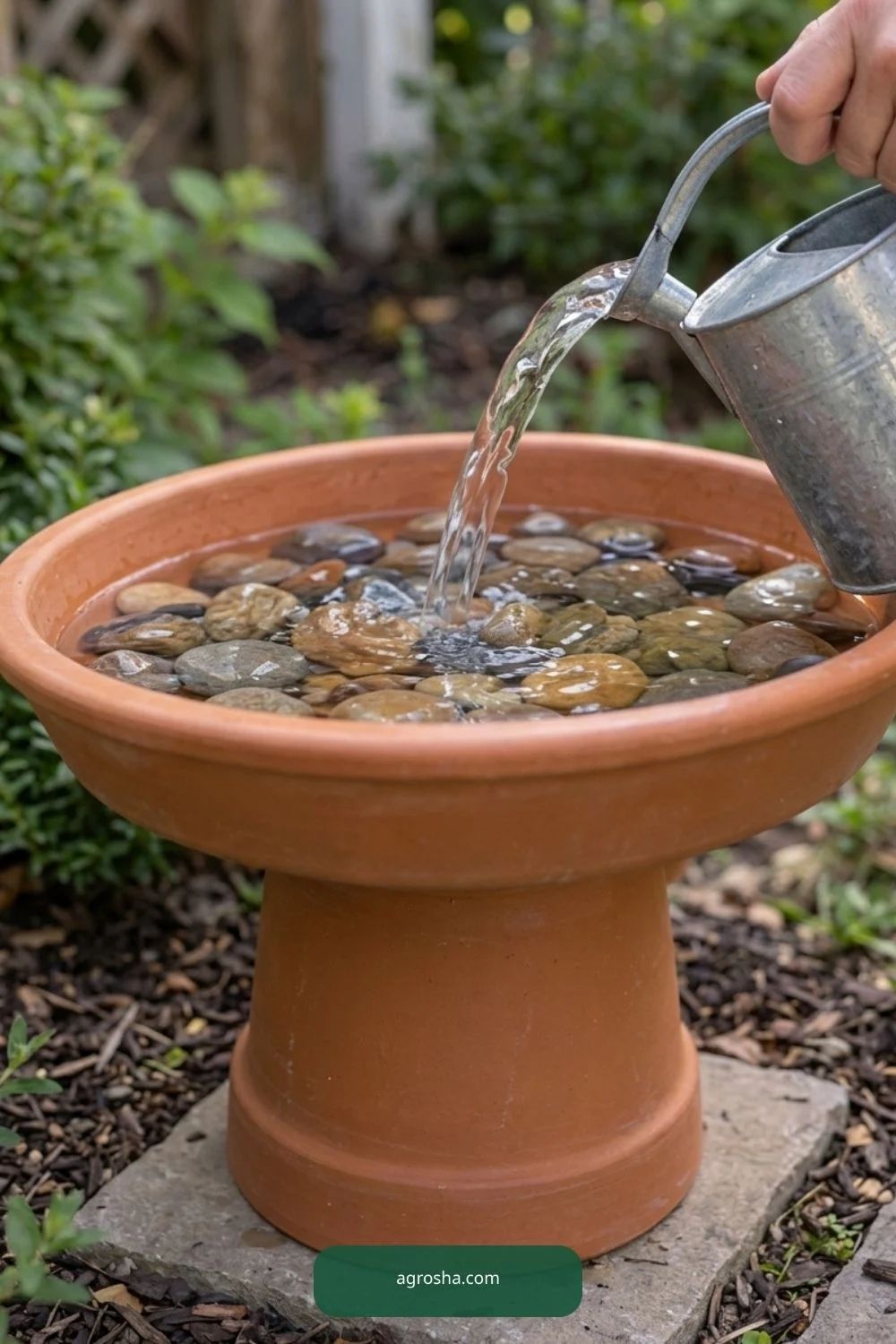
Avoid jagged rocks that could hurt feet. Fewer useful stones are better than a fully packed decorative arrangement.
7. Fill the water carefully
Pour clean water slowly into the saucer and stop while the depth is comfortably shallow. Check that the bowl remains stable at full use and does not spill onto a fragile footing. A bird bath is drinking water as well as bathing water, so freshness matters more than how reflective the surface looks.
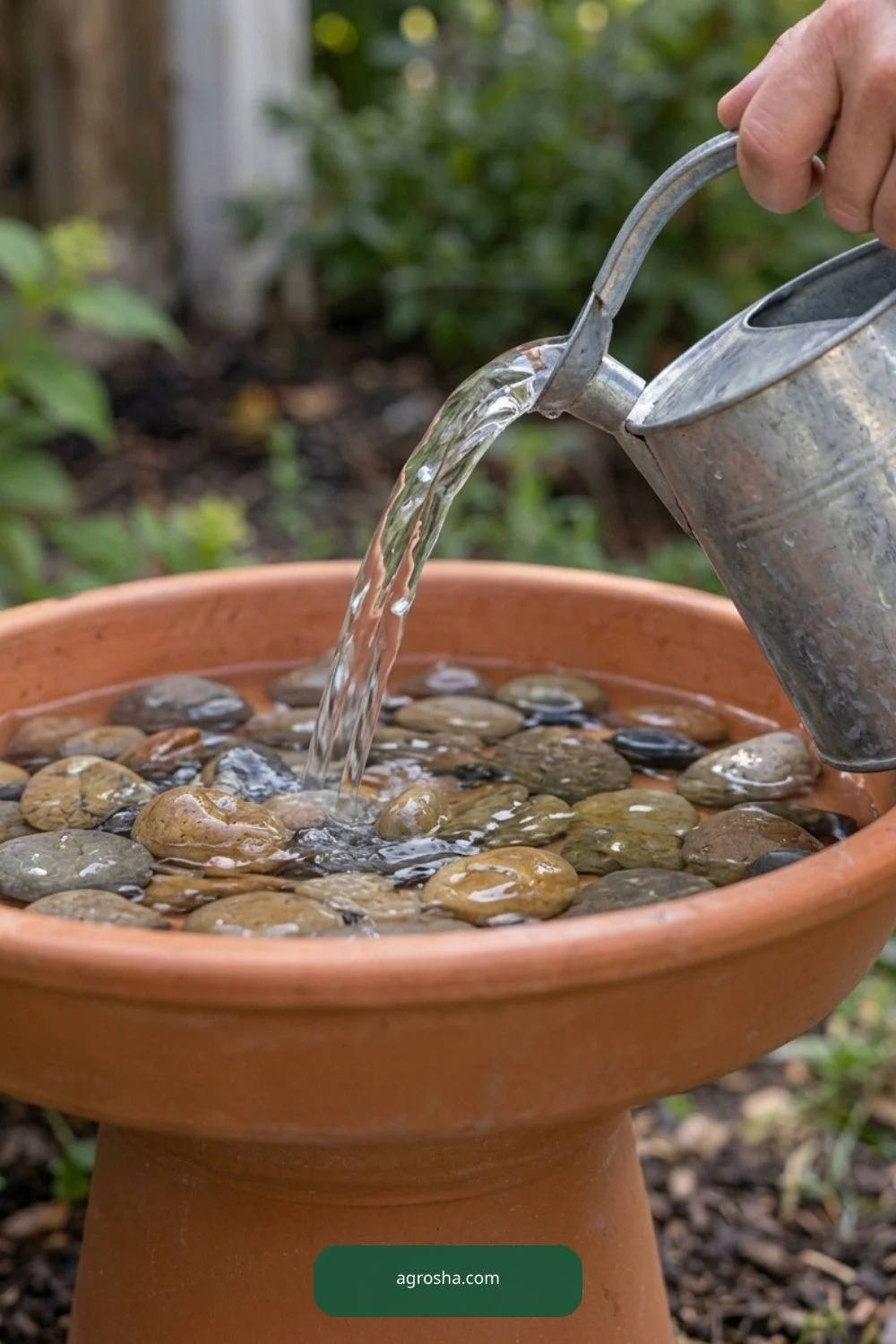
Do not add bleach, fragrance, soap or antifreeze to the water. Water treatment and cleaning are separate activities.
8. Check sightlines and escape space
Stand where a bird would approach from the fence or shrubs. The bath should offer an open view to notice threats and an accessible escape route. If pets use the yard, position the bowl where cats cannot hide immediately beside the water or easily launch from a concealed spot.

Watch for branch litter or falling seed directly over the basin. A pretty photograph is less important than a clean and safe setting.
9. Observe without crowding birds
Leave the finished bath alone for a while after filling. Wild birds may take time to discover it; do not move it from corner to corner every few hours. Watch from indoors or a distance rather than approaching as an animal lands. Keep the area quiet when possible.
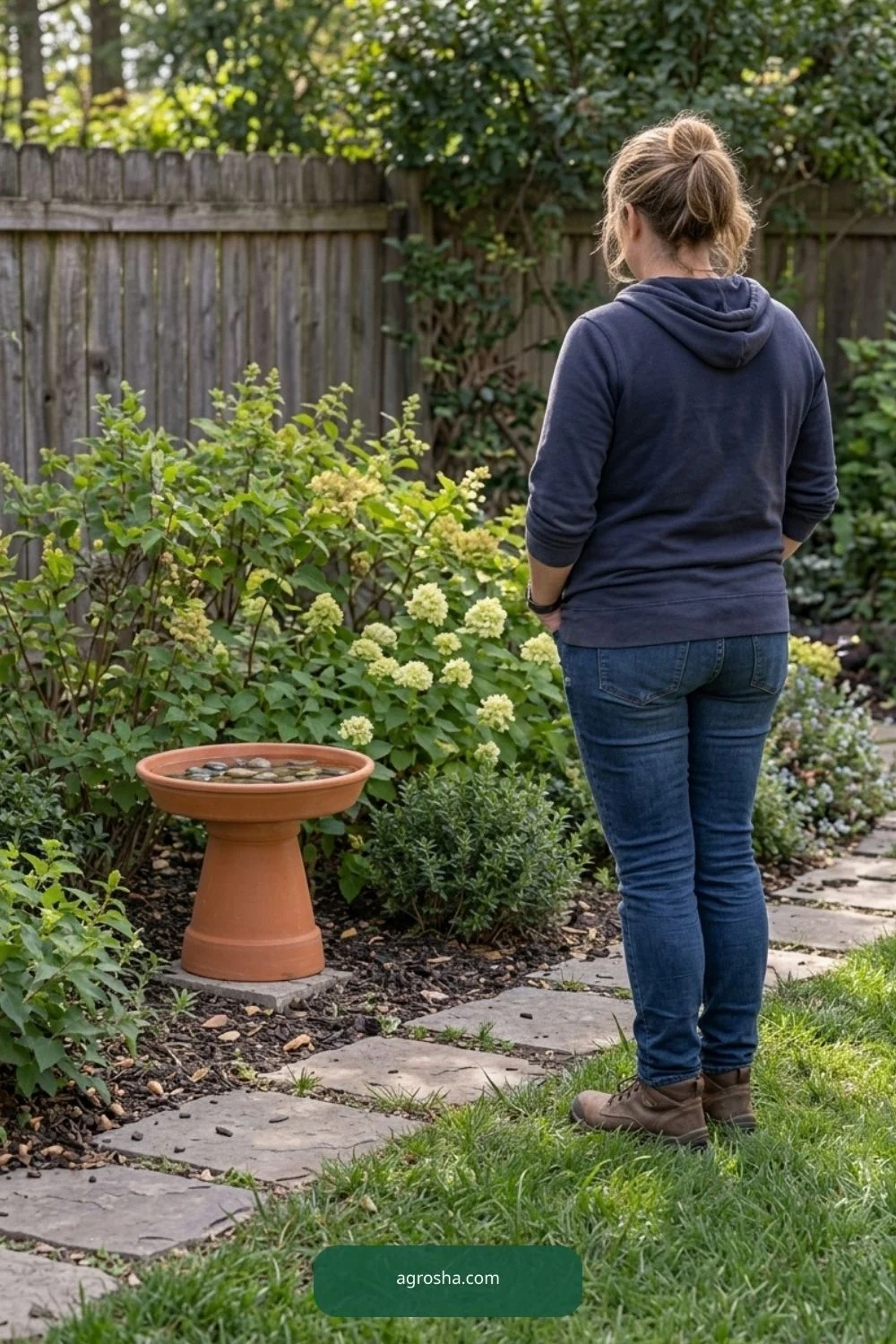
A bird’s absence during the first afternoon is not a reason to redesign the structure. Consistent fresh water is the useful feature.
10. Empty and clean the basin
Lift off the removable saucer, discard dirty water appropriately, brush away algae and debris, and rinse thoroughly before refilling. Clean more often in hot weather or when droppings and leaves appear. Use appropriate bird-safe cleaning guidance rather than leaving cleaning product residue in the bowl.
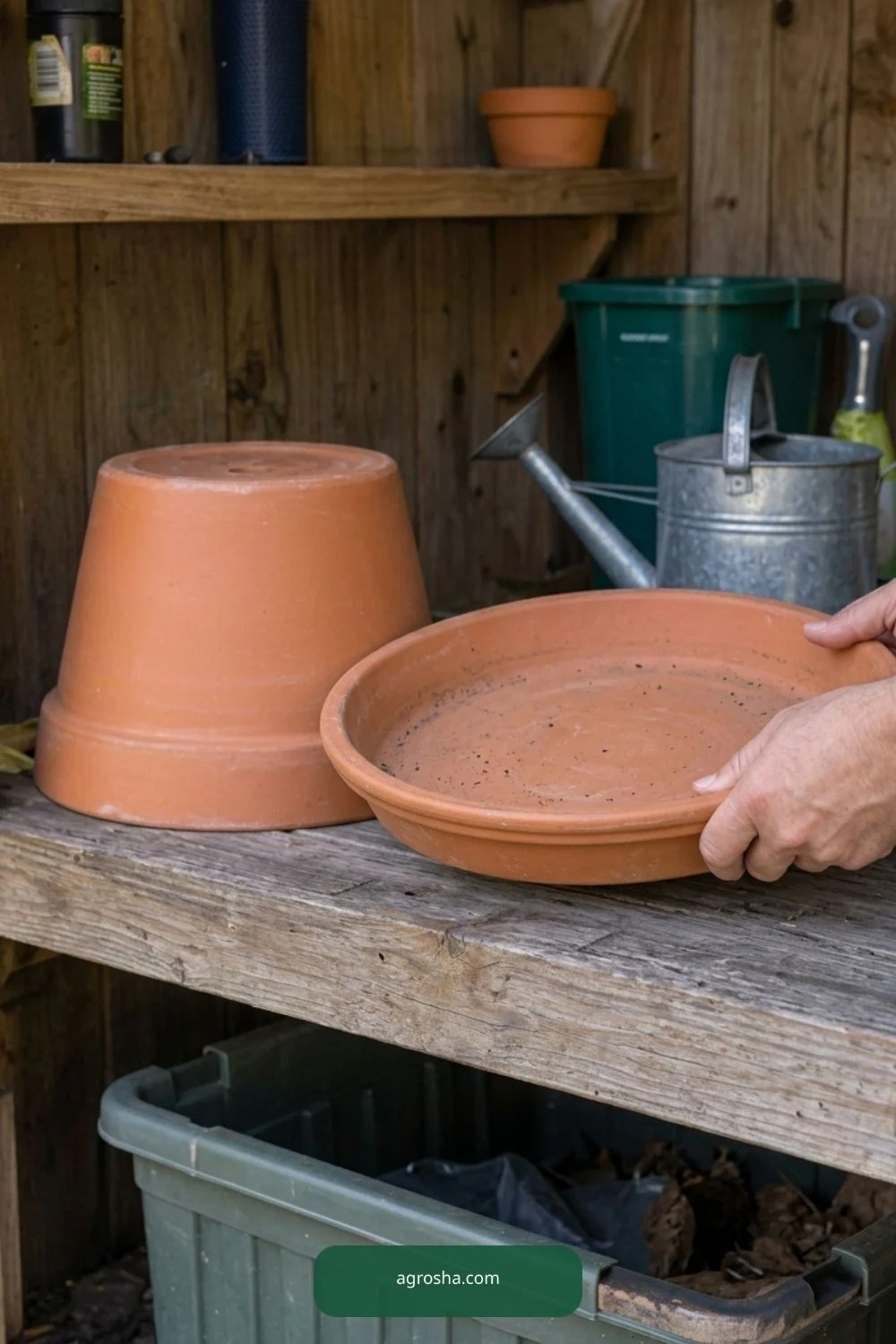
Cleaning is much simpler when the bowl is removable and not permanently fixed to a tall stack of pots.
11. Prepare for freezing conditions
Terracotta can absorb moisture and crack during freeze-thaw cycles, especially when water collects in weaknesses. Follow the material’s frost-resistance instructions, remove water before a hard freeze, and store vulnerable pottery in a protected dry spot. Never add chemicals to keep drinking water from freezing.
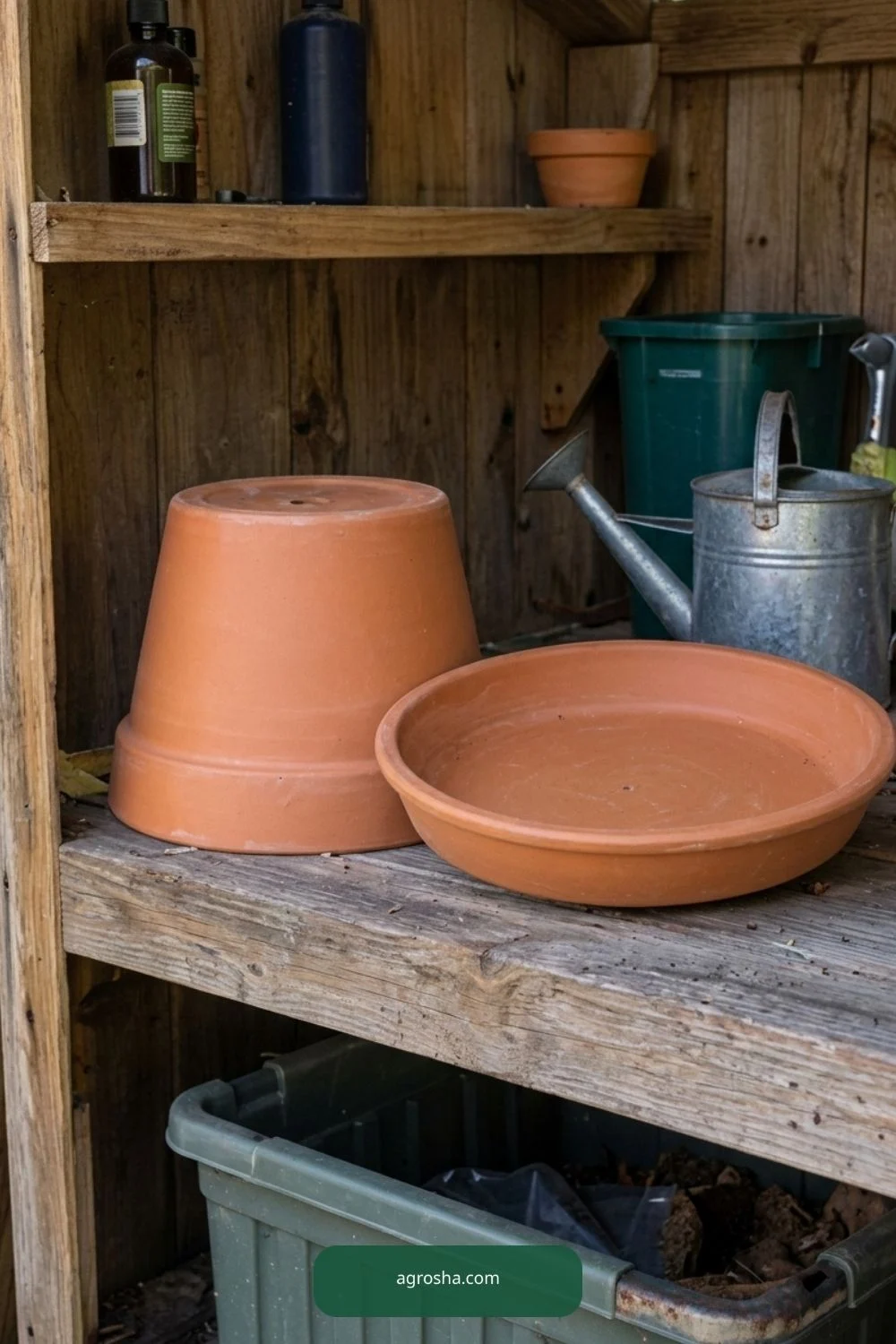
Check the base and saucer separately before reuse. A new crack or unstable contact means the component should be replaced.
Why These Details Matter in a Real Yard
A terracotta bird bath is different from a bird feeder. The water container should remain open, shallow, and easily washable; seeds or food scraps in the bowl only contaminate it. Keep vegetation from growing into the basin so the water is accessible and easy to assess.
An attractive glazed-looking surface is not a reason to use unknown finishes. Plain sound clay and a clean saucer are usually simpler to maintain than elaborate coatings. If painting only the outside of the supporting pot, ensure no material contacts water and follow the product’s instructions.
Birds need reliable safe water more than a dramatic pedestal. A slightly lower saucer on a wide support can be more sensible than a precarious tall tower. Think about local cats, curious children, gusty weather and where people carry hoses before choosing height.
In warm conditions, insects and algae can accumulate quickly. Daily checks for dirty water, leaves and mosquito development are part of owning the feature. Emptying and refreshing a small shallow saucer is much easier than maintaining a deep, permanently attached bowl.
Common Mistakes to Avoid
- stacking unstable pots into a tall narrow column
- using a deep bowl that small birds cannot comfortably use
- placing the bath beside concealment for cats
- permanently attaching a saucer so it cannot be cleaned
- allowing stagnant dirty water or freezing water to damage pottery
Frequently Asked Questions
How deep should a homemade bird bath be?
Keep it shallow. Audubon describes pans or flowerpot trays less than two inches deep and typically suggests roughly one to one-and-a-half inches of water, with clean stones offering places to stand.
Can I glue the saucer to the clay pot?
A secure fit matters, but permanently gluing the water bowl may make washing difficult. Favor a stable removable design or a purpose-built tested support.
Should a bird bath sit in full sun?
Consider heat, nearby escape cover and predator concealment together. Choose a location you can monitor and keep fresh rather than relying on one sunlight rule.
How often should I clean the water?
Check it at least daily and clean whenever dirty; hotter weather and heavy bird use may require more frequent attention. Empty, scrub and rinse the removable basin.
Can terracotta stay outdoors in winter?
It depends on the pottery and climate. Porous clay can crack during repeated freezing, so check frost ratings and store vulnerable pieces dry.
Reference Guidance
For verified context, see Audubon: How to Make a Birdbath. Check local restrictions and material instructions for your specific site.
Final Thoughts
A successful clay-pot bird bath is a small, dependable wildlife feature, not a sculpture that needs careful balancing. Use one stable support, keep the water shallow, make cleaning simple, and watch how the site works before adding anything decorative.