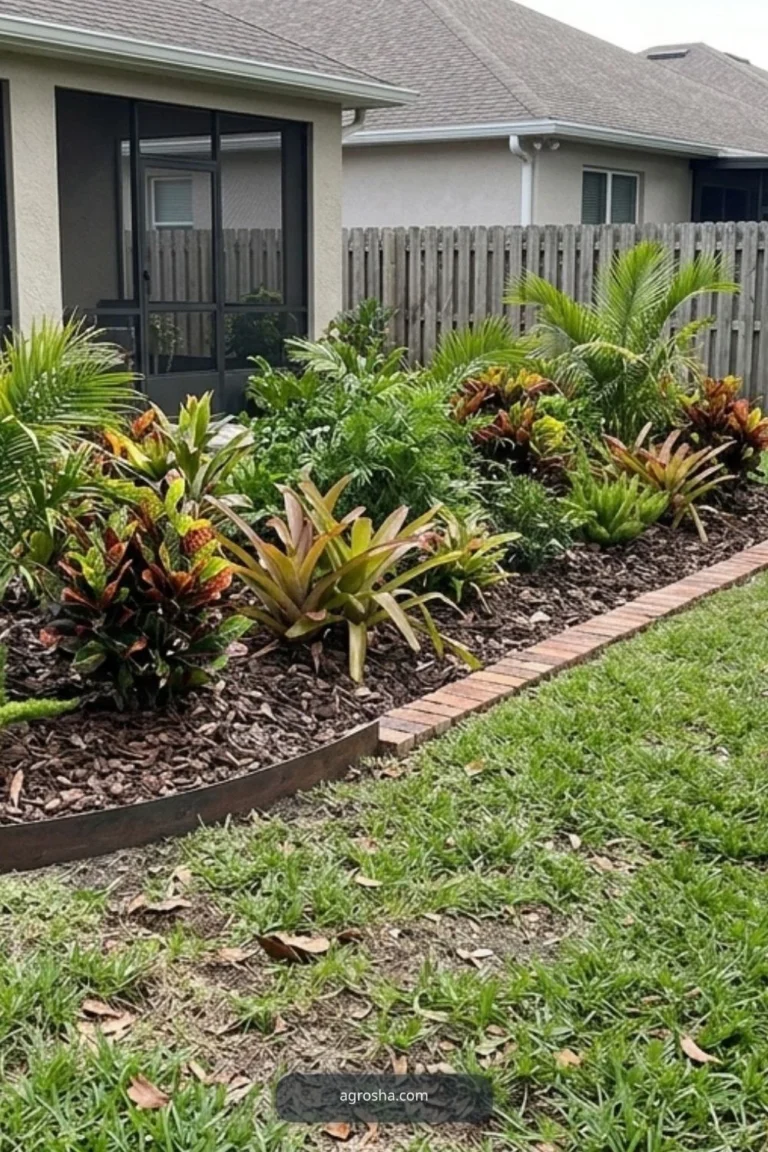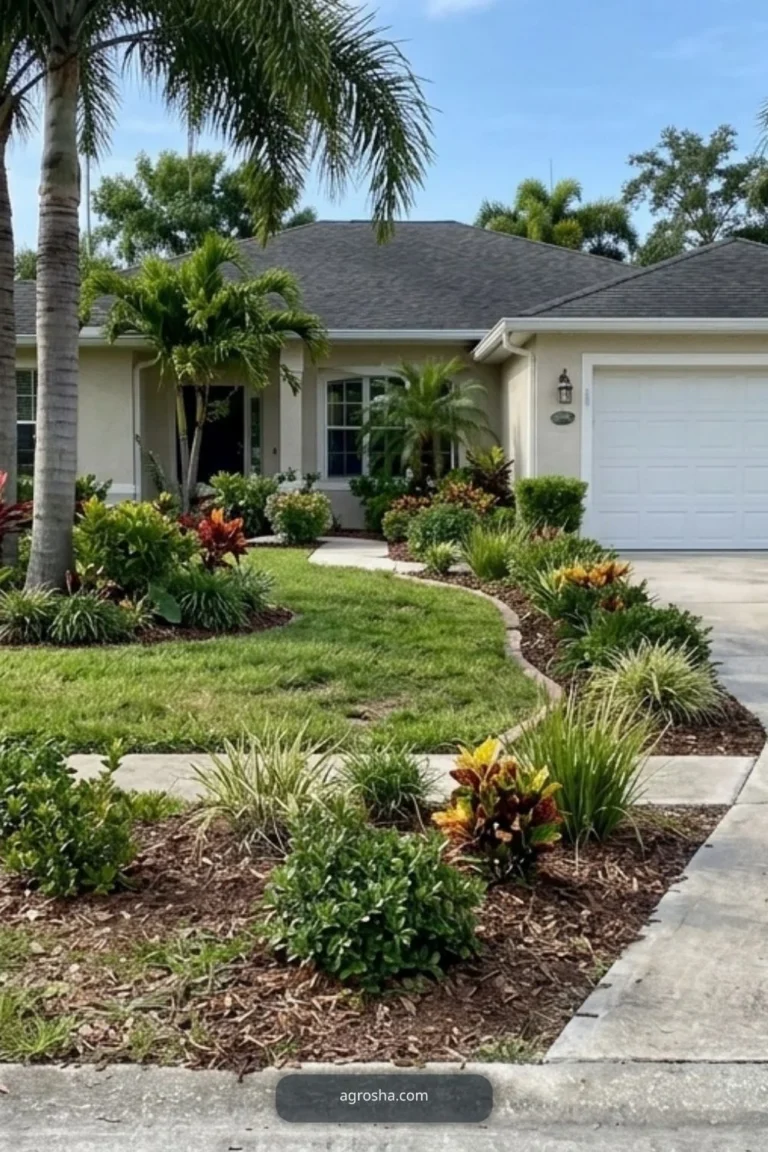

Gravel garden path ideas can be simple, affordable, and easy to adapt, but the path still needs a clear route, stable base, useful width, and edging that keeps stone where it belongs. The biggest difference between a path that feels finished and one that becomes messy is usually preparation under the gravel.
Florida rain, sandy soil, tree roots, strong sun, and fast-growing lawn edges all affect the design. Choose the gravel size for how the path will be used, then plan drainage before you focus on color. This guide stays specific to gravel so it does not repeat our broader garden pathway ideas.
30 Gravel Garden Path Ideas
Choose the Gravel Path Route and Base
Route and base preparation decide whether a gravel path stays comfortable or becomes a muddy channel. Walk the proposed line in both directions, check where water flows after rain, and test the width with a wheelbarrow if the path will serve garden work. The decorative gravel comes after those decisions.
1. Straight Gravel Utility Path

A straight gravel path works well between a patio, shed, raised beds, or side gate because the route is obvious and easy to maintain. Keep it wide enough for the way you actually use it. A compacted base and firm edging reduce rutting and keep loose gravel from spreading into beds.
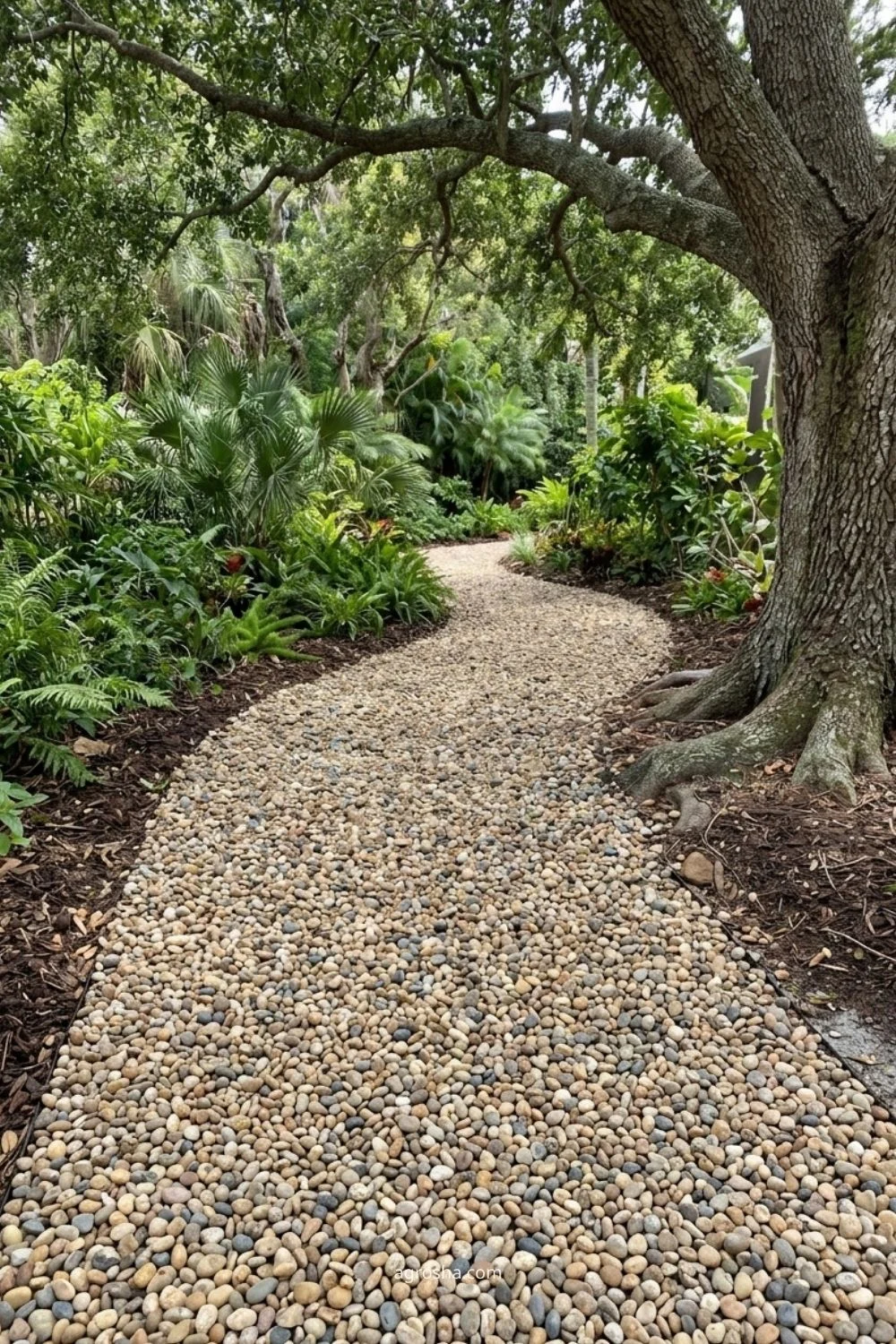
2. Gently Curved Backyard Gravel Path

A broad curve can guide people around a tree or planting bed without feeling forced. Avoid tight decorative bends that make wheelbarrows awkward. Mark the route with a garden hose first, walk it from both directions, and smooth any corner that causes you to step off the future path.
3. Gravel Path Around a Mature Tree

Route the path outside major surface roots whenever possible. Do not excavate deeply through the root zone just to create a perfectly level line. Use a lighter-touch base and adjust the curve to respect the tree. A natural route usually looks better than forcing a straight cut through roots.
4. Side-Yard Gravel Walkway
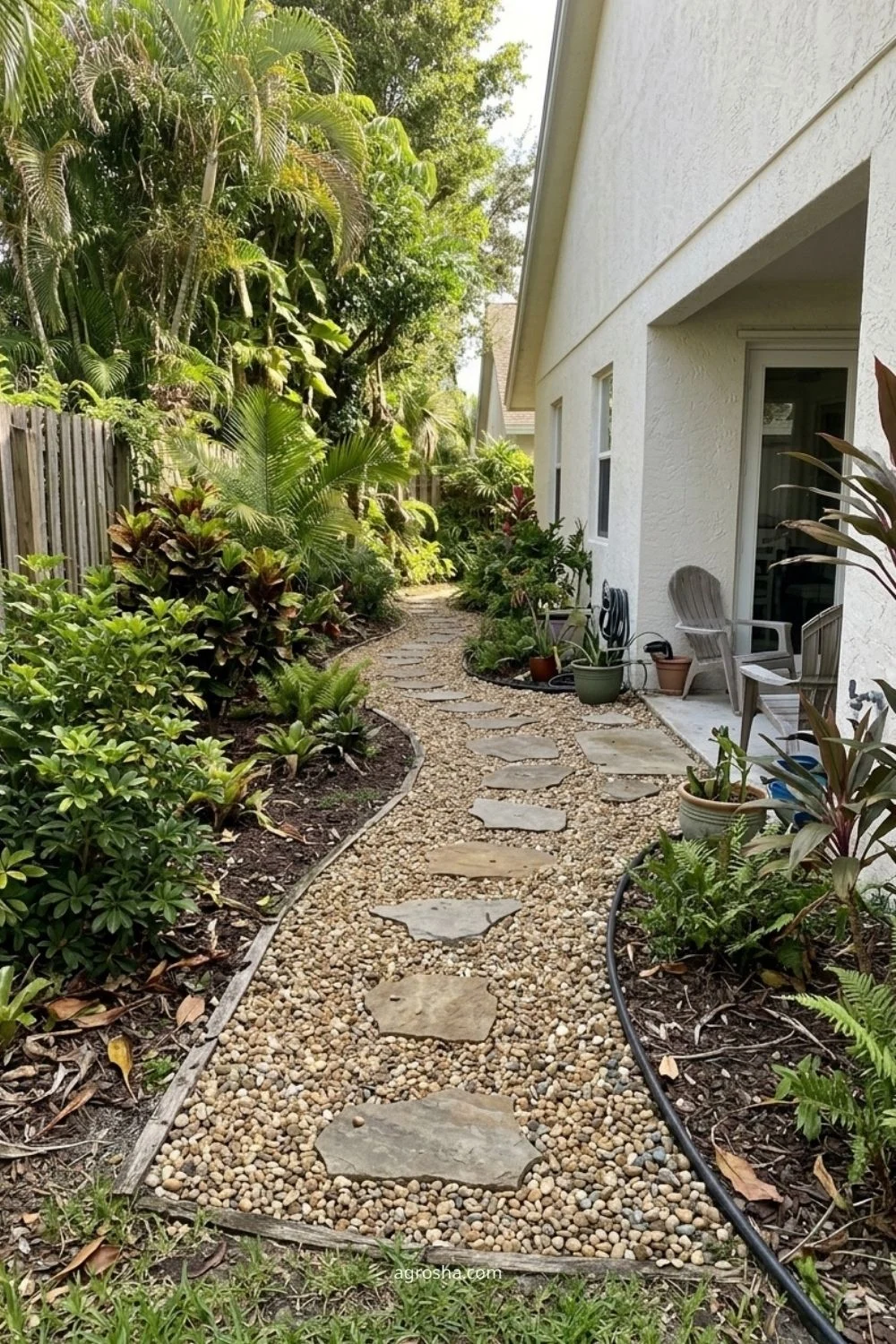
A narrow side yard often needs drainage, access, and low maintenance more than decorative planting. Use a simple gravel surface with enough width for trash bins, hoses, or service access. Keep the path away from AC equipment clearances and make sure roof runoff does not wash the gravel into one low spot.
5. Gravel Path From Patio to Garden Beds
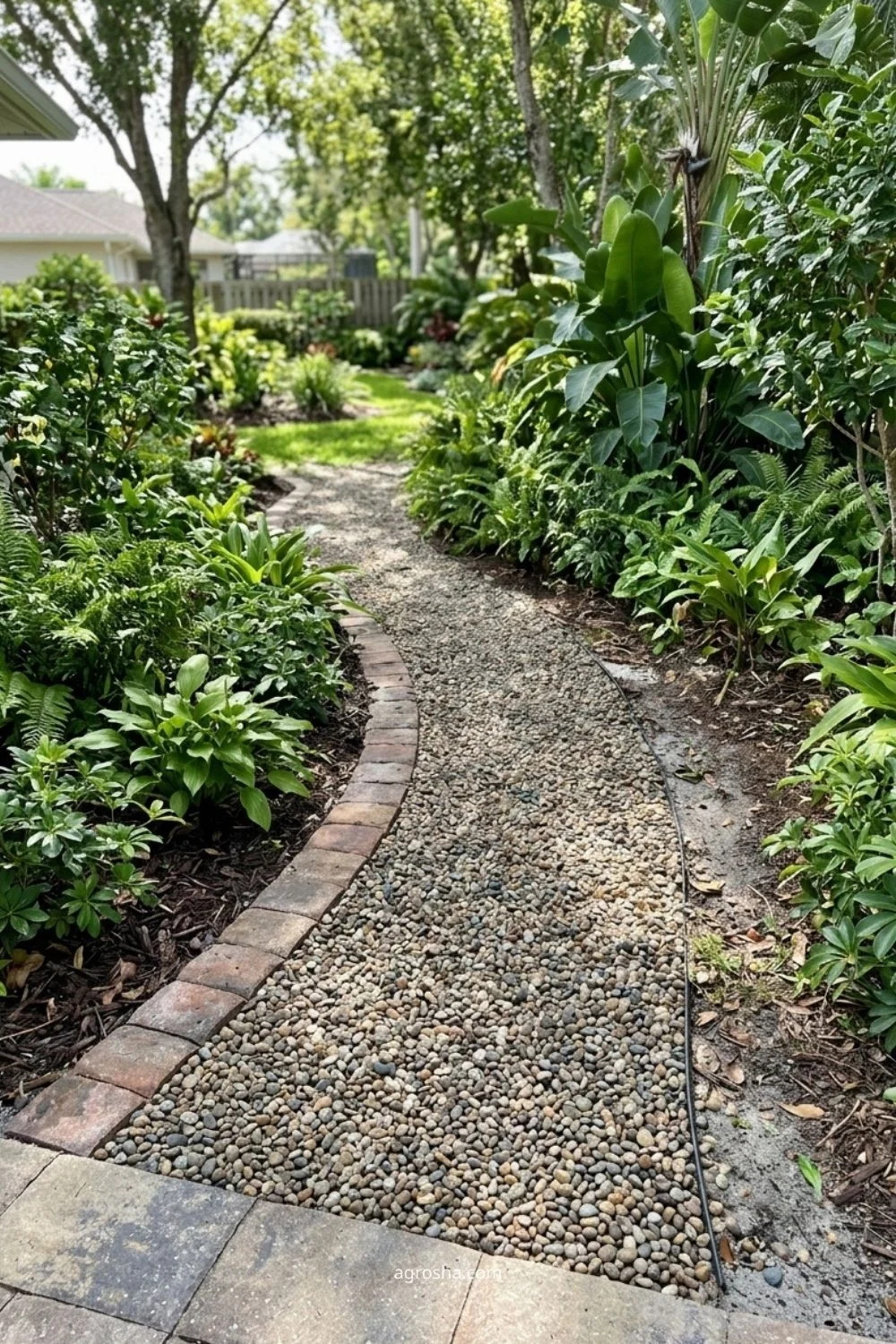
A short connection between outdoor living space and garden beds can stay informal while still feeling finished. Use the same gravel tone as nearby hardscape and make the transition at the patio flush enough to avoid a trip edge. Our garden pathway guide covers general route planning; this article focuses on gravel details.
Gravel Size, Color, and Surface Ideas
Gravel appearance matters, but particle shape affects performance more than color. Rounded stone moves underfoot, while angular material usually locks together more firmly. In hot Florida sun, also consider surface temperature and how the gravel tone will look beside concrete, stucco, lawn, and mulch.
6. Pea Gravel With Brick Edging
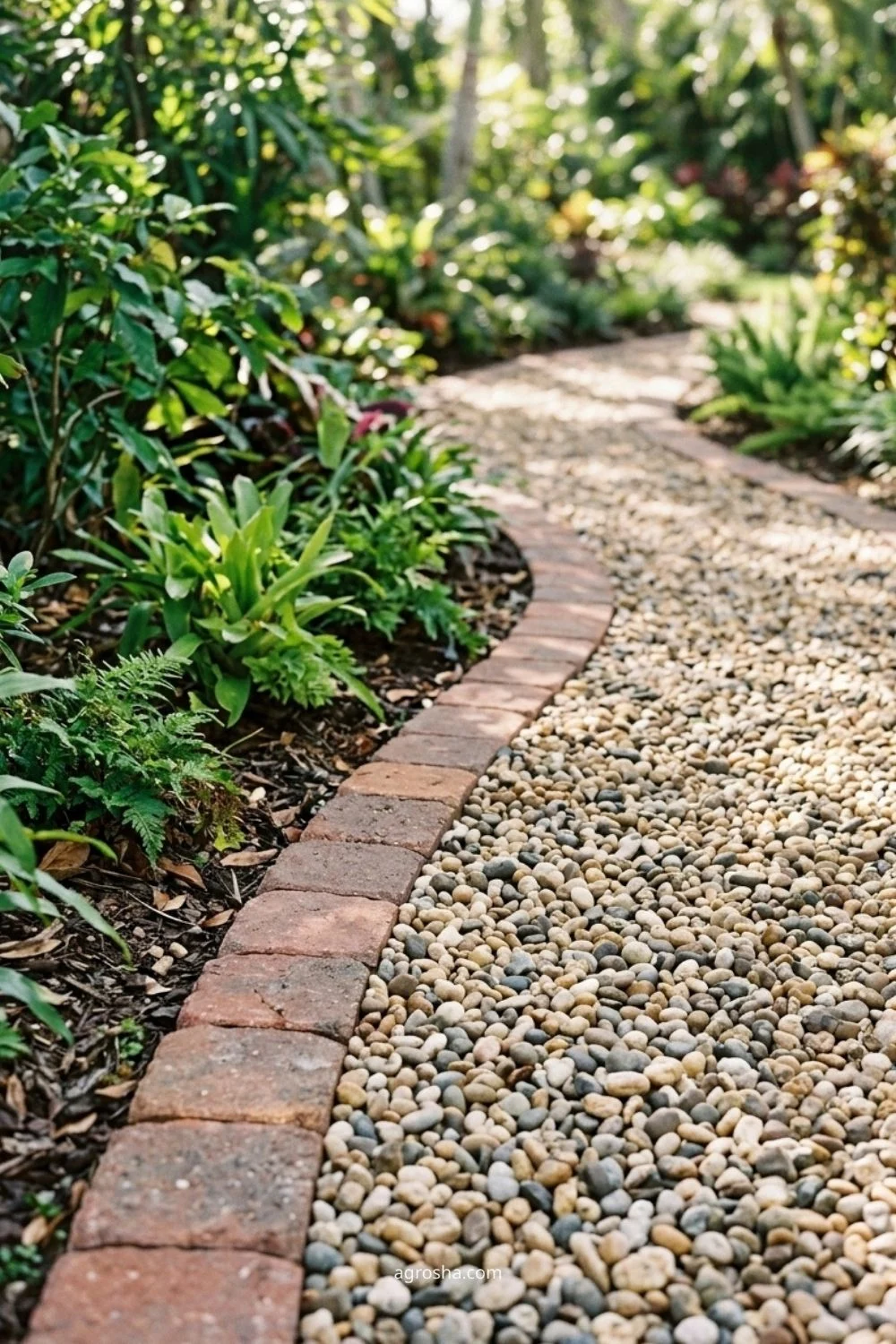
Pea gravel gives a soft, casual look and is comfortable for light foot traffic, but rounded stones move easily. A brick edge keeps the material contained and makes mowing cleaner. Use a compacted base beneath it rather than pouring loose gravel directly over soft soil.
7. Angular Crushed Gravel for Better Locking
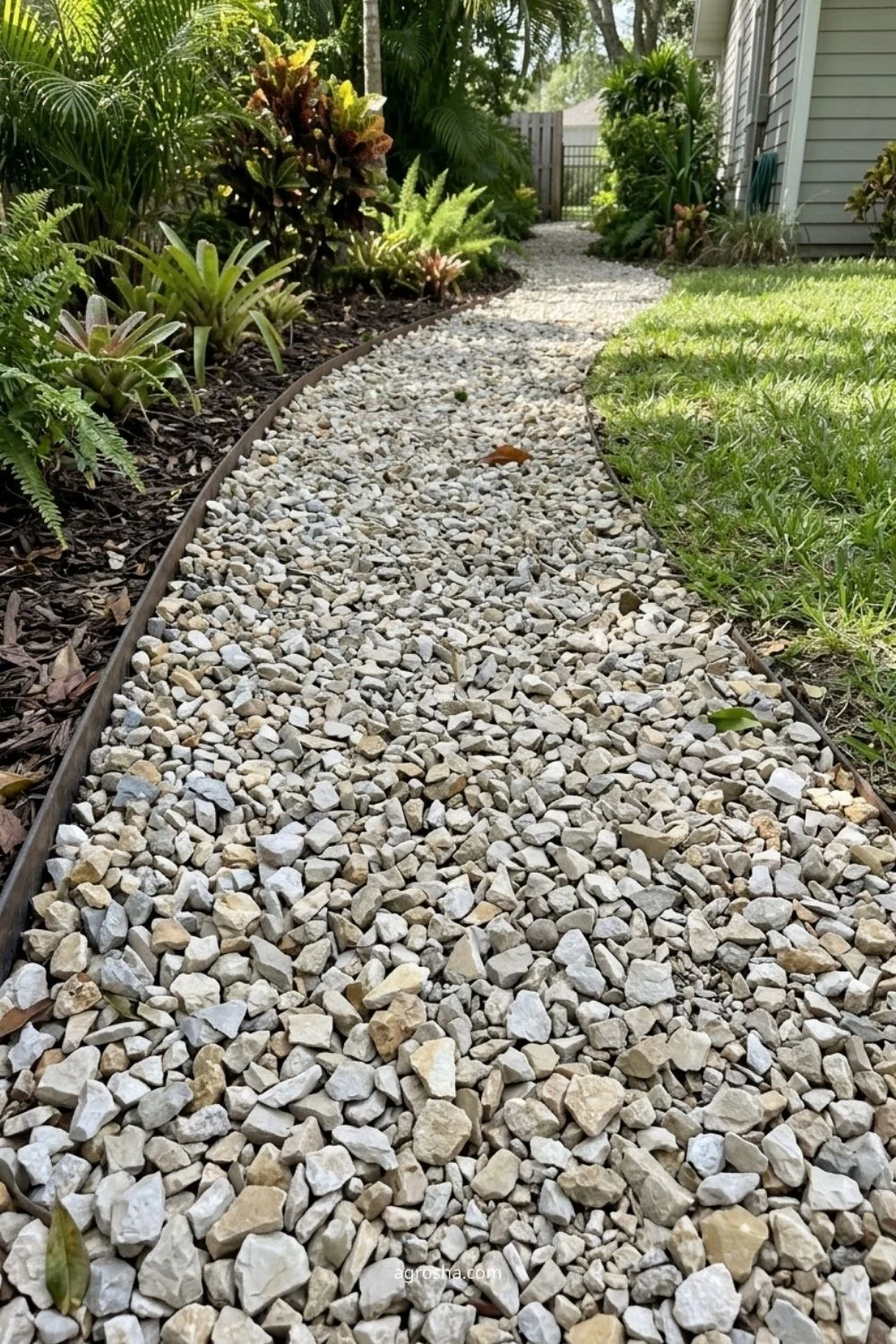
Angular gravel pieces tend to interlock better than rounded pebbles, creating a firmer walking surface. This can be useful on frequently used paths. Choose a size that remains comfortable underfoot and compact it in layers so the surface does not feel like deep loose stone.
8. Light Gravel for a Hot Sunny Yard
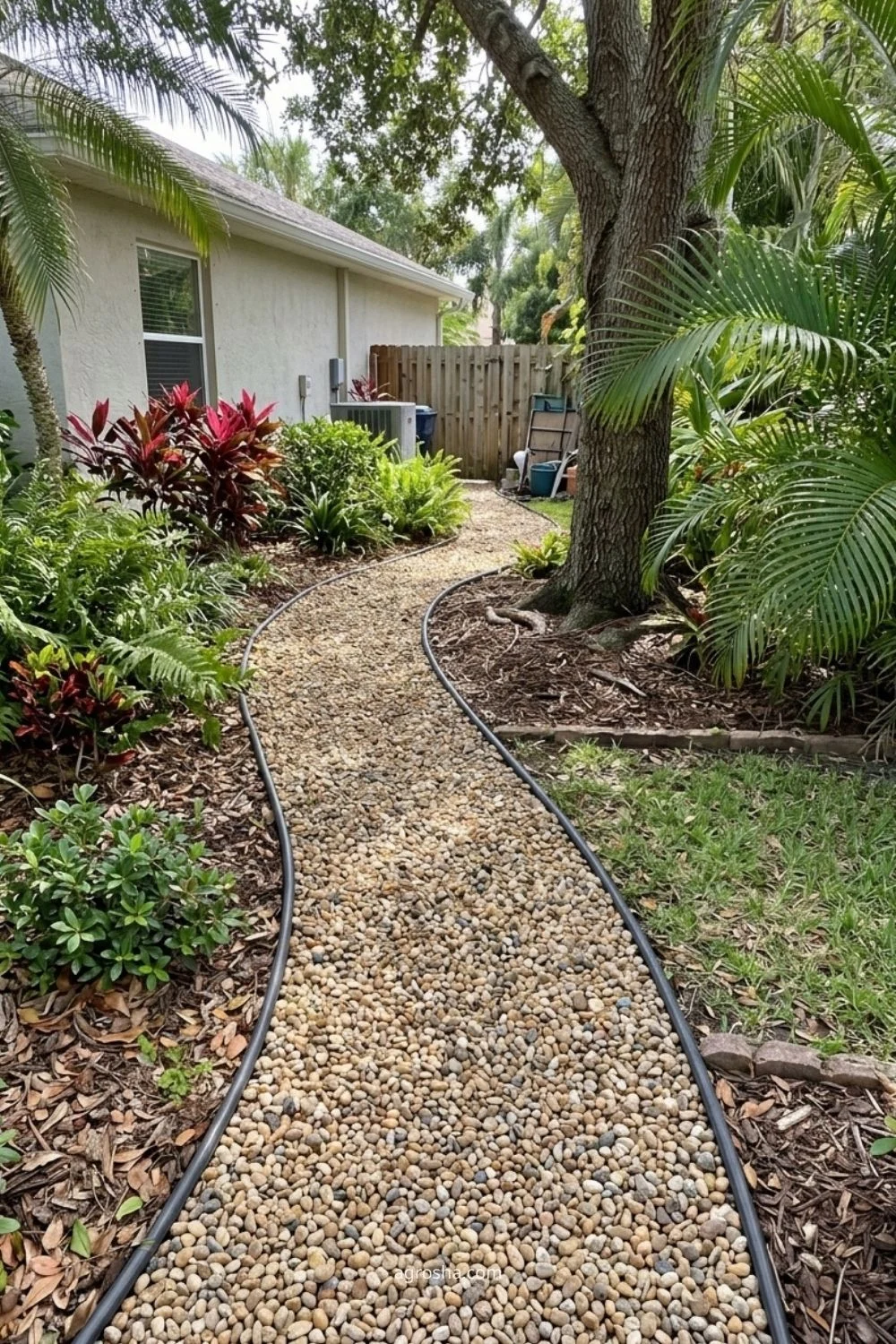
Light-colored gravel can reduce the heavy visual look of dark stone and may feel more comfortable beside bright Florida paving. Even light stone can become hot in full sun, so keep heat-sensitive plants set back from the path edge and provide shade where people linger.
9. Warm Tan Gravel for a Natural Florida Look
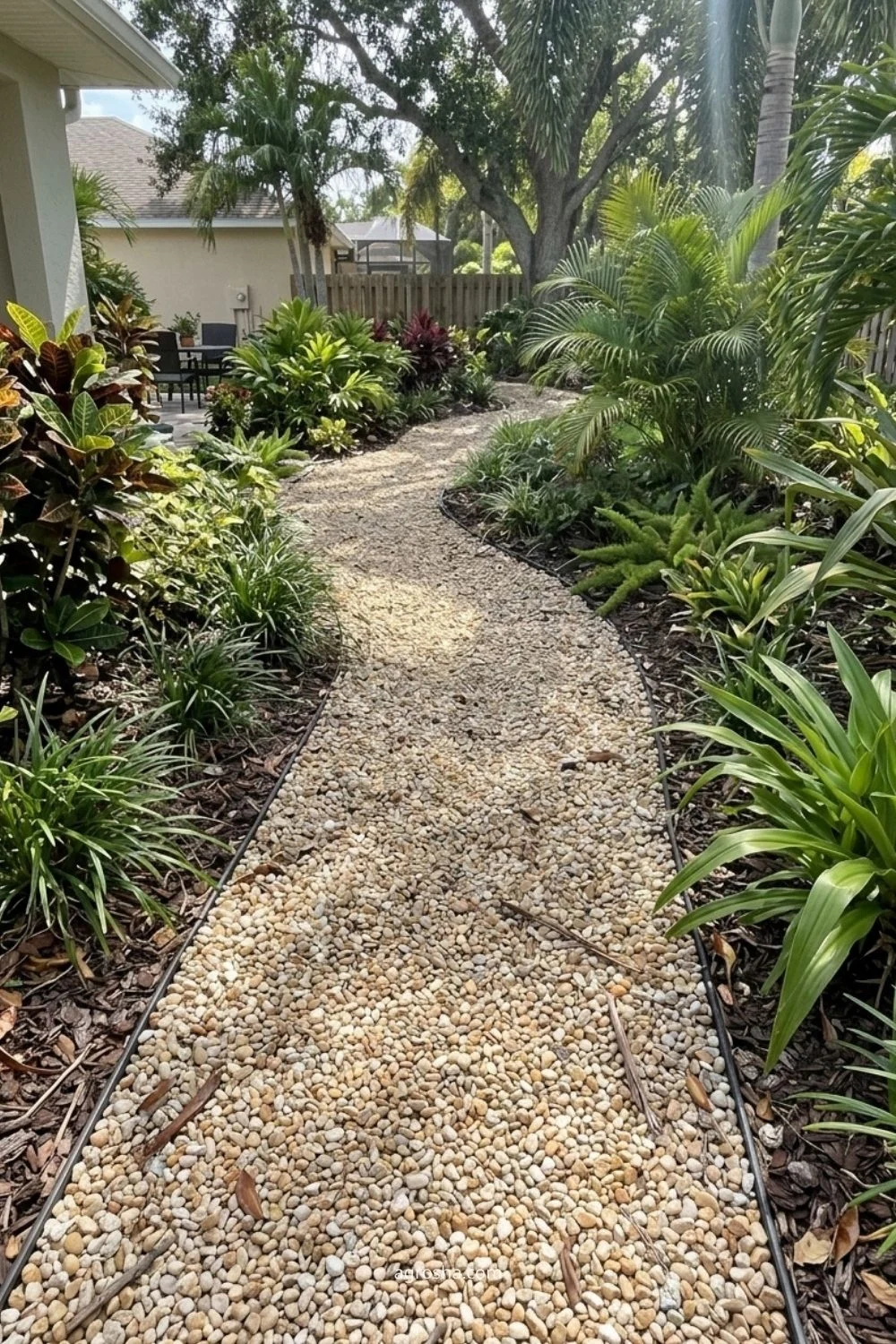
Tan or buff gravel blends well with sandy soil, beige stucco, brick, and warm pavers. It creates a relaxed transition without making the path a high-contrast feature. Use one gravel color through connected paths rather than switching material every few feet.
10. Gray Gravel for a Modern Garden
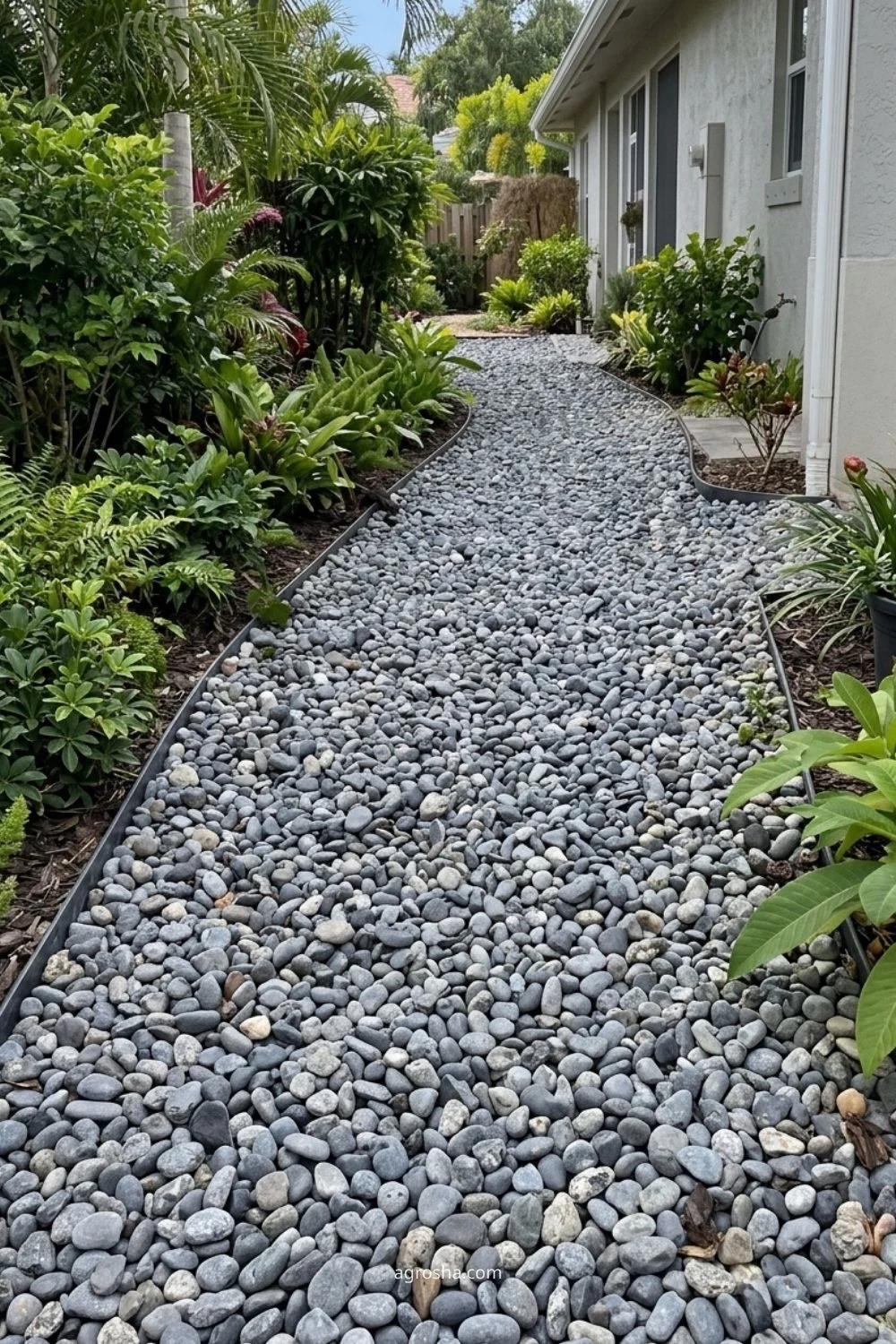
Cool gray gravel pairs well with concrete, black metal edging, and simple green planting. Keep the bed palette restrained so the path does not feel commercial. One repeated gray surface can connect a modern patio, side yard, and small seating area.
Edging Ideas for Gravel Paths
Edging keeps the path width consistent and prevents gravel from mixing into lawn or planting soil. Choose the edge by maintenance: flush brick helps mowing, thin metal saves width, and stone creates a softer garden look. The best edge should not become a trip hazard.
11. Steel Edging for a Crisp Line

Thin steel edging creates a clean boundary without becoming the main visual feature. Set the top low enough that it does not become a trip hazard. In humid or coastal areas, choose a material and finish suited to the exposure and inspect fasteners over time.
12. Brick Mowing Strip Beside Gravel
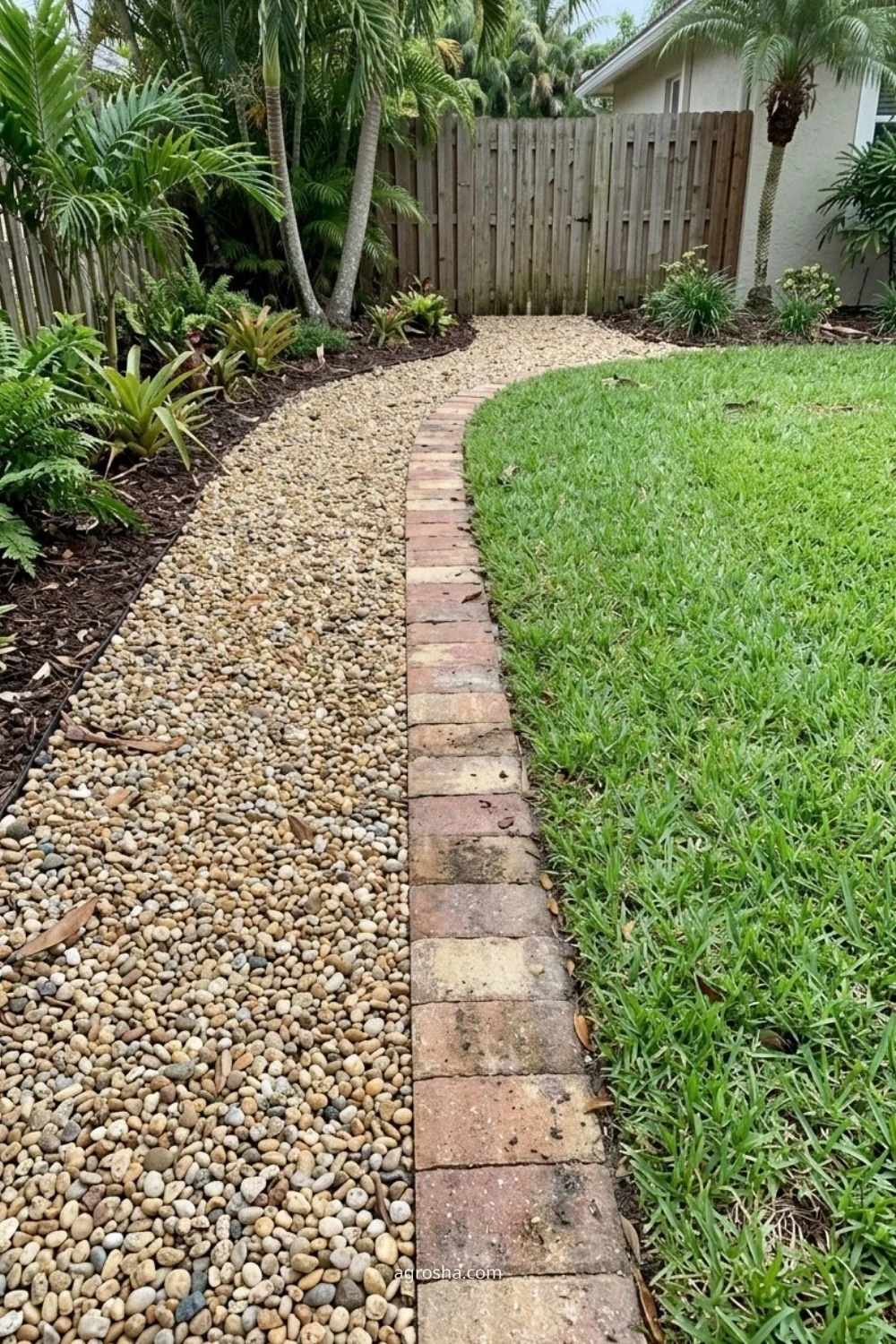
A flat brick strip can separate gravel from lawn and give mower wheels a firm edge. Keep the bricks level and supported so they do not rock. The wider strip also reduces grass creeping into the path and makes maintenance easier than a narrow upright border.
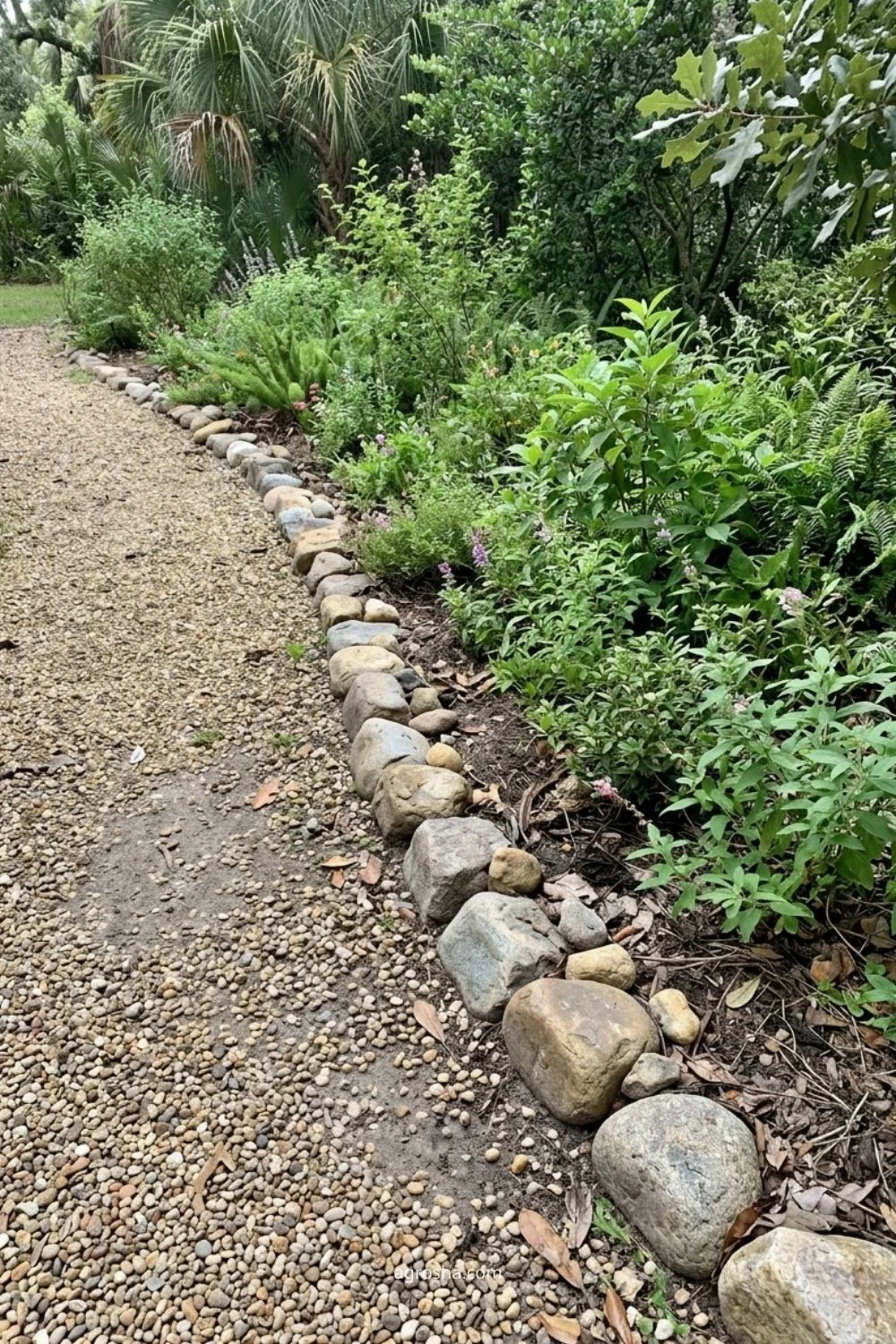
13. Natural Stone Edge
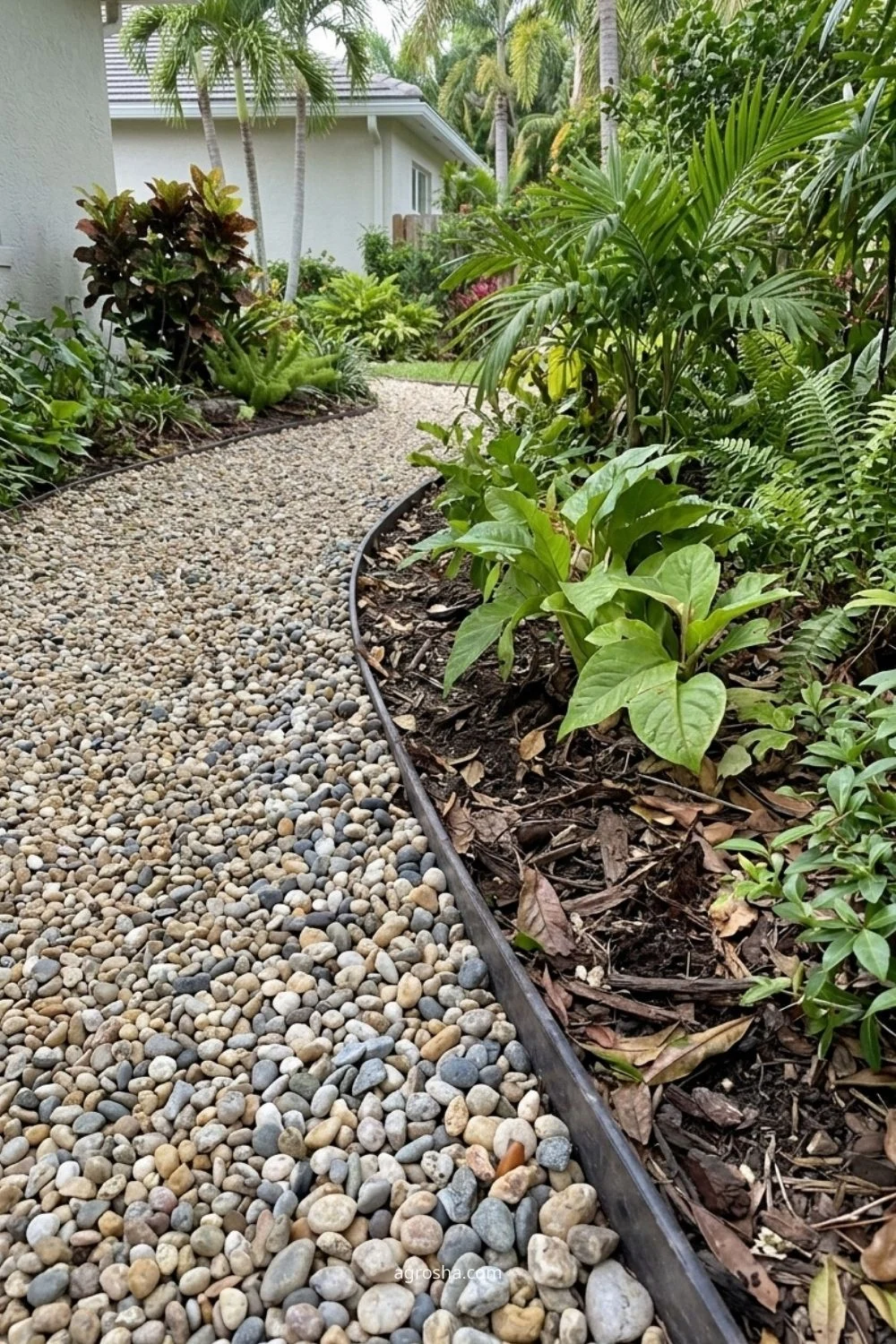
Irregular stone can soften a gravel path beside cottage or woodland planting. Use stones large enough that they do not shift every time the path is raked. Partly bury the stones so the edge looks settled rather than like loose rocks placed on top of the soil.
14. Timber Edge for a Casual Garden
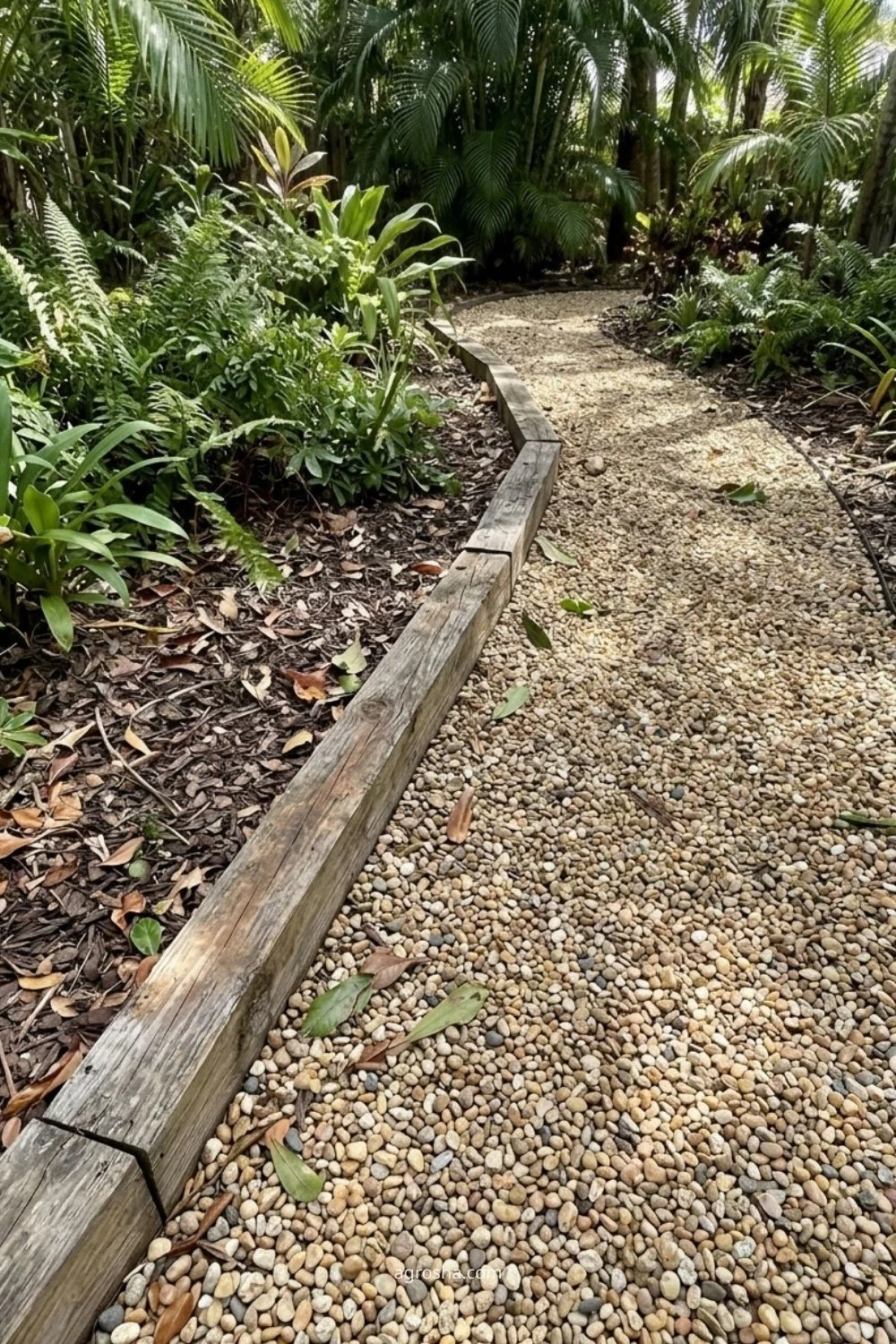
Exterior-suitable timber can create a simple straight or gently curved gravel boundary. Keep wood off constantly wet low spots and expect weathering. Avoid using treated railroad ties or unknown reclaimed wood near edible gardens if you do not know what chemicals are present.
15. Hidden Plastic or Composite Edge
A low-profile flexible edge can contain gravel without changing the look of the path. This is useful for curves and budget projects. Install it securely enough that lawn equipment does not pull it out and keep the top nearly flush with the finished surface.
Gravel Paths With Stepping Stones and Pavers
Adding pavers or flagstone can make a loose gravel path easier to walk without turning it into a fully paved walkway. Set every hard piece on a stable base and keep changes in height small. The solid elements should guide foot placement while gravel handles the wider route and drainage.
16. Large Stepping Stones in Fine Gravel

Wide flat stones can create stable foot placements while gravel fills the spaces between them. Set each stone level so it does not rock. The gravel should support the design, not bury the stone edges or create uneven steps between pieces.
17. Square Concrete Pavers in Gravel

Large square pavers create a clean rhythm in a modern yard. Use consistent spacing based on a comfortable stride and set the pavers on a stable base. Gravel between them can help drainage and soften the overall hardscape.
18. Flagstone With Gravel Joints

Irregular flagstone set in gravel works well for informal gardens and shaded paths. Keep stones large enough for a full foot and avoid sharp height changes. Use gravel that complements the flagstone rather than competing with it.
19. Brick Steppers Through Gravel
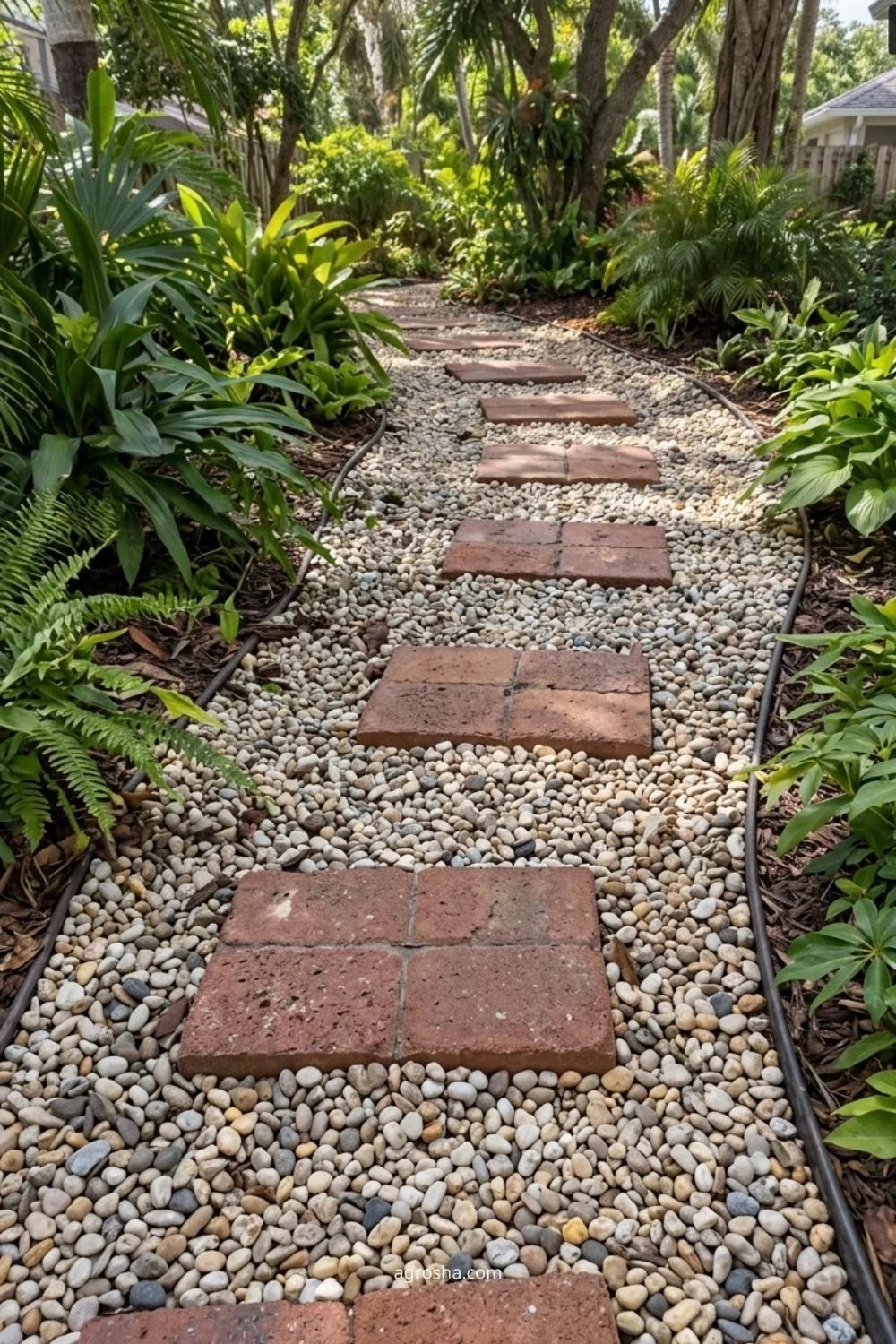
Brick clusters can create a traditional path while gravel handles drainage and fills the wider route. Use the same brick tone as the house or patio when possible. Keep the walking surface stable and avoid decorative patterns that become slippery or uneven.
20. Gravel Path With a Paver Landing

At a gate, bench, or garden entrance, widen the path into a small paver landing. The solid surface gives people a stable place to pause, turn, or open a gate without pushing loose gravel aside. Then return to gravel for the lower-traffic route.
Drainage, Weeds, and Florida Maintenance
Heavy summer rain and fast plant growth make maintenance different in Florida. Keep swales open, remove leaf debris before it becomes soil, and expect occasional weeds even with a well-built base. A path that drains correctly is easier to maintain than one that depends on frequent gravel top-ups.
21. Gravel Path Beside a Rain Garden

A path near a rain-garden edge should stay high enough that stormwater does not regularly wash across it. Use the path to provide access without blocking the shallow drainage area. Keep gravel out of the planting basin so the soil and plants can function as designed.
22. Dry-Creek Crossing With Flat Stones
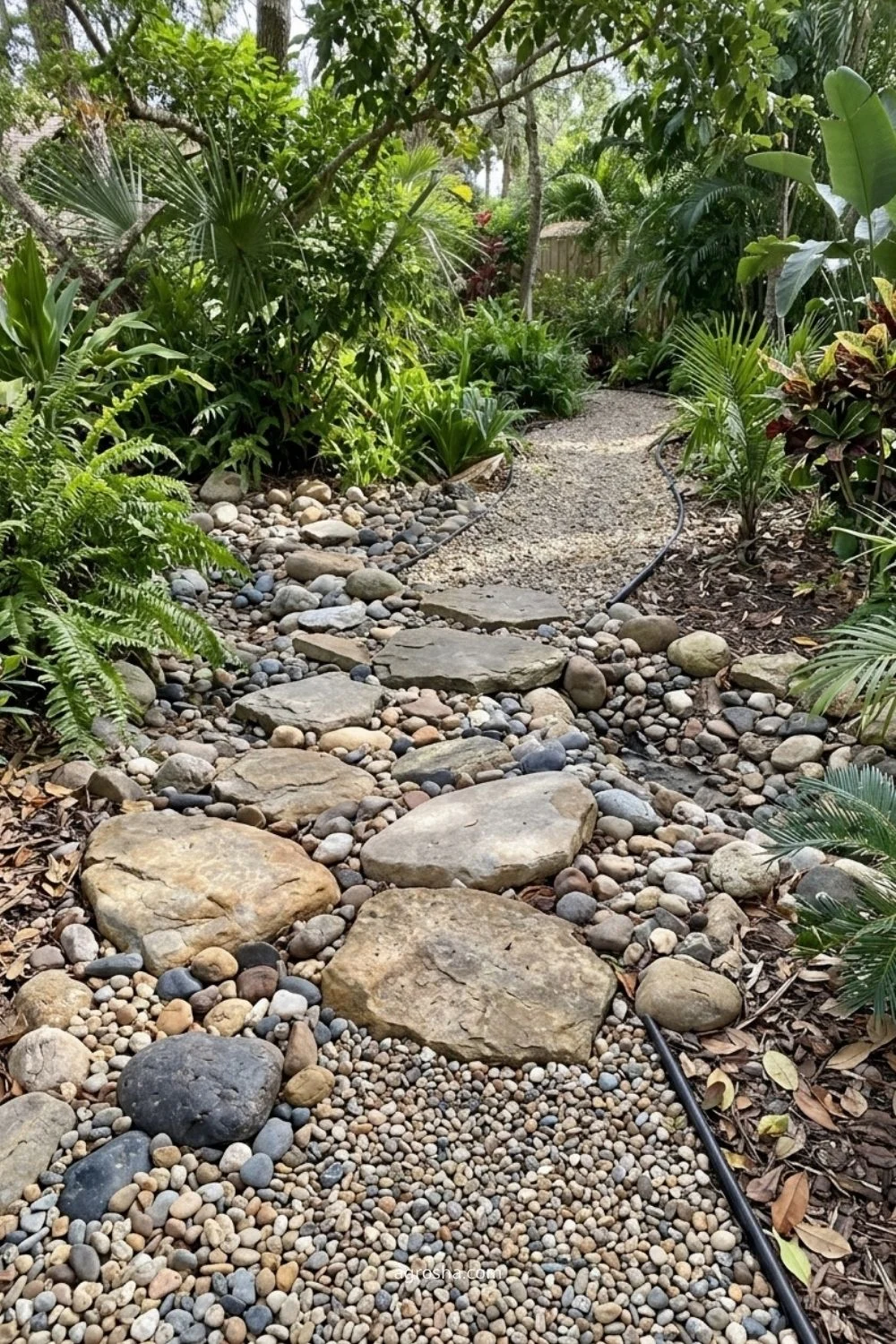
Where a dry creek or swale crosses a garden route, use stable flat stones or a simple bridge-like crossing instead of filling the water path with fine gravel. Heavy Florida rain needs a clear route. The crossing should remain obvious even when the channel is wet.
23. Gravel on a Gentle Slope With Check Edges

On a mild slope, angular gravel and cross-path edging can reduce downhill movement. Keep the slope gentle enough for safe walking. Steeper grades may need steps, switchbacks, or another surface; our sloped backyard garden ideas cover those options.
24. Weed-Controlled Gravel Without Plastic Mess
Start by removing perennial weeds and roots, then build a proper base. A durable geotextile may be useful in some installations, but thin plastic often traps water or tears as soil accumulates above it. Expect some hand weeding because wind-blown seeds can germinate in surface debris.
25. Gravel Path Under Partial Shade
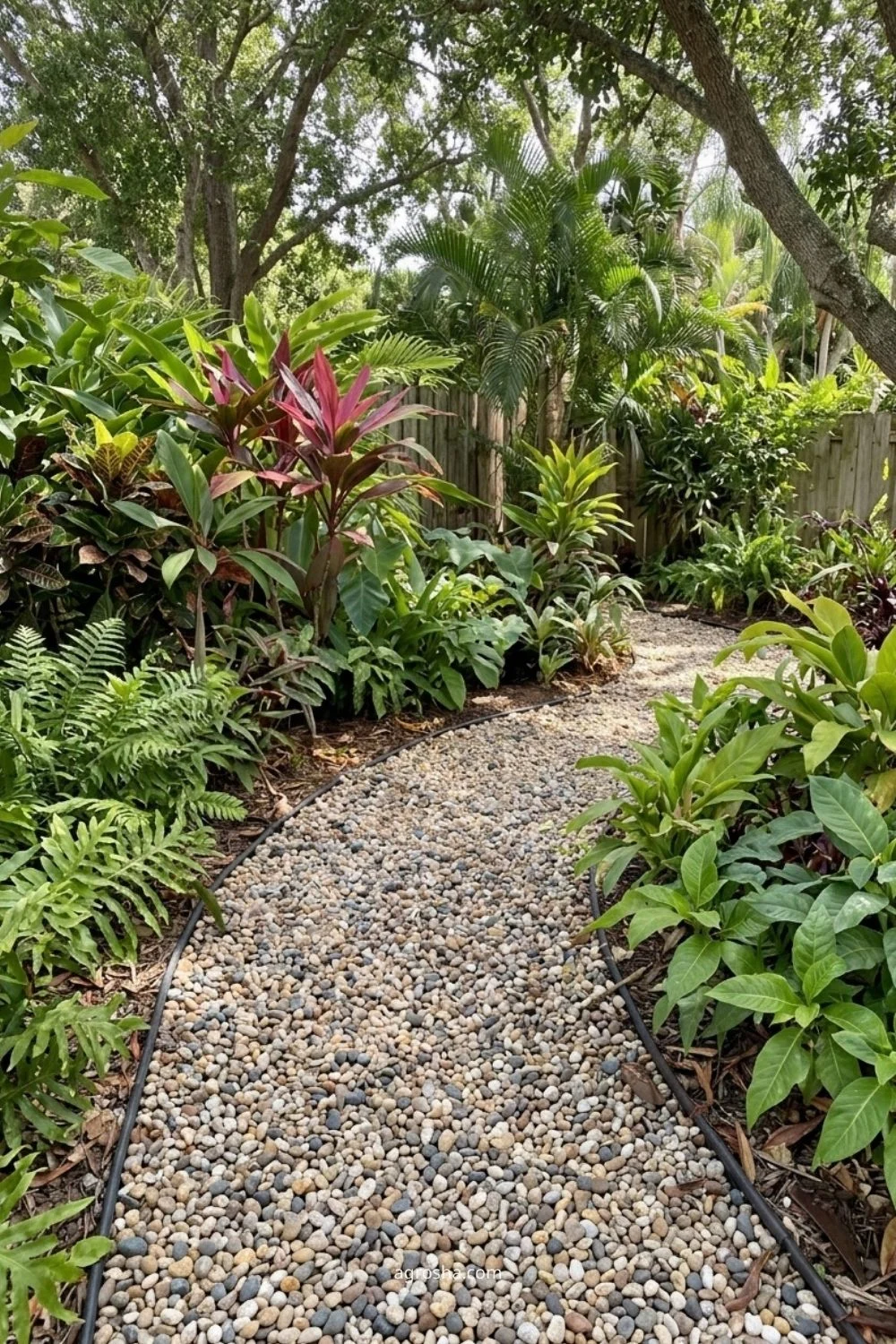
Shaded gravel paths can stay damp and collect leaves. Use a surface that remains firm when wet and rake organic debris before it breaks down into soil. Keep the route open enough for light and air, especially where tree roots already make the ground uneven.
Finishing and Long-Term Upkeep
The final details should make the path easier to live with. Low plants can soften edges, lighting can mark turns, and regular raking can correct small migration before it becomes a rut. Keep one main gravel type so repairs and future extensions remain simple.
26. Gravel Path With Low Planting at the Edge
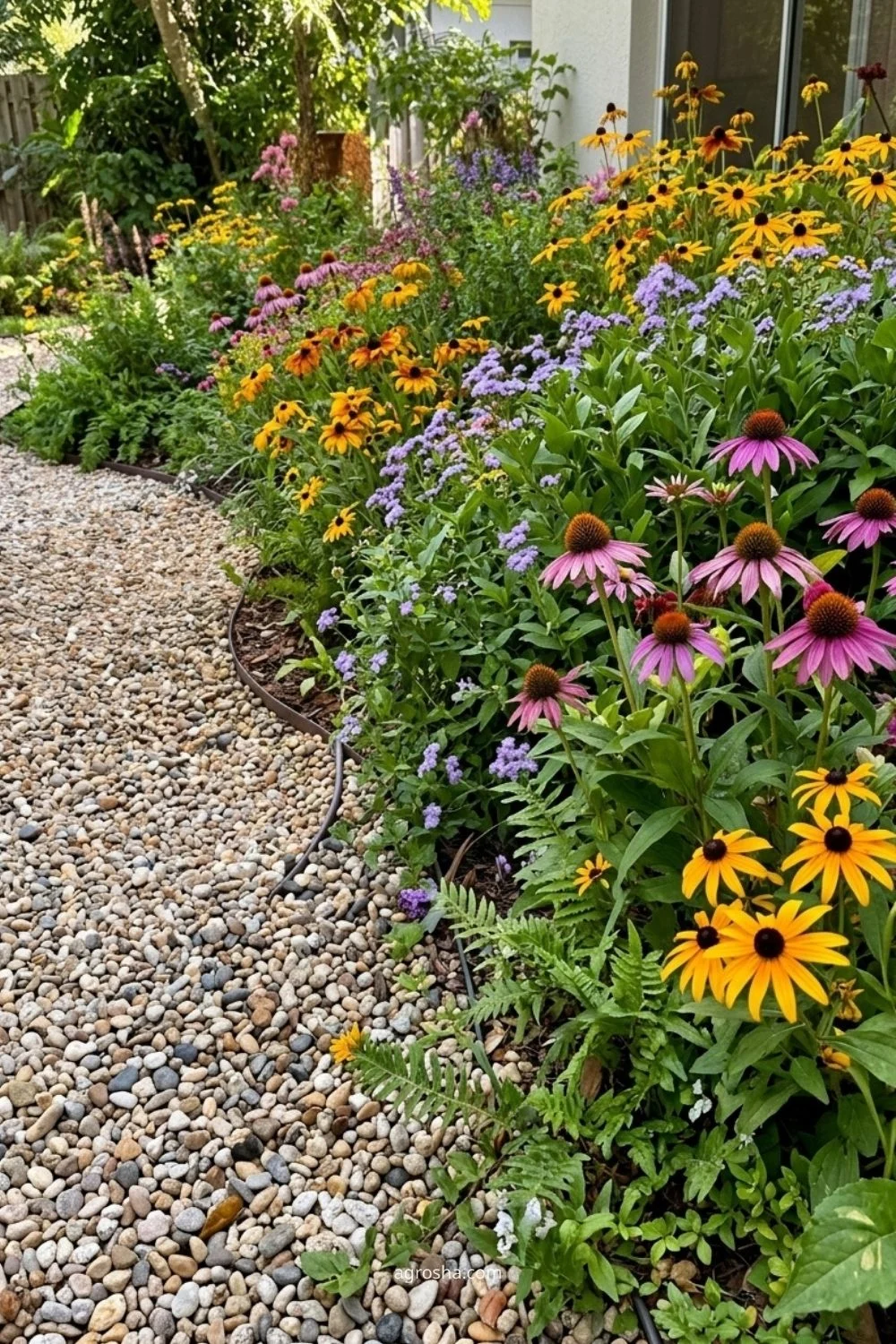
Low grasses, groundcovers, or compact flowers can soften a gravel route without spilling across the walking line. Choose plants that fit the light and moisture. Keep mature foliage back from the path so you are not trimming the border every week.
27. Gravel Path Through a Pollinator Bed
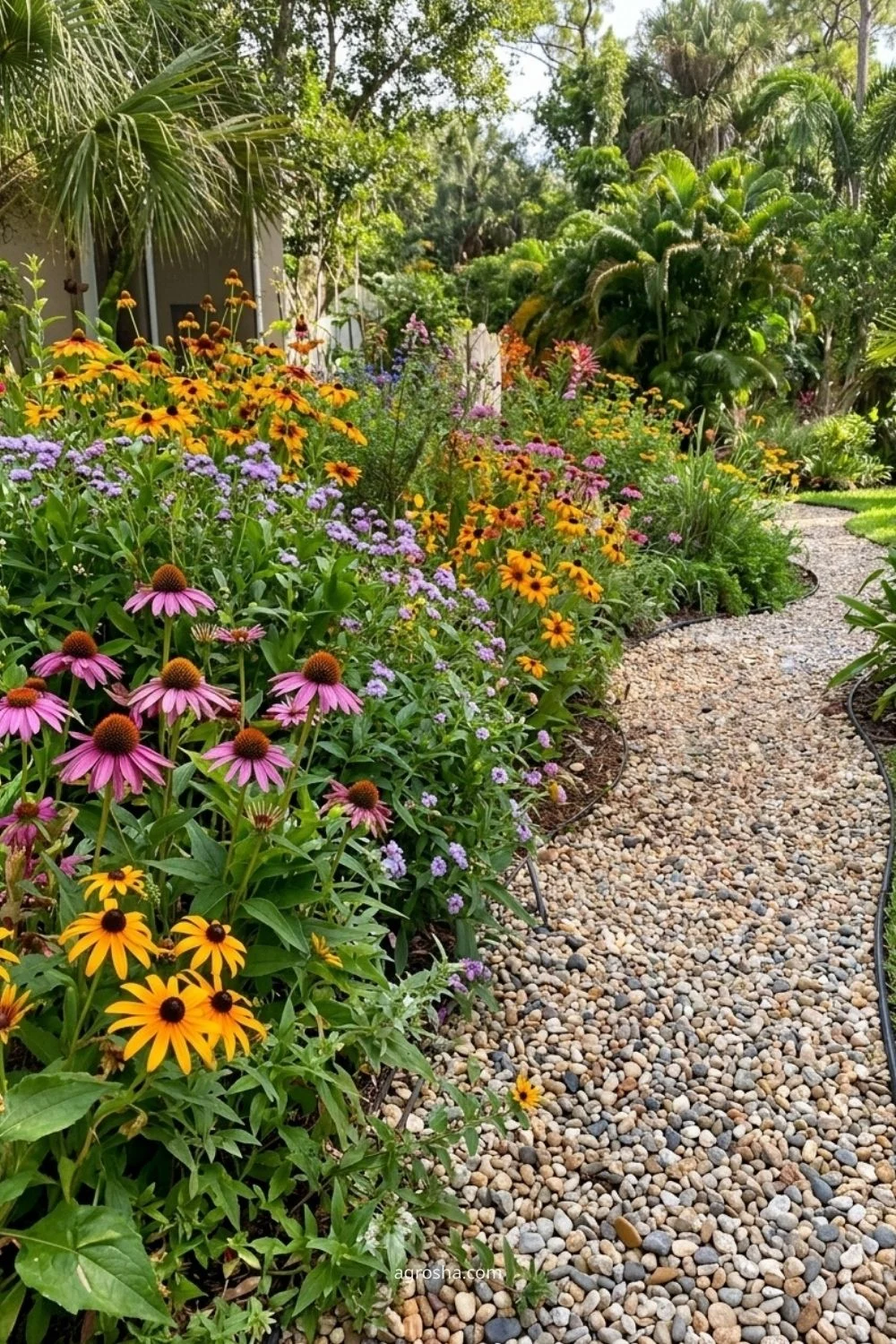
A simple gravel path can provide access through a dense pollinator planting. Keep the path wide and visible so visitors do not step into flowers. Use a clear edge and repeat the same gravel color so the route reads as intentional even when plants are at peak growth.
28. Gravel Path With Low-Voltage Lighting
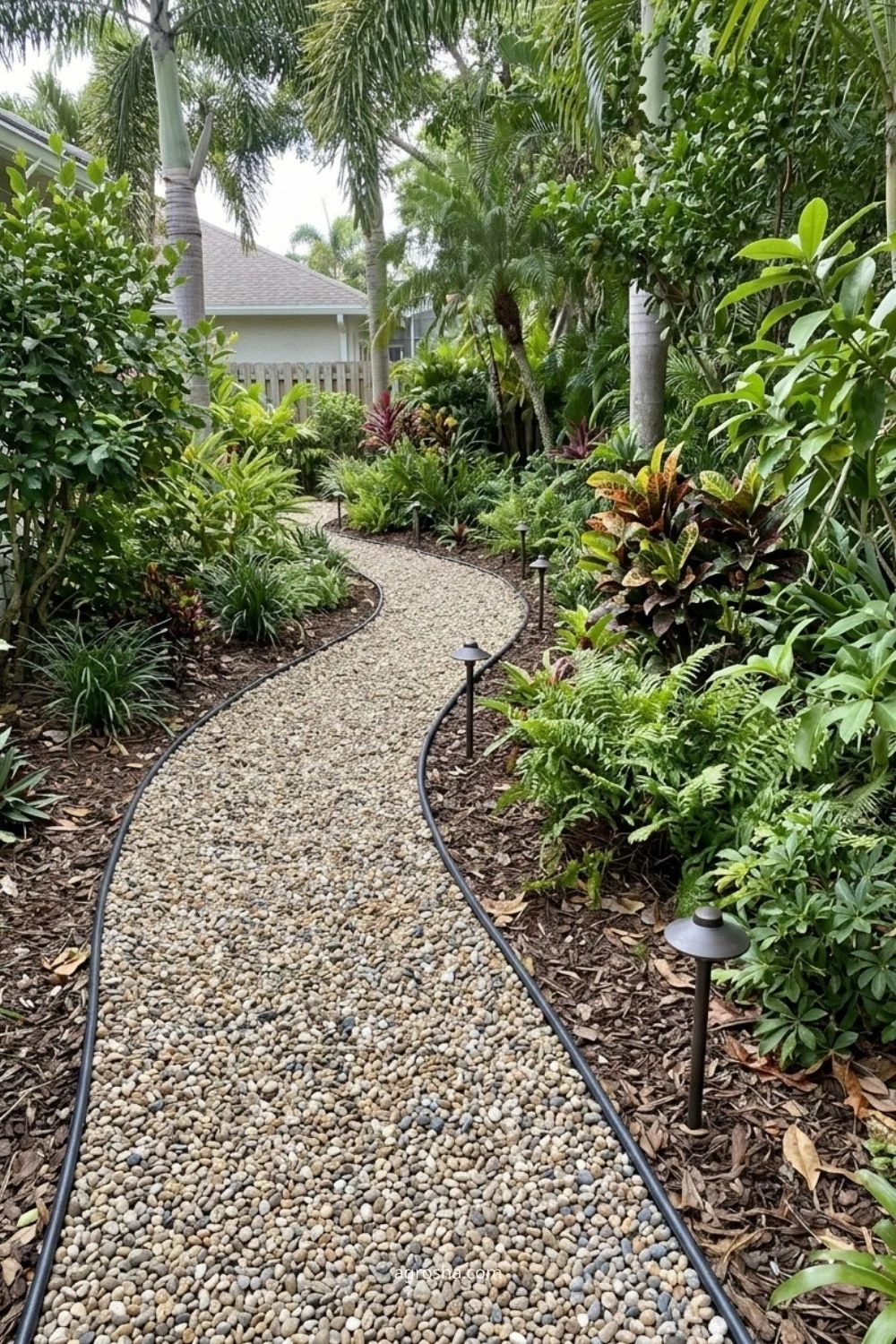
Use small downward-facing lights where the path changes direction, meets steps, or approaches a gate. Avoid lining every foot with bright fixtures. The goal is safe navigation and subtle orientation, not runway lighting.
29. Refresh Gravel by Raking and Spot-Filling
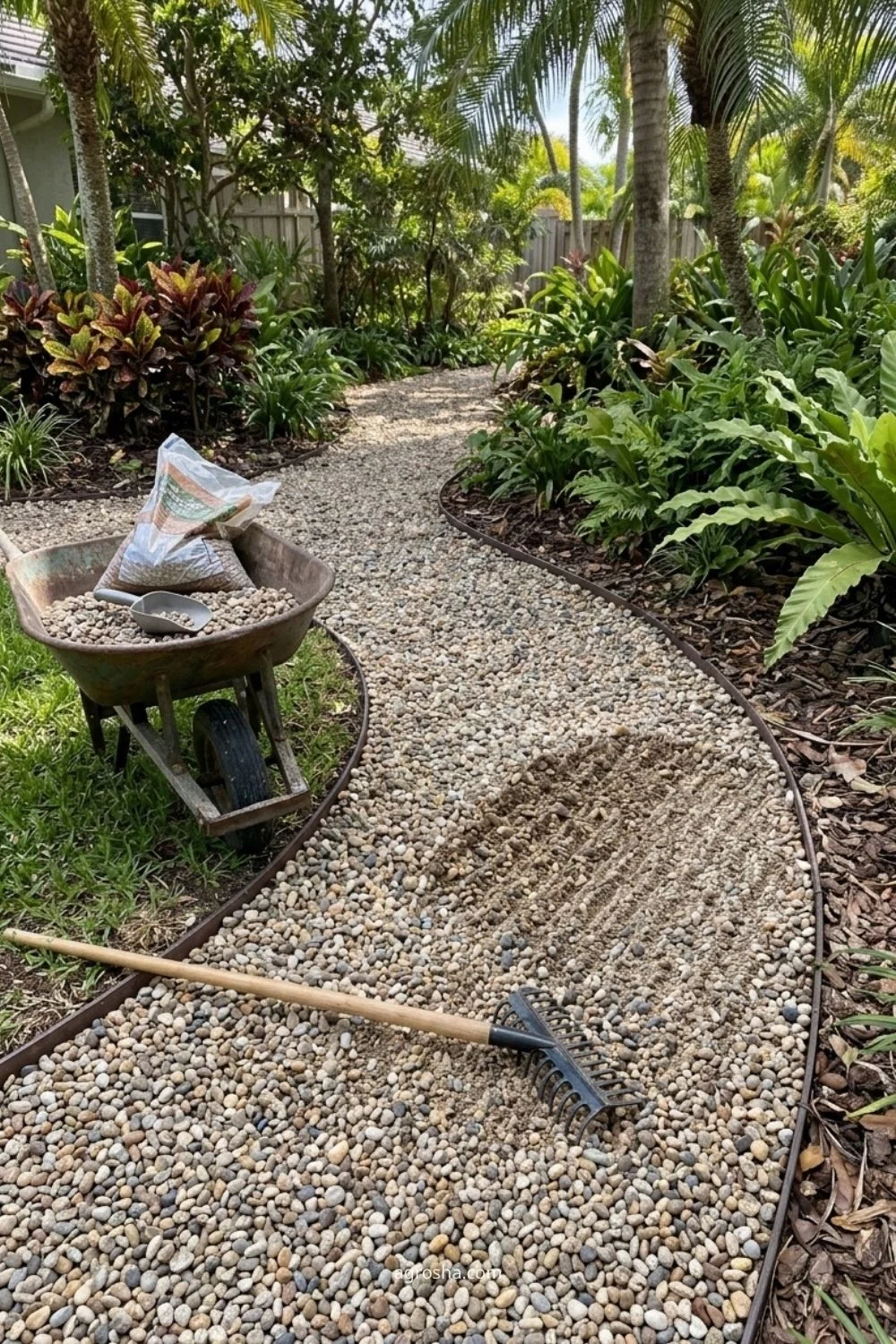
Gravel paths usually need occasional raking, edge cleanup, and small top-ups where material migrates. Fix low spots instead of simply dumping more stone across the whole path. A good base reduces how often you need to add material.
30. Keep One Gravel Type Across Connected Routes
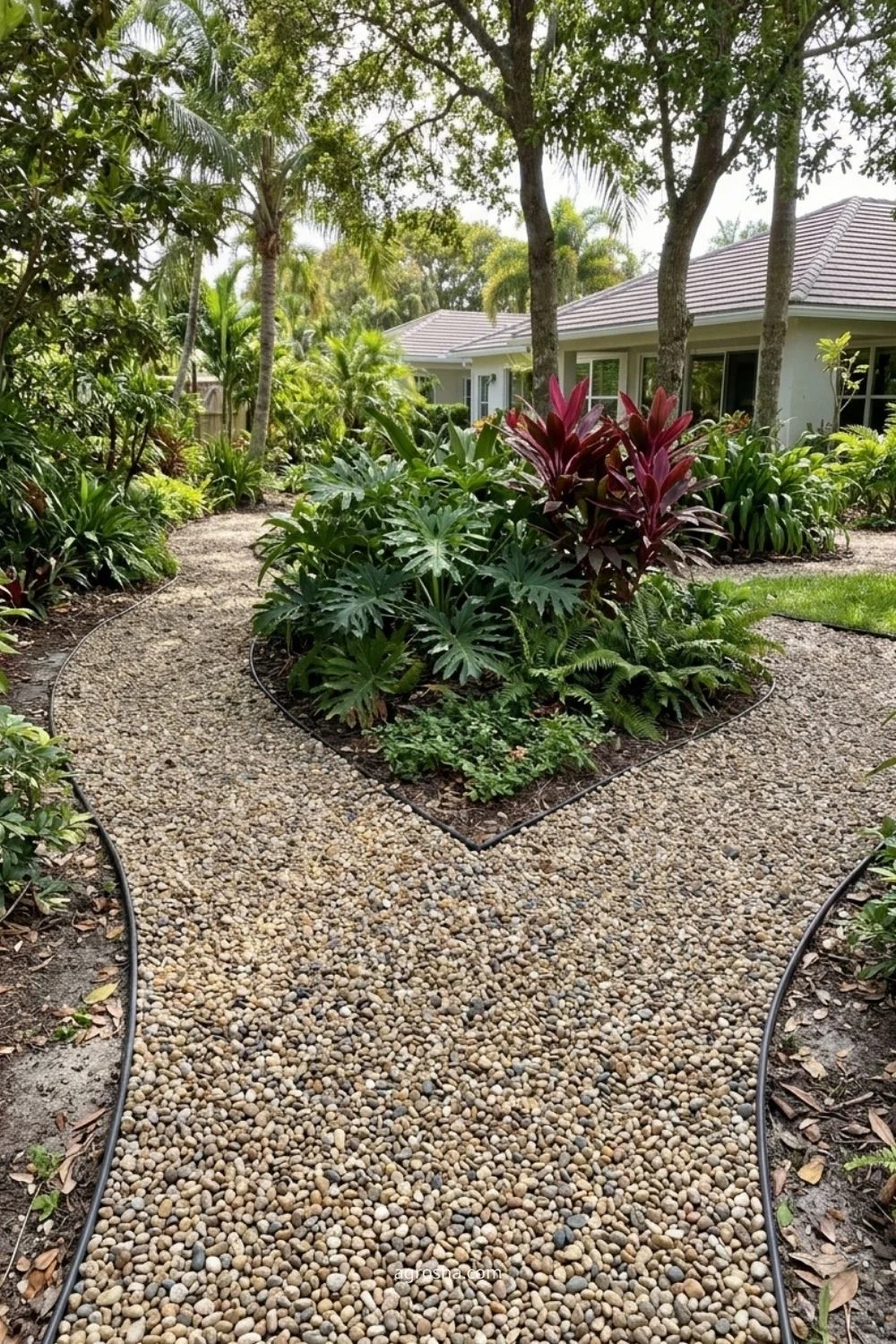
Using one main gravel size and color across the backyard, side yard, and garden path makes the landscape feel more cohesive. Change edging or stepping stones for variety instead of changing the gravel itself. Fewer materials are easier to buy, repair, and match later.
Frequently Asked Questions
What gravel is best for a garden path?
Angular crushed gravel usually compacts more firmly, while rounded pea gravel feels softer but moves more underfoot. The best choice depends on traffic, slope, edging, and the look you want.
How wide should a gravel garden path be?
Set width by use. A narrow access path can be compact, but a main route should let people walk comfortably without brushing plants. If you use a wheelbarrow or garden cart, test that width before installation.
Do I need edging for a gravel path?
Edging is strongly useful where gravel meets lawn, mulch, or soil. It reduces migration and makes maintenance cleaner. Hidden edging works for a subtle look; brick, stone, or steel can become part of the design.
How do I keep weeds out of gravel?
Remove existing perennial weeds, use a sound base, and clean leaf debris before it becomes soil. Some weed seeds will still germinate on top, so early hand removal remains part of maintenance.
Final Thoughts
A good gravel path is not just a layer of stone. The route, base, edging, drainage, and transitions determine how it feels after a year of rain and foot traffic. Keep the material palette simple, make the path easy to walk, and let nearby planting soften the edges without taking over the route.