Sloped backyard garden ideas work best when you treat the grade as part of the design instead of trying to force the whole yard flat. A slope can help create levels, views, drainage routes, planting zones, and private garden rooms. The main goal is to make the yard safer and easier to use while protecting soil from erosion.
Before adding plants or structures, watch how water moves after rain. Mark steep areas, slippery routes, exposed soil, and places where runoff collects near the house. Small planting changes can often be DIY projects, but major retaining walls, grading, drainage work, decks, and stairs may require local permits or professional engineering.
Read the Slope Before You Plant
Start at the top and walk the yard slowly. Notice where you can stand comfortably, where mowing feels unsafe, and where water has already carved channels. A practical slope plan usually combines access, erosion control, and planting rather than treating each problem separately.
If the yard needs a simple path before anything else, our garden pathway ideas can help you compare gravel, stepping-stone, and curved routes for smaller spaces.
30 Sloped Backyard Garden Ideas
1. Tiered Retaining-Wall Garden Beds
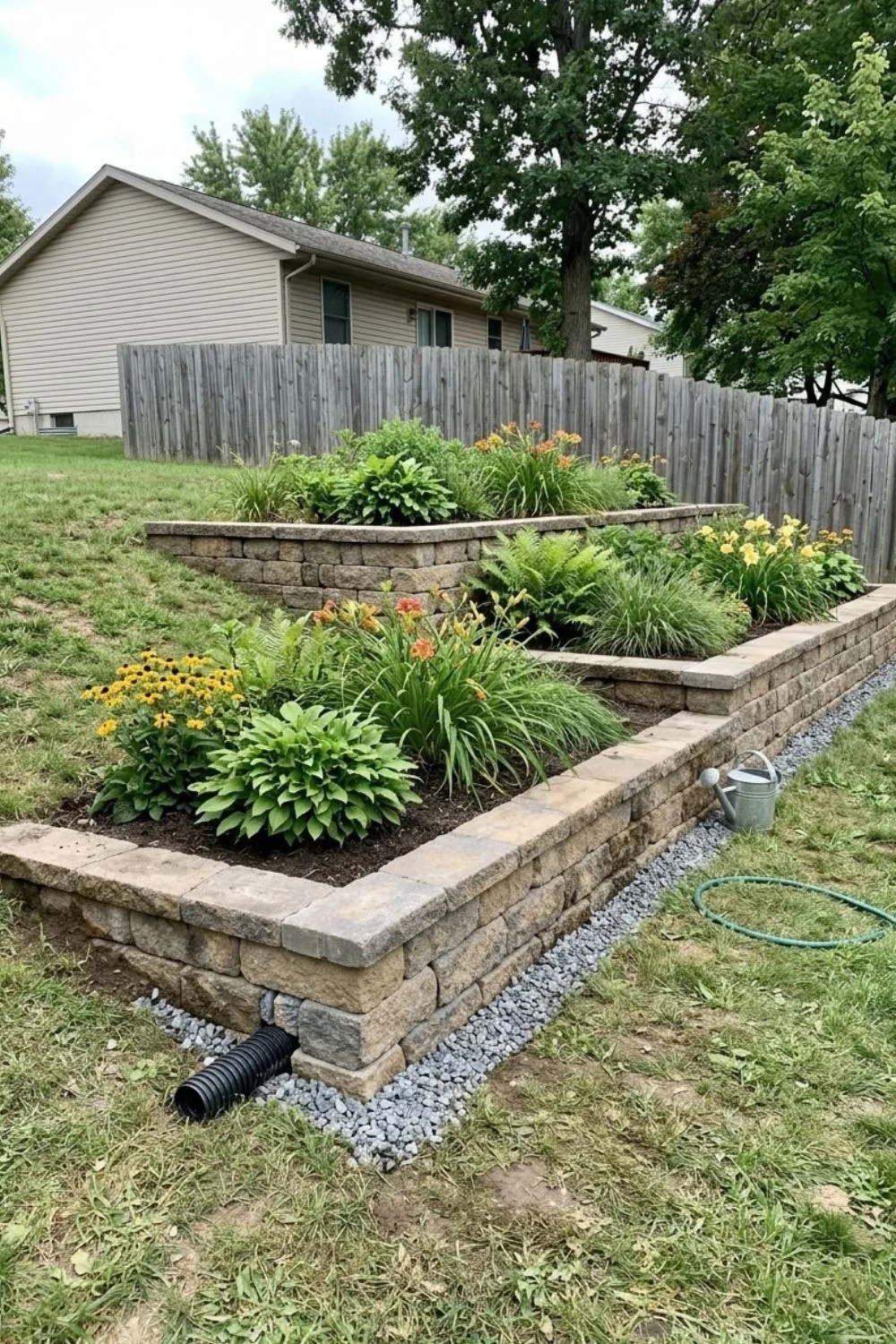
Terraces turn one steep incline into smaller level planting areas. Low walls can work for gentle grade changes, while taller walls may need drainage, footings, engineering, and permits. Use each level for a simple plant group instead of packing every tier with a different theme.
2. Natural Stone Steps
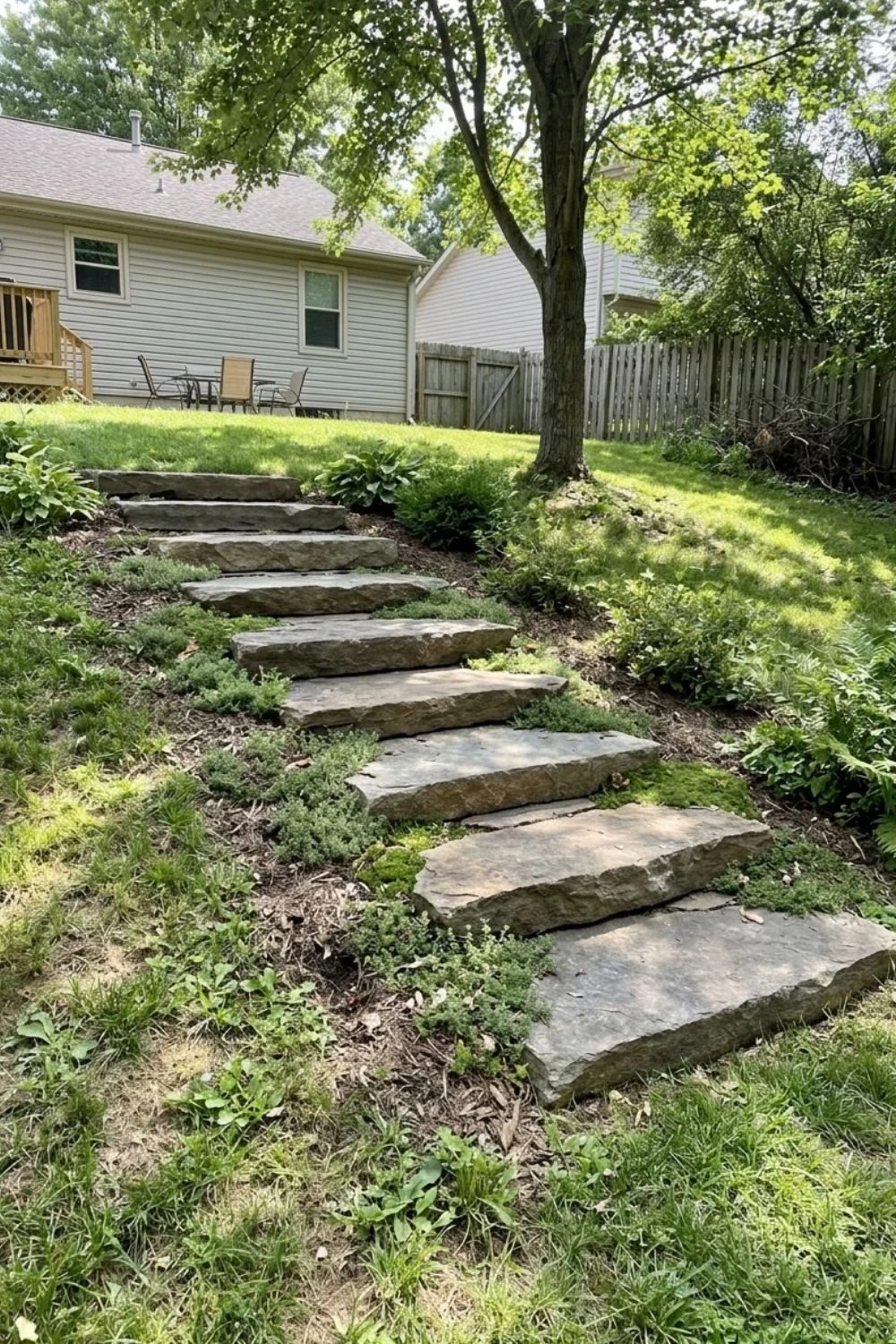
Wide stone steps can make a slope easier to move through and can feel more natural than a straight concrete stair. Keep risers consistent, provide stable footing, and avoid loose stones on steep sections. Low groundcovers beside the steps can soften the edges without narrowing the route.
3. Cascading Water Feature
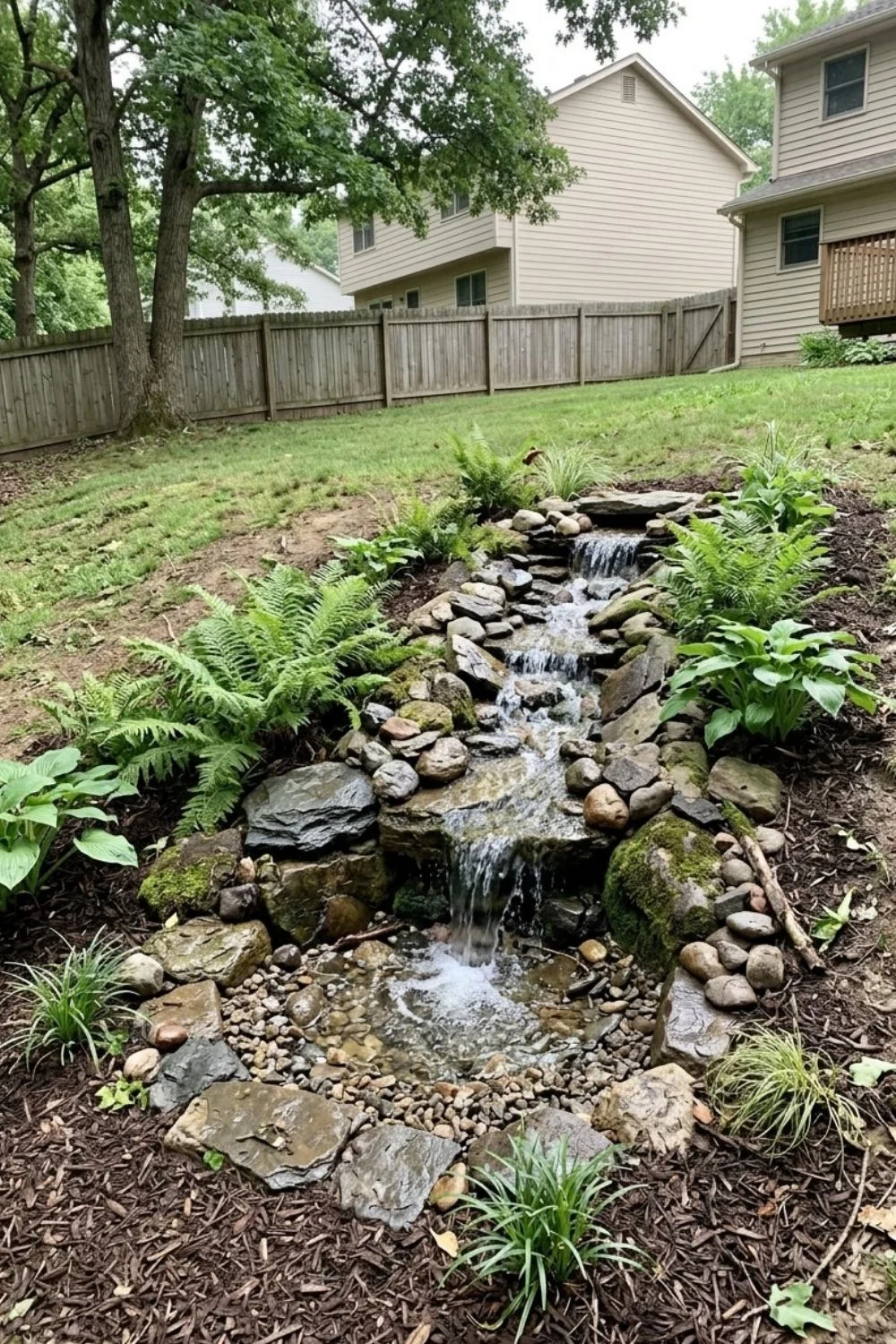
A slope naturally supports moving water, but a waterfall should not become the yard’s drainage system by accident. Use a recirculating design with a controlled basin and liner. Keep overflow away from foundations and neighboring property, and choose plants that tolerate occasional splash near the edges.
4. Multi-Level Decking
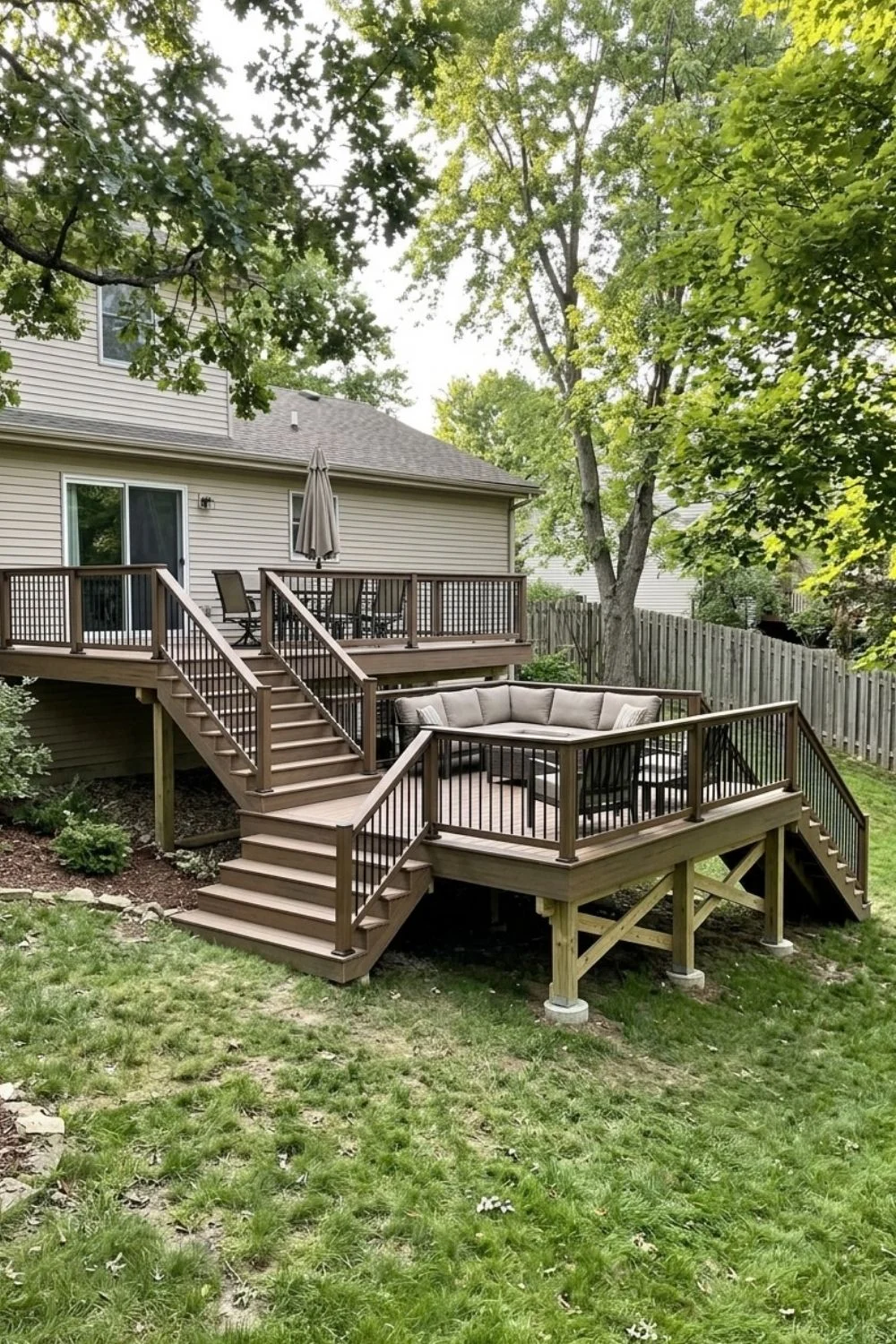
Deck levels can create flat outdoor rooms without excavating the entire slope. One level might hold a table, while another provides seating. Because elevated decks involve structural loads, railings, stairs, and footings, follow local building rules and use a qualified contractor when required.
5. Dry Creek Bed for Runoff
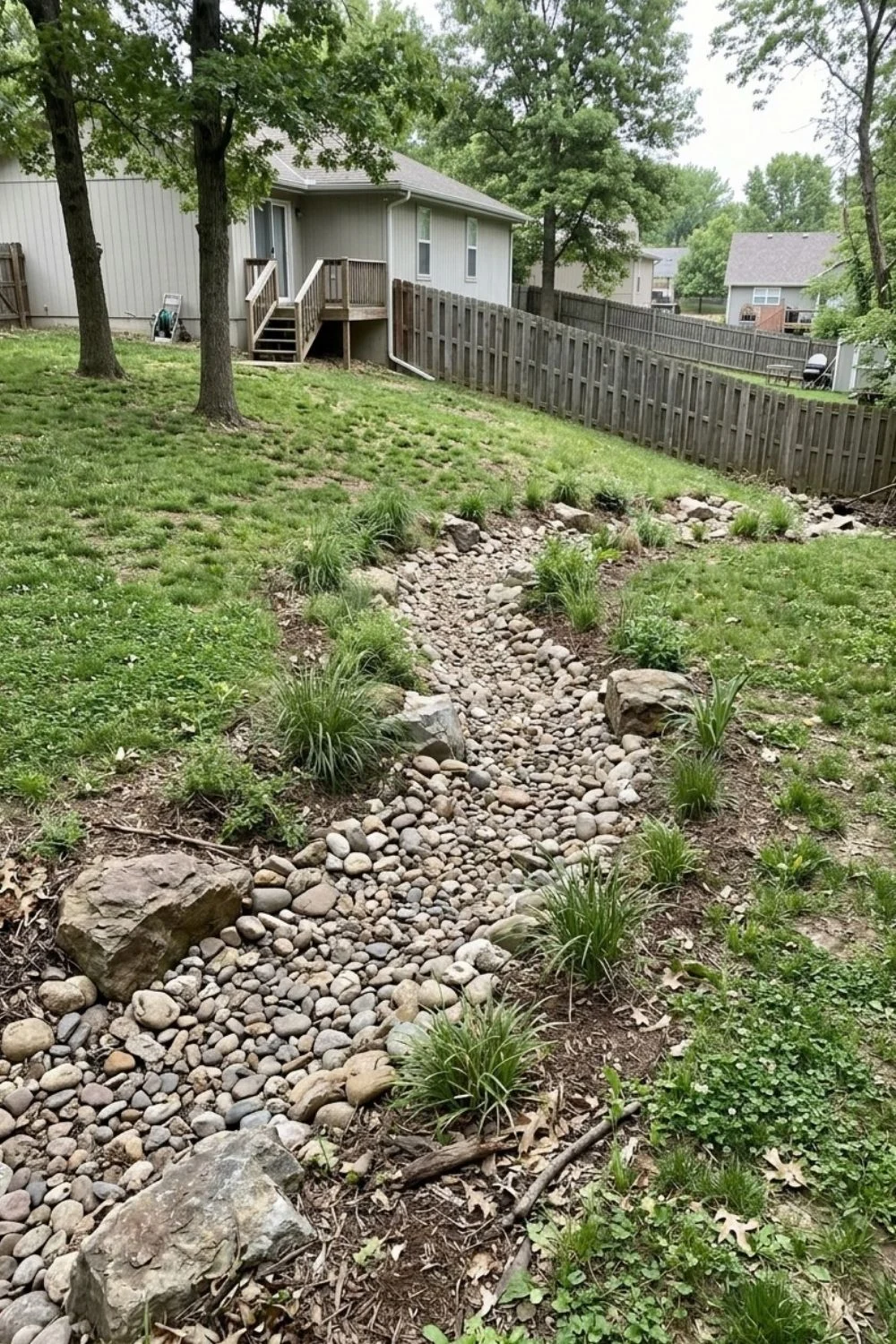
A dry creek bed can guide surface water through the yard while looking like a natural landscape feature. Use a shallow swale, larger anchor stones, and smaller river rock. The outlet matters as much as the channel, so direct water to an approved area instead of simply moving the problem downhill.
6. Terraced Patio Zone
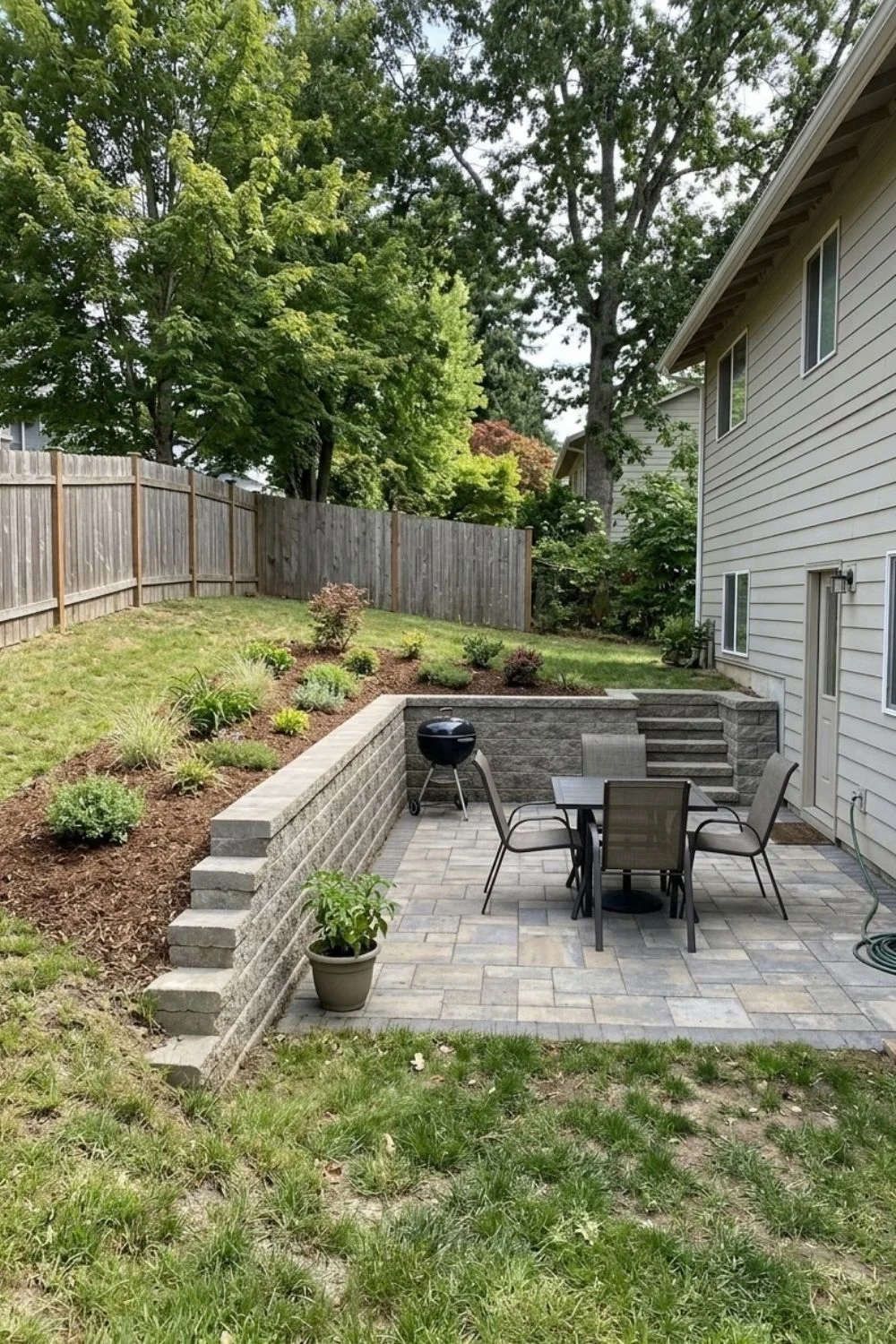
A level patio cut into a slope can create useful dining or cooking space. Keep the paved area slightly pitched for drainage and make sure any wall behind it can handle soil pressure. Add simple planting above and below so the patio feels connected to the yard.
7. Family Play Slide on a Gentle Slope
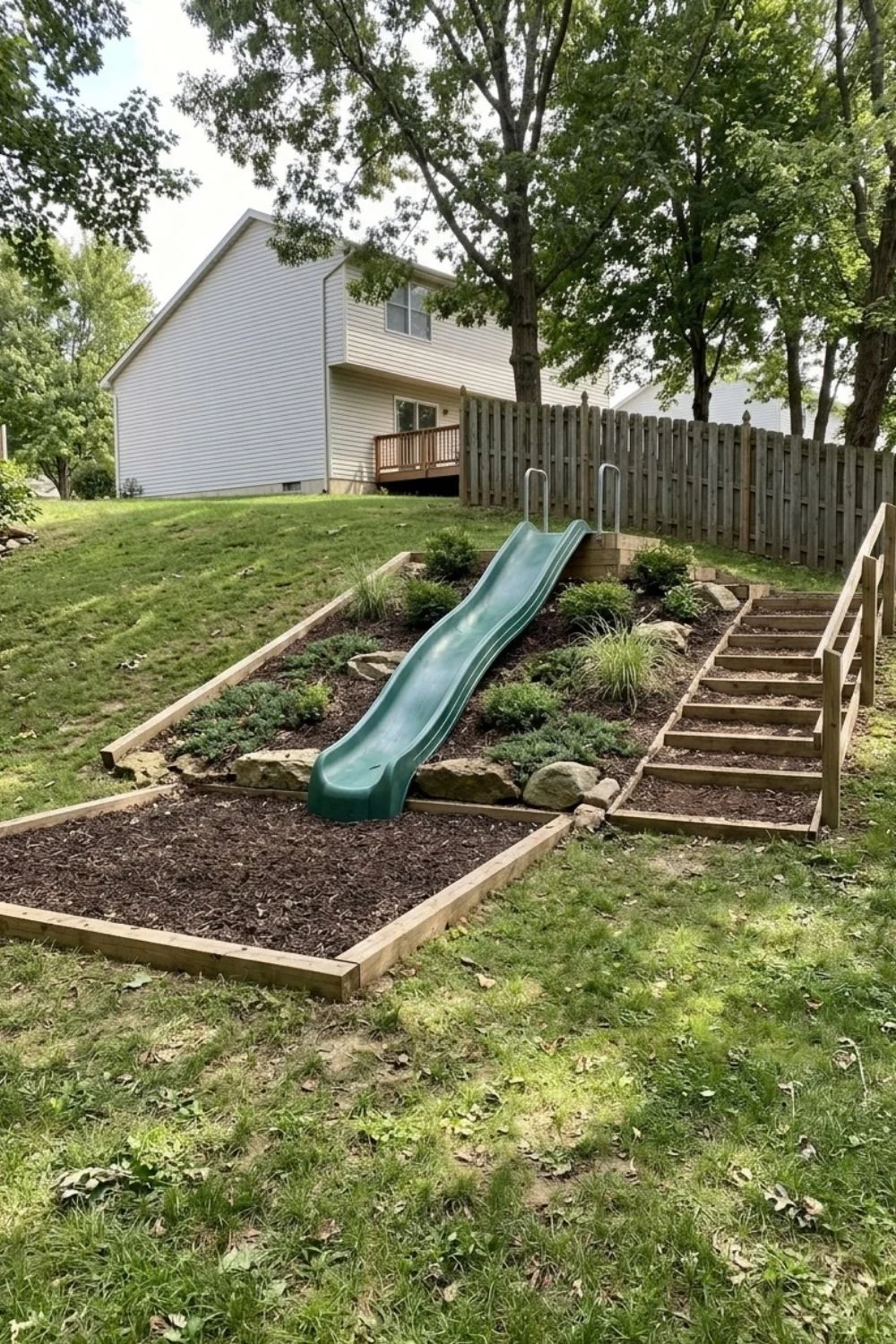
A gentle open slope can support a play slide or simple activity area. Keep the landing zone clear, use impact-absorbing surfacing where appropriate, and avoid retaining walls, rocks, or hard edges directly beside the play route. This works best where the grade is smooth and visible from the house.
8. Contour Planting Rows
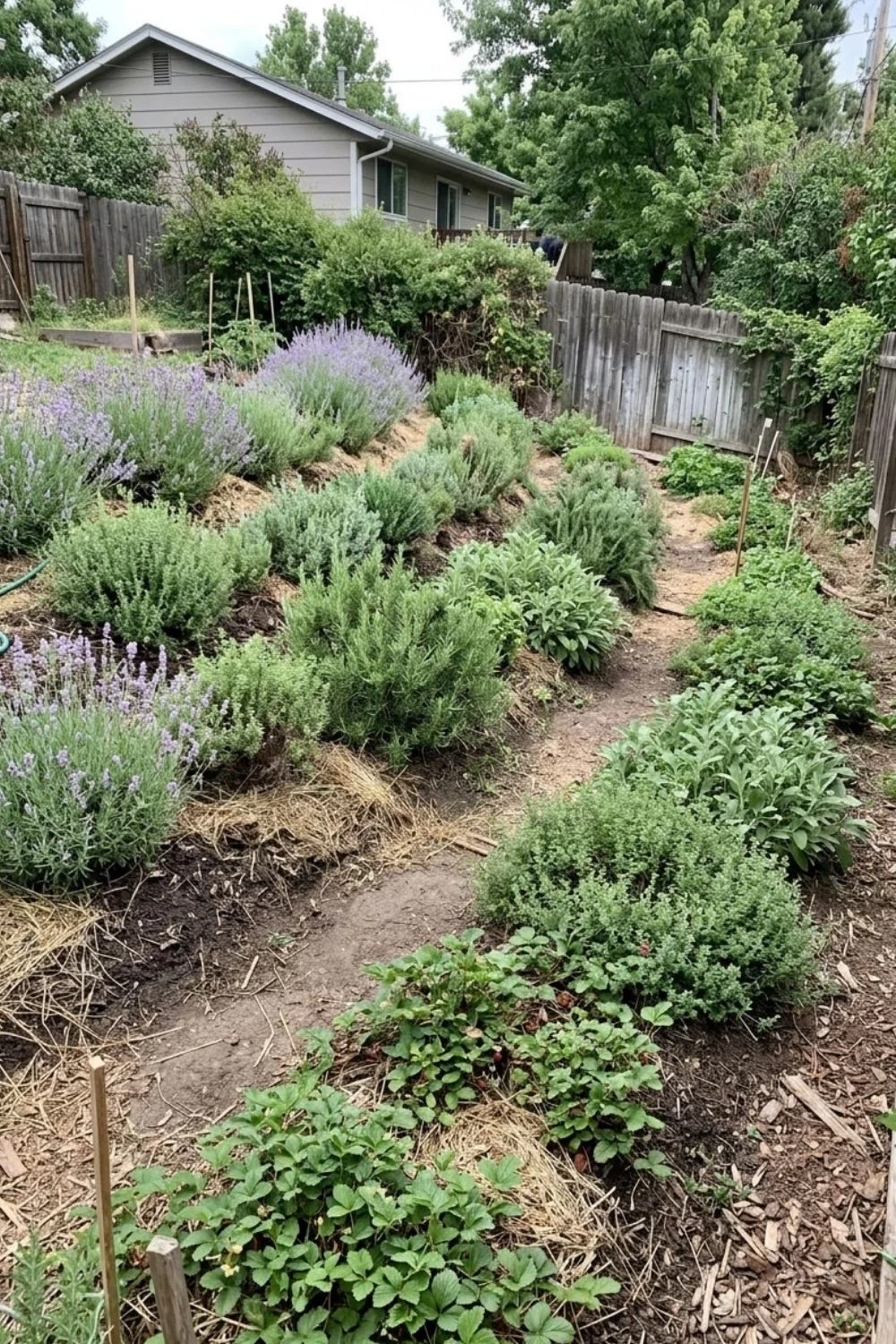
Instead of planting straight up and down the hill, arrange rows roughly along the contour. This can slow runoff and make the slope feel organized. Use shrubs, ornamental grasses, herbs, or berry plants suited to your climate. Keep access paths between rows wide enough for maintenance.
9. Boulder and Rock Garden
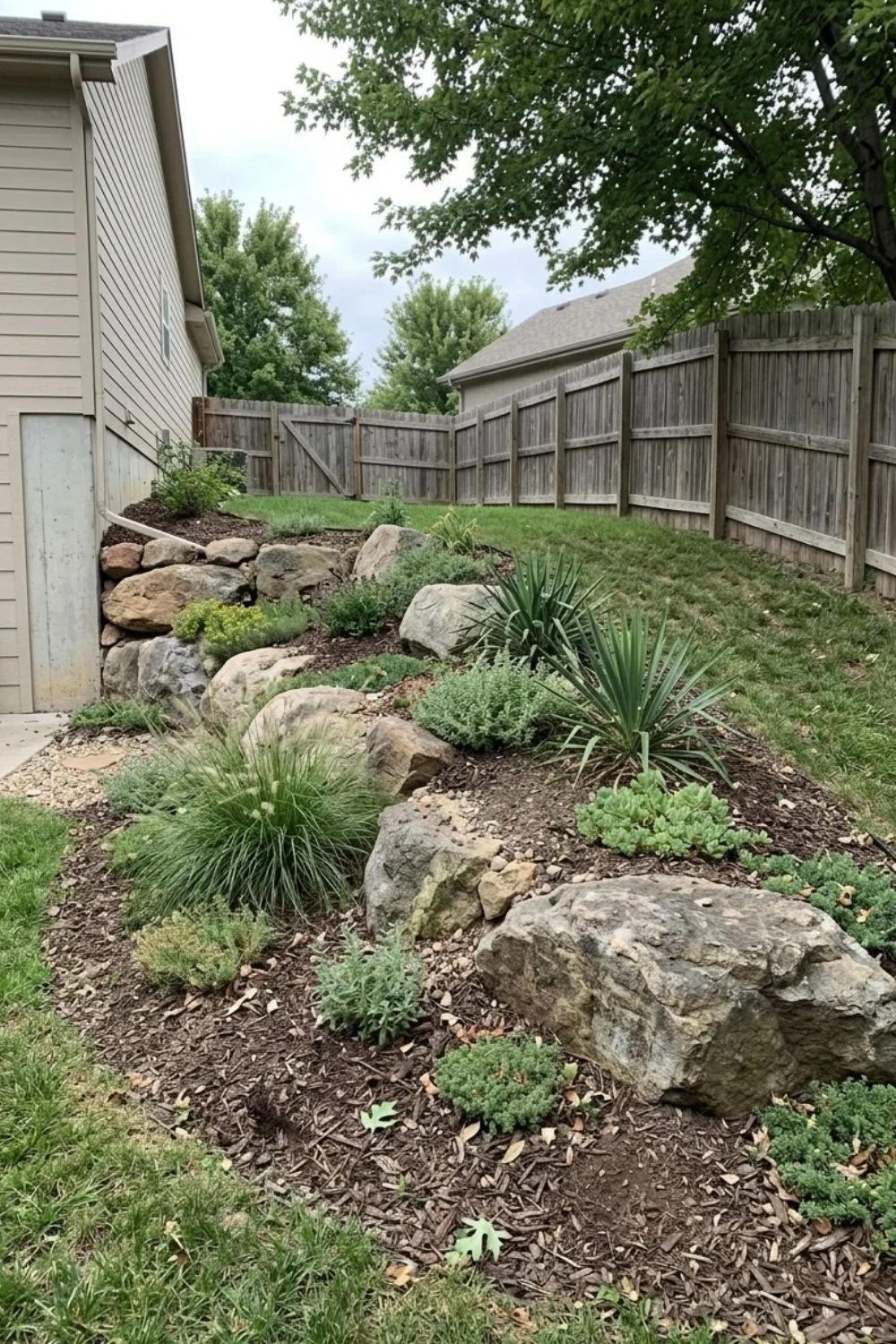
Partly buried boulders can visually anchor a slope and create small planting pockets. Use drought-tolerant plants where drainage is fast. Decorative rocks should not be treated as structural retaining elements unless they are installed for that purpose.
10. Sunken Fire Pit Terrace
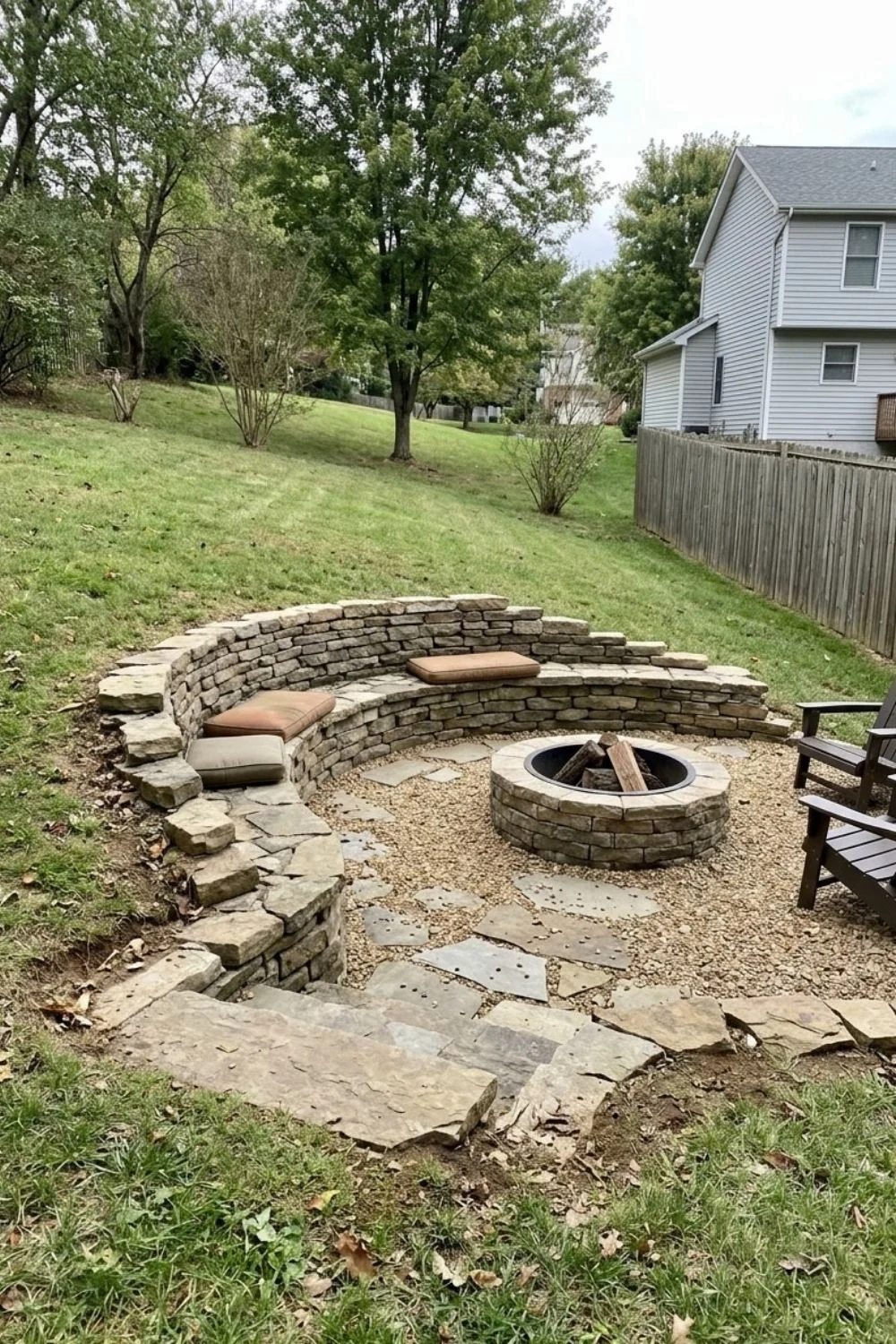
A recessed gathering area can fit naturally into a slope, but fire features require extra planning. Use noncombustible surfaces, maintain safe clearances from vegetation and structures, and follow local fire rules. In wildfire-prone regions, keep the surrounding landscape open and well maintained.
Work With Existing Grades
The easiest slope to maintain is usually the one you disturb as little as possible. Keep stable existing trees, avoid exposing large areas of bare soil at once, and use broad planting masses instead of many tiny isolated beds. Our low-maintenance backyard landscaping ideas can help simplify the rest of the yard around the slope.
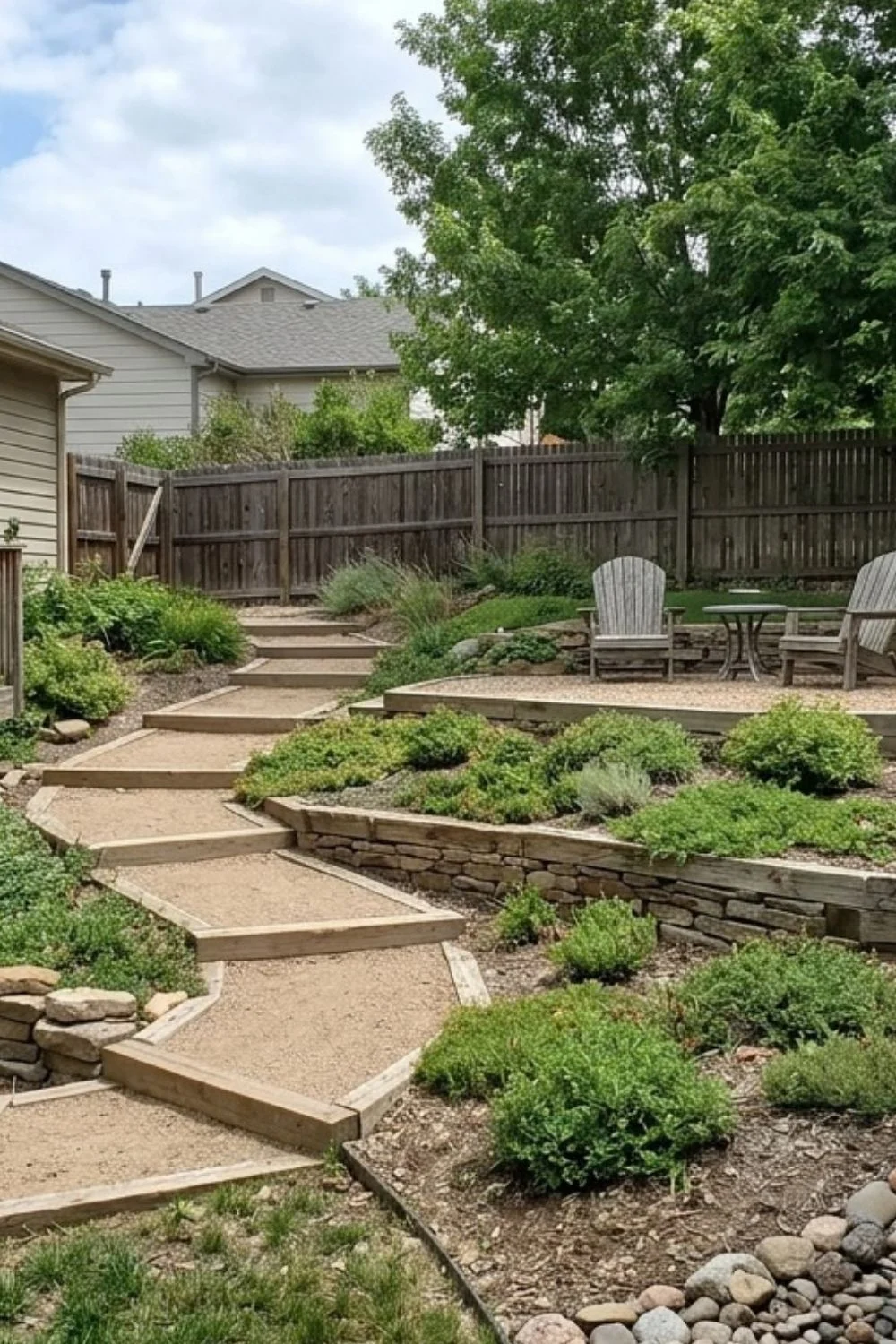
11. Switchback Garden Path
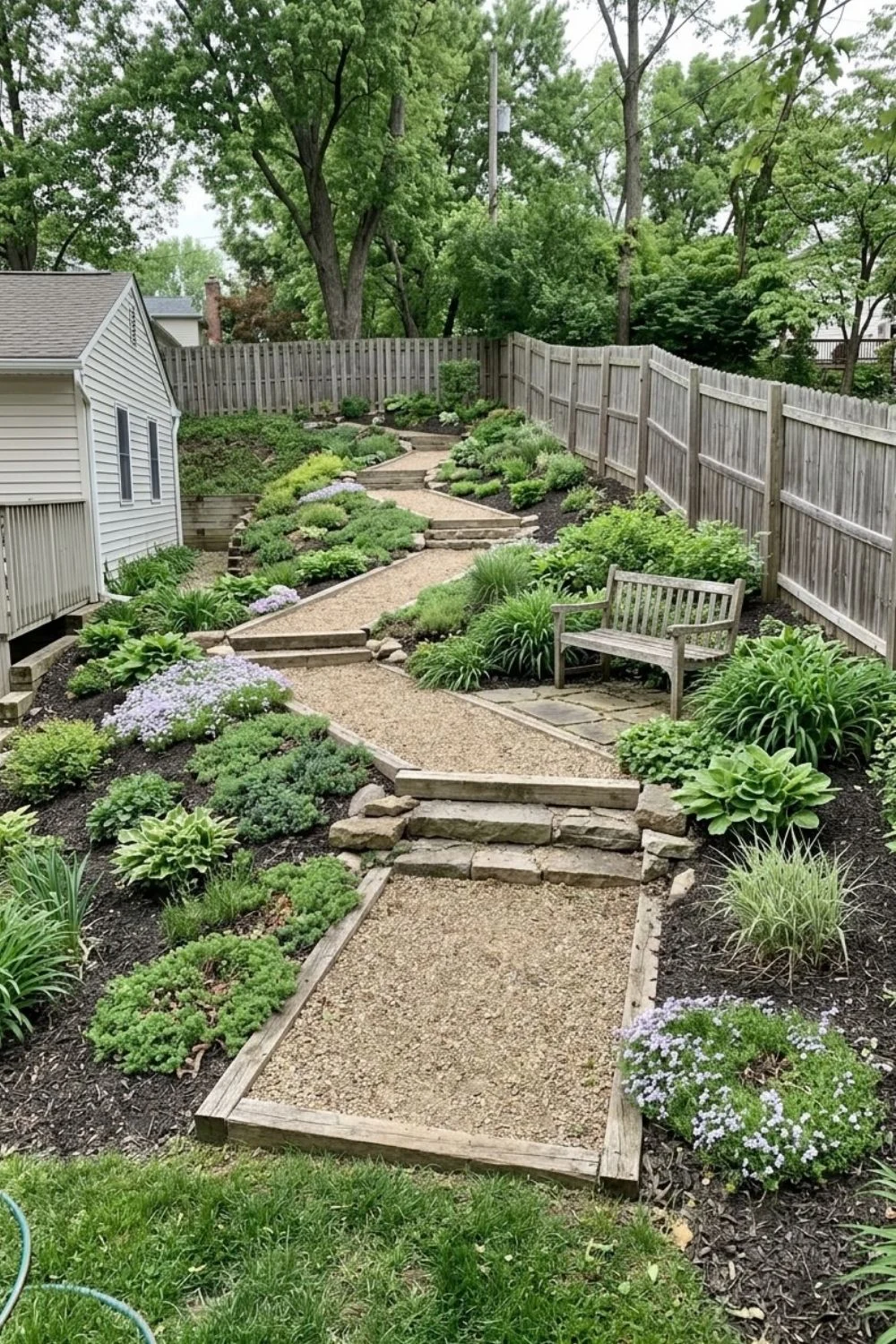
A zigzag or switchback route reduces the feeling of a steep climb. Use stable gravel, pavers, or compacted material with defined edges. Add resting points on longer routes and keep turns wide enough to walk comfortably with garden tools.
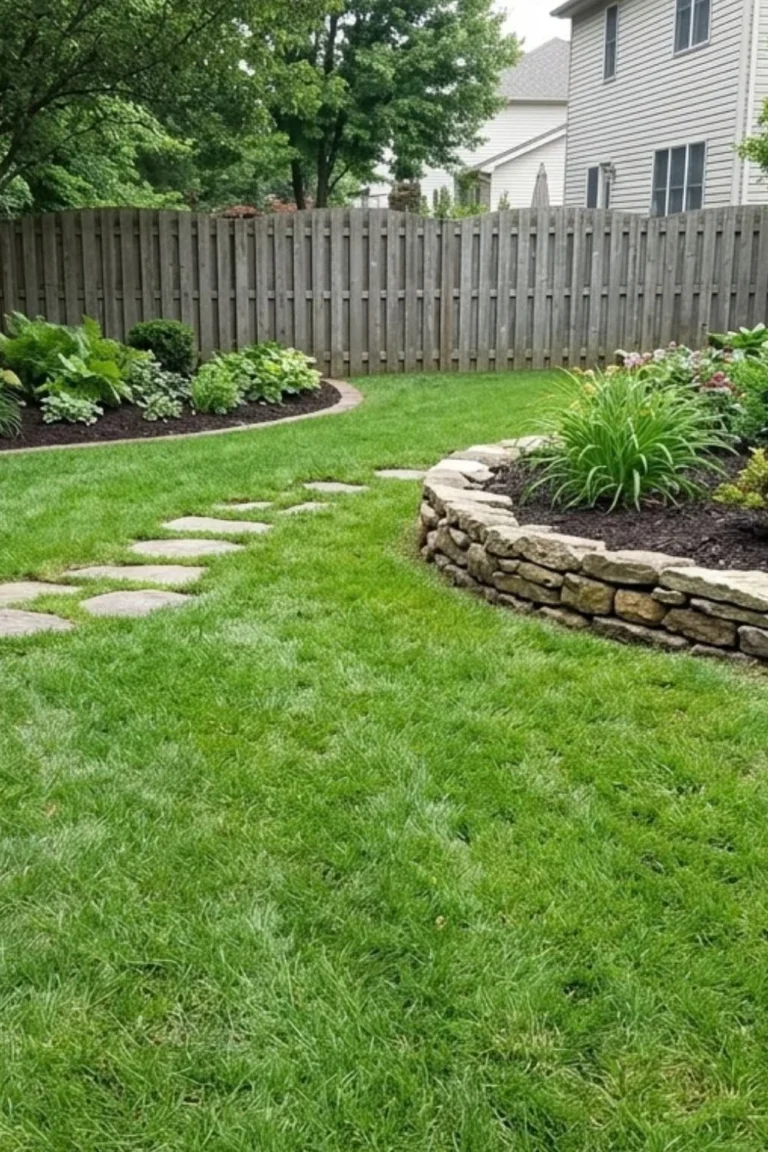
12. Flat Lawn Tiers
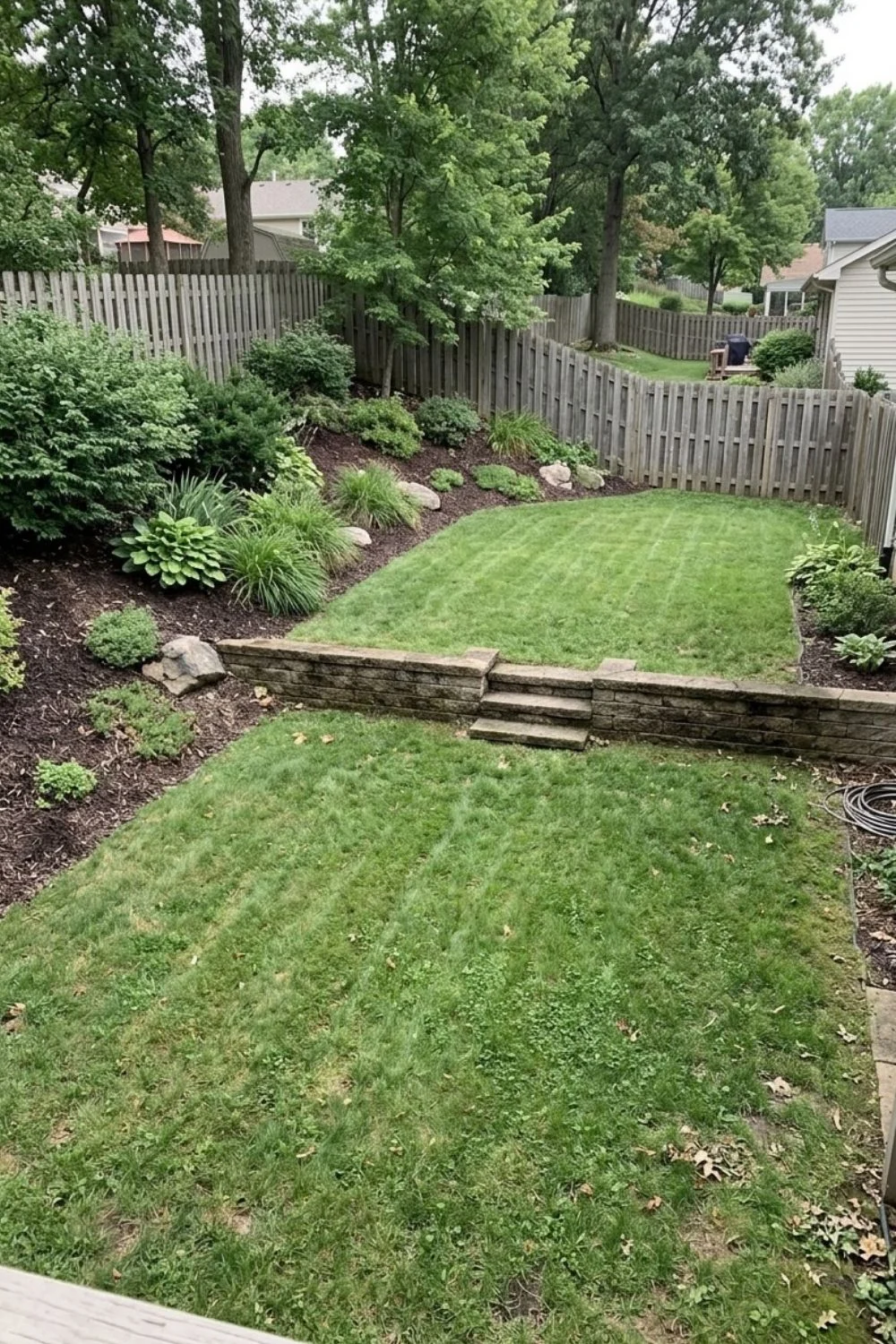
If you still want grass, keep it on a few usable flat sections instead of covering the entire hill. Small lawn terraces can support play or seating while steeper areas become planted beds or groundcover. This reduces difficult mowing on slopes.
13. Outdoor Amphitheater Seating
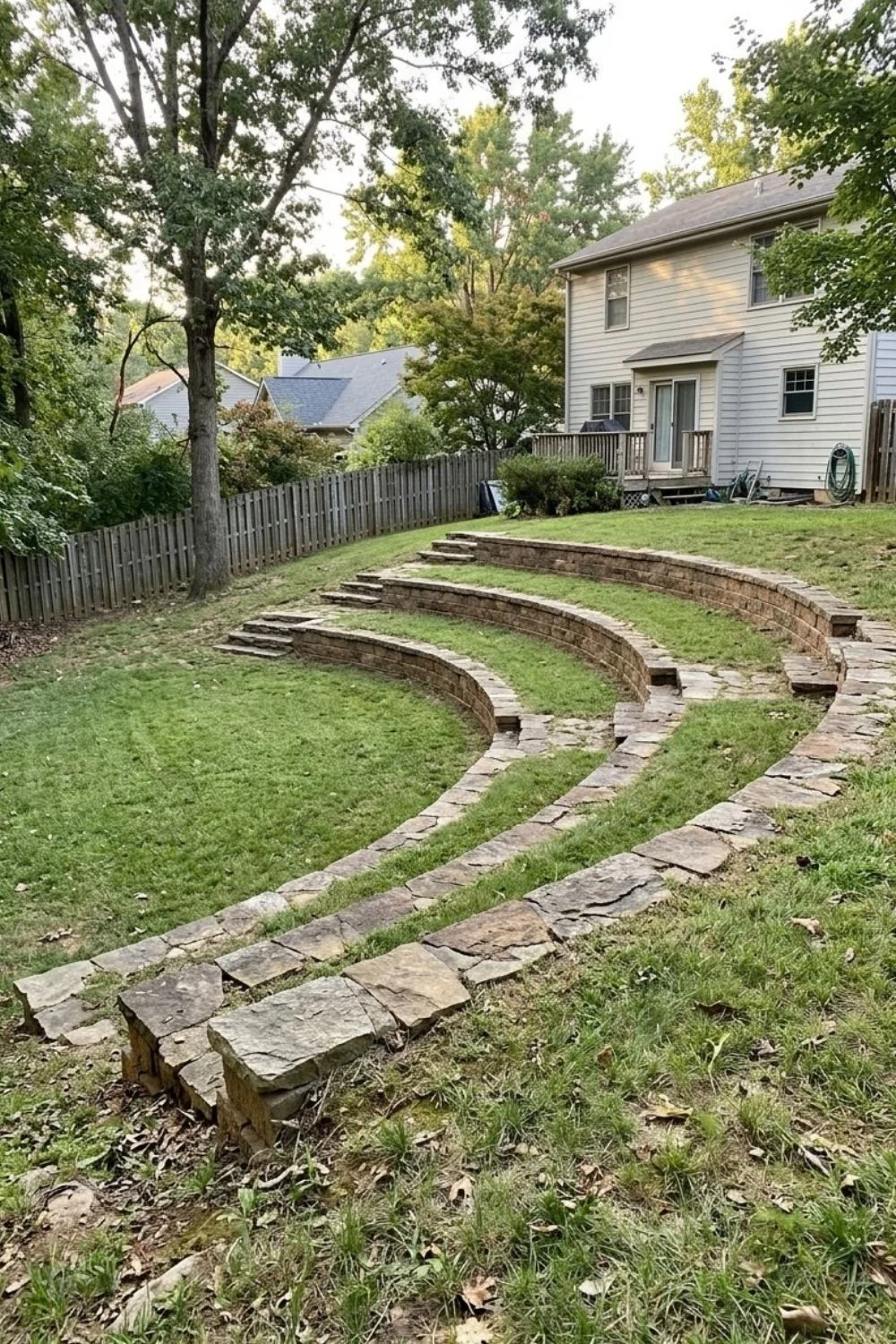
A broad slope can naturally support stepped seating facing a small lawn or patio. Keep the steps wide, stable, and consistent. Use this concept only where the grade and soil can safely support the structure, especially if walls or built-in seating retain soil.
14. Hillside Pergola Retreat
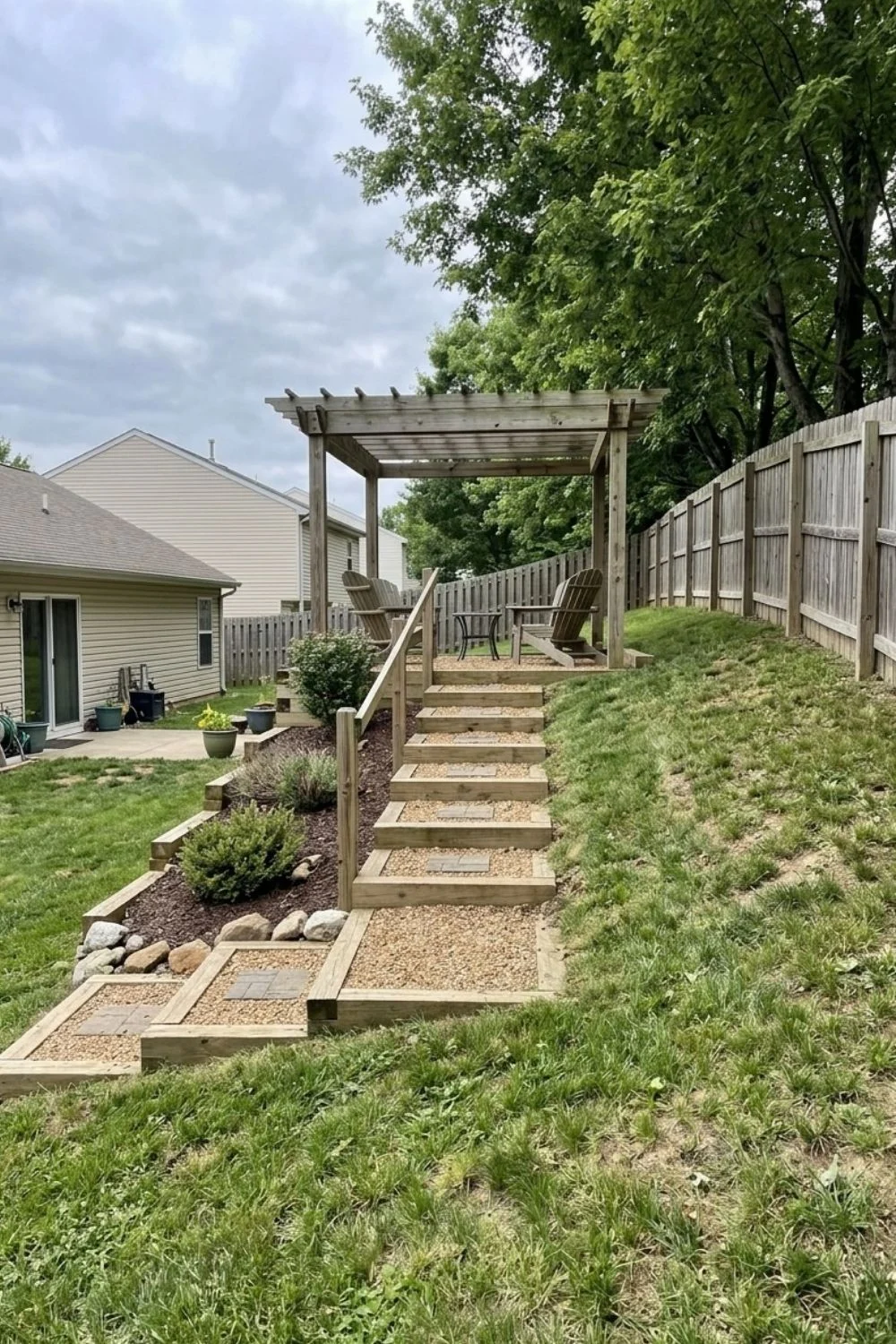
A pergola on a level terrace can turn the upper slope into a destination. Choose a location with a useful view and safe access. Keep foundations away from unstable soil edges and make sure the path to the structure is comfortable in wet weather.
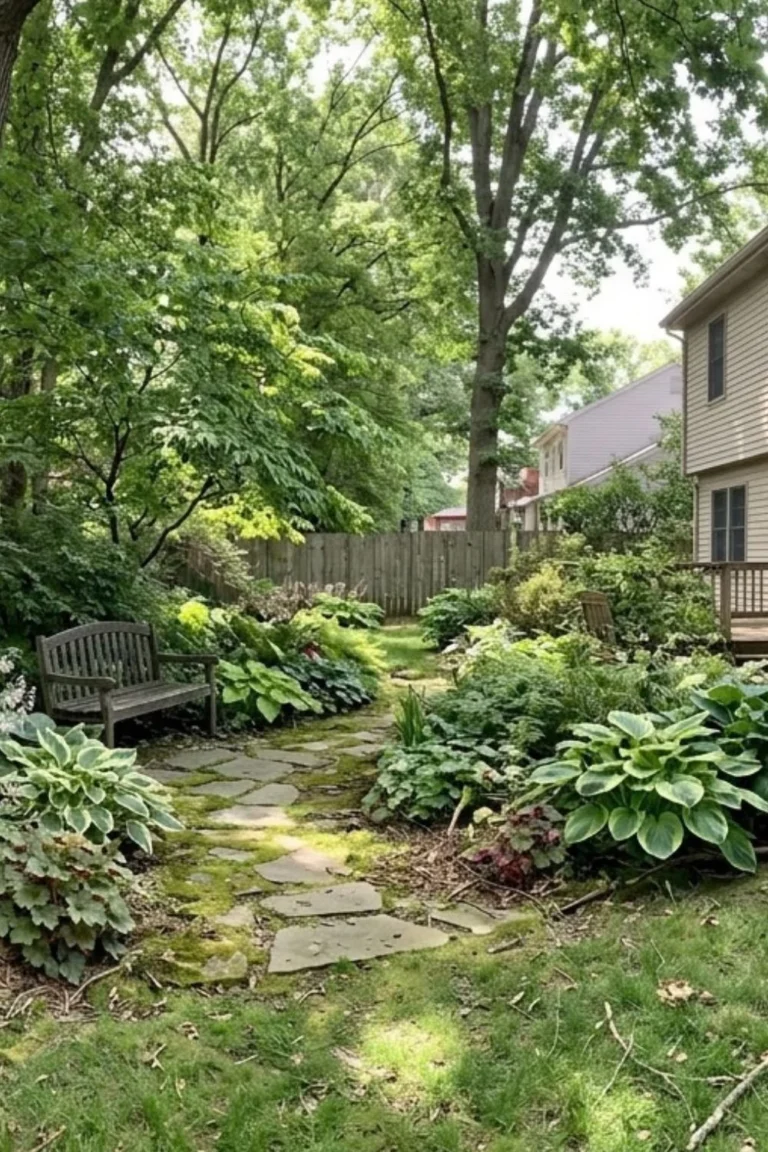
15. Groundcover and Wildflower Slope
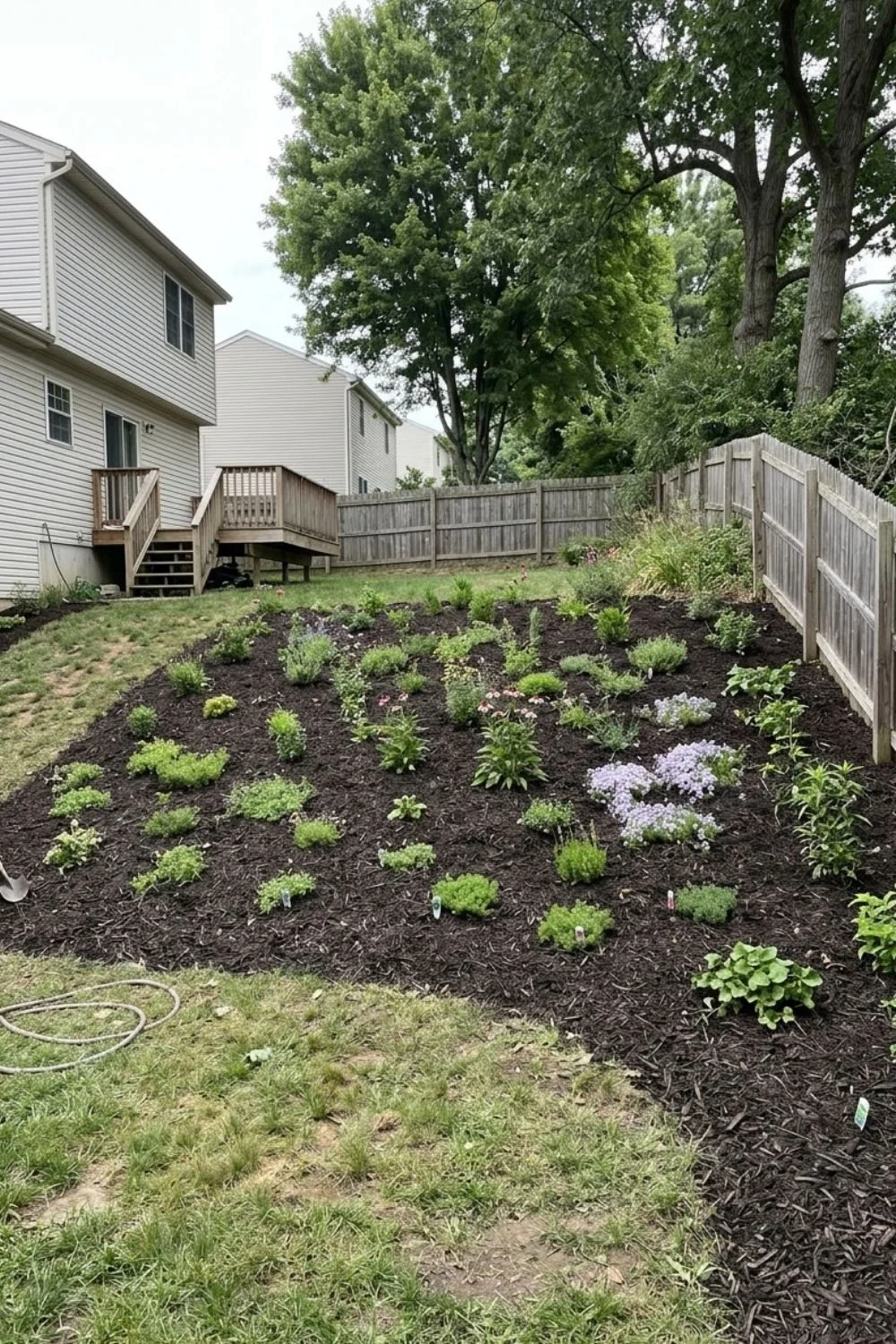
Low-growing groundcovers and region-appropriate native flowers can replace hard-to-mow turf. Use plants suited to the actual sun, moisture, and soil. Establishing coverage takes time, so mulch or erosion-control material may be needed while roots develop.
16. Terraced Vegetable Garden
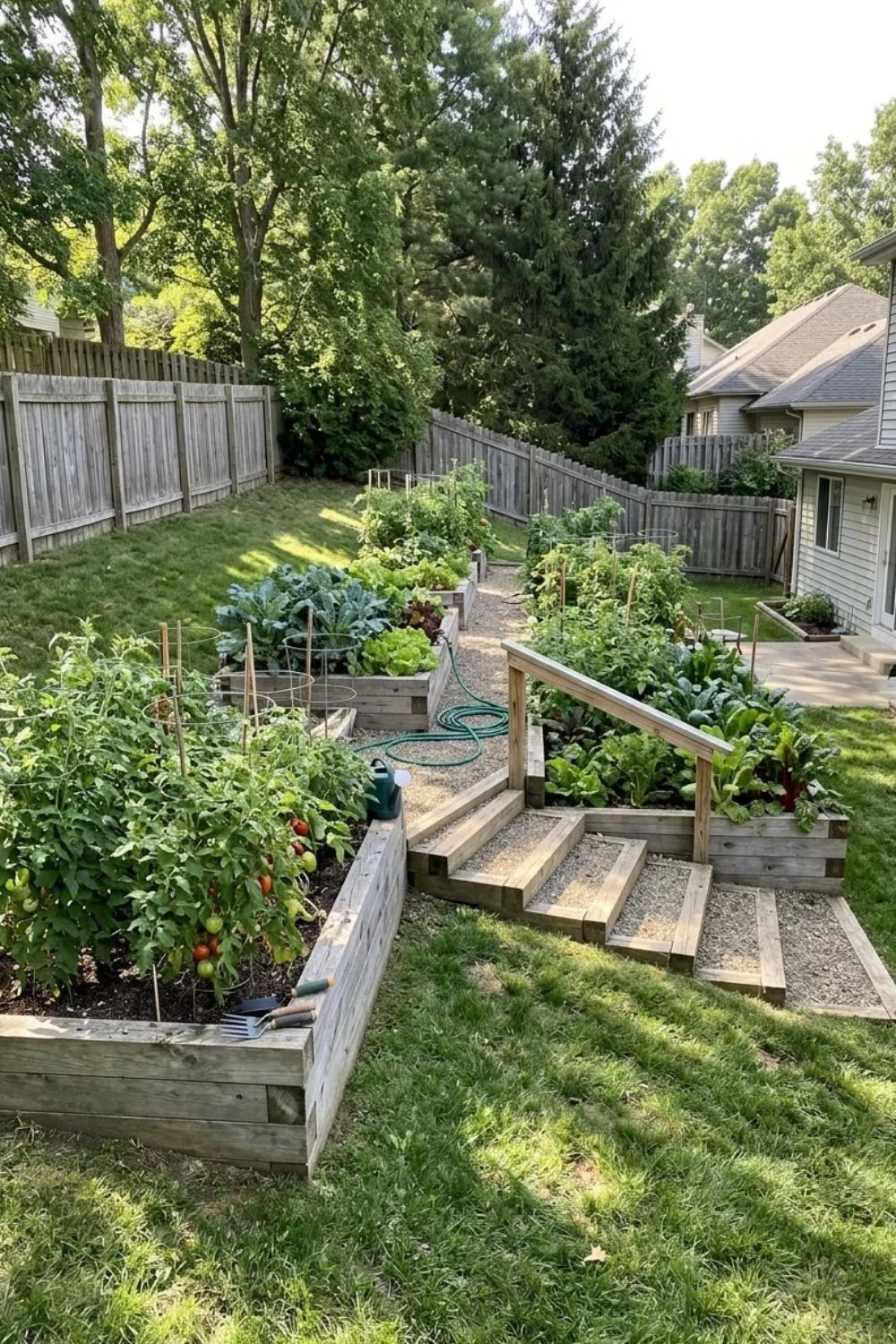
Small level beds can turn a sunny slope into productive growing space. Keep bed width reachable from paths and install steps or ramps that make harvesting safe. For practical bed sizing and access, see our raised garden bed layout guide.
17. Integrated Landscape Lighting
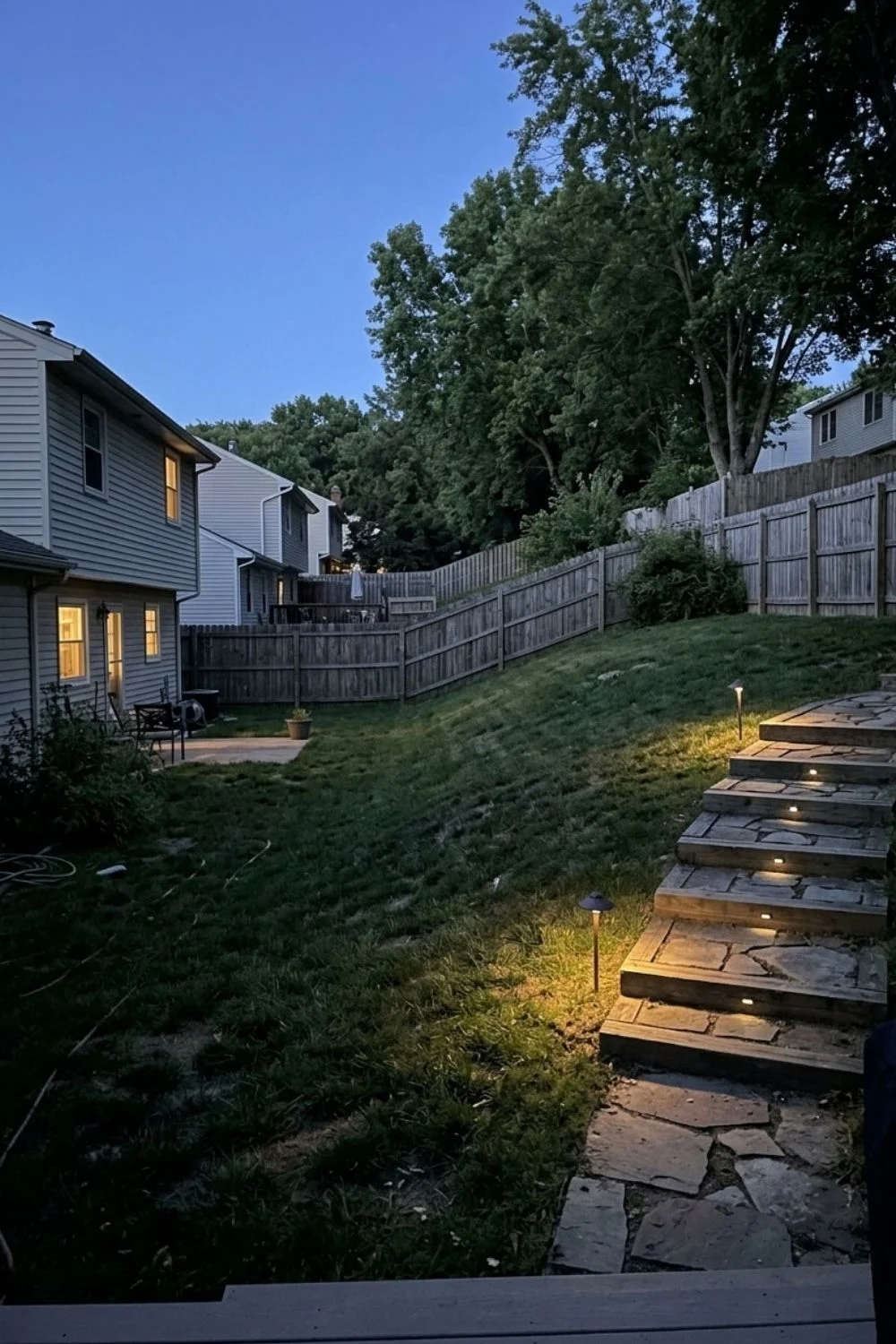
Low-voltage path lights can improve nighttime visibility on slope routes. Focus on steps, turns, wall edges, and level changes rather than lighting every plant. Shield fixtures to reduce glare and keep wiring protected from digging and runoff.
18. Zen Gravel Terrace
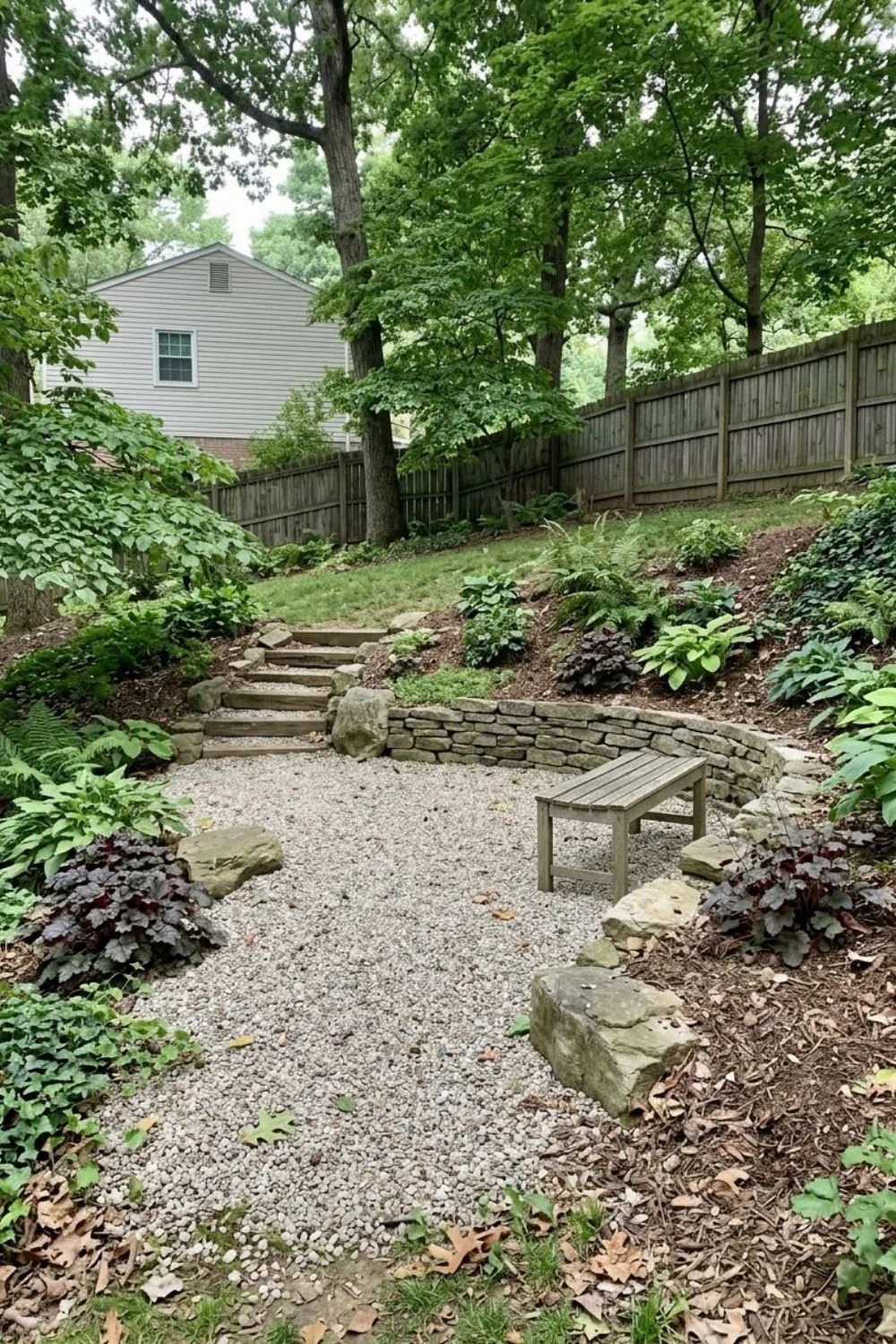
A small level terrace with gravel, a few rocks, and restrained planting can create a quiet resting space. Use edging to contain loose gravel on the slope and provide a stable path into the area. Keep the design simple so maintenance stays manageable.
19. Succulent and Dry-Garden Slope
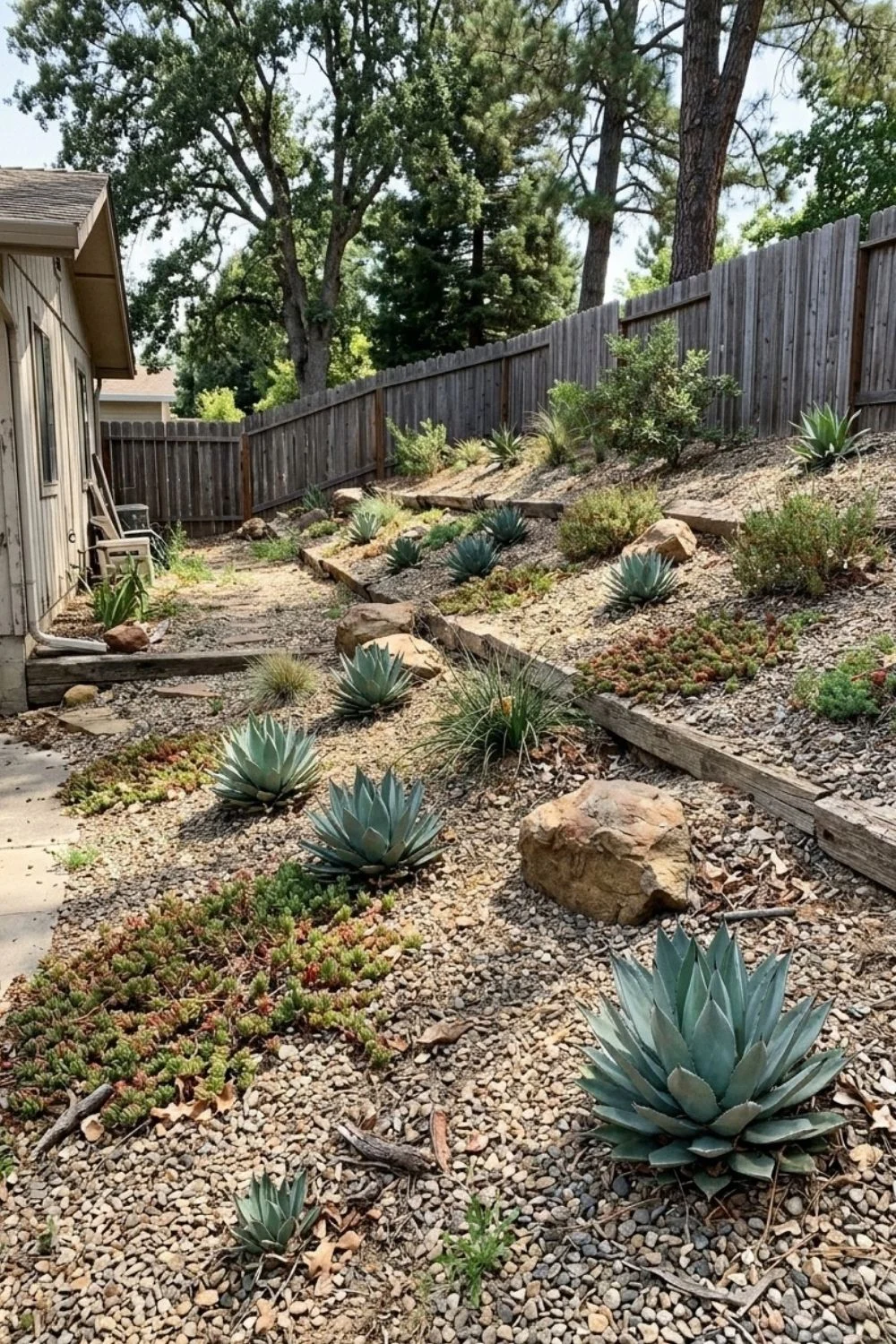
On sunny, fast-draining slopes in suitable climates, succulents and drought-tolerant plants can reduce watering needs. Group plants by water demand and use gravel or rock mulch carefully. Avoid species that are invasive or poorly adapted to local winter conditions.
20. Backyard Putting Green Terrace
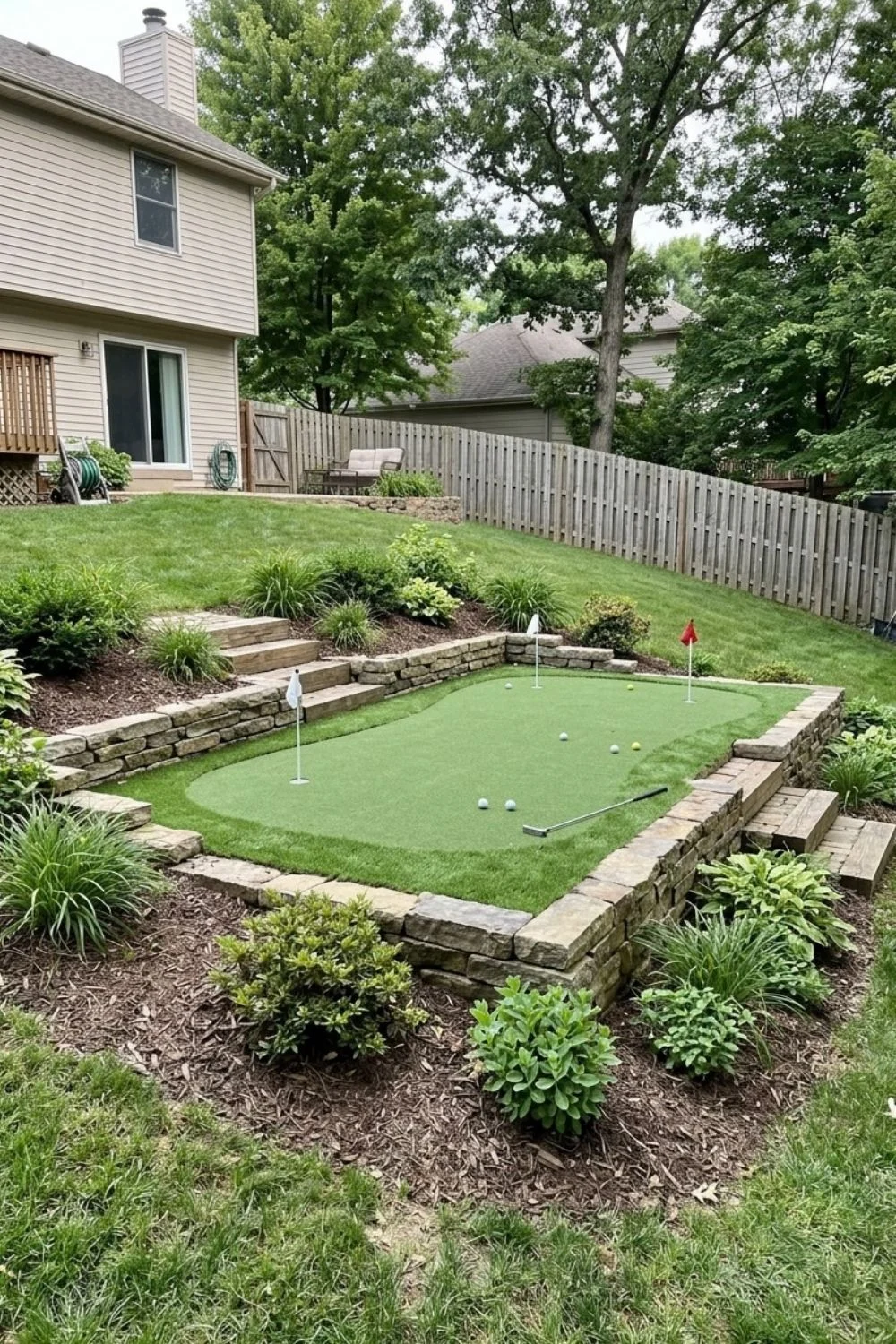
A putting area needs a controlled, smooth surface, so it works best on a purpose-built terrace rather than a raw hill. Keep drainage beneath the surface in mind. This is a specialty project and may be more practical as one small zone instead of taking over the entire slope.
Groundcover, Paths, and Drainage
Erosion control is easier when water slows down instead of racing straight downhill. Plant roots, mulch, contour beds, check steps, and shallow swales can all help depending on the site. Do not direct runoff toward a foundation, neighbor, septic area, or unstable wall.
21. Tiered Water Fountain
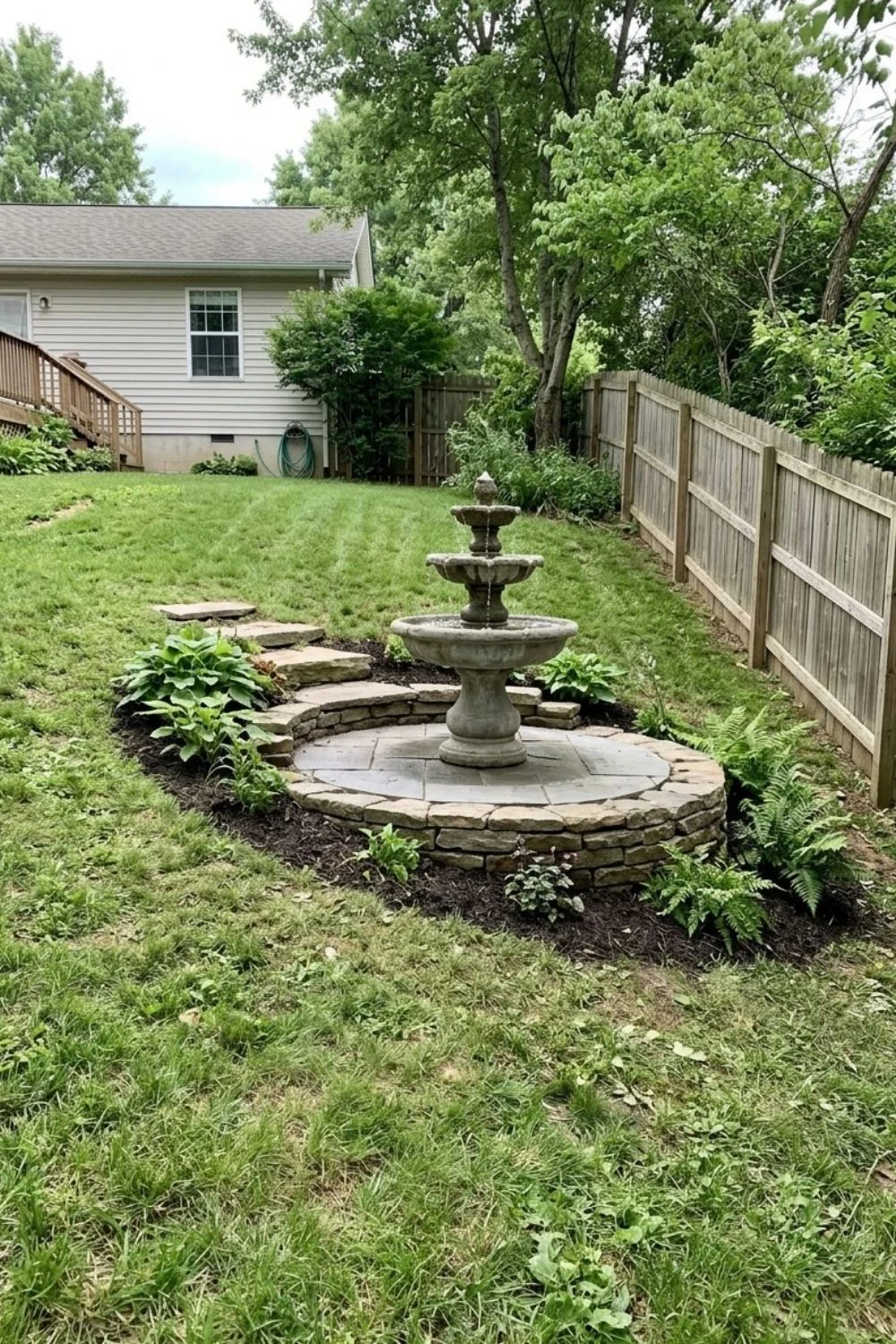
A formal fountain can use the change in elevation as part of its design. Choose a recirculating system and create stable level pads for each basin. Keep electrical components rated for outdoor wet locations and follow local installation requirements.
22. Hammock and Relaxation Nook
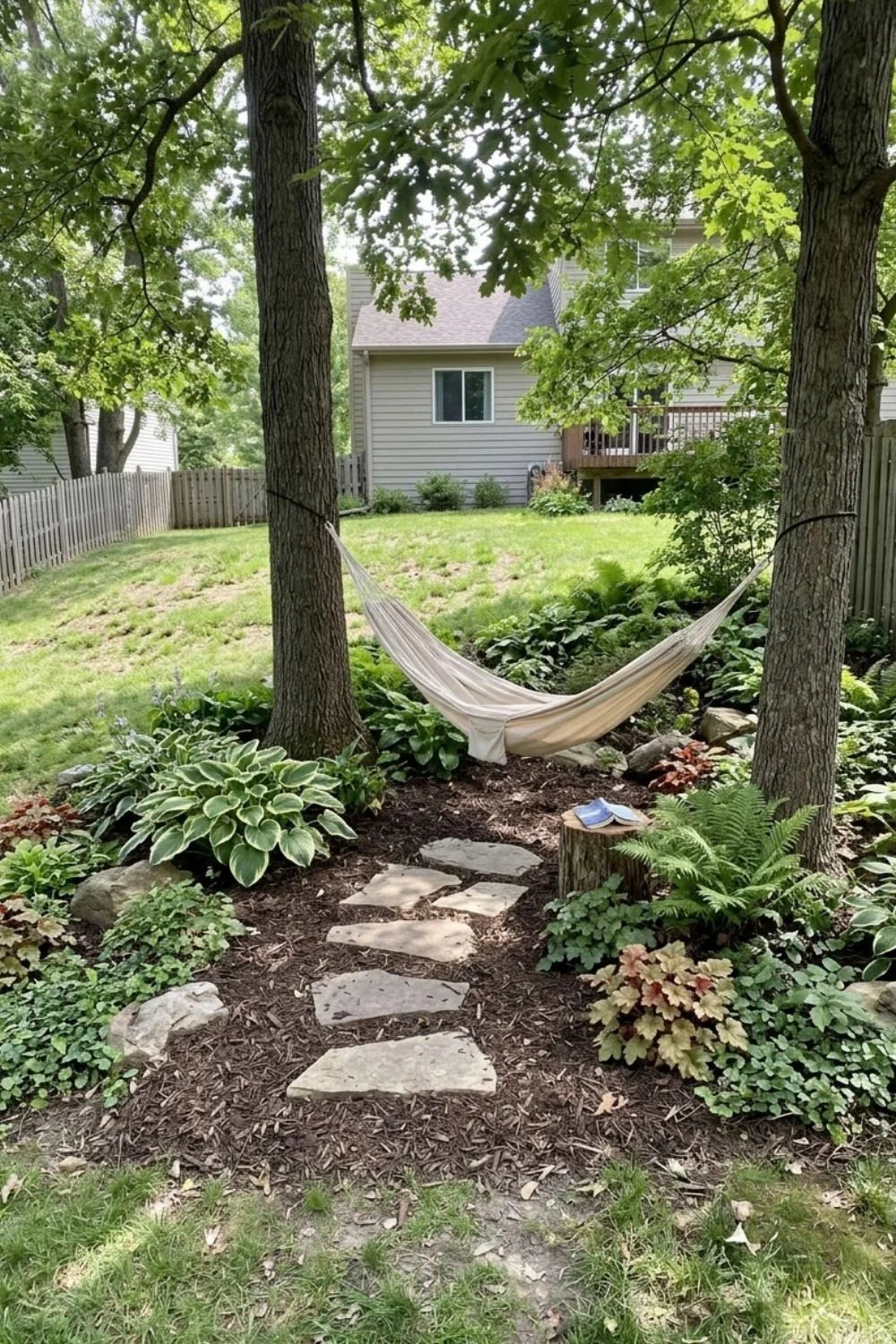
A gently sloped corner can become a quiet hammock area if the anchors are sound and the landing space is clear. Add a level stepping area below and choose low plants that will not interfere with movement. Avoid hanging from weak or damaged trees.
23. Wood-Timber Retaining Edges
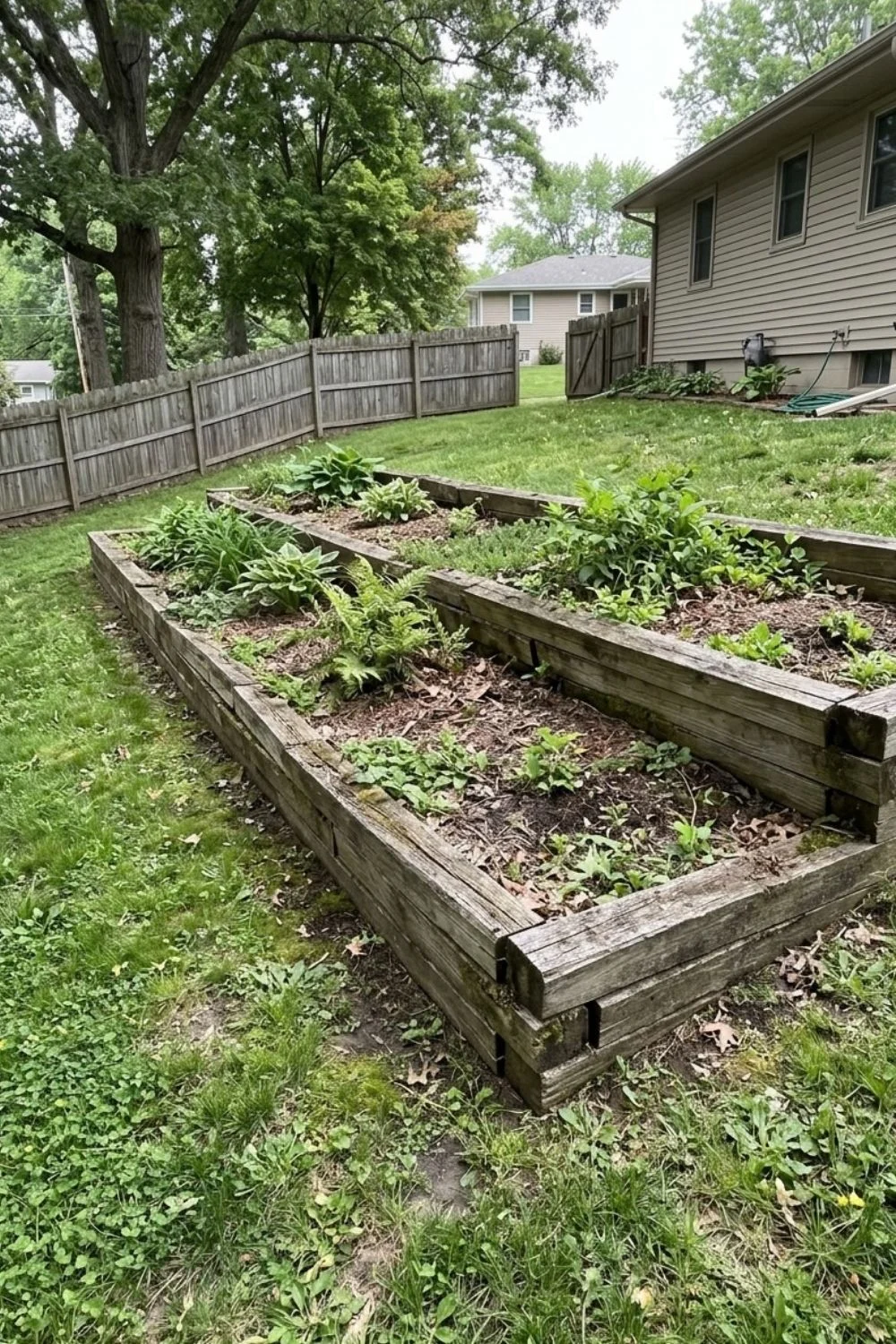
Low timber edges can shape shallow terraces in rustic gardens. Use rot-resistant materials and proper drainage. Tall walls or walls carrying major soil loads need more than decorative timbers and may require professional design.
24. Small Sloped Orchard
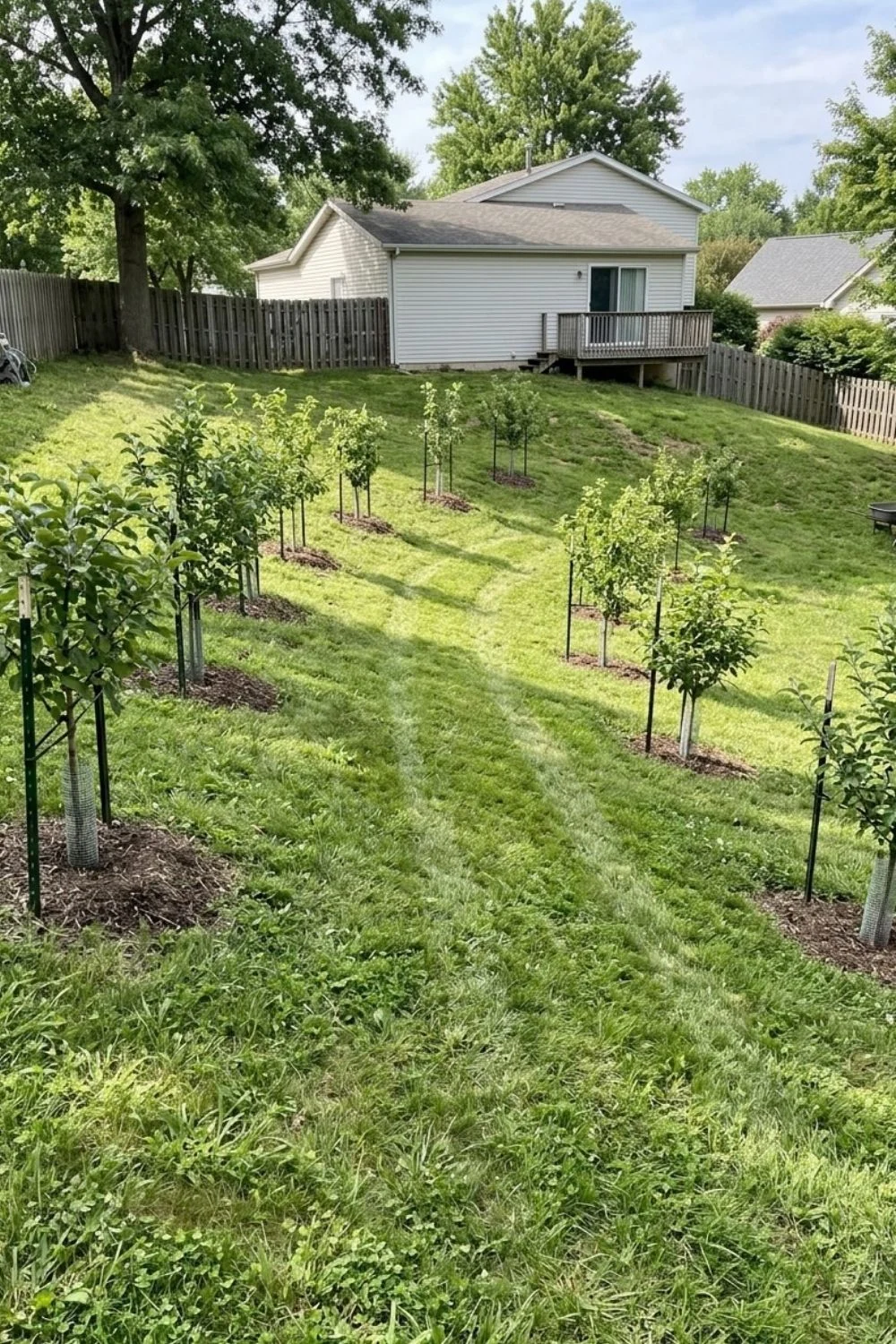
A sunny slope can offer good air movement for fruit trees, but access and soil moisture still matter. Plant along safe contours, choose varieties suited to your USDA hardiness zone and local chill requirements, and keep harvest routes stable.
25. Elevated Bridge or Boardwalk
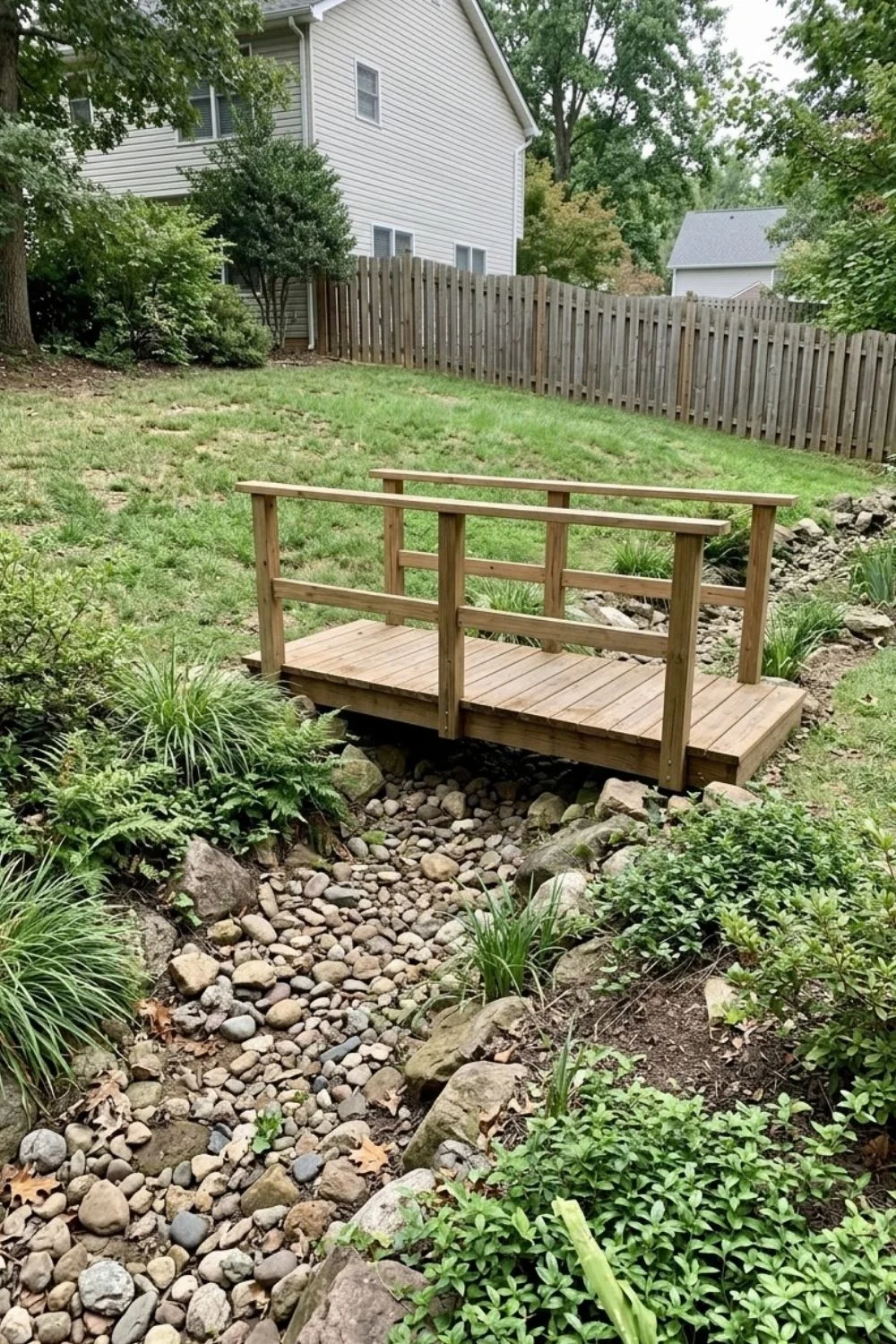
A short bridge can cross a drainage swale or connect two levels without forcing a steep path through a wet area. Use proper footings, railings where required, and slip-resistant decking. This is a structural feature, not a decorative shortcut.
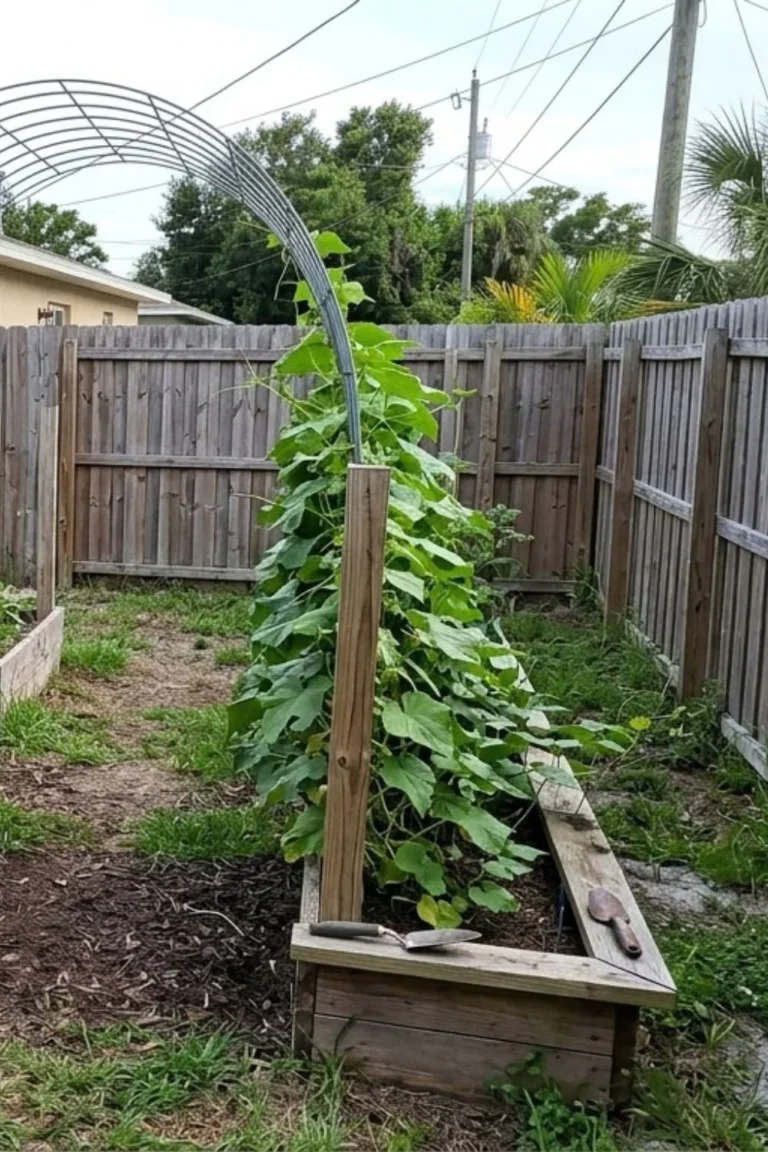
26. Trellises and Climbing Vines on the Slope
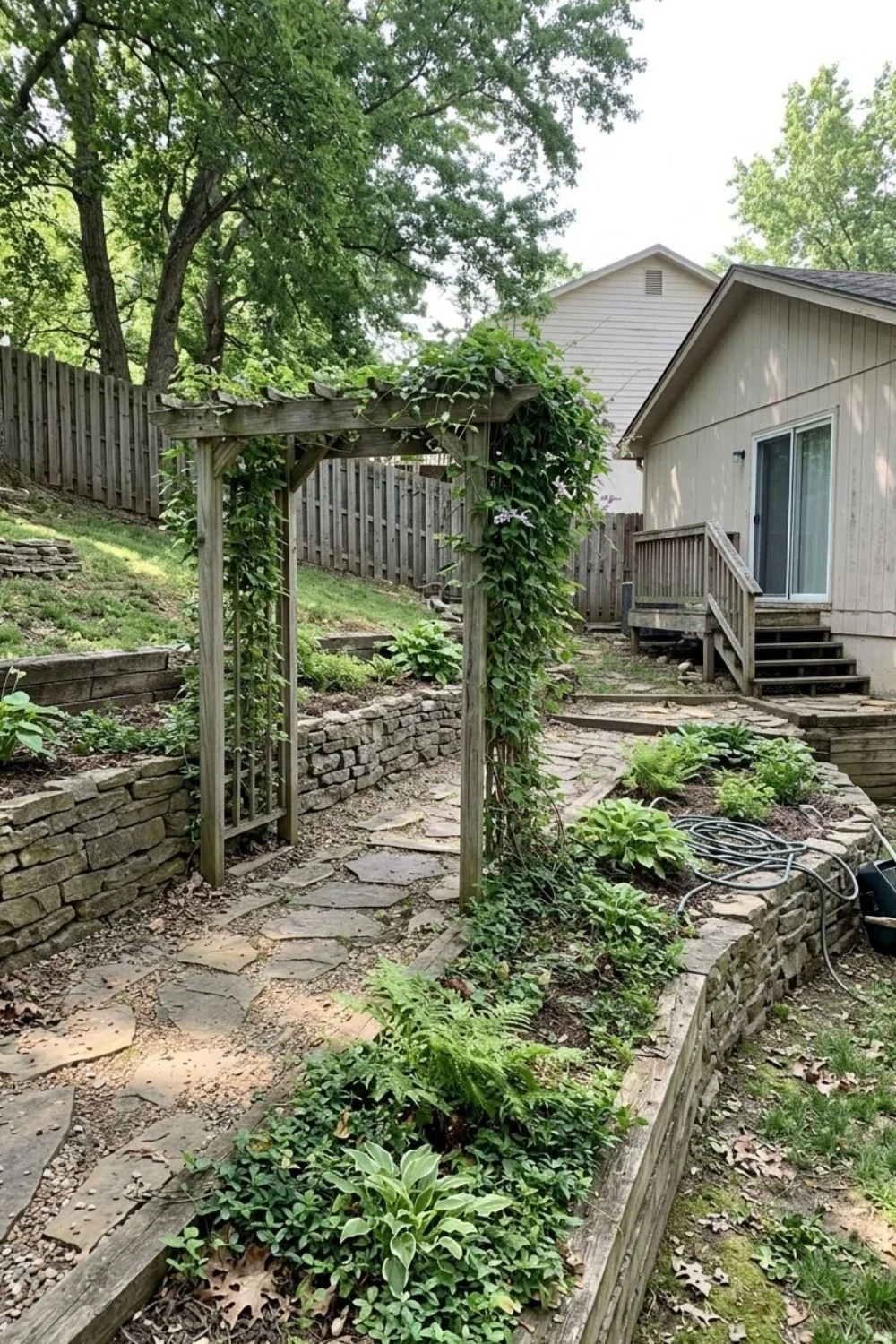
Vertical supports can add height while using little ground space. Place trellises where they will not block drainage routes or make slope access harder. If privacy is also a goal, our backyard garden privacy ideas offer plant-and-screen combinations that can work with terraced yards.
27. Natural Boulder Stairway
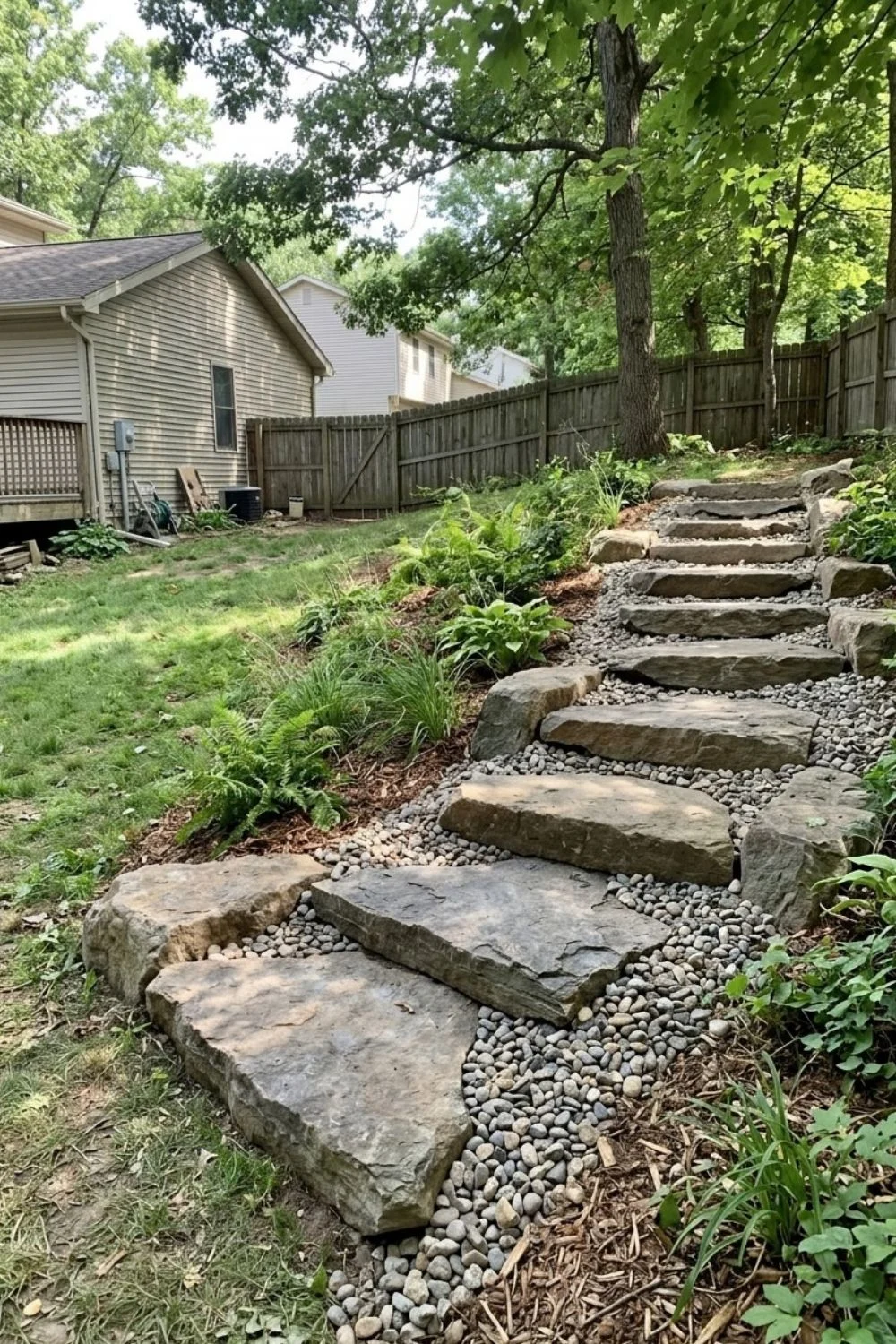
Large flat-topped boulders can create rustic steps when installed securely. Do not rely on loose stones for a steep or frequently used route. Fill gaps with compacted material or low plants and make sure each step has reliable footing.
28. Fire-Safe Gravel and Paver Zone
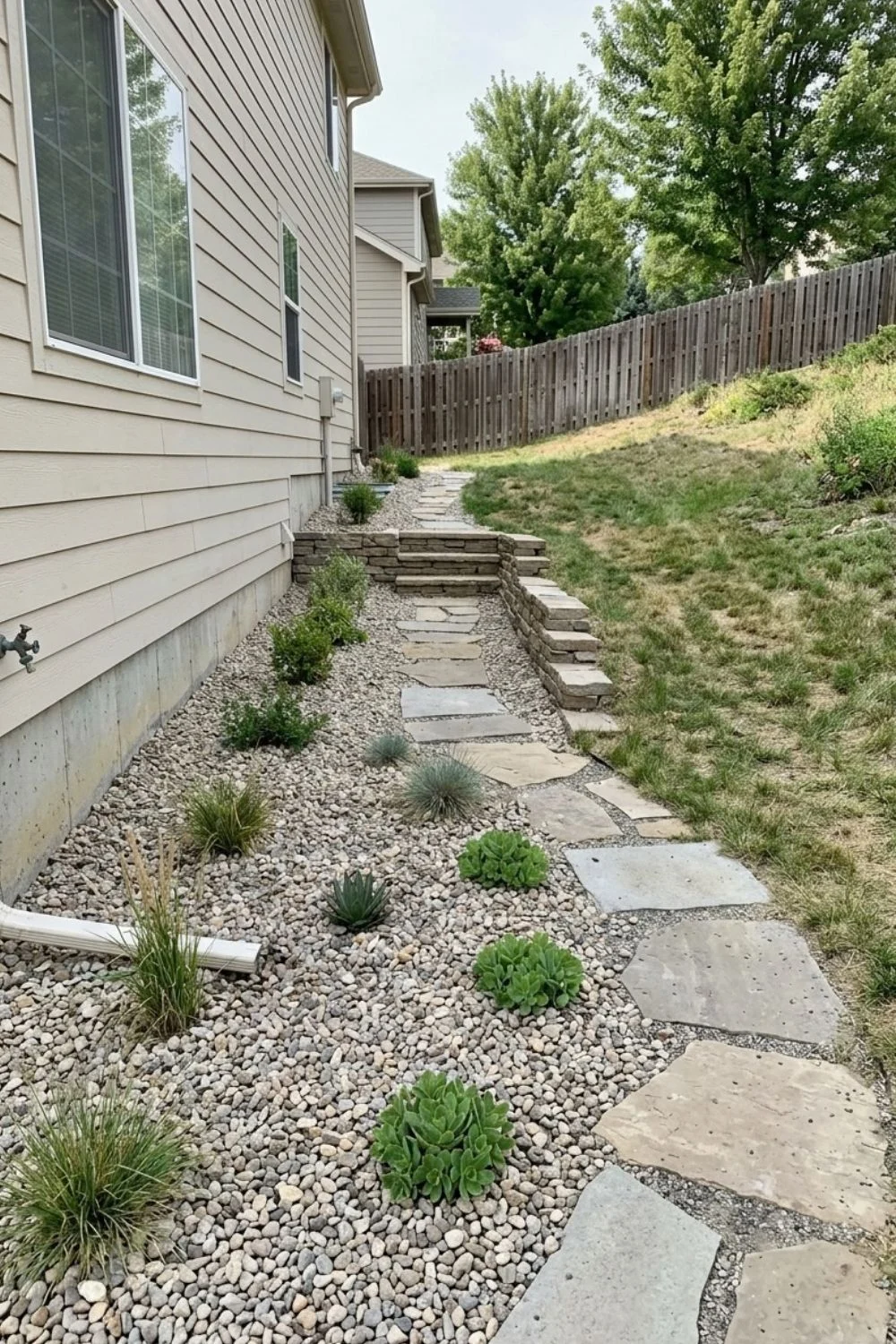
Where wildfire risk is a concern, a noncombustible zone near the home can be part of a broader defensible-space plan. Use gravel, pavers, and well-spaced low-flammability plants as allowed by local guidance. Follow your fire authority’s current recommendations rather than relying on one generic landscape rule.
29. Terraced Dog Run
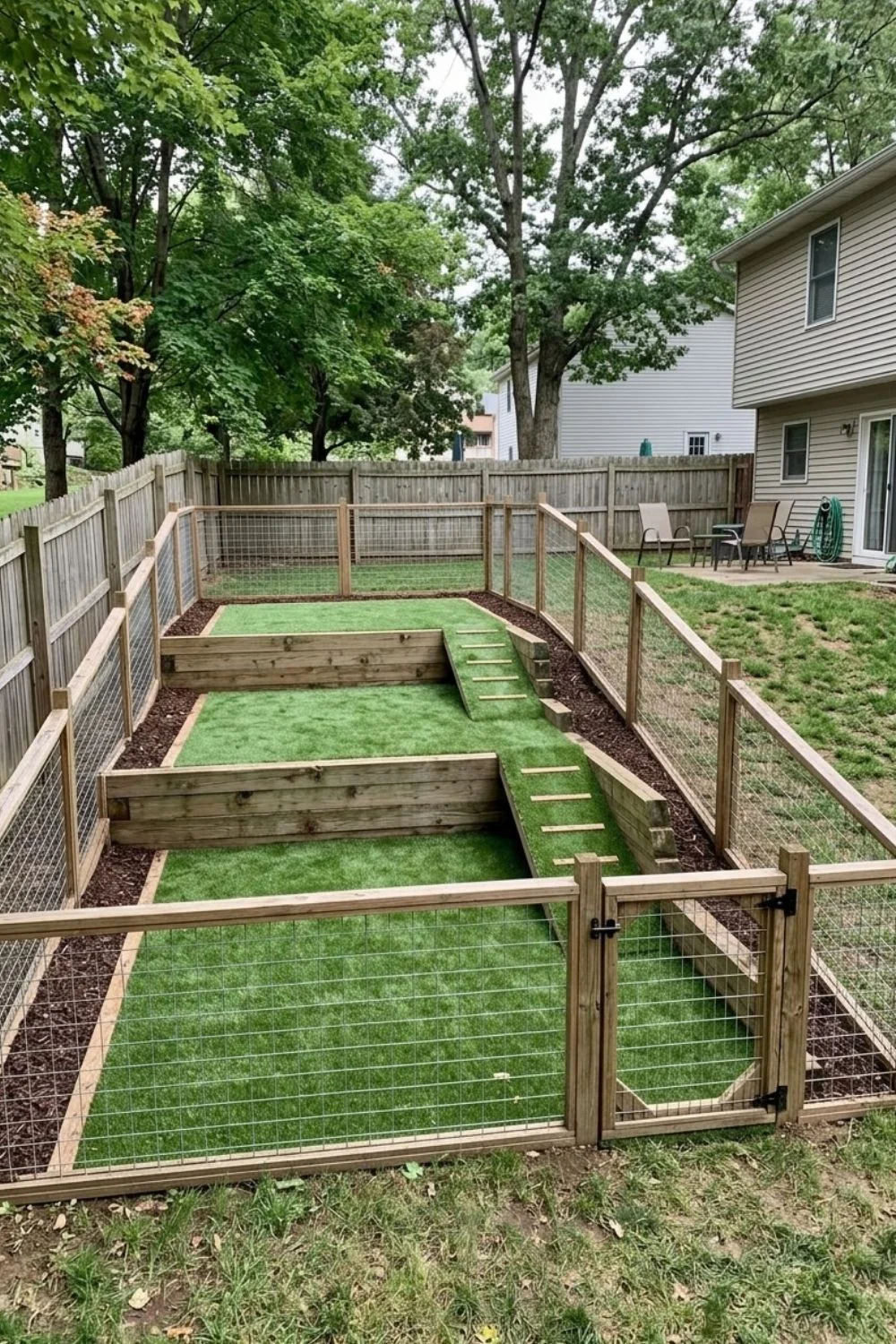
A pet area on a slope works better with one or more broad level sections connected by gentle ramps or low steps. Use paw-friendly surfacing, secure fencing, shade, and easy drainage. Avoid steep slick turf where dogs repeatedly run up and down.
30. Sloped Rain Garden
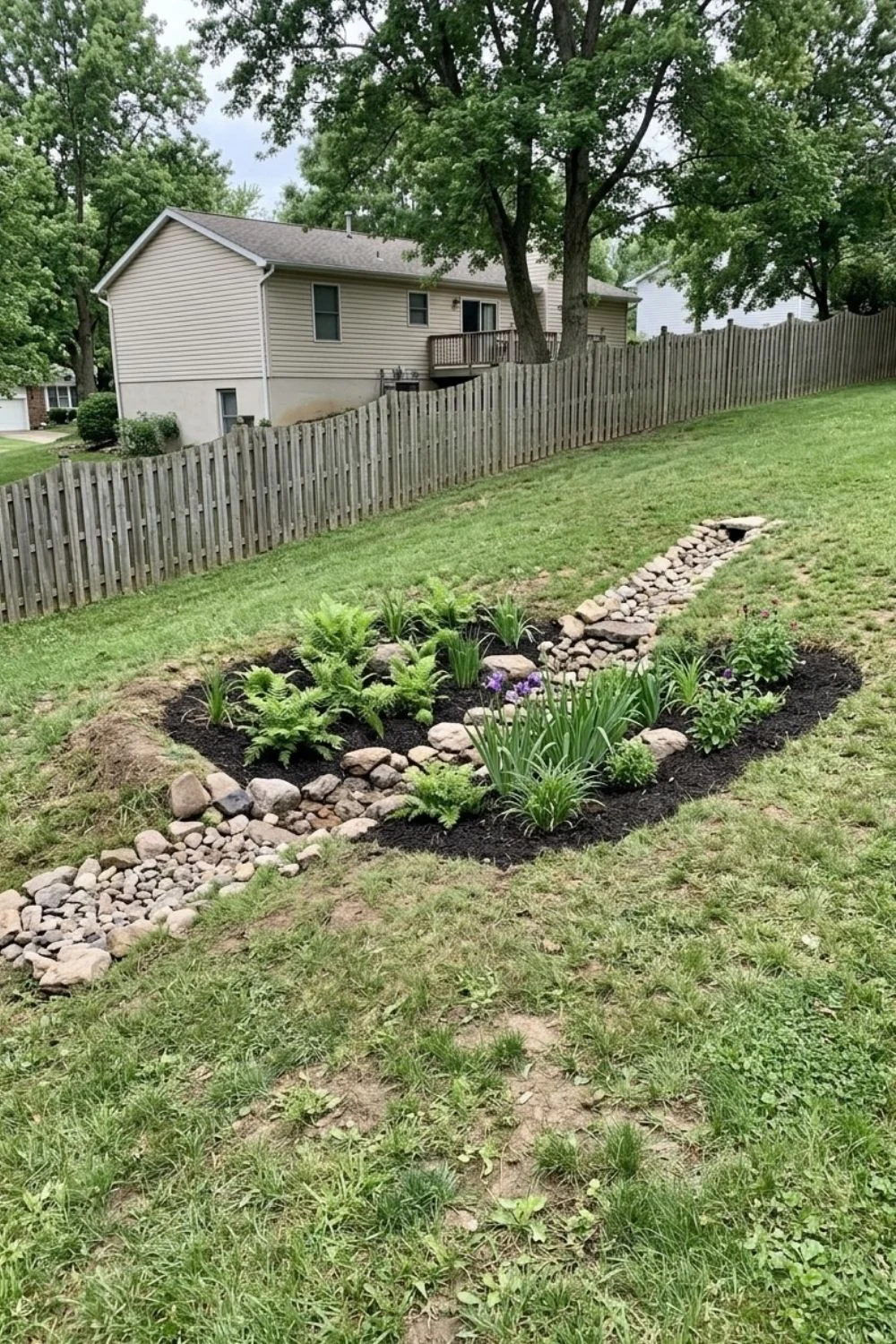
A rain garden should sit on a stable, appropriate location that can safely receive runoff. On a slope, this often means a level or gently benched area rather than the steepest section. Use region-appropriate plants and verify that water can infiltrate without threatening structures or neighboring property.
When a Retaining Solution May Be Needed
Signs that a slope may need professional evaluation include soil slumping, deep erosion channels, leaning walls, repeated washouts, drainage problems near the foundation, or a proposed wall that will hold back significant soil. Local codes vary across the U.S., so check permit and engineering requirements before construction.
Common Sloped-Yard Mistakes
Avoid planting a steep hill without first fixing concentrated runoff, building tall decorative walls without drainage, placing loose gravel on unsafe walking routes, and creating narrow terraces that are difficult to maintain. Also avoid removing established roots from an entire slope at once.
Frequently Asked Questions
What is the easiest way to landscape a sloped backyard?
For many yards, the simplest approach is to keep the existing grade, add a safe path, control runoff, and replace difficult turf with groundcovers, shrubs, or broad planting groups.
What plants help with erosion on a slope?
Plants with dense or spreading root systems can help stabilize surface soil, but the best choices depend on your region, sun, soil, and moisture. Native groundcovers, grasses, shrubs, and perennials are often useful when properly matched to the site.
Do I need a retaining wall on a slope?
Not every slope needs a wall. Gentle stable slopes can often be planted or terraced lightly. Significant grade changes, failing soil, or tall walls should be evaluated according to local codes and structural requirements.
How do I make a sloped backyard easier to walk?
Use consistent steps, a switchback path, or broad level landings. Choose a stable surface, provide drainage, and add lighting where nighttime access is needed.
Final Thoughts
A slope can become one of the most useful parts of a backyard when access, water, and planting are planned together. Start with safety and drainage, then choose the smallest intervention that solves the problem. Terraces, groundcovers, paths, and a few well-placed structures can turn a difficult grade into a practical garden without flattening the whole yard.