A balcony does not need to be large to become a useful garden. Even a narrow apartment balcony can hold herbs, leafy greens, flowers, and a few compact vegetables if you plan the space carefully.
For renters, the best balcony gardening ideas are usually the simplest ones. Instead of permanent shelves, heavy raised beds, or major changes to the balcony, use containers and accessories that can be moved, rearranged, or taken with you later.
The goal is not to fill every empty corner with plants. A good renter-friendly balcony garden should still be easy to walk through, water, clean, and enjoy.
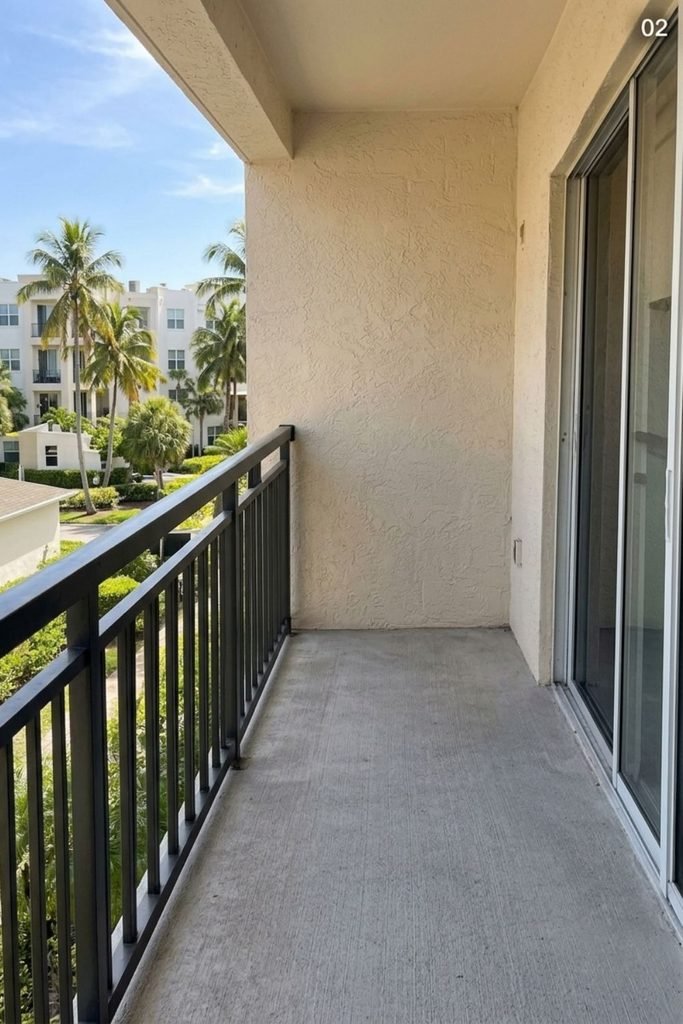
Quick Answer: How Do You Start a Balcony Garden as a Renter?
Start by checking how much sunlight your balcony receives and whether your building has rules about railing planters, hanging baskets, watering, or attaching items to walls. Keep a clear walking path, choose lightweight moveable containers, use freestanding vertical storage when floor space is limited, and start with easy plants such as herbs, leafy greens, compact vegetables, and flowers.
Check Light and Building Rules First
Before buying plants, spend a little time watching your balcony.
Notice where direct sun reaches the space in the morning, midday, and afternoon. One side of a balcony can receive strong sun while another stays shaded for most of the day.
This matters because different plants need different conditions. Sun-loving vegetables may struggle in a deeply shaded corner, while some leafy greens and herbs may be easier to manage with less intense sun.
Also check your lease or building rules before adding anything permanent.
Pay particular attention to rules involving railing planters, hanging baskets, drilling into walls, privacy screens, and water runoff.
For renters, it is usually easier to build the garden around removable items rather than changing the balcony itself.
Start With Simple, Moveable Supplies
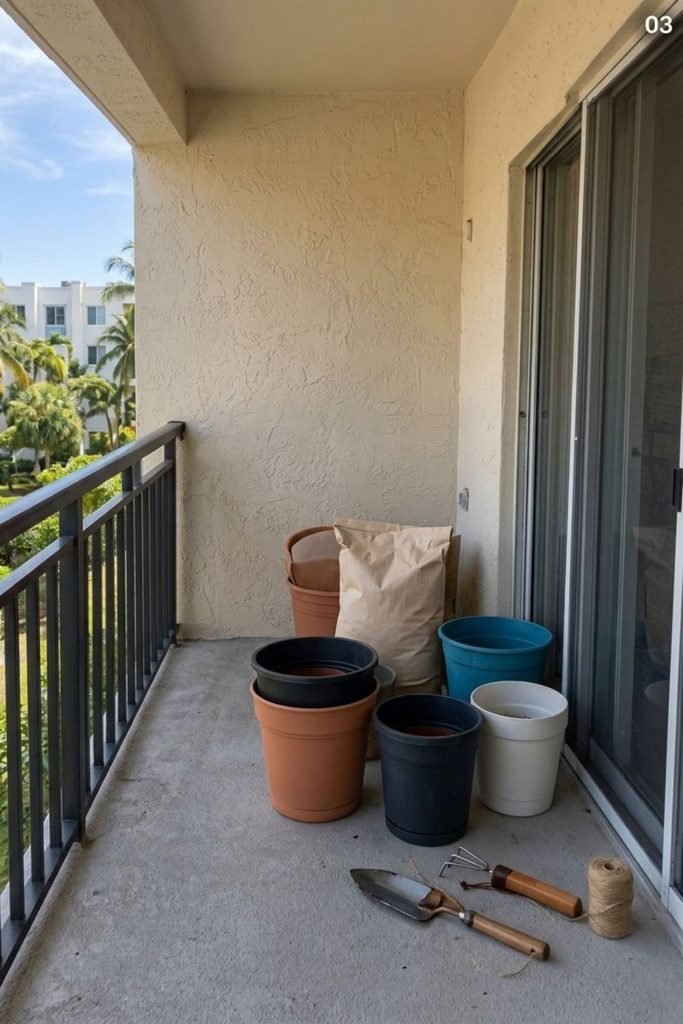
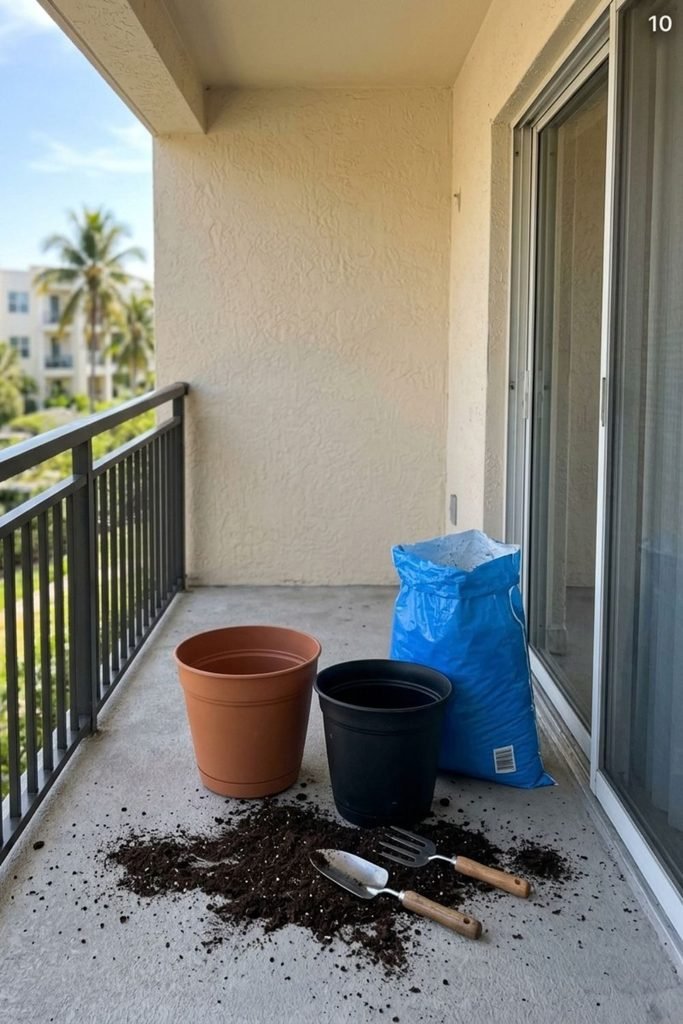
[IMAGE 03 – Pots and Gardening Supplies]
You do not need to buy everything at once.
A basic balcony gardening setup can begin with a few lightweight pots, potting mix, a watering can, simple hand tools, and plant saucers.
Choose containers that are large enough for the plant but still manageable when you need to clean or rearrange the balcony.
Plastic or resin containers can be useful when weight and portability matter. Terracotta-style containers can add a natural look, but remember that larger pots become much heavier after adding soil and water.
The easiest system is one you can change as you learn what works.
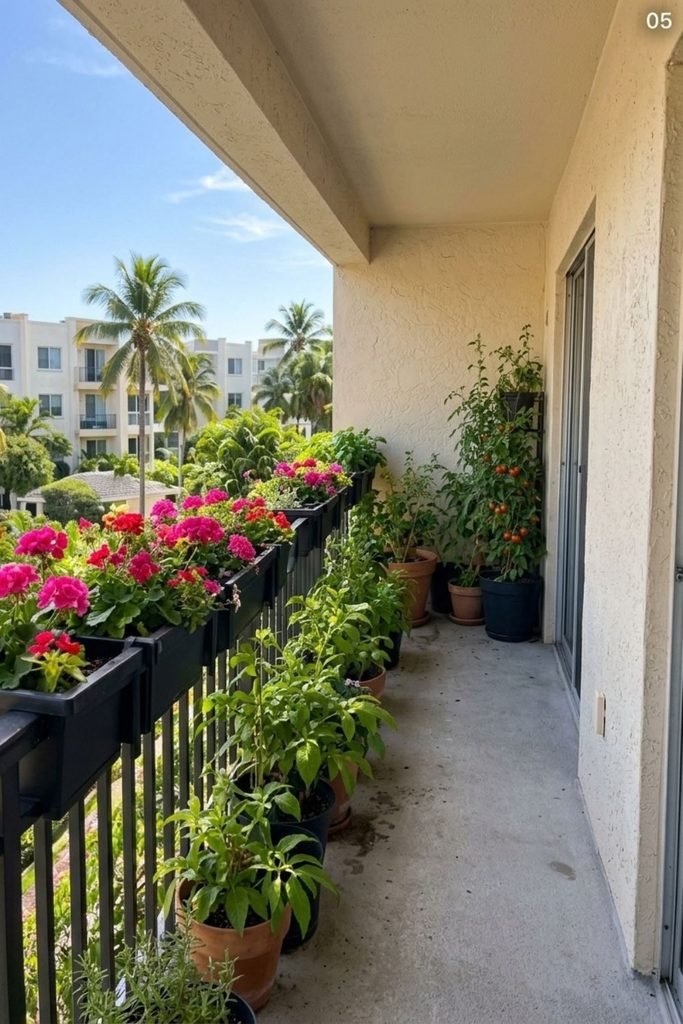
Start with a few containers, observe how the plants respond, and expand slowly rather than filling the entire balcony on the first day.
Keep a Clear Walking Path
A common small balcony garden mistake is using every inch of floor space for pots.
That may look full in a photo, but it can make everyday gardening difficult.
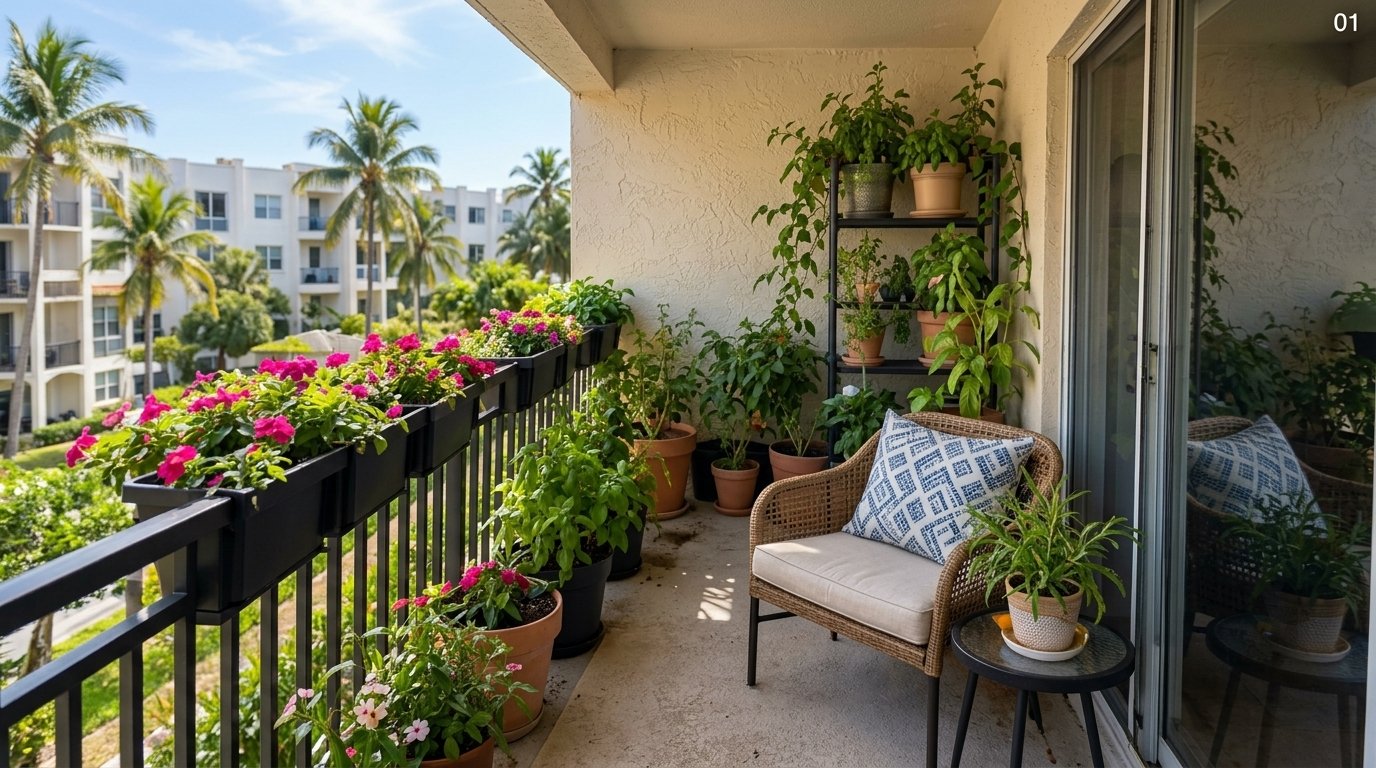
Keep one clear route from the door to the end of the balcony. Place most containers along walls, corners, or the railing side where they will not block normal movement.
This makes it easier to:
- water and inspect plants
- clean the floor
- move containers
- reach the railing safely
- sit outside comfortably
For a narrow balcony layout, open floor space is part of the garden design.
Use Railings Carefully
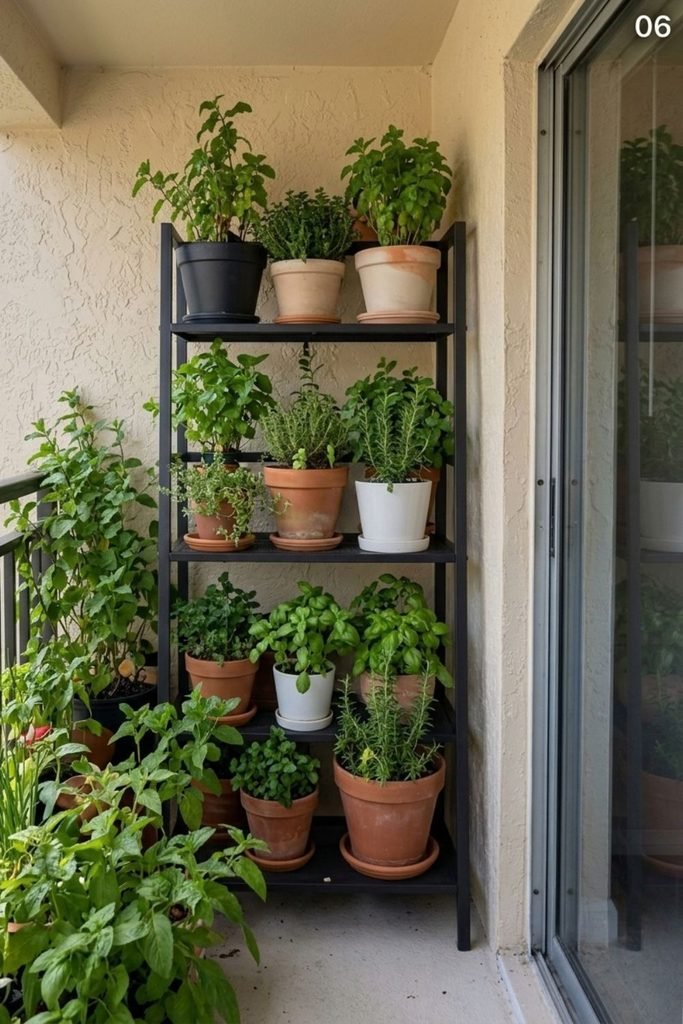
Railing planters can create extra growing space without covering the balcony floor, but they need to be secure.
Use planters designed for the type of railing you have, and follow any building restrictions.
Do not overload the railing with very large or heavy containers. For a renter-friendly setup, a few well-positioned planters are usually more practical than covering the entire railing.
Flowers, compact herbs, and smaller leafy plants can work well here because they provide greenery without taking over the balcony.
Build Up Instead of Spreading Out
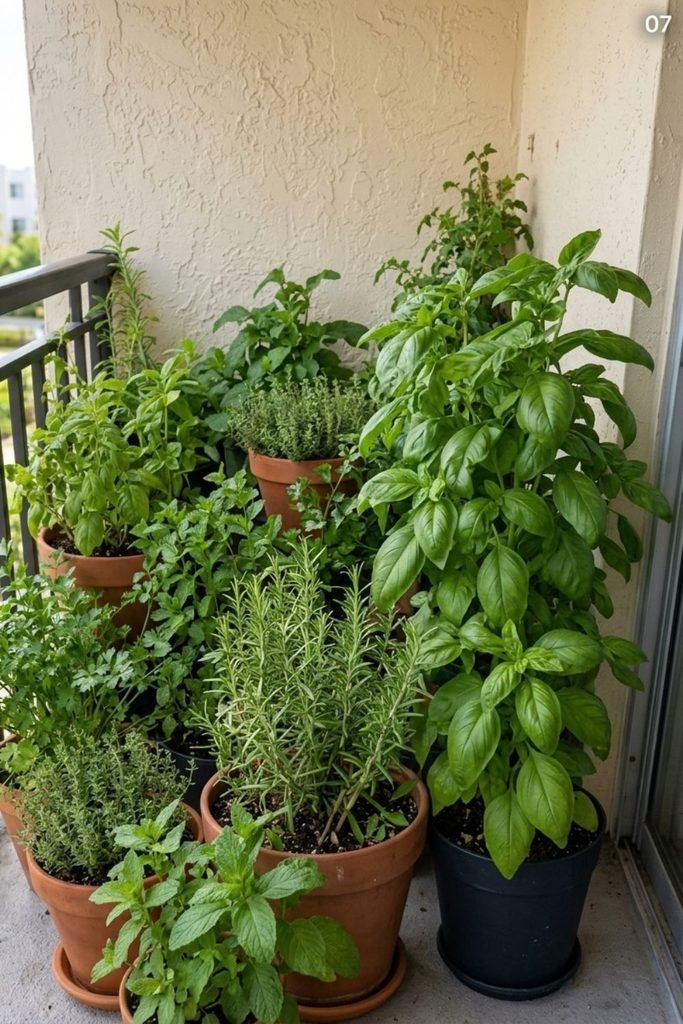
When floor space is limited, use height.
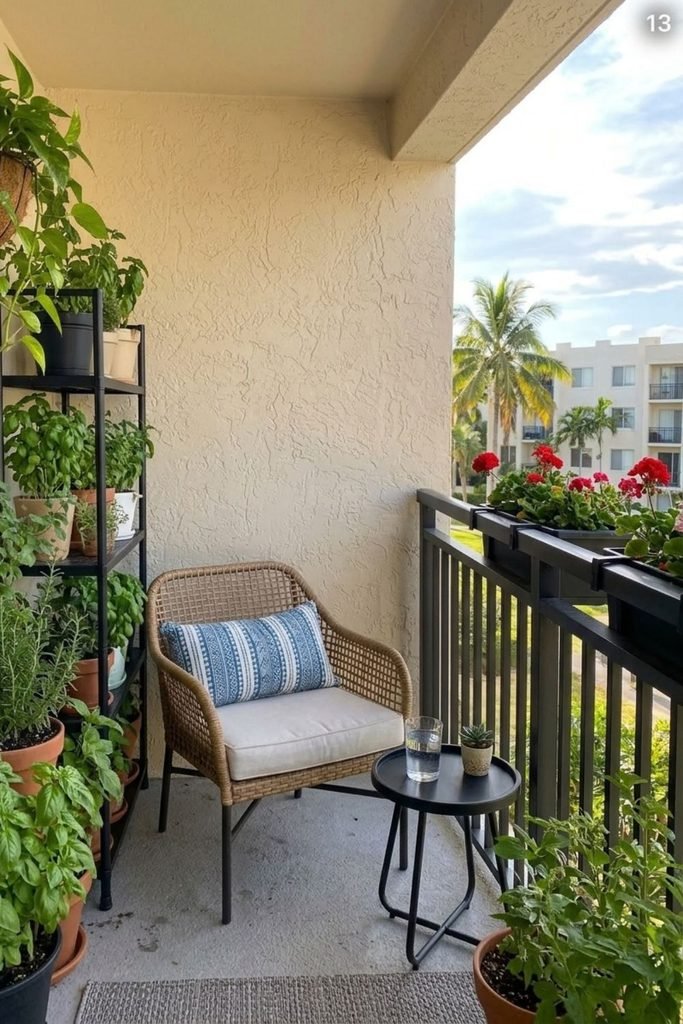
A freestanding plant shelf can hold several small containers while using only a small section of the balcony floor.
This is one of the easiest ways to create a vertical balcony garden without drilling into the wall.
Keep heavier pots on lower shelves and lighter plants higher up. Leave enough room between plants for light and airflow.
Vertical storage works especially well for small herb pots because you can keep several useful plants together without creating a crowded floor.
Best Plants for a Small Balcony Garden
The best balcony plants depend on your light, weather, and how much maintenance you want to do.
For beginners, it is usually better to grow a few useful plants well instead of trying to grow everything.
Herbs
Basil, mint, parsley, rosemary, thyme, and similar culinary herbs can be practical choices for balcony containers.
Keep herbs you use often somewhere easy to reach.
Mint is especially vigorous, so keeping it in its own container can make it easier to control.
Leafy Greens
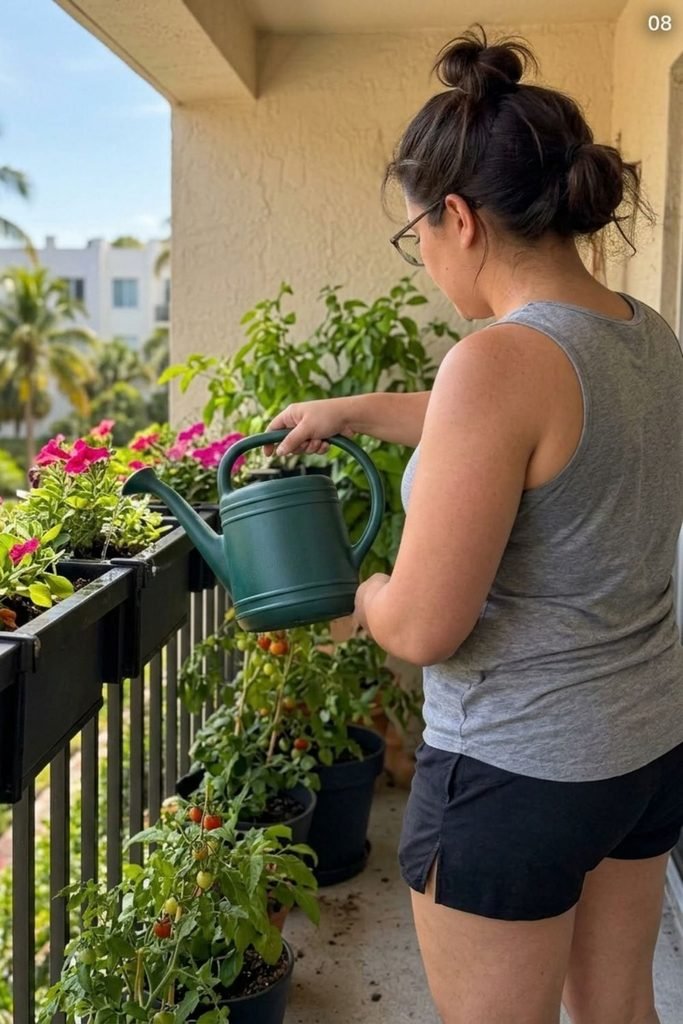
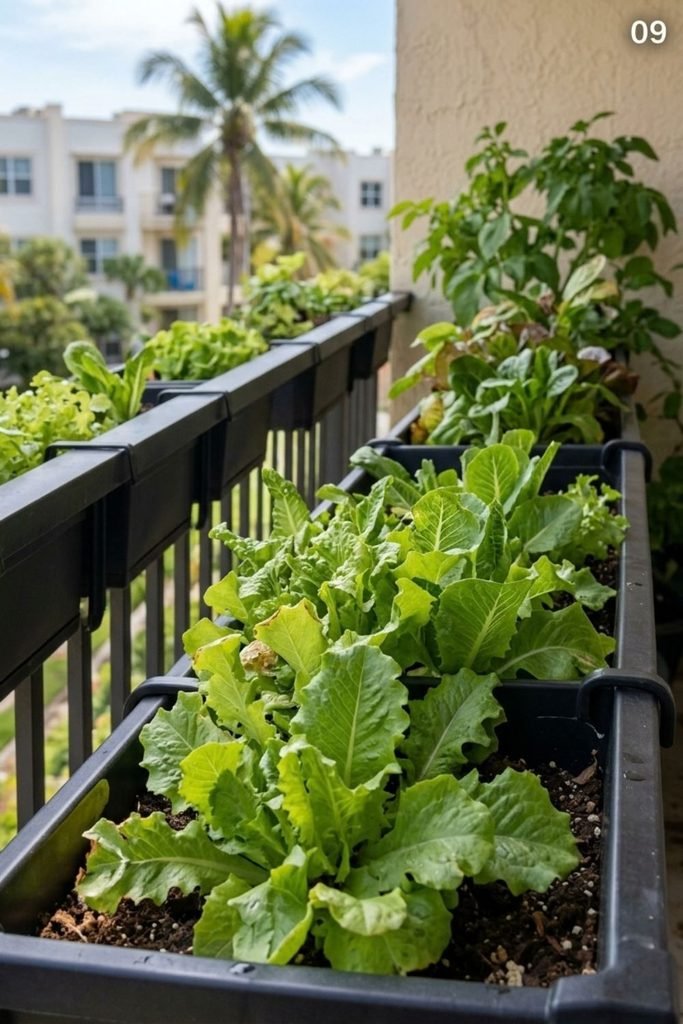
Leafy greens can work well in rectangular balcony containers because they do not always require the same depth or vertical space as larger fruiting plants.
Grow only as many as your planter can comfortably support. Crowded plants are harder to water and maintain.
Compact Vegetables
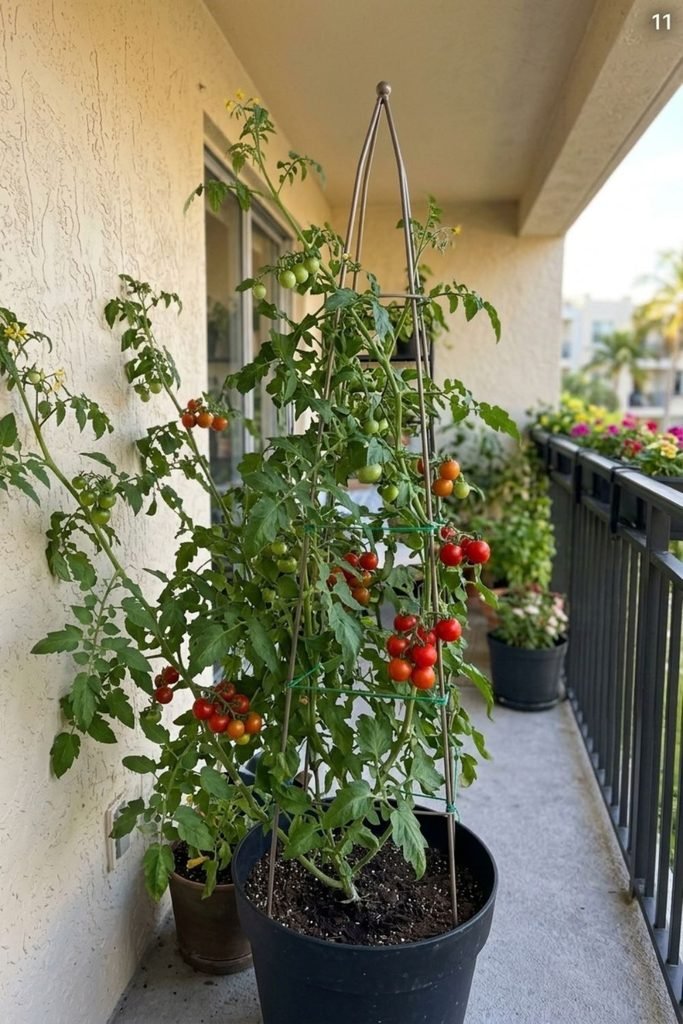
If your balcony receives enough sun, compact tomatoes, peppers, and other container-friendly vegetables can add a productive element to the garden.
Use a support or trellis when a plant needs it, but keep the structure freestanding or supported by the container when possible.
Choose compact varieties rather than plants that quickly outgrow the available space.
Flowers
Flowers can soften the hard lines of railings and concrete while adding useful color.
Instead of filling the entire balcony with flowers, mix a few flowering containers among herbs and edible plants.
This creates a more natural garden without sacrificing useful growing space.
Make Watering Easy to Manage
Containers can dry out faster than garden beds, especially during warm or windy weather.
Check the soil instead of watering only by habit. Different containers may dry at different speeds depending on pot size, material, sunlight, and plant type.
Use saucers or suitable drainage trays where appropriate so excess water does not create unnecessary mess.
Water slowly enough for the soil to absorb moisture.
Also think about your neighbors below. Avoid letting large amounts of water run over the balcony edge.
Keep Potting Mess Under Control
Repotting does not need to turn the balcony into a worksite.
Work with one or two containers at a time. Keep your soil and tools together, then sweep up loose material after you finish.
A small amount of soil on the floor during gardening is normal. Leaving loose soil, wet bags, and tools scattered across the walking path is not.
A simple, repeatable routine makes balcony gardening much easier.
Add Hanging Plants Without Overloading the Space
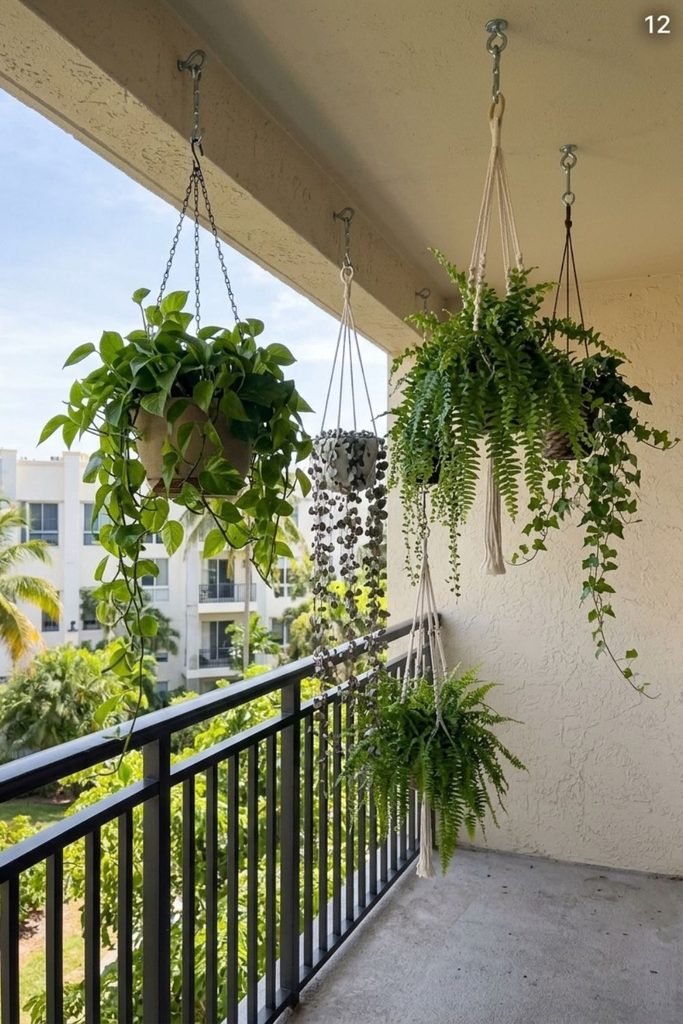
Hanging plants can add greenery at eye level and free up floor space.
Use only secure support points that your building allows.
A few trailing plants are usually enough. Too many hanging baskets can make a small balcony feel cramped and may create extra watering work.
The goal is to use vertical space, not fill every level of the balcony.
Leave Room to Sit
Your balcony garden should still feel like a place you can use.
If space allows, add one compact chair rather than a large outdoor furniture set.
Place it where it does not block access to your plants or the door.
A chair can also help you notice problems earlier because you are more likely to spend time around the garden instead of treating it only as a plant storage area.
Keep Maintenance Simple
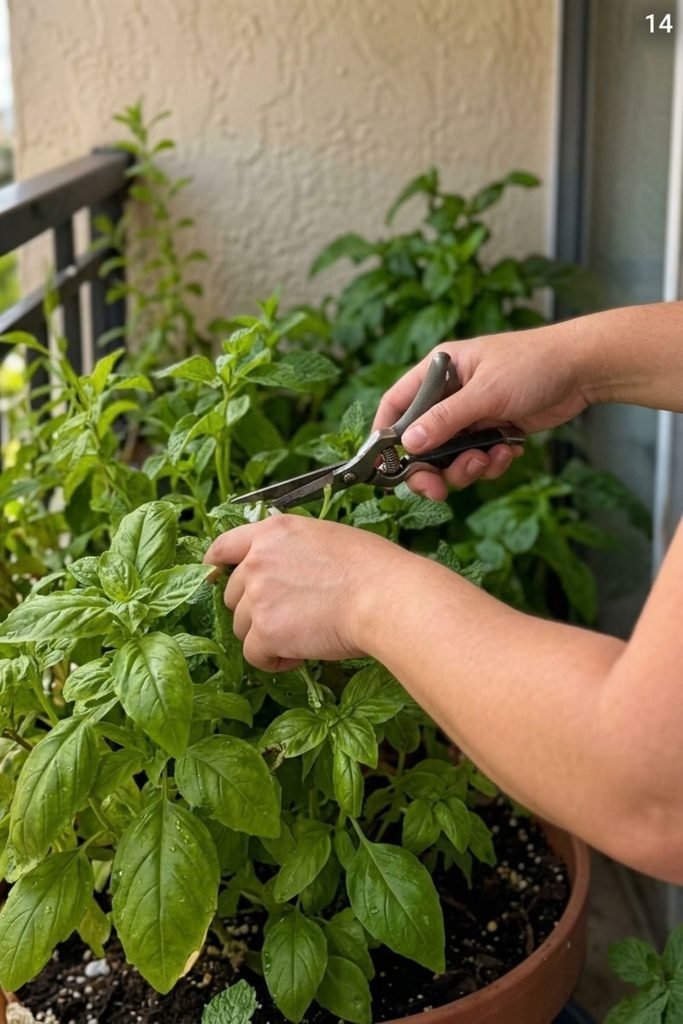
Check plants regularly for yellow leaves, damaged stems, overcrowding, and signs of pests.
Small problems are easier to manage when you notice them early.
Prune only what needs pruning. Remove dead or badly damaged growth, and keep crowded plants from covering neighboring containers.
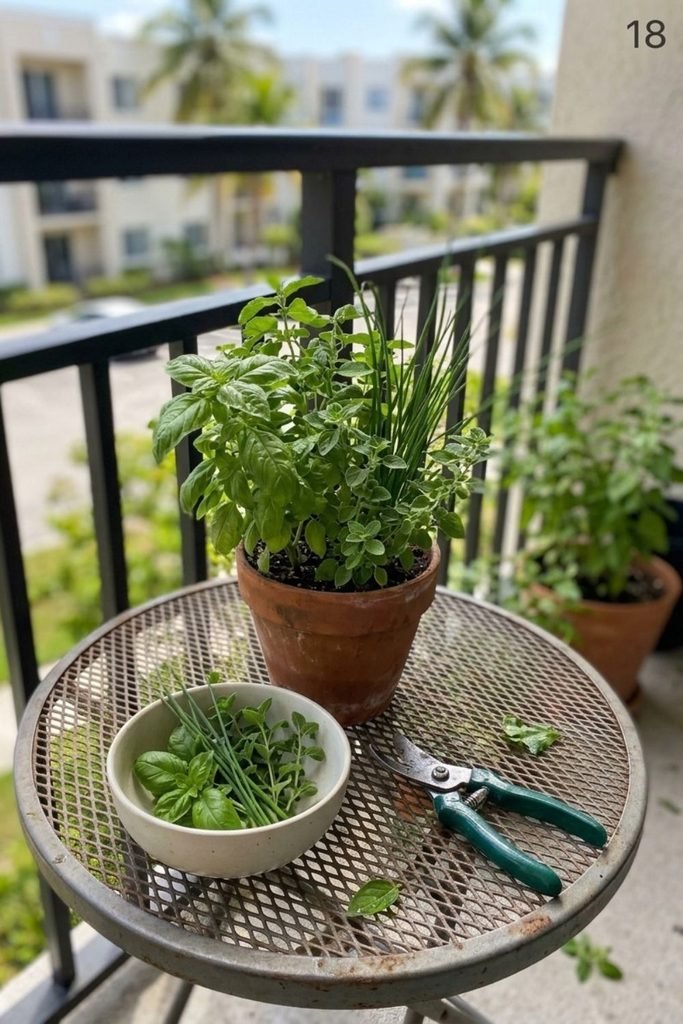
[IMAGE 18 – Fresh Herb Cutting and Maintenance]
Routine maintenance can be small. A few minutes of trimming, harvesting, cleaning, and checking soil is often more useful than waiting until the balcony needs a major cleanup.
Watch for Pests
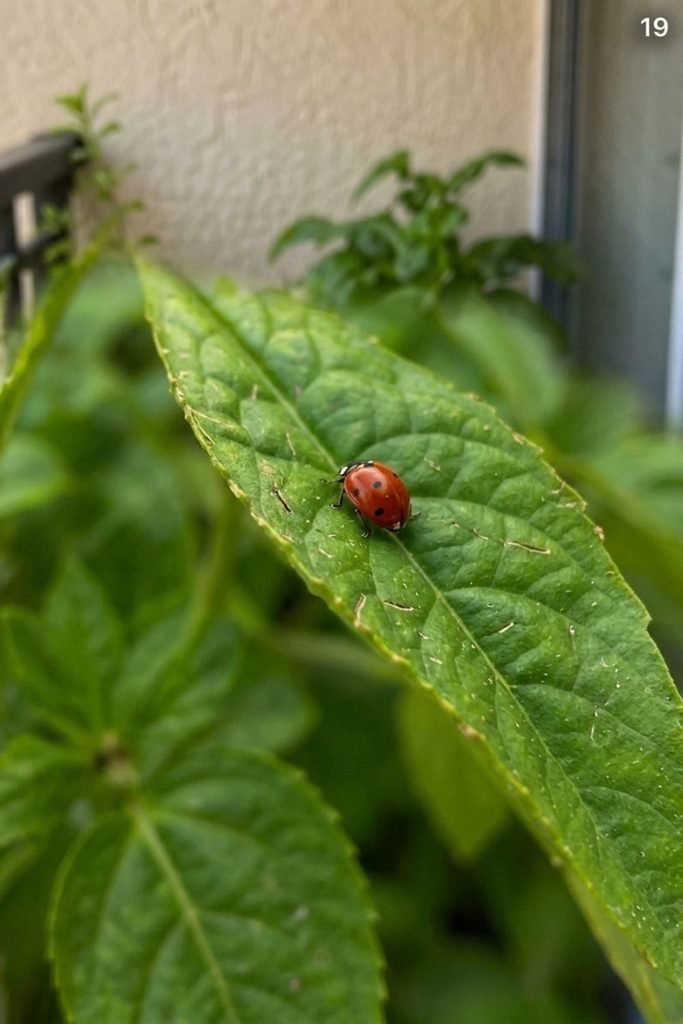
Balcony plants can still attract common garden pests.
Inspect the tops and undersides of leaves regularly, especially when you notice holes, discoloration, curling, or weak new growth.
Do not assume every insect is a problem. Identify what you are seeing before deciding how to respond.
Keeping plants appropriately spaced and removing badly damaged material can also make inspection easier.
Harvest Often From Edible Plants
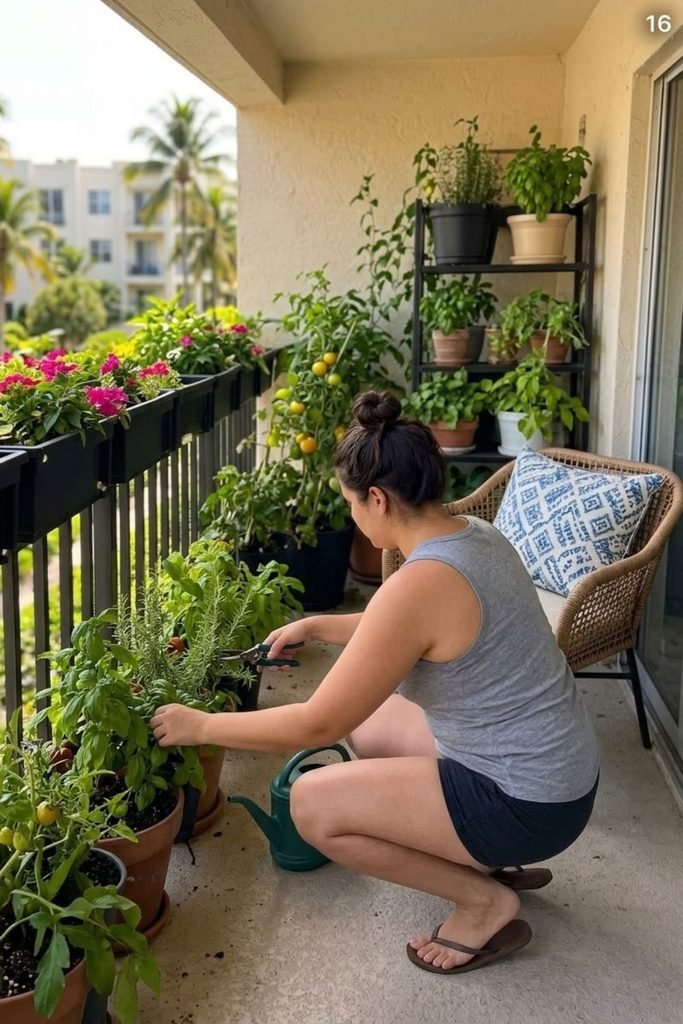
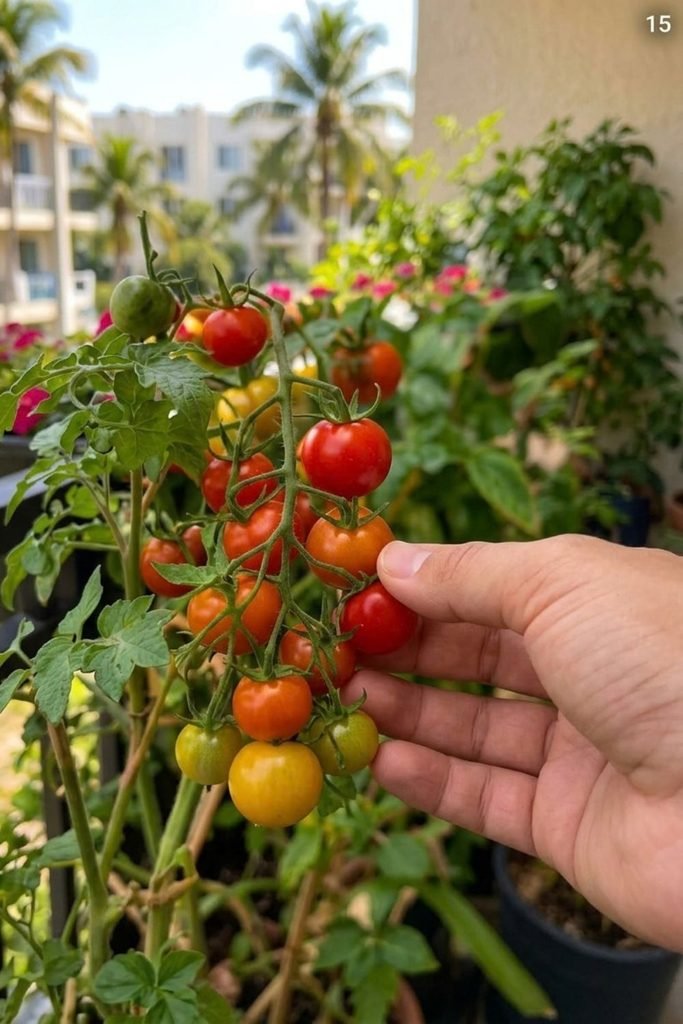
One of the most rewarding parts of balcony gardening is being able to harvest something you grew a few steps from your kitchen.
Pick ripe vegetables and herbs regularly.
Harvesting herbs can also encourage useful new growth when done correctly, while removing ripe produce keeps plants easier to inspect.
You do not need a large vegetable garden to make the balcony productive. A few well-managed containers can still give you fresh herbs, greens, or small vegetables during the growing season.
Plan for Wind and Weather
Balconies can be more exposed than ground-level gardens.
Wind can dry containers quickly, damage tender stems, and make lightweight pots unstable.
Place taller plants closer to a protected wall or corner when possible. Keep heavier, stable containers in more exposed positions and smaller lightweight pots where they are easier to secure or move.
If your building allows a removable privacy or wind screen, make sure it is securely installed and does not create a new hazard.
Weather is another reason moveable planters are useful. You can rearrange the balcony when conditions change instead of being locked into one layout.
Make the Garden Comfortable in the Evening
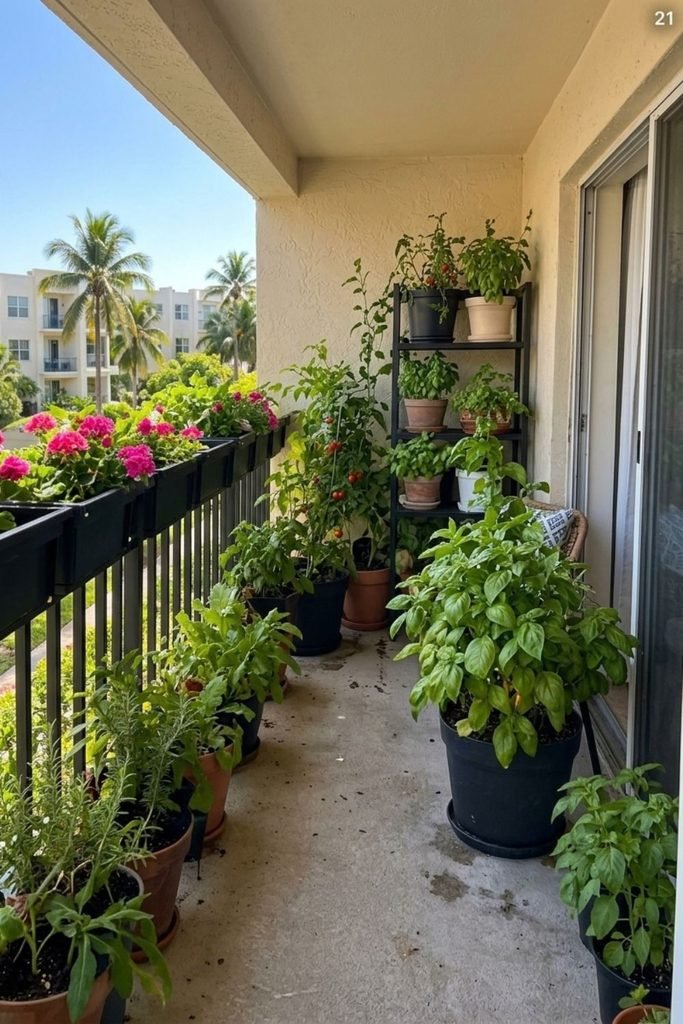
A balcony does not stop being useful when the sun goes down.
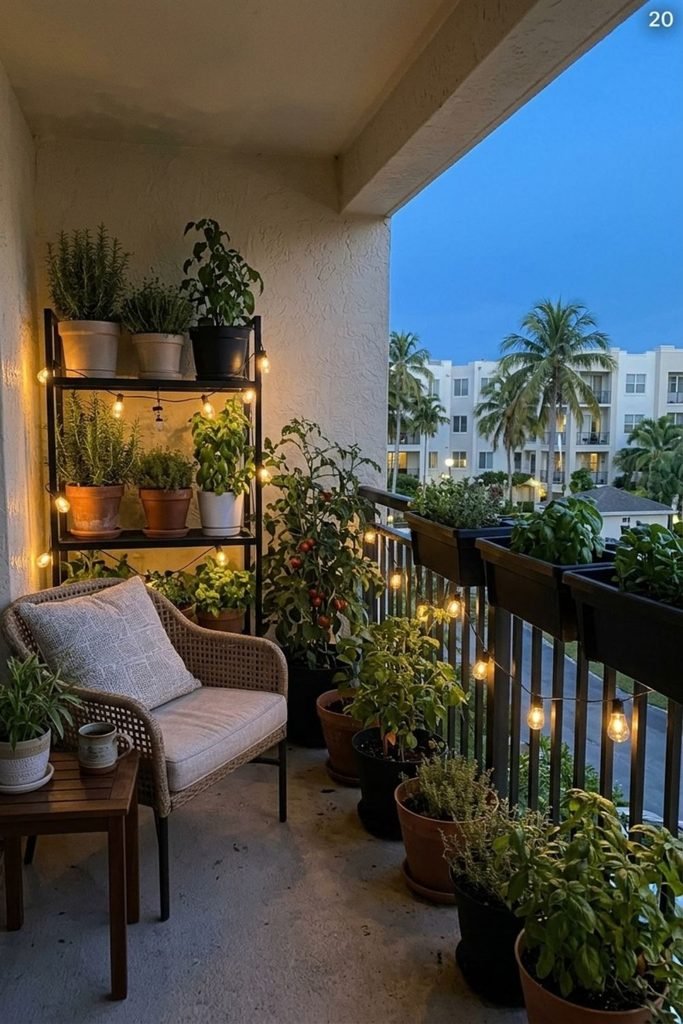
Simple removable lighting can make the garden more comfortable in the evening without turning it into a major decorating project.
Keep lighting subtle and practical. The plants and usable space should still be the main focus.
A chair, a few healthy containers, and soft lighting can be enough to make a small balcony feel finished.
Renter-Friendly Balcony Gardening Mistakes to Avoid
Avoid treating a small balcony like a full backyard. Too many large containers can quickly make the space difficult to use.
Other common mistakes include using heavy pots without considering how they will be moved, blocking the main walking path, attaching structures permanently without permission, placing unstable containers near exposed edges, choosing plants before checking sunlight, allowing water to drain carelessly, and adding so many plants that routine maintenance becomes difficult.
The most useful balcony garden is one you can realistically maintain.
A Simple Balcony Garden Setup That Can Grow With You
A renter-friendly garden does not need to be finished in one weekend.
Start with the balcony itself.
Understand the sunlight. Keep a walking path. Add a few moveable containers. Use the railing and vertical space carefully. Grow plants that fit the conditions. Then add seating, flowers, or extra containers only when you know you have room.
This gradual approach makes it easier to keep the garden useful, attractive, and manageable.
And when it is time to move, most of the setup can move with you.
FAQ
Can you make a balcony garden in a rental apartment?
Yes. Focus on moveable containers, freestanding shelves, removable accessories, and other non-permanent solutions. Check your lease or building rules before attaching anything to railings, walls, or ceilings.
What are the easiest plants for balcony gardening?
Herbs, leafy greens, flowers, and compact container vegetables are practical places to start. The best choice depends mainly on the amount of sunlight and weather exposure your balcony receives.
How do I garden on a very narrow balcony?
Keep the center walking path open. Place containers around the edges, use secure railing planters where allowed, and add a freestanding vertical shelf for smaller pots.
How can I make balcony plants easier to move?
Use lightweight containers, avoid oversized pots unless necessary, and place larger containers on suitable wheeled plant caddies.
Can I grow vegetables on an apartment balcony?
Yes, if the balcony receives suitable light and you use containers large enough for the plants. Compact tomatoes, peppers, leafy greens, and herbs can all be considered depending on your conditions.
How do I stop balcony gardening from becoming messy?
Keep potting supplies together, use drainage trays where appropriate, clean loose soil after repotting, maintain one clear walkway, and avoid buying more plants than the space can comfortably hold.
Conclusion
Balcony gardening for renters works best when the garden stays flexible.
You do not need permanent construction or a balcony packed with plants. A few moveable containers, useful herbs and vegetables, secure vertical growing options, good watering habits, and enough open space can turn even a narrow balcony into a practical garden.
Start small, learn how your balcony behaves, and let the garden grow from there.