Shade garden ideas can turn a dim part of the yard into one of the most comfortable and interesting spaces outside. The key is to stop treating shade as a problem and start matching plants and materials to the amount of light, soil moisture, tree roots, and space you actually have.
A shaded yard is not one condition. Bright shade near a house, dappled light under trees, deep shade beside a fence, and dry shade under mature roots all behave differently. Before buying plants, watch the area during the day and note when it receives direct sun, filtered light, or no sun at all.
Know Your Shade Type First
Partial shade usually means the area still receives several hours of sun, while full shade has little direct sun but may receive bright indirect light. Deep shade stays dim for most of the day. Dry shade adds another challenge because large tree roots compete for water. Choosing plants for the real conditions matters more than choosing by appearance alone.
If you are working with a compact yard as well as low light, our small backyard garden ideas can help you keep paths and planting zones from feeling crowded.
30 Shade Garden Ideas
1. Hostas and Ferns Together
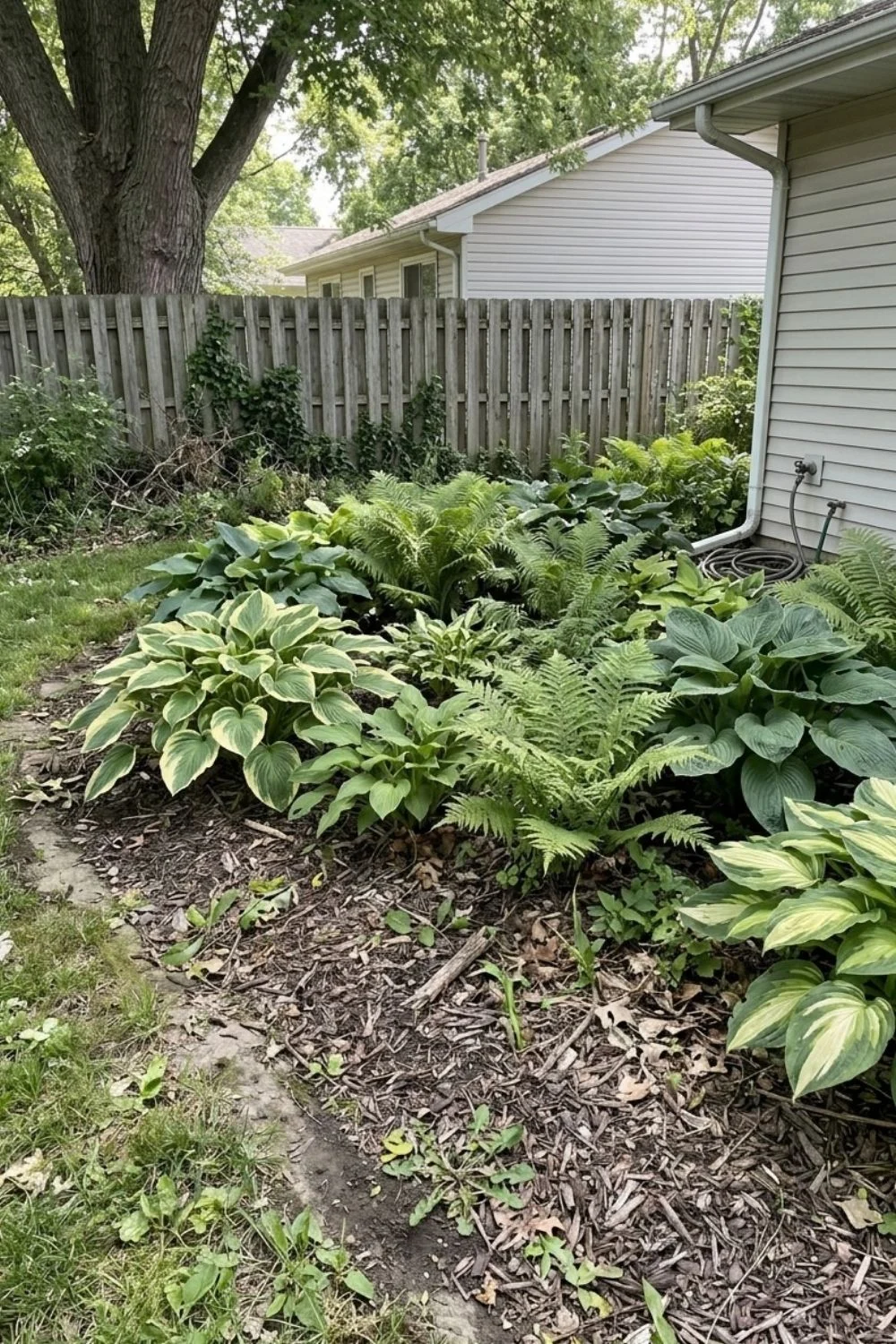
Hostas provide broad leaves while ferns add fine texture, so the combination makes a shaded bed feel layered without depending on flowers. Use varieties suited to your climate and moisture. In deer-prone areas, hostas may need protection or a different plant choice.
2. Woodland Path Shade Garden
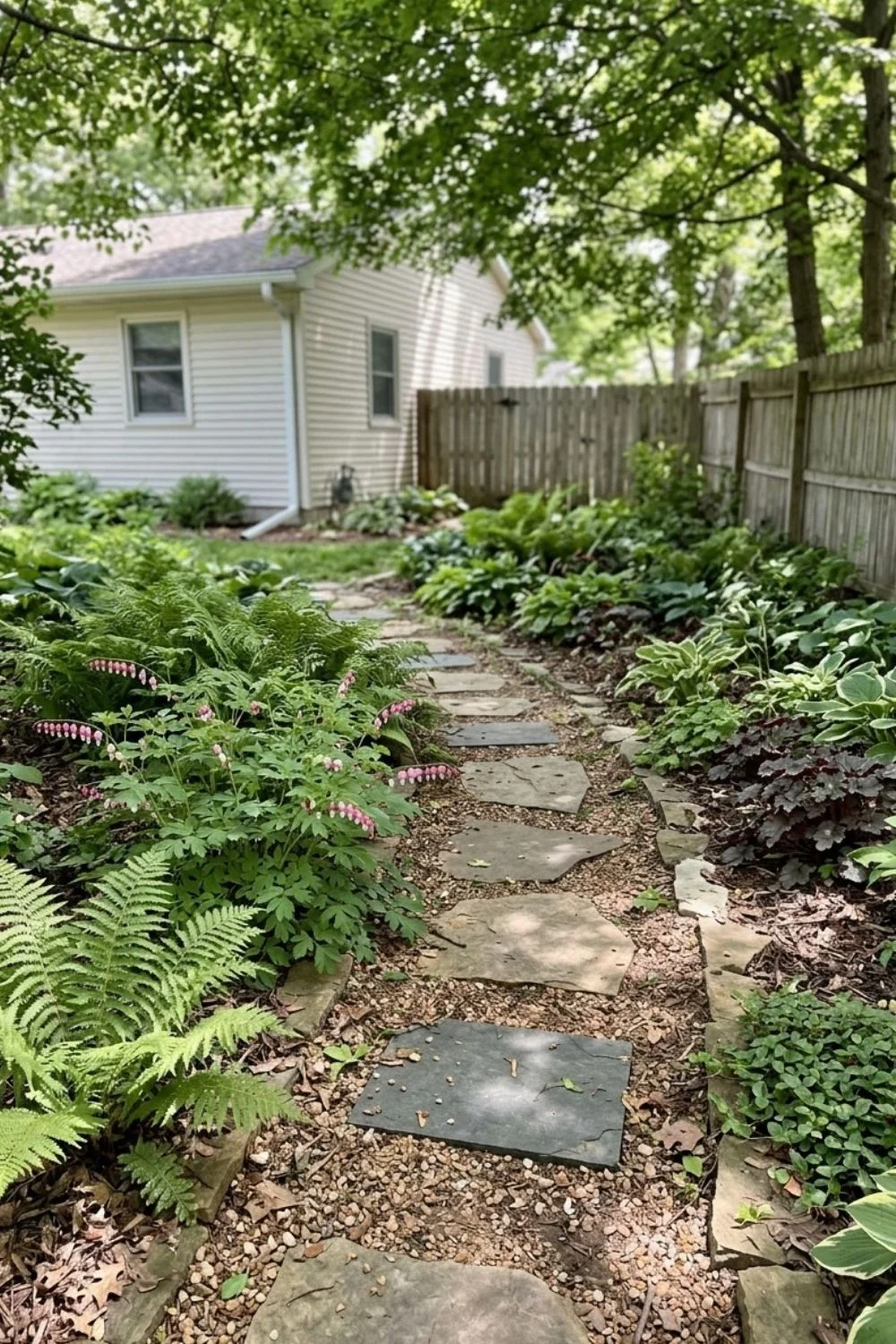
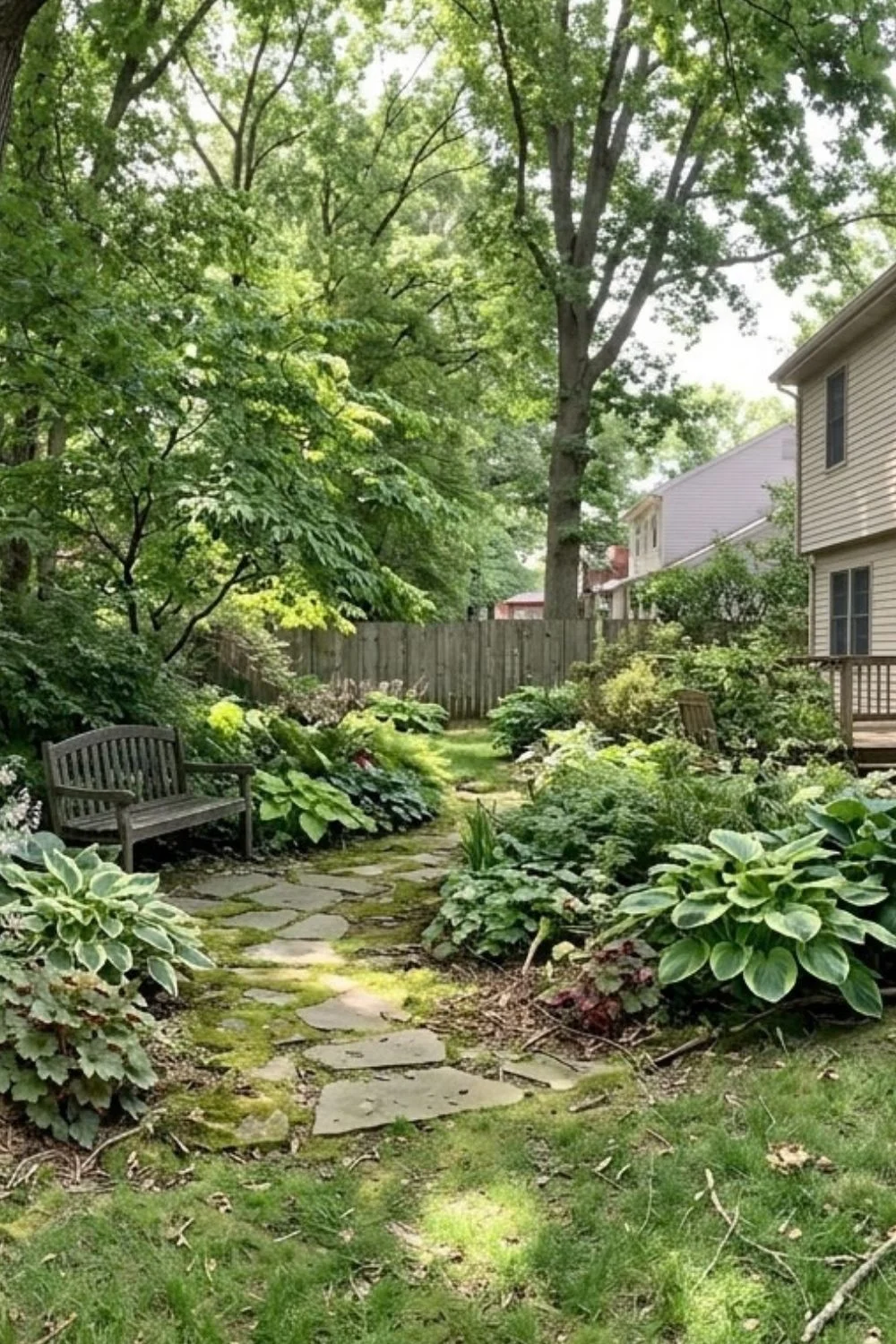
A narrow path through ferns, shade perennials, and mulch can make a low-light corner feel intentional. Use flagstone, gravel, or bark where the surface stays stable. Keep plants far enough back that wet leaves do not cover the walking route.
3. Shaded Water Feature
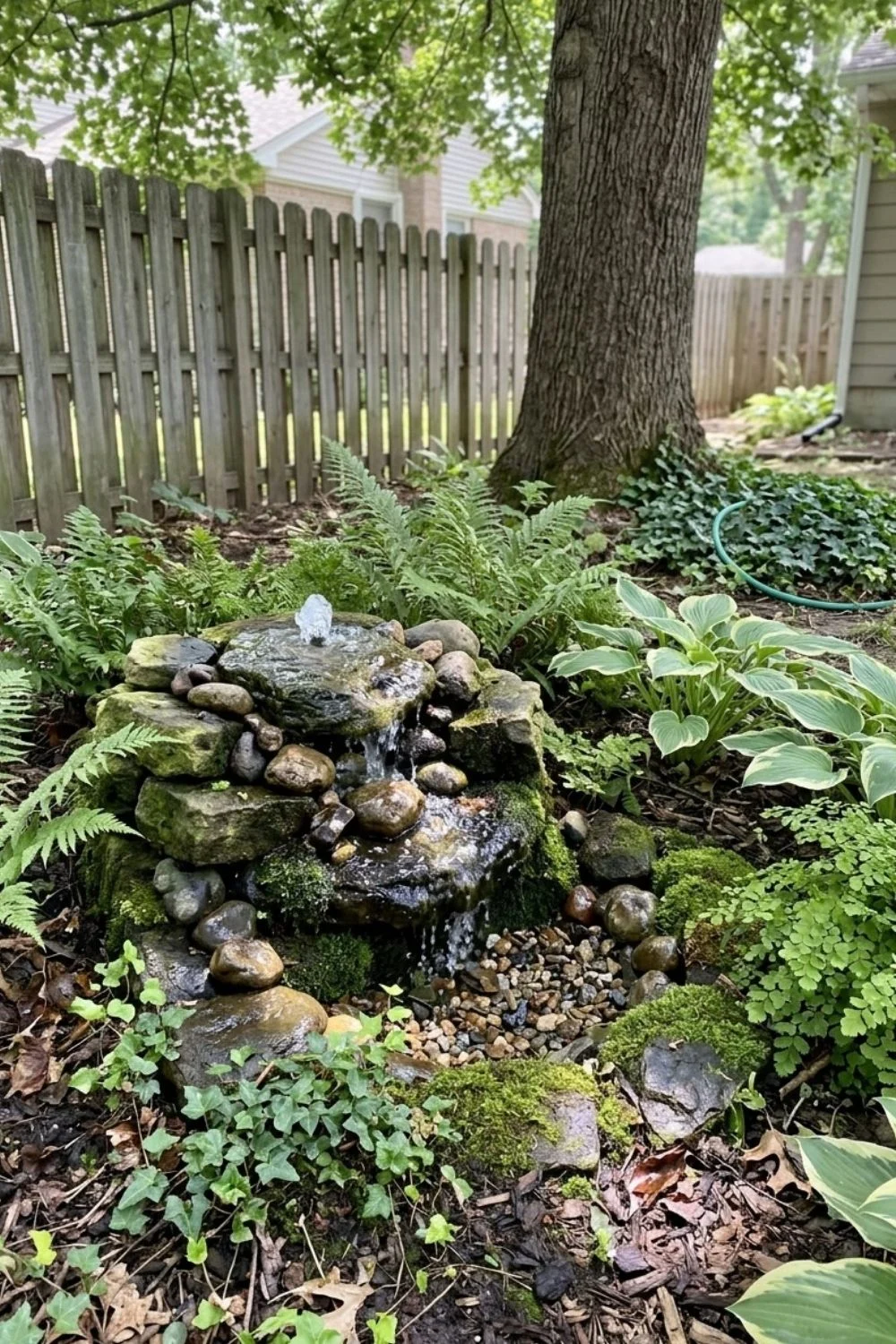
A small fountain or recirculating bubbler can add sound and movement to a shaded garden. Moisture-loving plants can soften the edges, but do not create constantly wet soil where the chosen plants need drainage. Keep electrical components rated for outdoor wet locations.
4. Bright Foliage With Heuchera
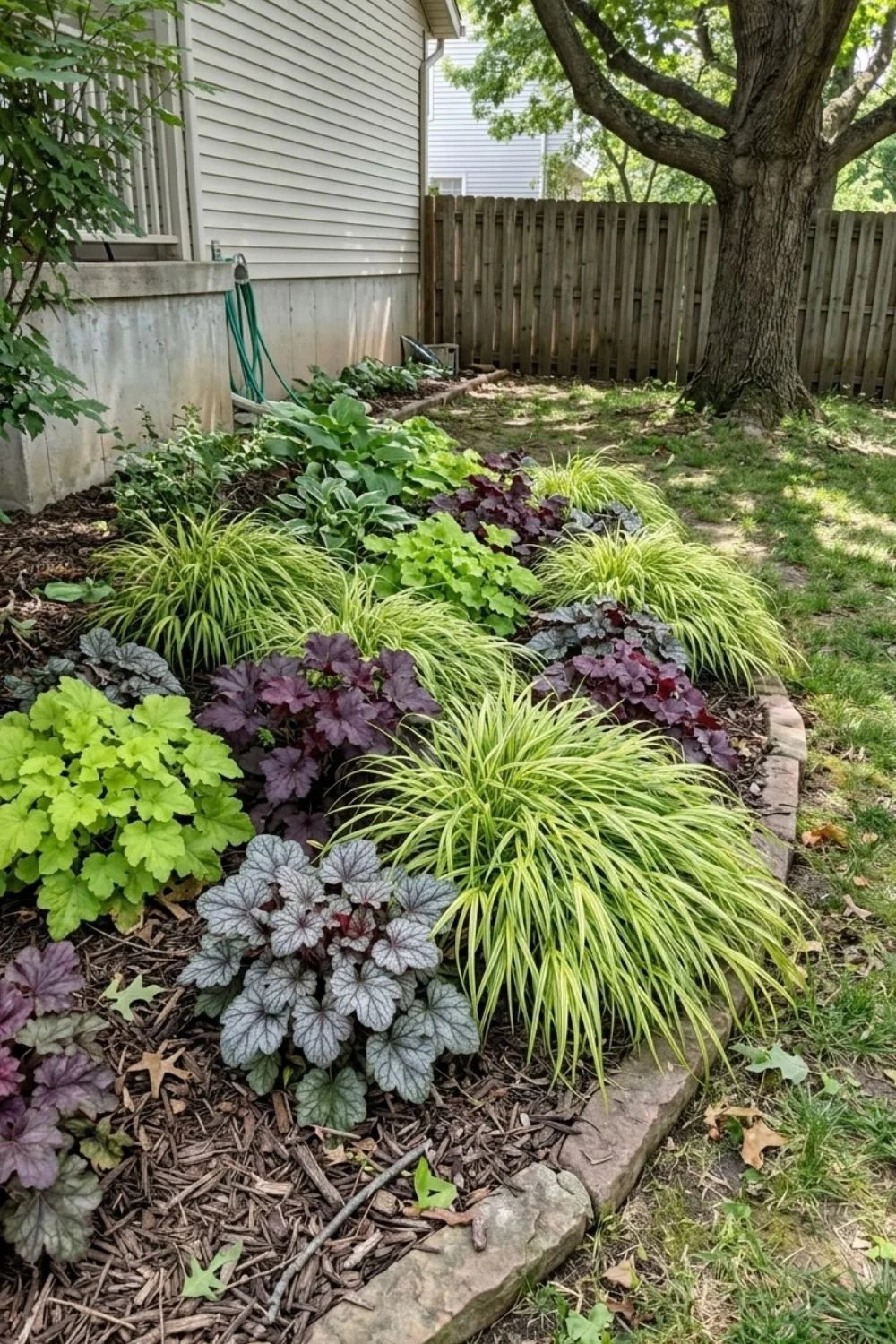
Colorful foliage can brighten shade even when few plants are blooming. Heuchera, Japanese forest grass, variegated hostas, and similar plants can add lime, silver, burgundy, or gold tones. Repeat a few colors instead of mixing every available variety.
5. Under-Tree Shade Garden
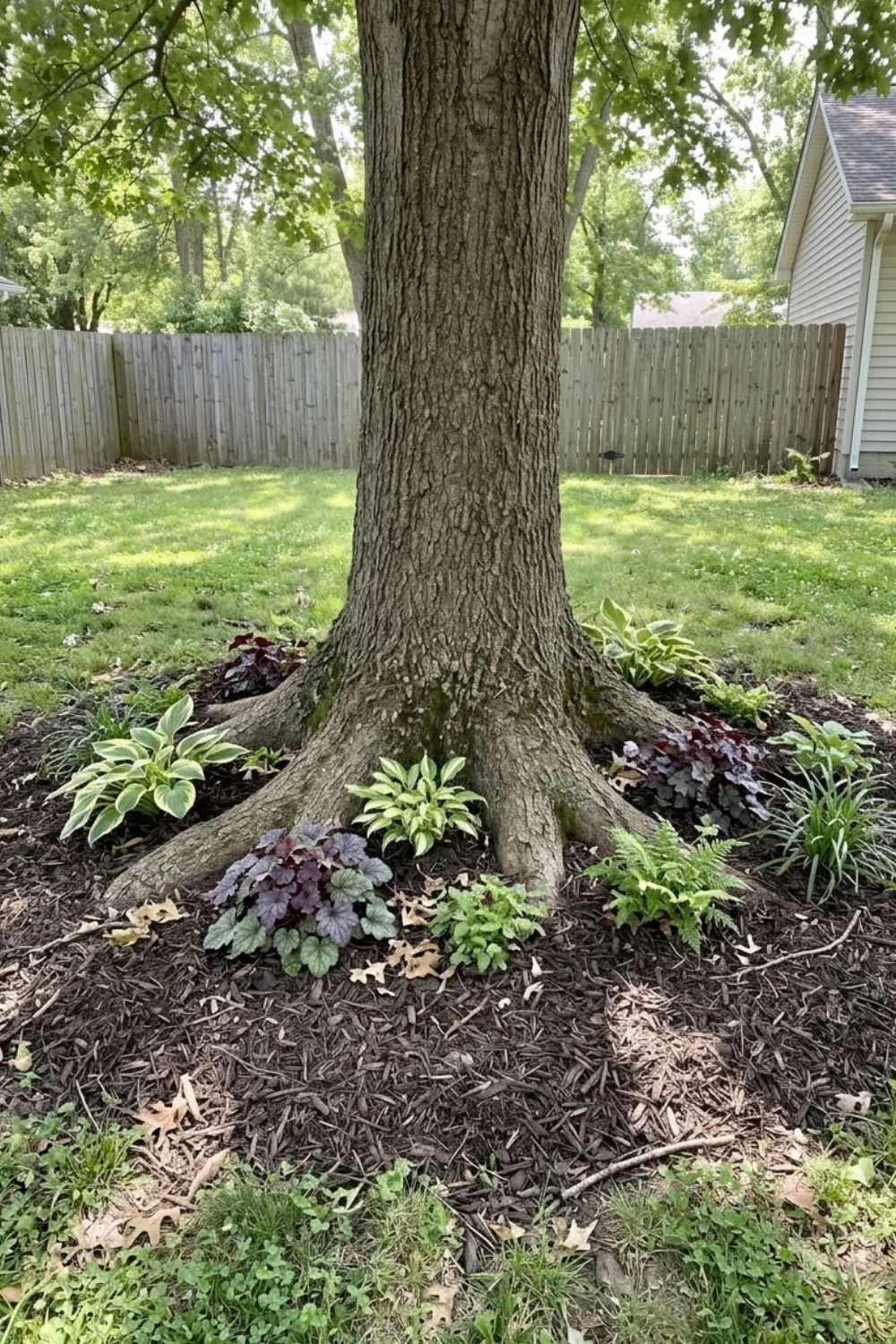
The soil beneath mature trees is often dry and full of roots. Avoid deep digging that damages major roots. Use shallow planting pockets, mulch, and species that tolerate root competition. Water new plants carefully until established.
6. Shaded Container Garden
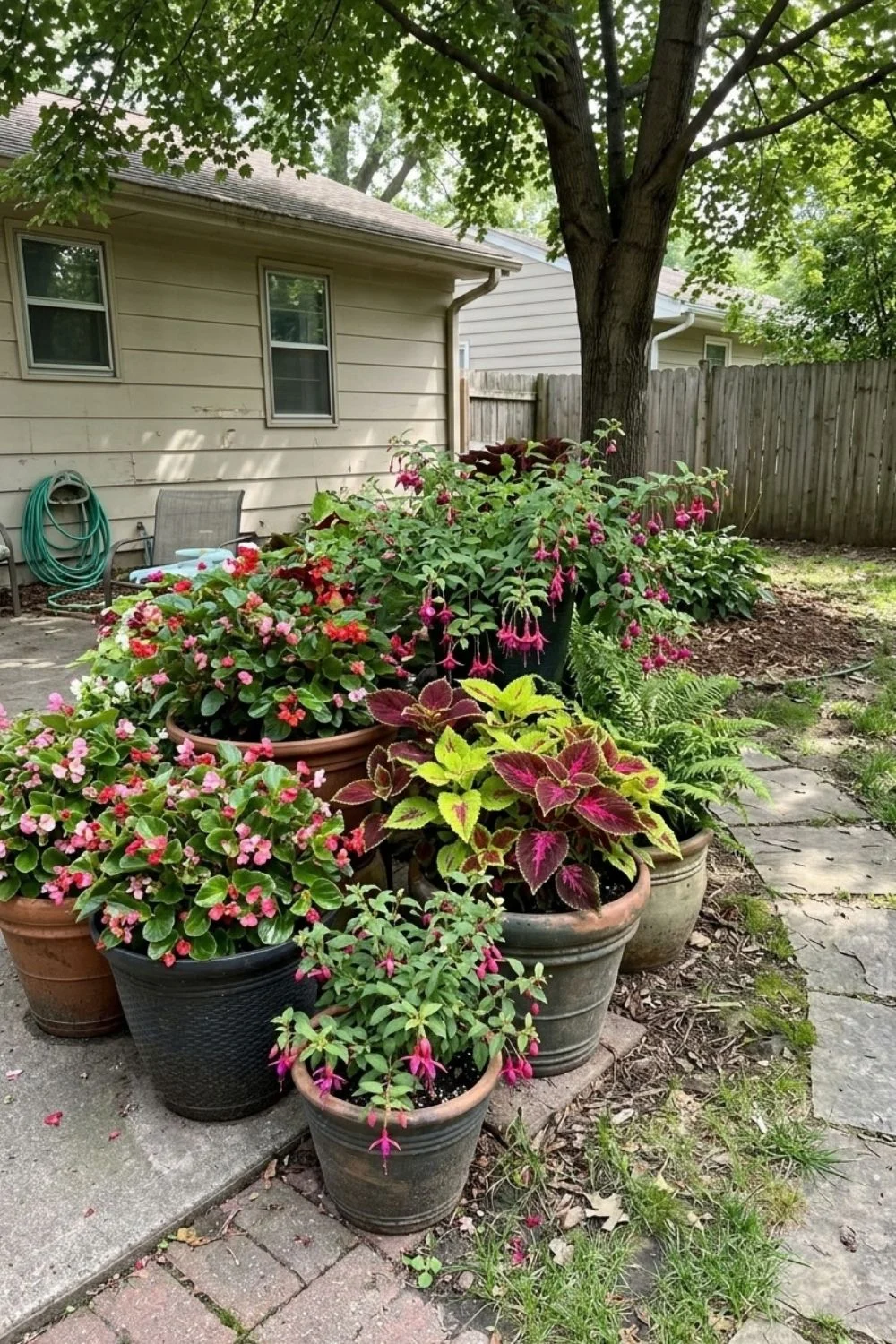
Containers let you control soil and move plants when light changes through the season. Begonias, coleus, fuchsias, and many foliage plants work well in bright shade. Group pots to simplify watering and keep enough room around doors and walkways. Our container gardening guide can help with sizing and placement.
7. Rock Garden for a Shaded Slope
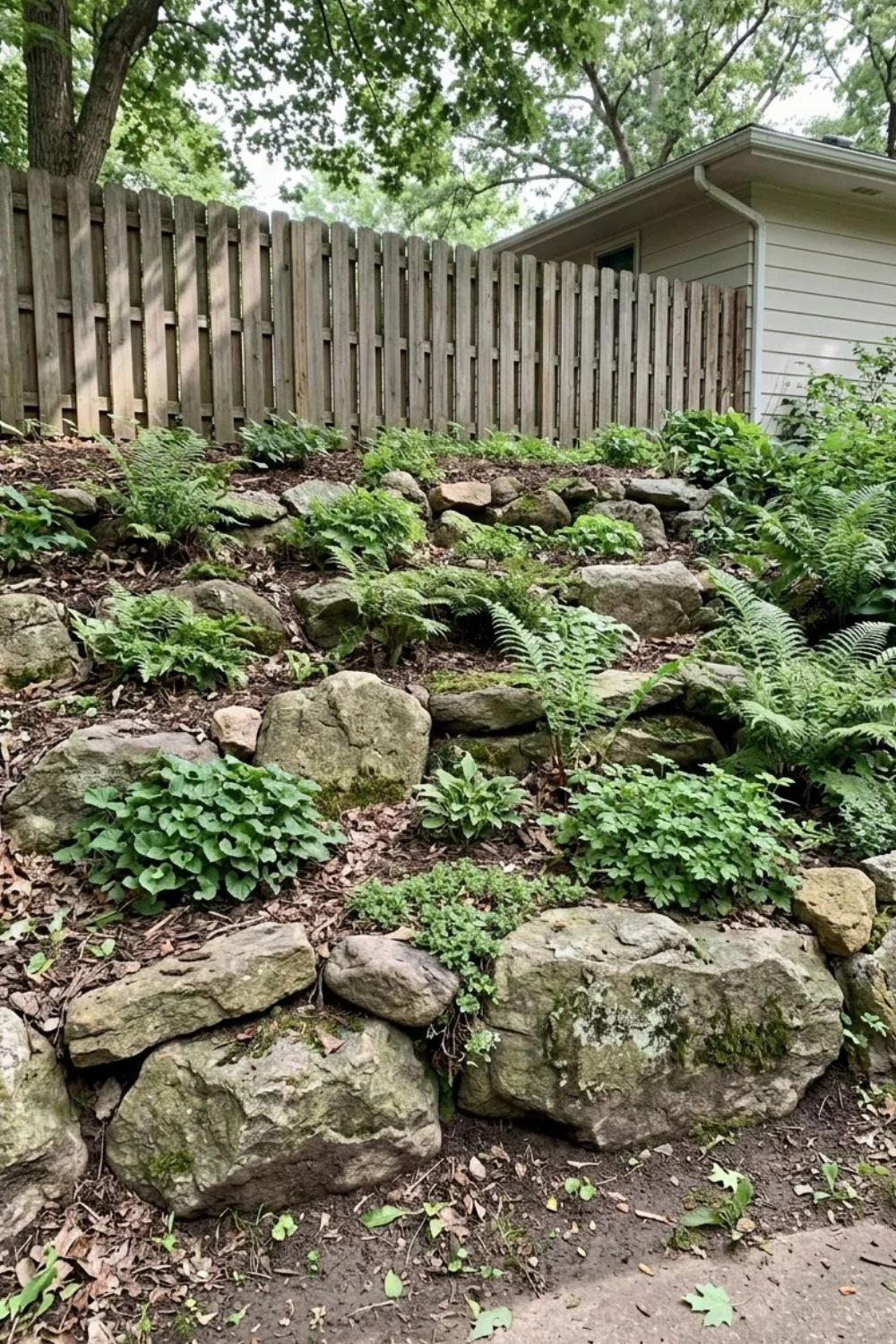
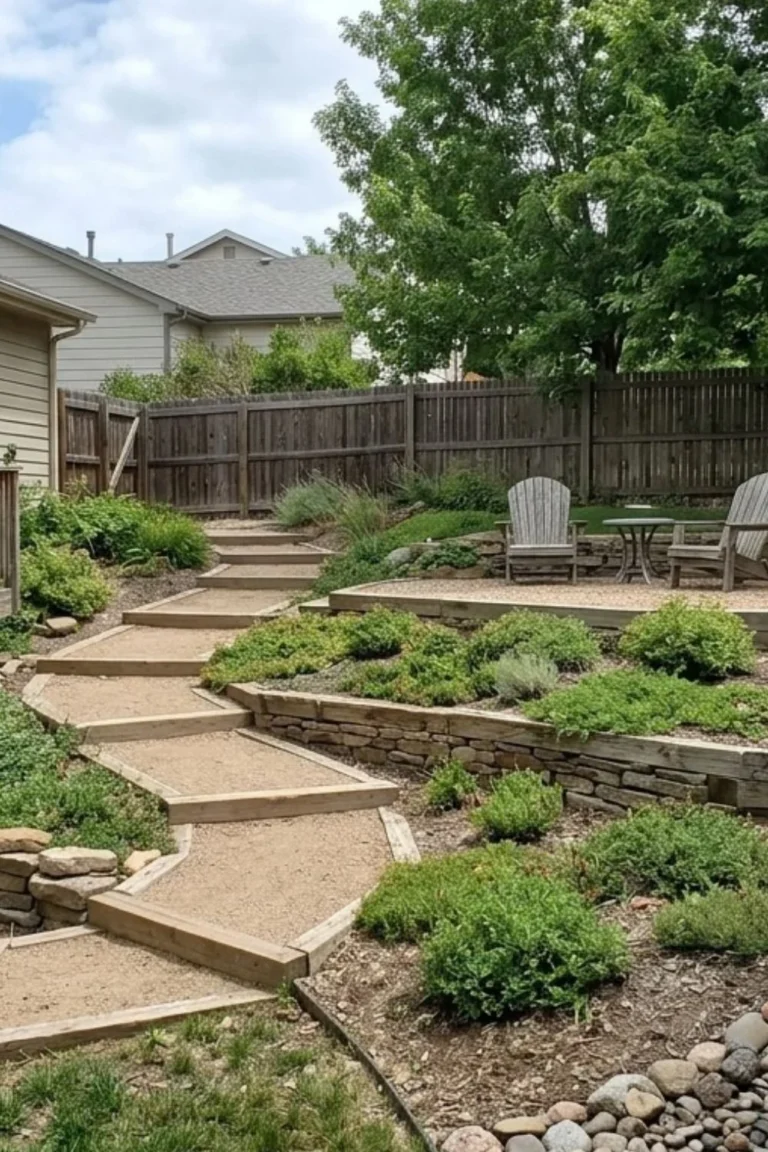
Small boulders and flat stones can create pockets on a shaded slope. Use plants that tolerate the actual moisture level, because a shady slope may still drain quickly. Partly bury rocks so they look settled and do not shift during storms.
8. Japanese-Inspired Shade Garden
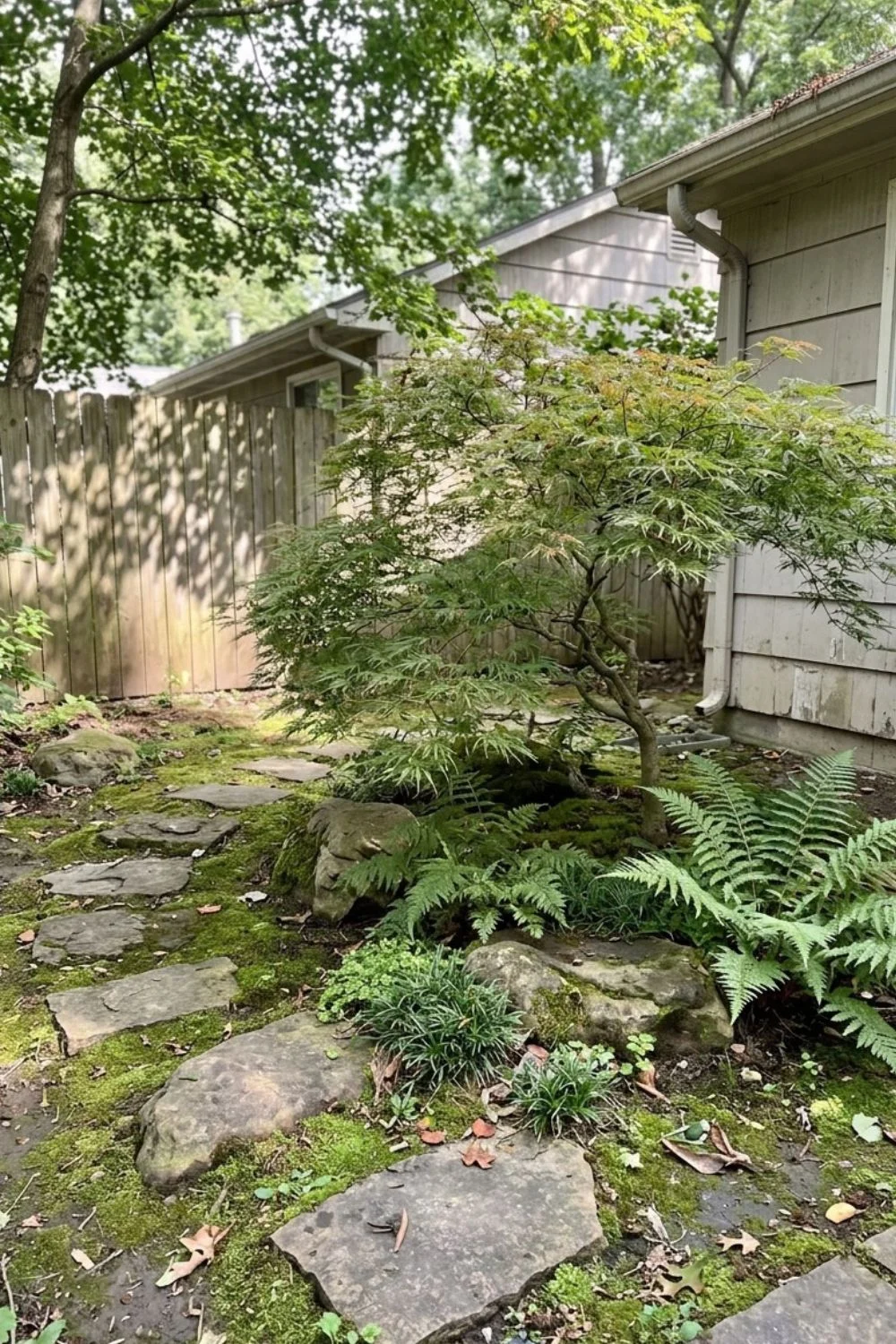
A restrained mix of mossy stones, ferns, a Japanese maple where climate allows, and simple gravel can create a quiet garden. Use fewer materials and more negative space. Keep the design practical for your region rather than copying a climate that does not match your yard.
9. Shade Garden With Flowering Shrubs
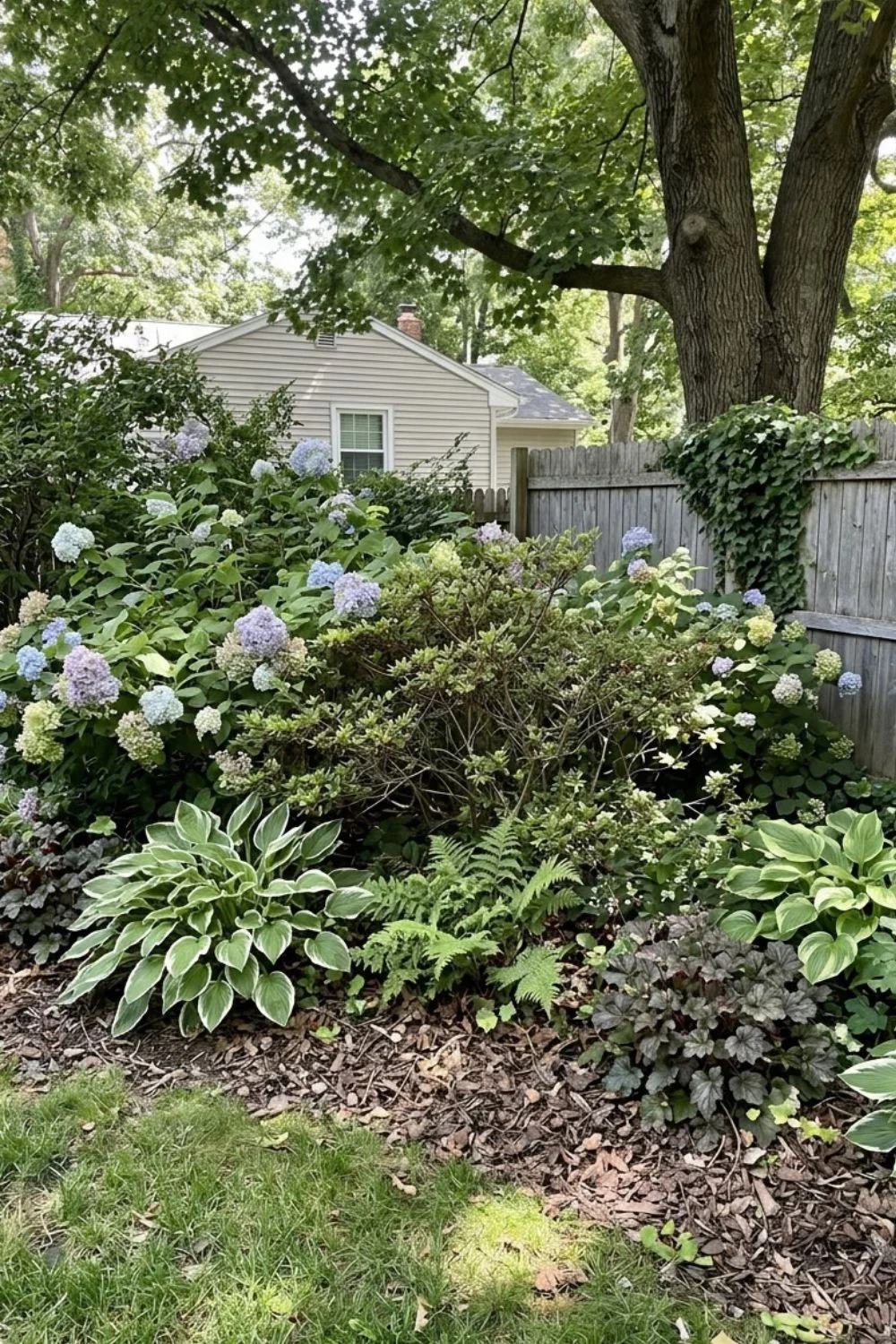
Hydrangeas, azaleas, rhododendrons, and camellias can add structure and seasonal flowers in suitable climates. Check mature size, soil pH needs, and winter hardiness before planting. Use shrubs as the background, then layer smaller plants in front.
10. Moss and Stone Garden
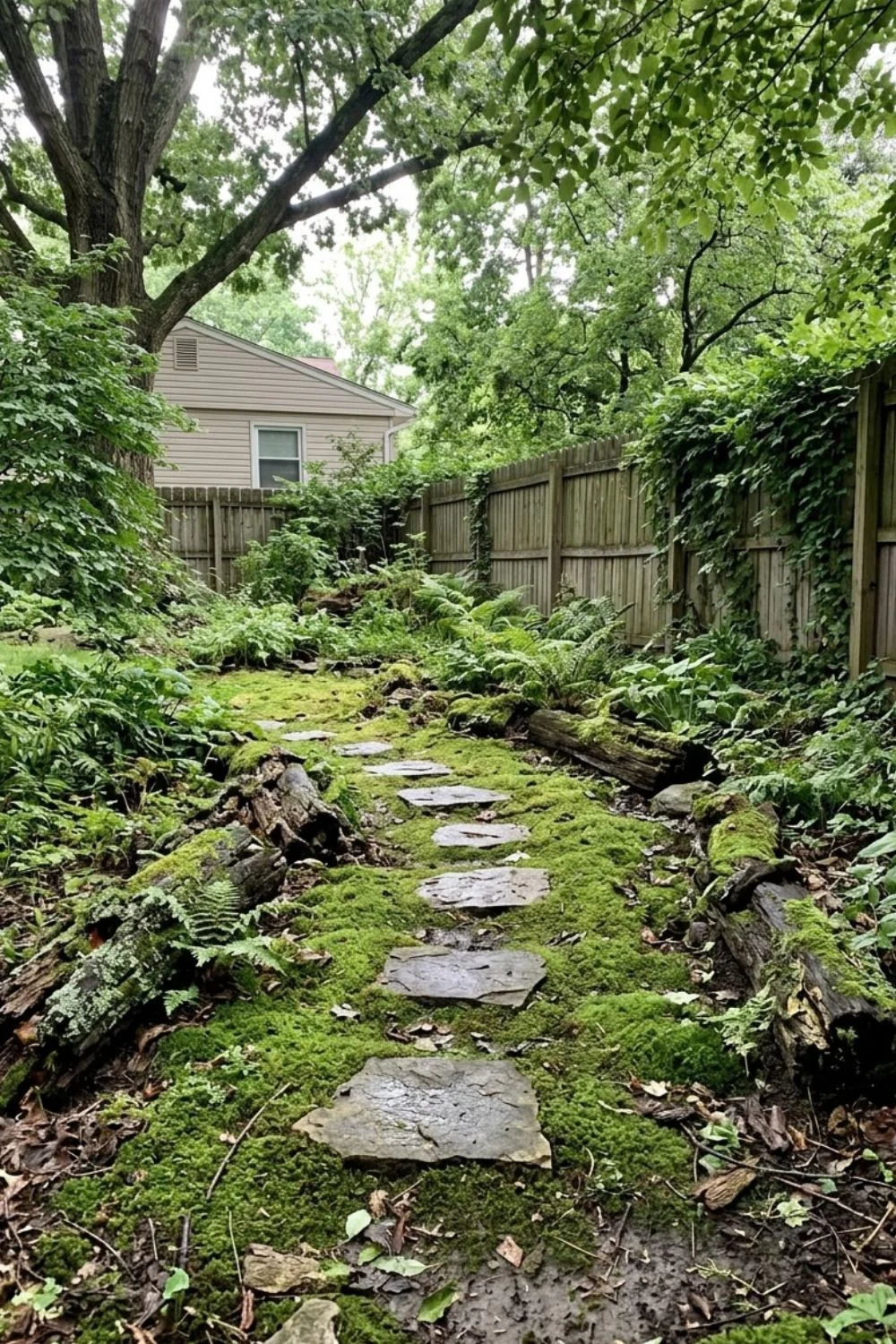
Where the site is naturally damp and shaded, moss can become an asset instead of something to remove. Pair it with stones, logs, and a simple path. Do not try to force moss into hot, dry shade that cannot support it.
Partial Shade and Deep Shade Ideas
11. Vertical Shade Garden
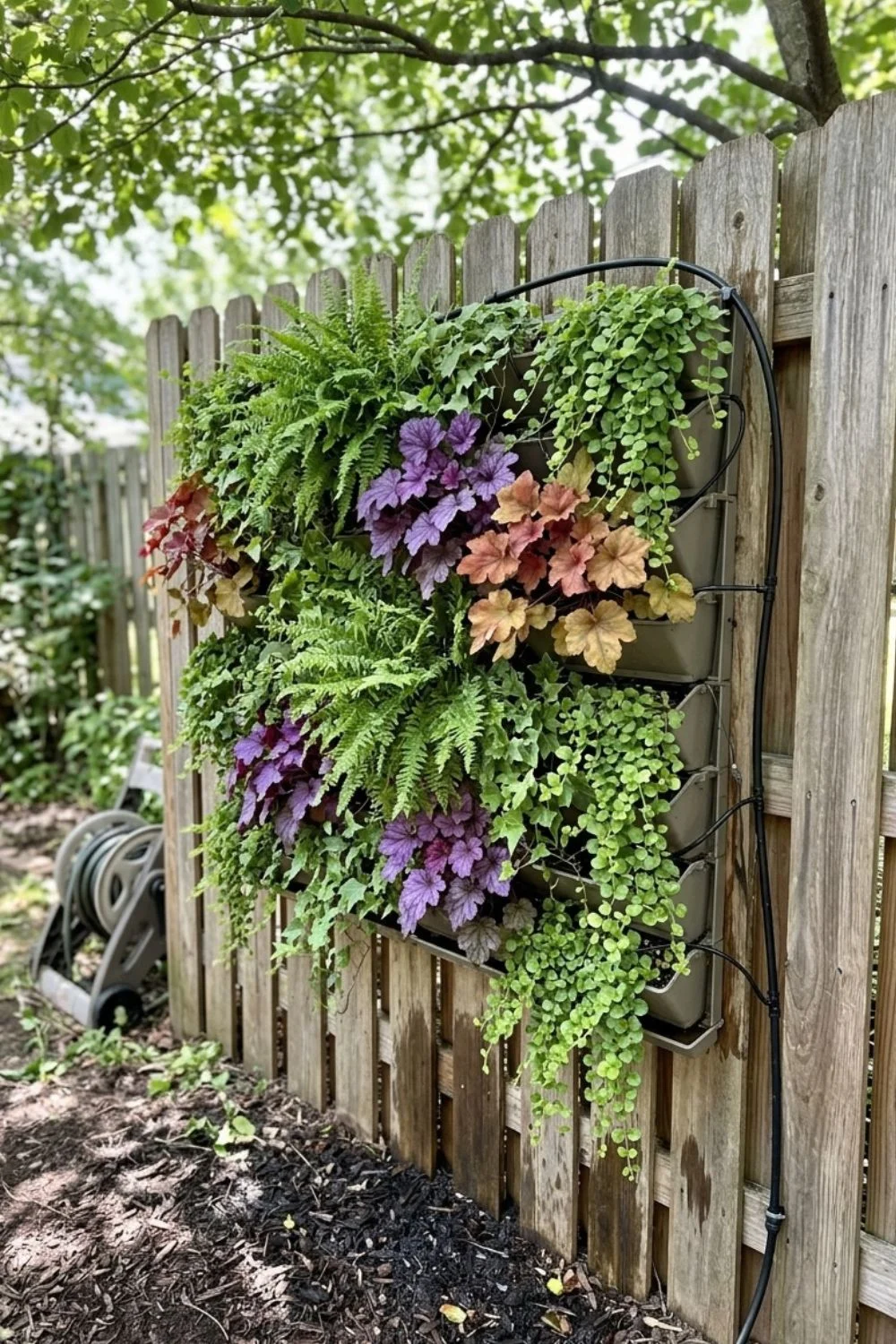
A shaded fence or wall can hold a vertical planter filled with ferns, begonias, heucheras, or trailing foliage plants. Make sure the structure can carry wet soil weight and that excess water can drain safely. Keep irrigation simple so upper pockets do not stay dry while lower ones become soaked.
12. Edible Shade Garden
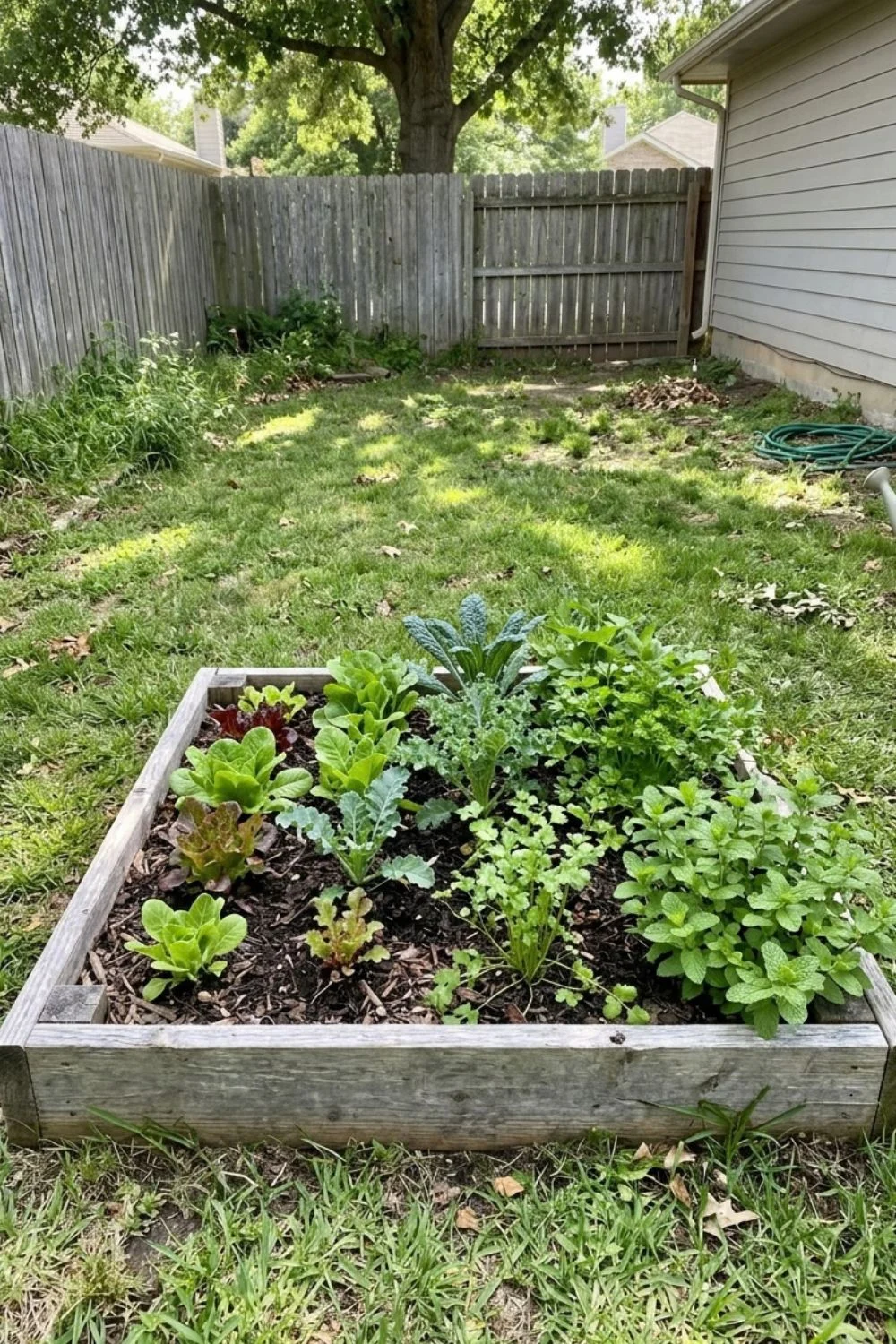
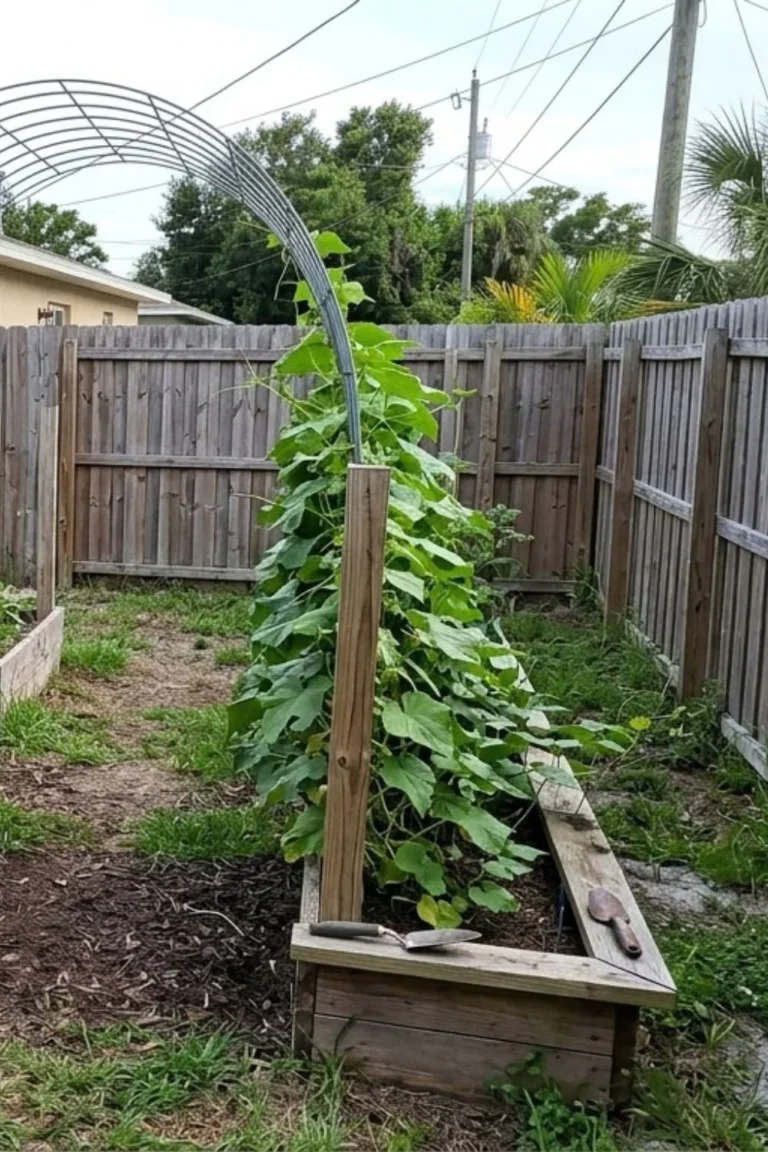
Leafy greens and some herbs can produce with less sun than fruiting vegetables. Lettuce, spinach, kale, parsley, cilantro, mint, and chives are common options for partial shade. Growth may be slower, so avoid promising full-sun yields in a low-light spot.
13. Stumpery Garden
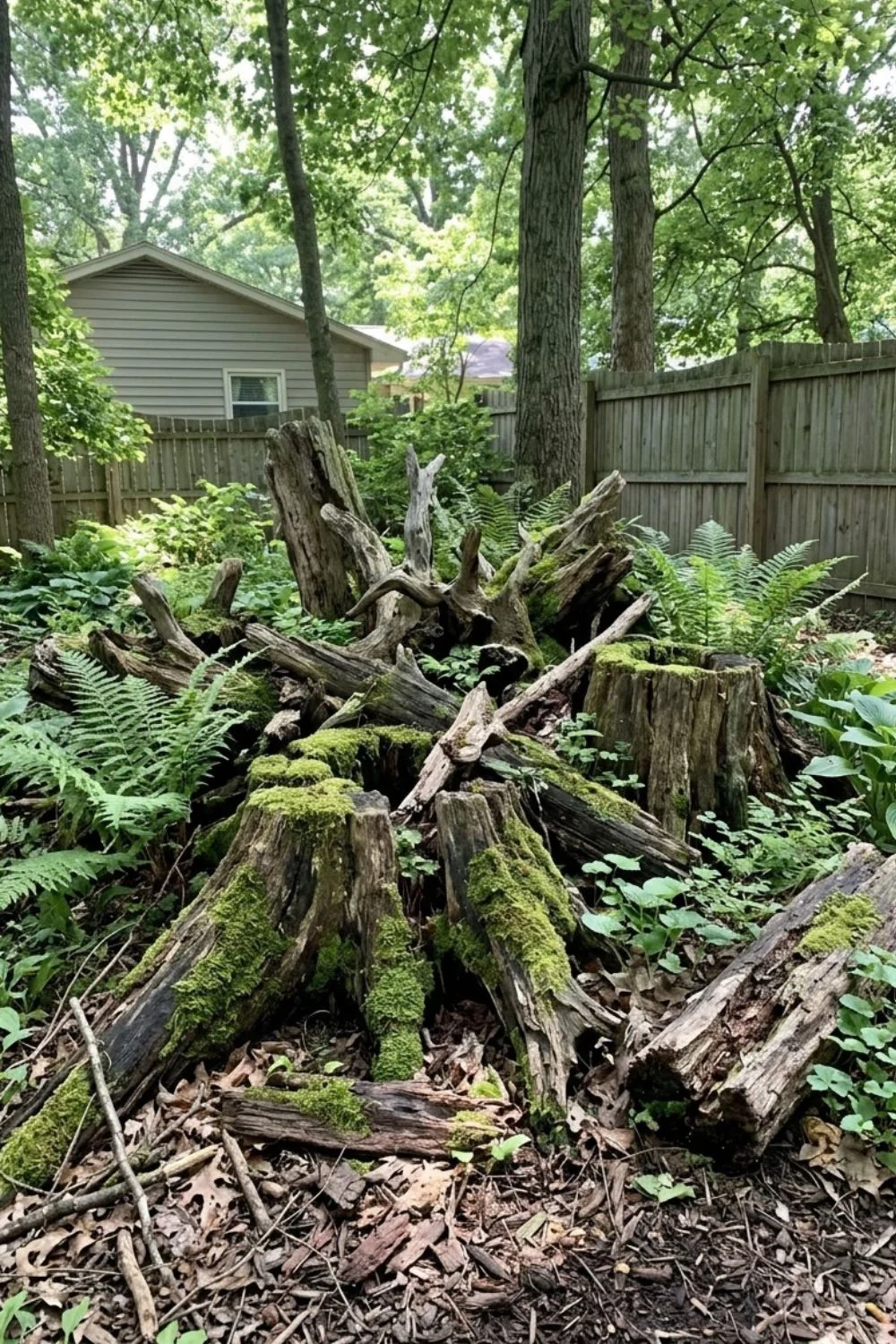
Old stumps, logs, and root pieces can become habitat and structure in a woodland-style bed. Arrange them safely so they do not roll or block paths. Ferns and mosses can grow around the decaying wood where moisture is suitable.
14. Formal Shade Garden
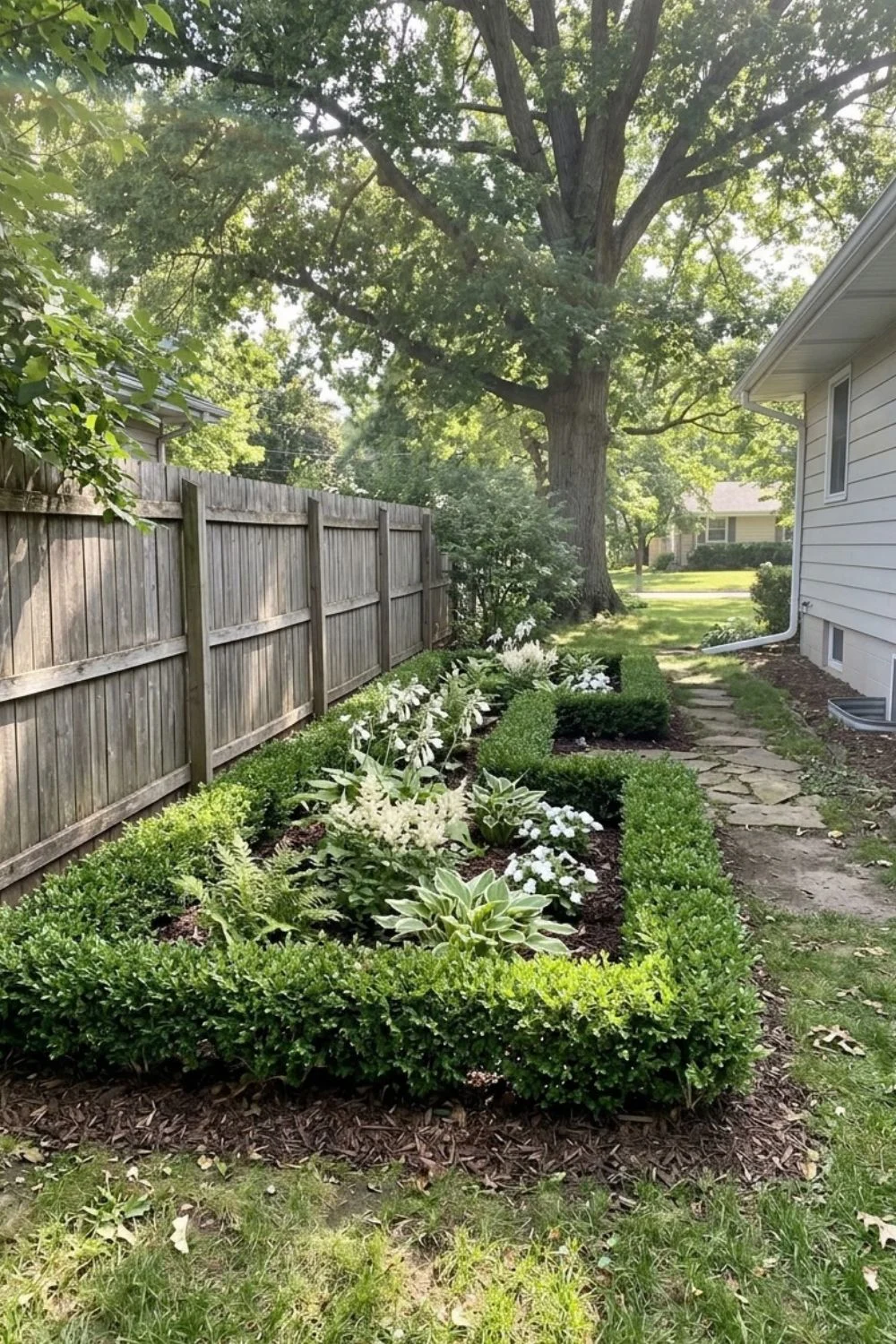
Low evergreen hedges and repeated shade plants can create a more structured look. Keep the layout simple with straight lines or broad curves. Choose hedge plants that actually tolerate the light conditions instead of using a formal species that struggles in deep shade.
15. Astilbe and Bleeding Heart Drift
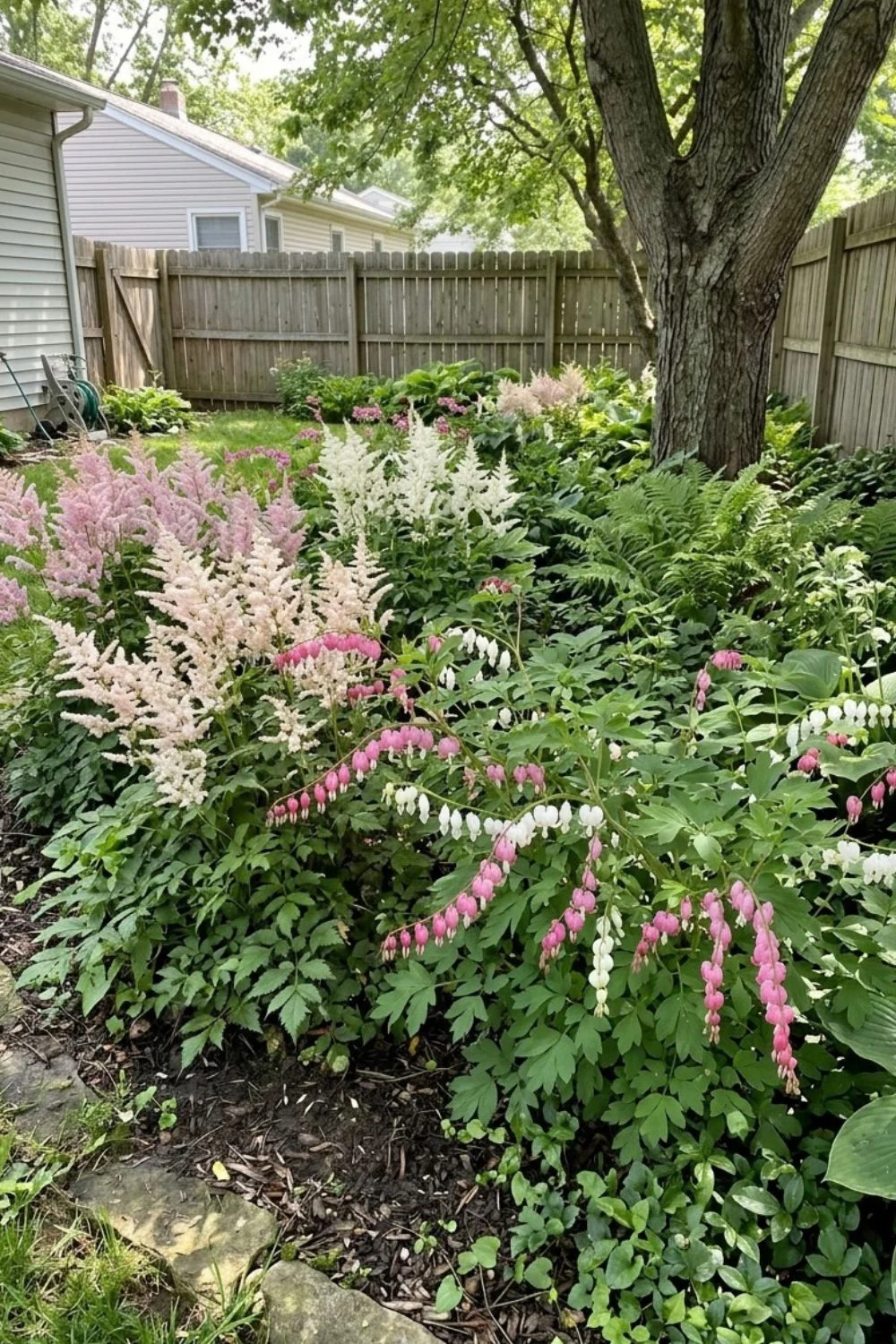
In moist shade, astilbes and bleeding hearts can create soft spring-to-early-summer color. Group them in drifts rather than isolated single plants. Add foliage plants nearby so the bed still looks full after early bloomers finish.
16. Dry Shade Garden
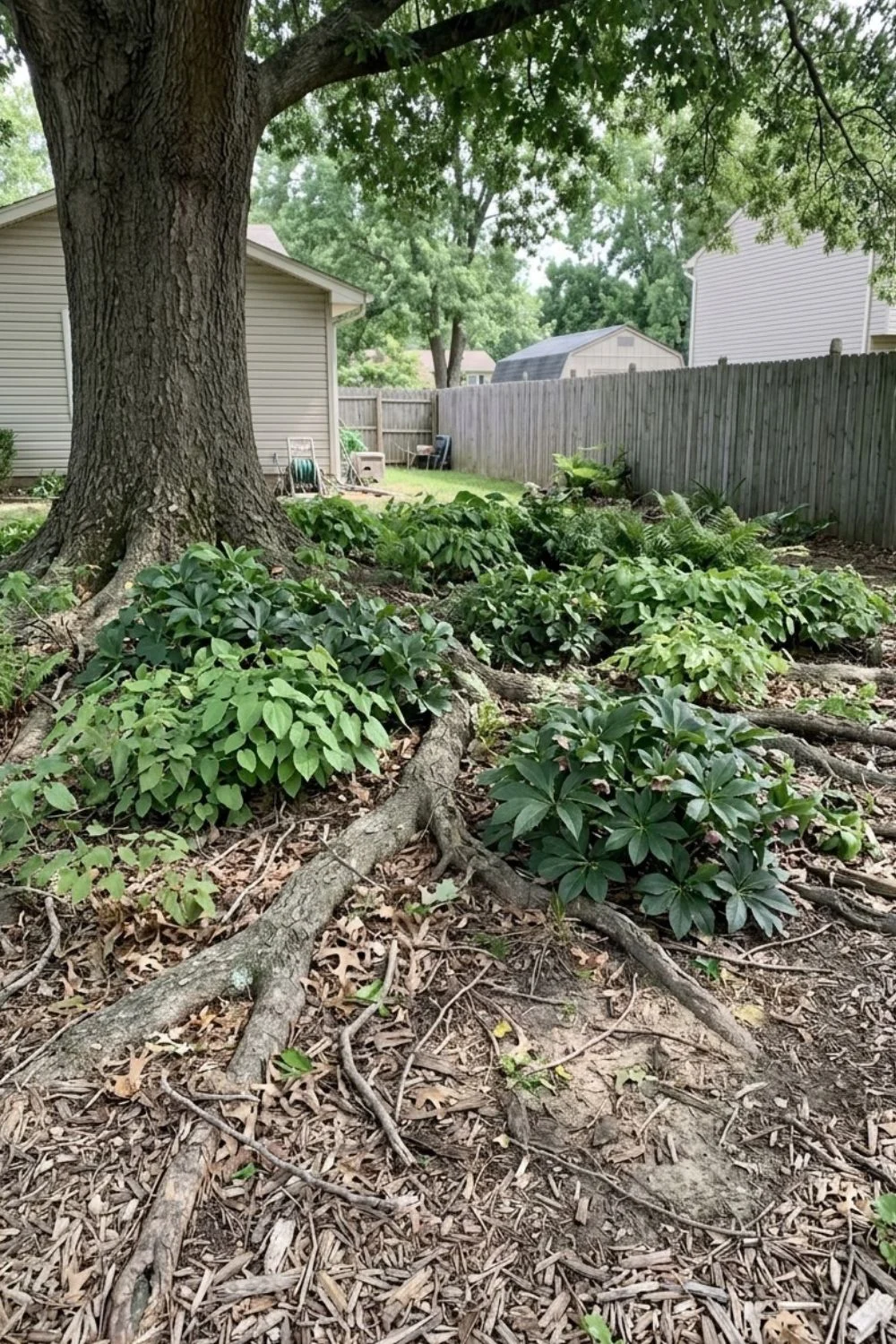
Dry shade often occurs beneath mature trees or roof overhangs. Tough plants such as epimedium, hellebores, and certain hardy geraniums can handle these conditions better than moisture-loving shade plants. Mulch helps conserve moisture, but do not pile it against tree trunks.
17. Shade Garden Seating Area
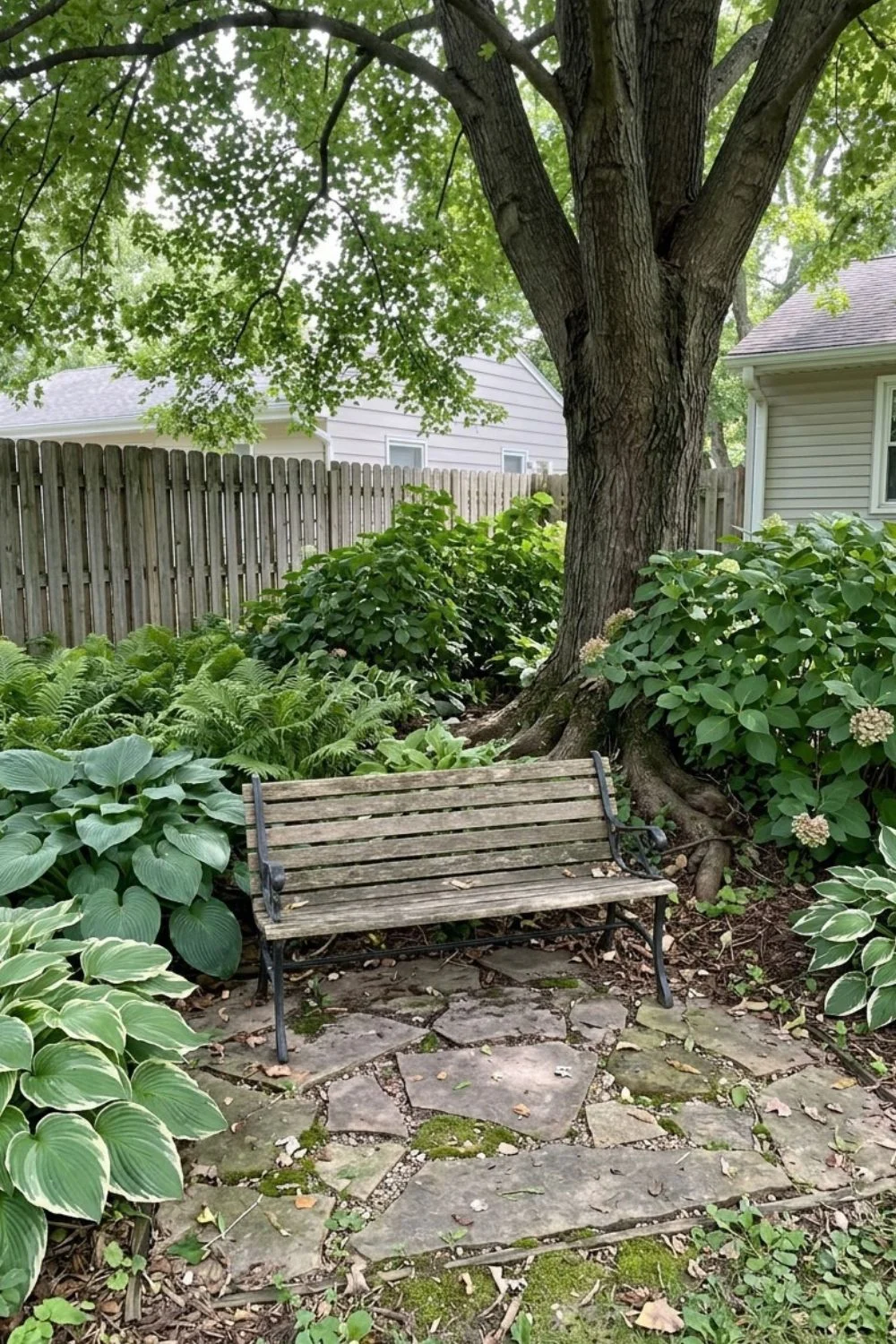
A bench or two chairs can turn a cool shaded corner into a useful outdoor room. Keep the seating on a level, stable surface and leave enough open space around it. Plants should frame the area without touching people every time they sit down.
18. Native Plant Shade Garden
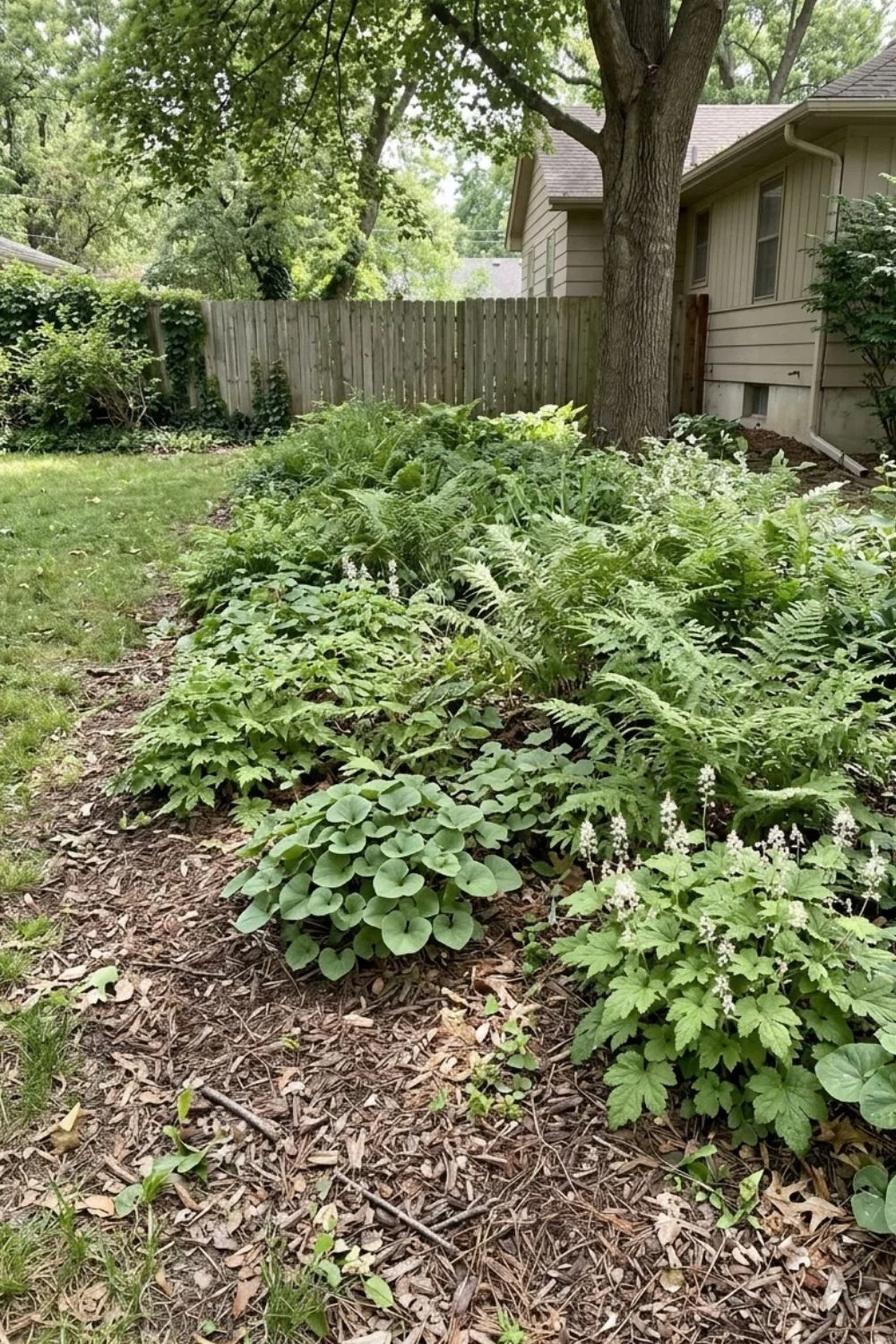
Native woodland plants can be a strong fit because they are adapted to local seasonal patterns and often support wildlife. Choose species native to your region, not just to the U.S. generally. Local extension services and native-plant societies can help confirm suitable options.
19. Shade Groundcover Carpet
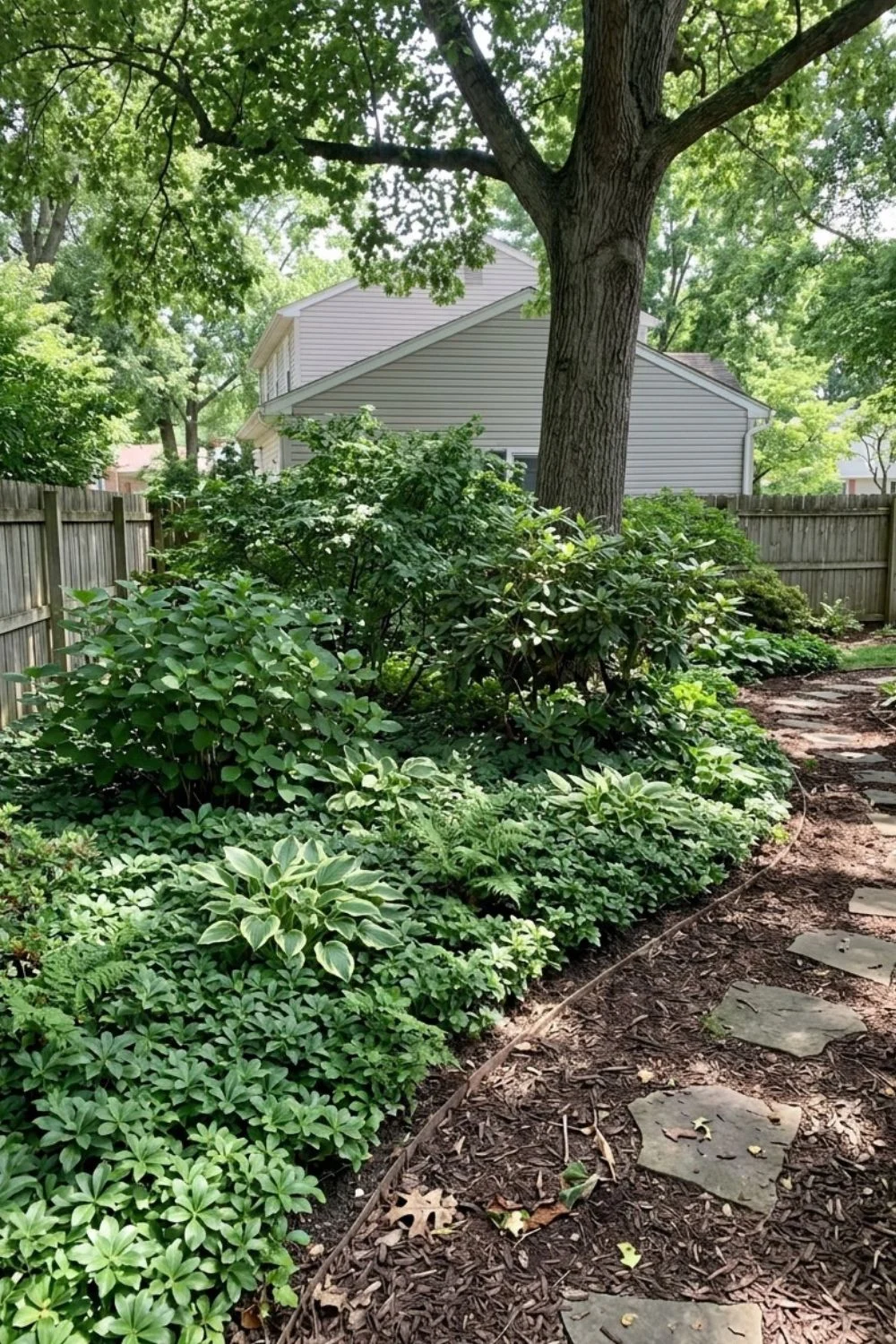
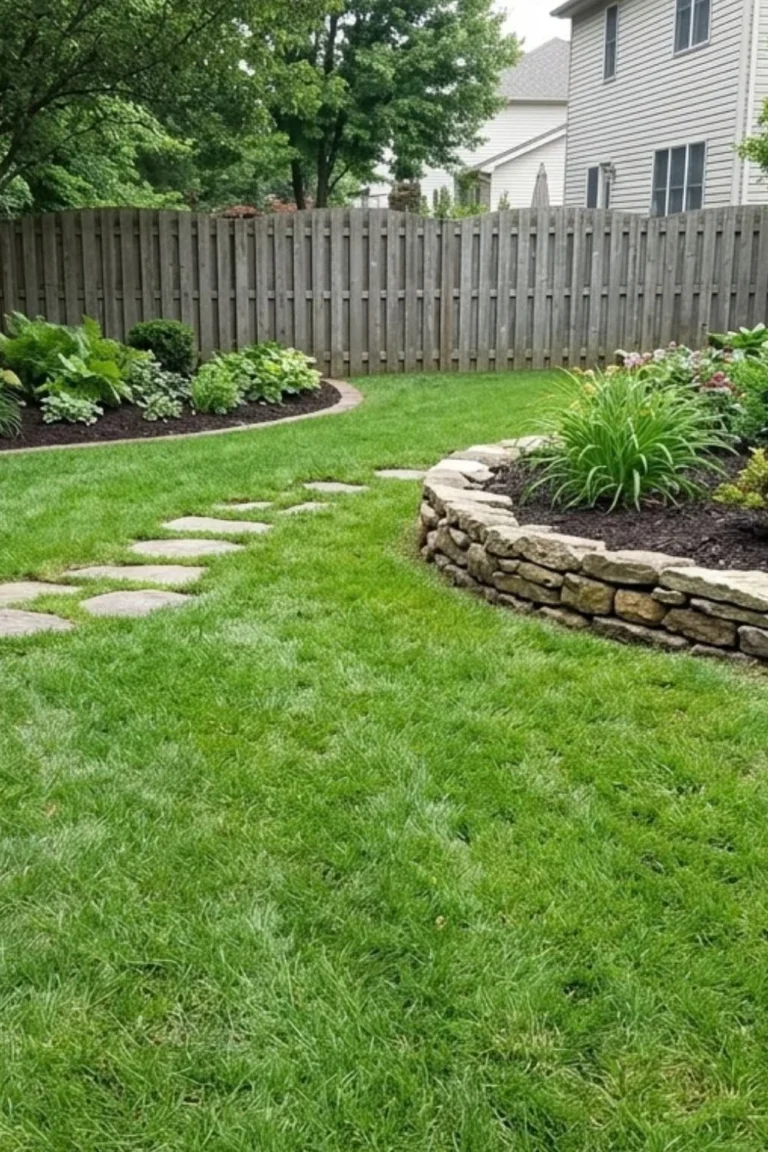
Low groundcovers can reduce bare soil and soften large shaded areas. Choose noninvasive species that suit your region. Even groundcovers need boundaries, so keep them away from places where they can spread into lawn, woodland, or neighboring beds.
20. Modern Minimalist Shade Garden
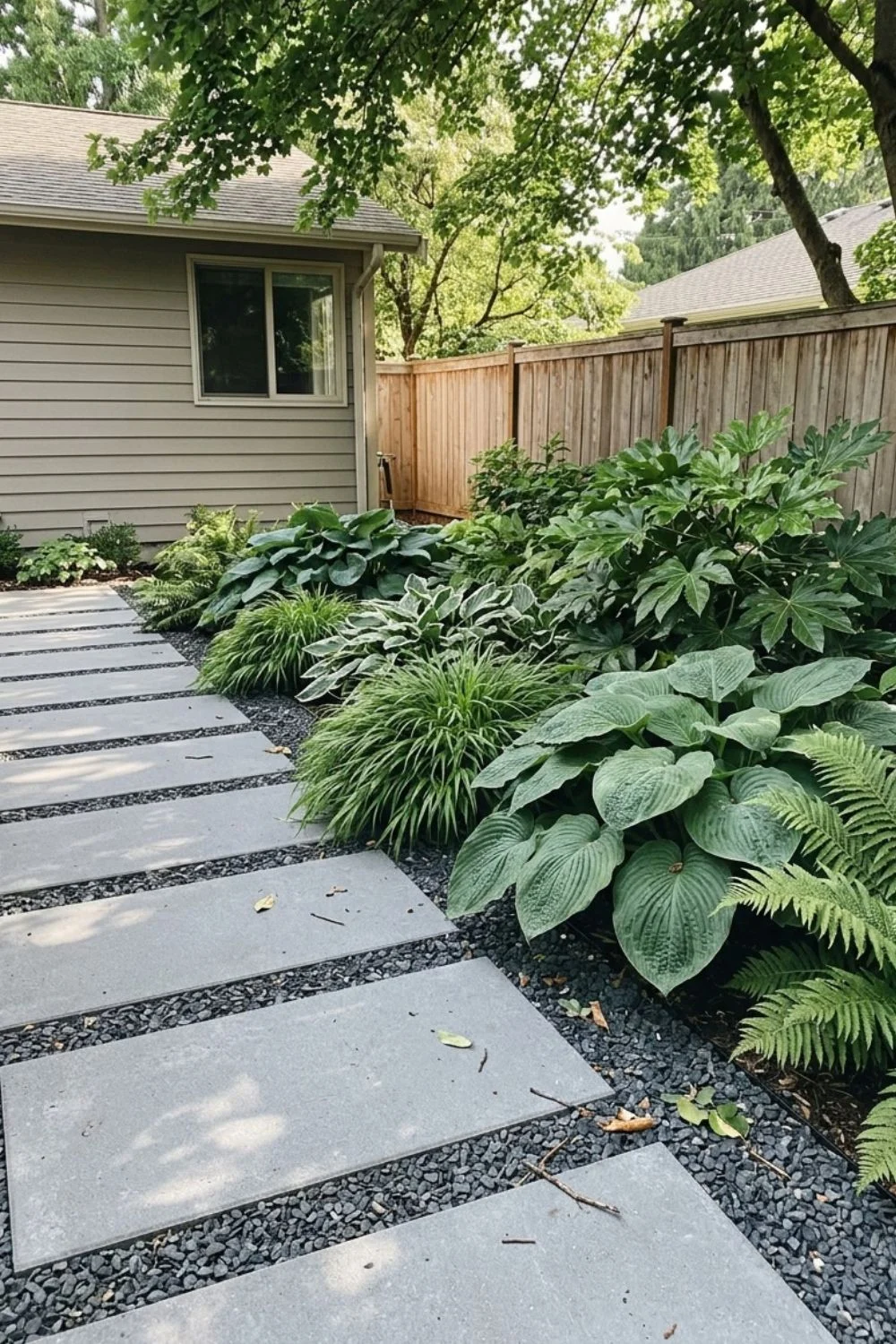
Use a limited palette of bold foliage, smooth pavers, dark gravel, and one or two repeated plant forms. Shade naturally emphasizes texture, so you do not need many colors. Keep the bed edges clean and the number of materials low.
Layer Plants by Height
A shade garden feels fuller when plants are arranged in layers. Taller shrubs or architectural perennials can sit behind medium ferns and hostas, with low groundcovers along the edge. Leave enough spacing for mature size so the layers do not become one crowded mass.
If you want the rest of the yard to stay easy to care for, combine shade planting with the simple structure in our low-maintenance backyard landscaping guide.
21. Bog Garden in a Shaded Area
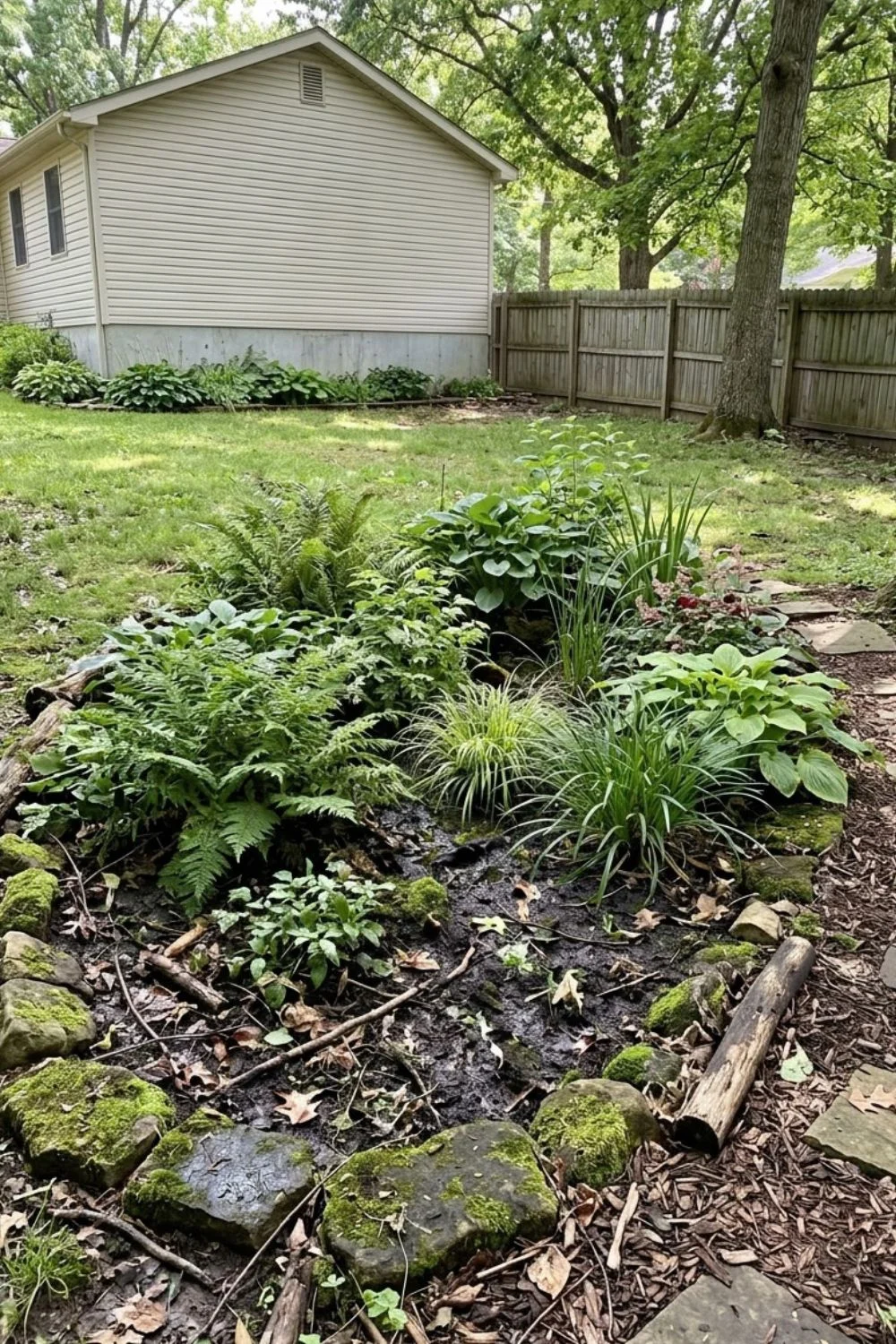
If a spot is naturally damp, choose moisture-loving plants rather than constantly trying to dry it out. A true bog garden needs careful construction and should not create standing water near foundations. Check drainage before adding liners or changing soil levels.
22. Spring Ephemeral Garden
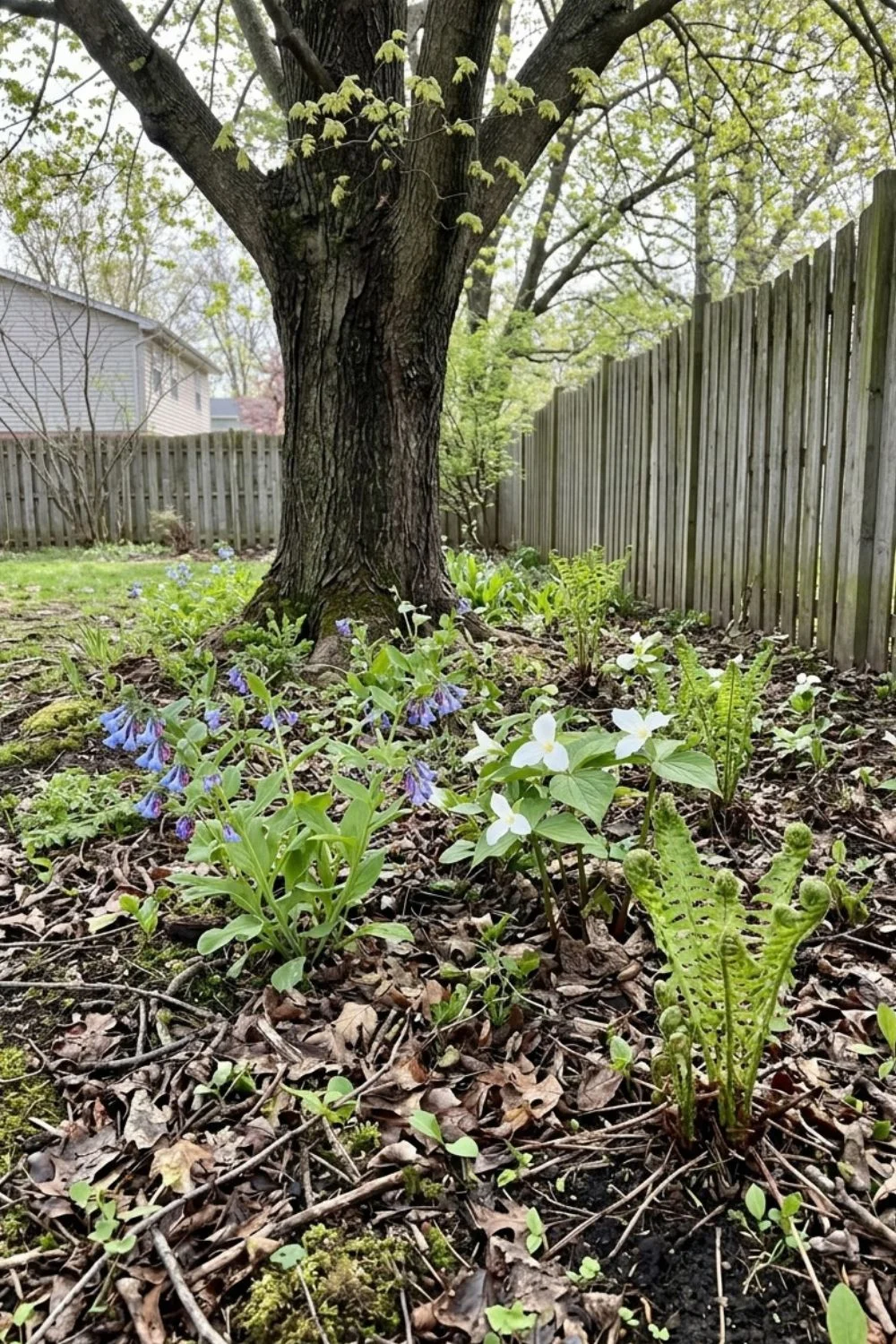
Under deciduous trees, spring wildflowers can bloom before the canopy fully leafs out. Trillium, Virginia bluebells, and similar plants may work where regionally appropriate. Pair them with later-emerging ferns or hostas so the area does not look empty after the ephemerals go dormant.
23. Contrasting Foliage Textures
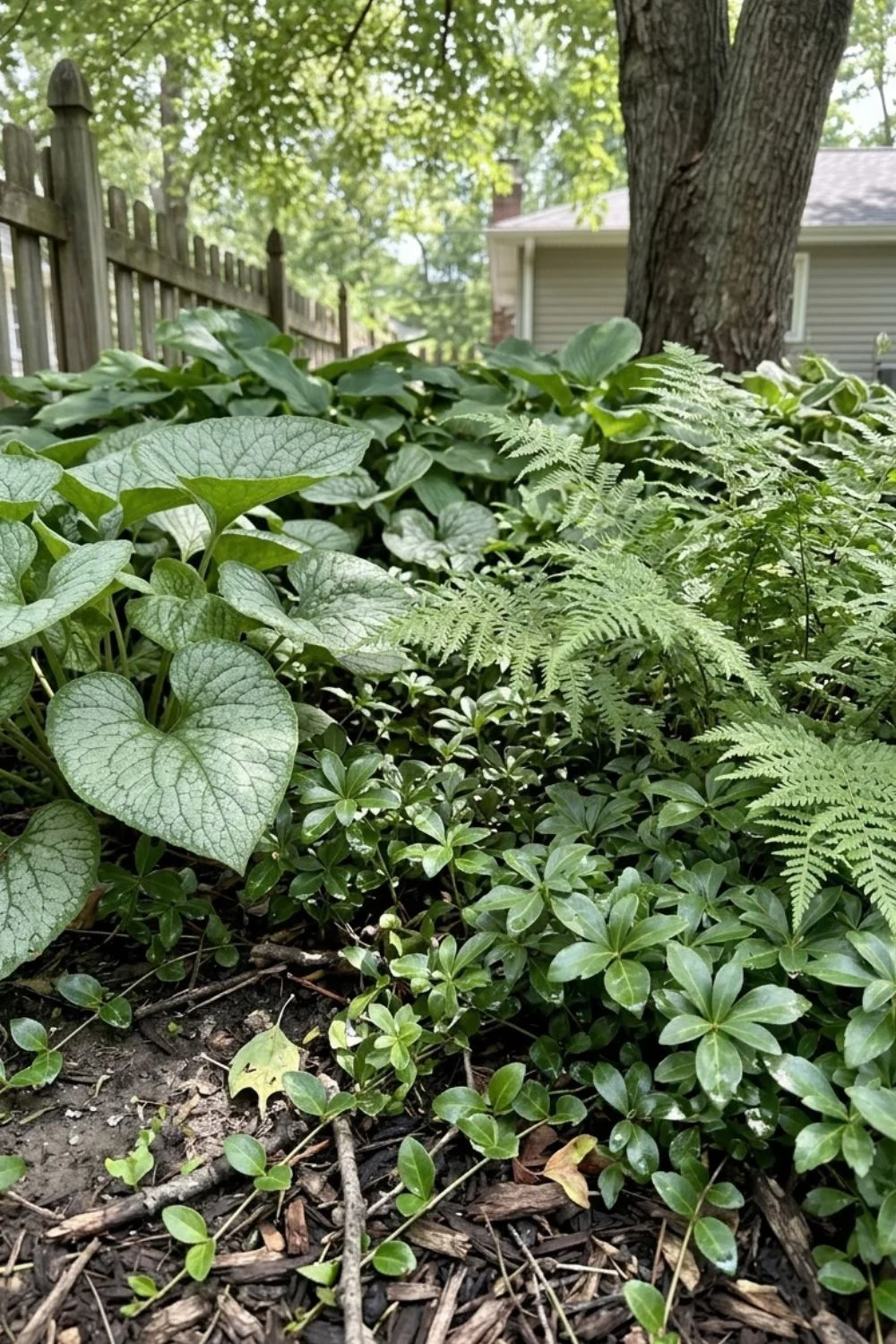
Mix broad, smooth leaves with fine fern-like foliage and grass-like forms. Texture becomes more important in low light because flowers may be fewer. Repeat the same contrasts in several places so the bed feels connected instead of random.
24. Fragrant Shade Garden
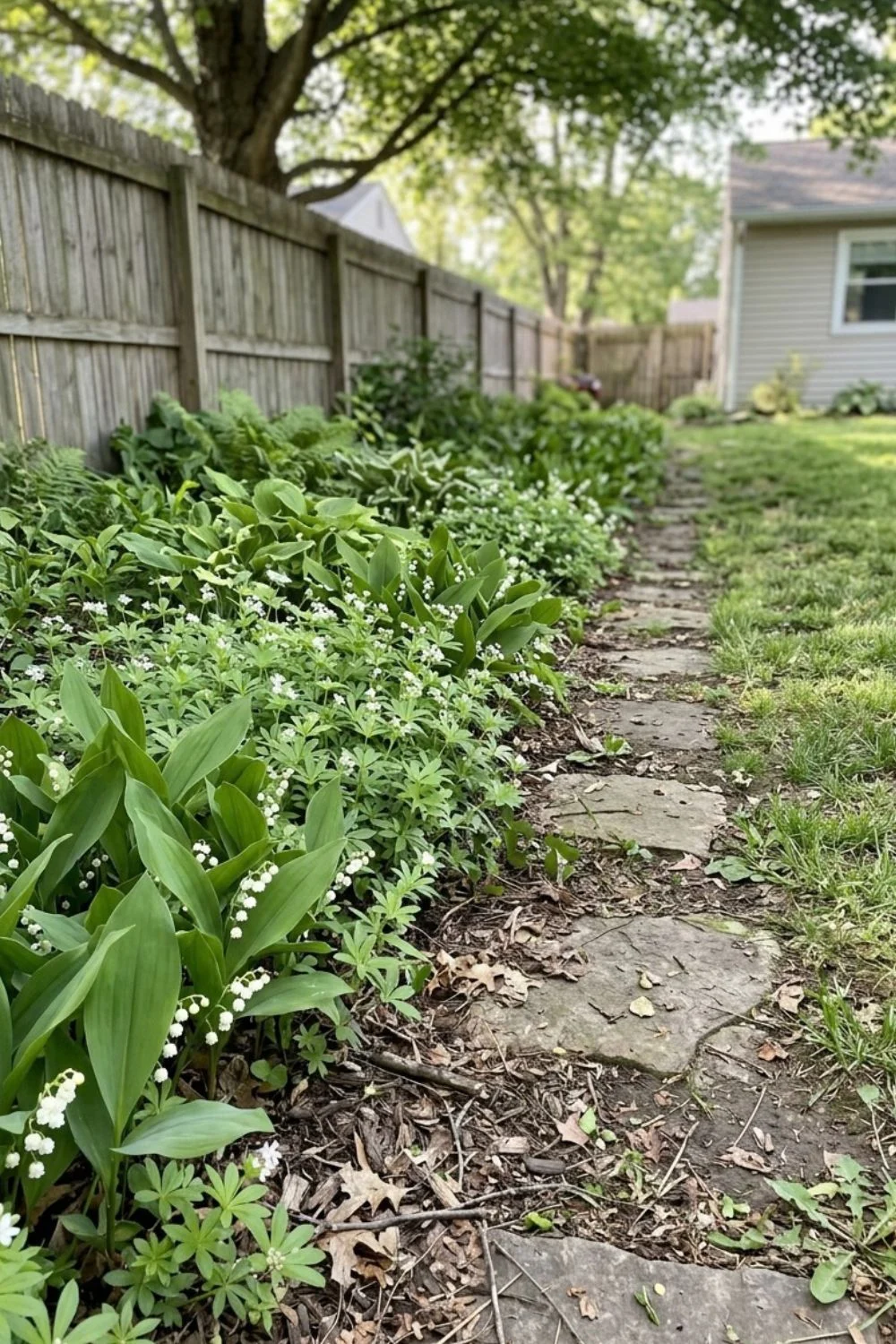
Fragrant plants can make a shaded path or seating area more enjoyable. Lily of the valley and sweet woodruff are traditional examples, but both can spread aggressively in some regions. Check local recommendations and choose noninvasive alternatives when needed.
25. White and Silver Shade Garden
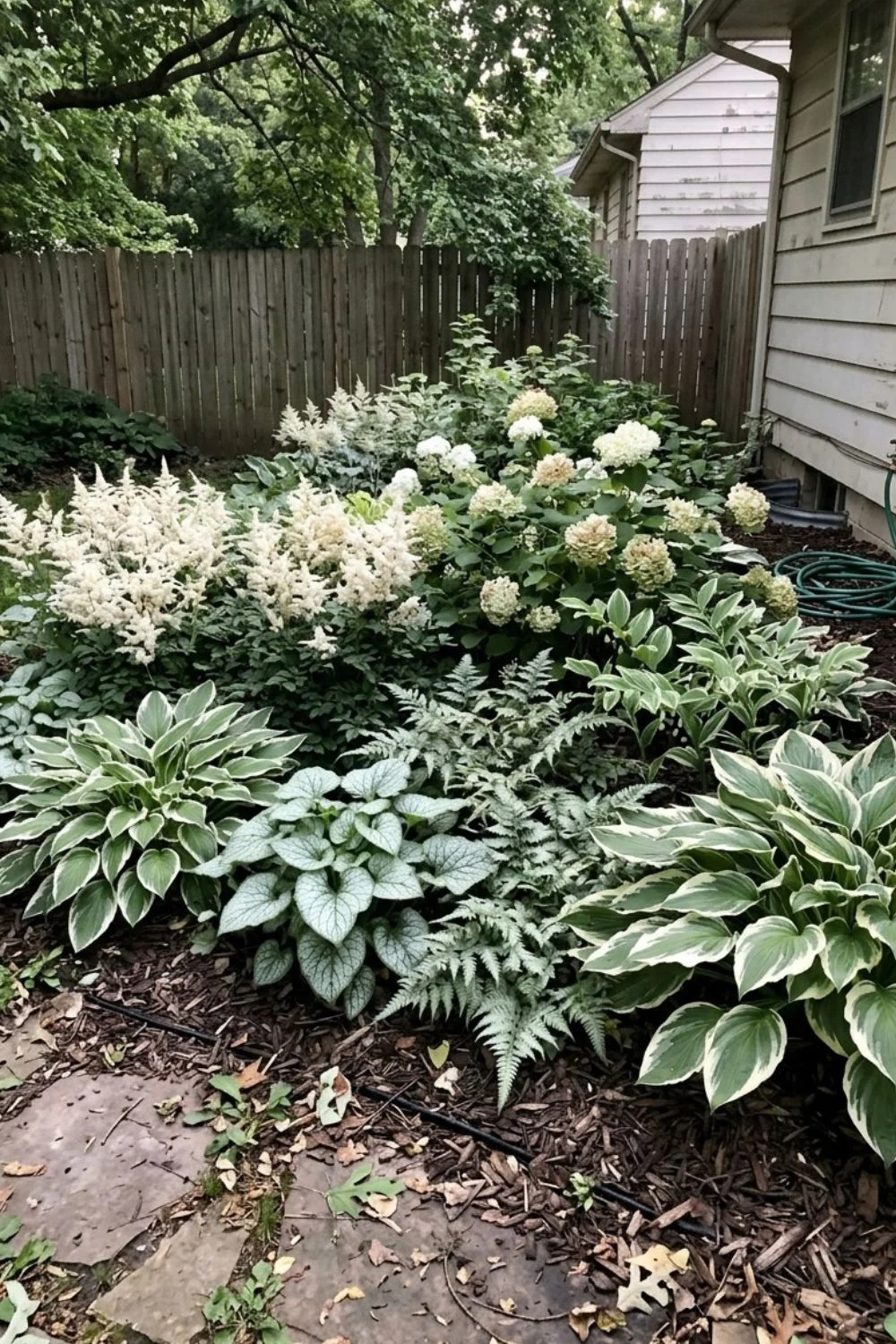
White flowers and silver or variegated leaves can appear brighter in low light. Use them near a walkway, porch, or evening seating area. A mostly white-and-green palette can feel calm without relying on strong sun for color.
26. Tall Architectural Shade Plants
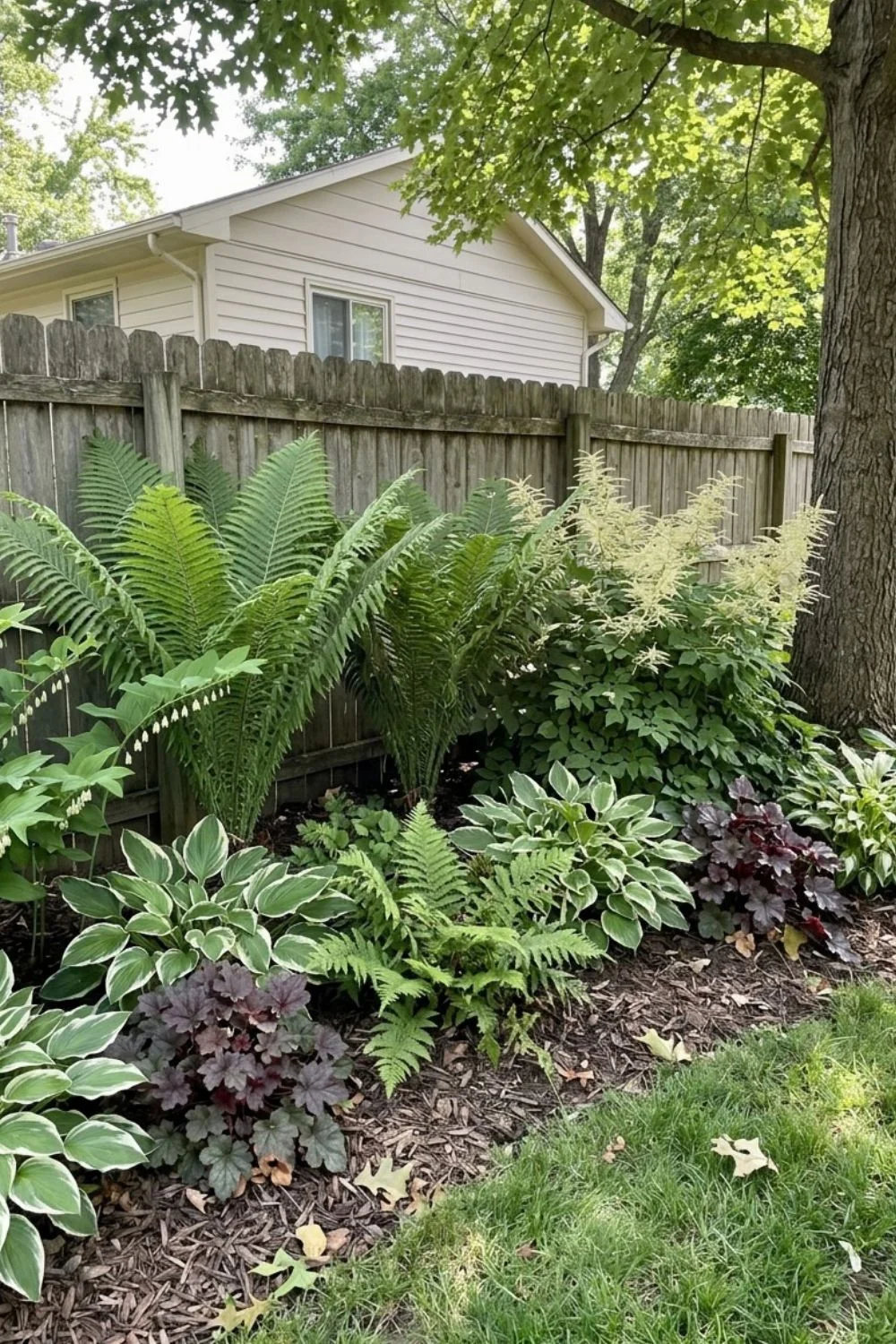
Tall ferns, goat’s beard, Solomon’s seal, and other upright shade plants can create vertical structure. Use them toward the back of a bed or as repeated accents. Keep them away from narrow paths where arching stems would reduce clearance.
27. Pollinator-Friendly Shade Garden
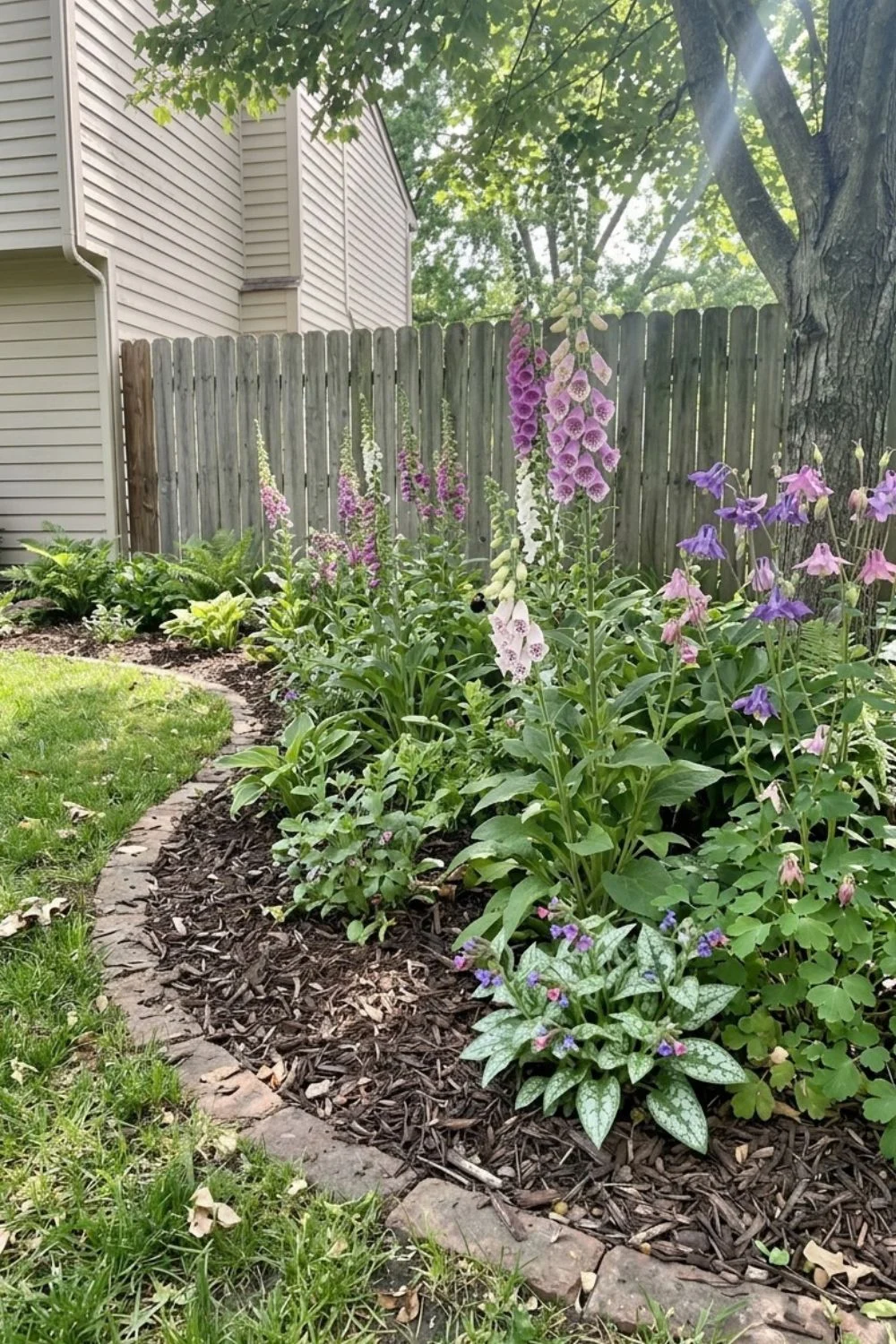
Shade gardens can still support pollinators. Columbine, foxglove, bleeding heart, and lungwort are examples that may provide nectar in suitable climates. Choose locally appropriate species and include plants that bloom at different times.
28. Lower-Allergen Shade Garden
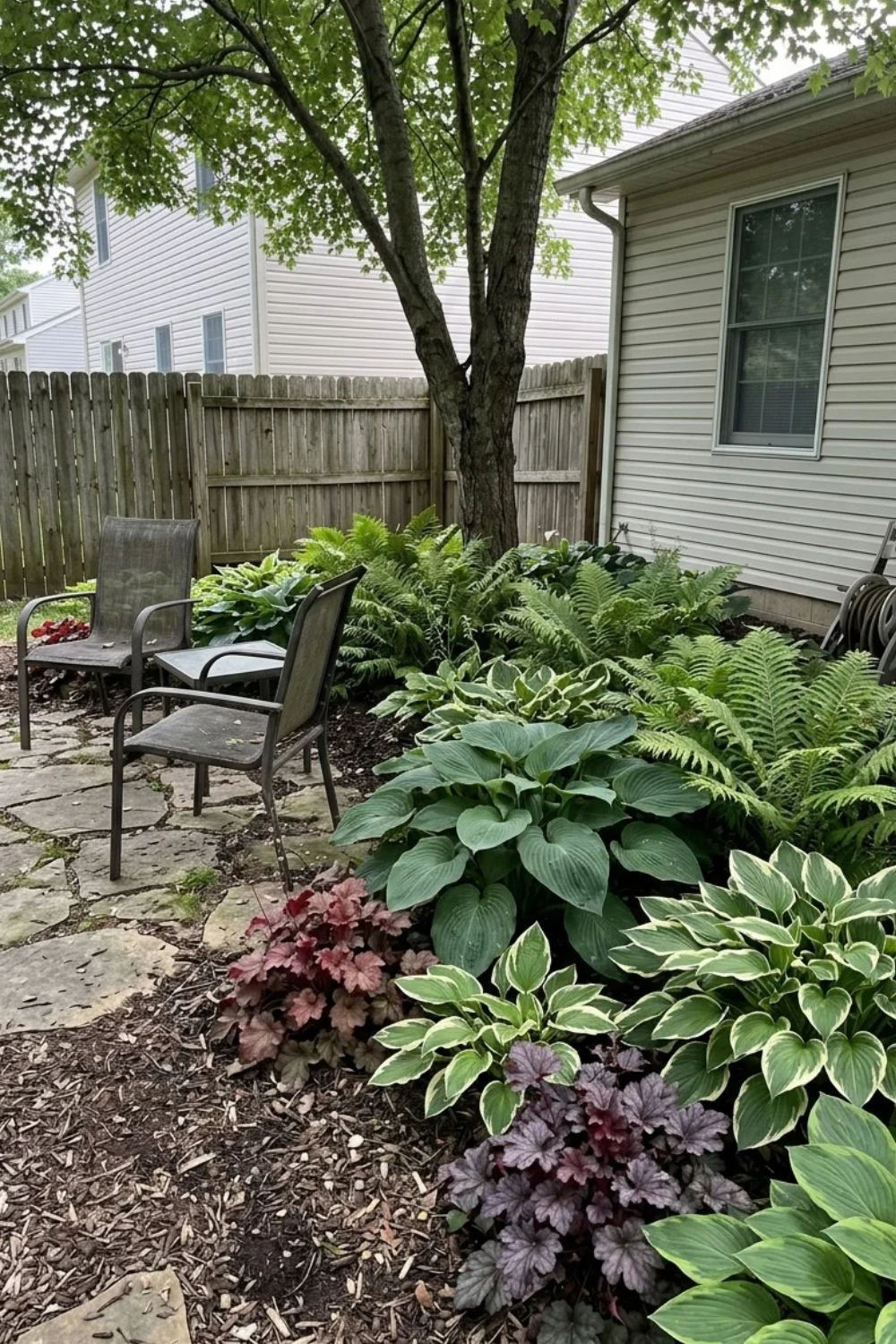
If pollen sensitivity matters, focus on foliage plants and lower-pollen flowering choices. Individual allergies vary, so no garden can be guaranteed allergy-free. Keep wind-pollinated plants that trigger symptoms away from seating and entry areas when possible.
29. Cottage-Style Shade Garden
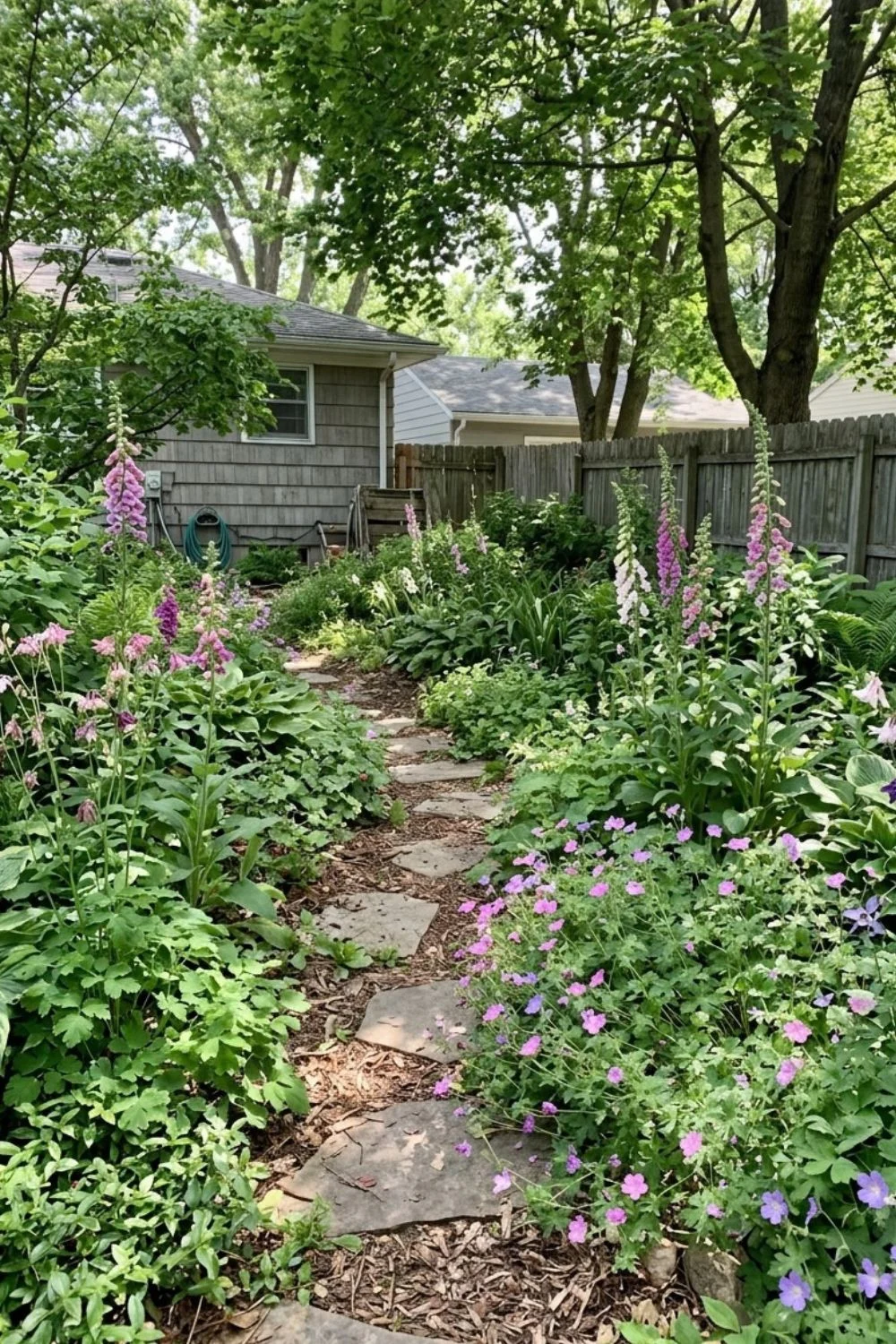
Foxgloves, columbines, hardy geraniums, ferns, and soft path edges can create an informal cottage look in partial shade. Keep one clear path and repeat a few plants so the garden feels abundant without becoming hard to maintain.
30. Driveway Border Shade Garden
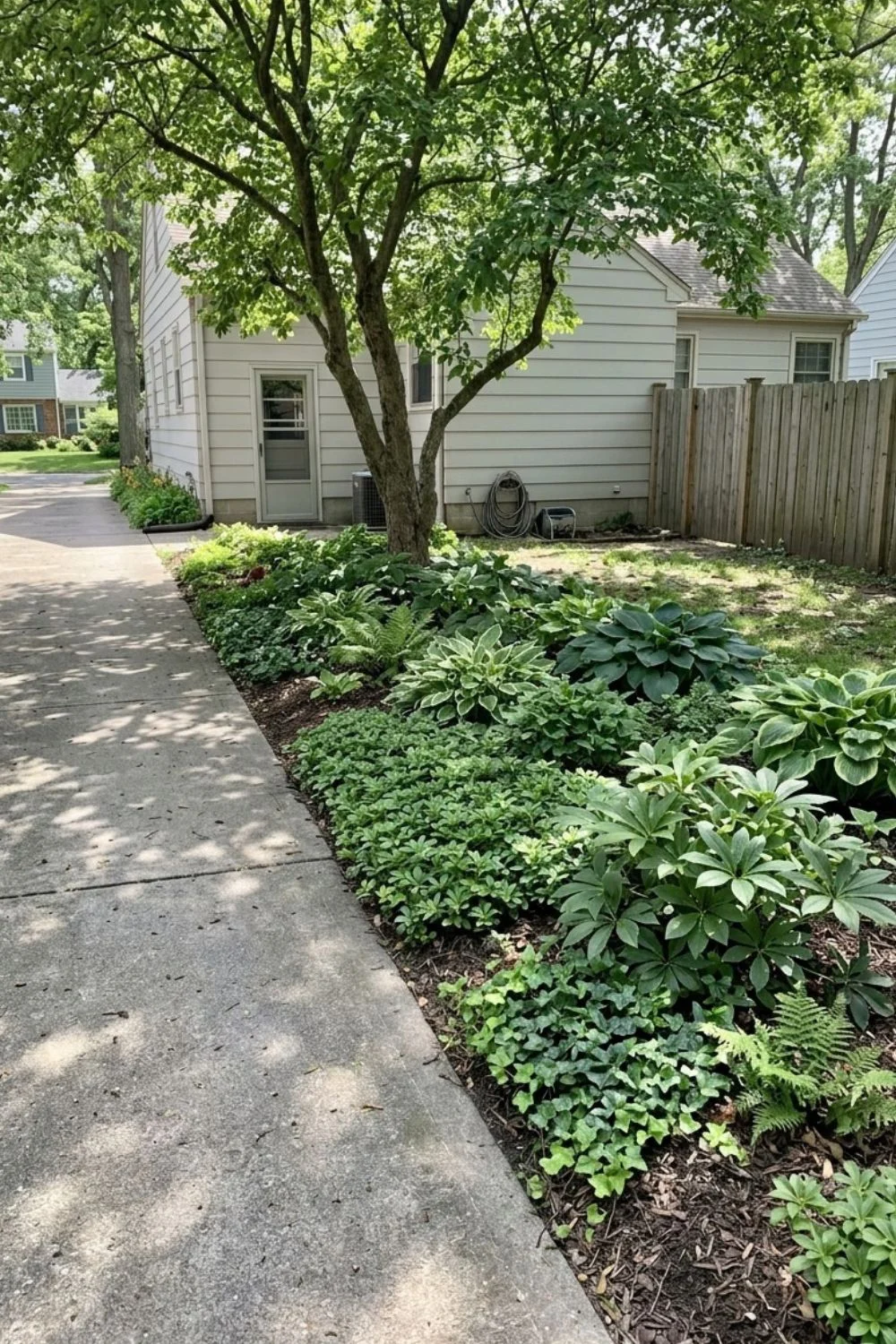
A shaded strip beside a driveway can soften hard paving. Choose plants that tolerate root competition, reflected heat, and occasional soil compaction. Keep mature foliage away from vehicle sightlines and doors. For a more complete entry plan, see our front yard garden ideas.
Paths and Mulch in Shade
Shaded paths often stay damp longer than sunny ones. Use stable surfaces that do not become slippery when wet. Mulch can reduce weeds and protect soil, but thick wet mulch can also stay soggy. Keep it away from trunks and building siding.
Common Shade Garden Mistakes
Do not assume every shaded area is moist. Avoid buying plants before checking the light, planting deeply over major tree roots, crowding mature shrubs, or using aggressive groundcovers without a boundary. Another common mistake is expecting sun-loving flowers to perform normally in deep shade.
Frequently Asked Questions
What grows well in a shade garden?
Ferns, hostas, heucheras, astilbes, hellebores, some hydrangeas, and many woodland natives can grow well in shade. The best choice depends on your climate, moisture, soil, and how much direct sun the site receives.
Can a shade garden have flowers?
Yes. Many shade plants bloom, including astilbes, bleeding hearts, columbines, begonias, impatiens, and some shrubs. Foliage still provides most of the year-round structure.
What can I plant in dry shade under trees?
Plants such as epimedium, hellebores, and some hardy geraniums can tolerate dry shade better than moisture-loving species. Check local recommendations and avoid damaging large tree roots during planting.
How do I brighten a dark garden corner?
Use pale flowers, silver or variegated foliage, light gravel, and a clear path. Bright foliage usually works more reliably than trying to force colorful sun plants into low light.
Final Thoughts
A good shade garden starts with observation. Learn how much light and moisture the space receives, protect existing tree roots, then build layers with plants that fit the site. With the right choices, a shaded corner can become cooler, greener, and easier to enjoy than a high-maintenance sunny bed.