A garden path can do more than connect one part of a backyard to another.
The right path can make watering easier, keep shoes out of muddy planting beds, guide people through the yard, and help a small space feel more organized.
For small and medium backyards, the best garden pathway ideas are usually simple. A narrow route with stepping stones, gravel, practical edging, and a few plants can work better than a large paved walkway that takes over the lawn.
Choose the Path Purpose First
Before choosing stones or gravel, decide what the path needs to do.
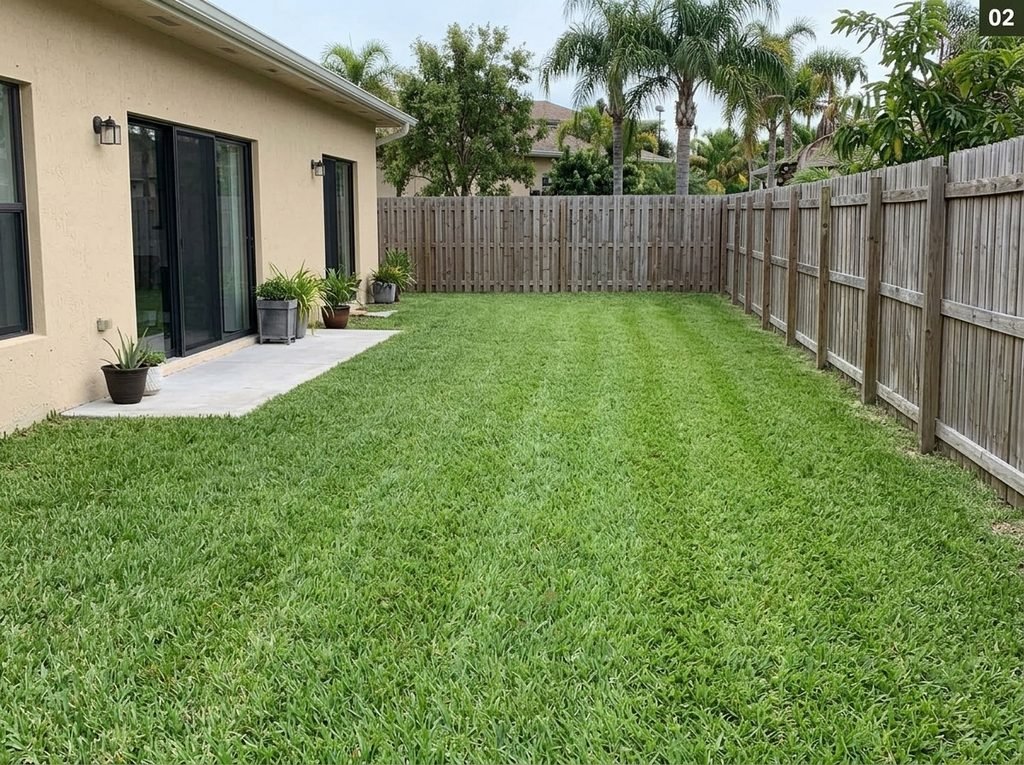
A backyard walkway might connect:
- the patio to a garden bed
- the house to a seating area
- a lawn to a vegetable garden
- a side entrance to the backyard
- frequently used planting areas
A decorative path can be narrow, while a route used every day needs enough room for comfortable walking.
Look at the Natural Route
Walk through the backyard before changing anything.
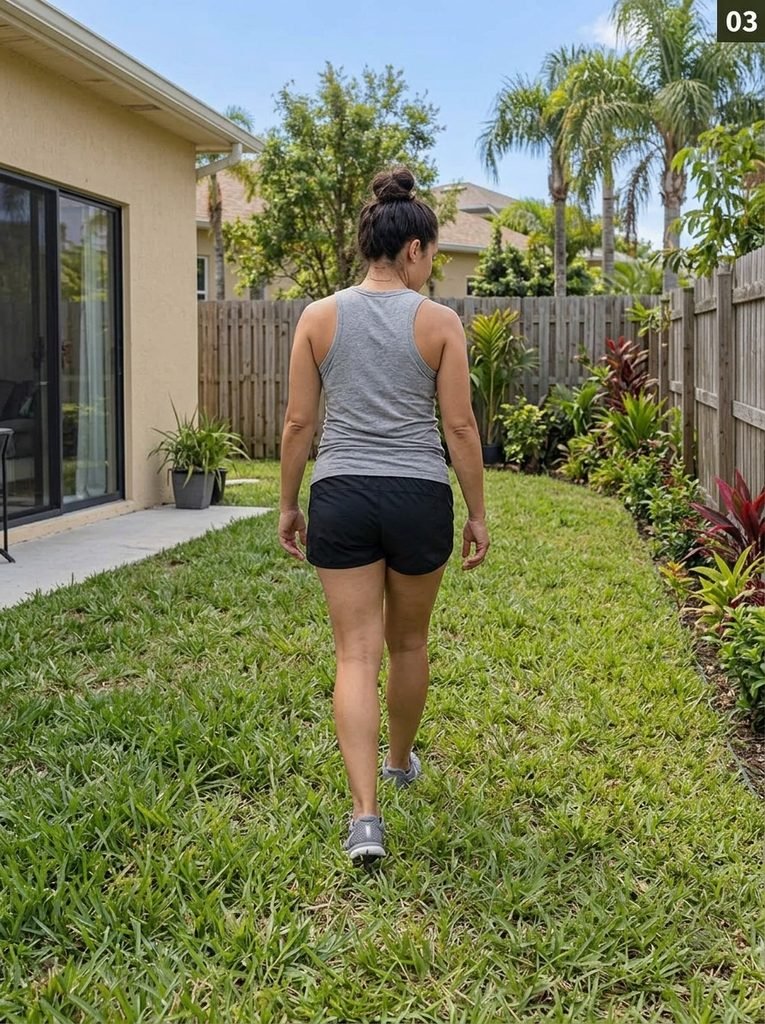
Notice where you already tend to walk.
The most practical route is often the one that follows normal movement between the patio, lawn, garden, and seating area.
Trying to force a path into an unnatural location can make the yard harder to use.
Measure the Path Area
Measure the approximate route before buying materials.
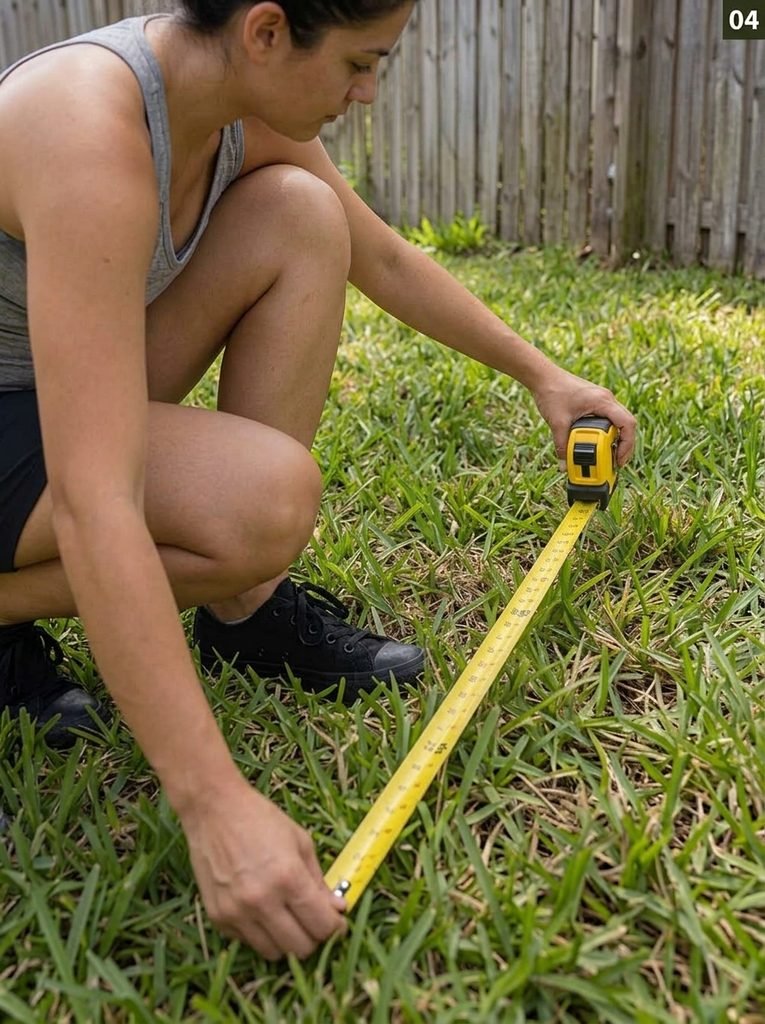
You do not need a complicated landscape plan.
Check:
- total path length
- available width
- distance from the fence
- space beside planting beds
- patio connection
- final destination
These measurements help you estimate how many stepping stones or how much gravel you may need.
Mark the Route Before Digging
Use stakes, string, marking paint, or another simple temporary guide.
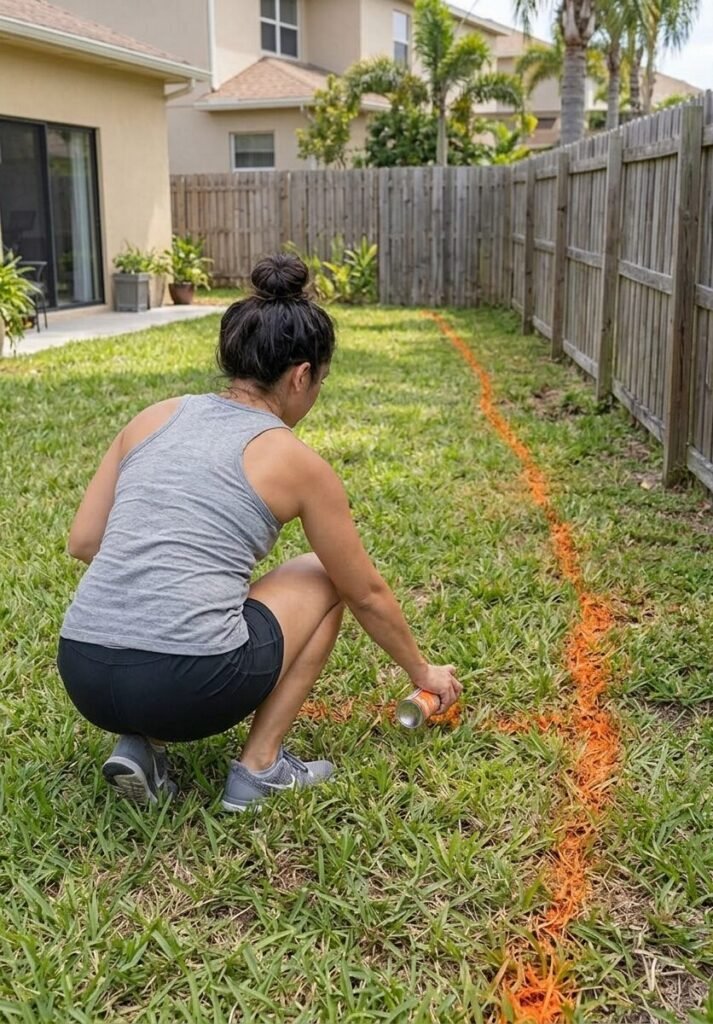
This makes it easier to judge the shape of the path before removing any grass.
Walk beside the marked route and look at it from the patio.
If the path feels too wide, too narrow, or awkwardly positioned, adjust it now.
Choose a Comfortable Path Width
Not every garden path needs the same width.
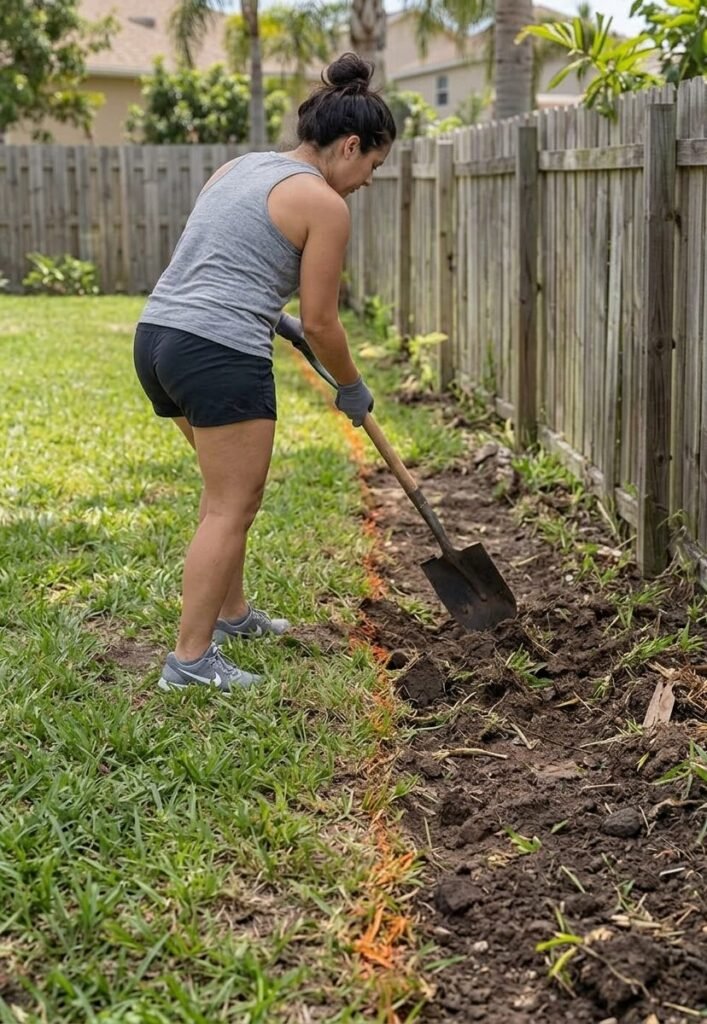
A small secondary path can stay relatively narrow, while a frequently used backyard walkway should allow a natural walking stride.
Think about whether you may carry:
- watering cans
- garden tools
- harvesting baskets
- bags of soil
- small containers
The goal is to make the path comfortable without using more yard space than necessary.
Prepare the Ground
Once the route is fixed, prepare the path area gradually.
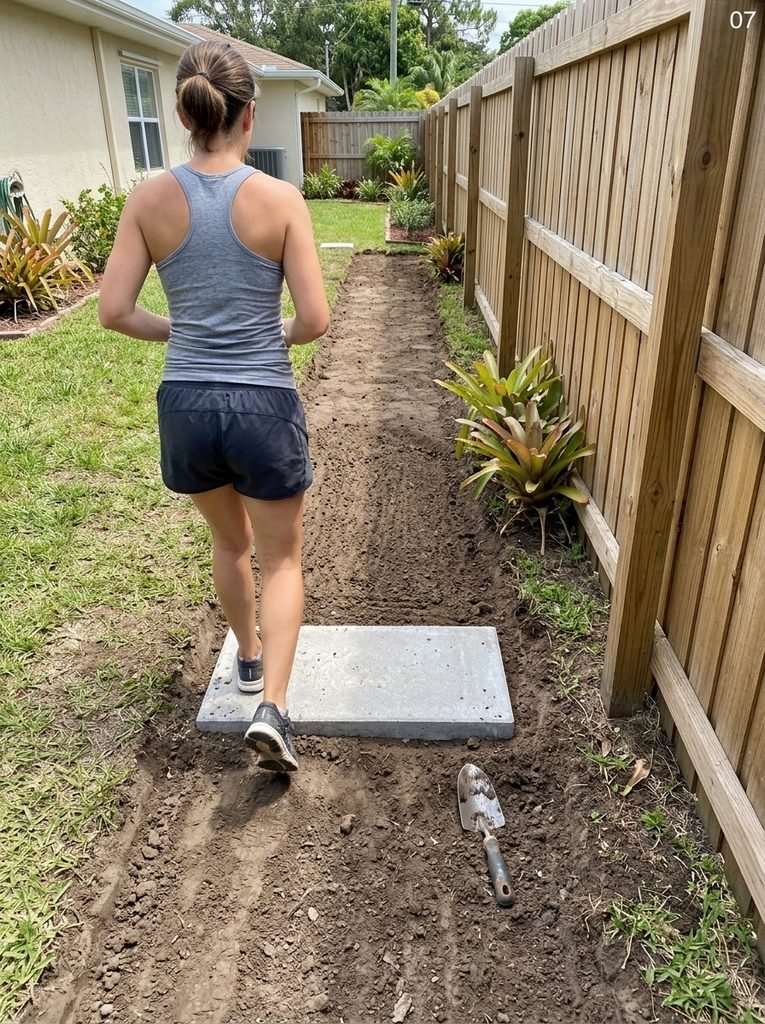
Remove or loosen only the grass and soil needed for the walkway.
Try to keep the surrounding lawn intact.
The path base should be reasonably level, but it does not need to look perfectly engineered.
A simple backyard path can still feel natural.
Start With the First Stepping Stones
Begin near the patio or the point where people naturally enter the yard.
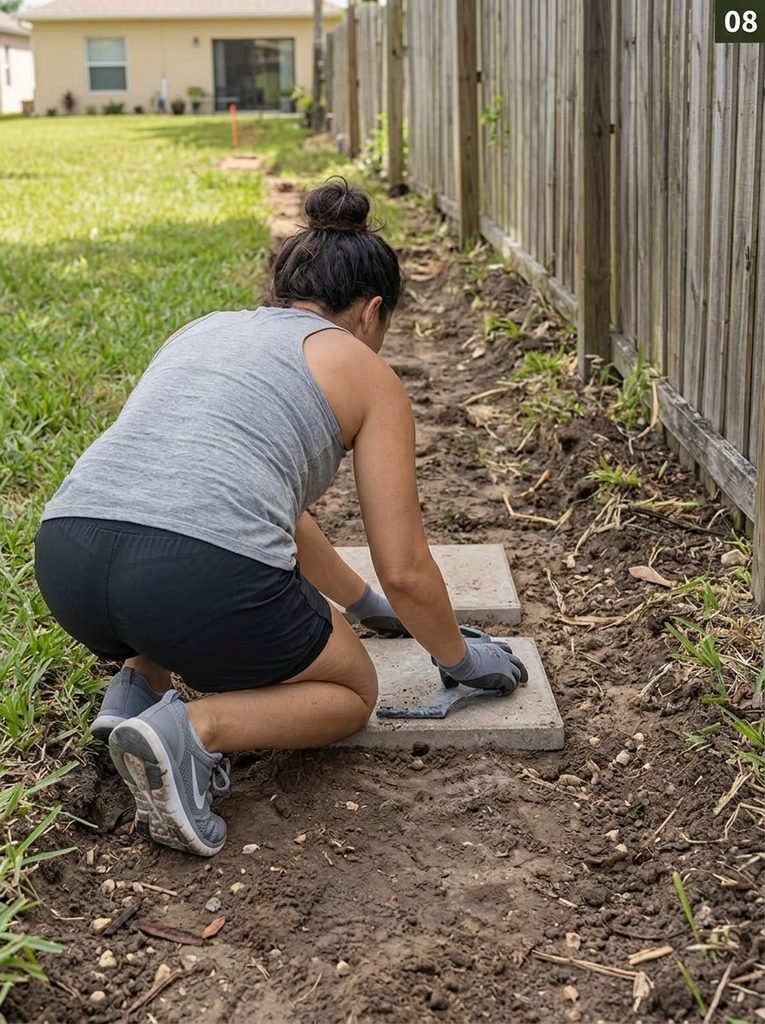
Set the first stones before finishing the entire route.
This allows you to test spacing and alignment.
Each stone should feel stable underfoot.
Continue the Same Stone Pattern
Once the first few stones feel comfortable, continue the same pattern.
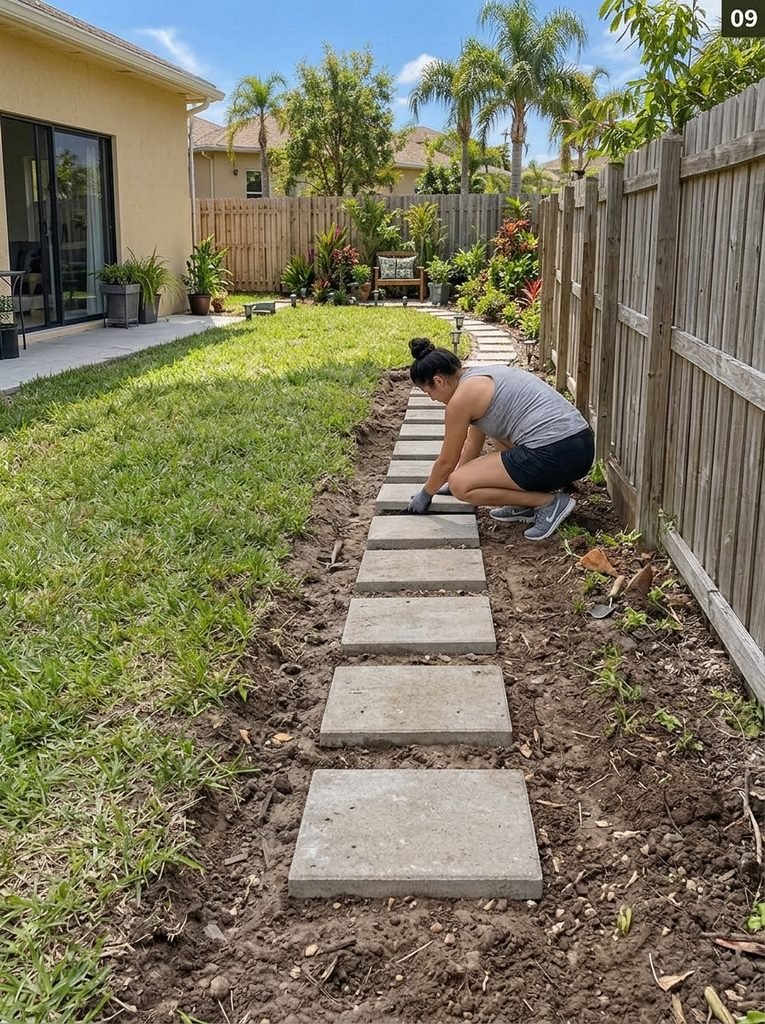
Keep the stone family consistent.
Avoid switching between many different shapes or materials halfway through the path.
Simple repetition usually creates a cleaner result.
Check the Stones Before Finishing
Small adjustments are easier before gravel and edging are added.
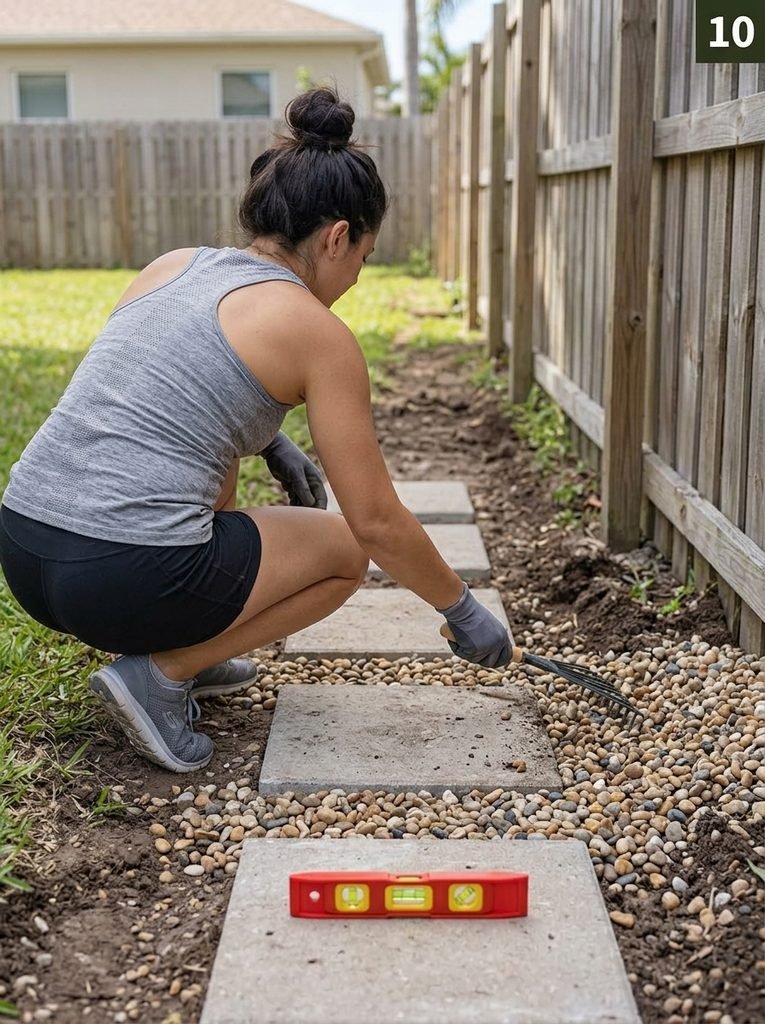
Check whether each stone:
- sits firmly
- feels level enough to walk on
- follows the route naturally
- provides comfortable spacing
- stays clear of major roots
A slightly imperfect path can still look good if it is practical.
Add Gravel Around the Stones
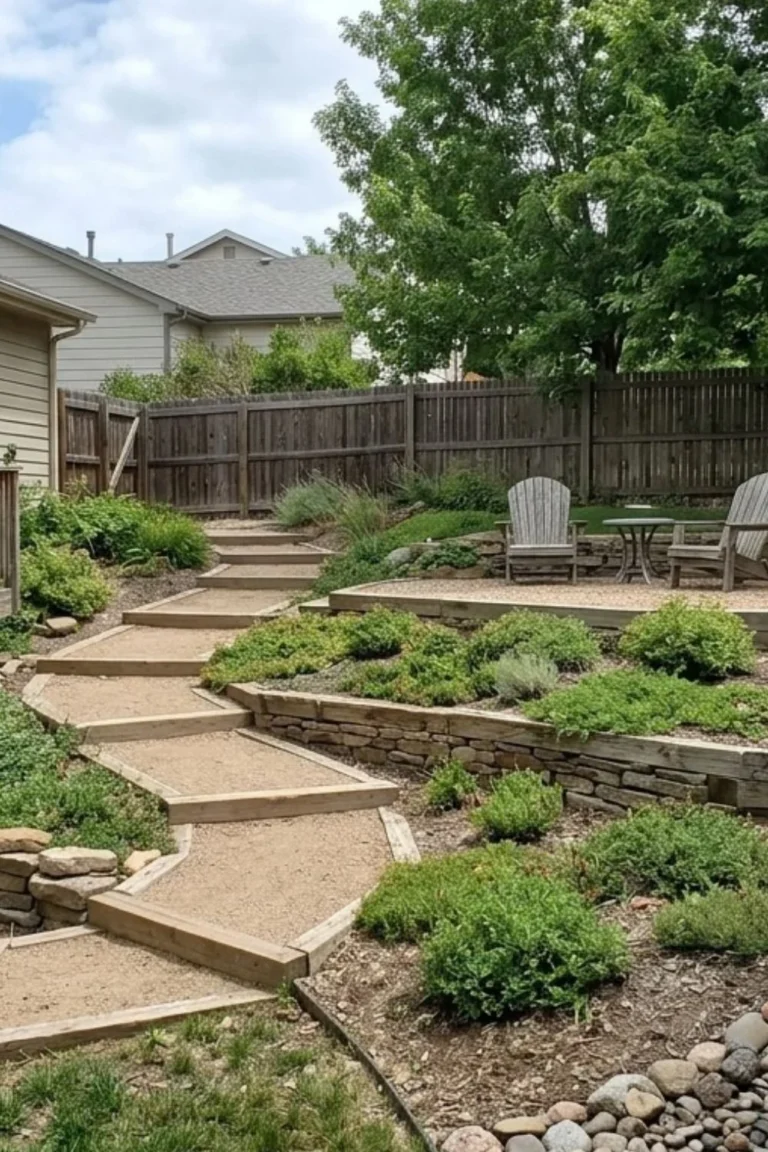
Gravel can help define the walkway and fill the space around stepping stones.
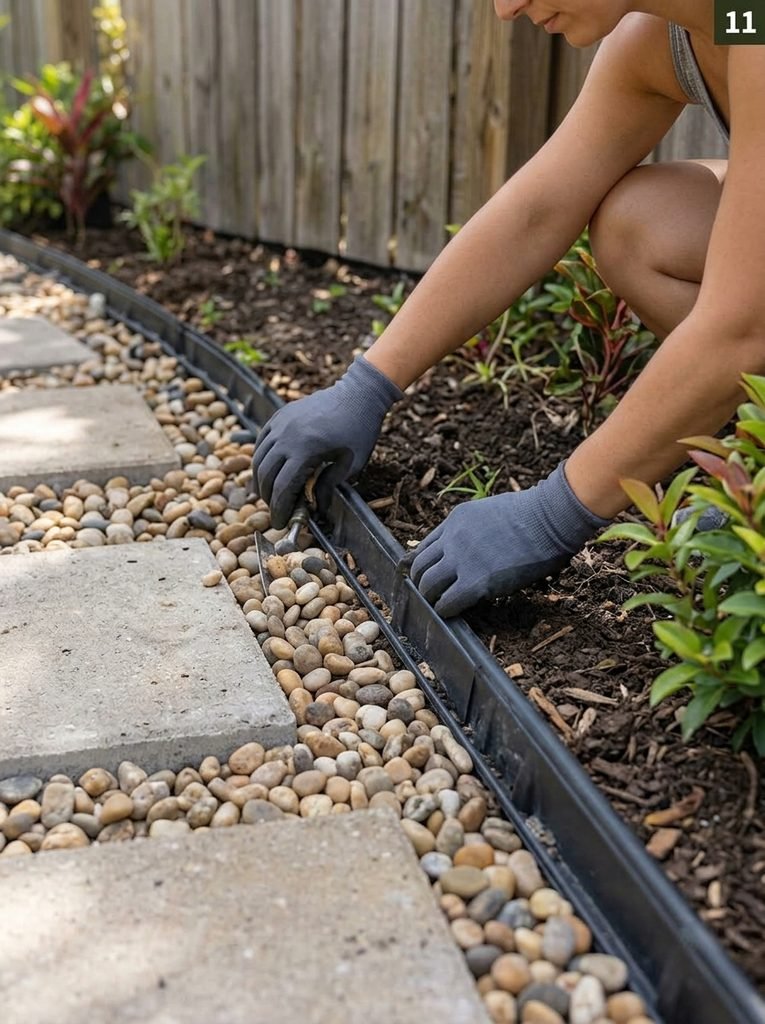
Choose a simple neutral gravel that fits the backyard.
Keep the layer controlled so stones remain clearly visible.
Too much loose gravel can make walking less comfortable.
Use Simple Edging
Edging helps keep gravel separated from lawn, mulch, or planting beds.
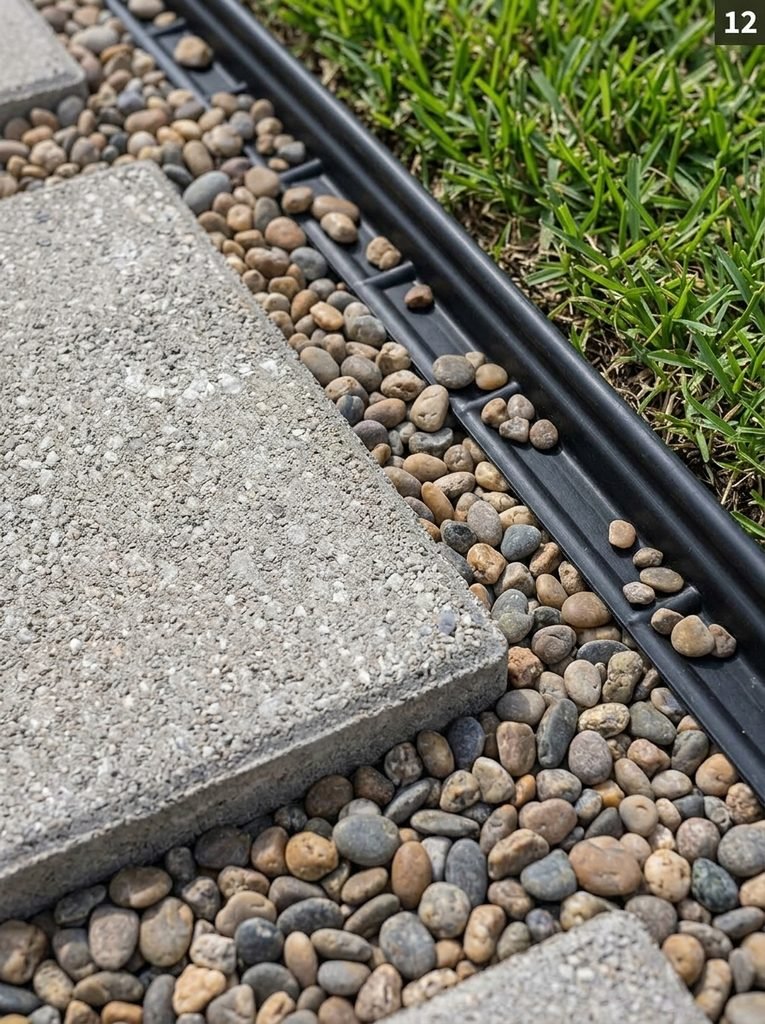
A basic low-profile edge is often enough.
The goal is not to make the path look heavily constructed.
Instead, edging should quietly keep the materials organized.
Add Plants Along the Path
Plants can soften the transition between a walkway and the fence or garden bed.
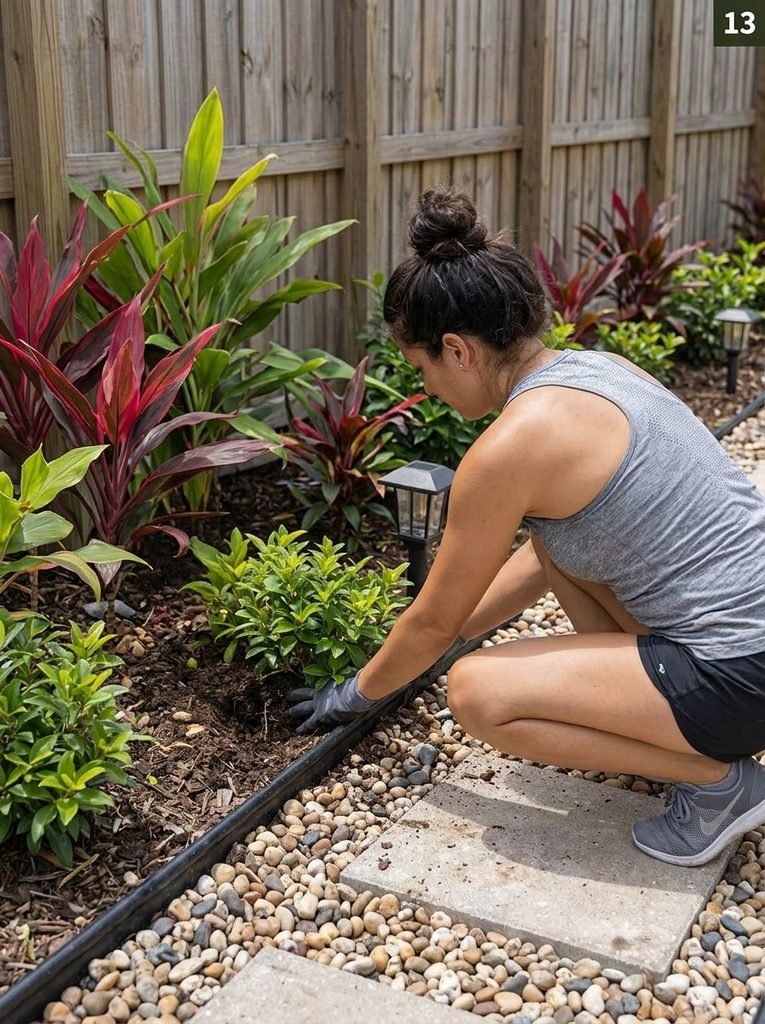
Choose compact plants that will not constantly grow into the walking area.
Useful options may include:
- low foliage plants
- herbs
- compact flowering plants
- small ornamental shrubs
Leave enough room for mature growth.
Keep Planting Easy to Reach
Continue the border only where it improves the route.
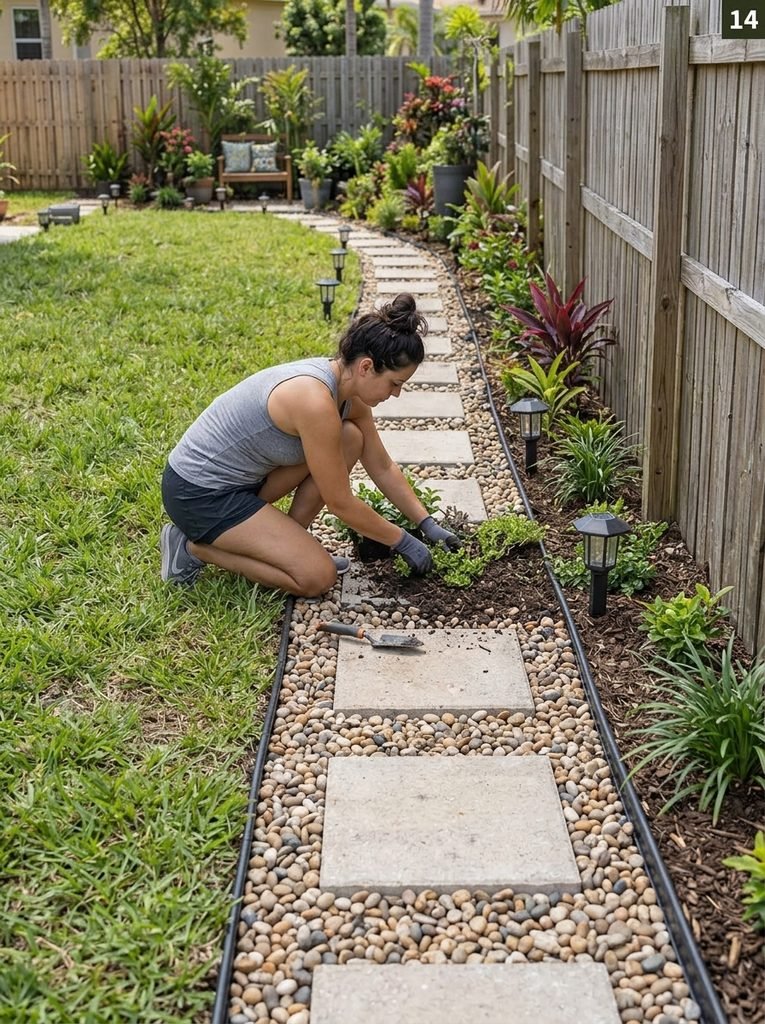
Avoid filling every gap with plants.
A simple combination of mulch, a few grouped plants, and open areas is often easier to maintain.
The path itself should remain visually clear.
Give the Path a Destination
A walkway feels more useful when it leads somewhere.
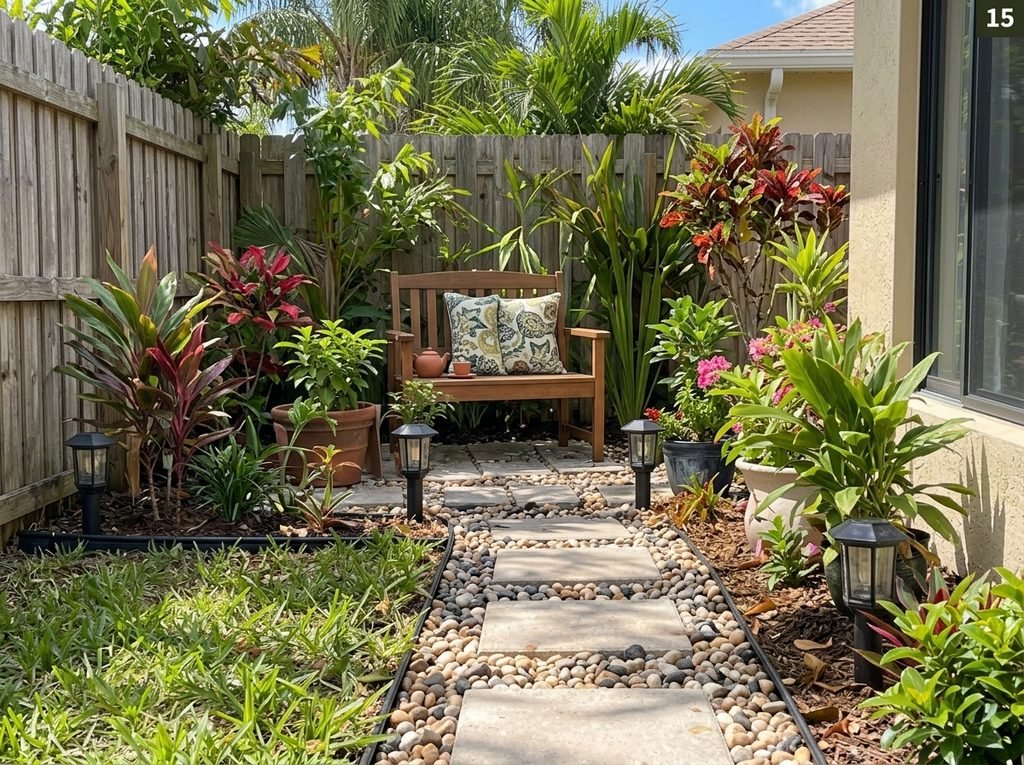
The destination could be:
- a small bench
- a garden bed
- a herb area
- a quiet corner
- a vegetable plot
The destination does not need to be large.
Even one simple bench can make the path feel purposeful.
Walk the Finished Path
Once the main construction is complete, use it normally.
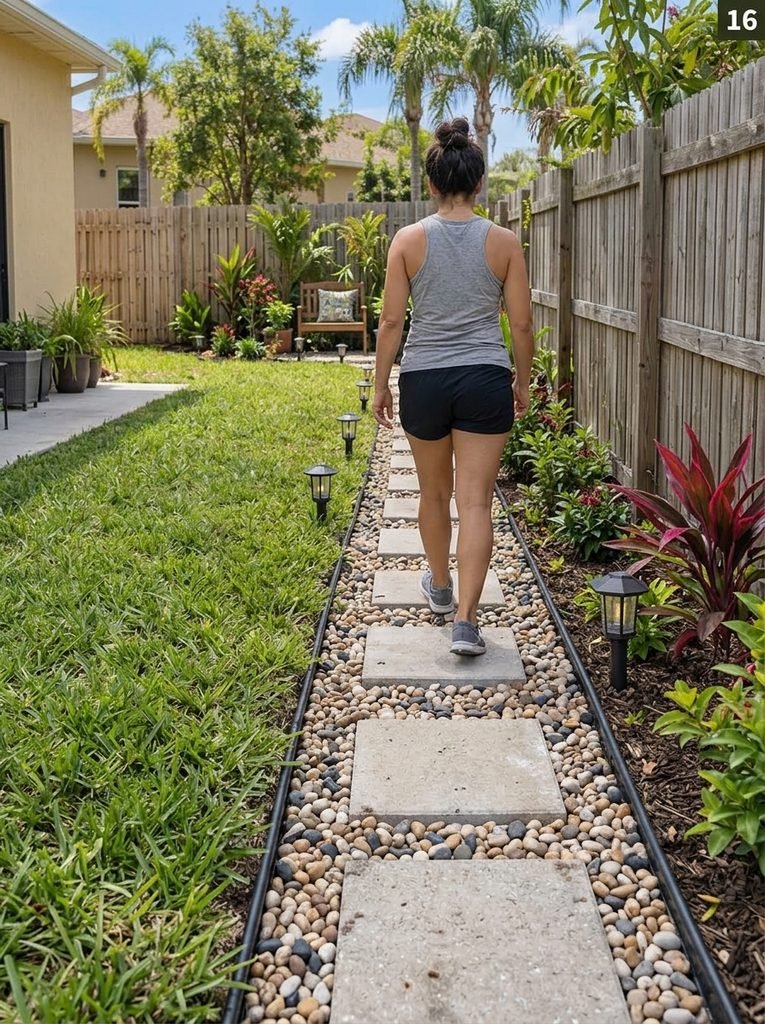
Walk from the patio to the end point several times.
Notice whether:
- stepping distances feel natural
- plants interfere with movement
- gravel moves too much
- the route feels comfortable
- the path connects logically to the yard
Real use often reveals problems that are hard to notice during installation.
Water Path-Side Plants Carefully
New plants beside a path may need extra attention while they establish.
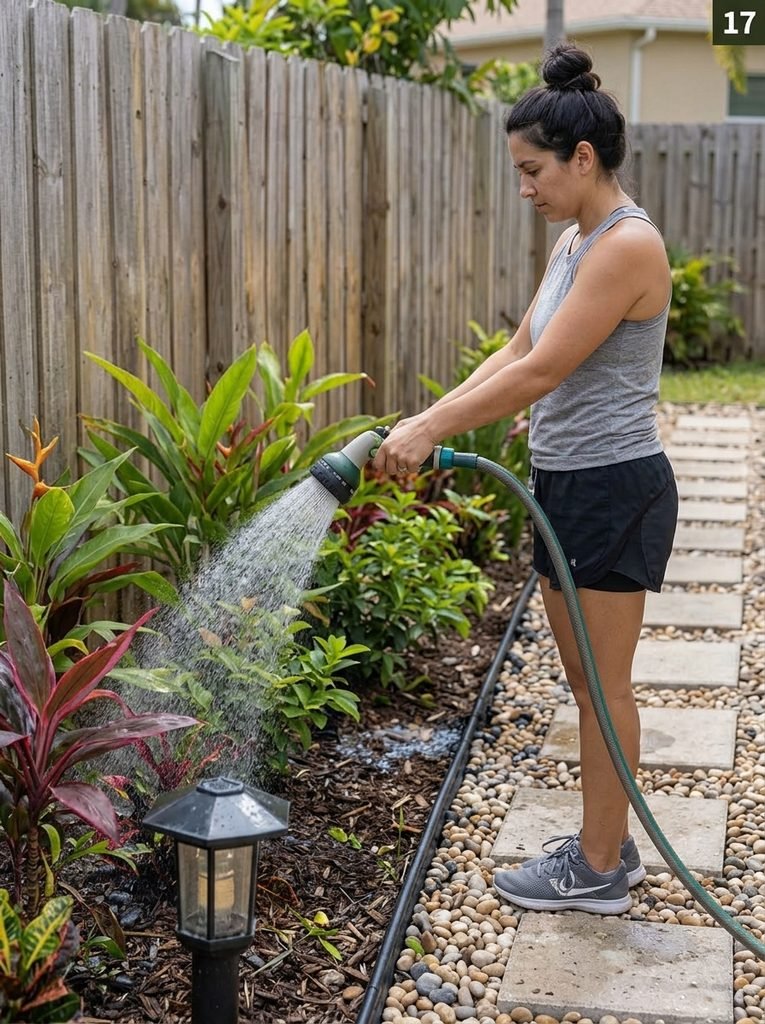
Water the soil around the plants rather than flooding the walkway.
If water repeatedly washes gravel onto the lawn or creates puddles, the path may need a drainage adjustment.
Keep Gravel and Stones Tidy
Garden paths need some maintenance, but it should be simple.
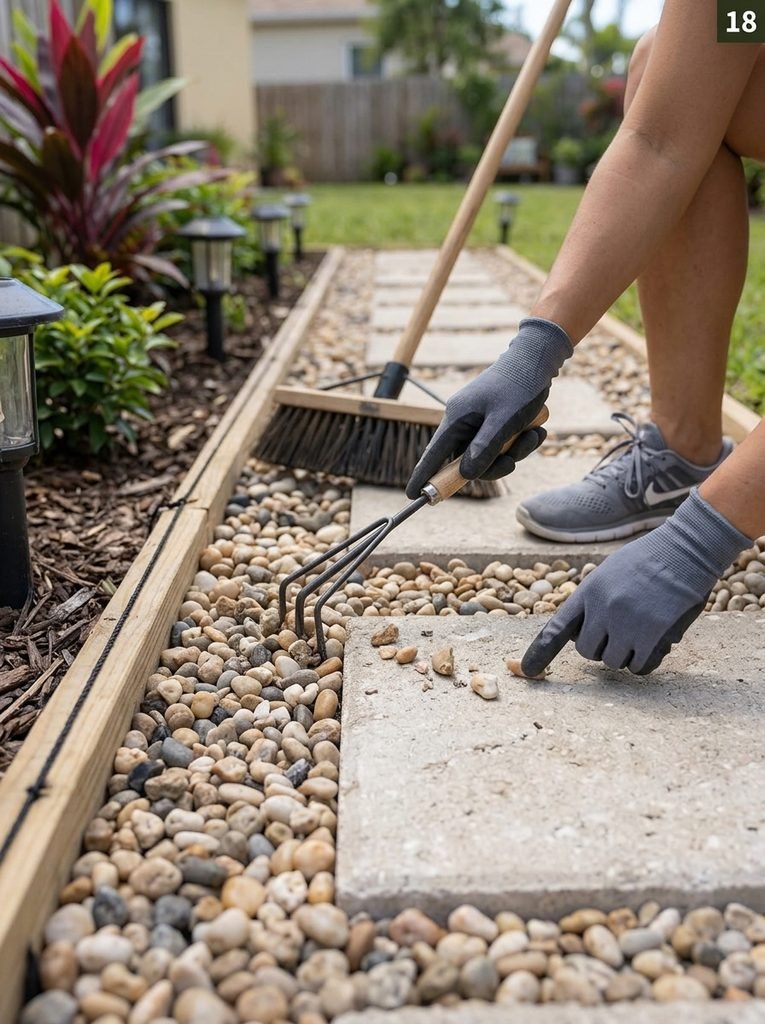
Occasionally:
- sweep or rake loose gravel
- remove weeds
- clear fallen leaves
- check loose stones
- restore clean path edges
Small maintenance sessions are easier than waiting until the path becomes messy.
Trim Plants Away From the Walkway
Plants beside the path should not make walking difficult.
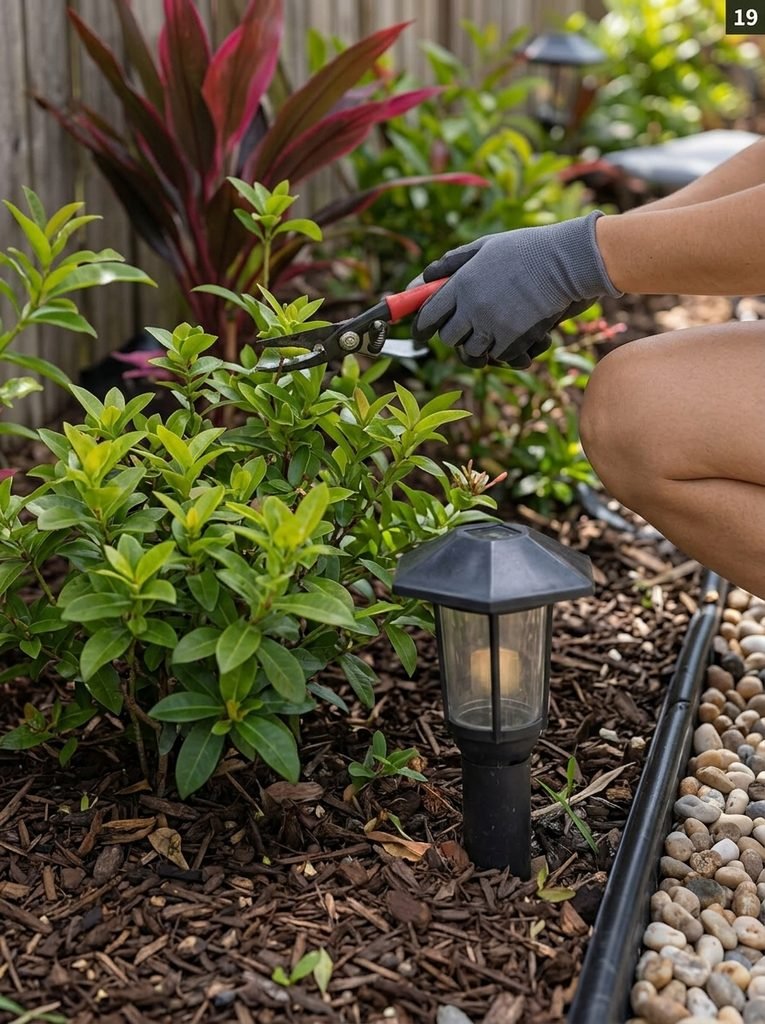
Light trimming can keep stems and leaves away from stepping areas.
This is especially helpful for plants placed close to narrow paths.
Keep the planting natural rather than cutting everything into rigid shapes.
Review the Finished Path
Step back and look at how the walkway fits the whole yard.
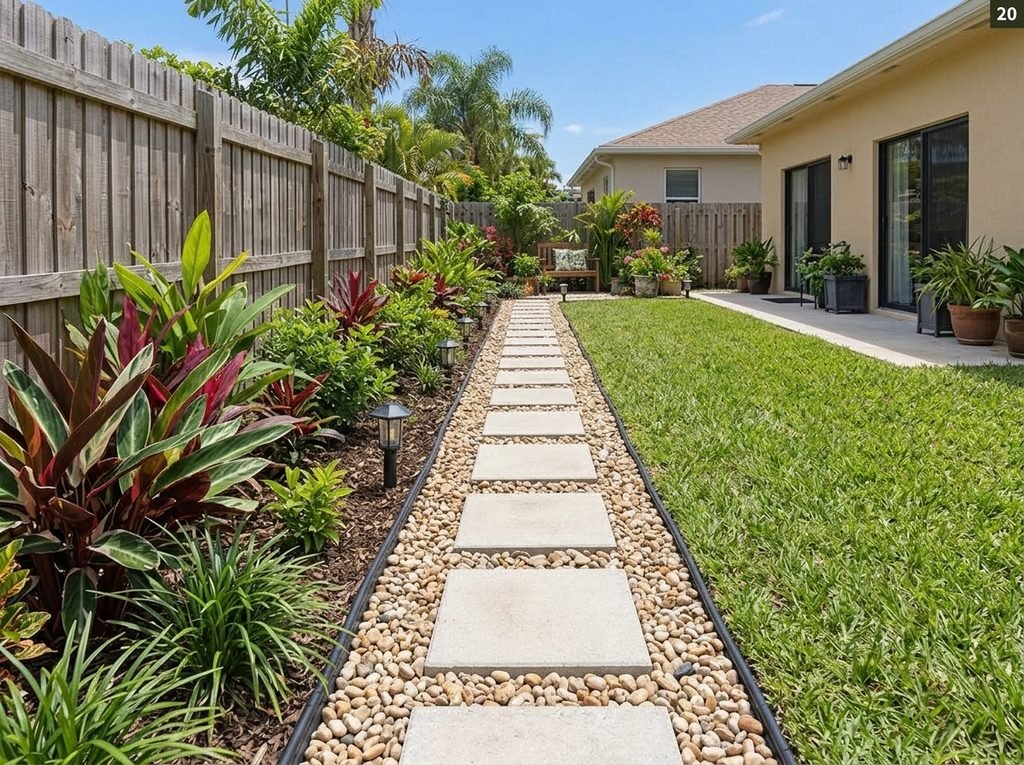
A practical path should:
- guide movement clearly
- preserve open lawn
- connect useful areas
- fit the scale of the backyard
- stay easy to maintain
If the path dominates the entire yard, it may be wider or more complex than necessary.
Final Backyard Pathway
A simple path can change how a backyard works without requiring a major landscaping project.
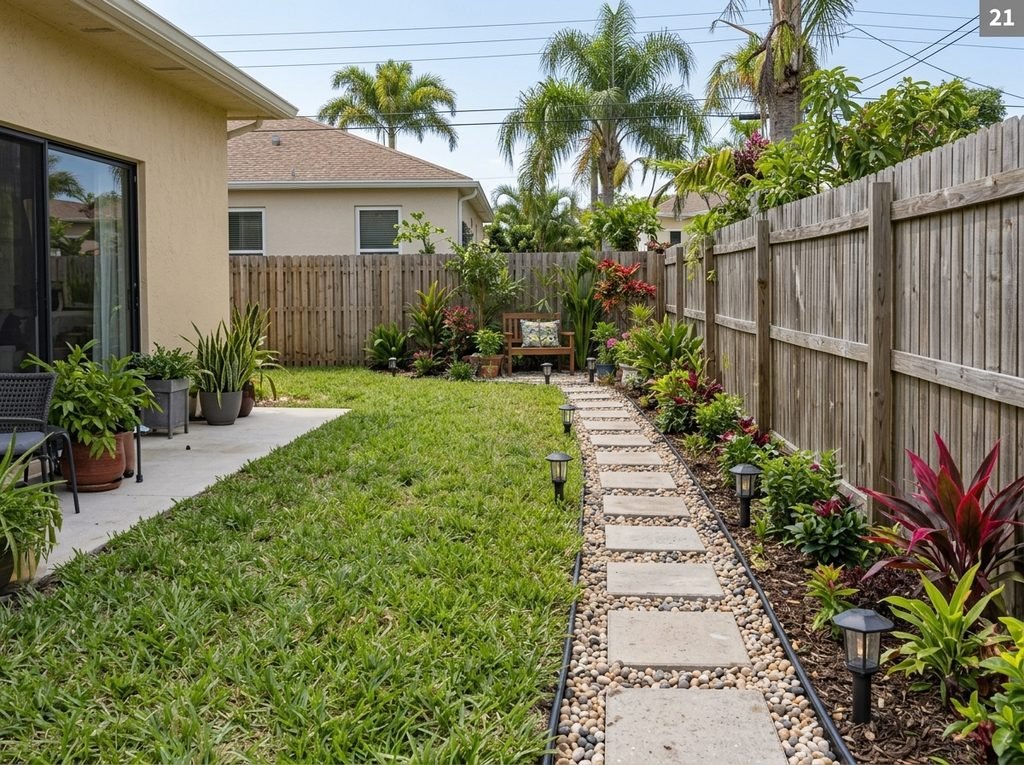
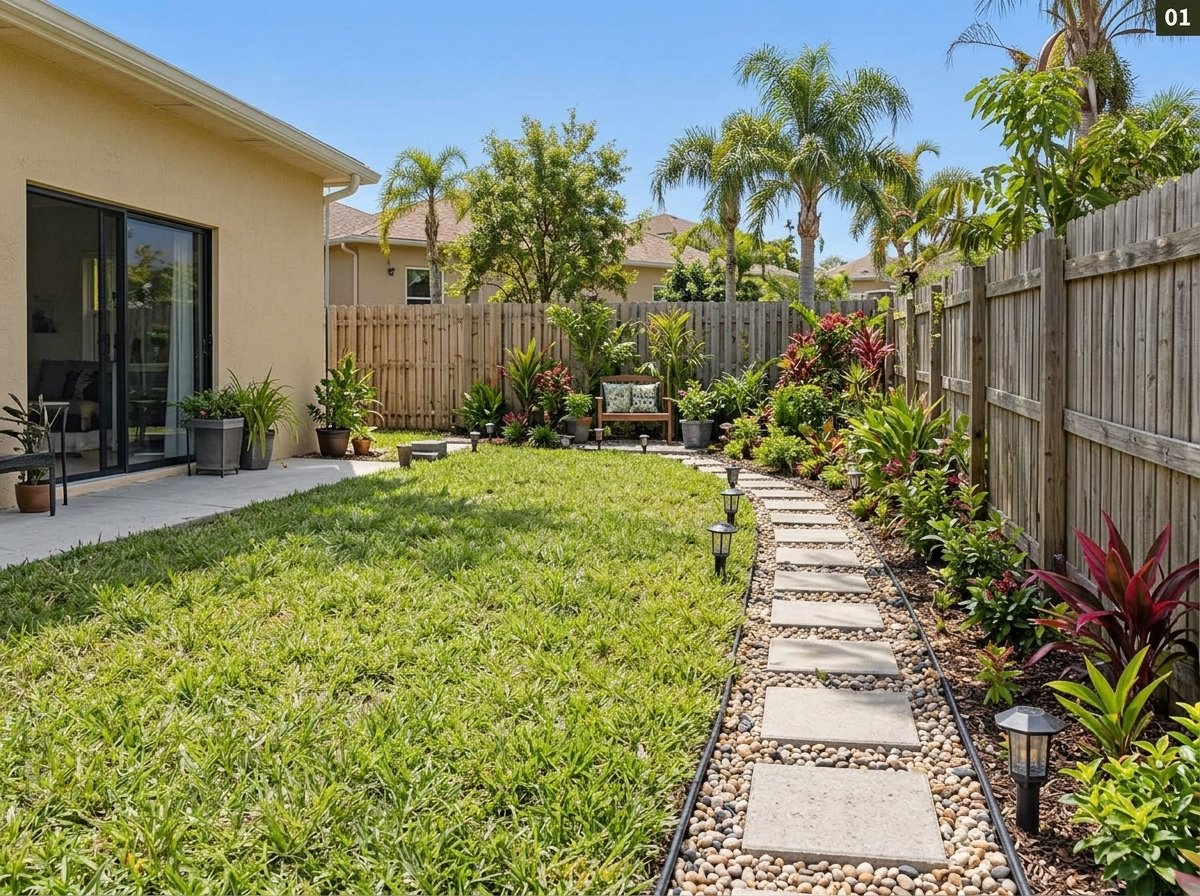
Stepping stones, gravel, basic edging, and compact planting can create a useful connection between the patio and garden while keeping the yard open.
The best path is usually not the most elaborate one.
It is the one that makes everyday movement easier.
Gravel Paths
Gravel works well when you want a simple surface that can follow a narrow route.
It is useful for:
- side-yard walkways
- paths between garden beds
- informal backyard routes
- areas where full paving is unnecessary
Edging helps prevent gravel from spreading into the lawn.
Stepping Stone Paths
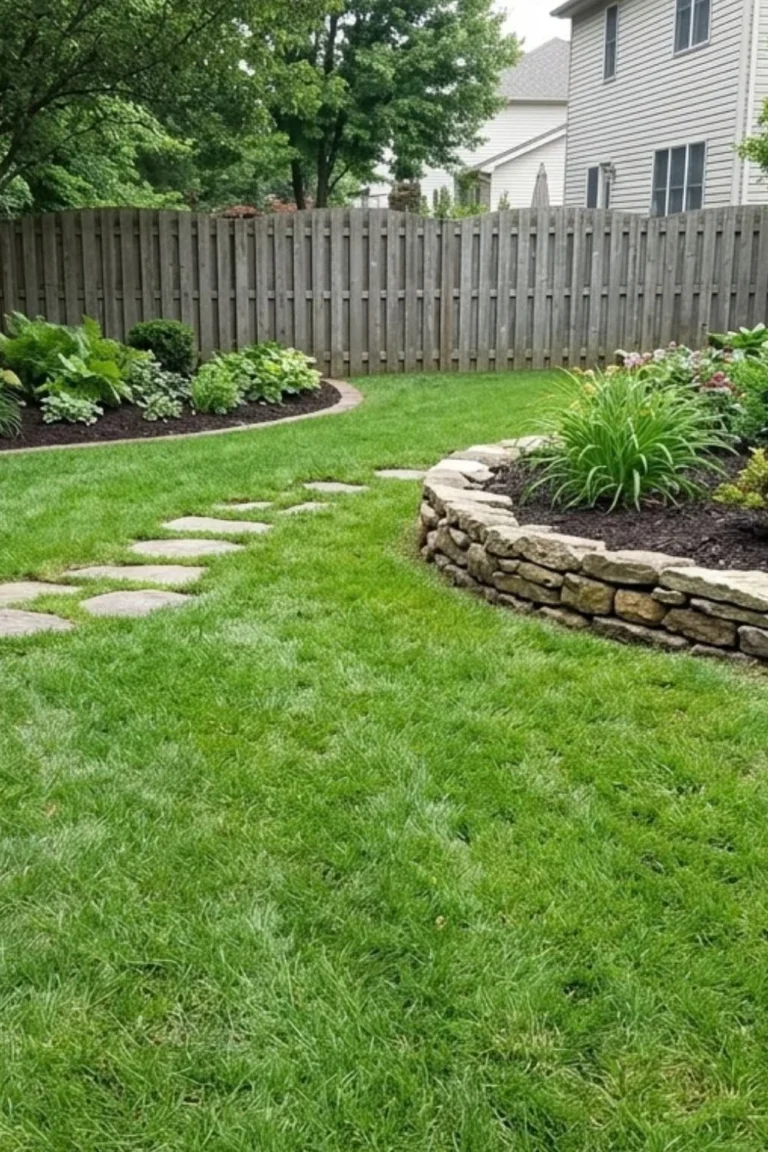
Stepping stones are a practical choice when you want to preserve more grass or planting around the walkway.
They also use less hard surface than a fully paved path.
Keep spacing comfortable and test it by walking the route before finishing the surrounding material.
Curved vs Straight Garden Paths
Straight paths work well when the destination is direct and space is limited.
A gentle curve can make sense when the route needs to move around a garden bed or existing feature.
Avoid adding curves only for decoration.
The path should still follow a logical route.
Garden Path Edging
Simple edging helps separate:
- gravel from lawn
- mulch from stones
- planting beds from walkways
It can also reduce cleanup after watering or rain.
Keep edging low enough that it does not become a tripping hazard.
Drainage Around a Garden Path
Water should not regularly sit on stepping stones or collect beside the path.
Watch the area after watering or rain.
If water pools, possible improvements may include:
- adjusting the path level
- improving nearby soil drainage
- moving gravel
- correcting a low spot
Good drainage helps both the path and nearby plants.
Common Garden Path Mistakes
Making the Path Too Wide
A wide path can consume valuable lawn or planting space in a small yard.
Use only the width needed for comfortable movement.
Making the Path Too Narrow
If you constantly step off the path, it is probably too narrow or the stones are poorly spaced.
Using Too Many Materials
Mixing several stone colors, gravel types, bricks, and edging styles can make a small yard look busy.
Keep the material palette simple.
Placing Stones Too Far Apart
Test the path with a natural walking stride before finishing it.
Forgetting Drainage
A beautiful path becomes inconvenient if water constantly sits on it.
Overplanting the Edges
Small plants can eventually grow much larger.
Leave enough room so foliage does not take over the walkway.
Creating a Path With No Purpose
A walkway should connect useful areas.
Avoid building a path that simply ends in an unused section of the yard.
Frequently Asked Questions
What is the best garden path for a small backyard?
A narrow stepping-stone or gravel path often works well because it provides access without covering too much lawn.
How wide should a garden path be?
The ideal width depends on how the path will be used. A frequently used walkway should allow comfortable movement, while a secondary garden path can be narrower.
Are stepping stones good for garden paths?
Yes. They can create a practical walking route while preserving grass, gravel, or planting space around them.
Is gravel good for backyard walkways?
Gravel can be practical for informal paths. Proper edging and a stable base help keep it contained.
Should a garden path be straight or curved?
Use the route that best matches how you move through the yard. Straight paths are efficient, while gentle curves can work around beds or existing features.
What can I plant beside a garden path?
Choose compact plants that will not constantly spread into the walkway. Low foliage, herbs, and small flowering plants can work well.
Final Thoughts
Garden paths should make a backyard easier to use.
Start by deciding where you actually need to walk. Measure the space, mark the route, test the width, and build the path gradually.
Simple stepping stones, gravel, edging, and a few path-side plants can create a practical walkway without taking over a small or medium backyard.
Keep the design simple, maintain the edges, and let the path connect the parts of the garden you use most.