For busy homeowners, the goal is usually simpler: create a yard that looks organized, stays useful, and does not demand hours of work every week.
The best low maintenance backyard landscaping ideas focus on a clear layout, easy plant groups, mulch, simple paths, manageable lawn areas, and plants that fit the available space.
You do not need to remove the entire lawn or fill every corner with landscaping. In many homes, a few practical changes can make the backyard easier to maintain while keeping it open and comfortable.
Start With a Simple Yard Plan
Before buying plants or materials, look at the backyard you already have.
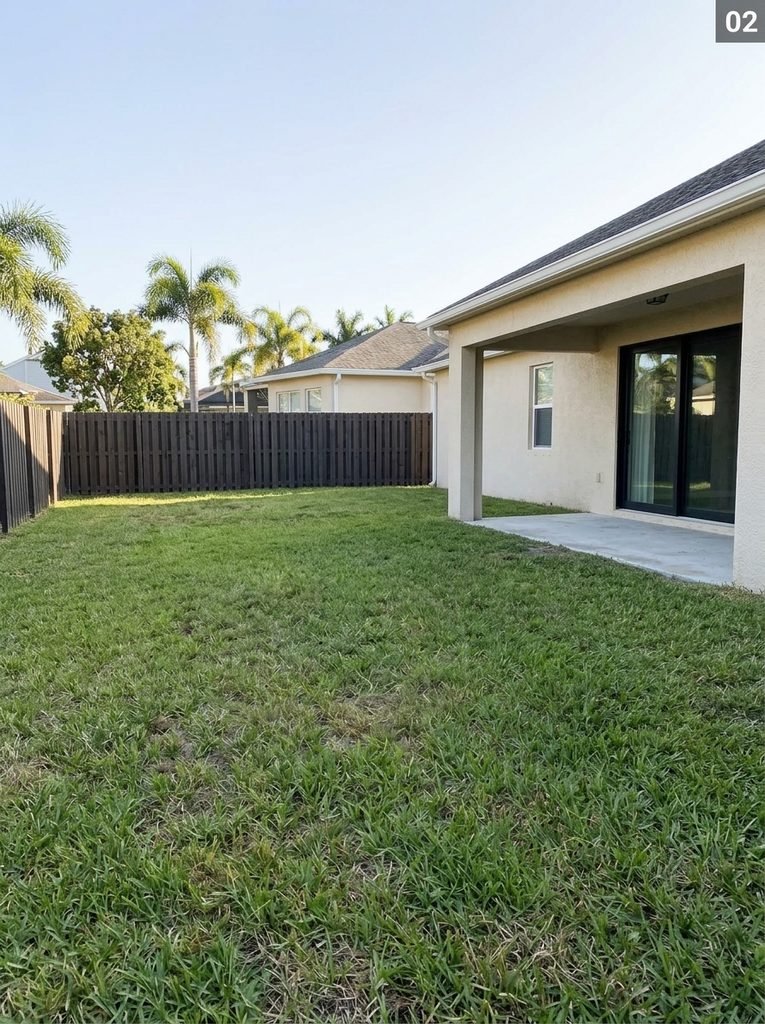
Notice:
- where people normally walk
- where the patio begins and ends
- which areas receive the most sun
- where water tends to collect
- which fence sections need privacy
- which parts of the lawn are difficult to maintain
A simple plan helps prevent unnecessary work later.
Instead of redesigning everything at once, decide which areas actually need improvement.
Observe How You Use the Backyard
A backyard should support everyday life, not make it harder.
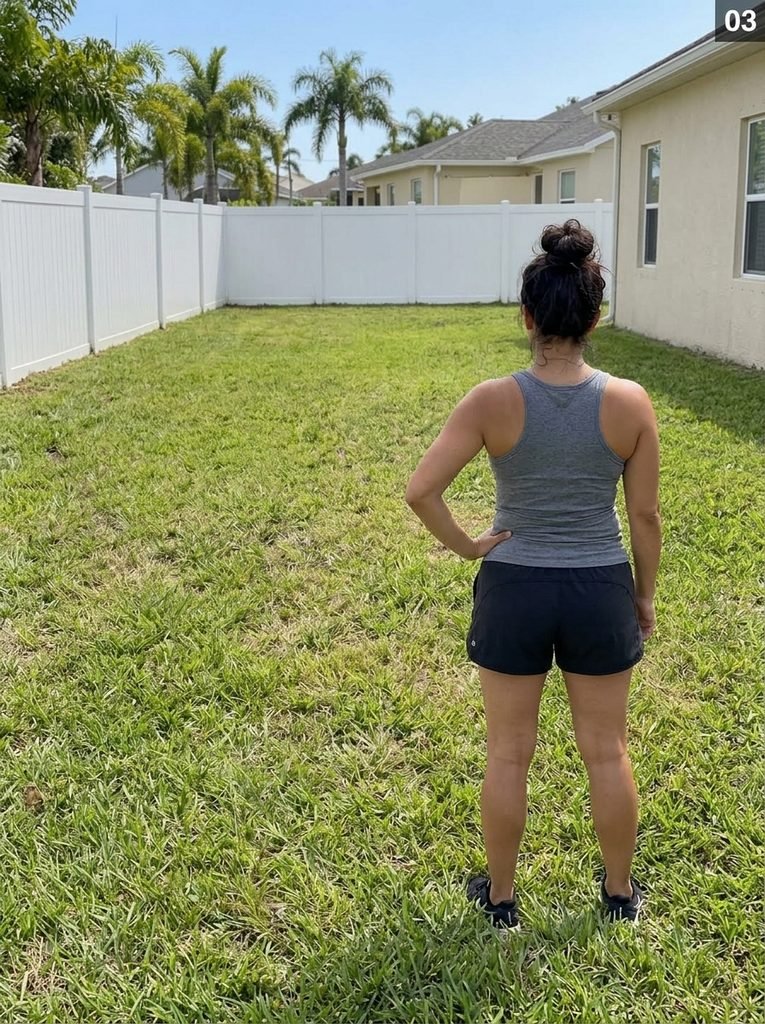
Walk through the space and think about where you naturally move.
For example, you may need a clear route from the patio to a garden bed or a small seating area.
Keep those routes open.
This step also helps you avoid planting shrubs where they will later block access.
Measure Before You Start
Small measurements can save a lot of unnecessary work.
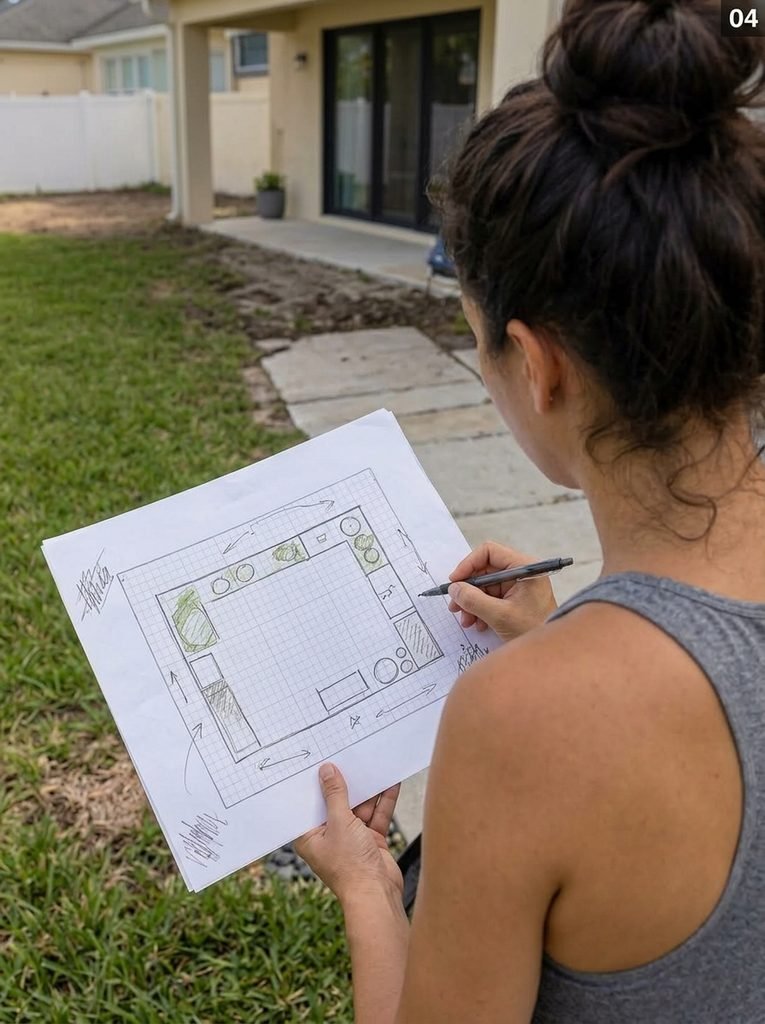
Measure the areas where you want to create planting beds, paths, or seating.
You do not need a professional landscape drawing.
A simple sketch can show:
- lawn area
- house
- patio
- planting borders
- future path
- seating
- privacy area
Once you know how much space you actually have, it becomes easier to choose plants and materials that fit.
Define the Layout Before Planting
Mark the basic shape of the future landscaping before digging.
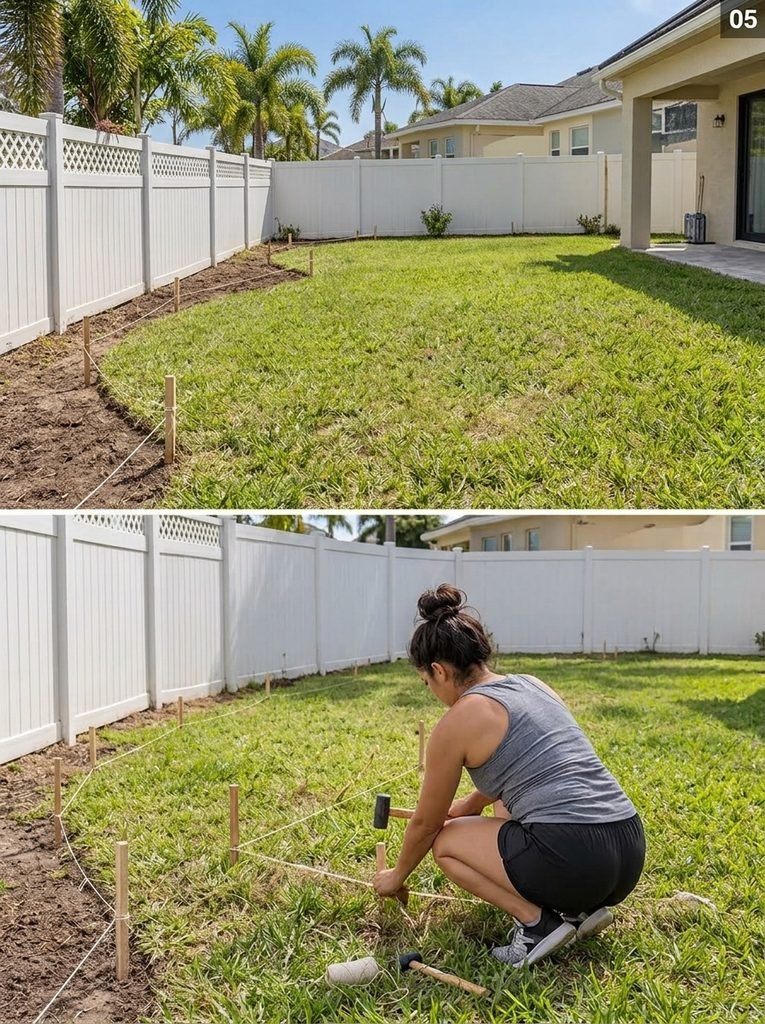
Simple stakes and garden string can help show where borders will go.
Try to keep the layout uncomplicated.
A few well-defined areas are usually easier to maintain than many small planting pockets scattered around the yard.
Reduce High-Care Lawn Areas Carefully
Lawn can be useful open space, so low maintenance landscaping does not always mean removing all of it.
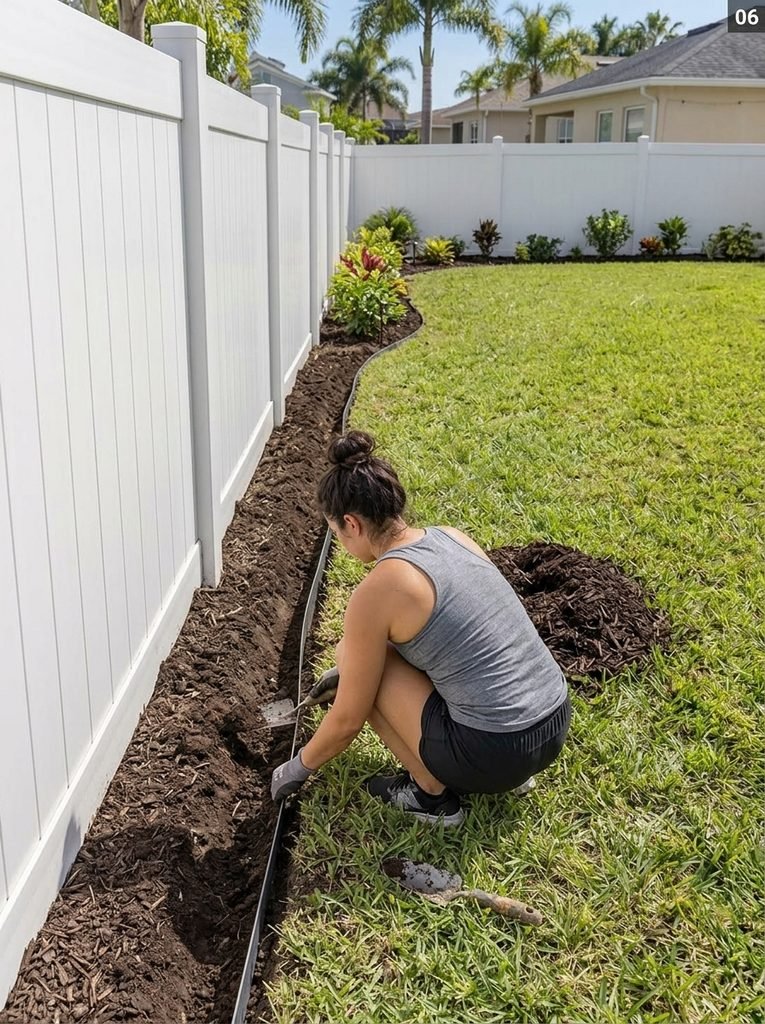
Instead, focus on awkward lawn edges or narrow strips that are difficult to mow.
Turning those areas into simple mulch beds can reduce trimming while giving you room for easy-care plants.
Keep the main lawn area open if you still use it.
Add a Simple Path
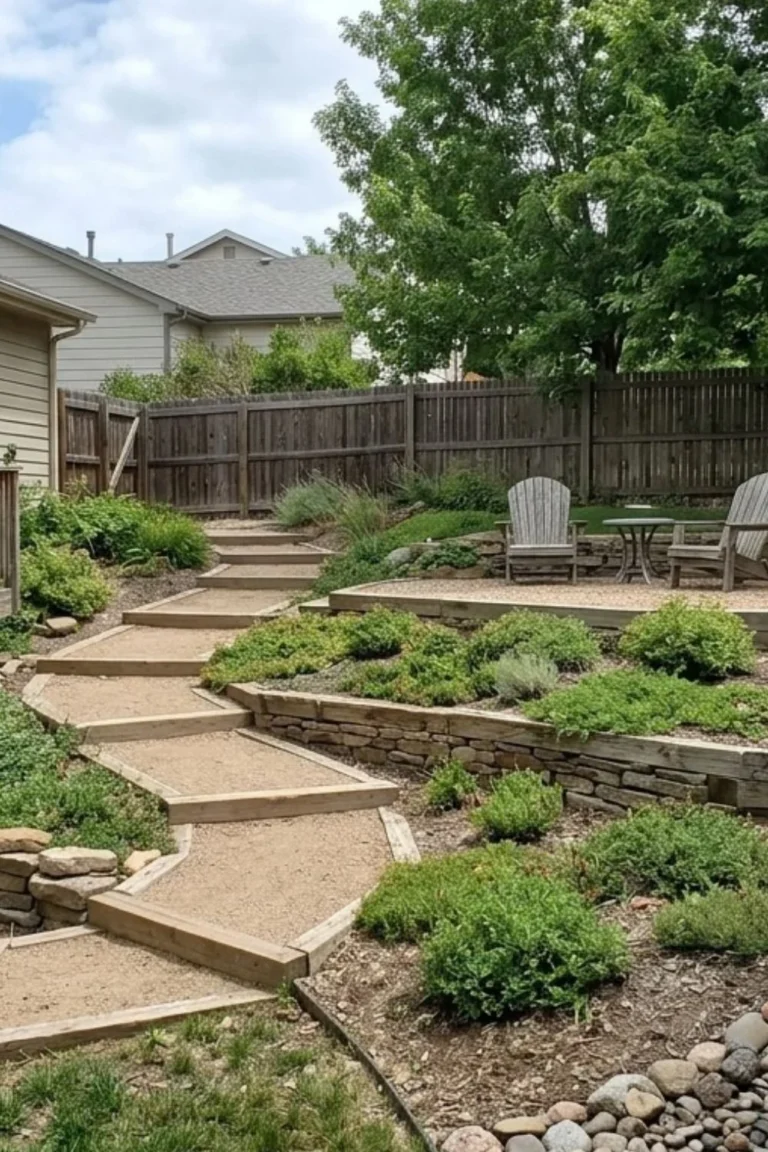
A practical path can reduce wear on the lawn and make garden areas easier to reach.
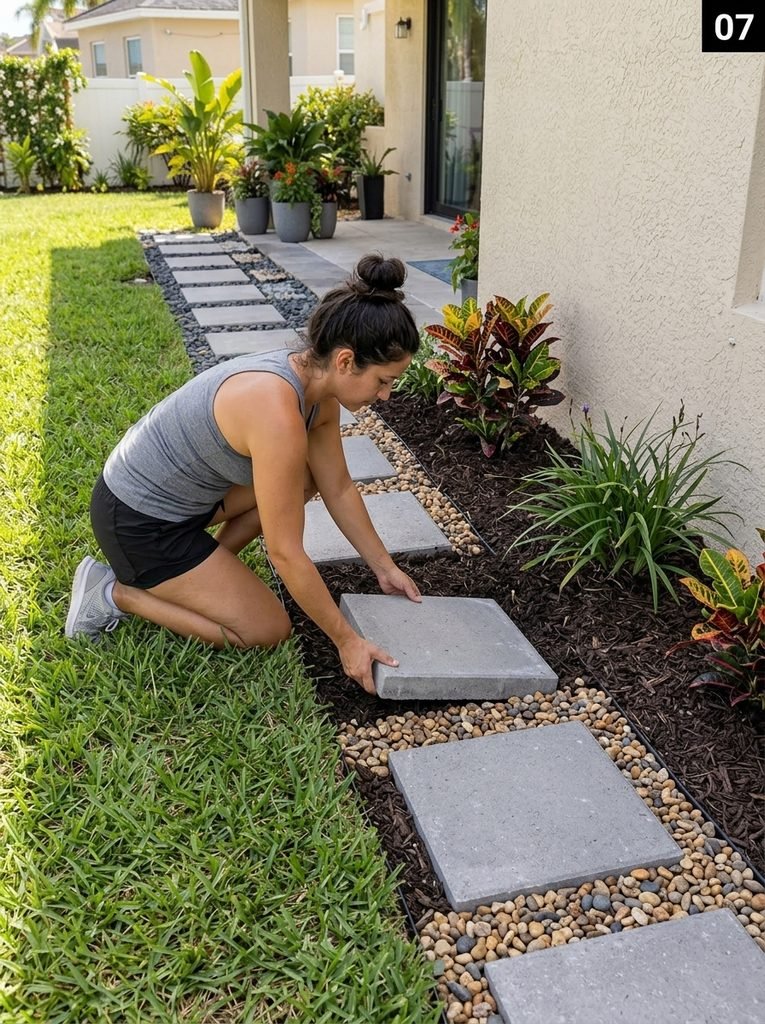
Stepping stones, gravel, or mulch can all work.
Keep the path simple and narrow enough that it does not dominate the backyard.
Straight or gently curved paths are usually easier to maintain than complicated patterns.
Also, choose materials that are easy to replace if one section becomes damaged.
Use Easy Planting Groups
Planting groups are usually easier to manage than many individual plants scattered around the yard.
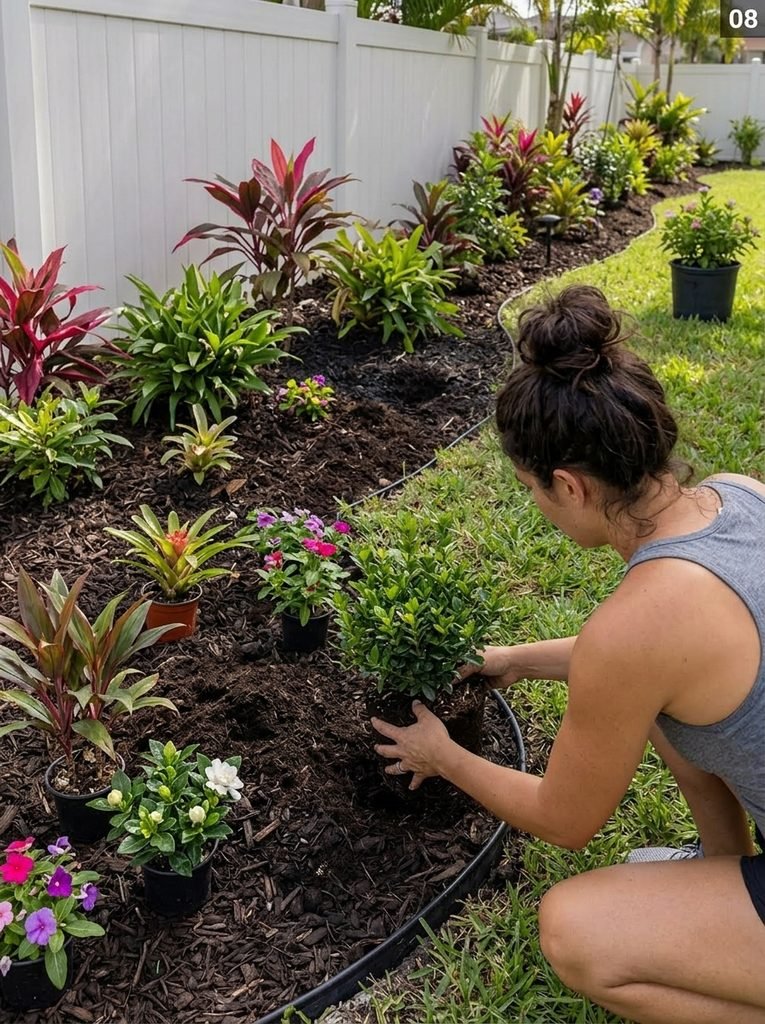
Group plants with similar needs.
For example, combine plants that prefer similar:
- sunlight
- watering
- soil conditions
- mature size
This makes watering and pruning simpler.
Leave enough room between young plants for future growth. Otherwise, a low-maintenance border can become crowded after a few seasons.
Group Containers Instead of Scattering Them
Containers are useful because they are flexible, but too many separate pots can create extra watering work.
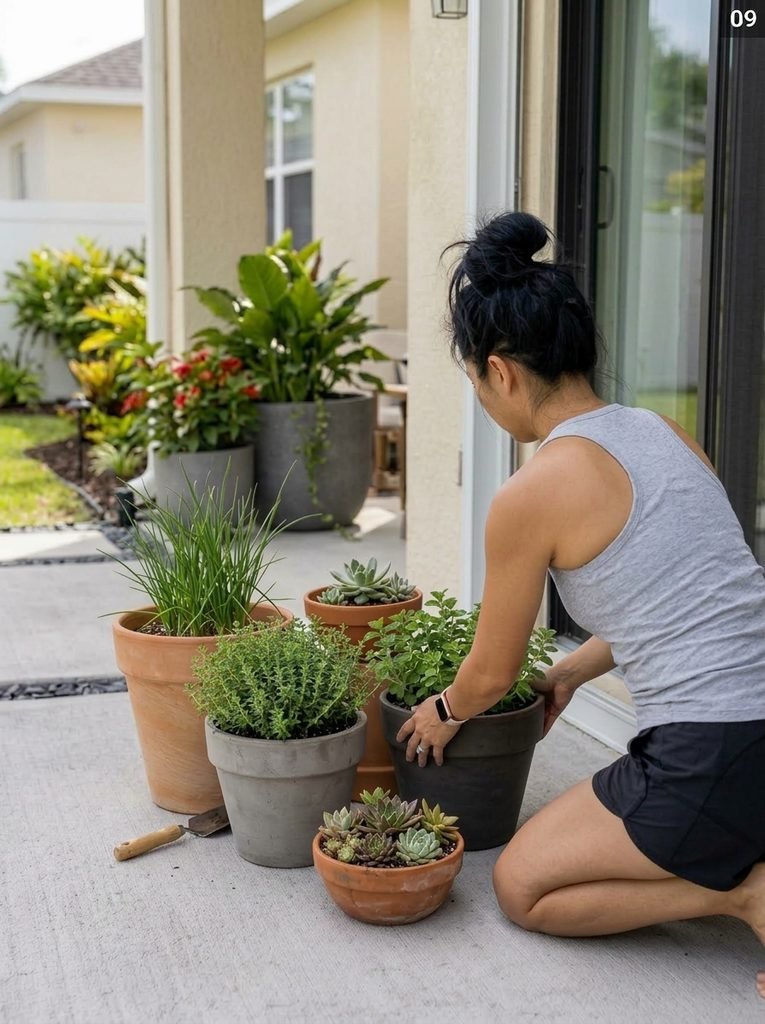
Keep several containers together near the patio or another convenient location.
A small group can contain:
- herbs
- compact foliage plants
- easy flowering plants
- small edible plants
Grouping containers also makes watering faster and keeps the patio visually organized.
Keep Raised Beds Small and Practical
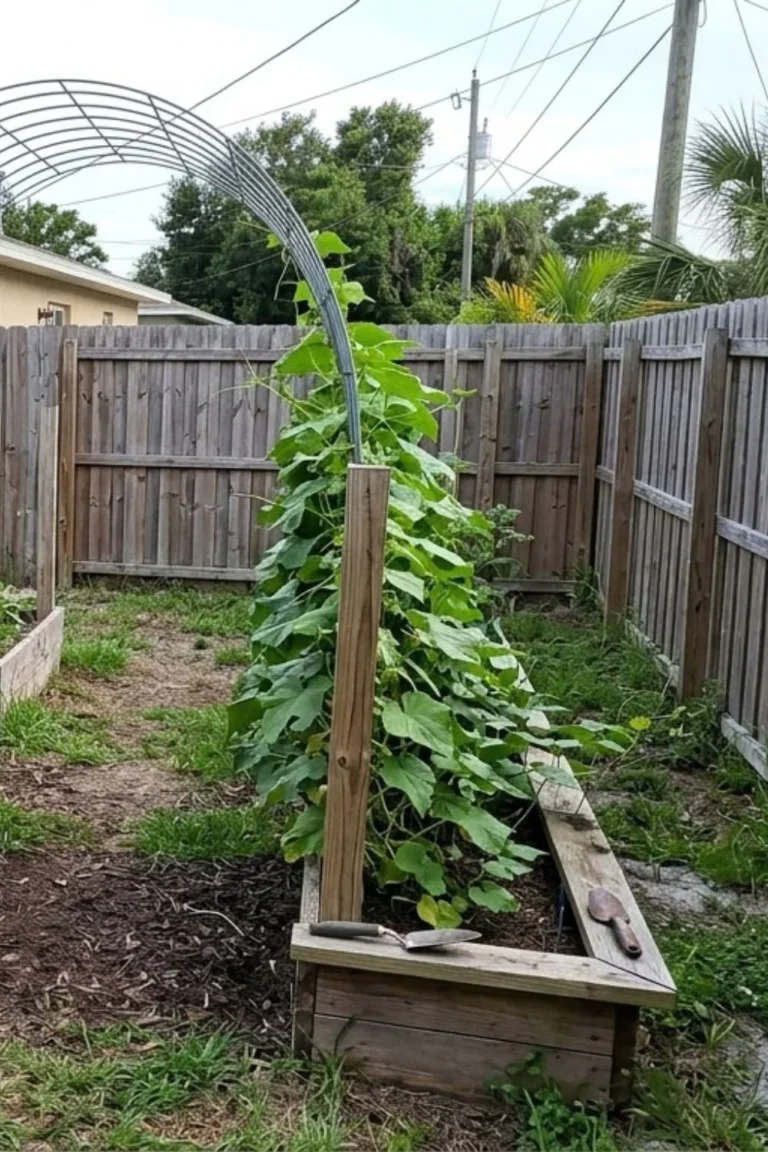
One small planting or raised bed can provide useful growing space without turning the entire backyard into a garden.
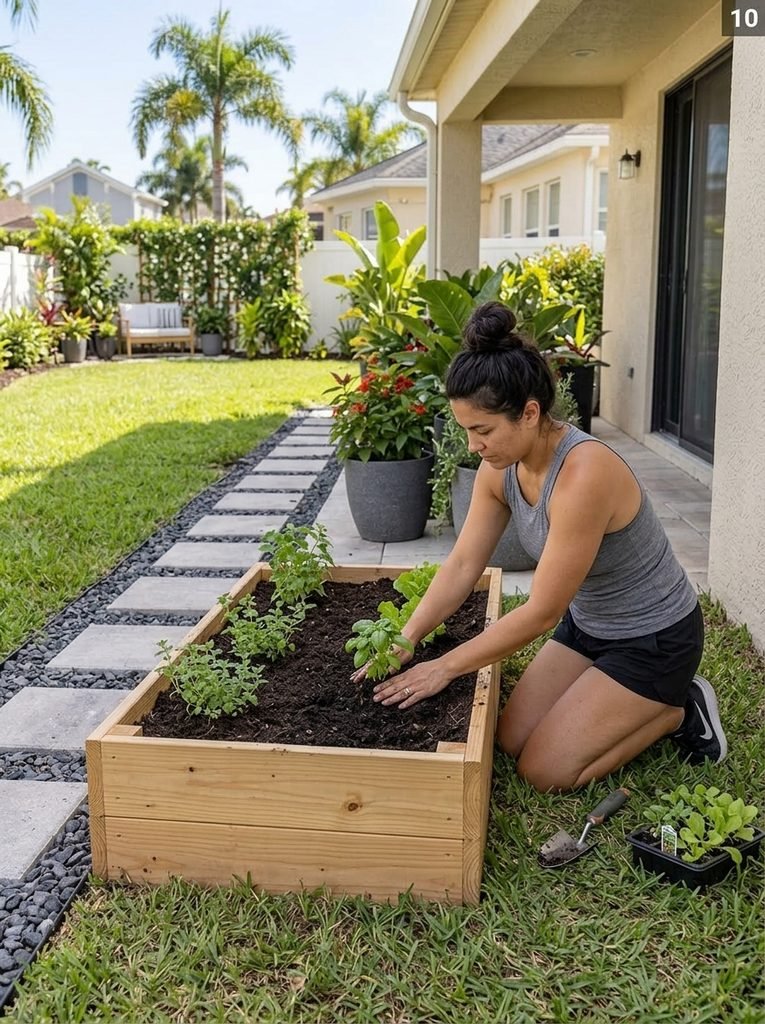
Use it for herbs, vegetables, or a simple mixed planting.
Place the bed where it is easy to reach.
Avoid making it larger than you have time to maintain.
A smaller productive bed is often more useful than a large bed that becomes neglected.
Use Vertical Space for Easy Privacy
Privacy does not always require a dense hedge.
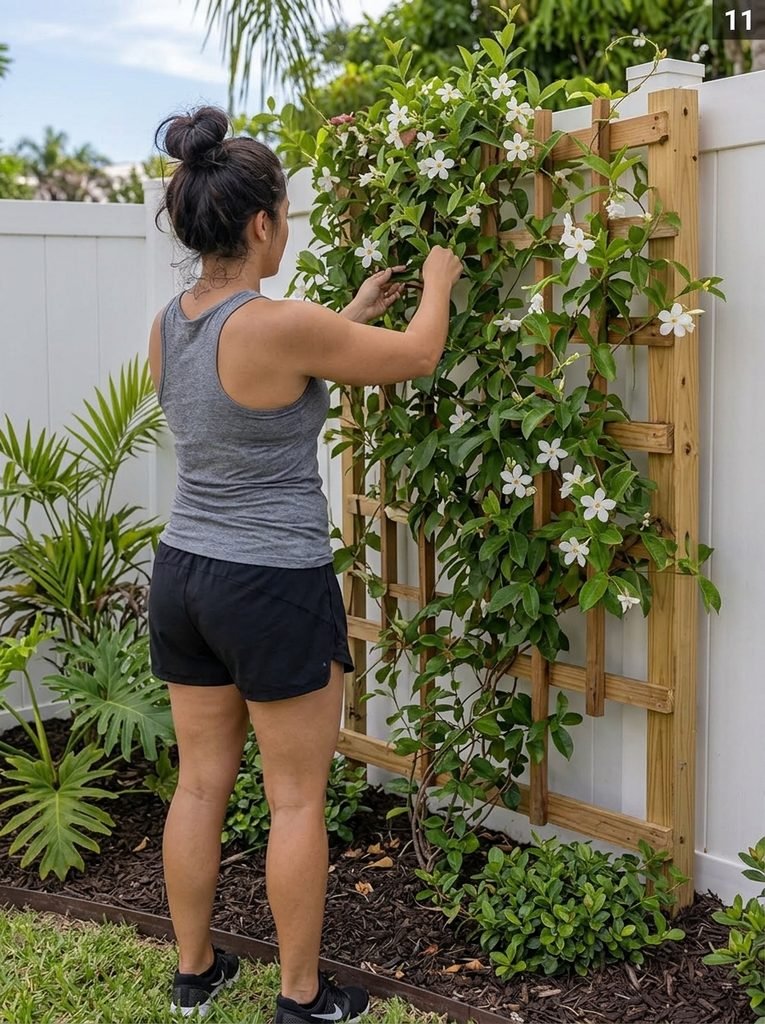
A simple trellis with a manageable climbing plant can screen one specific view while taking up little ground space.
Keep the vine under control with occasional pruning.
The fence should still remain partly visible.
A completely covered fence can eventually become more work than expected.
Choose Practical Supporting Plants
Not every plant needs to be the main feature of the yard.
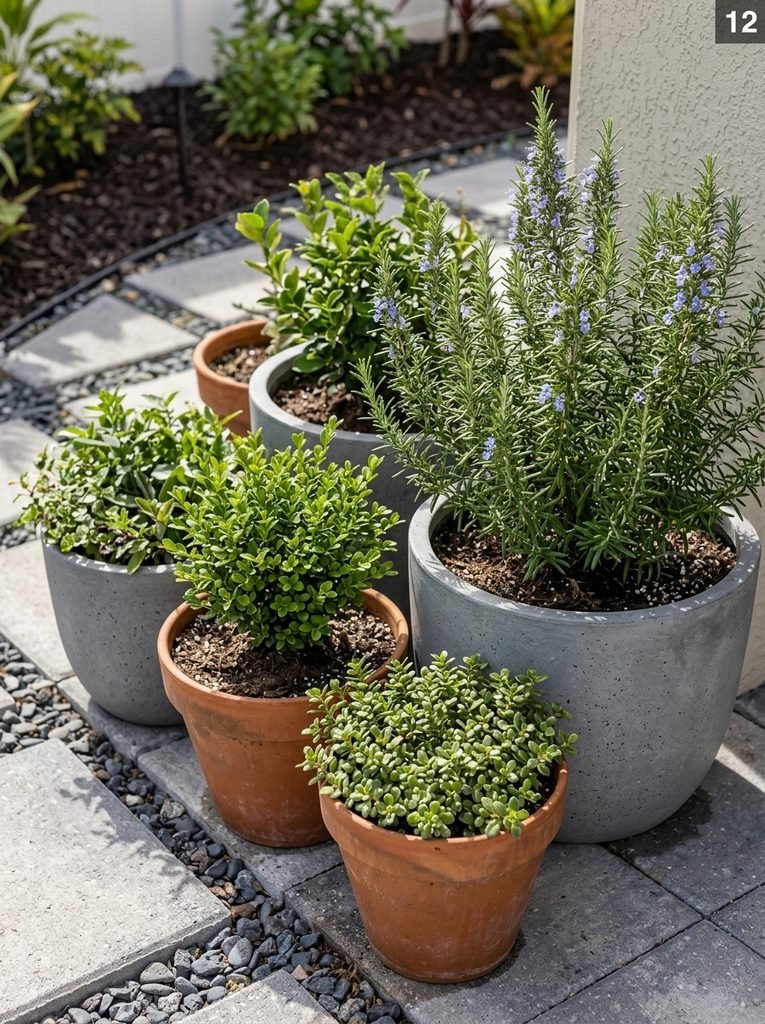
Simple herbs, foliage plants, and compact shrubs can fill small areas without requiring complicated care.
When choosing plants, consider their mature size.
A plant that stays naturally compact usually requires less pruning than one that constantly outgrows its location.
Use Mulch Around Planting Beds
Mulch is one of the simplest ways to reduce routine yard work.
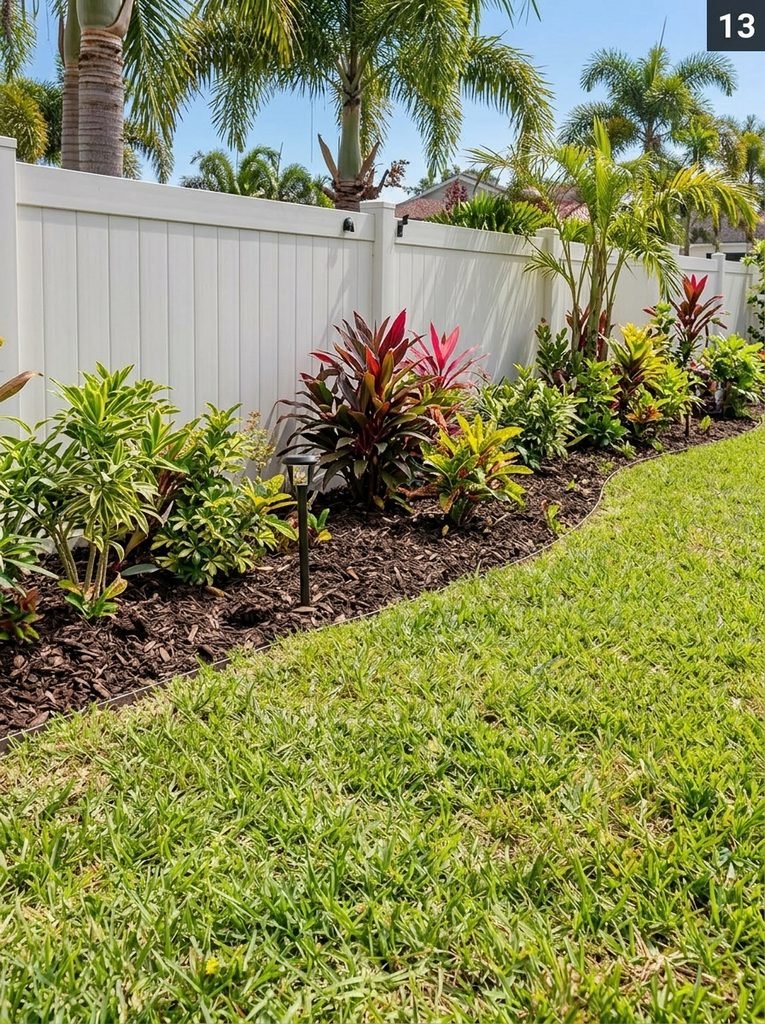
A layer of mulch can help:
- slow moisture loss
- reduce some weed growth
- define planting beds
- reduce exposed soil
- create a cleaner edge
Keep mulch away from direct contact with plant stems and tree trunks.
You may still need to refresh the layer occasionally, but it can reduce frequent weeding.
Add Only the Seating You Need
Low-maintenance landscaping should leave room to enjoy the backyard.
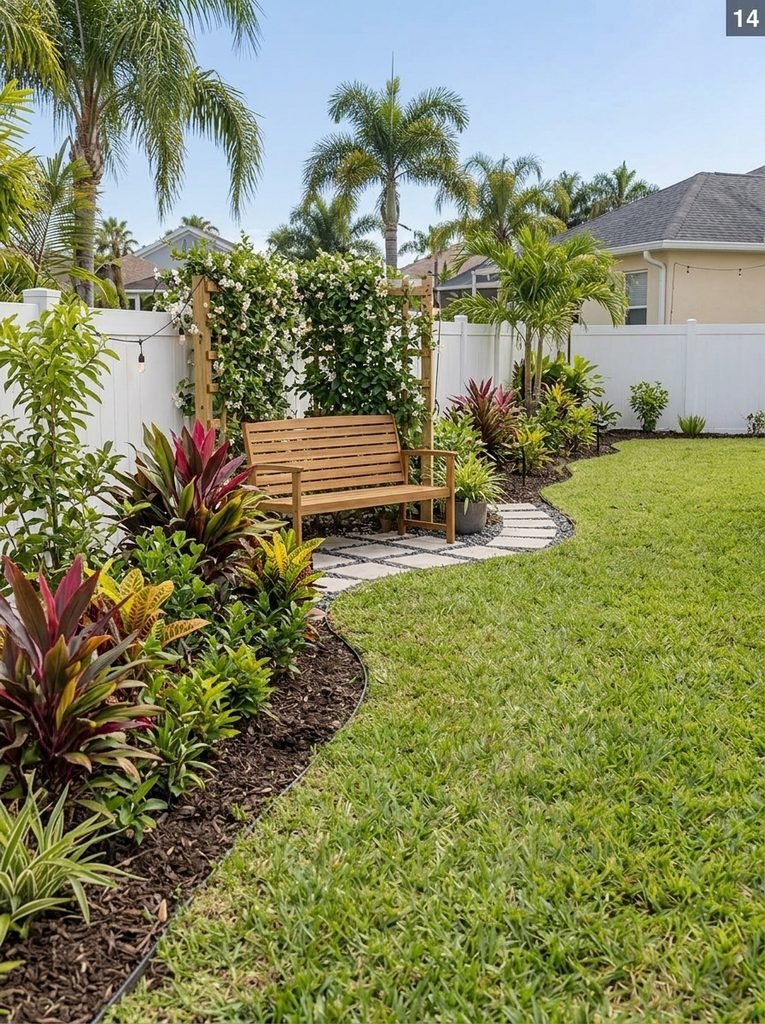
One small bench or a couple of simple chairs may be enough.
Avoid filling a modest yard with large outdoor furniture that needs constant cleaning or rearranging.
Position seating near an existing path, patio, or garden edge.
This keeps the open lawn usable.
Keep Garden Borders Simple
Complicated borders often mean more edging and trimming.
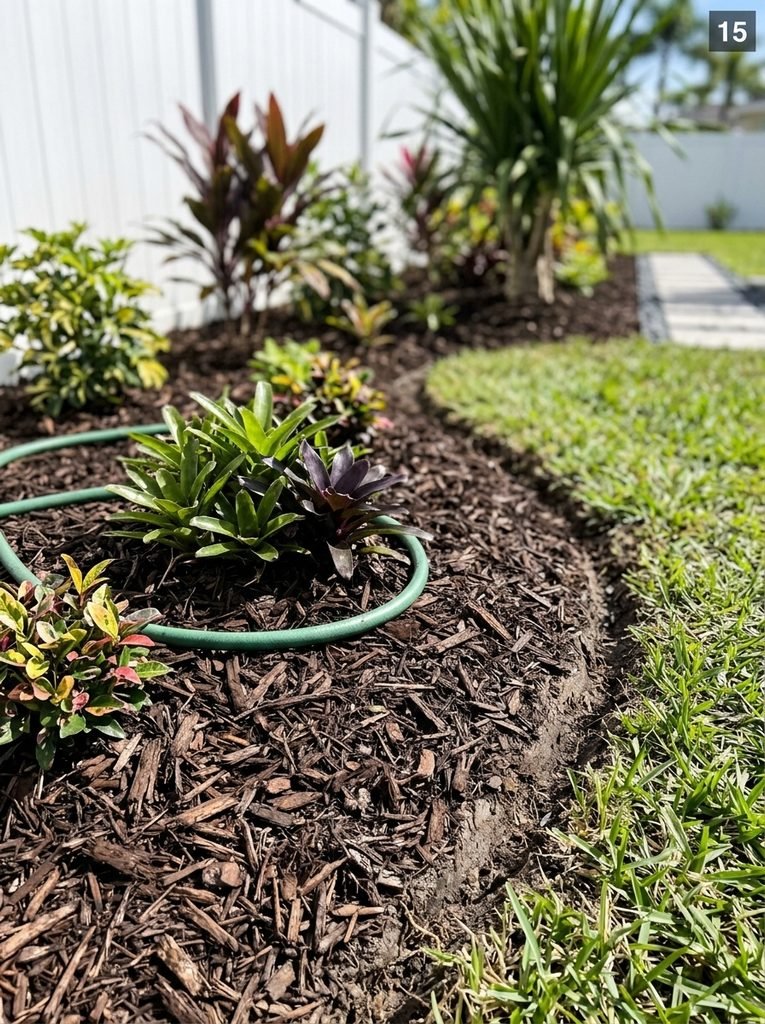
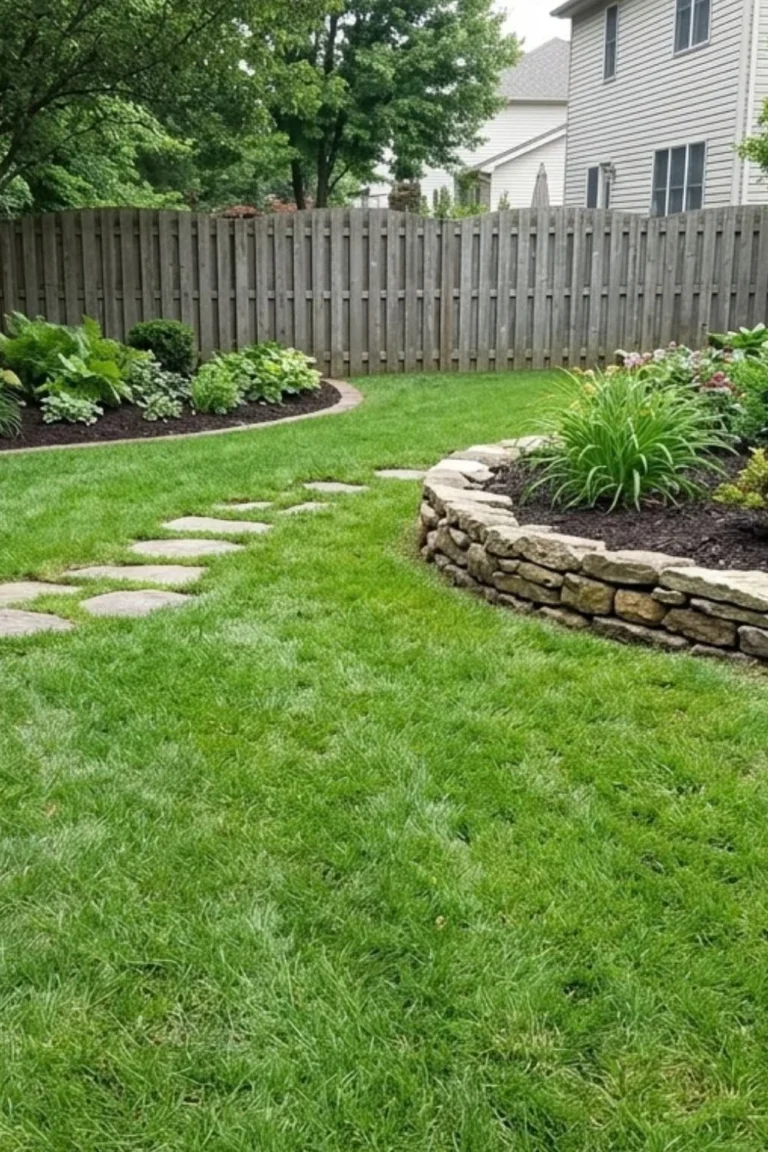
A simple mulch border can create a clear separation between lawn and planting areas.
Try to avoid too many sharp corners or tiny curves.
Smooth, easy-to-follow edges are usually easier to mow around.
If irrigation or a hose line is used, keep it positioned so it does not become a tripping hazard.
Make Sure the Yard Is Easy to Walk Through
Once the main features are in place, walk around the backyard again.
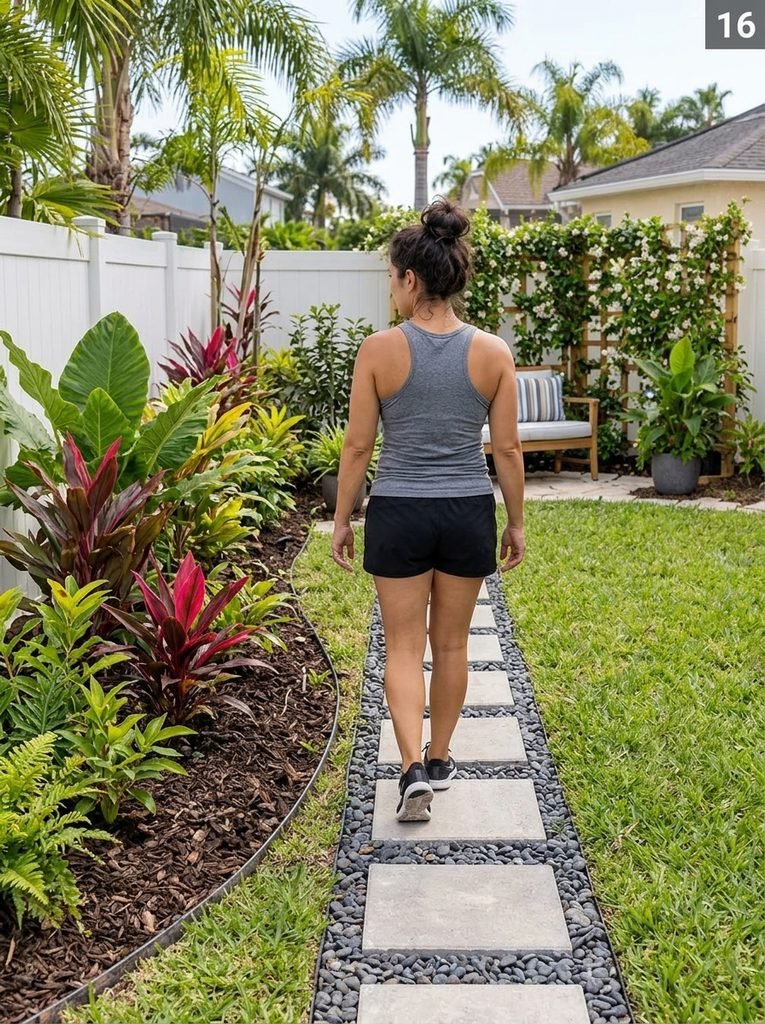
Check whether you can comfortably reach:
- the planting beds
- containers
- seating
- trellis
- hose connection
- raised bed
If something blocks normal movement, adjust it before plants become larger.
Good landscaping should make the yard easier to use.
Water Efficiently
Even low-maintenance plants still need water, especially while becoming established.
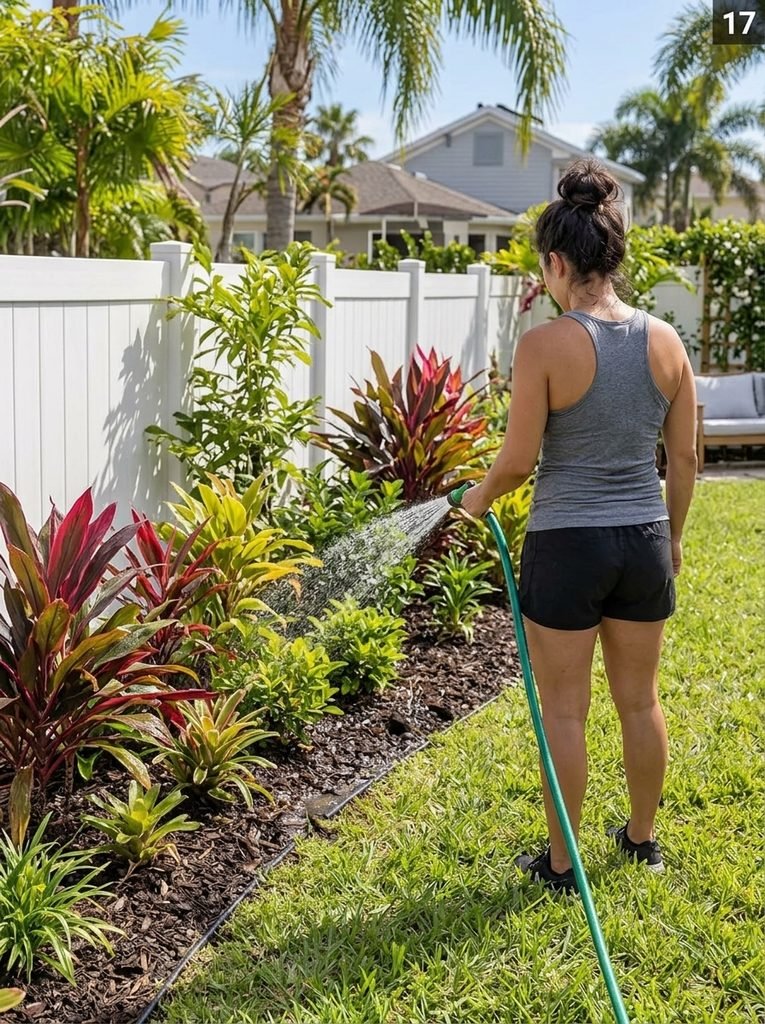
Water deeply when appropriate instead of constantly wetting only the surface.
Plants growing in containers may need more frequent checks than plants in mulched garden beds.
Grouping plants with similar water needs makes this easier.
If possible, water close to the soil rather than spraying the entire plant every time.
Prune Before Plants Become Overgrown
Regular light maintenance is usually easier than major cleanup.
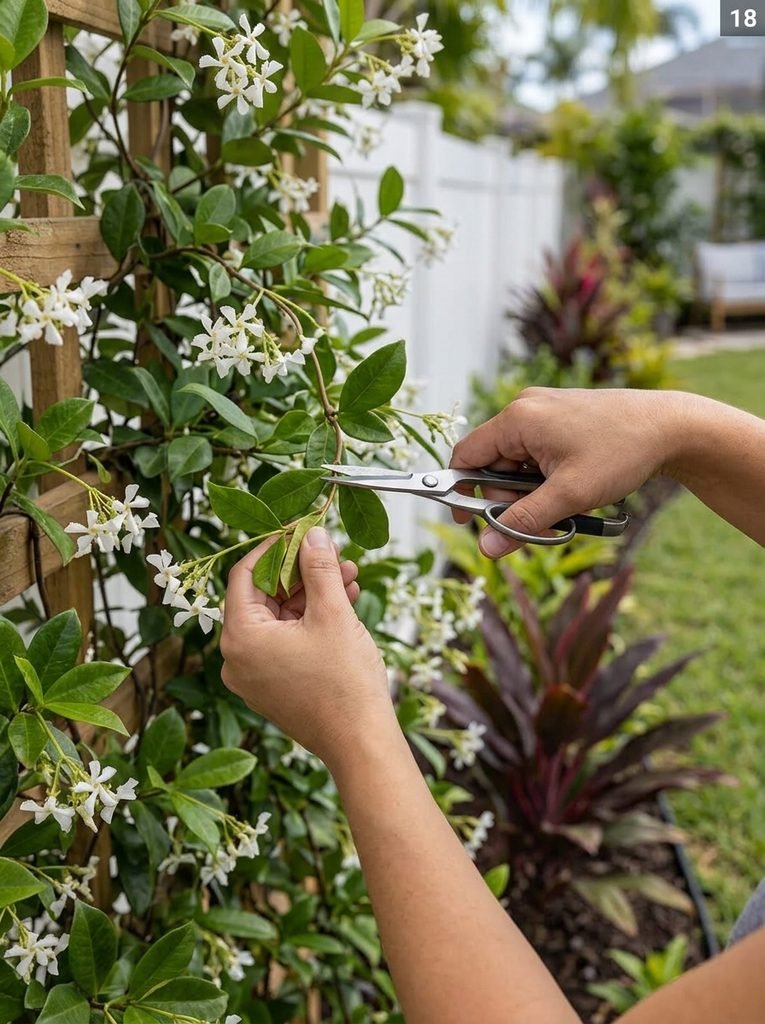
Trim vines, shrubs, and border plants before they block paths or grow into neighboring plants.
You do not need to create perfectly shaped plants.
The goal is simply to keep growth within the space you planned for it.
A few minutes of occasional pruning can prevent much larger work later.
Review the Entire Backyard
Once the landscaping becomes established, step back and look at the full space.
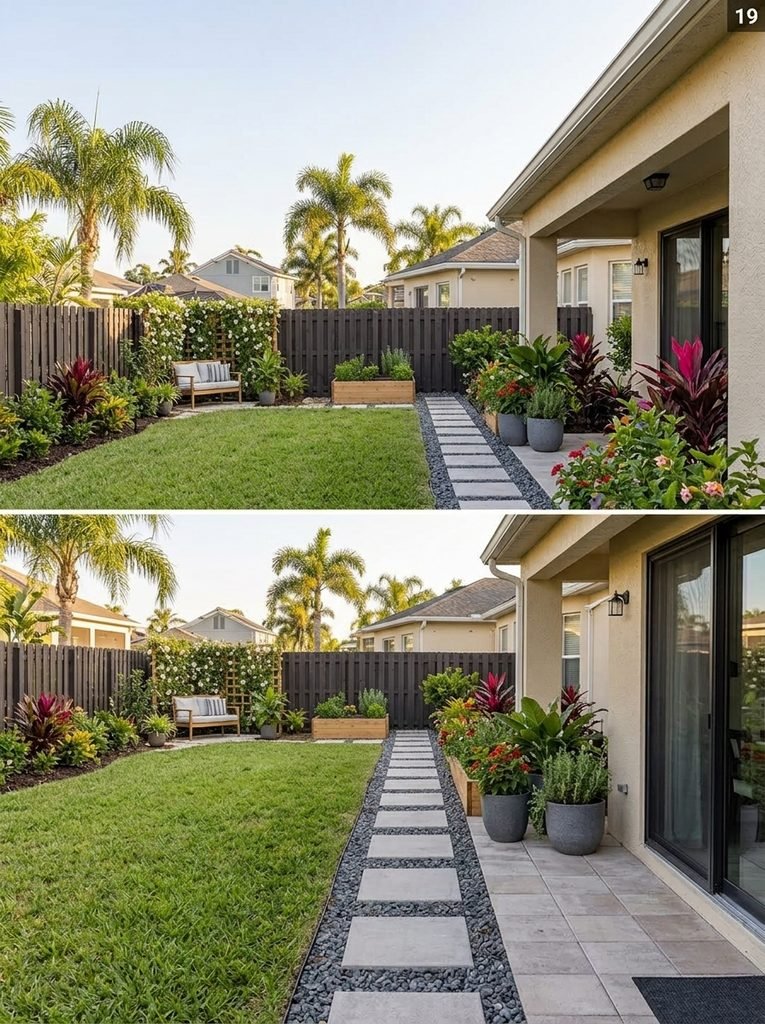
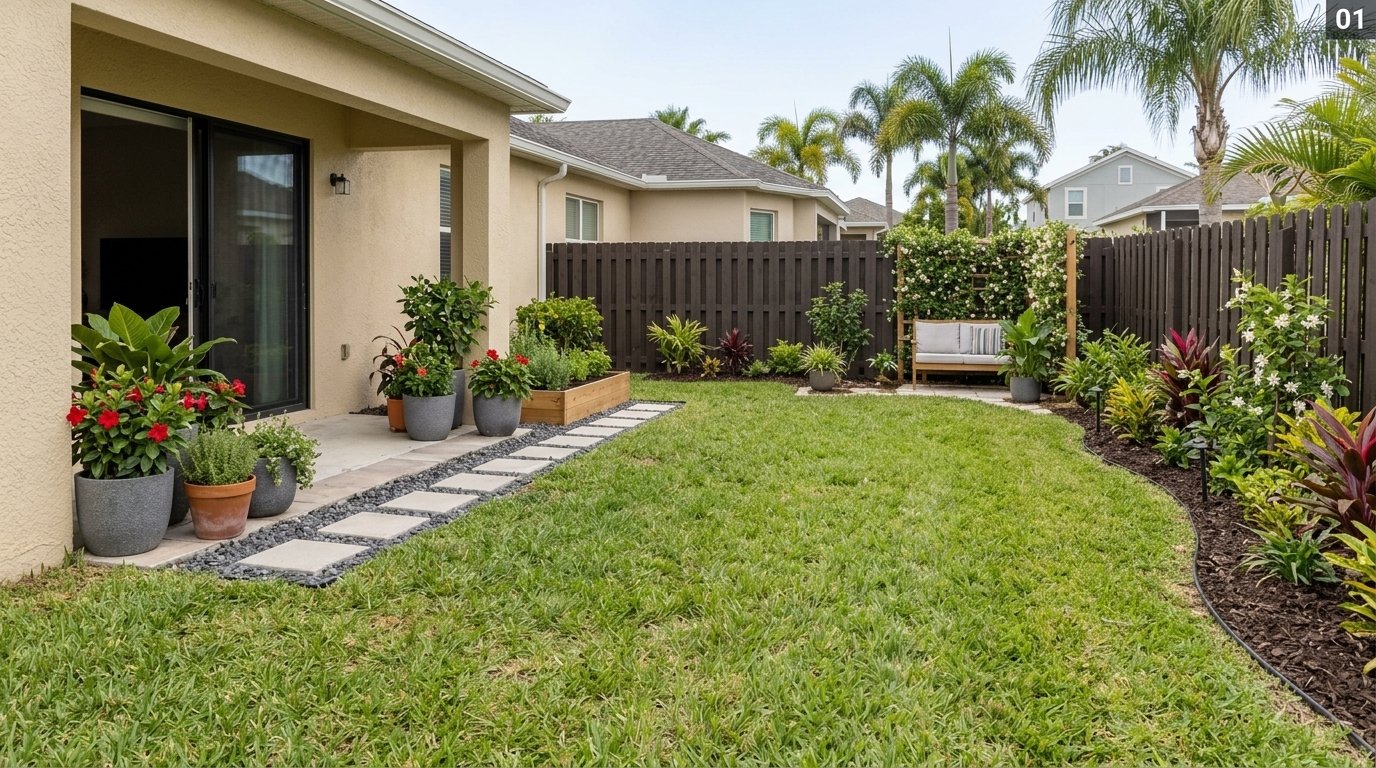
A practical low-maintenance backyard may include:
- open lawn
- simple planting borders
- grouped containers
- one raised bed
- a stepping-stone path
- one trellis
- modest seating
No single feature needs to dominate the yard.
The space should still feel open and easy to understand.
Keep the Final Layout Easy to Use
Landscaping should support your routine.
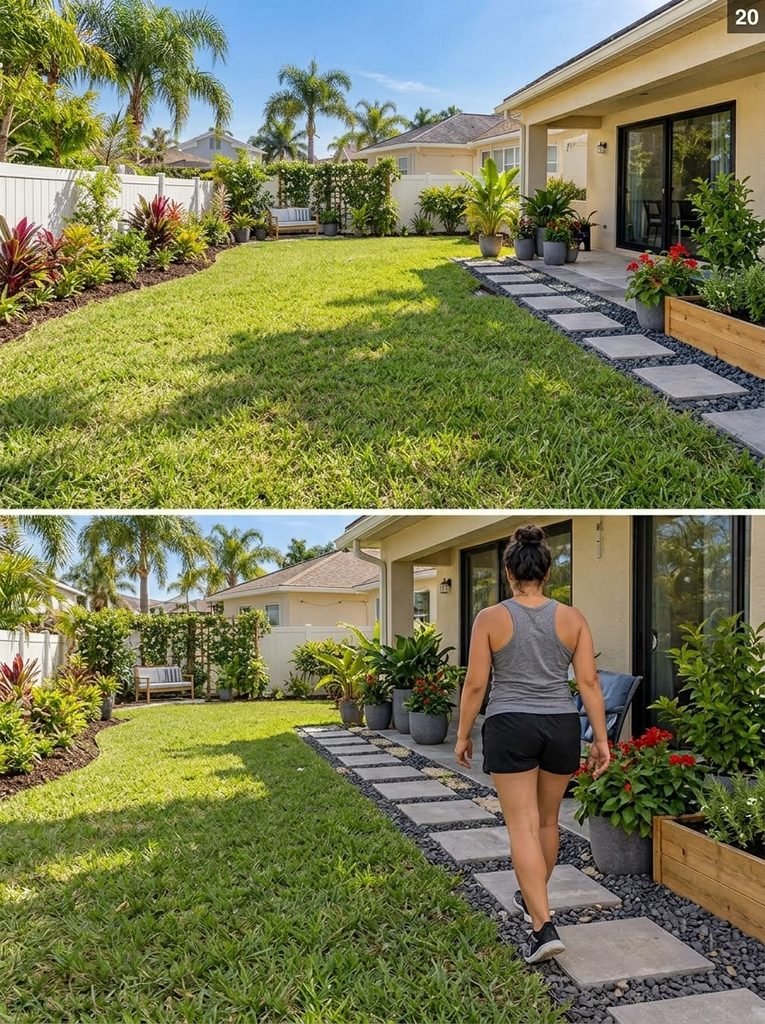
You should be able to move naturally between the house, lawn, garden, and seating area.
If maintenance starts becoming difficult, simplify.
Remove unnecessary containers, trim oversized plants, or reduce the number of planting areas.
Low maintenance landscaping works best when the design matches the amount of time you actually have.
A Finished Low-Maintenance Backyard
The final backyard does not need to look like a professionally designed resort.
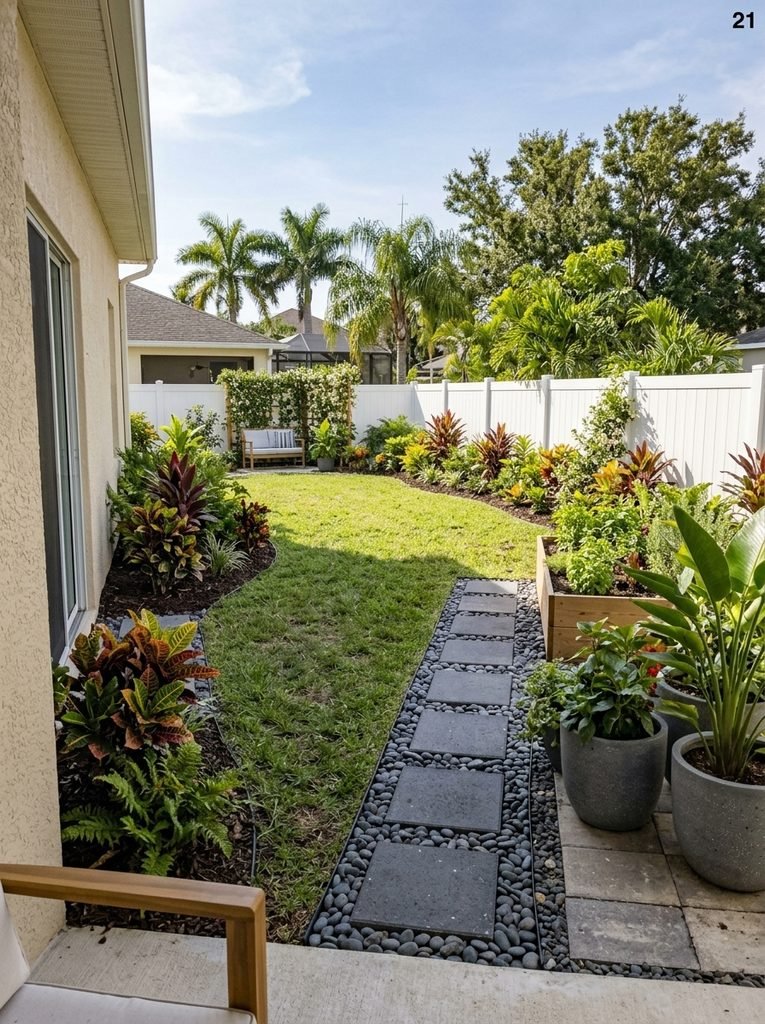
A realistic home landscape can include a healthy lawn, manageable planting beds, a few containers, simple privacy, and one comfortable place to sit.
The important part is that every feature has a purpose.
That makes the yard easier to maintain and more enjoyable to use.
Low-Maintenance Plants: What to Look For
There is no single plant that is low maintenance in every climate or yard.
Instead, look for plants that fit your specific conditions.
Good candidates usually:
- tolerate your local sunlight
- handle normal seasonal weather
- fit the available space when mature
- do not require constant shaping
- have reasonable water needs
- are not aggressive spreaders
Choosing the right plant for the location often reduces maintenance more than choosing a plant simply because it is marketed as “easy.”
What Still Needs Regular Care?
Low maintenance does not mean no maintenance.
Even a simple landscape will still need occasional attention.
Expect some routine work such as:
- mowing or edging lawn
- watering during dry periods
- pulling occasional weeds
- refreshing mulch
- pruning vines and shrubs
- checking irrigation
- cleaning paths
- removing damaged growth
The difference is that a simple landscape keeps those tasks manageable.
Common Low-Maintenance Landscaping Mistakes
Adding Too Many Features
A backyard does not need a raised bed, fire pit, pond, outdoor kitchen, pergola, and multiple seating areas all at once.
Keep the design focused.
Choosing Plants That Grow Too Large
Always consider mature plant size.
Large plants placed in narrow borders usually create extra pruning work.
Making Too Many Tiny Beds
Several small planting areas can require more edging and weeding than one or two larger, simple borders.
Ignoring Water Needs
Plants with very different watering requirements can make maintenance more complicated.
Group plants with similar needs when possible.
Using Too Many Containers
Containers can be easy to arrange but often dry faster than in-ground beds.
Keep the collection manageable.
Creating Dense Privacy Everywhere
Only screen the areas that actually need privacy.
Keeping some open fence or sky visible can also help the yard feel larger.
Frequently Asked Questions
What is the easiest way to make a backyard low maintenance?
Start with a simple layout, reduce difficult lawn edges, use mulch, group plants by care needs, and avoid adding more garden features than you can maintain.
Is mulch good for low-maintenance landscaping?
Yes. Mulch can help reduce exposed soil, conserve moisture, and limit some weed growth. It still needs occasional refreshing.
Should I remove all grass for a low-maintenance yard?
Not necessarily. A simple lawn can provide useful open space. Consider removing only difficult or unnecessary lawn sections.
Are container plants low maintenance?
They can be convenient, but containers often need closer watering attention. Grouping a small number of pots is usually easier than maintaining many scattered containers.
What is the best landscaping for busy homeowners?
A simple design with open space, easy-care planting groups, mulch, clear paths, limited containers, and plants chosen for the local conditions is often easier to manage.
How can I create privacy without a lot of maintenance?
Use targeted screening such as one trellis, several upright plants, or a small privacy planting section instead of planting dense hedges around the entire yard.
Final Thoughts
Low-maintenance landscaping is not about making a backyard empty.
It is about removing unnecessary work.
Start with a simple plan. Keep useful open lawn, organize plants into manageable groups, mulch planting beds, add a basic path, and use privacy only where it is needed.
Most importantly, choose plants and features that fit the time you have available.
A backyard that takes less effort to maintain gives you more time to actually enjoy it.