A small backyard does not need to feel crowded.
With the right layout, you can add plants, herbs, a small edible garden, privacy, seating, and useful paths while still keeping enough open space to move around comfortably.
The key is to avoid treating every empty section as a place that needs to be filled.
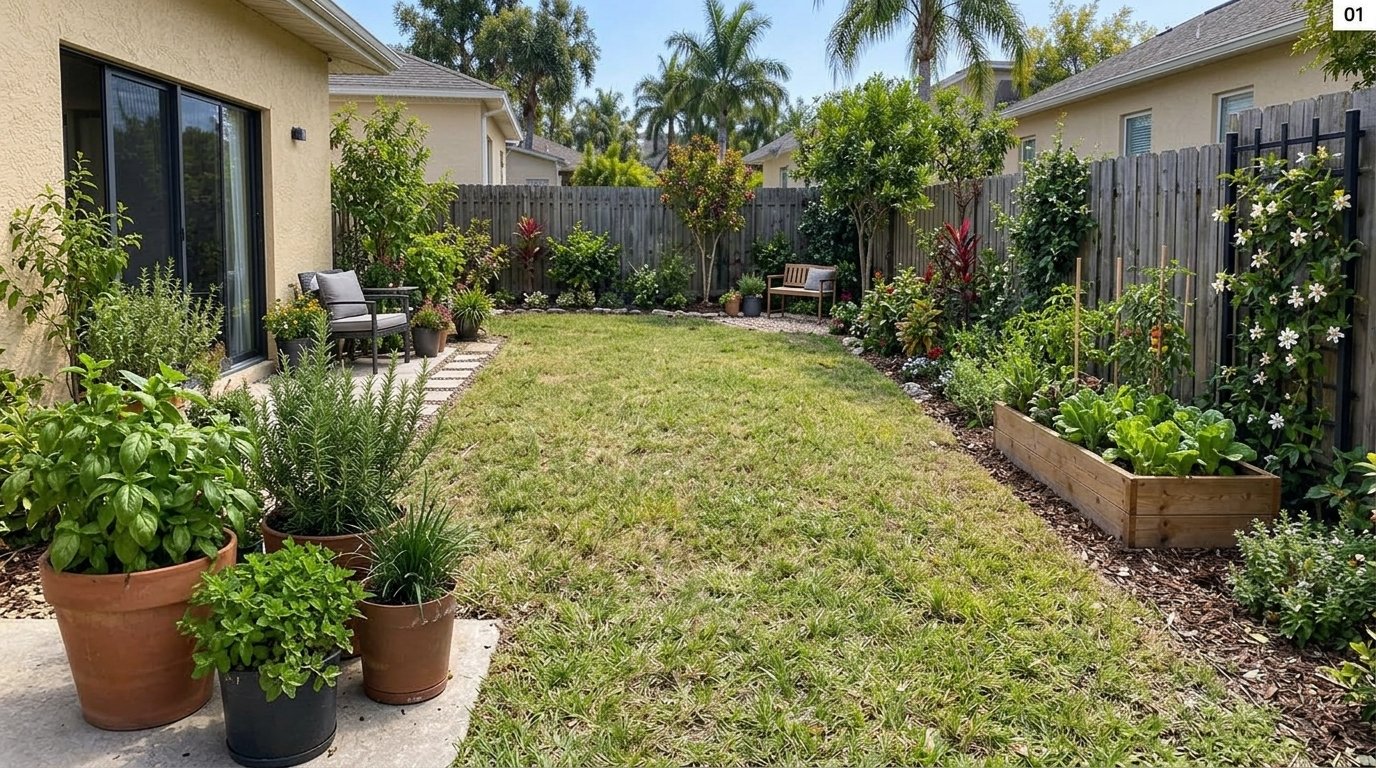
Instead, keep the center relatively open and move most planting toward fences, patio edges, and corners.
These small space garden ideas focus on creating a useful backyard that still feels light, practical, and easy to maintain.
Start With the Space You Already Have
Before adding plants or garden structures, look carefully at the existing yard.
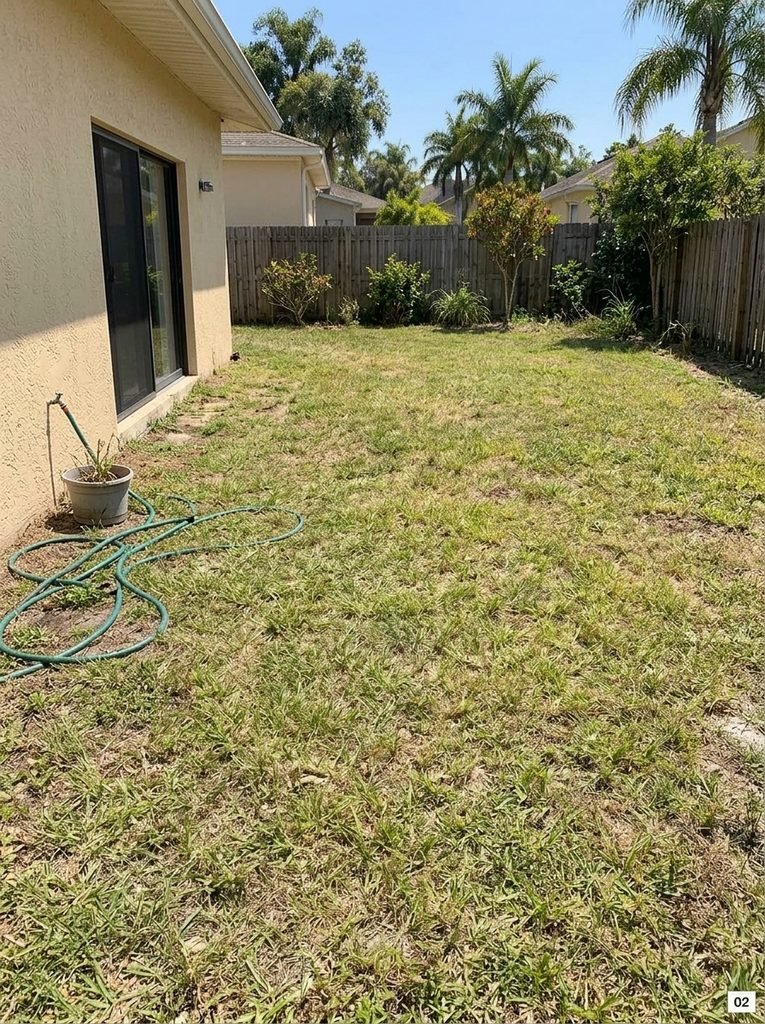
Notice where the patio ends, how much lawn you want to keep, where the doors are, and which parts of the yard receive the most sun.
Also think about how you actually use the space.
You may need room for:
- walking
- watering
- carrying garden tools
- children or pets
- outdoor seating
- harvesting vegetables
- normal backyard activities
A garden should work with those needs rather than competing with them.
Study the Yard Before Changing It
Spend some time looking at the space from different angles.
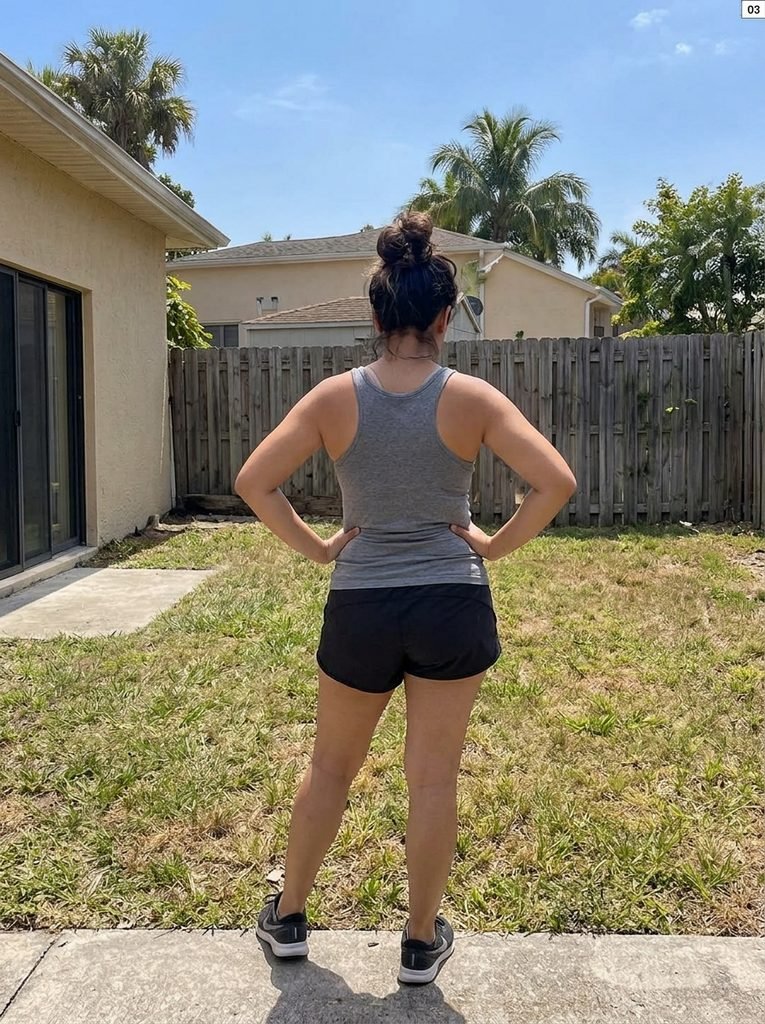
A section that looks empty from the patio may actually be an important walking route.
Similarly, a narrow fence edge may provide enough room for planting without sacrificing useful lawn.
Watch how sunlight moves across the yard during the day.
This helps you decide where vegetables, herbs, flowers, and seating will work best.
Measure Before You Plant
Even a simple measurement can prevent a small backyard from becoming overcrowded.
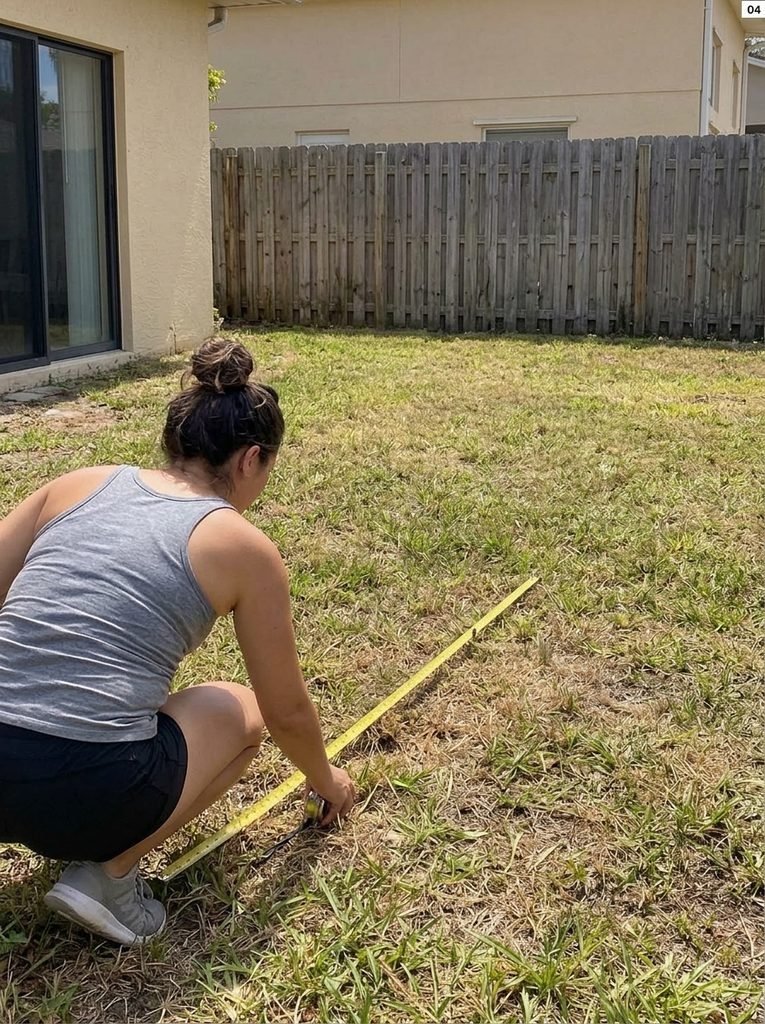
Measure the usable edges of the yard, especially along fences and beside the patio.
You do not need a complex landscape plan.
A basic sketch showing the house, patio, fence, open center, and a few narrow planting zones is often enough to make better decisions.
Keep the Center Open
One of the easiest ways to make a small backyard feel larger is to avoid filling the middle.
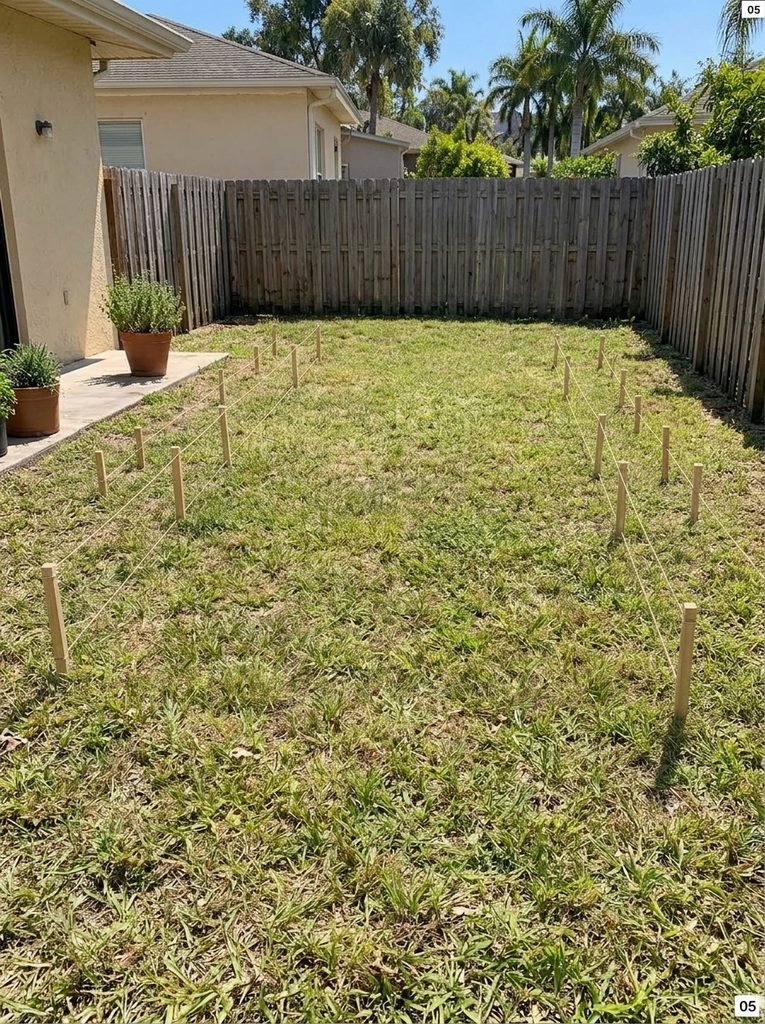
Use stakes or garden string to mark narrow planting areas around the edges before digging.
Then stand back and look at the remaining open space.
The center does not need to be completely empty, but it should provide visual breathing room.
This approach can make the entire backyard feel less busy.
Create Simple Garden Zones
A small backyard usually works better when each area has one clear purpose.
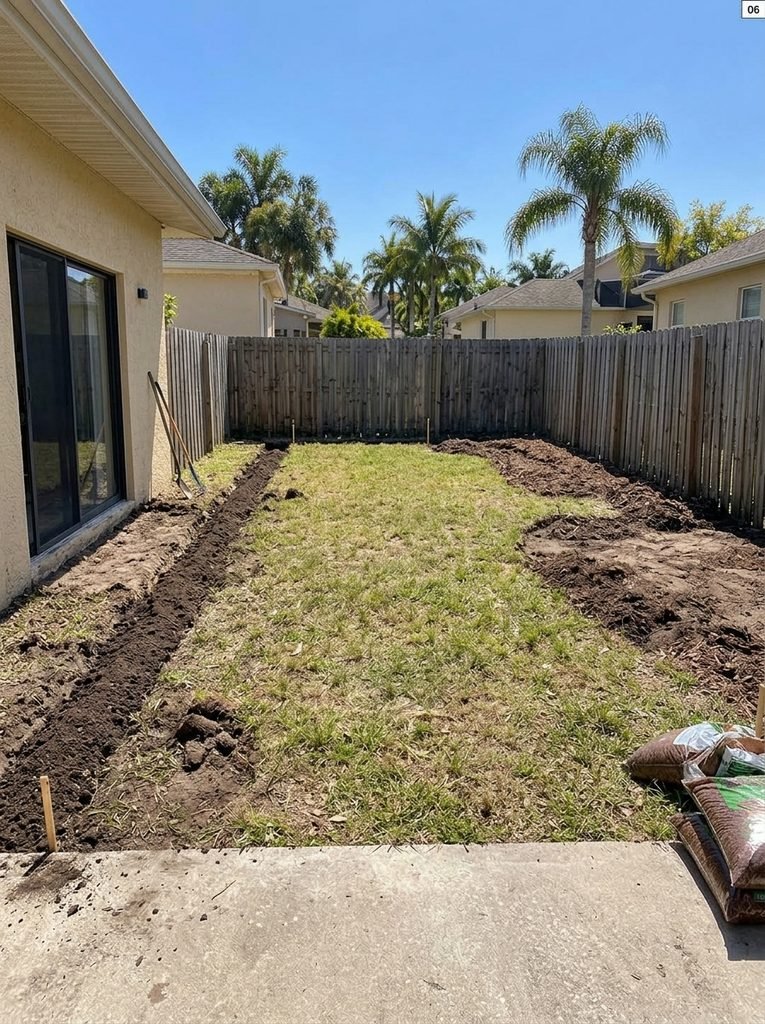
For example, you might create:
- a narrow planting border
- one small herb corner
- one compact edible zone
- one seating corner
- one simple path
- a central open lawn
Keep the number of zones limited.
Too many tiny features can make a small yard feel fragmented.
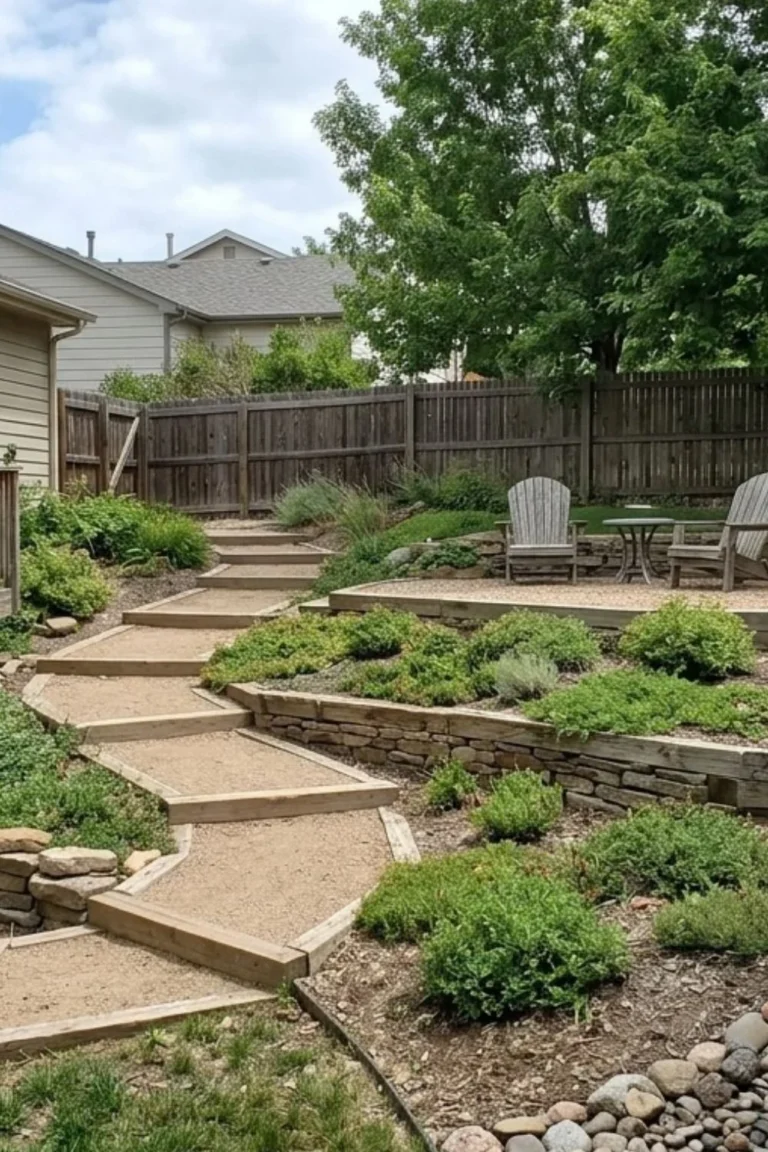
Use Narrow Paths That Still Feel Comfortable
Paths are useful, but wide paths can consume valuable growing or open space.
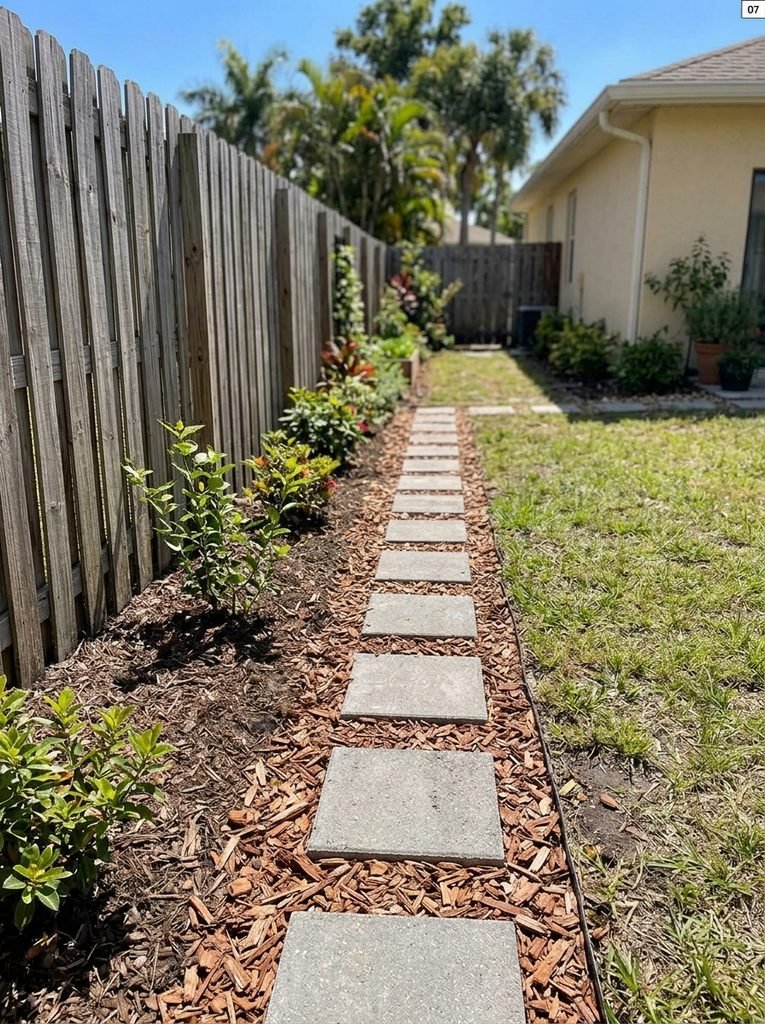
A narrow side path made from stepping stones, mulch, or gravel can provide access without dividing the lawn into several small pieces.
Make sure the path is still comfortable enough to walk naturally.
If you constantly have to step around plants or squeeze against the fence, the path is too narrow.
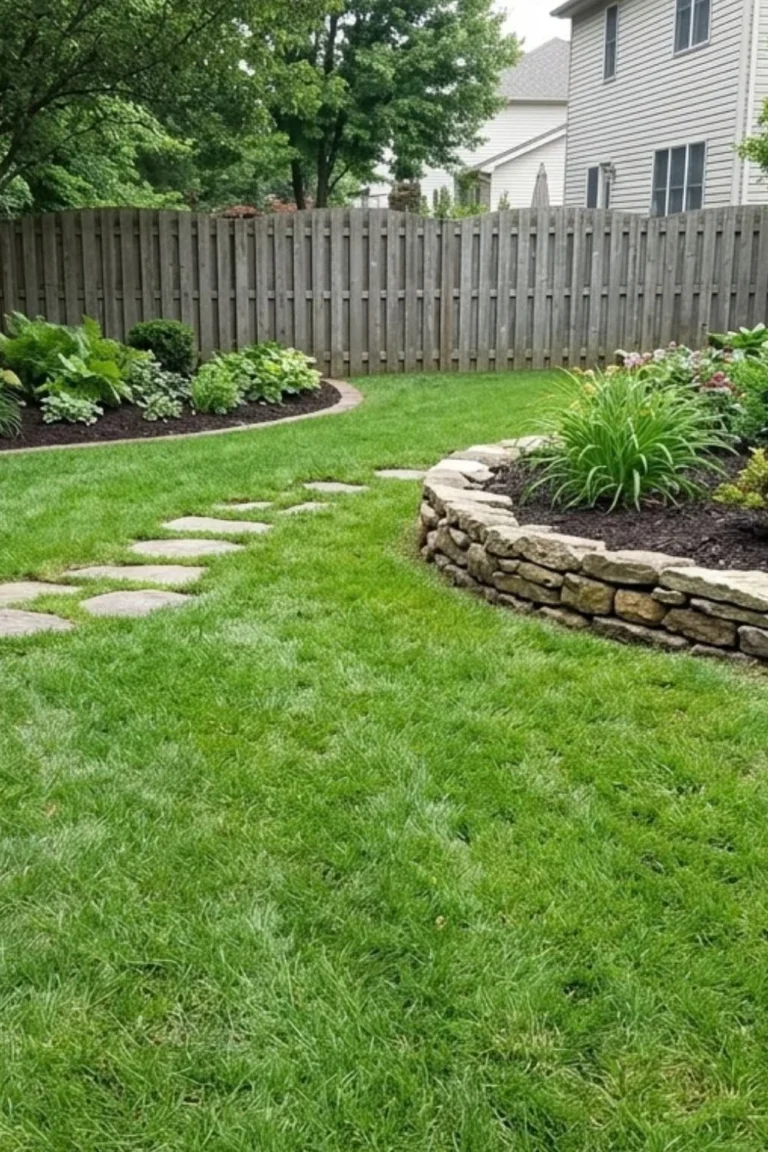
Choose Compact Border Plants
Planting along the edges allows you to add greenery without taking over the center.
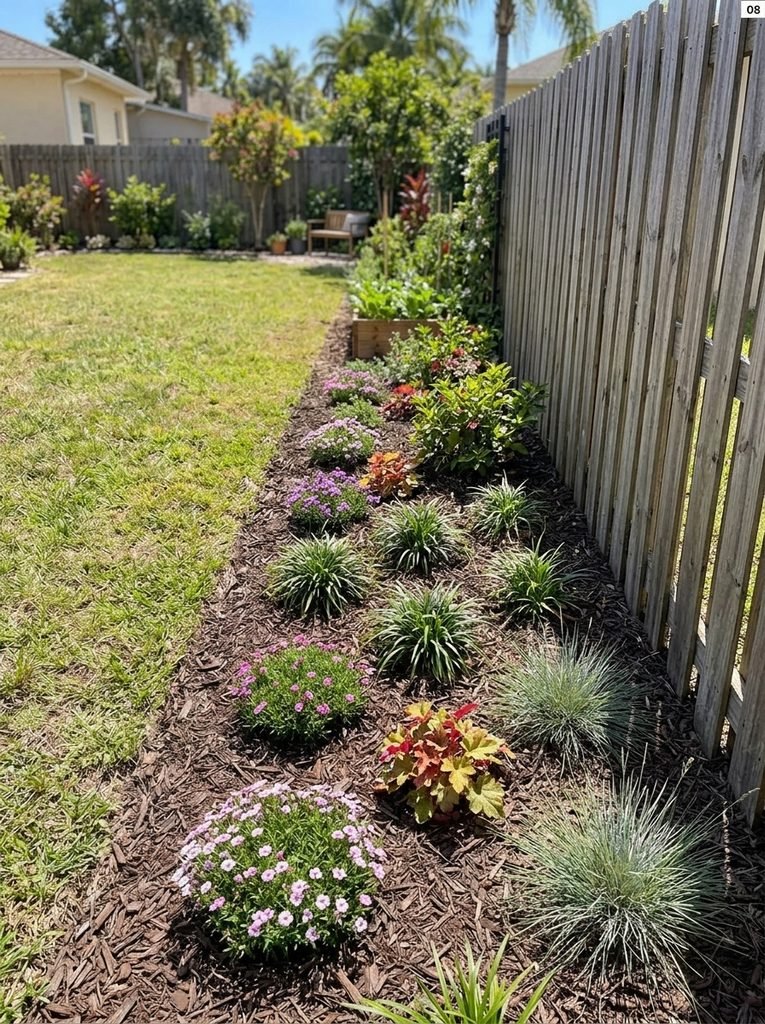
Choose plants that stay reasonably compact.
A mix of low shrubs, small flowering plants, and modest ornamental grasses can create interest without forming a heavy wall of foliage.
Leave visible gaps between plants when they are young.
Those gaps will become smaller as the plants mature.
Use Containers for Flexible Planting
Containers are useful in small gardens because they can be moved.
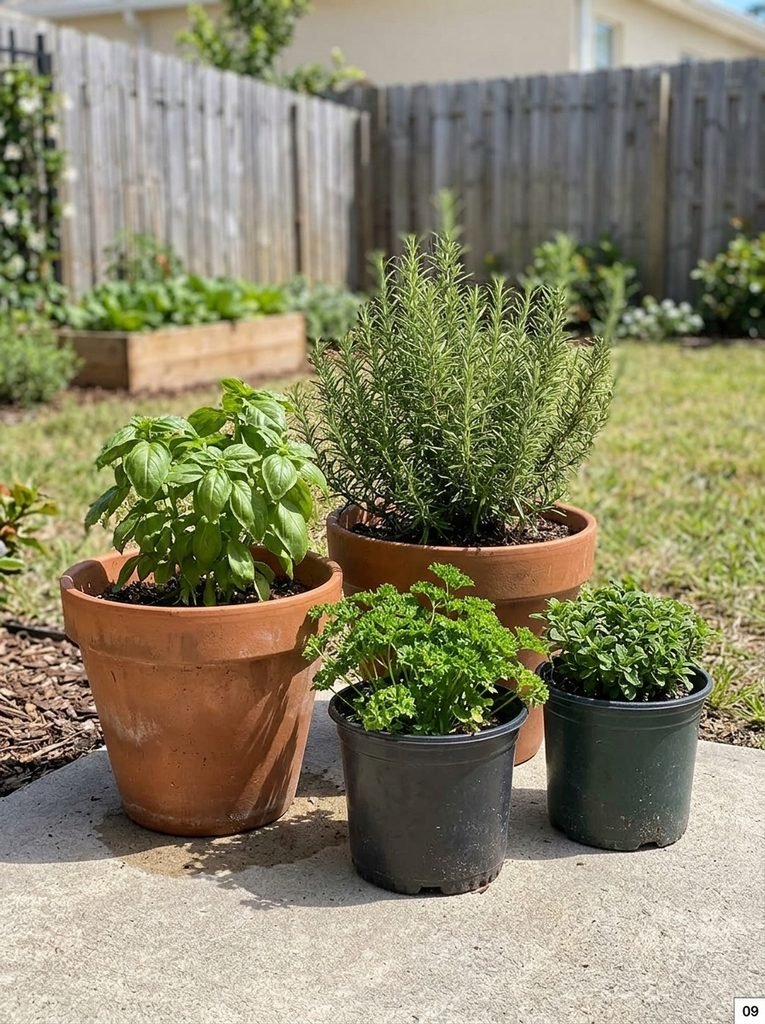
Instead of placing pots everywhere, group a few together near the patio or fence.
This keeps the garden visually organized and makes watering easier.
A small container group can include:
- basil
- rosemary
- parsley
- compact flowers
- small ornamental plants
Mixing a few container heights looks natural without creating clutter.
Add One Small Edible Garden Zone
You do not need a large vegetable garden to grow useful food.
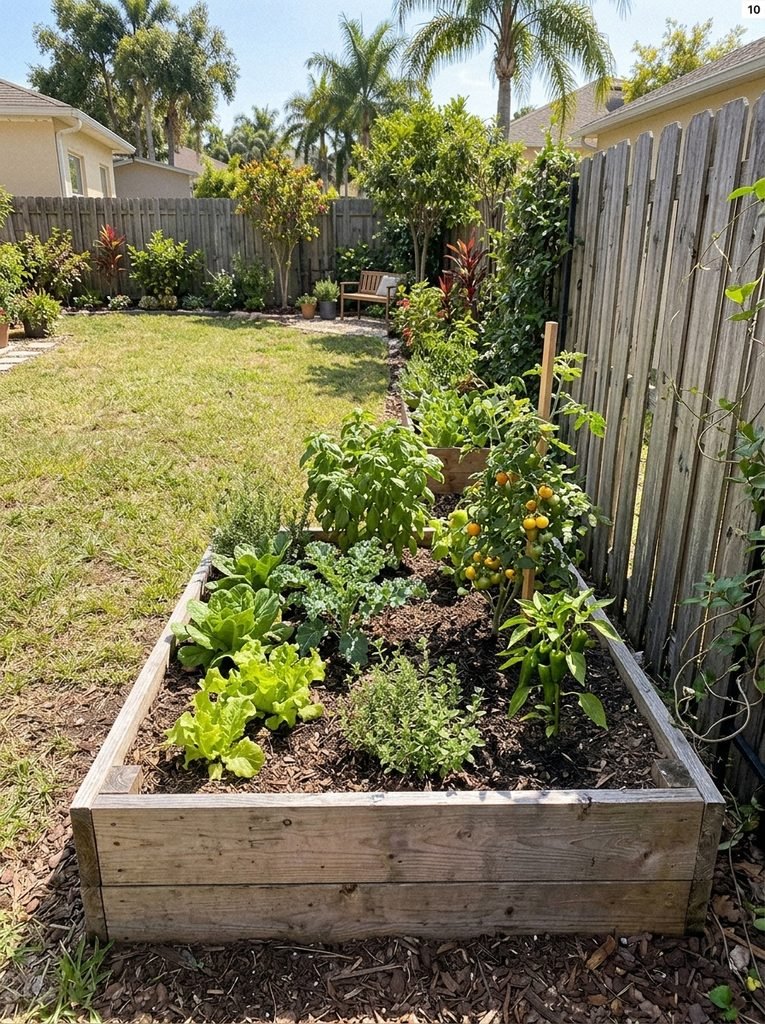
One compact raised bed or narrow edible planting area can provide room for:
- leafy greens
- herbs
- peppers
- compact tomatoes
- seasonal vegetables
Position it along an edge rather than in the center of the yard.
This keeps the garden productive without dominating the backyard.
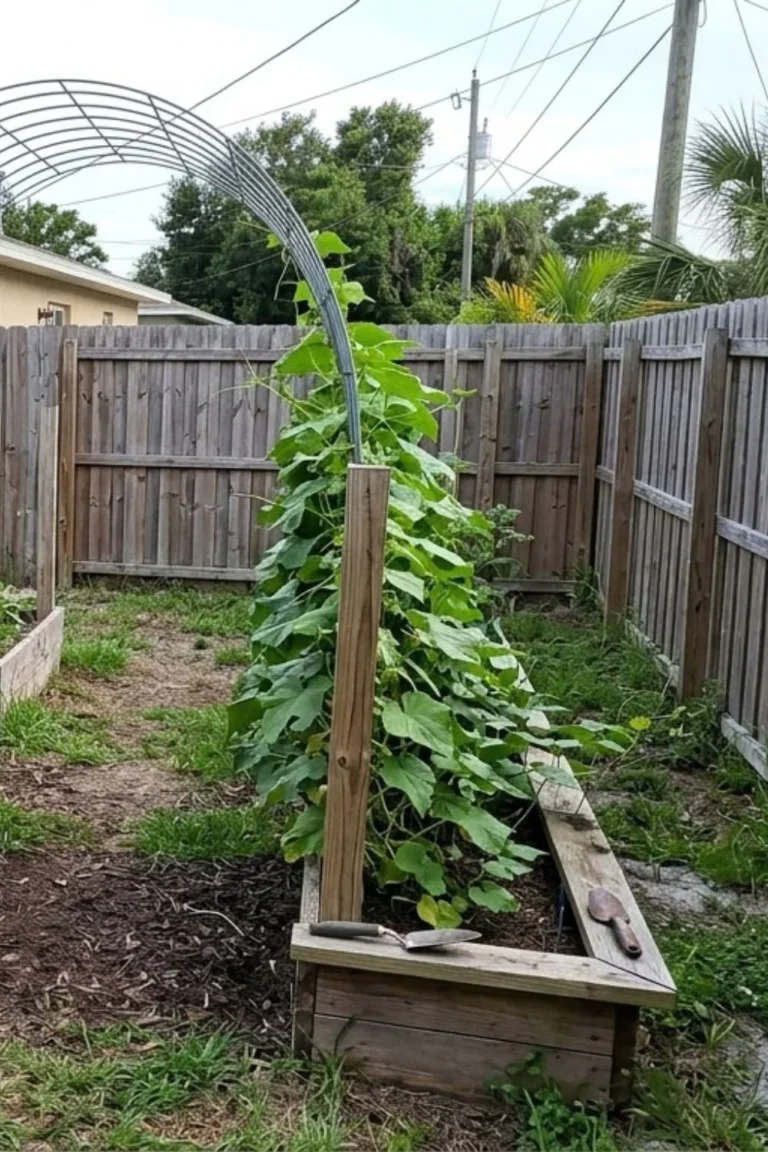
Grow Up With a Simple Trellis
Vertical growing can help when ground space is limited.
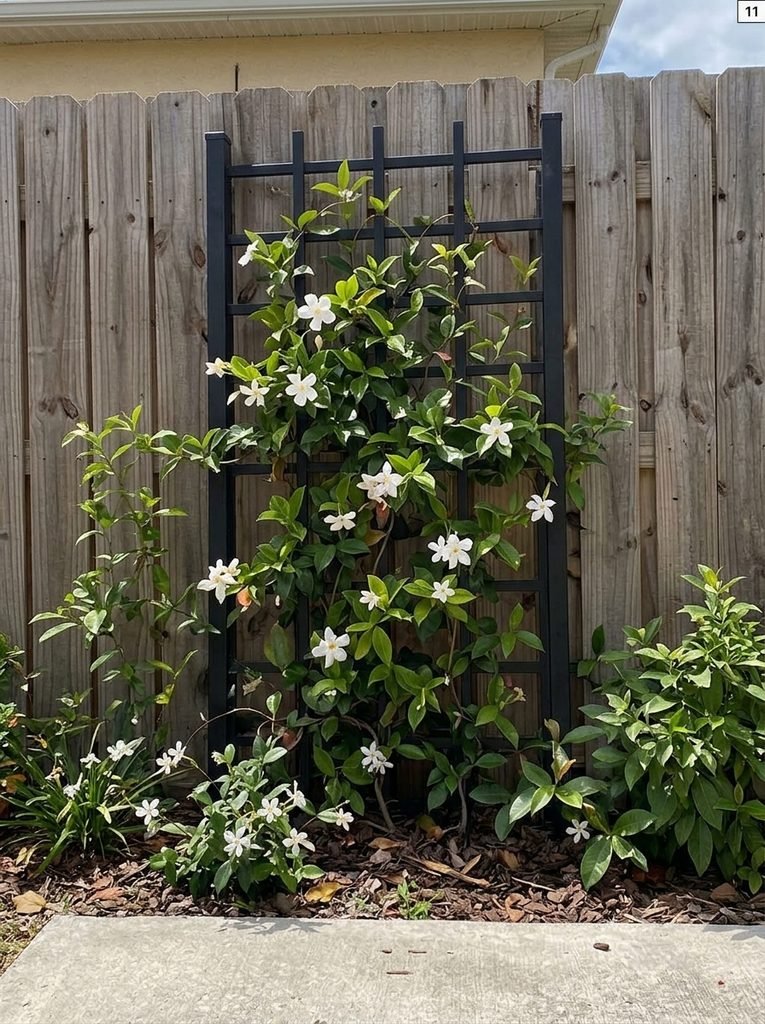
A small trellis against a fence can support:
- climbing beans
- cucumbers
- flowering vines
- compact climbing ornamentals
Keep the growth controlled.
A trellis should add useful vertical interest, not cover the entire fence and make the yard feel enclosed.
Make a Compact Herb Corner
Frequently used herbs can stay close to the patio or kitchen entrance.
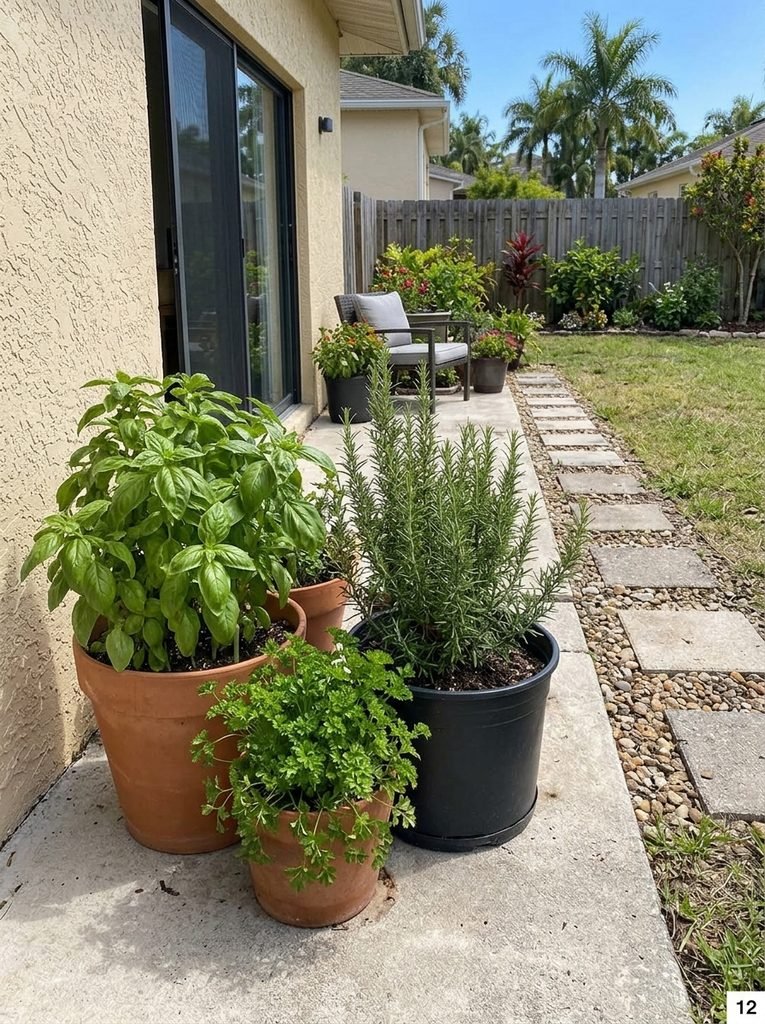
Basil, rosemary, parsley, thyme, and similar herbs can fit into a small group of containers.
Keep enough floor space around the pots so the area stays easy to use.
A small herb corner is usually more practical than scattering individual herb pots throughout the yard.
Use Low-Growing Plants Along Edges
Low-growing plants can soften borders without visually shrinking the backyard.
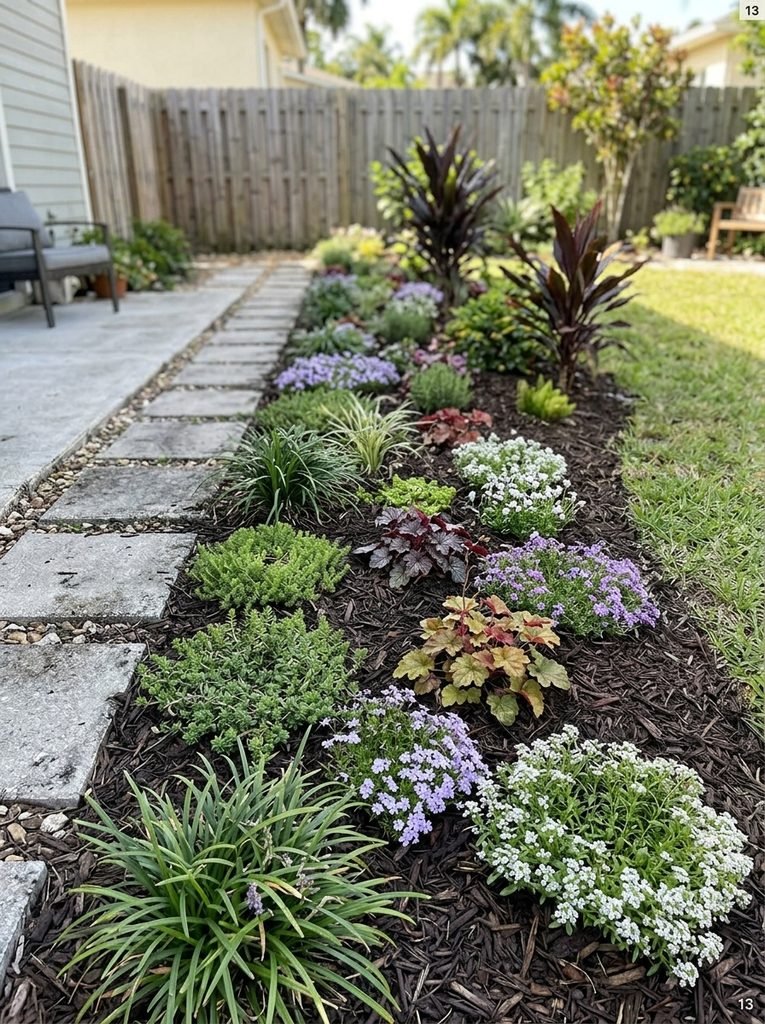
Groundcovers and small flowering plants work especially well near paths and border edges.
Because they stay low, they allow the eye to travel across the yard.
That helps preserve an open feeling.
Avoid planting tall shrubs along every edge.
Add Privacy Without Closing In the Yard
Privacy is useful, but a completely solid wall of plants can make a small space feel smaller.
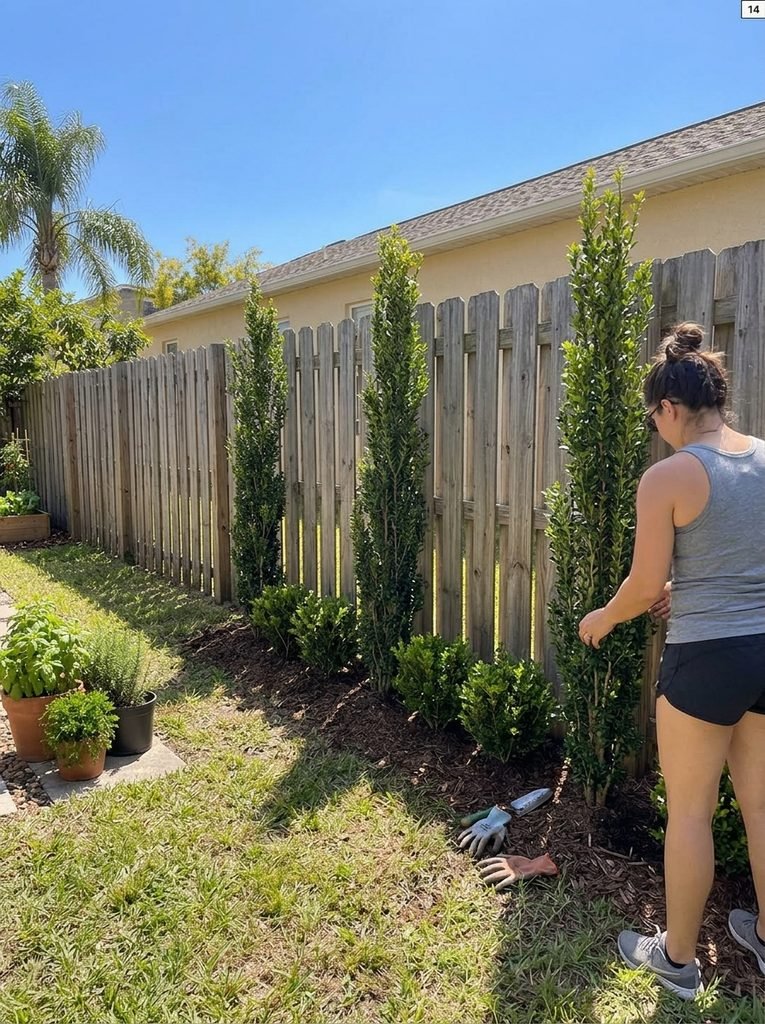
Instead, add privacy only where you actually need it.
A few narrow upright plants, a lightly planted trellis, or several slim planters may be enough to screen a particular view.
Leave some fence and sky visible.
Partial screening often feels lighter than a dense hedge.
Keep the Seating Area Small
A backyard does not need a large furniture set to be comfortable.
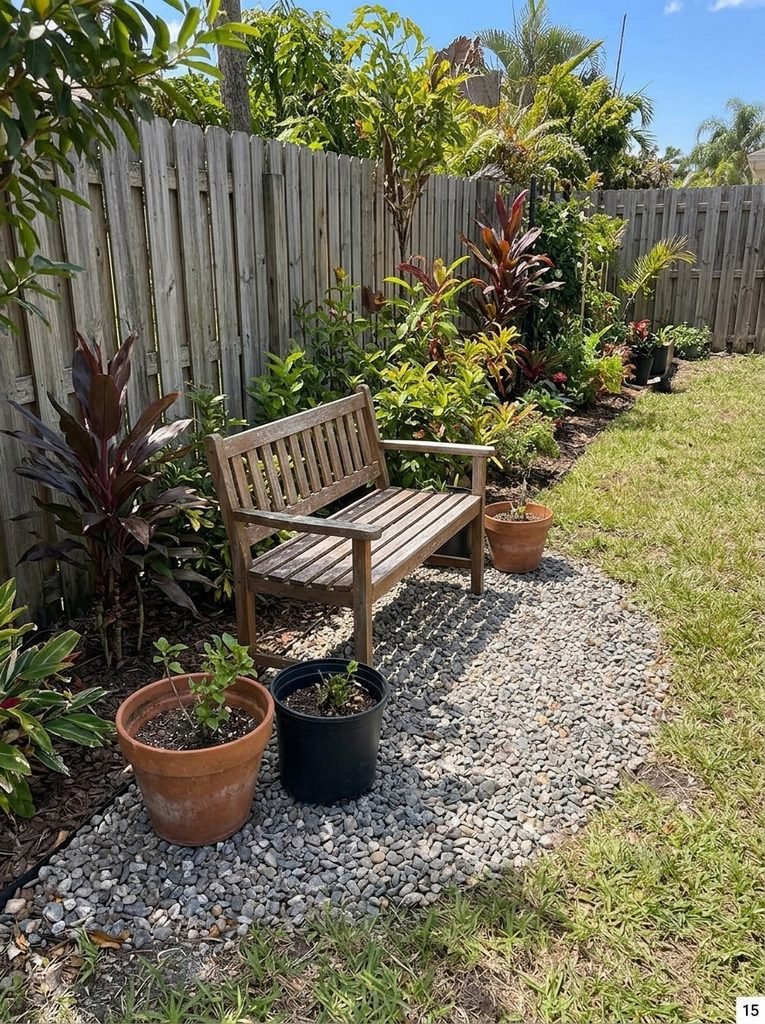
One simple bench or two modest chairs can create a useful place to sit.
Position seating near a patio edge or corner so it does not consume the center lawn.
Avoid oversized furniture that forces people to walk around it.
Check That the Yard Is Still Easy to Walk Through
Once the main garden elements are installed, walk through the yard.
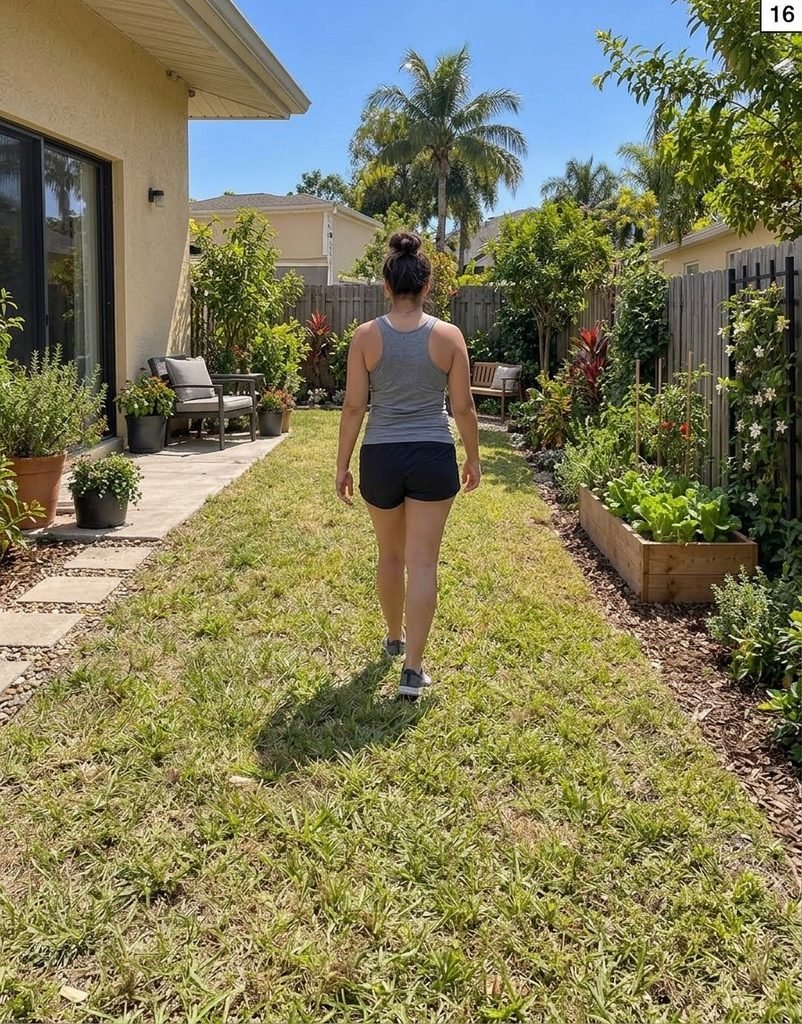
Move from the patio to the garden bed, herb pots, seating area, and path.
Nothing should feel difficult to reach.
If plants or containers block normal movement, adjust them before they become larger.
A small garden should remain easy to use every day.
Make Watering Simple
Compact planting does not mean every plant should be difficult to access.
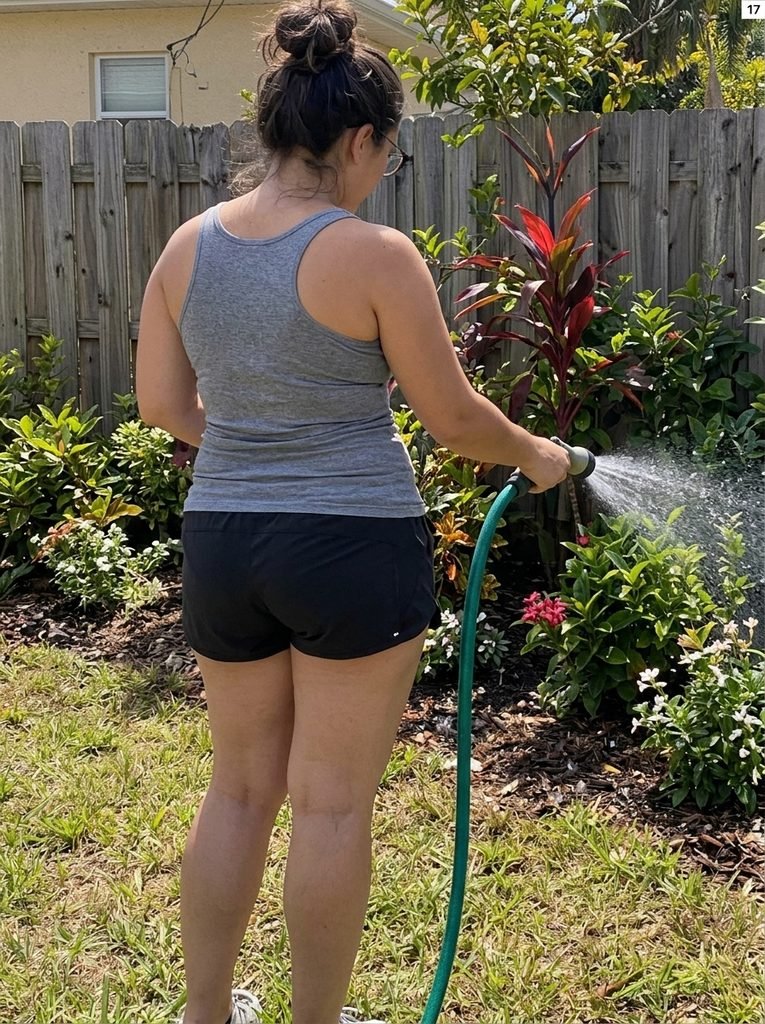
Keep a clear route for a watering can or hose.
Water close to the soil where possible and pay attention to the needs of individual plants.
Containers may dry faster than plants growing in the ground, while mulched border plants may hold moisture longer.
Grouping plants with similar needs can make maintenance easier.
Trim Plants Before They Take Over
Small yards benefit from regular light pruning.
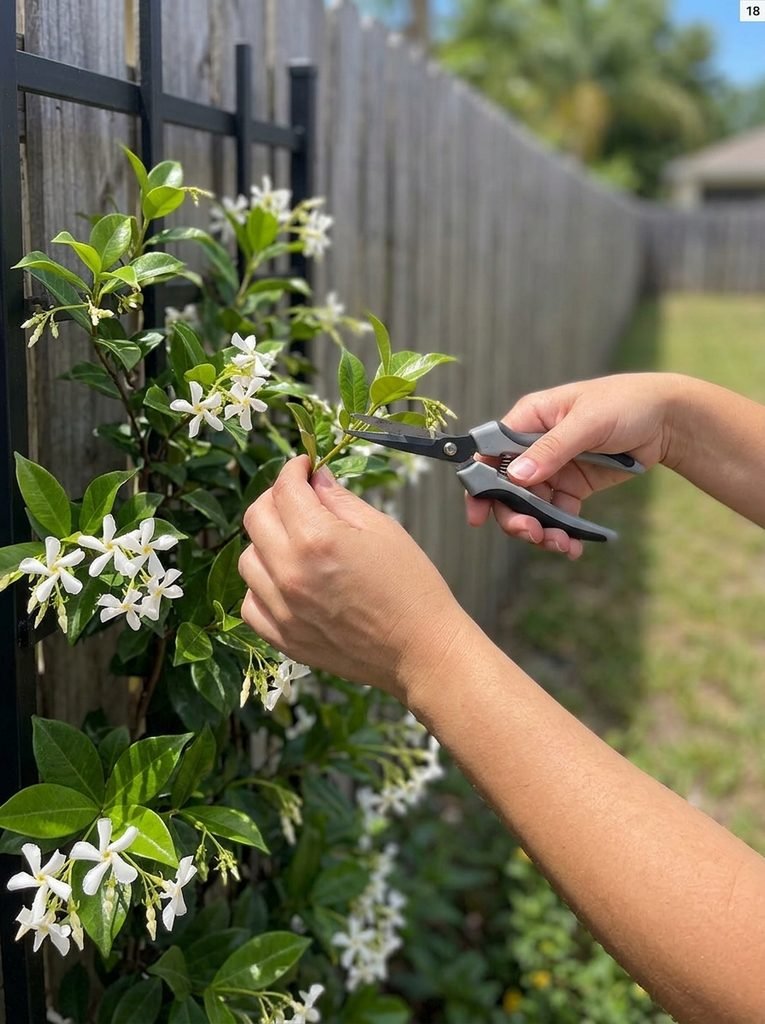
Remove growth that blocks paths, overwhelms neighboring plants, or spreads too far into the open center.
You do not need to keep every plant perfectly shaped.
The goal is simply to maintain a useful scale.
Regular trimming is usually easier than trying to control an overgrown garden later.
Review the Balance of the Garden
After the plants begin to establish, look at the entire backyard rather than individual plants.
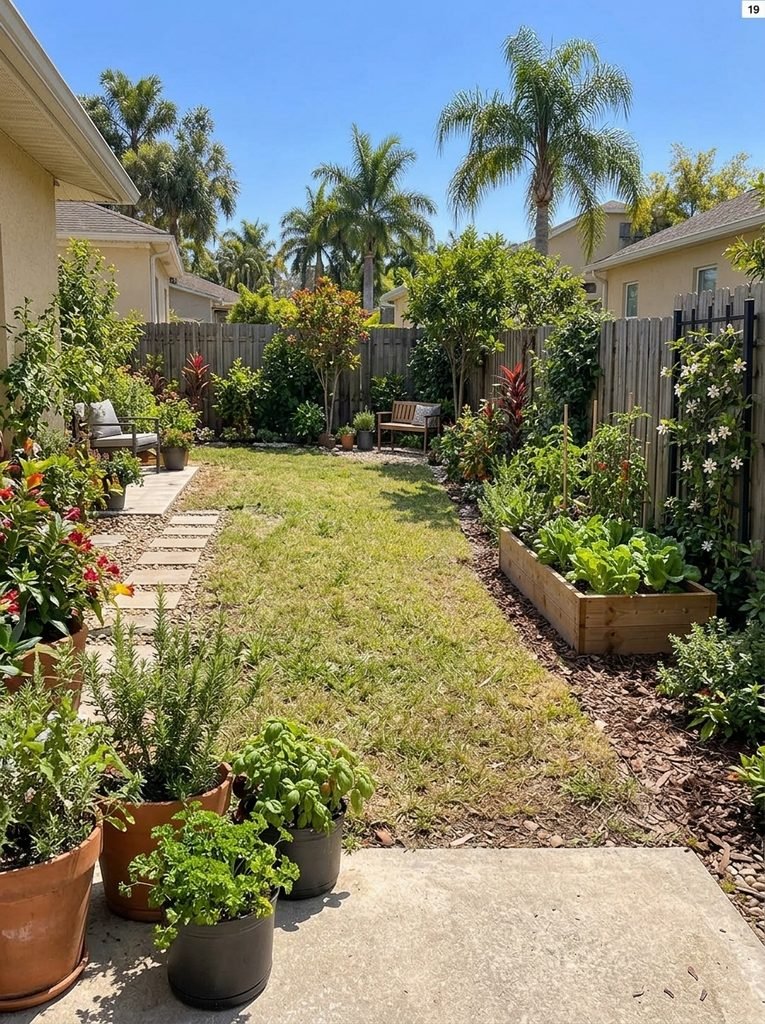
A successful small backyard may include several useful features while still leaving plenty of open space.
Check whether:
- the center is still visible
- paths remain usable
- containers stay grouped
- tall plants stay controlled
- the seating area is accessible
- privacy planting is not becoming too dense
If one section starts to dominate the yard, simplify it.
Make Sure the Space Is Still Usable
A backyard should not become a garden that you are afraid to walk through.
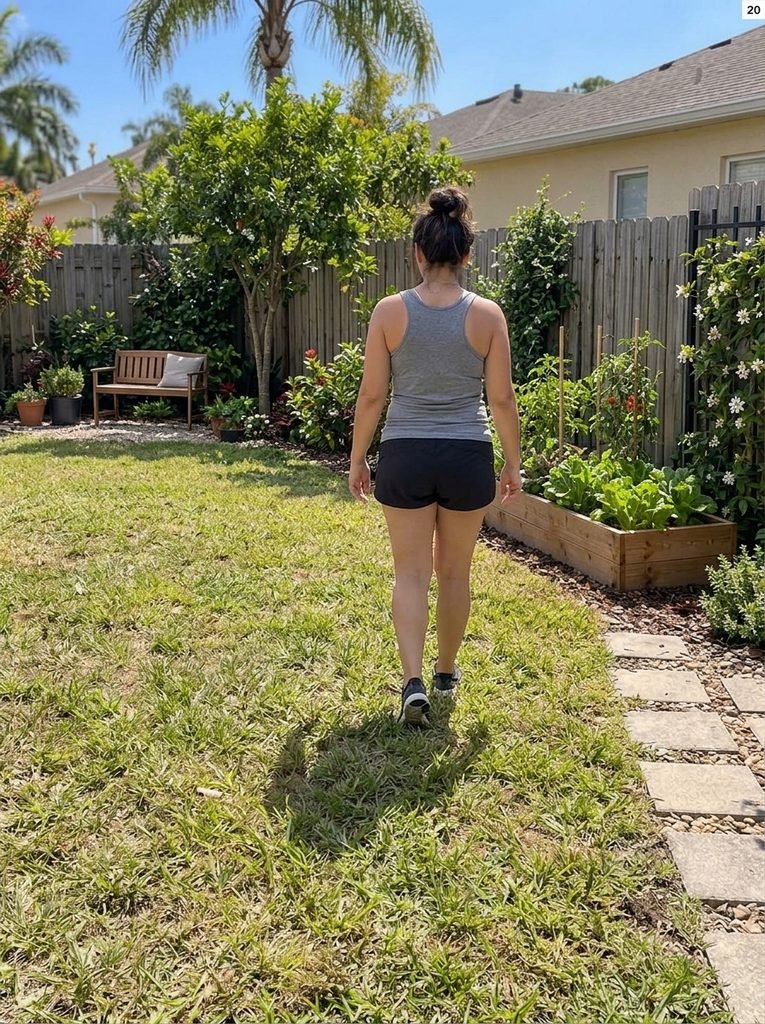
You should still be able to move comfortably, sit outside, carry tools, and enjoy the open area.
Plants are only one part of the space.
Leaving room for normal life can make the garden easier to enjoy and easier to maintain.
A Final Small Backyard That Still Feels Open
As the garden matures, the original layout becomes even more important.
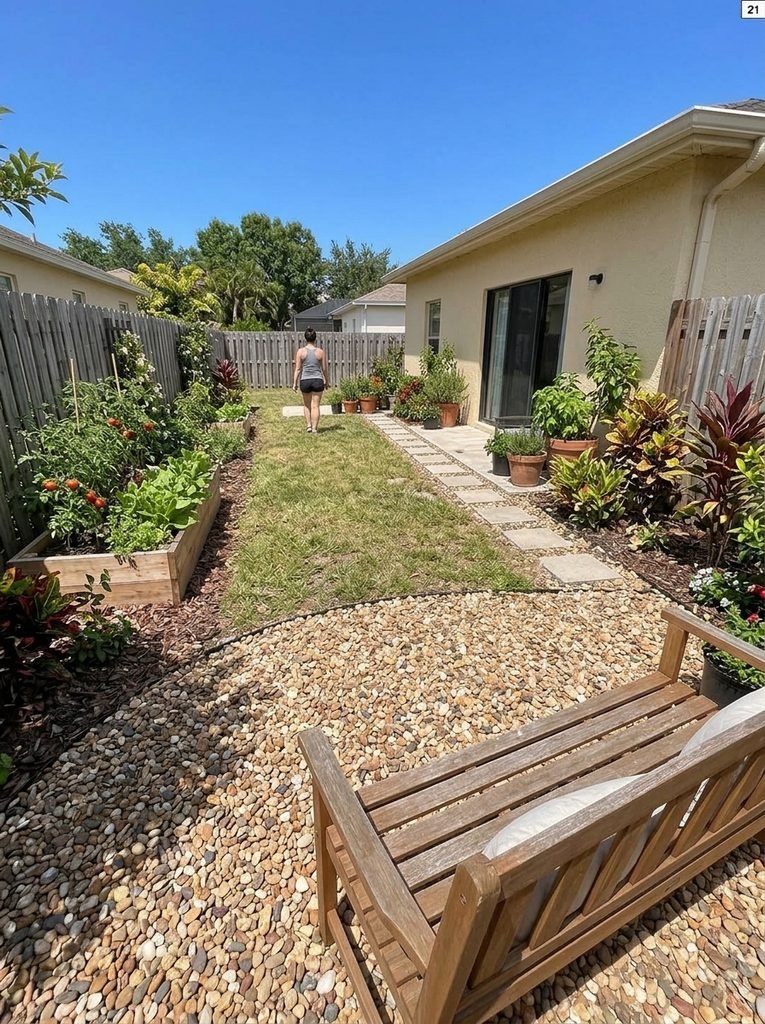
Compact border plants, a few containers, one edible zone, a small trellis, a narrow path, and simple seating can create a complete backyard without filling every inch.
The open center helps connect all of those elements.
That is what keeps the garden from feeling cramped.
Common Small-Yard Mistakes
Filling Every Empty Space
More planting does not always make a better garden.
Leaving some lawn, open patio, or simple ground space can make the planted areas stand out more.
Using Too Many Large Plants
Large shrubs and vigorous vines can quickly overwhelm a small backyard.
Choose plants based on their mature size, not how small they look at the nursery.
Making Paths Too Wide
A path should be comfortable, but it does not need to dominate the landscape.
Use the minimum width that still works naturally for your household.
Scattering Containers Everywhere
Random pots can make the yard look cluttered.
Create one or two intentional container groups instead.
Creating Too Much Privacy
Dense planting on every fence can create a closed-in feeling.
Add screening only where it is useful.
Buying Oversized Furniture
Large sofas, tables, and outdoor dining sets can consume a small yard quickly.
Choose furniture that matches the available space.
Forgetting Mature Plant Size
Plants that look perfectly spaced at planting time may become crowded later.
Allow enough room for natural growth.
Frequently Asked Questions
How do you make a small backyard garden look bigger?
Keep the center relatively open, place most planting around the edges, use low plants near paths, and limit the number of large features.
What plants are good for a small backyard?
Compact shrubs, herbs, low groundcovers, small ornamental grasses, compact vegetables, and controlled climbing plants can work well.
Should I use raised beds in a small yard?
Yes, but keep them modest. One small raised bed along an edge can provide useful growing space without taking over the lawn.
How can I add privacy to a small backyard?
Use targeted privacy planting instead of surrounding the entire yard with dense greenery. Narrow upright plants or a lightly planted trellis can provide partial screening.
Are containers good for small-space gardens?
Yes. Containers are flexible and can be moved as conditions or layouts change. Group them together to avoid visual clutter.
How much open space should I keep?
There is no fixed percentage. Keep enough open area for comfortable movement, normal backyard use, and visual breathing room.
Final Thoughts
The best small space garden ideas are not always the ones that add the most plants.
A small backyard often feels better when the center remains open and the garden grows around the edges.
Use compact plants, simple zones, narrow paths, grouped containers, one small edible area, and targeted privacy planting.
Then keep growth under control as the garden matures.
The result can still provide herbs, vegetables, flowers, seating, and privacy while feeling comfortable instead of crowded.