Vertical gardening is one of the easiest ways to grow more plants when floor space is limited.
Instead of spreading pots across a patio, balcony, or small yard, you use walls, trellises, shelves, towers, hanging containers, and other upright structures to grow plants upward.
A good vertical garden can hold herbs, leafy greens, strawberries, climbing vegetables, and flowers while still leaving enough room to walk, water, harvest, and enjoy the space.
The key is choosing the right structure for the plants you want to grow.
What Is Vertical Gardening?
Vertical gardening means growing plants upward instead of relying only on horizontal ground space.
That can be as simple as training beans up a trellis or as structured as using a pocket planter, tiered shelf, strawberry tower, or wall-mounted growing system.
It is especially useful for:
- patios
- balconies
- narrow side yards
- small backyards
- apartment outdoor areas
- compact home gardens
Vertical growing does not mean every plant needs to be attached to a wall.
Freestanding systems are often easier because they can be moved, adjusted, or removed later.
Choose a Vertical Growing Area First
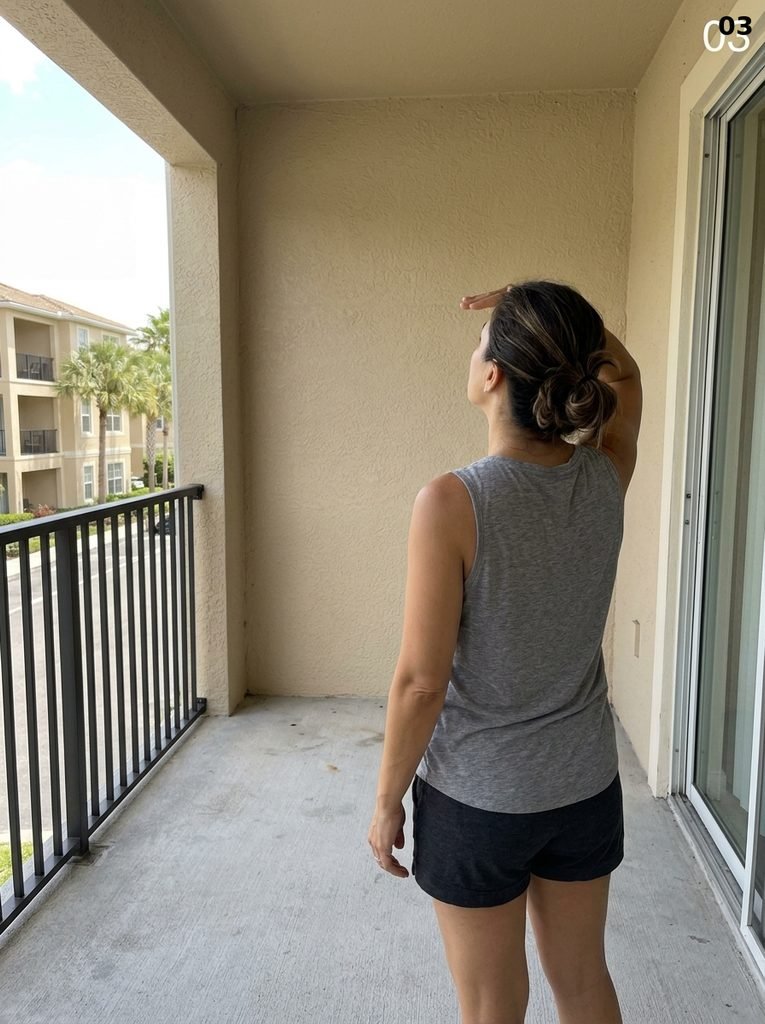
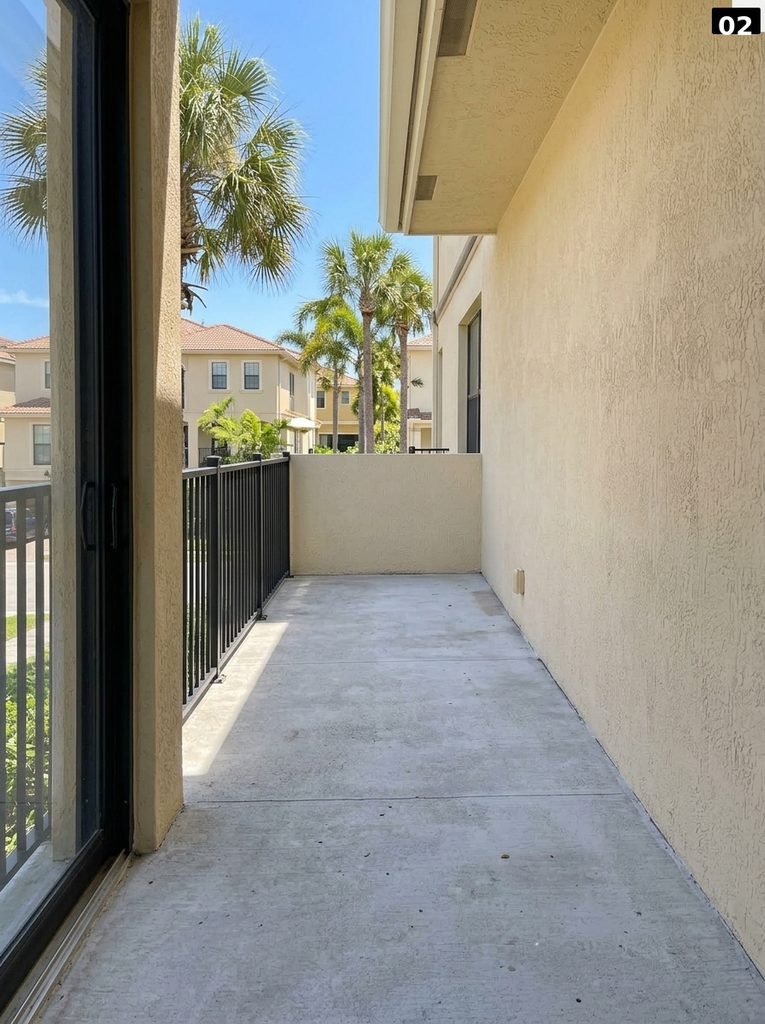
Before adding a trellis or vertical planter, look at the space during different parts of the day.
Check:
- how many hours of direct sunlight the area receives
- whether the wall becomes very hot
- how much room is available at the base
- whether the structure will block a door or walkway
- how easy the plants will be to water
- whether wind is strong in that location
Vegetables such as tomatoes, cucumbers, and beans usually need more sun than many leafy greens and herbs.
Also think about height.
A tall structure may look efficient, but it is not useful if you cannot comfortably water or harvest the top.
Trellis Garden vs Wall Planter
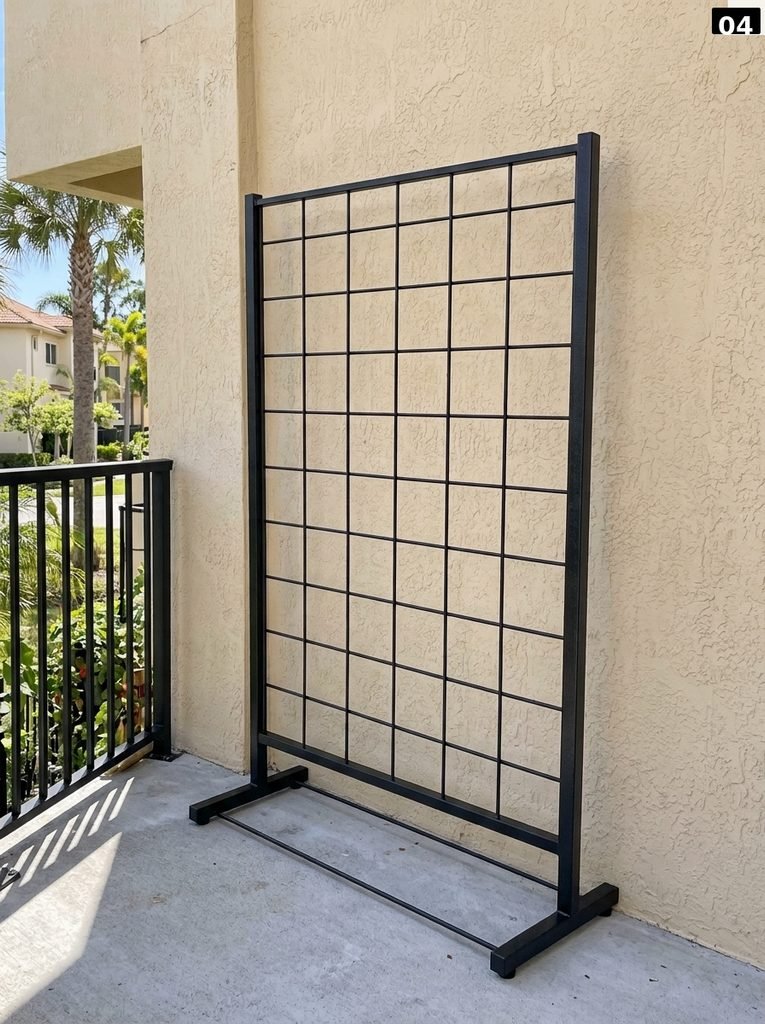
A trellis and a wall planter solve different problems.
A trellis supports plants that naturally climb or can be trained upward.
Good trellis crops include:
- pole beans
- peas
- cucumbers
- some tomatoes
- flowering vines
A freestanding trellis can be especially useful because it does not require you to permanently alter a wall.
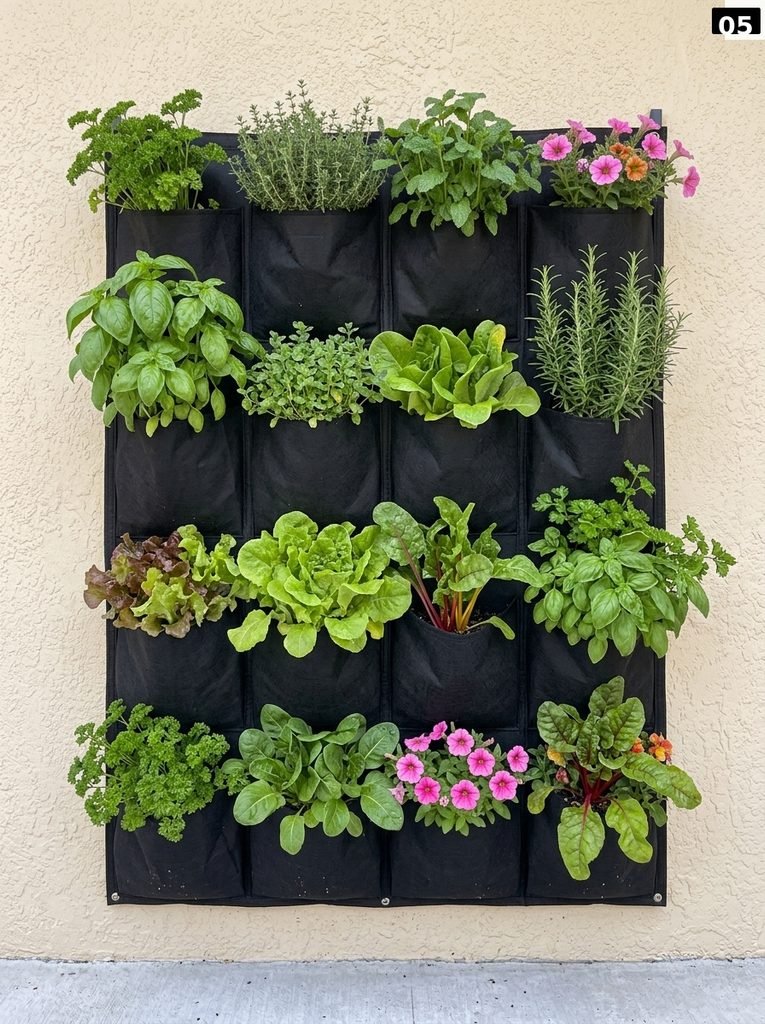
A wall or pocket planter is better for smaller plants with compact root systems.
These can work well for:
- herbs
- lettuce
- small greens
- strawberries
- compact flowers
Do not treat shallow wall pockets like large garden beds.
The amount of soil is limited, so plants may need more frequent watering and careful plant selection.
Try a Pallet Herb Garden
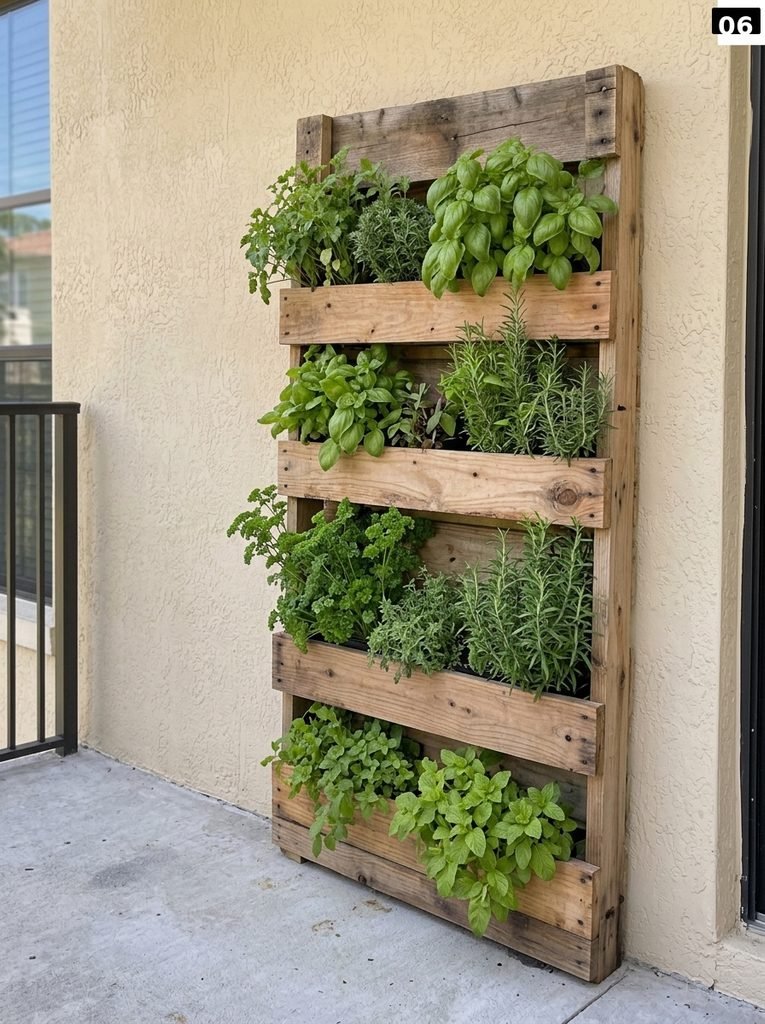
A pallet-style planter is a simple way to create several growing levels in a narrow space.
It can work well for herbs such as basil, parsley, mint, thyme, and rosemary.
Keep the structure stable and make sure each planting section can drain properly.
If you are reusing wood, make sure it is suitable for gardening before planting edible crops in it.
For herbs you use often, keep the most frequently harvested plants at an easy-to-reach height.
Use Hanging Pots Carefully
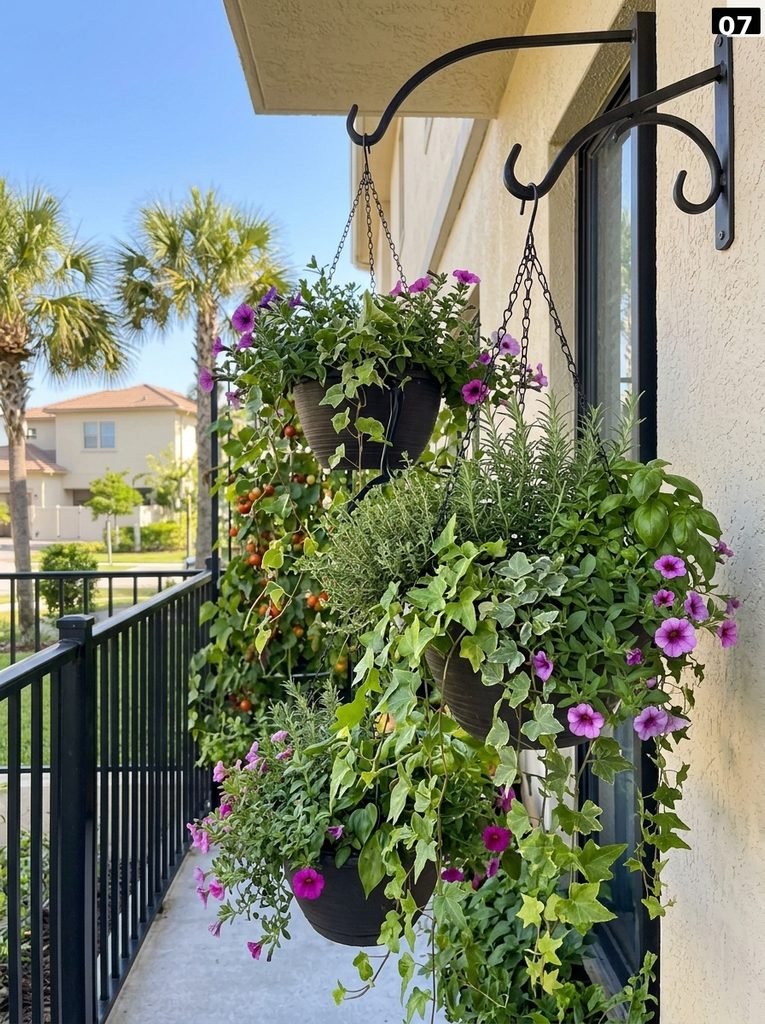
Hanging pots can add another growing level without using much floor space.
They work best for lightweight plants such as:
- trailing herbs
- small flowers
- compact strawberries
- light ornamental plants
Avoid hanging very large, water-heavy containers from weak hooks or supports.
Remember that a hanging basket becomes much heavier after the soil is wet.
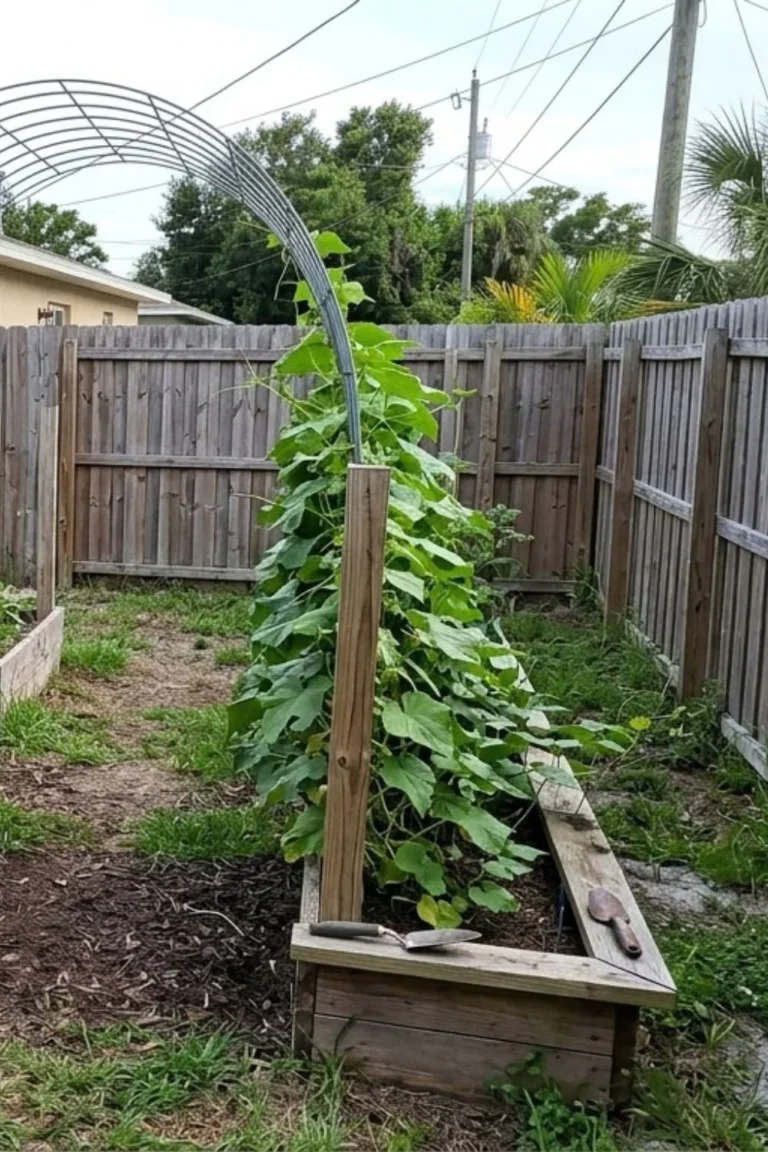
Grow Climbing Vegetables on a Trellis
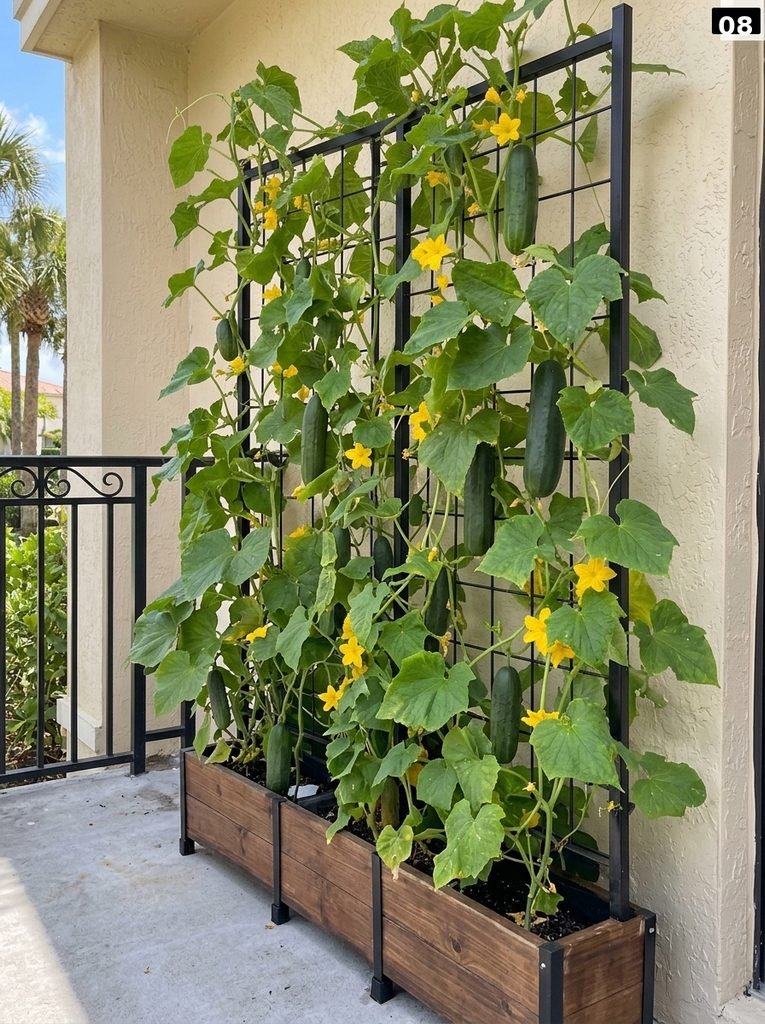
Climbing vegetables are some of the best plants for vertical gardening because the plant naturally wants to grow upward.
Cucumbers, pole beans, and peas can all use vertical support.
Guide young vines toward the trellis as they grow.
Some plants will grab the support themselves, while others may need loose ties or clips.
Keep ties gentle enough that they do not cut into stems as the plant becomes larger.
Use Tiered Planters for Mixed Planting
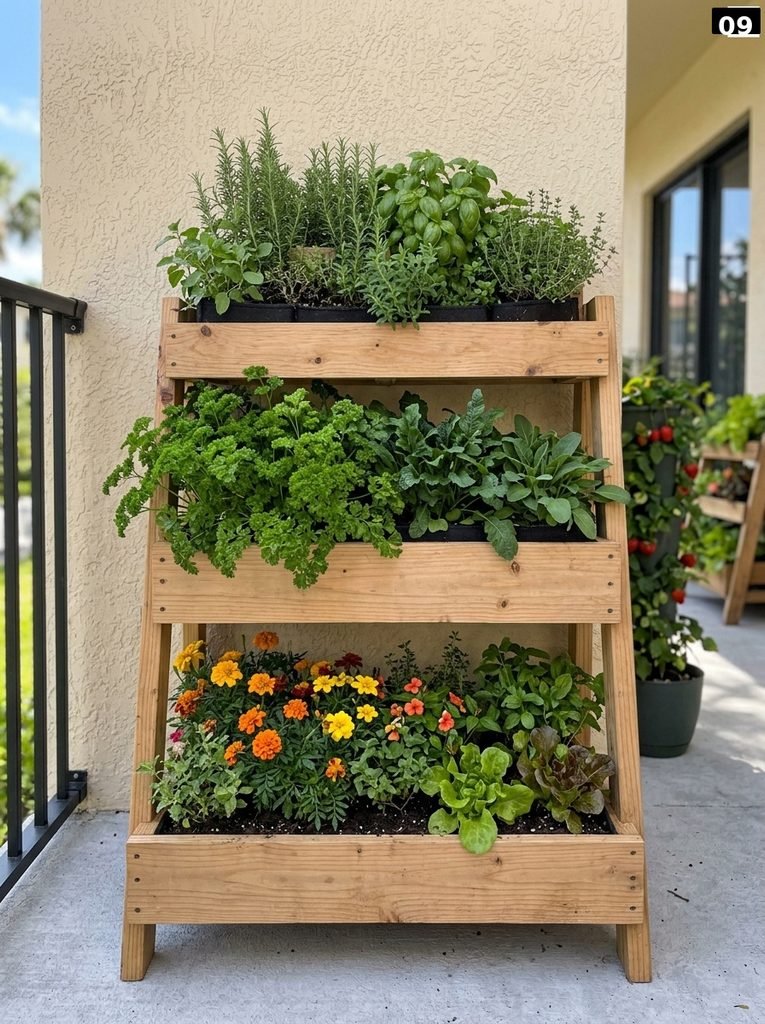
A tiered planter gives you several planting levels without creating a tall flat wall.
It is useful when you want to combine several types of plants.
For example:
Upper levels:
- herbs
- small flowers
Middle levels:
- lettuce
- leafy greens
Lower levels:
- larger herbs
- compact vegetables
Place taller plants where they will not shade smaller sun-loving plants unnecessarily.
A-Frame Vertical Gardens
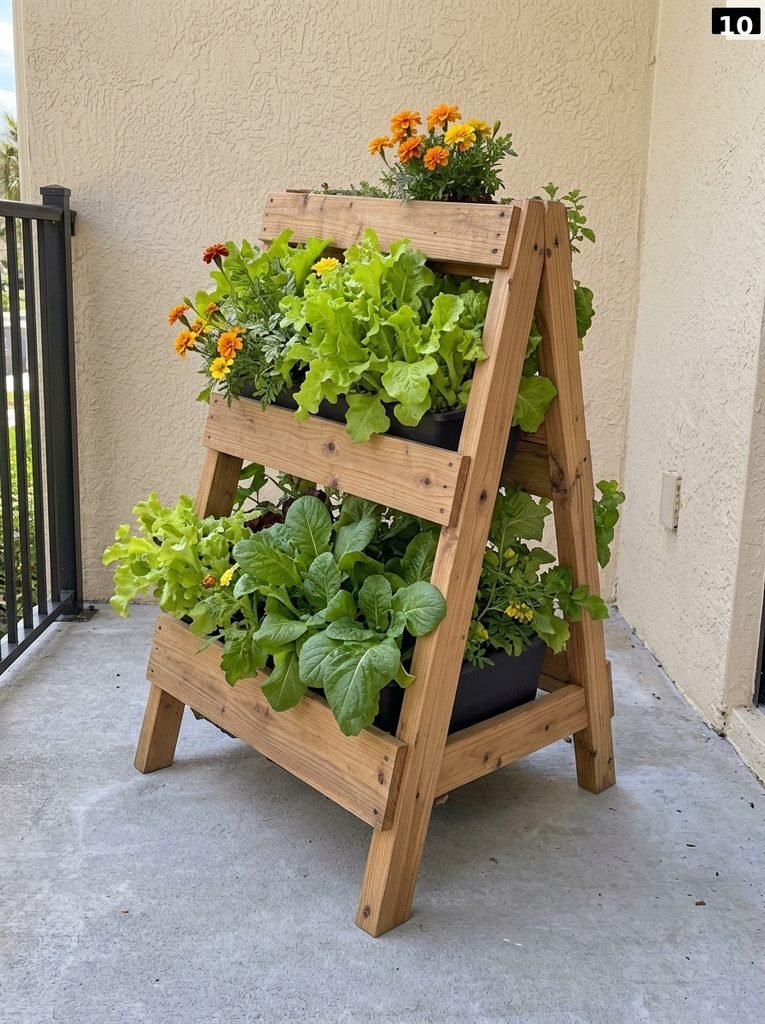
An A-frame planter can provide growing space on both sides.
This makes it useful in a small patio or garden where you want more planting area without attaching anything permanently to a wall.
Before filling one with soil, make sure the frame is stable.
Keep enough space around it so you can reach both sides for watering and maintenance.
Grow Strawberries Vertically
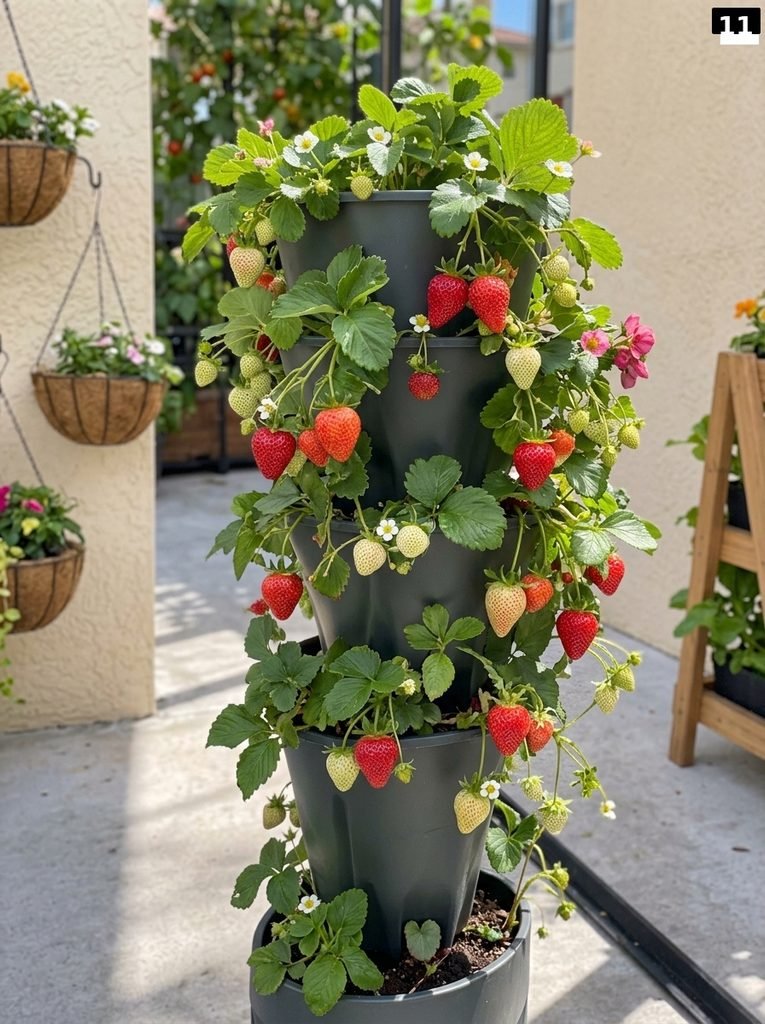
Strawberries can work well in vertical towers because individual plants can grow from separate openings.
A tower also keeps many berries elevated instead of spreading across the ground.
However, water distribution matters.
The top of a tower may dry faster than the lower sections, so check moisture at different levels instead of assuming the whole planter is equally wet.
Rotate the planter occasionally if one side receives much more light.
Gutter-Style Vertical Planters
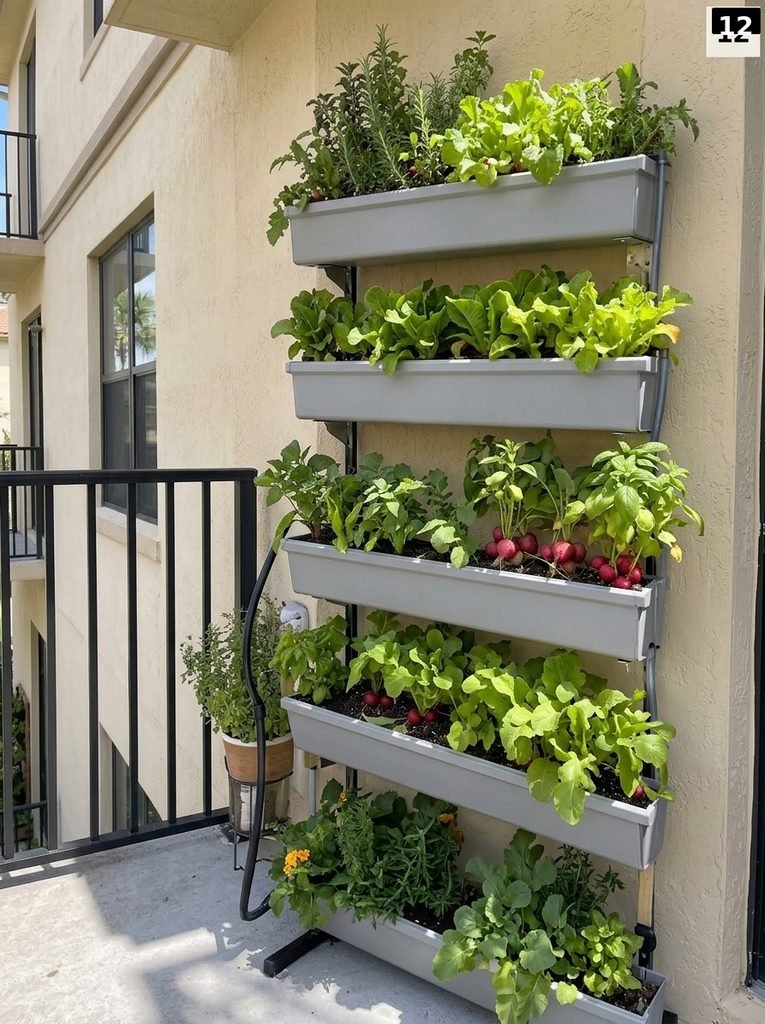
Shallow horizontal planters arranged vertically can work well for smaller crops.
Good options include:
- lettuce
- spinach
- herbs
- small radishes
- compact flowers
These systems are better for shallow-rooted plants than large vegetables.
Make sure water can drain freely and does not simply run from the top container into every planter below.
Fabric Grow Bags on a Wall System
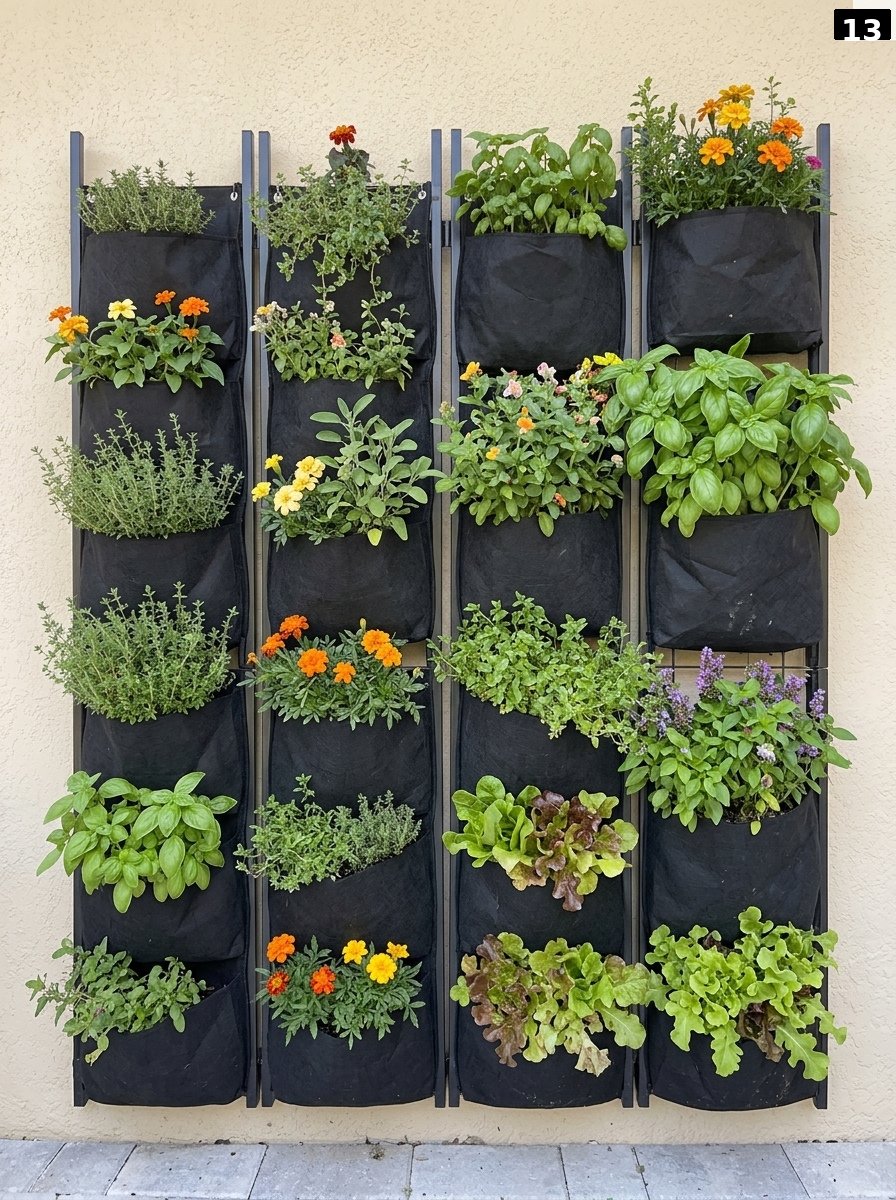
Fabric grow bags can provide better airflow around the root zone than some solid containers.
Smaller bags can be arranged vertically for herbs, flowers, and compact vegetables.
They are also relatively lightweight before watering.
But fabric dries quickly in warm weather, so check the soil regularly.
Do not pack too many bags into one support structure.
Best Herbs for Vertical Gardening
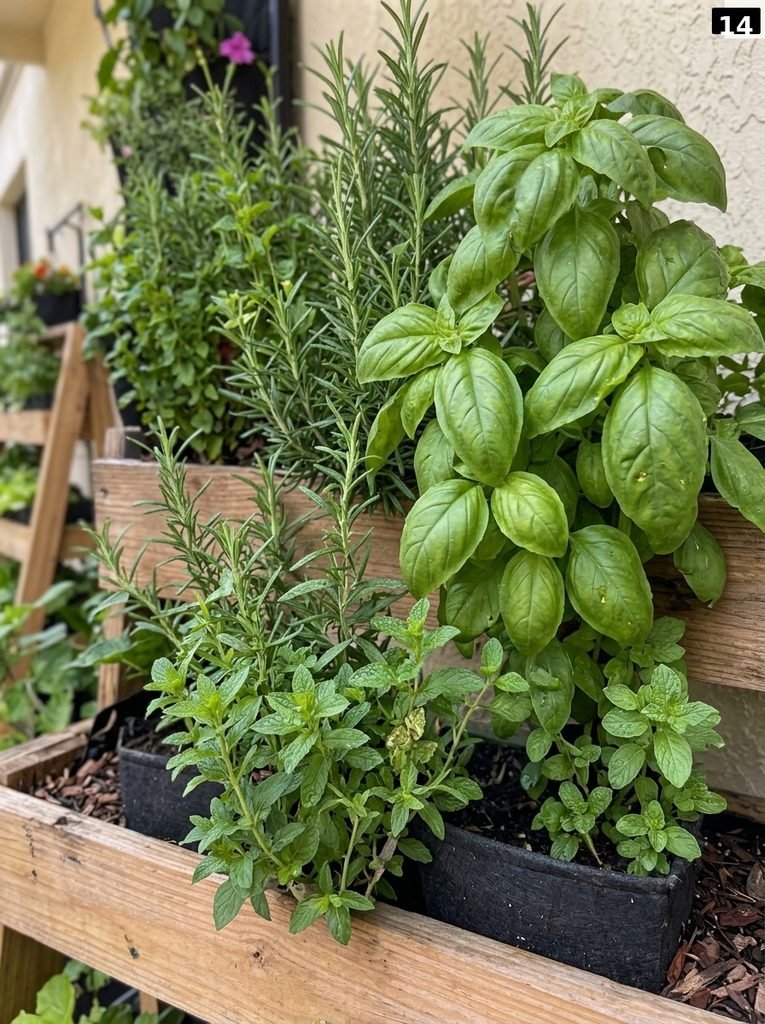
Herbs are among the easiest plants to include in a small-space vertical garden.
Useful choices include:
- basil
- parsley
- thyme
- rosemary
- mint
- oregano
Group herbs with similar light and watering needs when possible.
Mint grows aggressively, so giving it its own container can help prevent it from taking over nearby plants.
Place frequently used herbs where they are easy to harvest.
Grow Leafy Greens Vertically
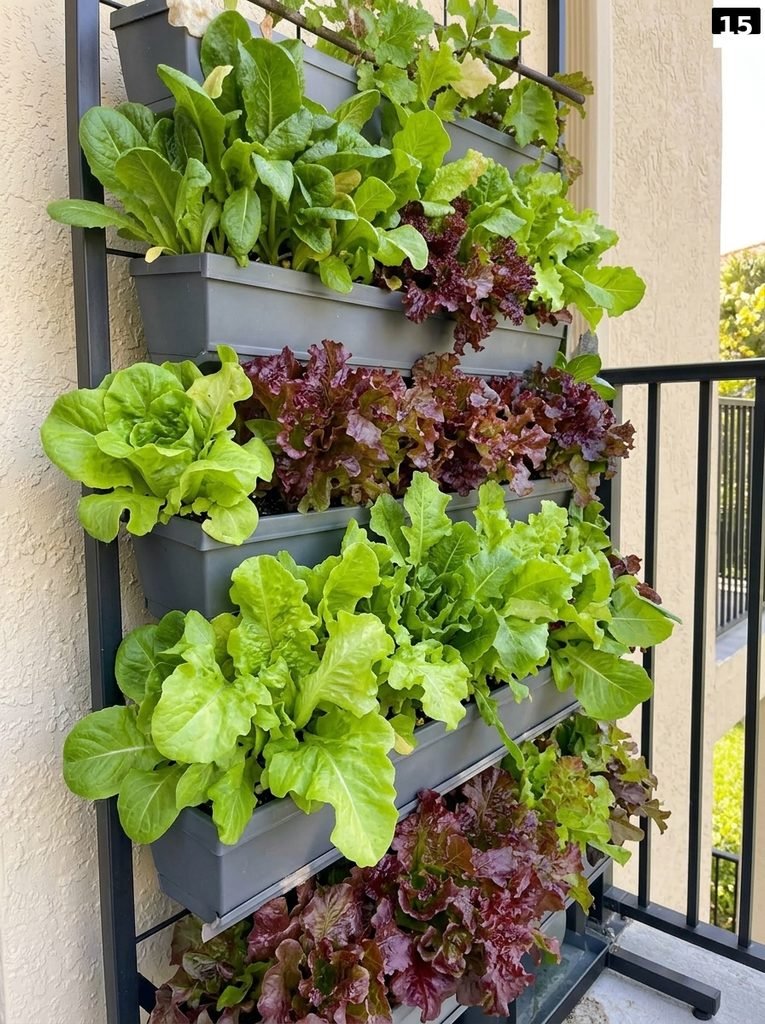
Leafy greens are practical for vertical planters because many varieties stay relatively compact.
Lettuce and similar greens can be planted in stacked containers or shallow vertical systems.
Avoid overcrowding.
Dense planting may look productive at first, but crowded leaves reduce airflow and make it harder to check for pests or disease.
Harvest outer leaves regularly when the crop allows it.
Tomatoes in a Vertical Garden
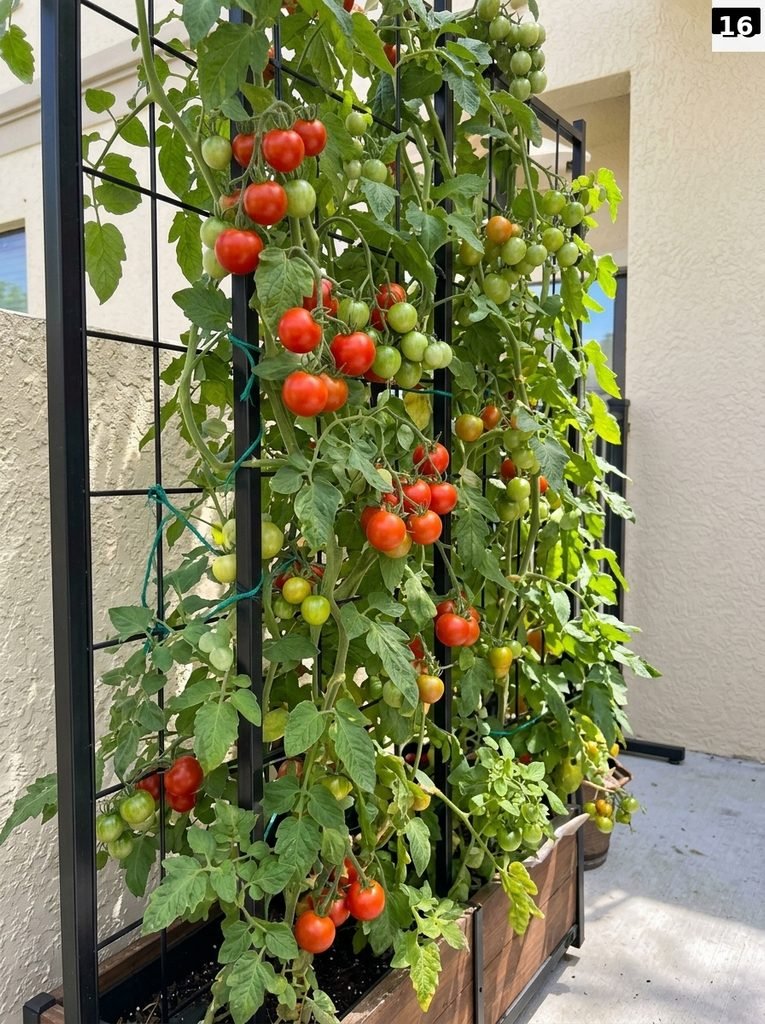
Tomatoes are not climbing vines in the same way as pole beans, but many varieties benefit from strong vertical support.
Use a cage, trellis, stake, or similar structure that can handle the mature plant.
As the tomato grows, secure stems loosely.
Do not rely on a lightweight decorative trellis for a large fruiting tomato plant.
For a compact patio, smaller tomato varieties may be easier to manage than very vigorous indeterminate plants.
Add Flowers to a Vertical Garden
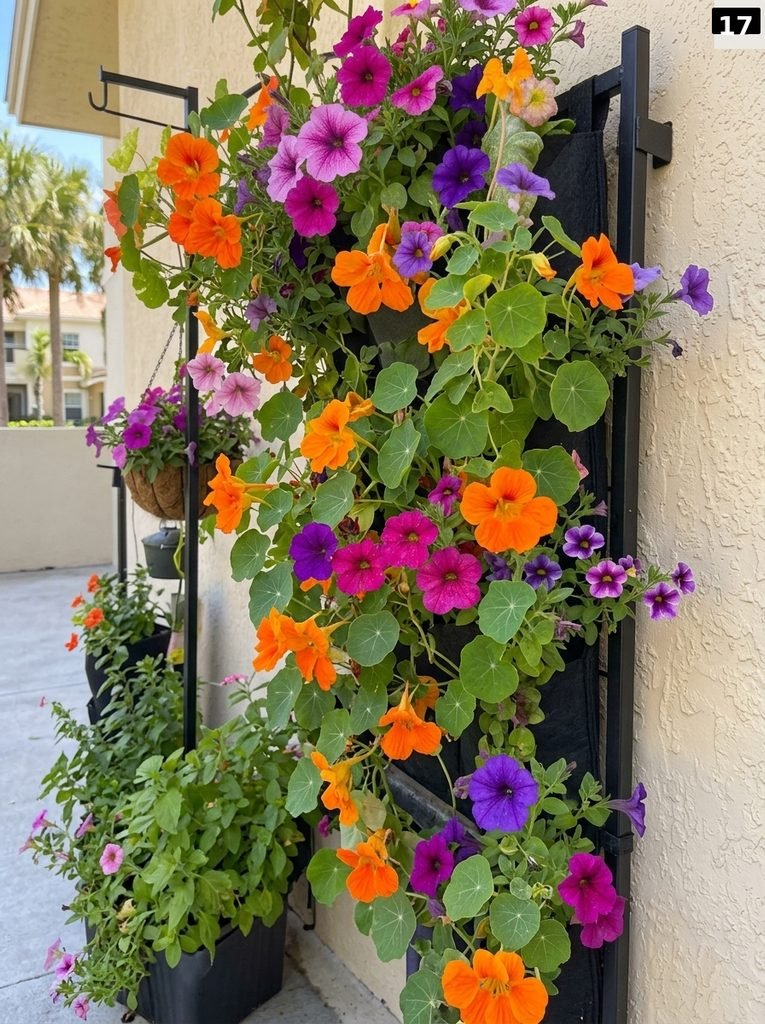
A vertical garden does not have to be completely edible.
Flowers can add color and help make the growing area feel more balanced.
You can mix flowers among herbs and vegetables or give them a separate vertical section.
Nasturtiums and other compact flowering plants can work well in containers when their growing conditions match the location.
Avoid adding so many flowers that they crowd out the plants you actually want to harvest.
How to Water a Vertical Garden
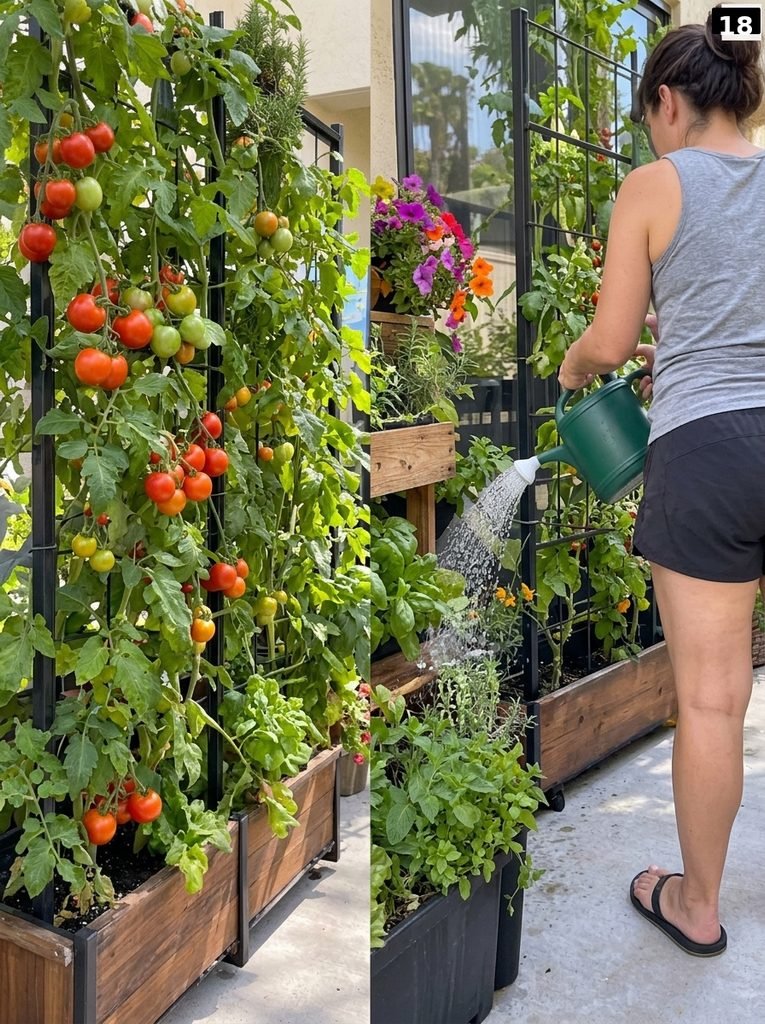
Watering is one of the biggest differences between vertical gardening and ordinary in-ground gardening.
Vertical containers often hold less soil, which means they can dry out faster.
Check the soil with your finger before watering.
Pay special attention to:
- top containers
- hanging baskets
- fabric planters
- shallow pockets
- sunny sections
- areas exposed to wind
Water slowly enough for the soil to absorb moisture.
Make sure excess water has somewhere safe to drain.
A vertical system with poor drainage can create root problems and unnecessary mess.
Check Weight and Support
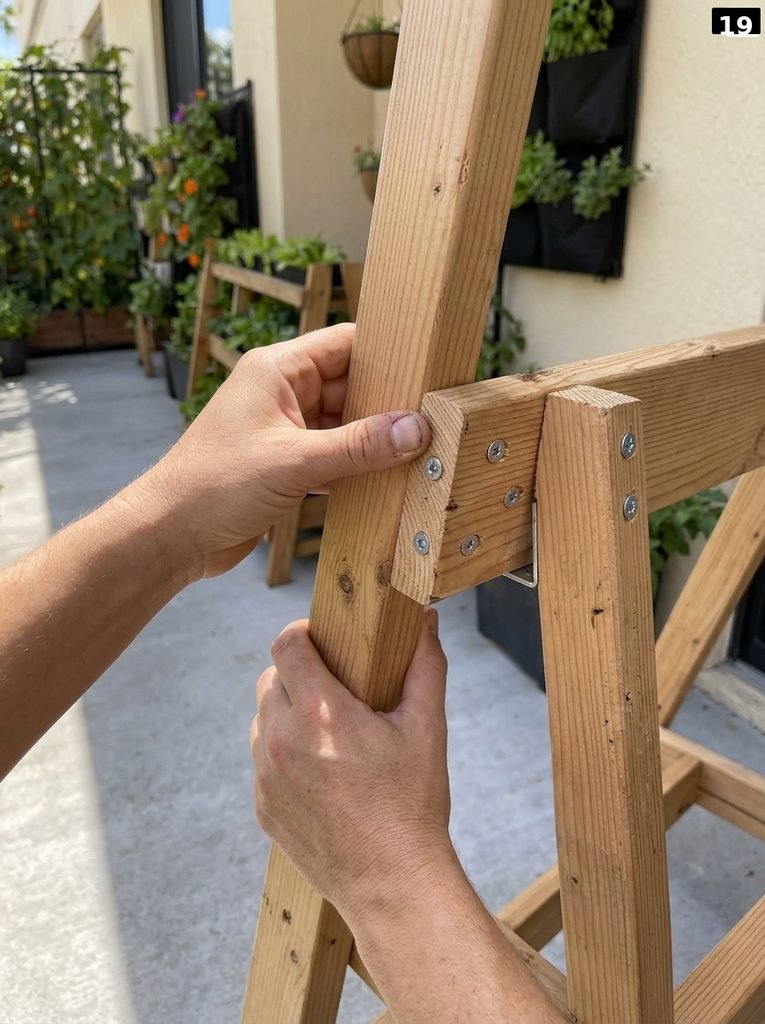
Soil, plants, containers, and water can become surprisingly heavy.
A structure that feels light when empty may carry much more weight after everything is planted and watered.
Before using a vertical structure, check:
- the base
- screws and joints
- wall attachments
- hooks
- brackets
- shelves
- trellis stability
Place heavier containers closer to the bottom whenever possible.
Do not overload a railing, fence, or wall simply because there is unused vertical space.
Maintenance and Harvesting
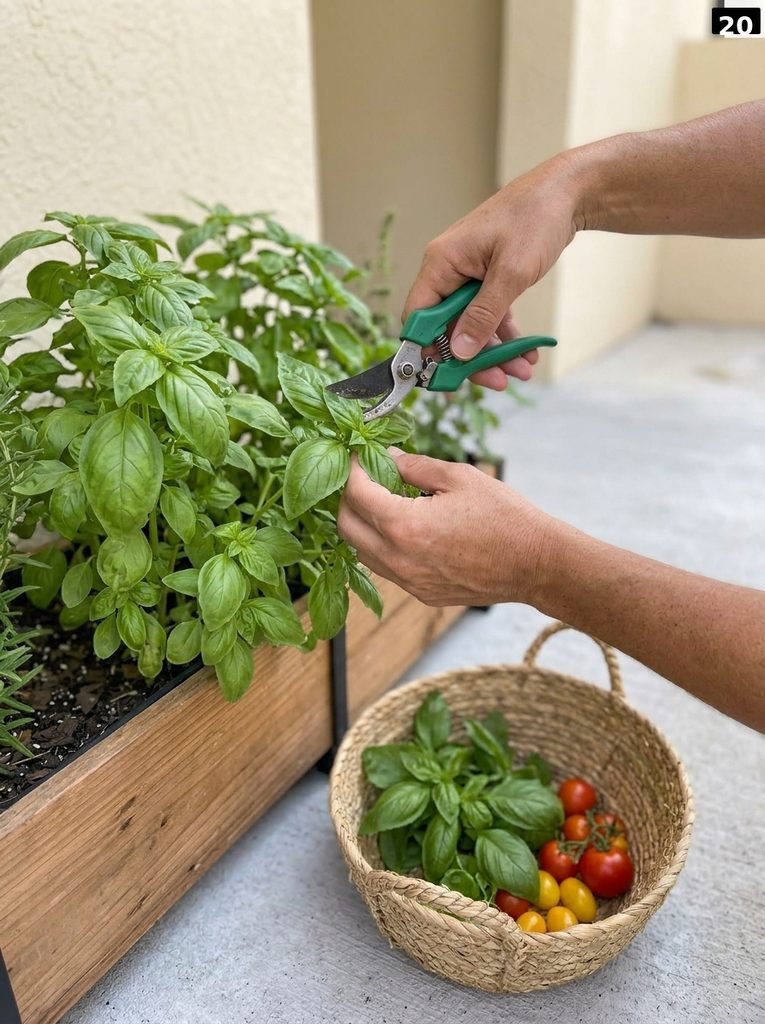
Vertical gardens are easier to manage when you inspect them regularly.
Remove:
- yellow leaves
- dead flowers
- broken stems
- heavily damaged growth
Harvest herbs and vegetables when they are ready instead of allowing mature produce to stay on the plant for too long.
Regular harvesting also makes it easier to see what is happening inside dense foliage.
Keep pruning tools clean and avoid cutting healthy growth unnecessarily.
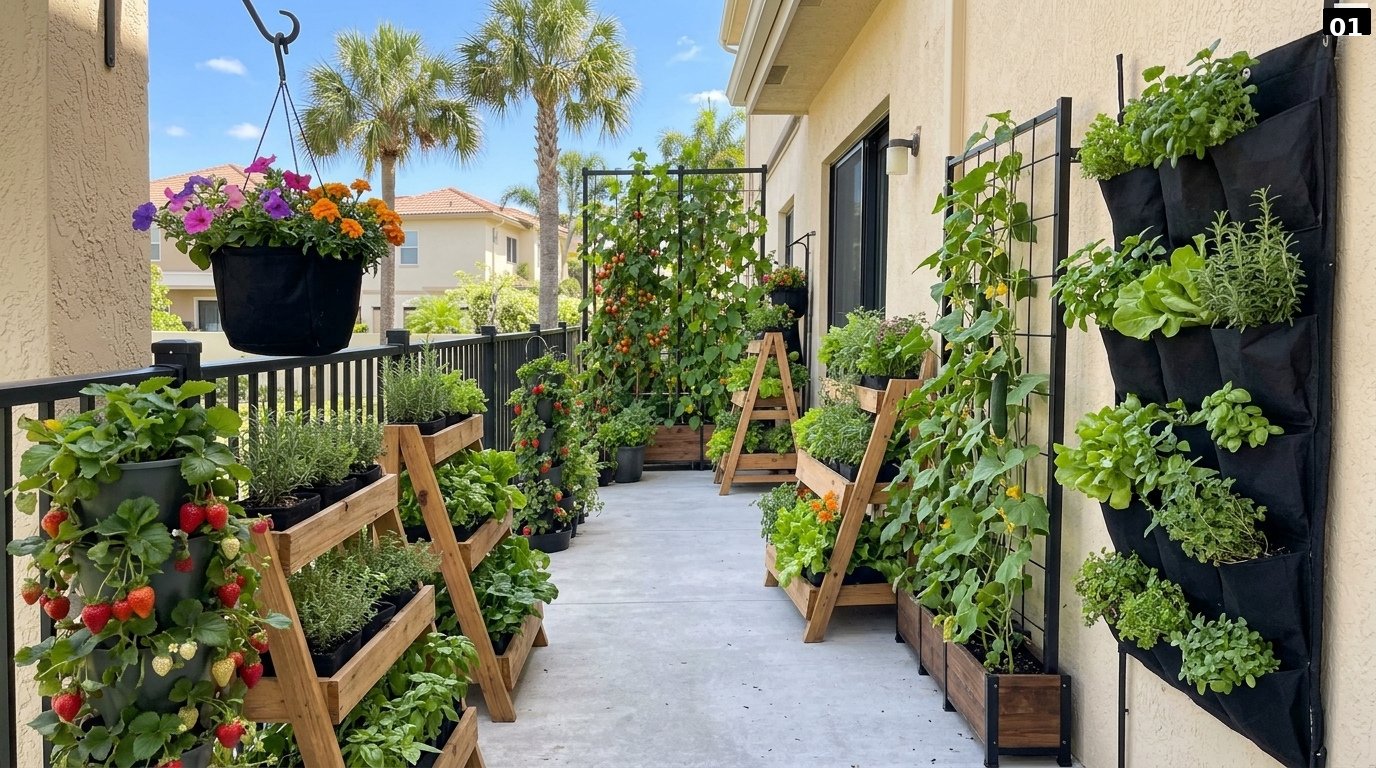
Small-Space Vertical Garden Layout Ideas
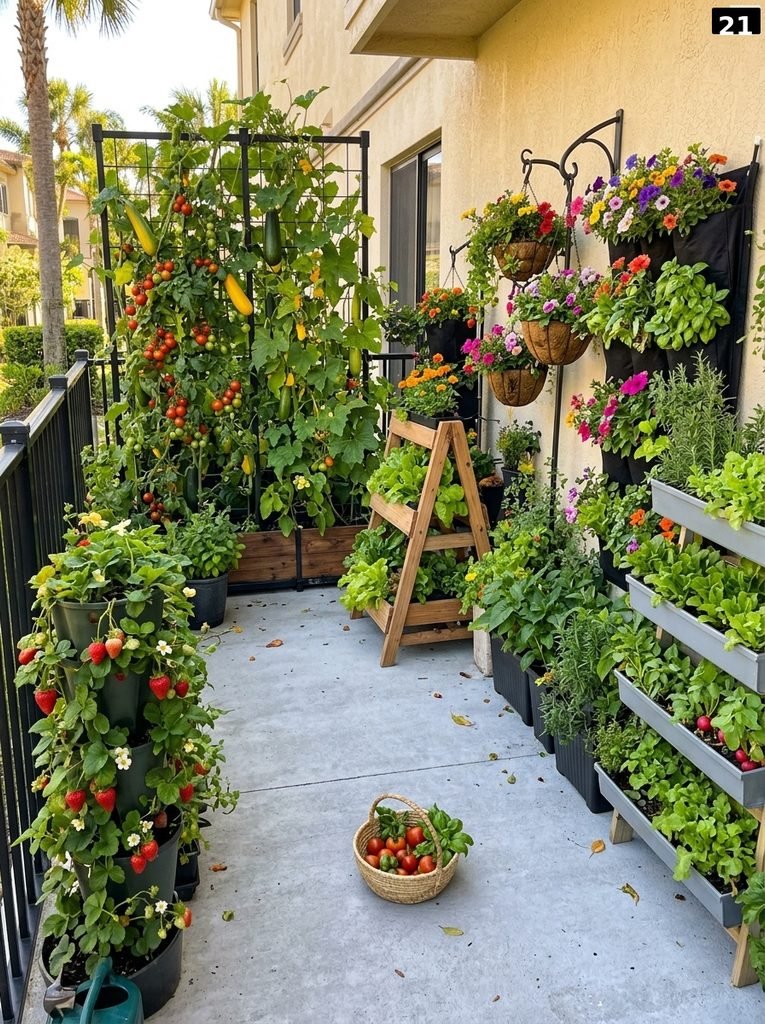
A productive vertical garden usually works best when each type of structure has a clear role.
One practical layout could be:
Trellis:
climbing vegetables
Wall pocket planter:
small herbs and greens
Pallet planter:
culinary herbs
Tower:
strawberries
Tiered planter:
greens and mixed herbs
Hanging baskets:
flowers and trailing plants
The center of the space should remain open enough to walk through.
Do not fill every wall, railing, and corner simply because you can.
Vertical gardening is most useful when it creates more growing space without making the garden harder to use.
Common Vertical Gardening Mistakes
Some of the most common problems come from trying to grow too much in too little space.
Avoid:
- using weak supports
- placing heavy pots too high
- choosing large plants for shallow pockets
- blocking sunlight with oversized structures
- overcrowding containers
- forgetting drainage
- making plants difficult to reach
- using one watering schedule for every container
- ignoring wind exposure
- placing tall plants where they shade everything below
A simple vertical garden that is easy to maintain is usually more productive than an overloaded one.
FAQ
Is vertical gardening good for vegetables?
Yes. Beans, peas, cucumbers, tomatoes, leafy greens, herbs, and some compact vegetables can all work in vertical systems when they have enough soil, sunlight, water, and structural support.
What vegetables grow best vertically?
Pole beans, peas, cucumbers, and supported tomatoes are common options. Leafy greens can also grow in stacked or wall-mounted containers.
What is the easiest vertical garden for beginners?
A freestanding trellis with climbing plants or a simple tiered herb planter is usually easier to manage than a large wall system.
Can herbs grow in a vertical garden?
Yes. Basil, parsley, thyme, rosemary, oregano, mint, and many other herbs can grow in vertical planters when the containers have enough soil and drainage.
Do vertical gardens need more water?
Some vertical containers dry faster than larger ground-level beds, especially hanging baskets, fabric pockets, and shallow planters. Check soil moisture instead of watering every section automatically.
Can I make a vertical garden without drilling into a wall?
Yes. Use freestanding trellises, A-frame planters, tiered shelves, towers, and other movable vertical systems.
How tall should a vertical garden be?
Keep it at a height you can safely water, inspect, prune, and harvest. Taller is not always better.
Final Thoughts
Vertical gardening can turn a small patio, balcony, or narrow outdoor area into a productive growing space without covering the entire floor with containers.
Start with the space you have.
Choose one or two reliable vertical structures, match the plants to the available light, keep the supports stable, and make watering easy.
Once that system is working, you can gradually add herbs, vegetables, strawberries, greens, and flowers.
The best vertical garden is not the one with the most plants.
It is the one you can comfortably reach, maintain, and enjoy.