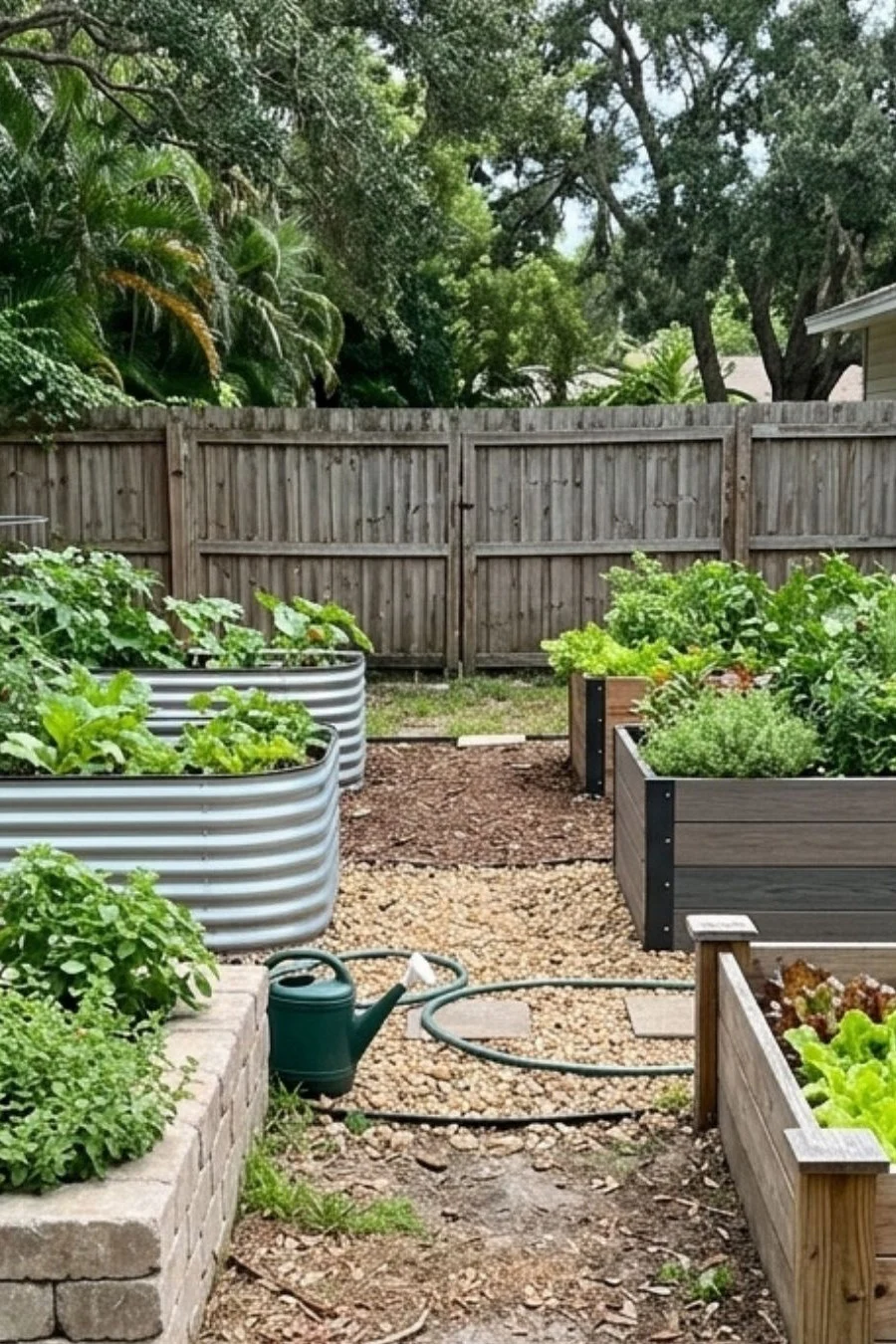
Raised bed materials comparison is about more than choosing the material that looks best. In Florida, heat, humidity, heavy rain, termites, irrigation, soil weight, and how long you expect the garden to stay in one place all affect the decision.
Wood is easy to customize, metal is durable and fast to assemble, composite resists rot, and masonry can become a permanent landscape feature. Before choosing, decide the bed size, path width, crop depth, irrigation, and whether you may want to move or redesign the garden later.
Raised Bed Materials at a Glance
For a flexible DIY bed, wood is usually the easiest to cut and repair. For a clean modular system, metal is convenient. Composite and recycled-plastic products reduce rot concerns but need proper support. Brick, pavers, concrete block, and stone create the most permanent beds but require more base preparation.
Wood Raised Bed Materials
Wood beds are easy to customize because you can change length, width, height, and corner details with basic tools. The tradeoff is exposure to moisture, soil pressure, and insects. In Florida, board thickness, drainage around the outside, and easy replacement of individual pieces matter more than keeping the lumber looking new.
1. Cedar Boards
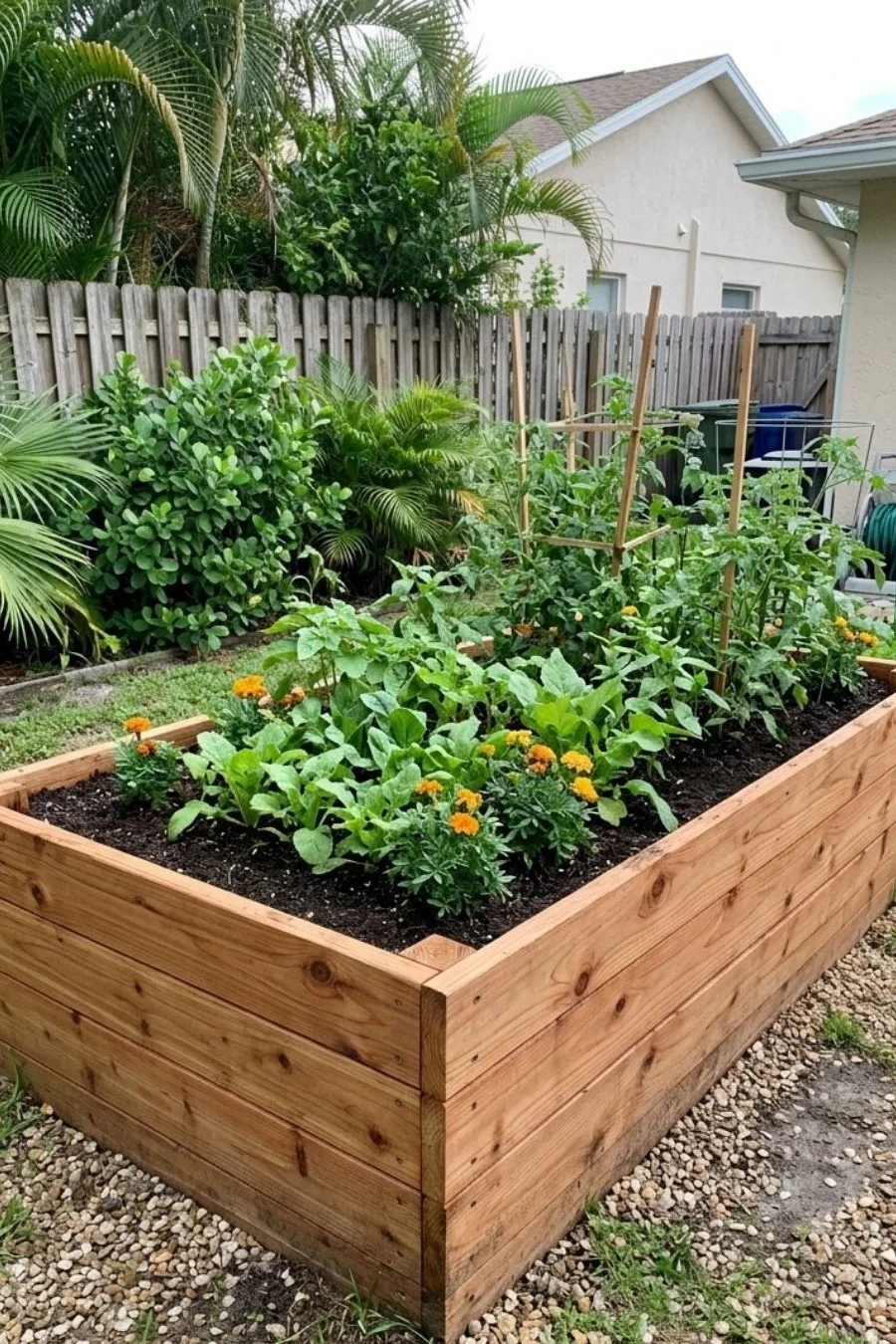
Cedar is a popular raised-bed material because it is light enough to work with, looks natural, and handles outdoor exposure better than many softwoods. In humid Florida, use boards thick enough to resist bowing and keep soil off exterior walls. Expect weathering over time rather than a permanently fresh lumber color.
2. Untreated Pine for a Budget Build

Untreated pine can lower the upfront cost, but it usually has a shorter outdoor life than naturally durable woods. It works best when you accept that the boards may eventually need replacement. Use good drainage around the bed and avoid letting sprinklers hit the outside constantly.
3. Thick Timber Beds for a Rustic Look
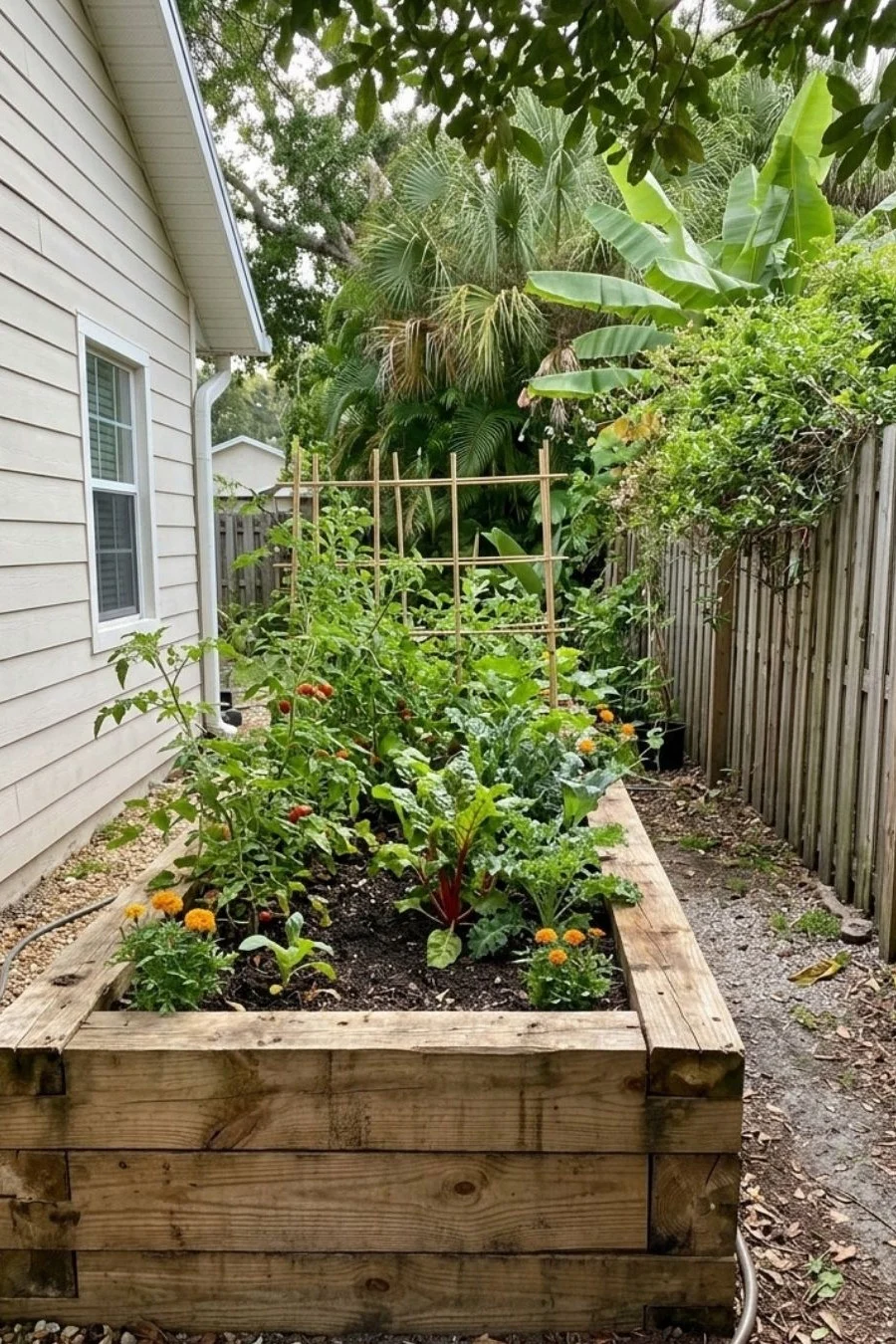
Thicker lumber can create a sturdy, substantial bed and resist bowing better than thin boards. The tradeoff is weight and cost. Keep corners braced and make sure the finished bed is narrow enough to reach the center without stepping into the soil.
4. Wood Beds With Metal Corner Brackets
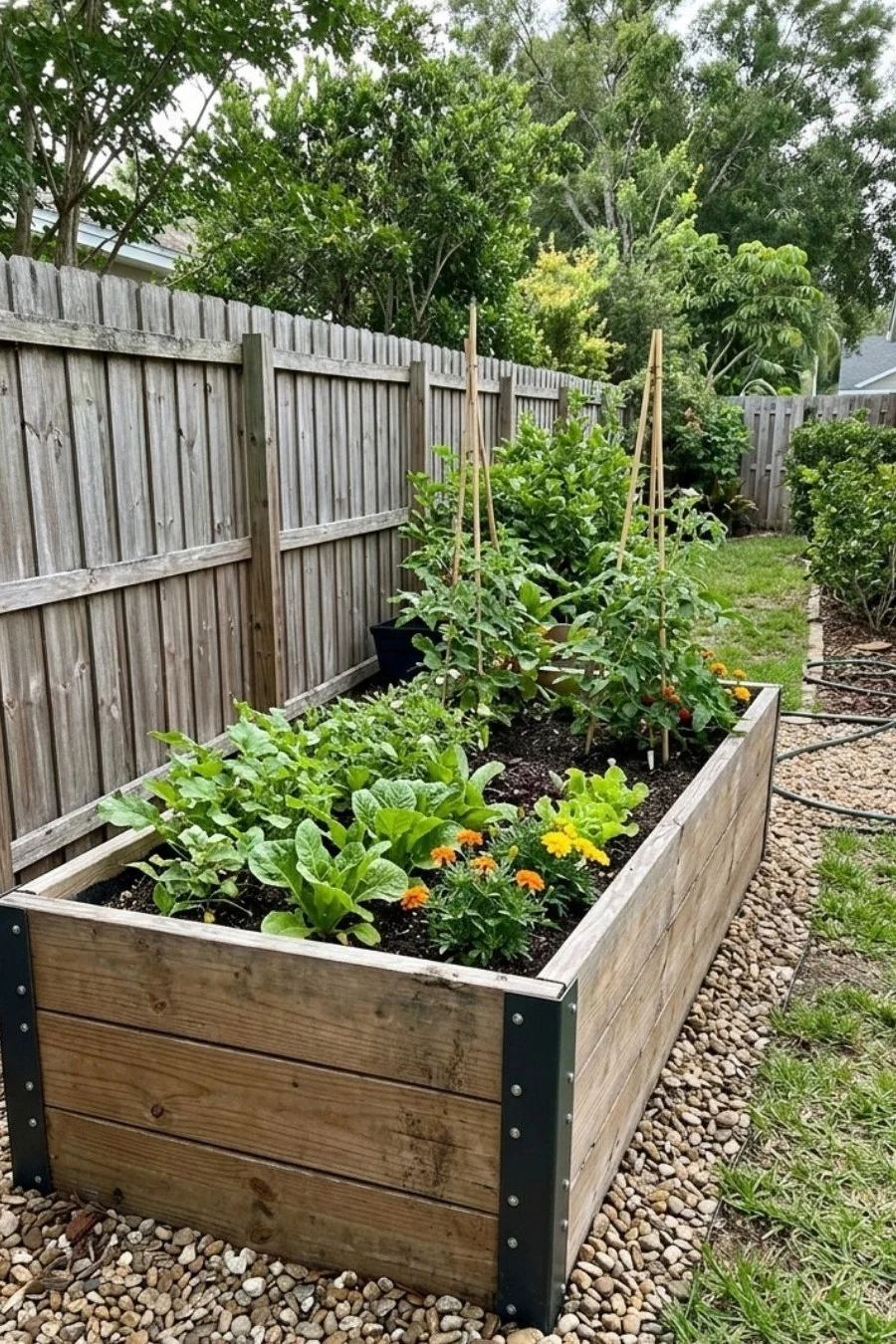
Metal corner brackets can simplify a wood build and reduce movement at the joints. Choose corrosion-resistant hardware for Florida humidity and keep fasteners accessible for future tightening. This is a practical upgrade when you want the look of wood without relying on screws alone at each corner.
5. Elevated Wood Beds on Legs
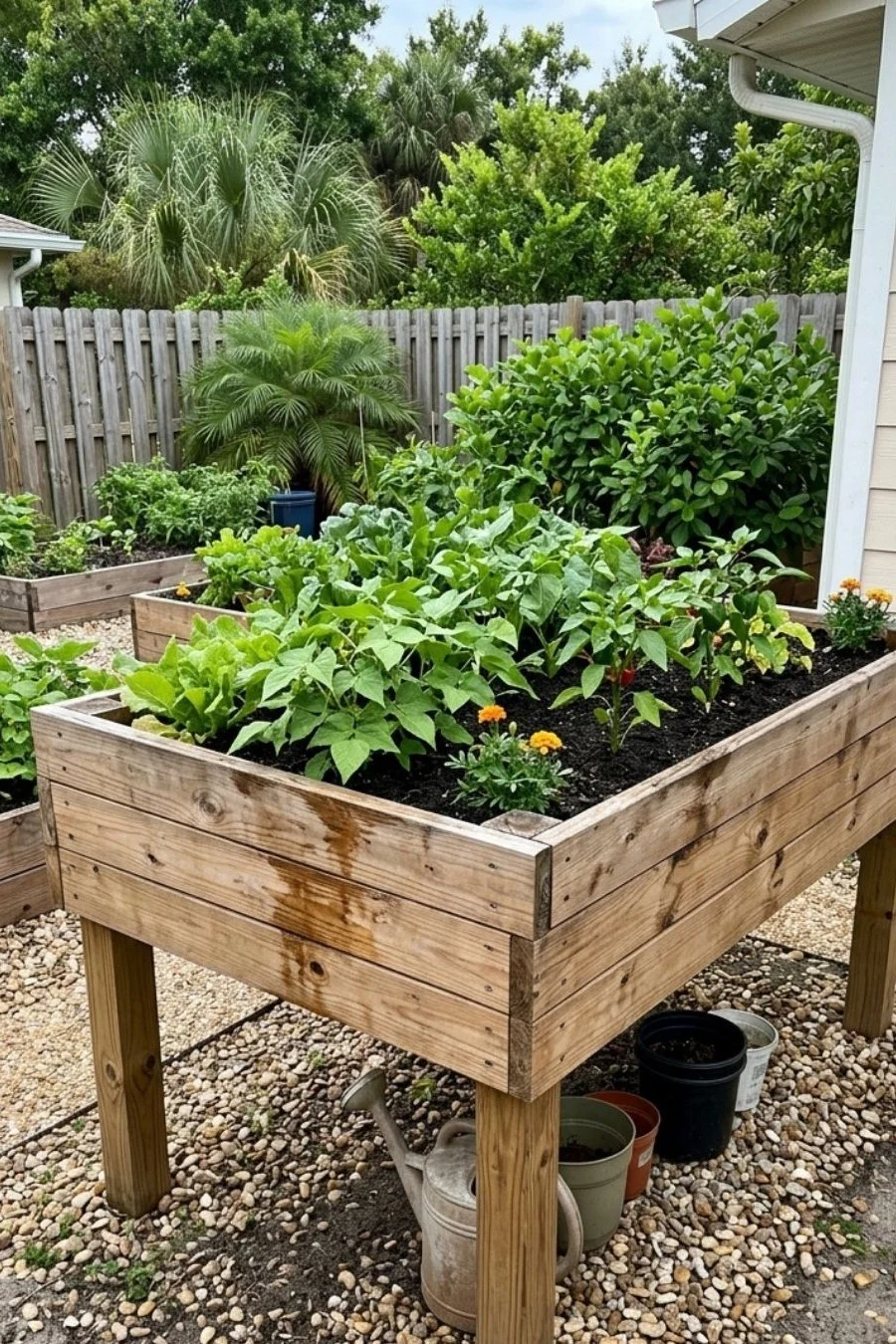
A raised bed on legs can make herbs and greens easier to reach on a patio. Because the soil is completely above ground, drainage and water loss are faster. Use a sturdy structure, a safe liner if needed, and enough depth for the crops you plan to grow. Our container size guide can help with root-depth planning.
6. U-Shaped Wood Beds
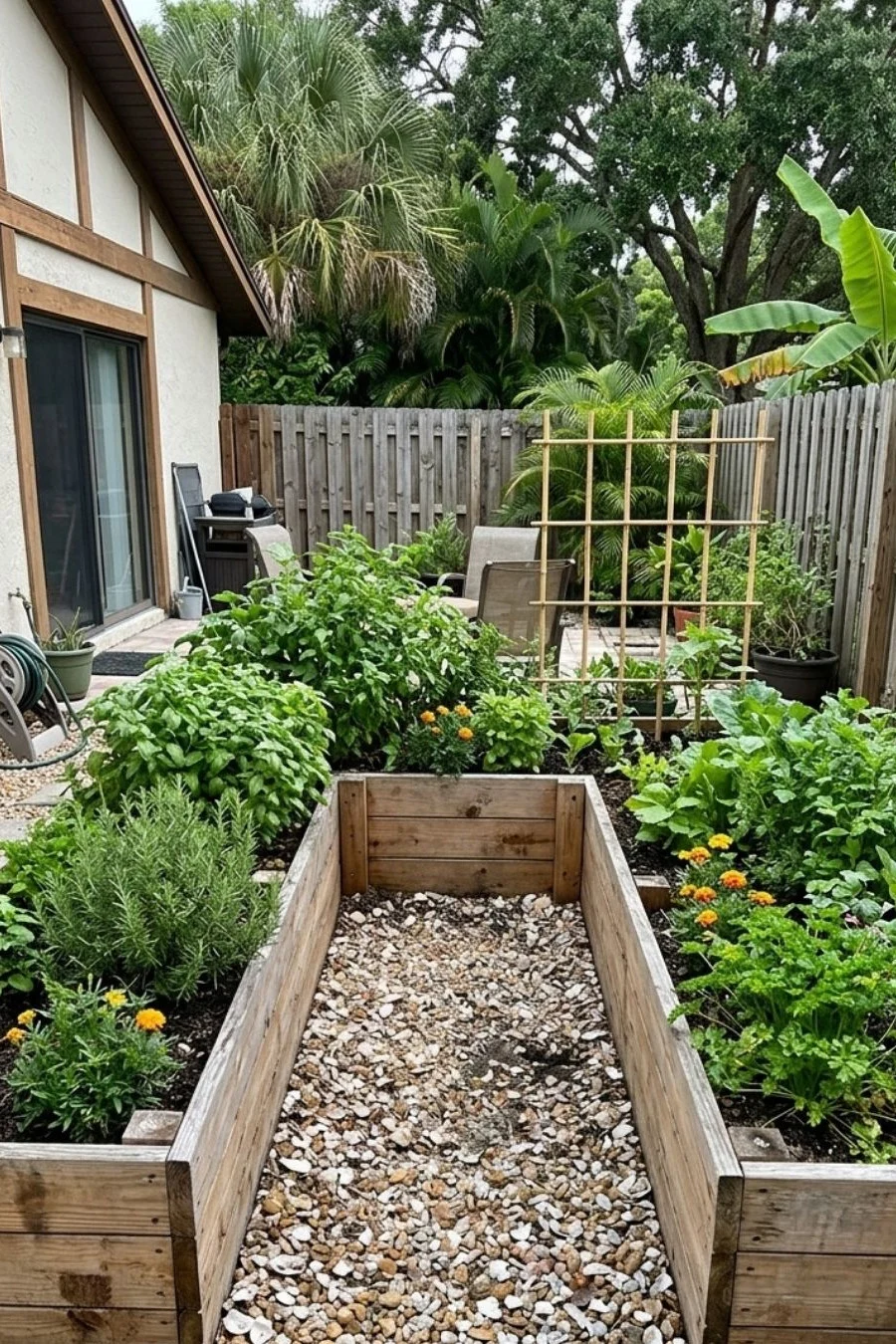
A U-shaped layout gives more planting edge while keeping a central working aisle. It works well for gardeners who want to reach everything without stepping into the bed. Keep each arm narrow enough for comfortable access and leave a wide, stable path through the center.
Metal Raised Bed Materials
Metal beds make sense when you want a fast modular build and long service life. Compare finish color, panel stiffness, edge safety, and how much soil volume the design provides. Dark metal can become hot in full sun, so bed size, irrigation, and plant shading should be part of the material choice.
7. Galvanized Corrugated Steel
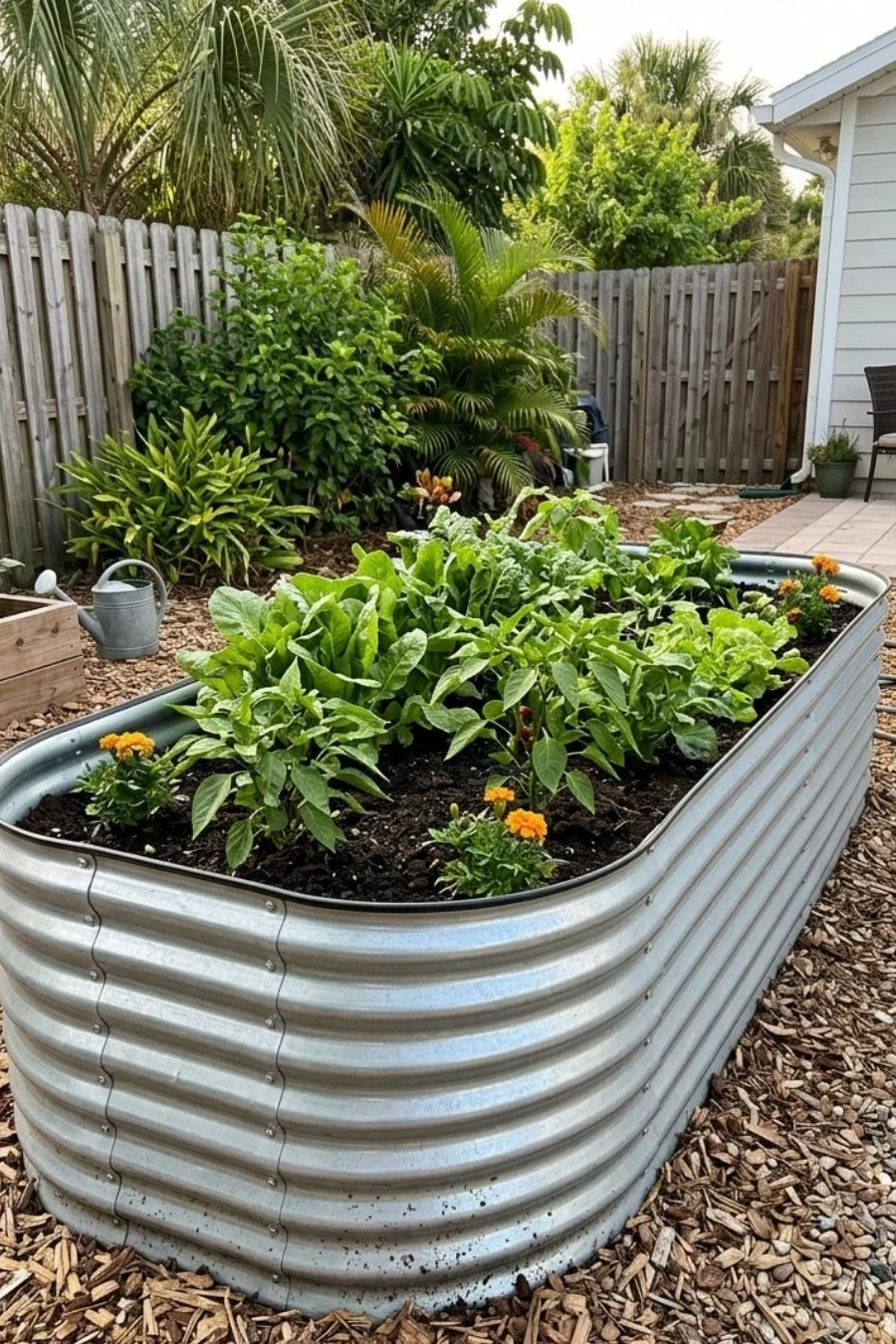
Galvanized steel beds are durable, clean-looking, and available in many modular sizes. In Florida sun, dark metal can heat up, so light-colored finishes and adequate soil volume are helpful. Check edges and hardware during assembly so there are no sharp exposed points.
8. Powder-Coated Steel
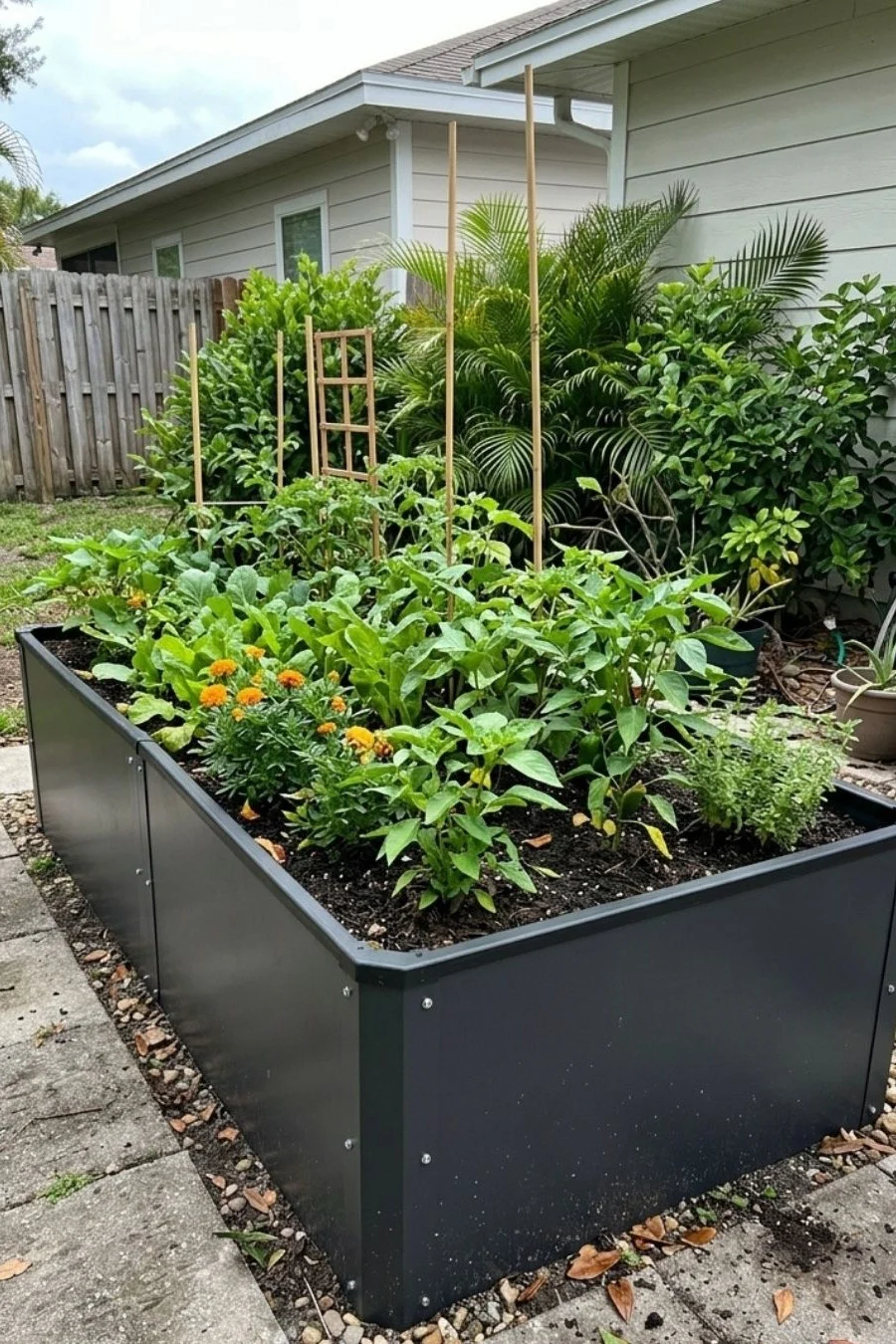
Powder-coated metal gives a smoother finished look and can coordinate with modern patios or fences. The coating reduces direct exposure of the metal surface, but scratches should still be checked over time. Use this option when appearance matters as much as durability.
9. Weathering Steel Beds
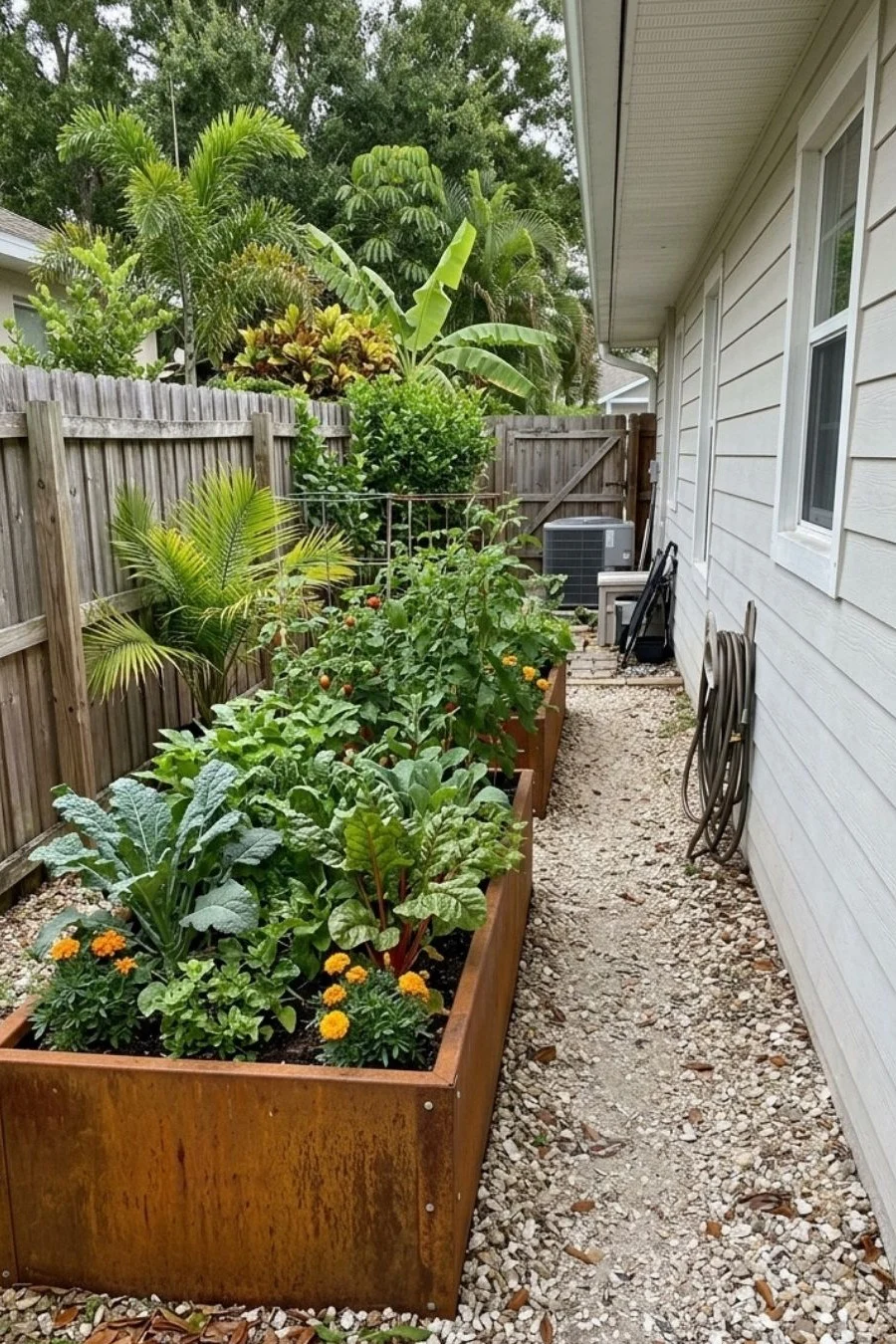
Weathering steel develops a rust-like protective patina and creates a strong architectural look. It can stain nearby light pavers during weathering, so plan the location carefully. Use it as a long-term landscape feature rather than a bed you expect to move often.
10. Round Stock-Tank Style Beds
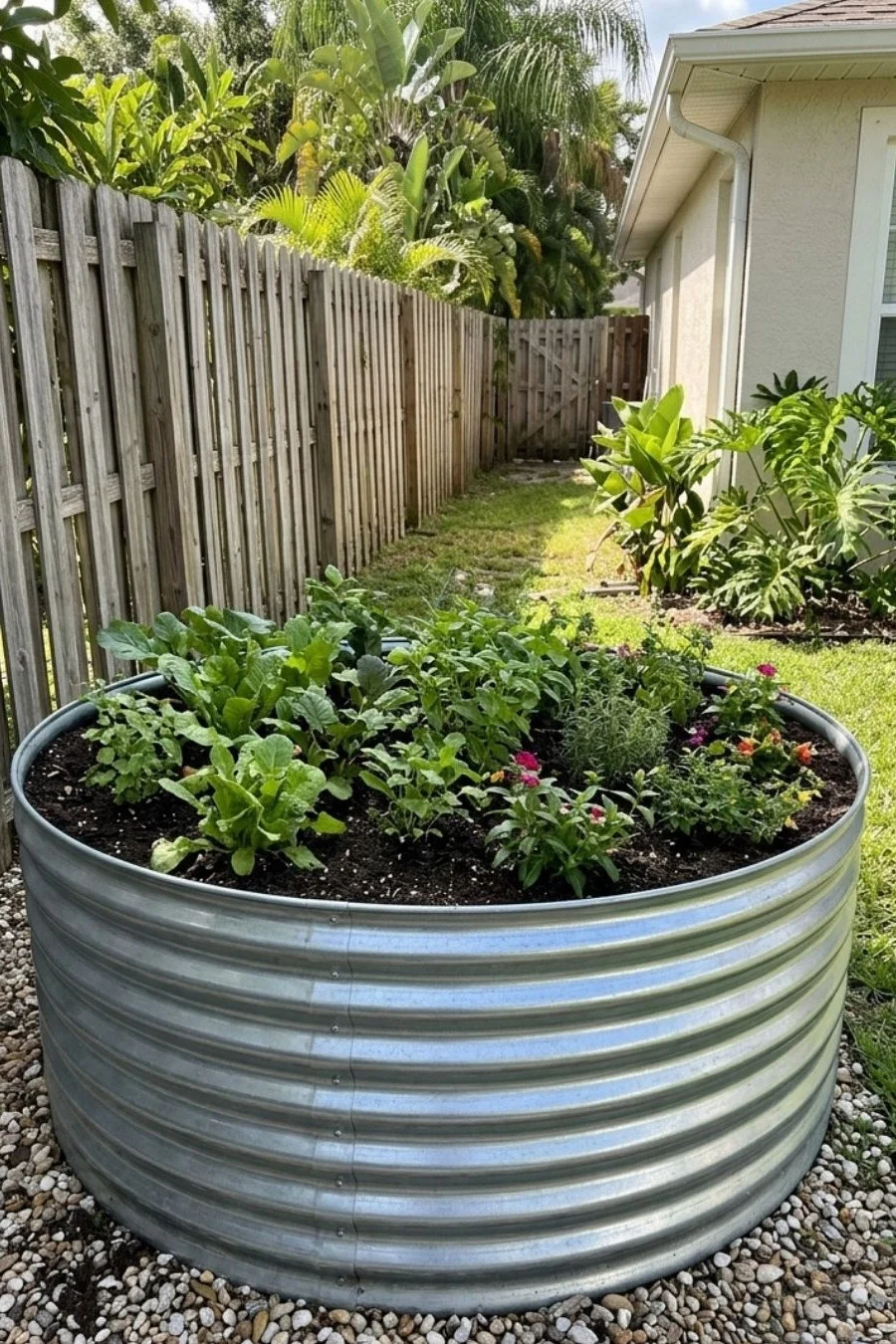
Round metal beds can fit corners and make a useful focal point. Their depth can be excessive for shallow-rooted crops, so you do not need to fill every inch with premium mix. Keep drainage open and position the bed before filling because it becomes heavy quickly.
11. Tall Metal Beds for Easier Access

Waist-high metal beds can reduce bending and make gardening easier for some people. They need more fill and can dry faster near the edges. Use a stable base, easy watering access, and paths wide enough for comfortable movement around the bed.
12. Metal Bed With an Integrated Trellis

A trellis attached to a strong metal bed can support cucumbers, beans, peas, or flowering vines. Put the trellis where it will not shade shorter crops unnecessarily. For vertical crop support, compare our vegetable garden trellis ideas.
Composite and Recycled Materials
Composite and recycled-plastic systems can reduce rot concerns, but they are not all built the same. Check span limits, bracing, expansion, and whether the product is actually intended for garden-bed construction. These materials are useful when low maintenance matters more than the natural weathered look of wood.
13. Composite Board Raised Beds
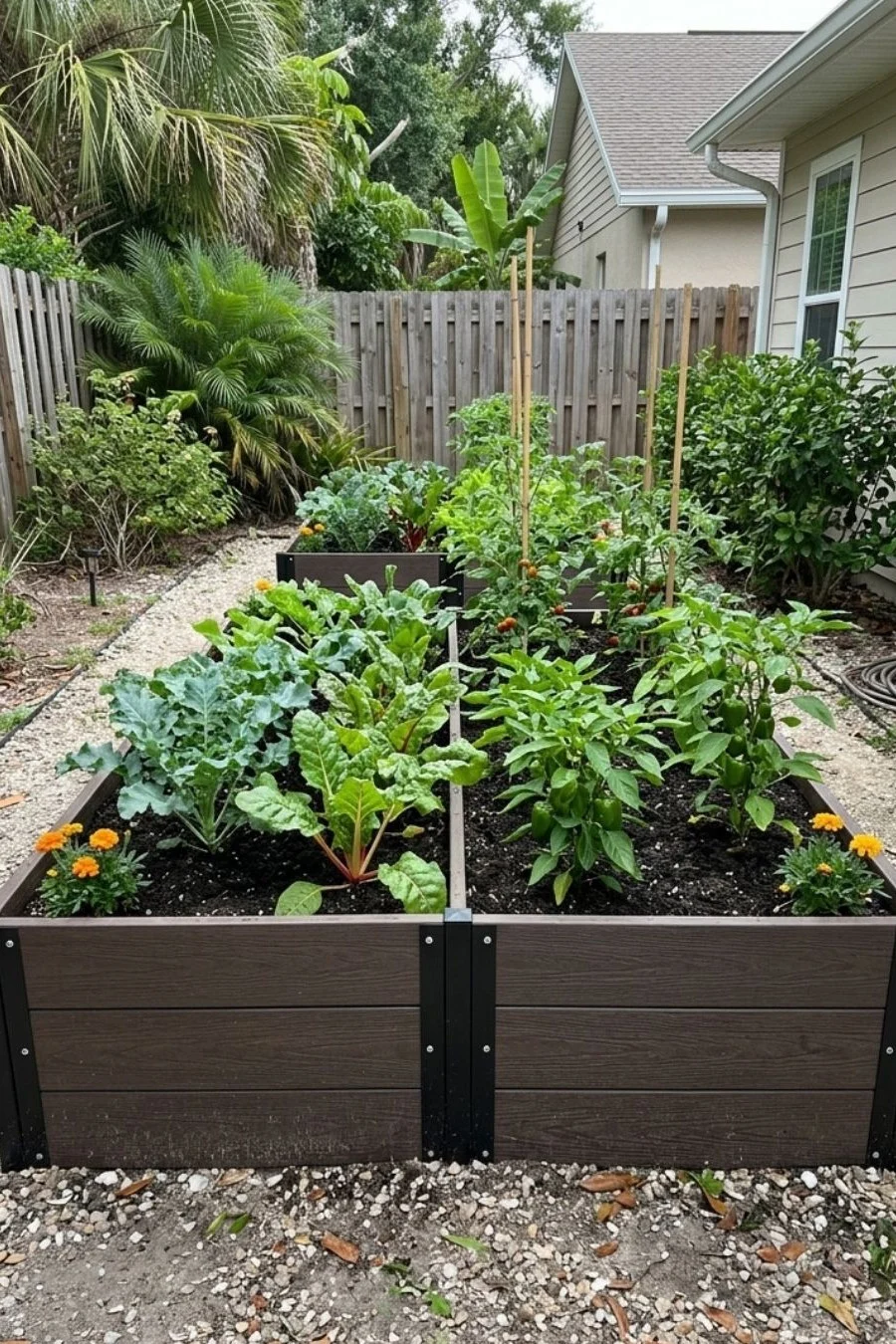
Composite boards resist rot and do not need staining, which appeals to homeowners who want a uniform look. They can cost more than basic lumber and may flex if spans are too long. Use manufacturer-approved supports and avoid assuming every decking-style board is designed for soil-contact bed construction.
14. Recycled Plastic Lumber Beds
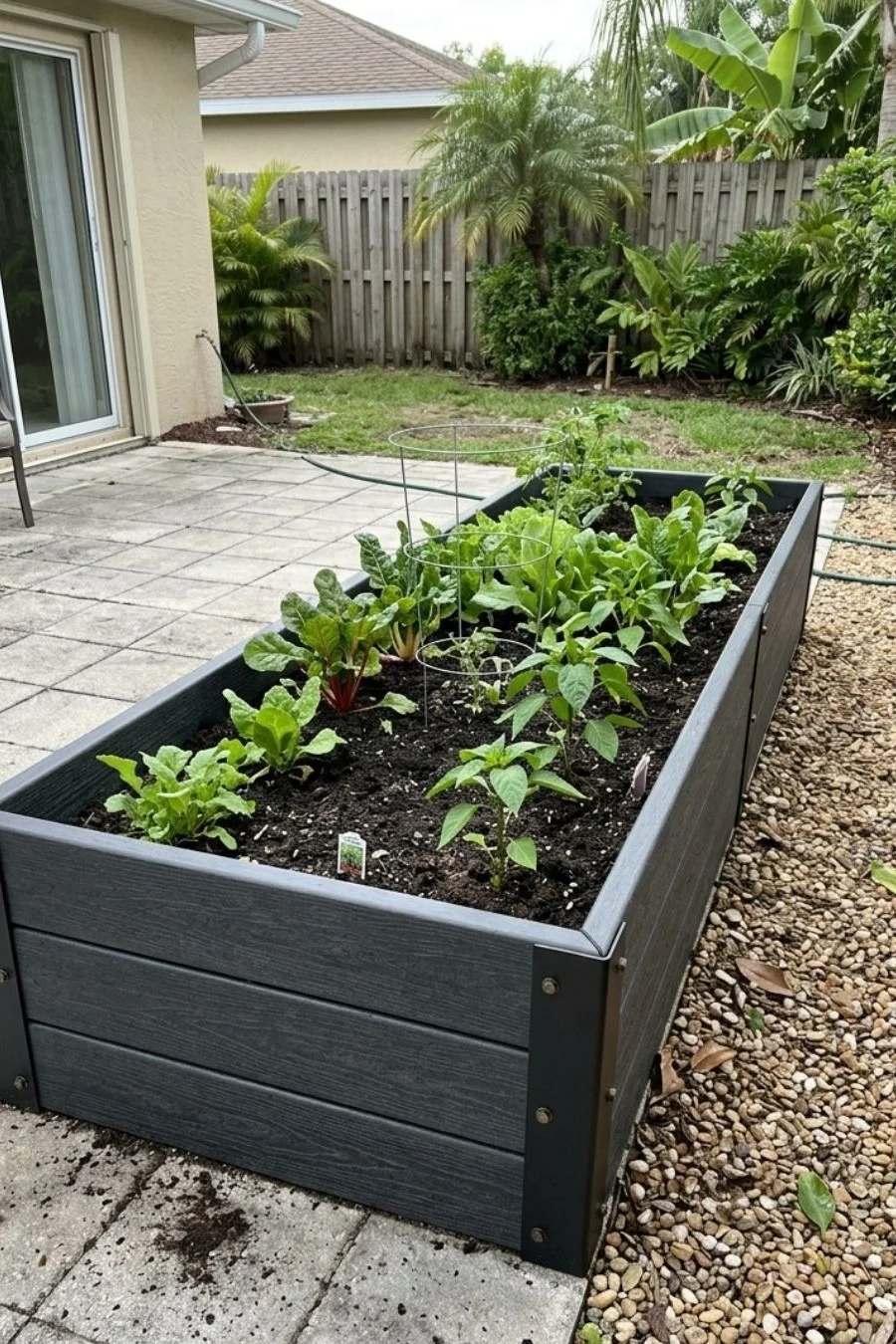
Recycled plastic lumber can handle moisture well and is easy to wash. The material can expand, flex, or feel less natural than wood, so proper bracing matters. It is useful where long-term rot resistance is more important than a traditional garden appearance.
15. Modular Panel Kits
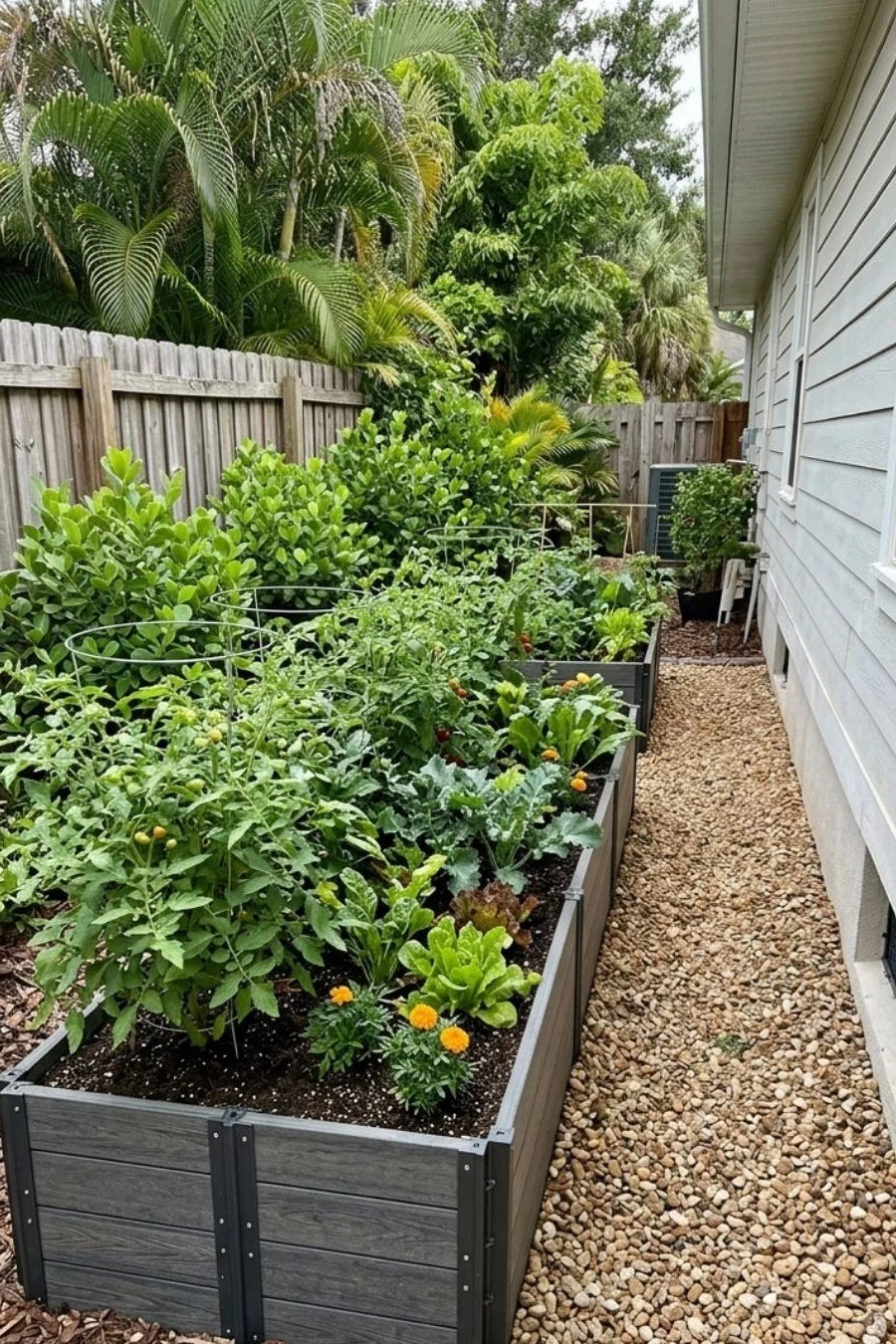
Modular raised-bed kits are useful when you want predictable sizing and quick assembly. Metal, composite, and recycled-plastic systems can often be expanded later. Measure the real garden area first so the convenience of the kit does not lead to paths that are too narrow.
16. Mobile Raised Beds on Locking Casters
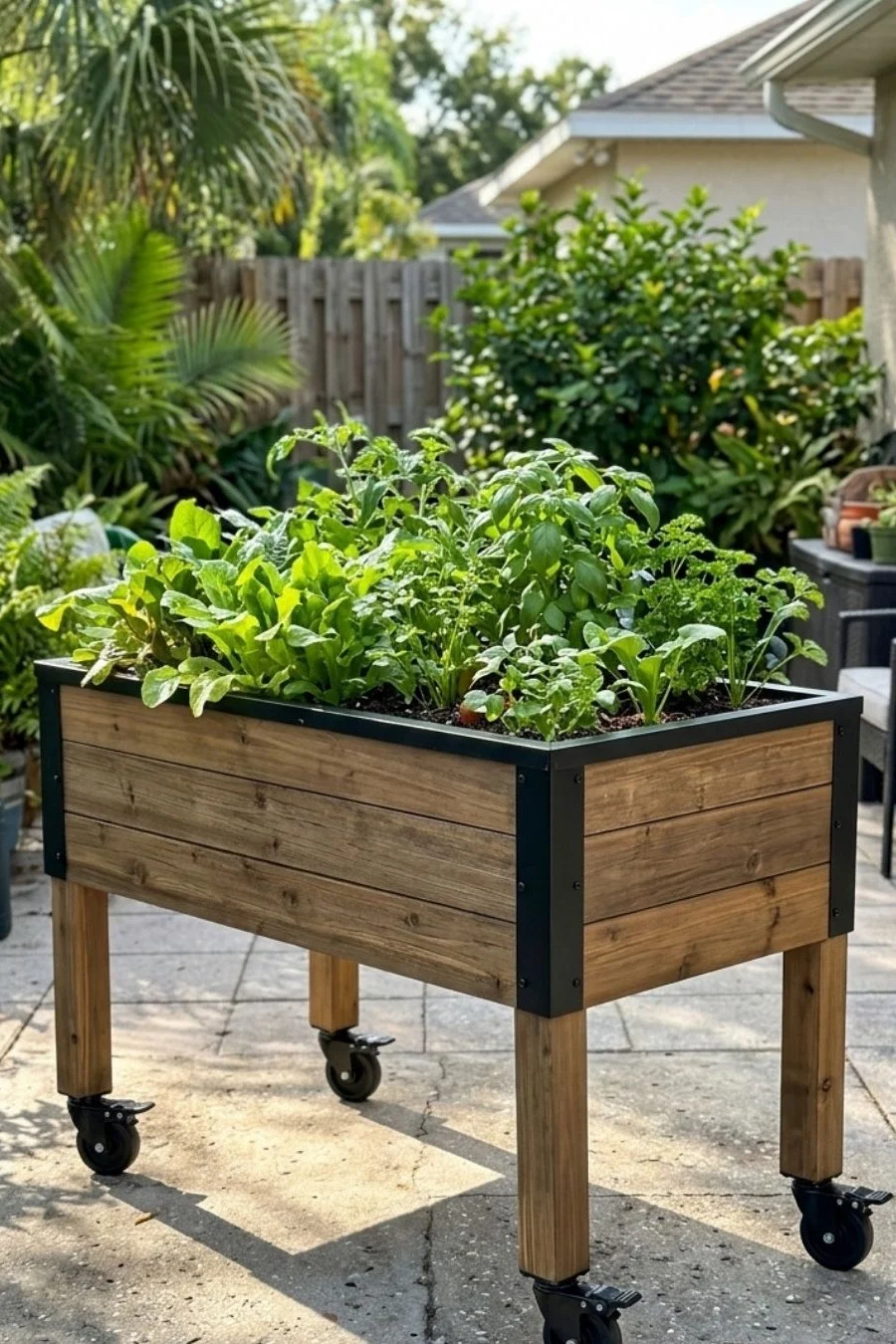
A small mobile bed can follow seasonal sun on a patio or be moved for cleaning. Keep it compact because wet soil is heavy. Use strong locking casters rated for the finished load and avoid rolling a full bed across uneven pavers or soft ground.
17. Self-Watering Raised Planter Systems

A self-watering reservoir can reduce daily watering for herbs and compact vegetables, but it still needs overflow and drainage for heavy Florida rain. Check the reservoir instead of assuming the system stays balanced automatically. These work best as raised planters rather than large in-ground-style beds.
18. Fabric-Sided Raised Growing Beds
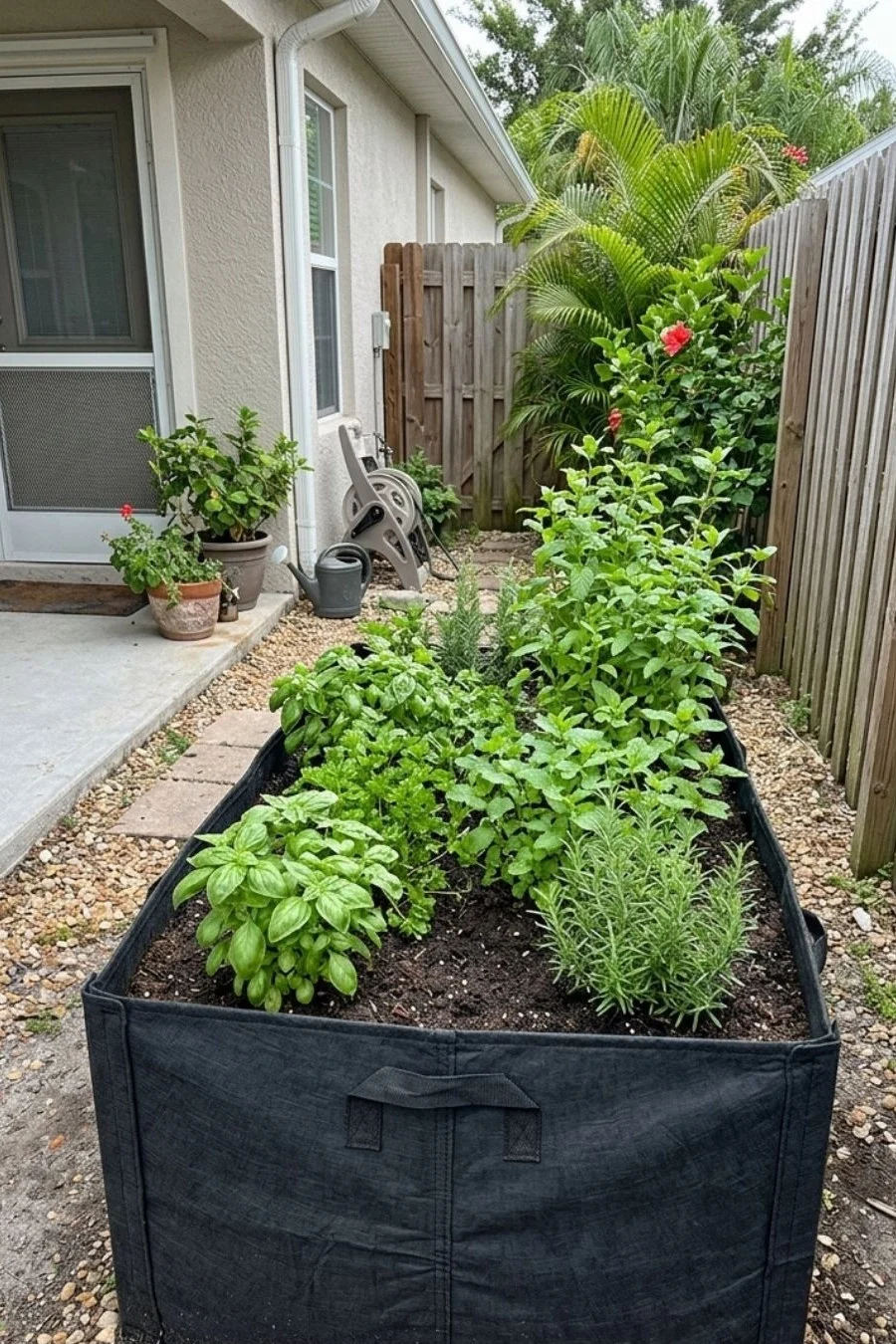
Rigid fabric grow beds are lightweight and drain freely, making them useful for temporary gardens or renters. They dry faster than masonry and can lose shape if overfilled or moved. Put them on a surface that can handle runoff and replace them when fabric begins to weaken.
Stone, Brick, and Masonry
Masonry raised beds are the least flexible but can become part of the permanent landscape. They are heavy, need a stable base, and are harder to redesign. Use them after you are confident about path widths, irrigation, sun exposure, and how the bed will connect to patios or slopes.
19. Concrete Block Beds
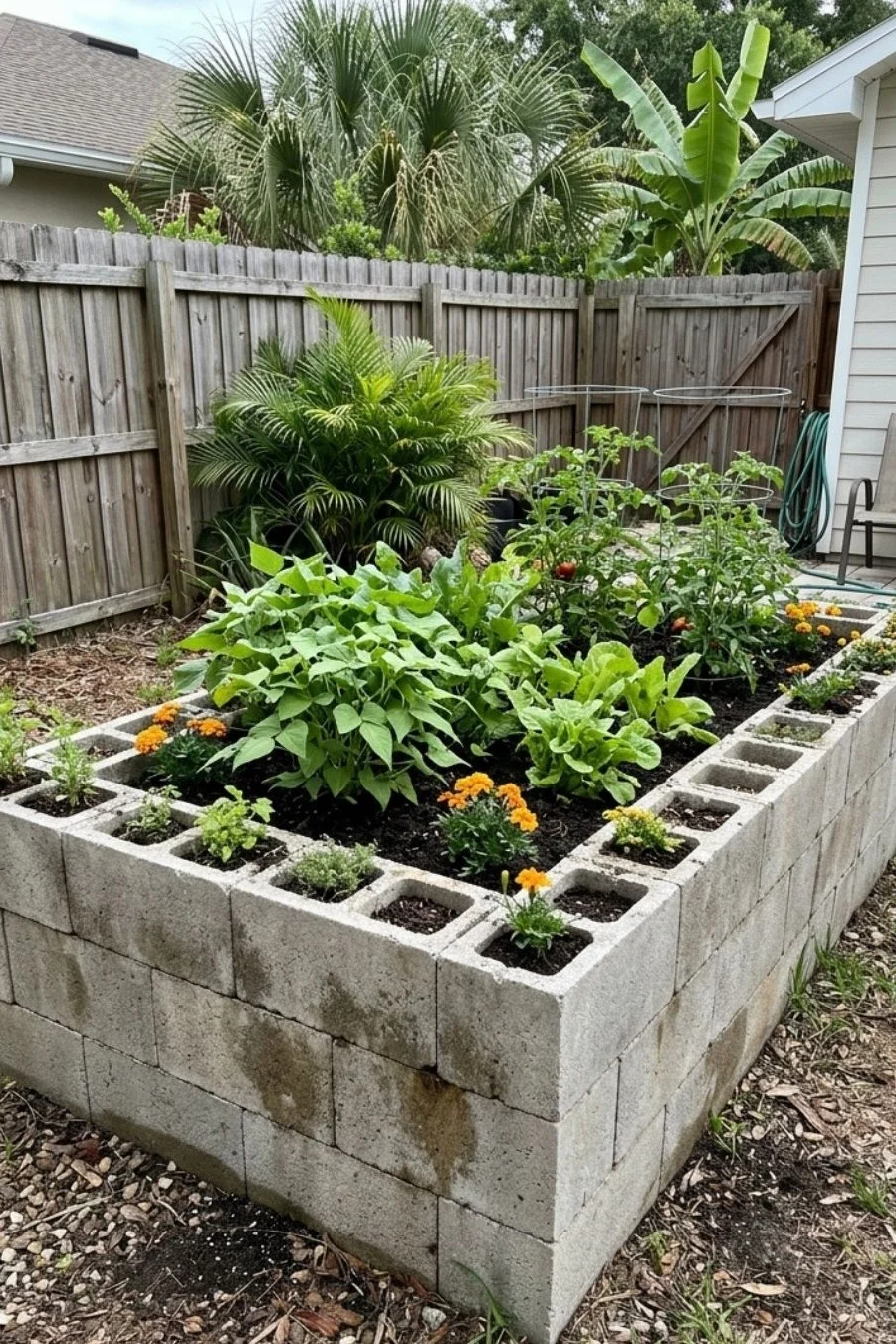
Concrete blocks are widely available and make a sturdy, modular raised bed. Set them on a level base so the walls do not shift. The finished look is practical rather than delicate, and the blocks can absorb heat in full sun, so choose plant placement accordingly.
20. Paver-Block Raised Beds

Landscape pavers can create a more finished masonry bed than standard block. They work well when you want the bed material to match a patio or walkway. Curves and corners are possible, but the base needs careful leveling so the rows remain stable.
21. Brick Raised Beds
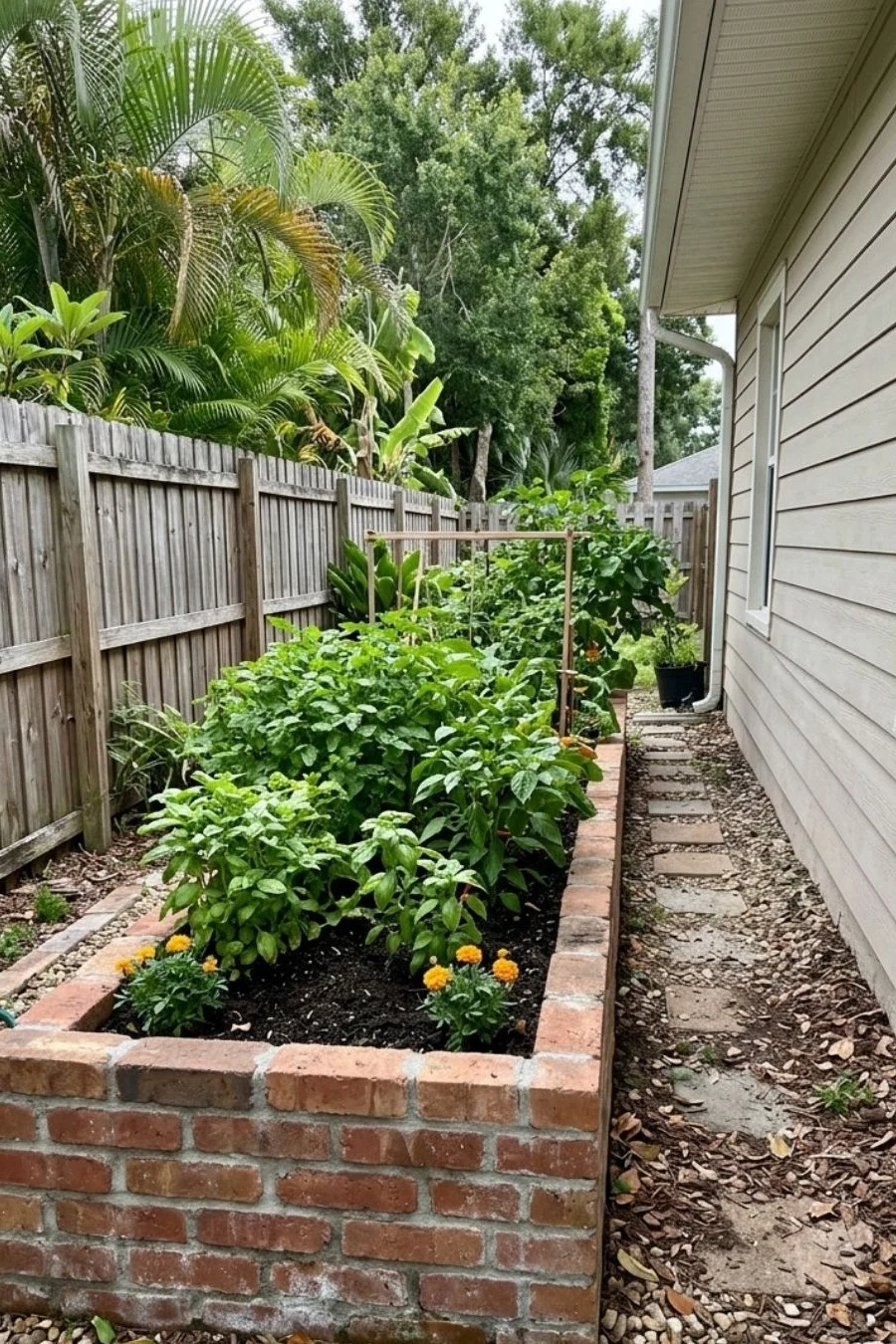
Brick creates a classic permanent look and can coordinate with older Florida homes or brick walkways. A well-built brick bed can last for years, but changes later require more work than moving a wood box. Use it where the garden layout is already settled.
22. Natural Stone Beds

Natural stone blends well with informal or cottage-style landscapes. Dry-stacked walls need enough width and interlocking stone to stay stable; taller walls may require professional design. Use stone where the bed can become part of the landscape rather than a temporary vegetable setup.
23. Low Dry-Stack Walls on a Slope
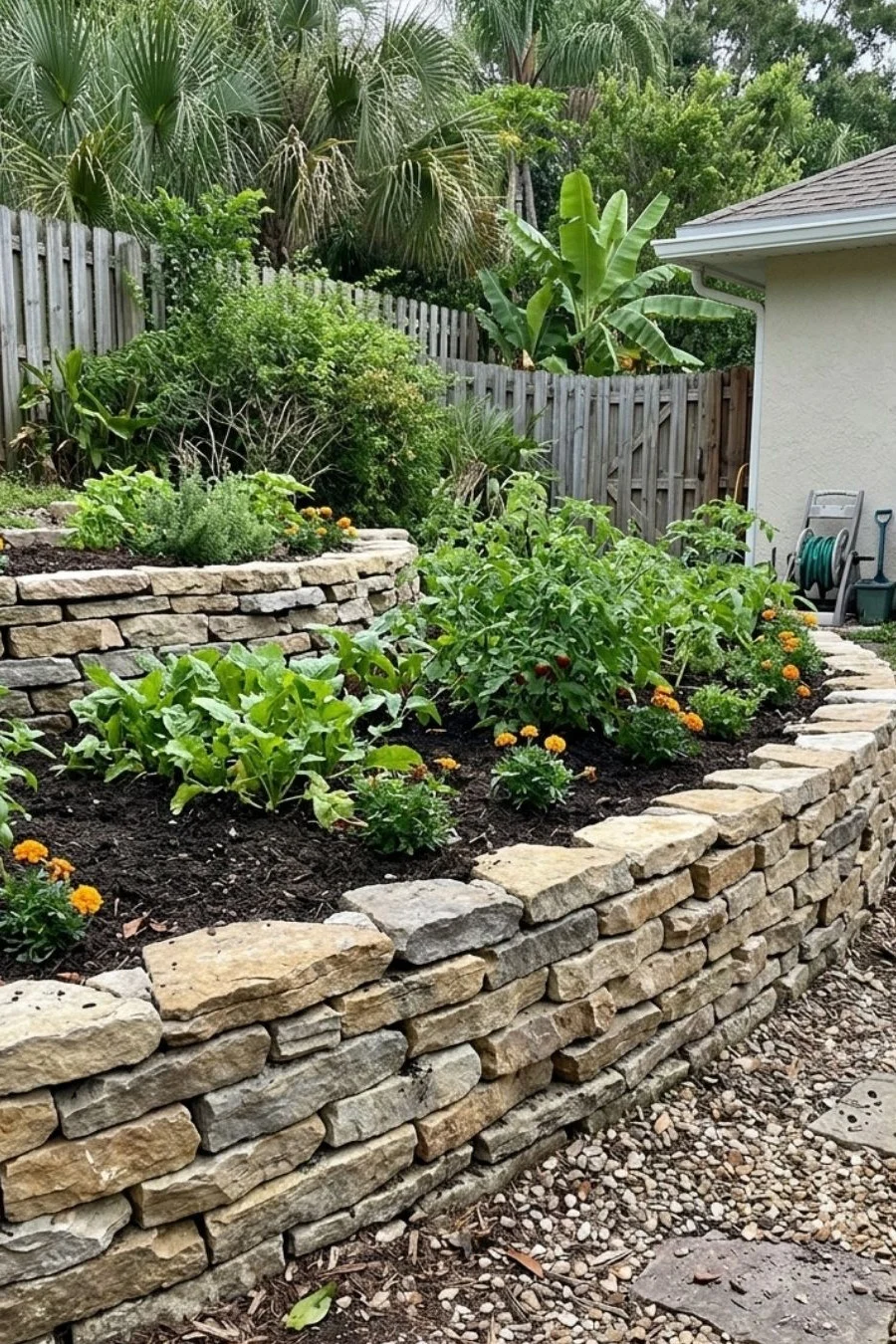
On a gentle grade, a low stone wall can create a level planting terrace. The wall should manage soil, not hold back a major hillside. For more significant slope changes, drainage and retaining requirements become structural issues. See our sloped backyard garden ideas for planning context.
24. Mortared Masonry Beds
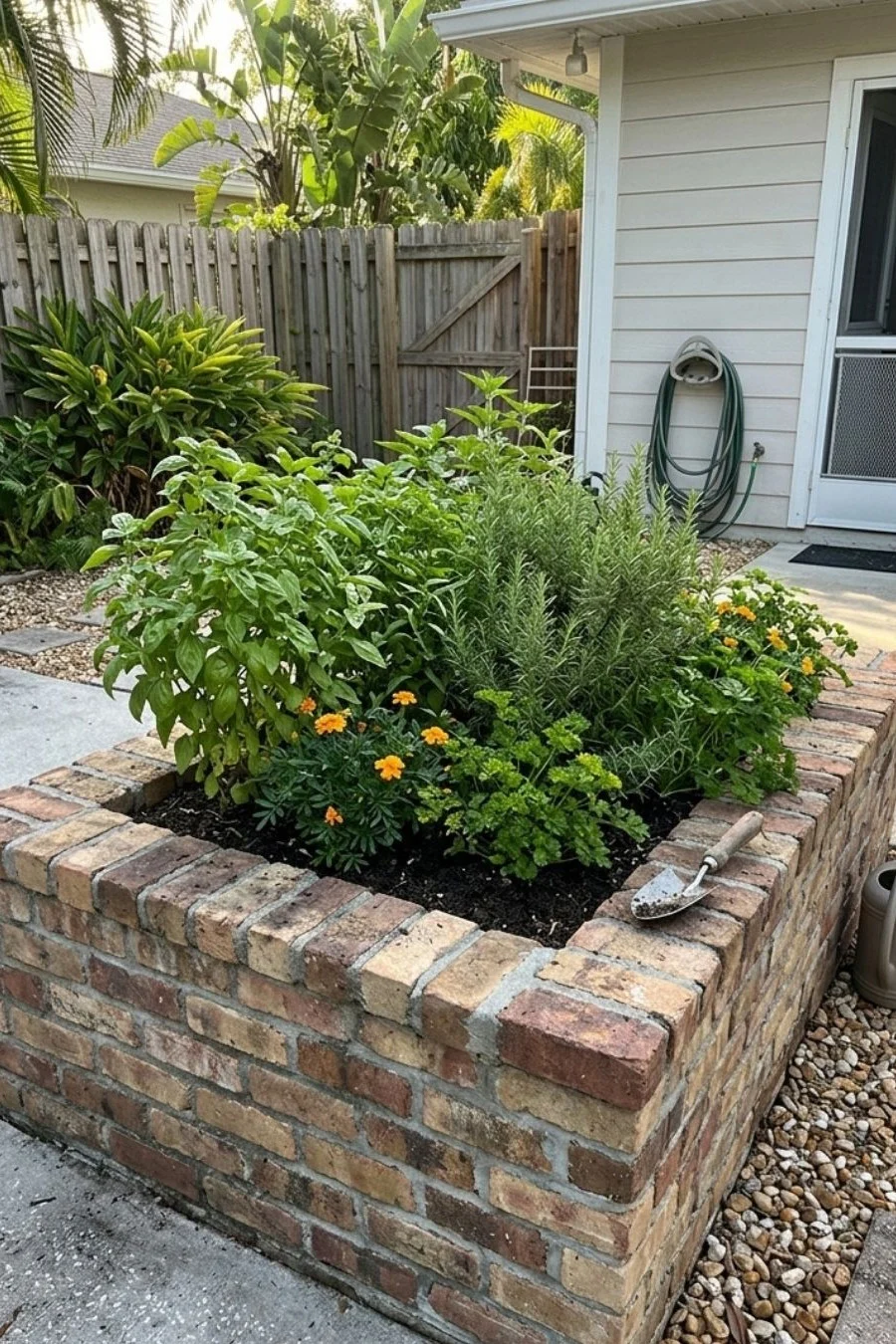
Mortared masonry gives a clean, permanent edge and can support wider caps that double as casual seating. It costs more and is harder to change, so confirm bed dimensions and irrigation before construction. Keep weep paths and drainage in the plan so heavy rain has somewhere to go.
Design Details That Change Performance
Material is only half the decision. A beautifully built bed can still be frustrating if it is too wide to reach, too tall for the gardener, poorly irrigated, or placed in the wrong sun. Use the final five ideas to compare comfort, access, and long-term flexibility before choosing the build.
25. Beds With Wide Cap Seating
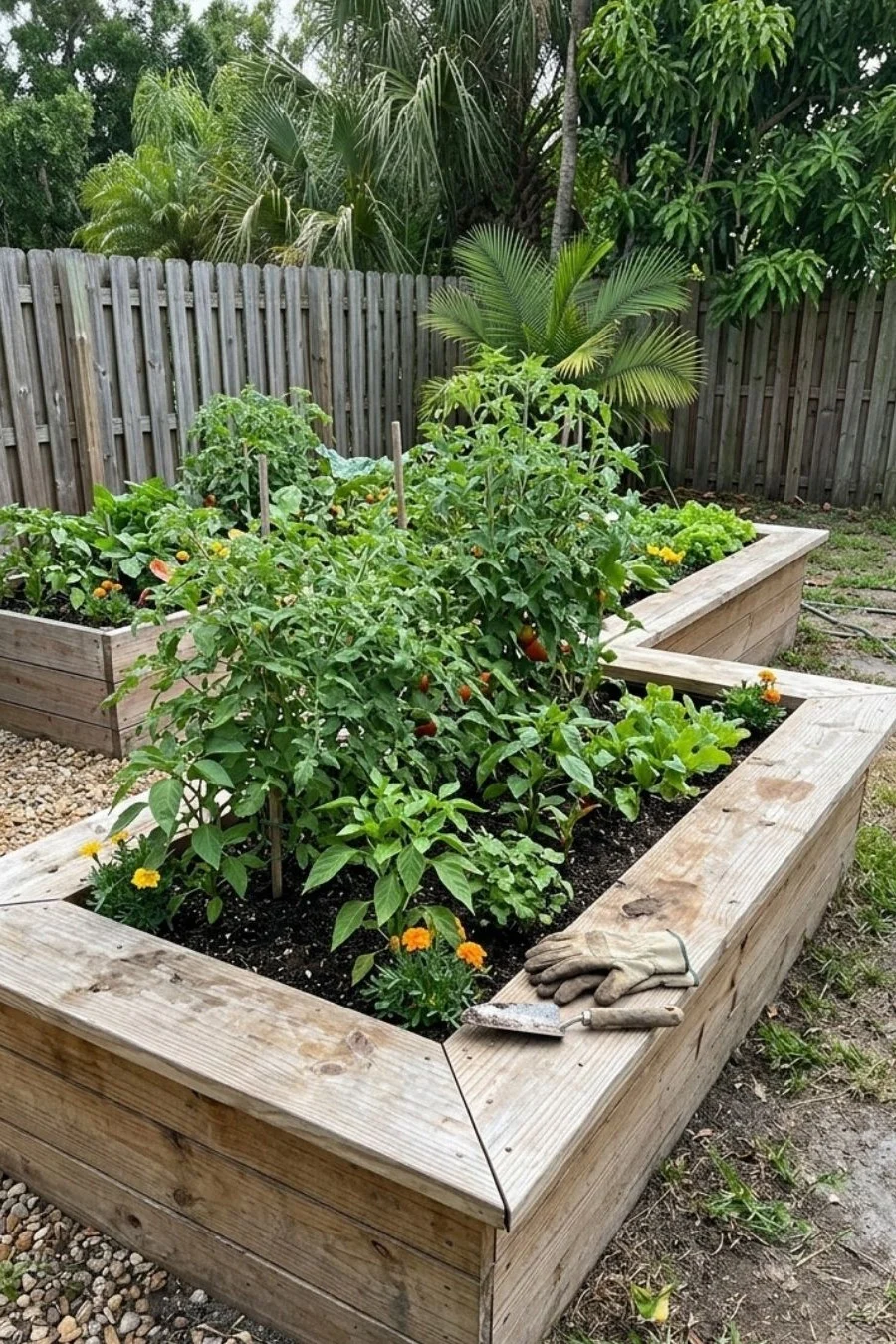
A wide wood or masonry cap can create a comfortable place to sit while gardening. Make sure the cap does not reduce the reach into the bed too much. This works best on lower beds beside a patio or central garden area.
26. L-Shaped Corner Beds
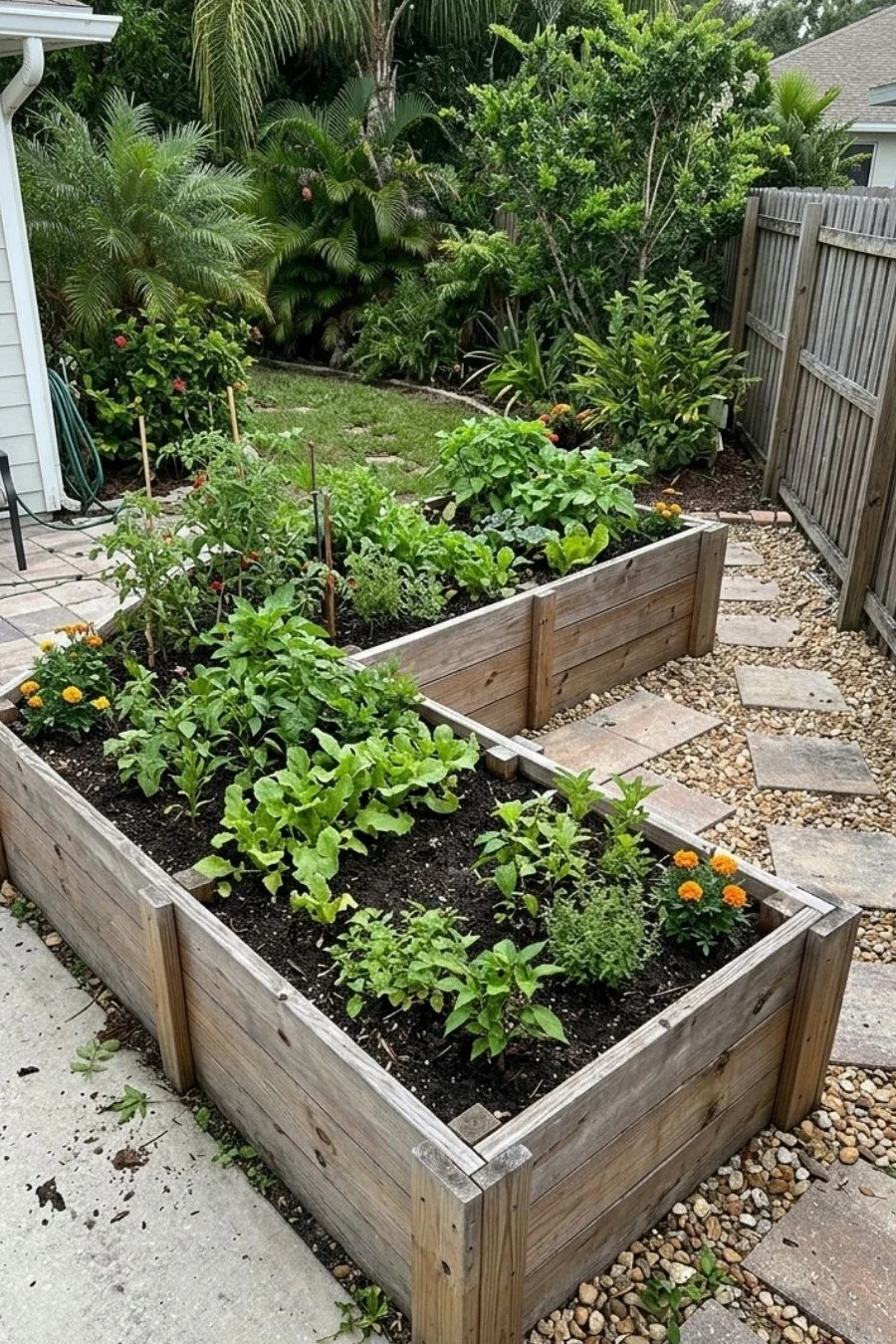
An L-shaped bed can use a fence corner efficiently while leaving the center of the yard open. Keep both arms reachable from the path and do not build tightly against a wooden fence that needs future maintenance. Leave enough gap for airflow and access.
27. Tiered Beds for Small Spaces
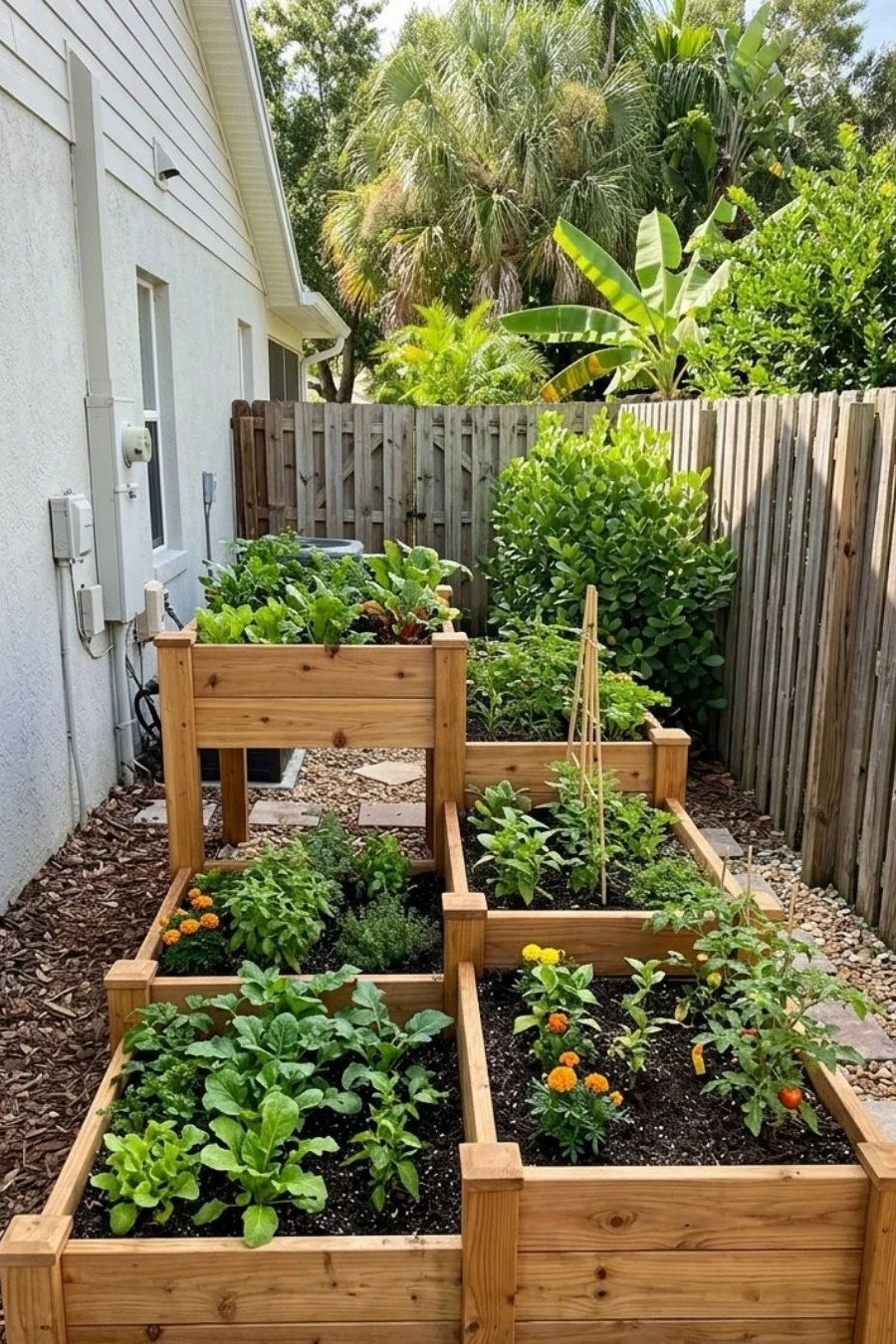
Two or three levels can create more visual interest and separate herbs, flowers, and vegetables. Keep the tiers broad enough to hold useful soil volume and avoid creating tiny pockets that dry out quickly. A simpler two-level system is often easier to maintain than a tall staircase of planters.
28. Beds With Drip or Micro-Irrigation
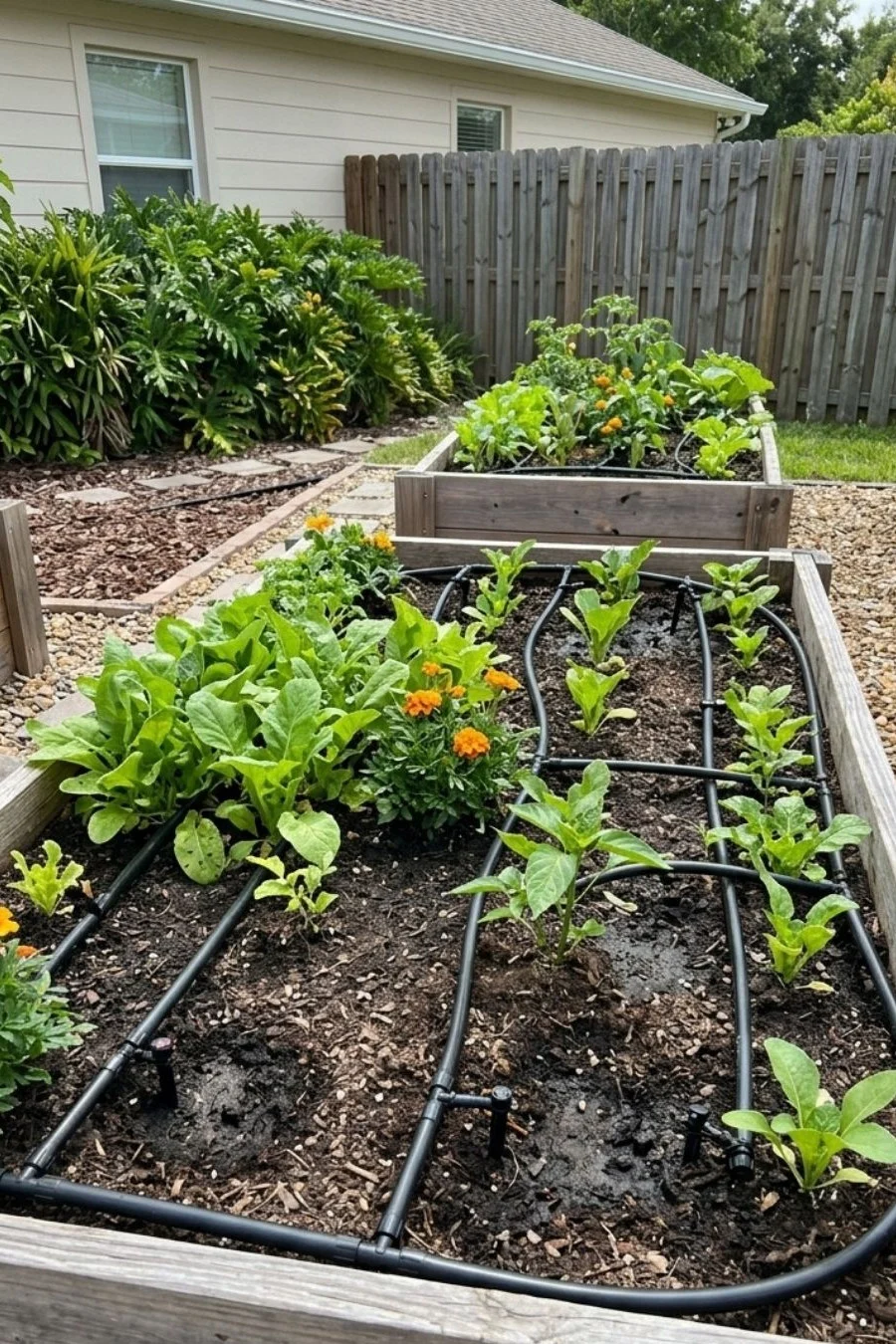
Adding drip or micro-irrigation can make raised beds easier to water consistently. Keep emitters visible enough to inspect, and adjust for rain rather than running a fixed schedule year-round. Group crops with similar water needs when possible.
29. Extra-Tall Accessible Beds
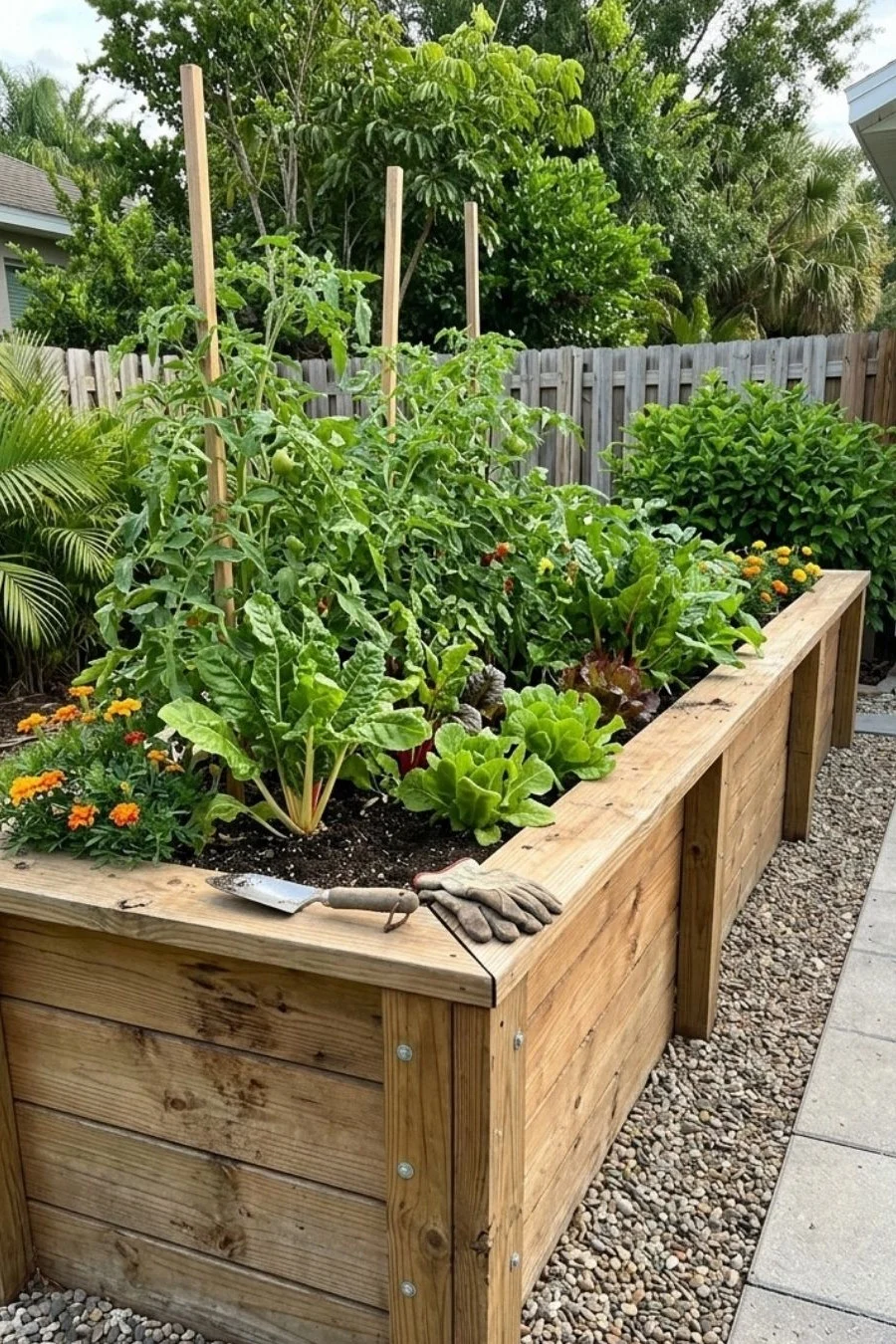
A taller bed can help gardeners who have difficulty bending, but height alone does not guarantee accessibility. Consider path width, reach distance, wheel clearance, hose access, and whether the surface around the bed is firm and level.
30. Match the Material to How Long the Garden Will Stay
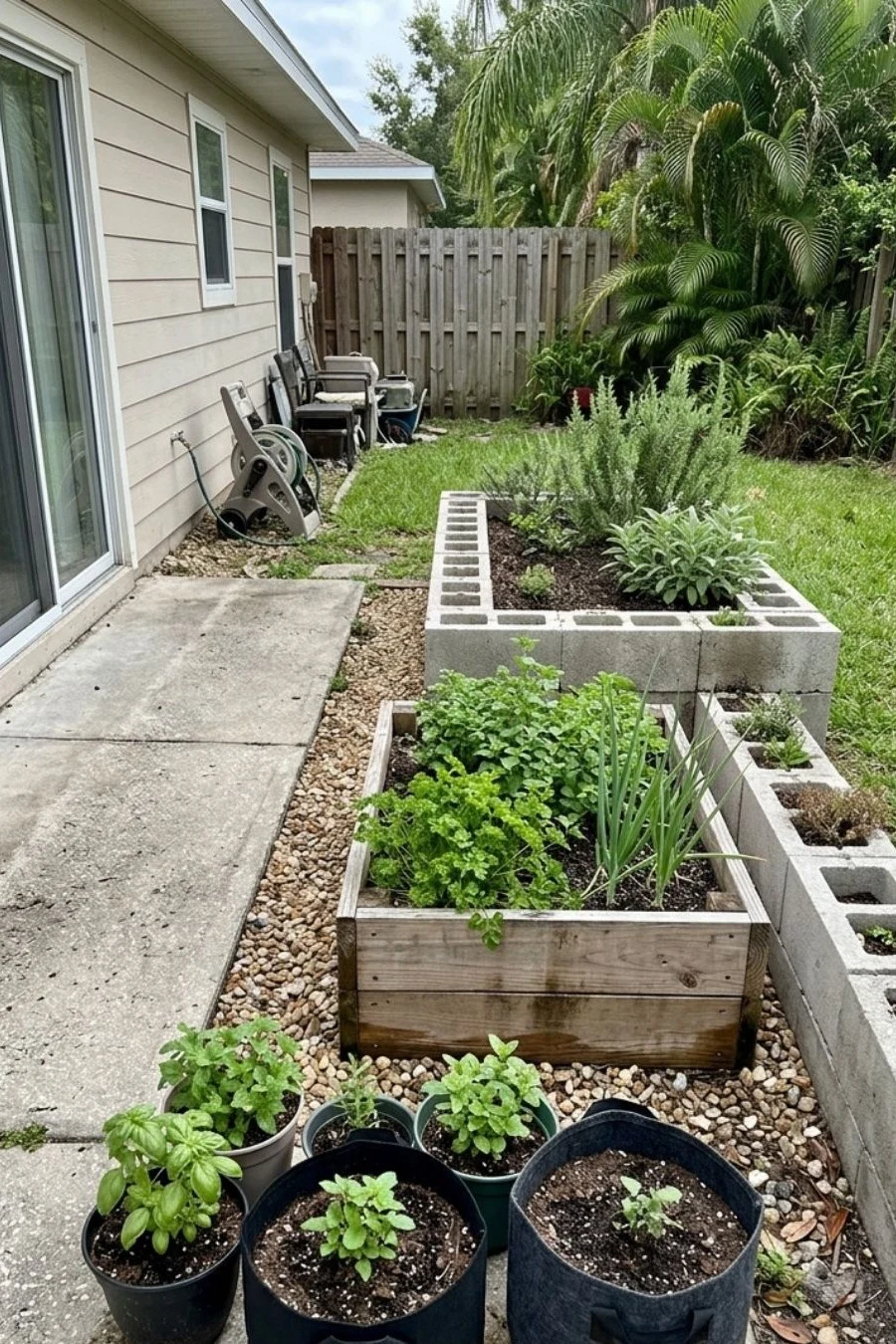
If you are testing a new layout, wood, fabric, or modular metal may be easier to change. If the garden location is permanent and integrated with patios or walls, masonry or heavier metal can make more sense. The best material is the one that fits your budget, climate, maintenance tolerance, and future plans.
Frequently Asked Questions
What is the best raised bed material for Florida?
There is no single best material. Cedar or sturdy lumber is easy to build with, galvanized or coated metal is durable, composite resists rot, and masonry works well for permanent beds. Choose based on budget, heat exposure, drainage, desired lifespan, and whether the layout may change.
Do metal raised beds get too hot?
Metal surfaces can become hot in full sun, especially dark finishes. Soil volume, color, plant shading, irrigation, and bed location all affect root-zone temperature. In very exposed sites, use enough soil depth and monitor moisture during hot weather.
How wide should a raised bed be?
A common goal is to make the center reachable without stepping into the soil. Beds accessed from both sides can be wider than beds against a fence or wall. Your arm reach and path layout matter more than following one fixed number.
Should a raised bed have a bottom?
Beds placed directly on soil often remain open at the bottom so roots and water can move naturally. Elevated patio planters need a structural bottom and drainage. The construction depends on whether the bed is on soil, pavers, a deck, or another surface.
Final Thoughts
Choose raised-bed materials by lifespan, climate, access, and how permanent you want the layout to be. A simple well-proportioned bed with comfortable paths and good drainage will usually outperform a more expensive design that is too wide, too hot, or difficult to reach. For crop layout ideas, see our raised garden bed planning guide and small vegetable garden layouts.