Vegetable garden trellis ideas can make a small garden easier to use by moving climbing crops up instead of letting vines spread across paths and beds. The best trellis is not always the tallest or most decorative one. It is the support that matches the crop, fits the bed, stays stable in wind, and still lets you reach the fruit.
For a compact backyard, raised bed, or patio garden, vertical growing can free up valuable ground space. It can also improve airflow, keep fruit off damp soil, and make harvesting easier. Before you build anything, look at the plant’s weight, climbing habit, sun direction, and how much room you need to move around the bed.
Why Trellis Vegetables in a Small Garden?
A trellis works best when it solves a real space or plant-support problem. Cucumbers, pole beans, peas, and many flowering vines naturally want to climb. Indeterminate tomatoes can also benefit from tall, sturdy support, although they need tying rather than tendrils. If you are still deciding how to use height in a compact yard, our vertical garden guide can help you plan the larger layout.
Vertical growing does not create more sunlight, so placement still matters. A tall trellis on the south side of a bed can shade shorter vegetables behind it. In many U.S. gardens, placing tall supports toward the north or back side of a bed helps reduce unwanted shade, but always check your actual sun pattern.
Trellis Types for Small Vegetable Gardens
1. Rustic Branch Ladder Trellis
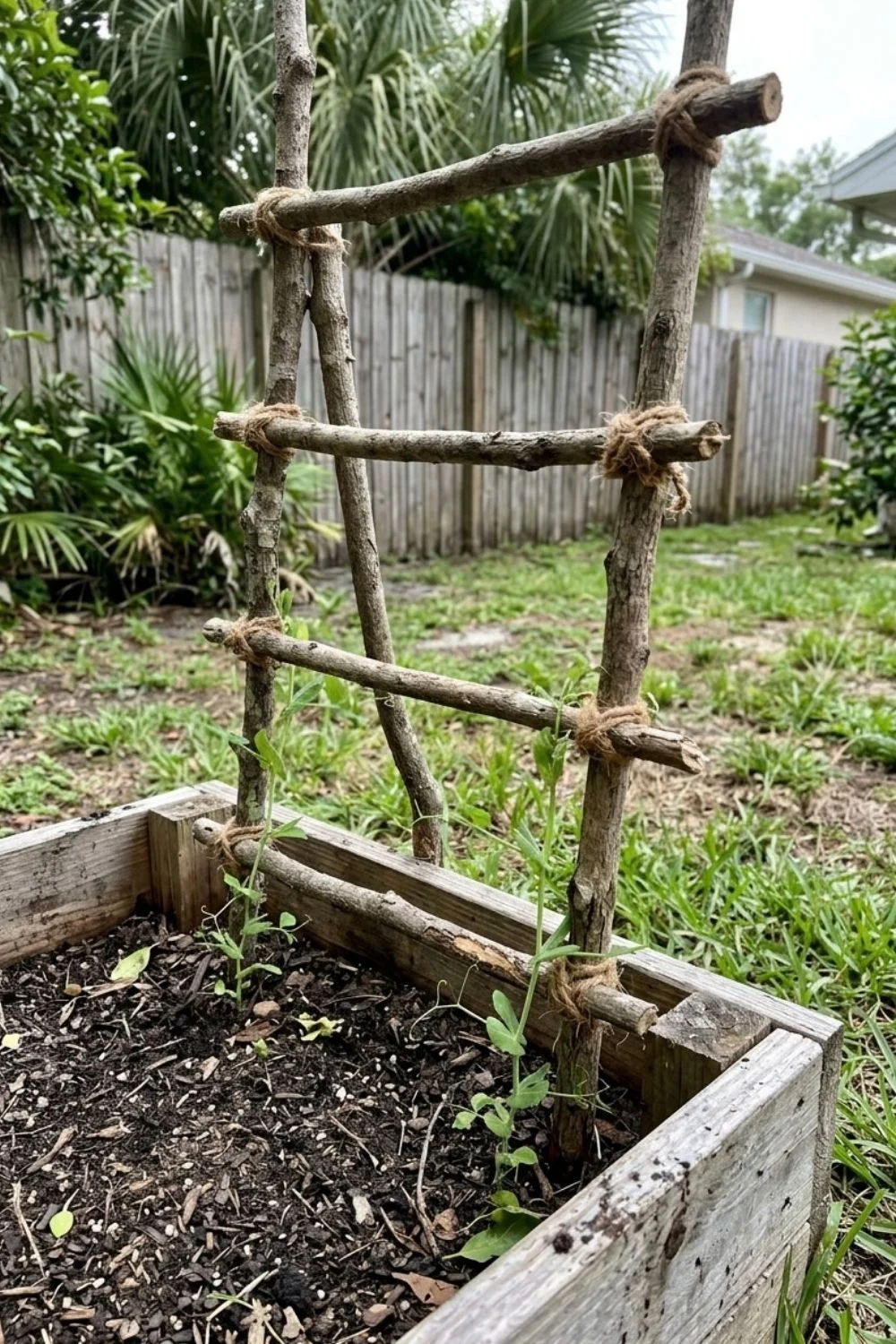
A branch ladder is a simple choice for peas, lightweight beans, and flowering vines. Use two sturdy side branches with smaller crosspieces tied securely between them. Lean it against a fence or anchor it in a bed. It works best for light crops because natural branches can vary in strength.
2. Copper Pipe Grid Trellis
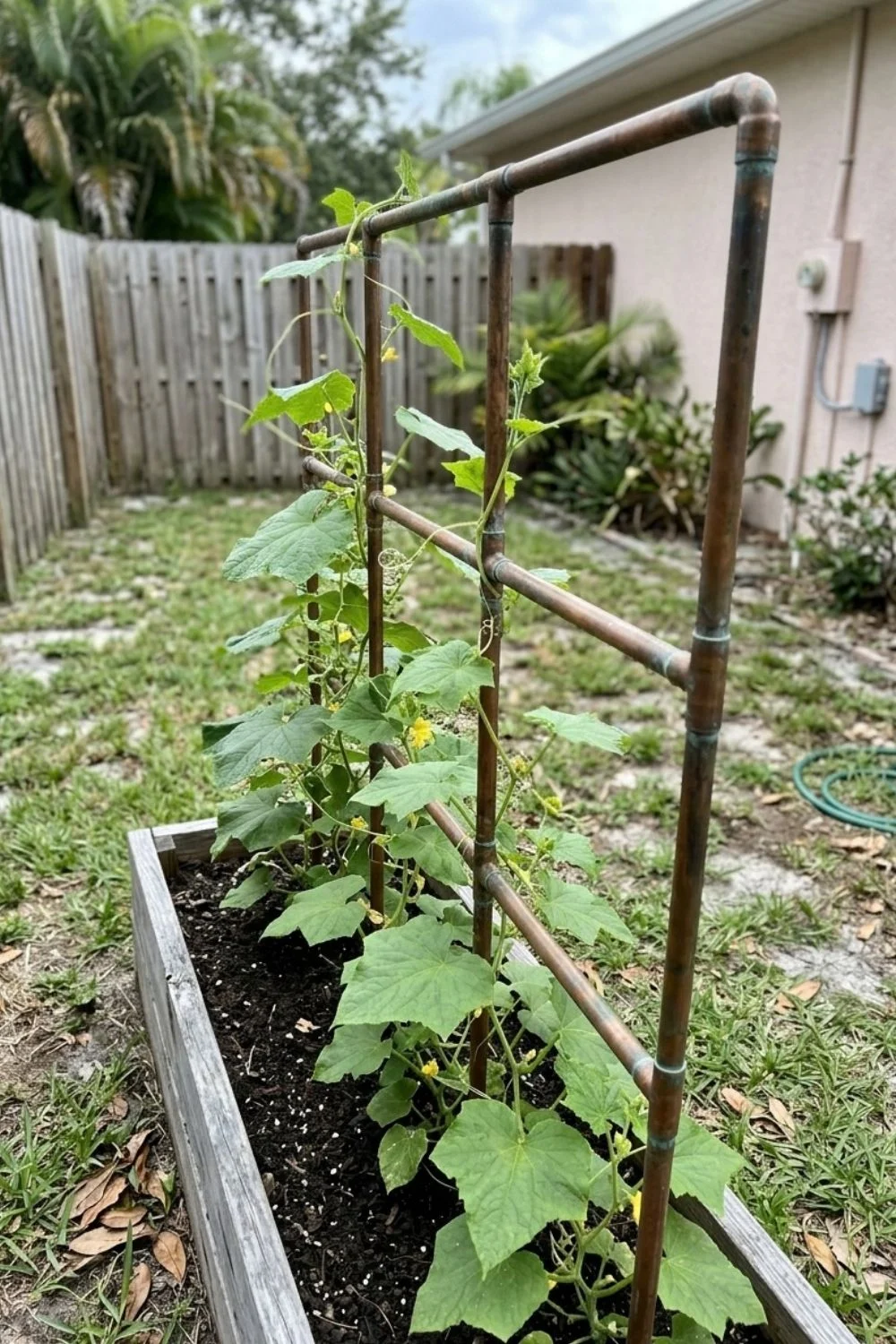
A copper grid gives a narrow garden a clean, structured look. Build a simple rectangle with horizontal or vertical crossbars, then anchor it firmly. It suits peas, small cucumbers, and decorative climbers. Remember that metal can heat up in strong summer sun, so use plant ties where stems need protection.
3. Upcycled Bicycle Wheel Trellis
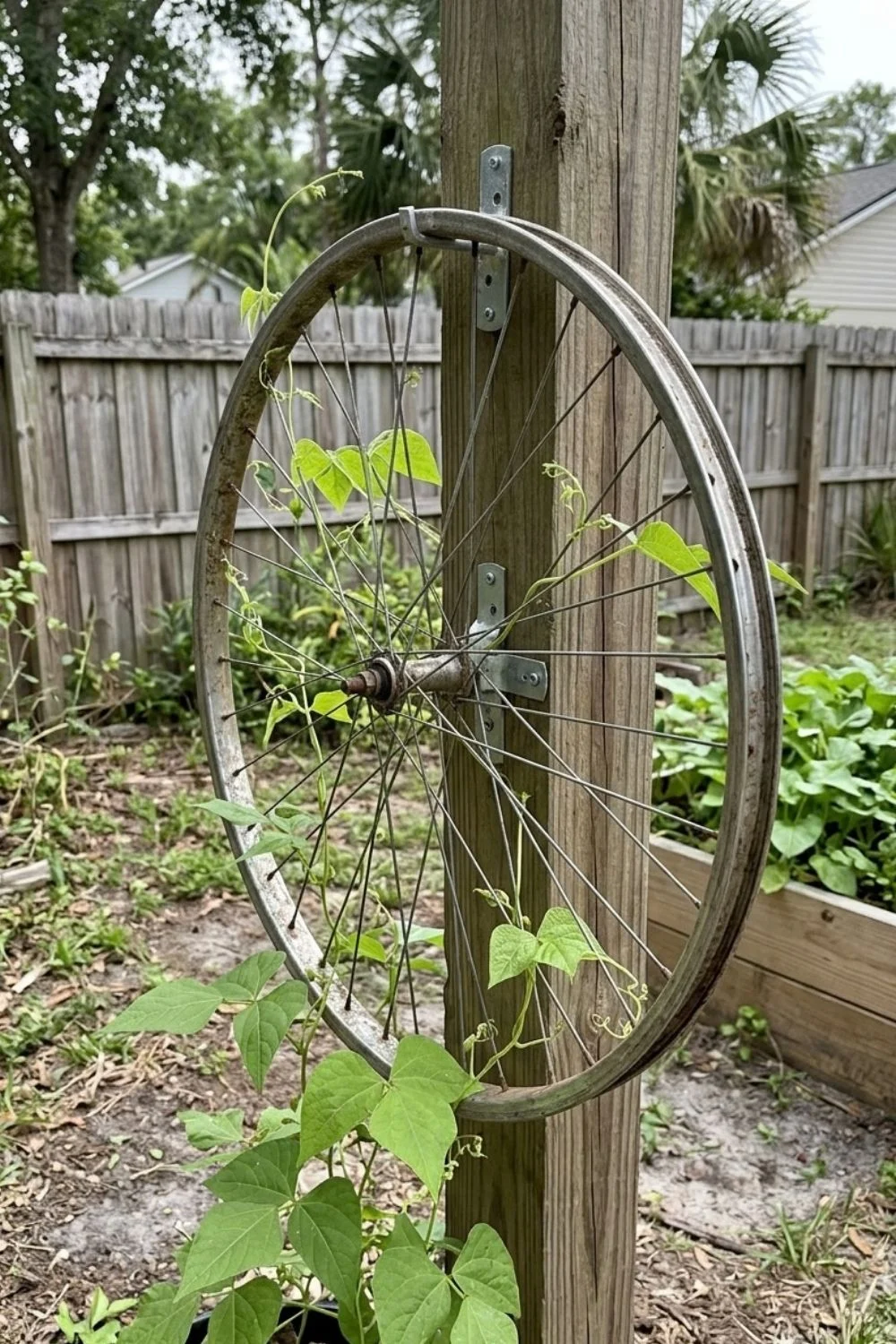
An old bicycle wheel can become a compact circular support when mounted securely to a post, fence, or wall frame. The spokes give vines many places to grab. This is better for light climbers than heavy squash, but it can work well in a small garden where a full-width trellis would feel too large.
4. Classic Wood A-Frame Trellis
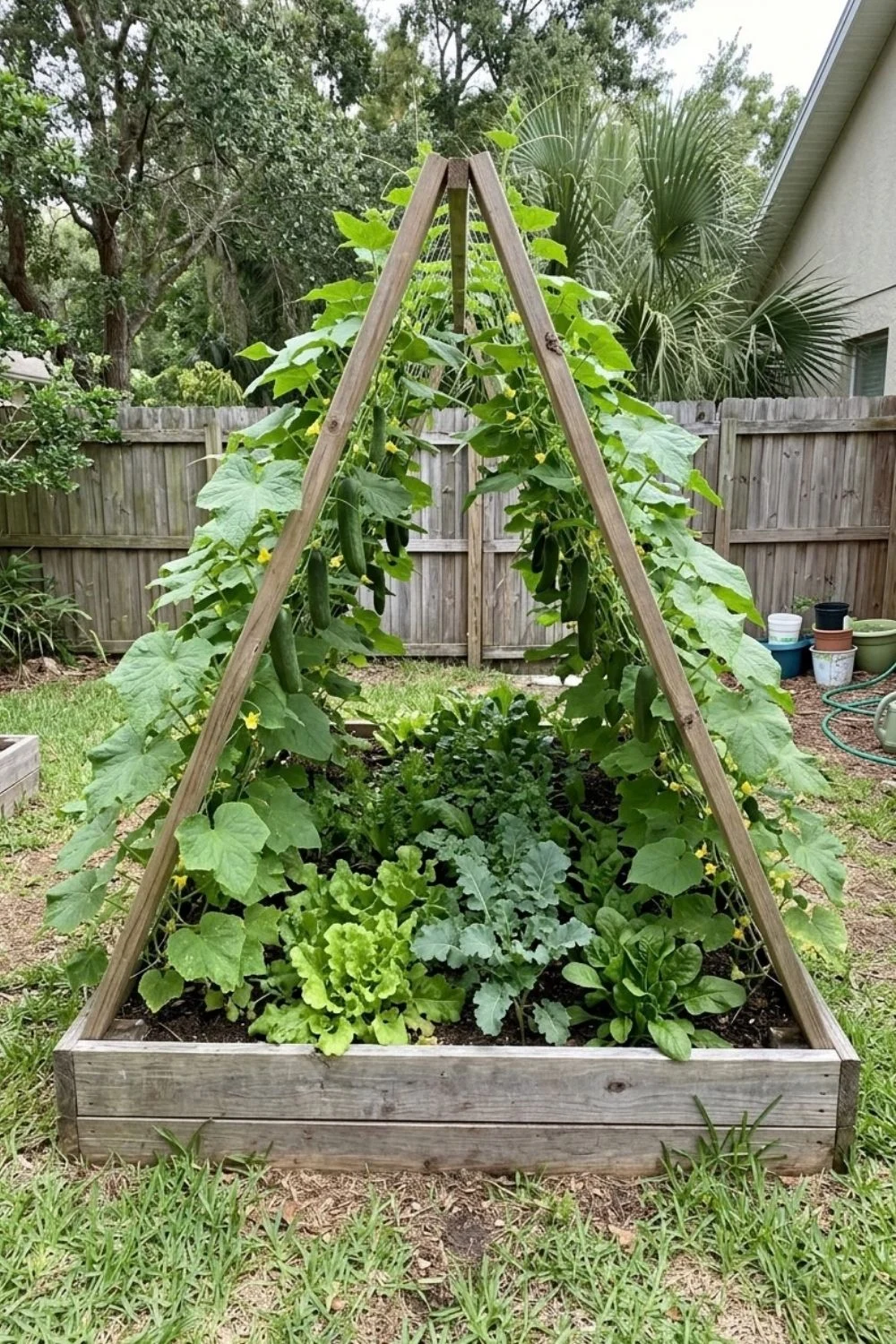
An A-frame is one of the most useful supports for small vegetable beds. Two panels meet at the top and create growing space on both sides. Cucumbers, peas, and pole beans can climb the frame while leafy greens grow nearby. For more bed-planning help, see our raised garden bed layout ideas.
5. Woven Willow Obelisk
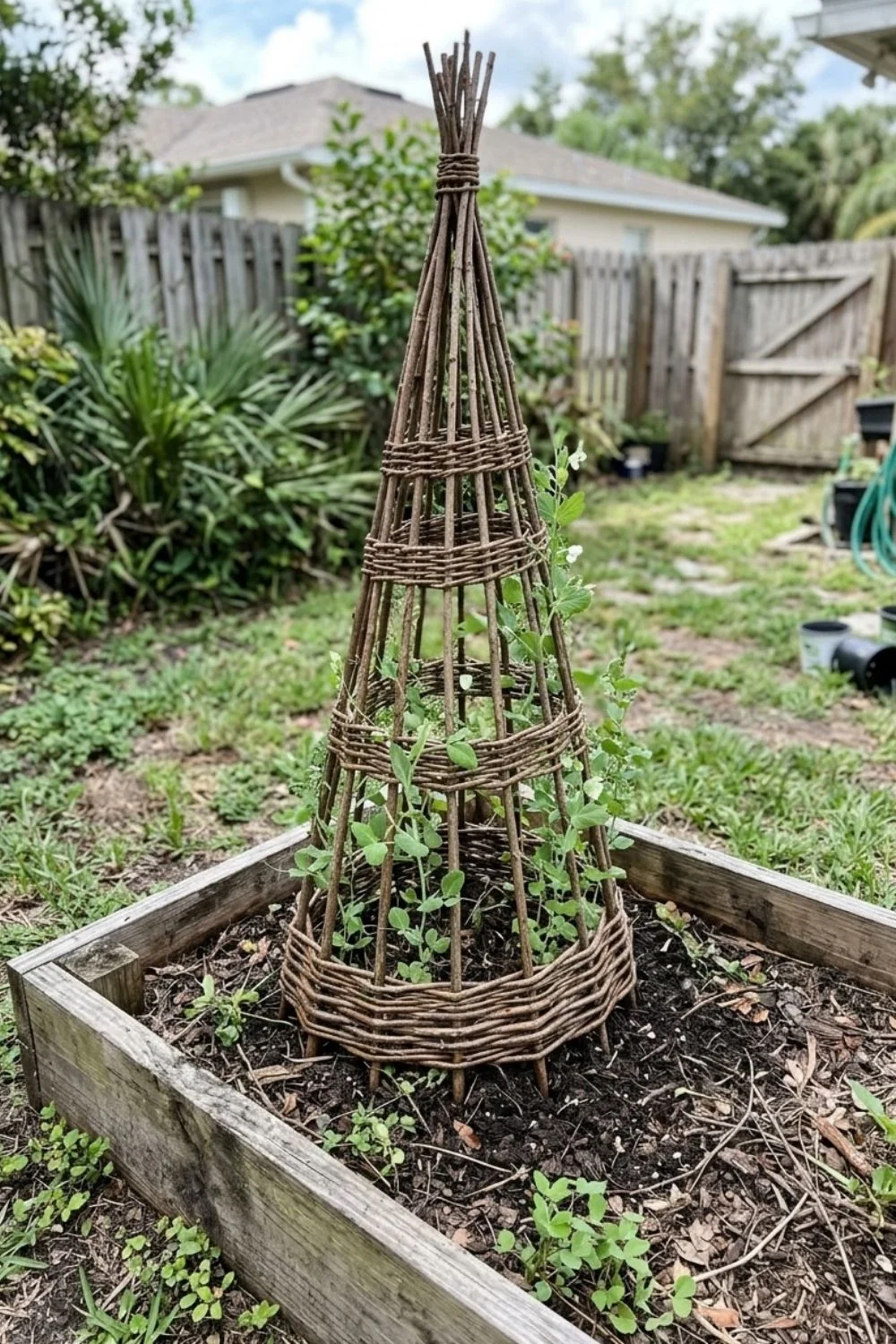
A willow obelisk adds vertical support without taking much ground space. It works well in a corner of a raised bed or large container. Use it for peas, small beans, or lightweight flowering climbers. Keep the base wide enough that the structure does not tip when the plant becomes top-heavy.
6. Repurposed Door Frame Trellis
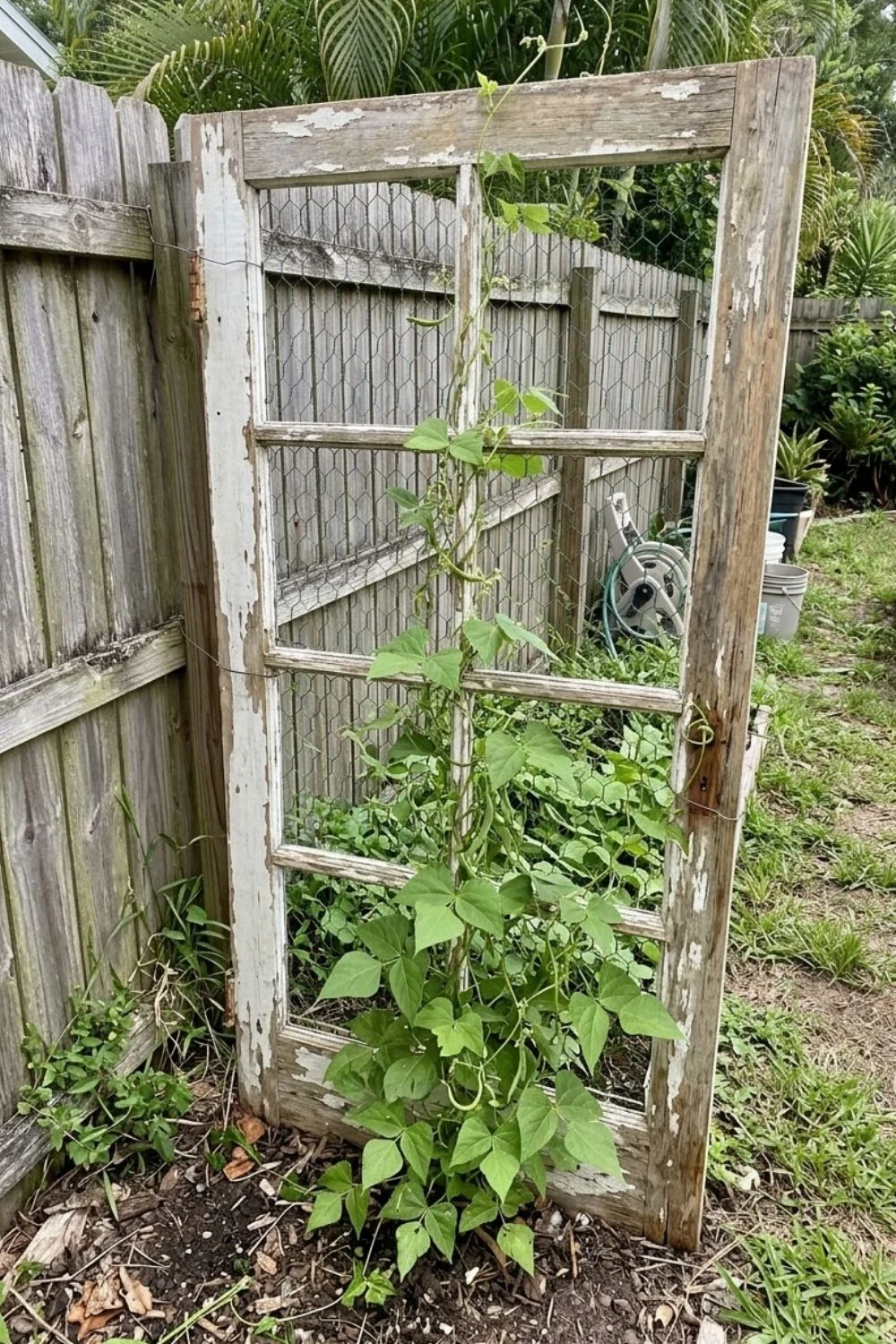
A solid old door frame can be reused after glass and unsafe hardware are removed. Add garden wire or weather-resistant cord across the openings to create climbing points. Secure the frame so it cannot fall. This setup can make a useful privacy screen along a patio or vegetable garden edge.
7. Rebar Grid Trellis
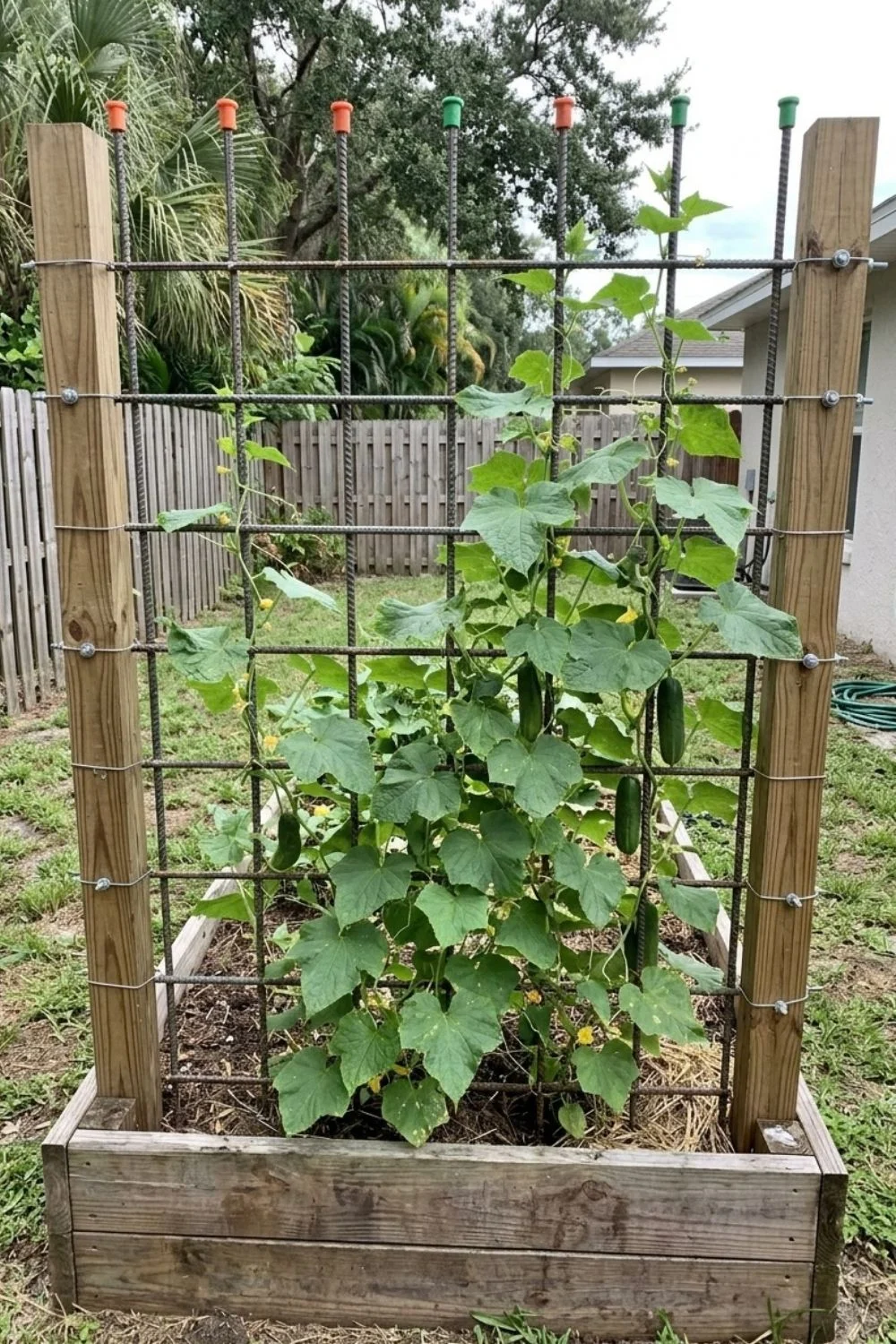
A rebar grid is strong enough for vigorous vines and can last for years. It is especially useful where flimsy stakes fail in wind. Keep sharp ends capped or below a safe height, and anchor the grid deeply. Use it for beans, cucumbers, and other crops that need a rigid support.
8. Accordion Trellis
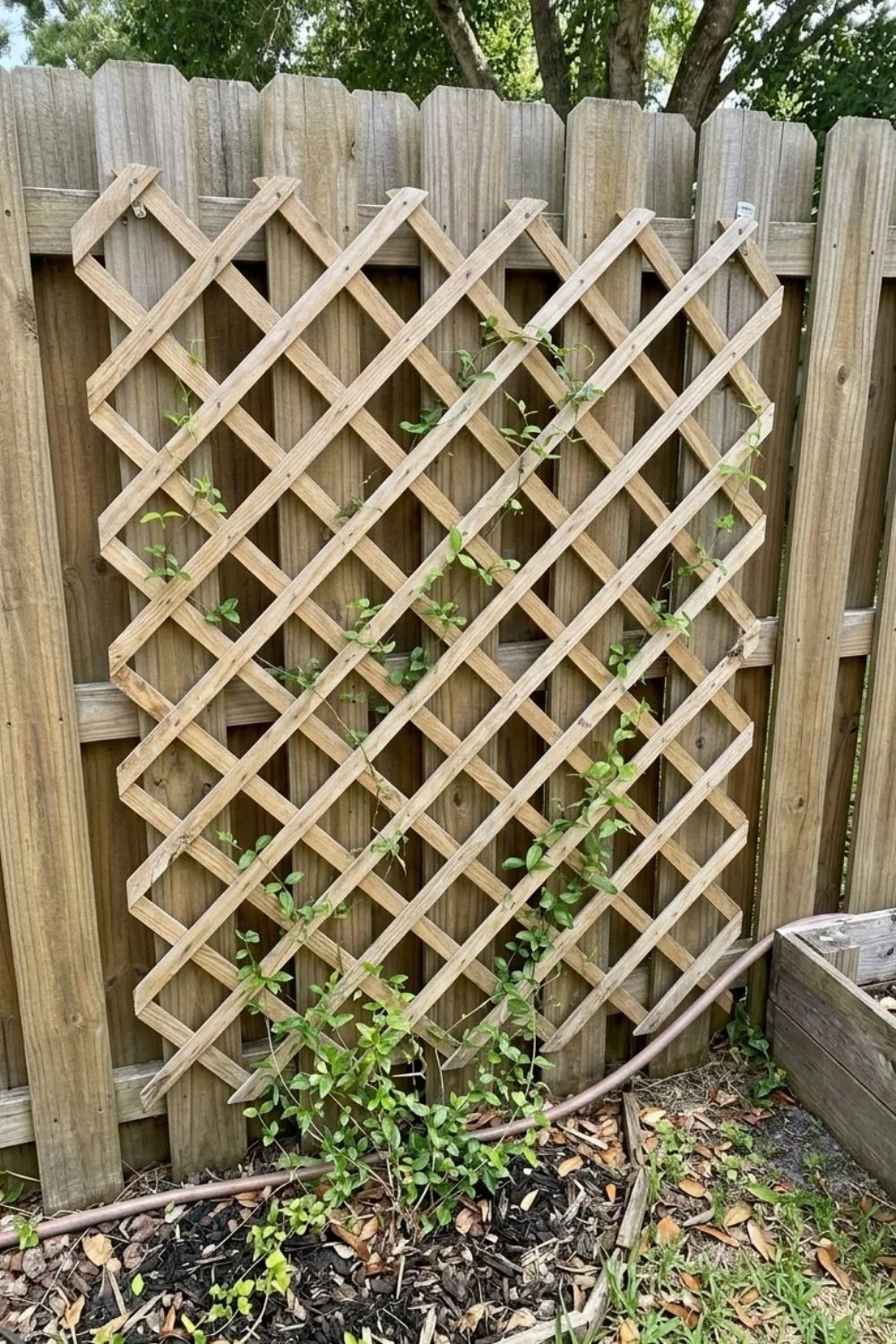
An expandable wood trellis can fit a narrow fence, patio wall, or small bed. Open it wider for more coverage or keep it compact in a tight space. It is best for light to medium climbers. Leave a small air gap from a wall so leaves can dry after watering or rain.
9. String Grid Trellis
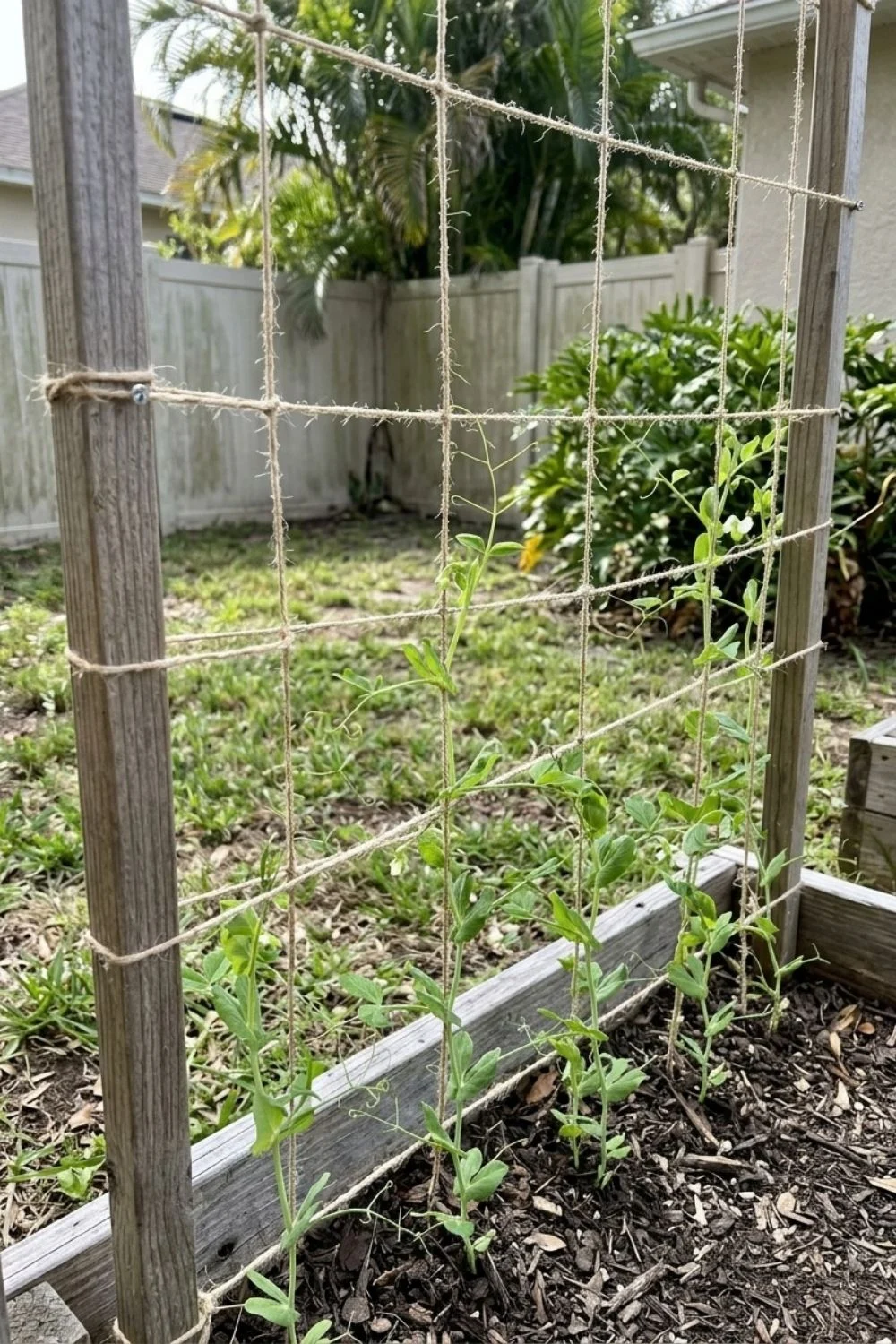
A string grid is inexpensive and easy to replace each season. Attach strong garden twine to a frame and make vertical lines or a simple grid. Peas and beans can climb it easily. Check the tension during the season because wet weather and plant weight can make loose lines sag.
10. Bamboo Teepee Trellis
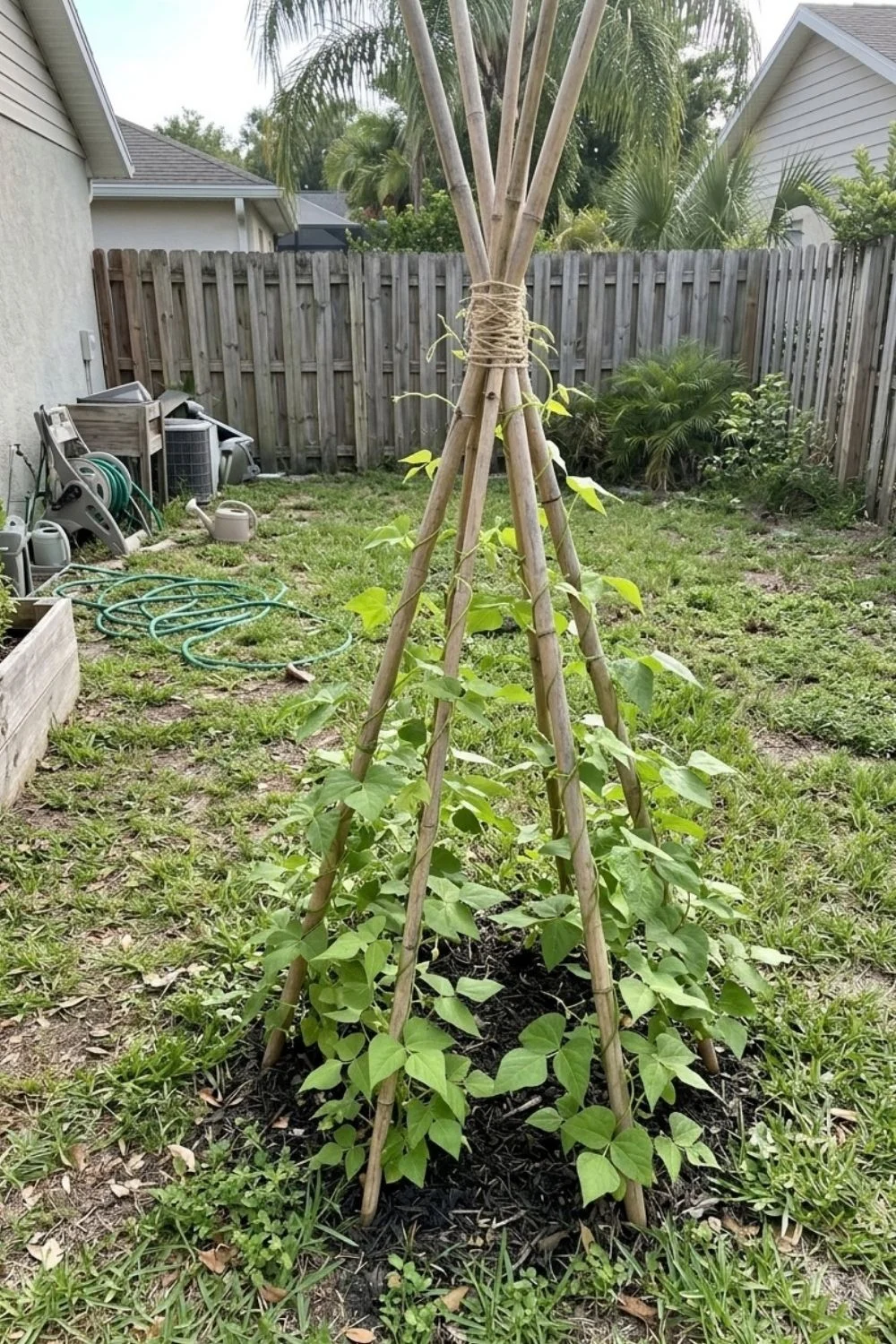
A bamboo teepee is fast to build and works well for pole beans. Push several long poles into the soil in a circle and tie them together firmly at the top. Keep the center open enough for airflow. In a small bed, place the teepee where it will not block your main walking route.
Cucumbers, Beans, Peas, and Other Climbing Crops
Different vegetables climb in different ways. Peas use tendrils, pole beans twine around supports, cucumbers grab with tendrils but become heavier as fruit develops, and tomatoes usually need ties or clips. Choose support spacing that gives the plant something easy to reach.
11. Upcycled Headboard Trellis
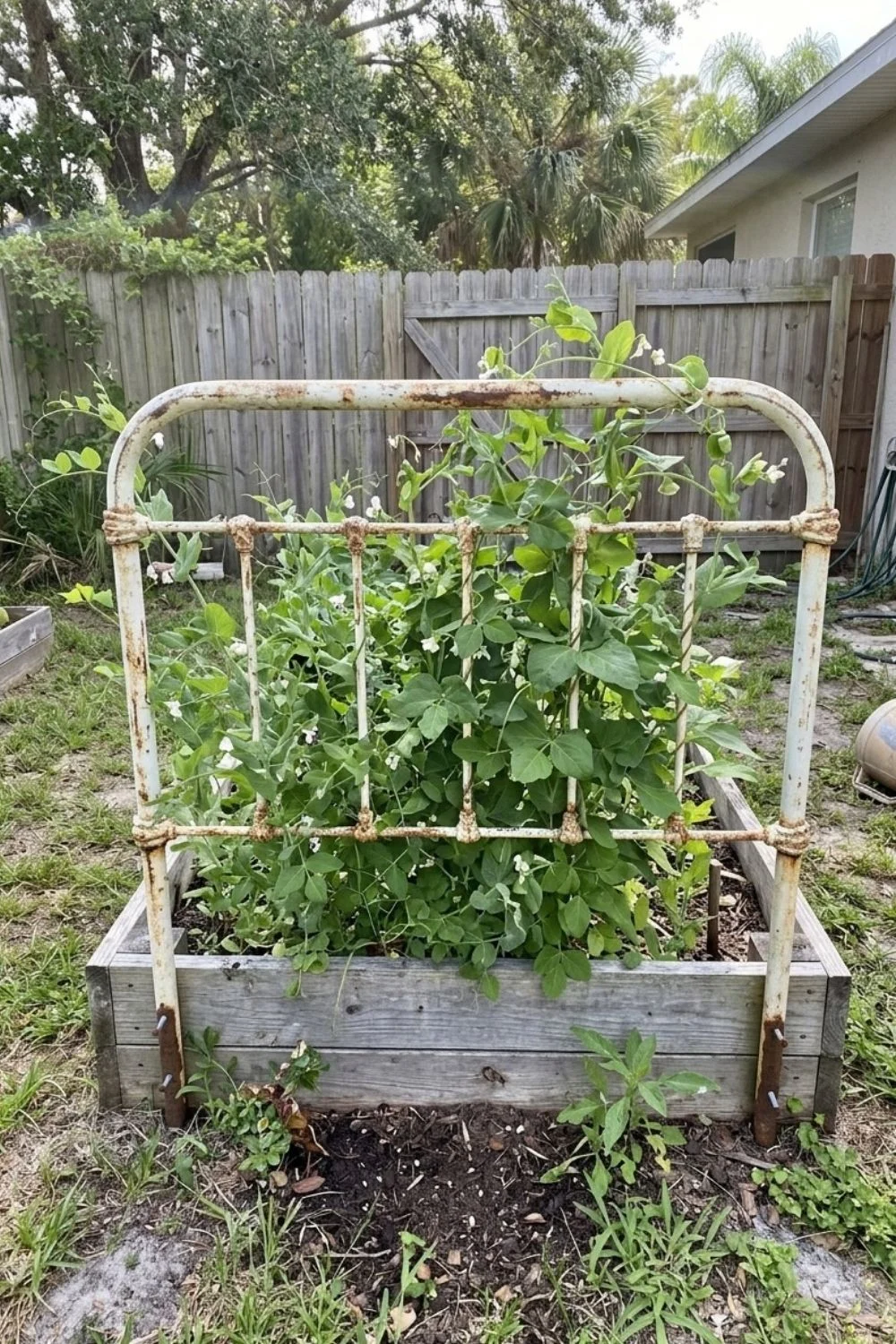
A metal or wood headboard can provide instant vertical structure in a garden bed. Secure it to posts so it cannot lean or fall. The existing bars and openings work well for peas, beans, or decorative vines. Avoid painted pieces that are flaking badly or have unknown coatings near edible crops.
12. Living Arch Trellis
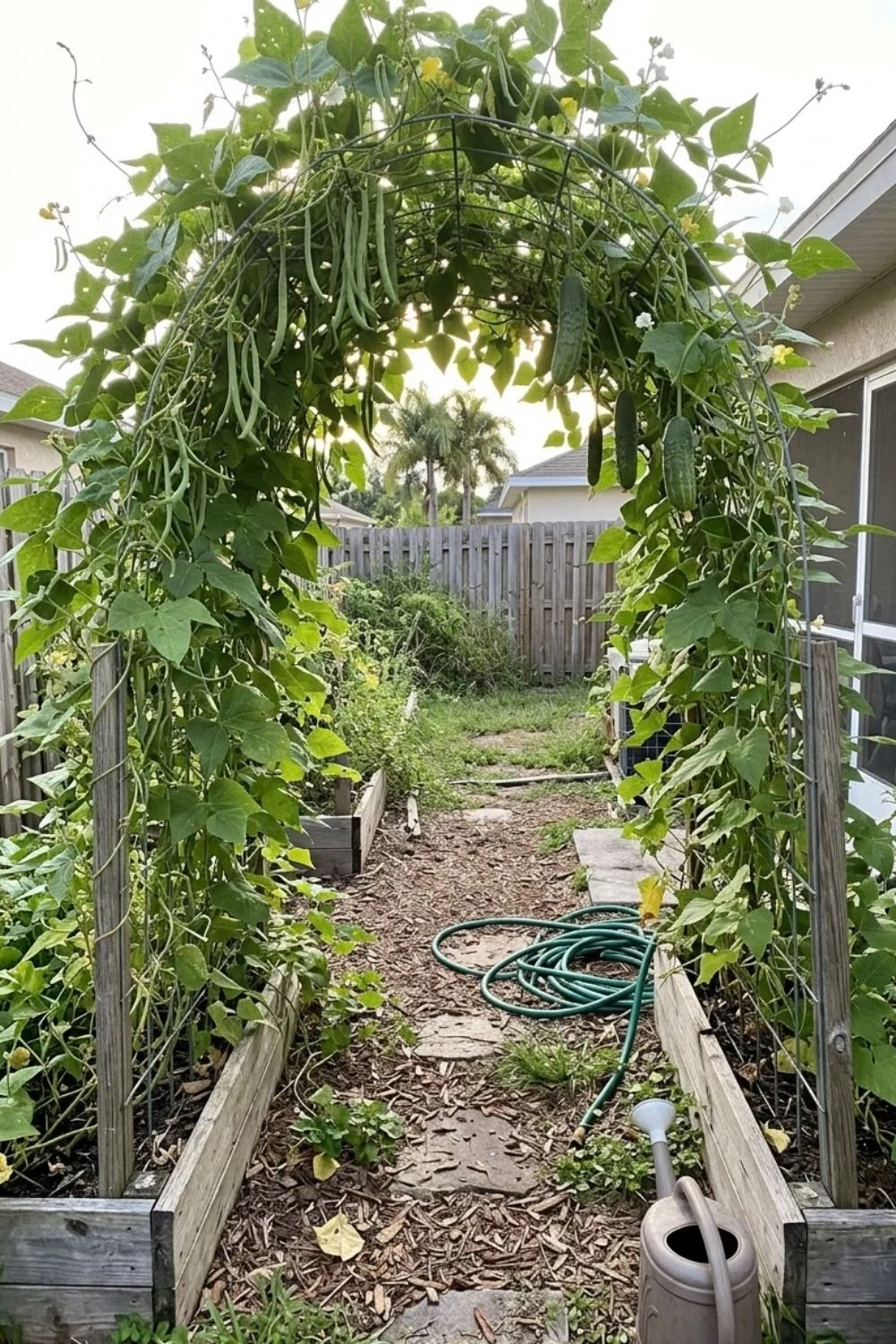
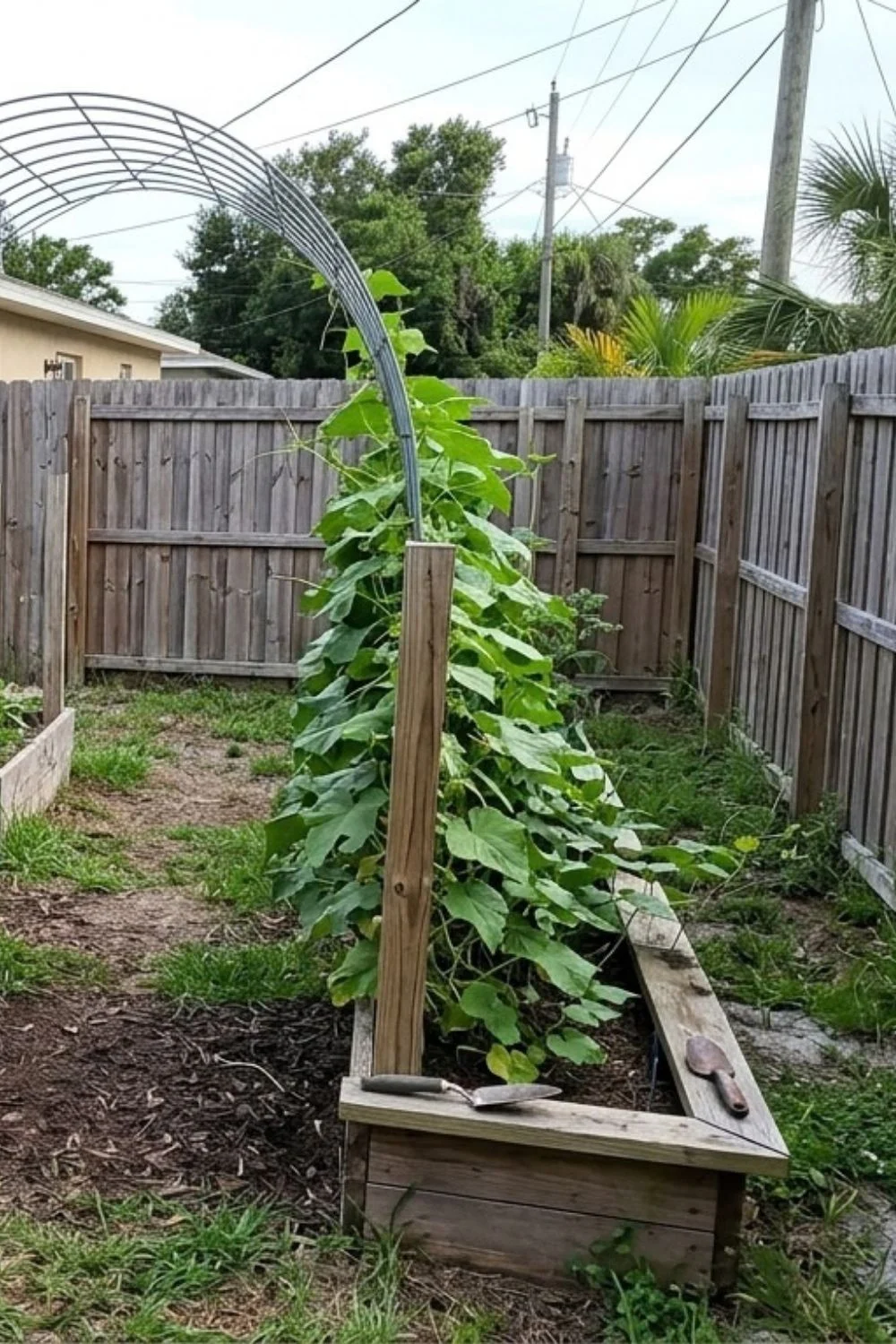
An arch over a path can grow food without using extra bed width. Strong cattle panel, welded wire, or a sturdy wood frame can support beans, cucumbers, small gourds, and some squash varieties. Make the walkway wide enough to pass comfortably and check that hanging fruit will not hit people at head level.
13. Salvaged Window Frame Trellis
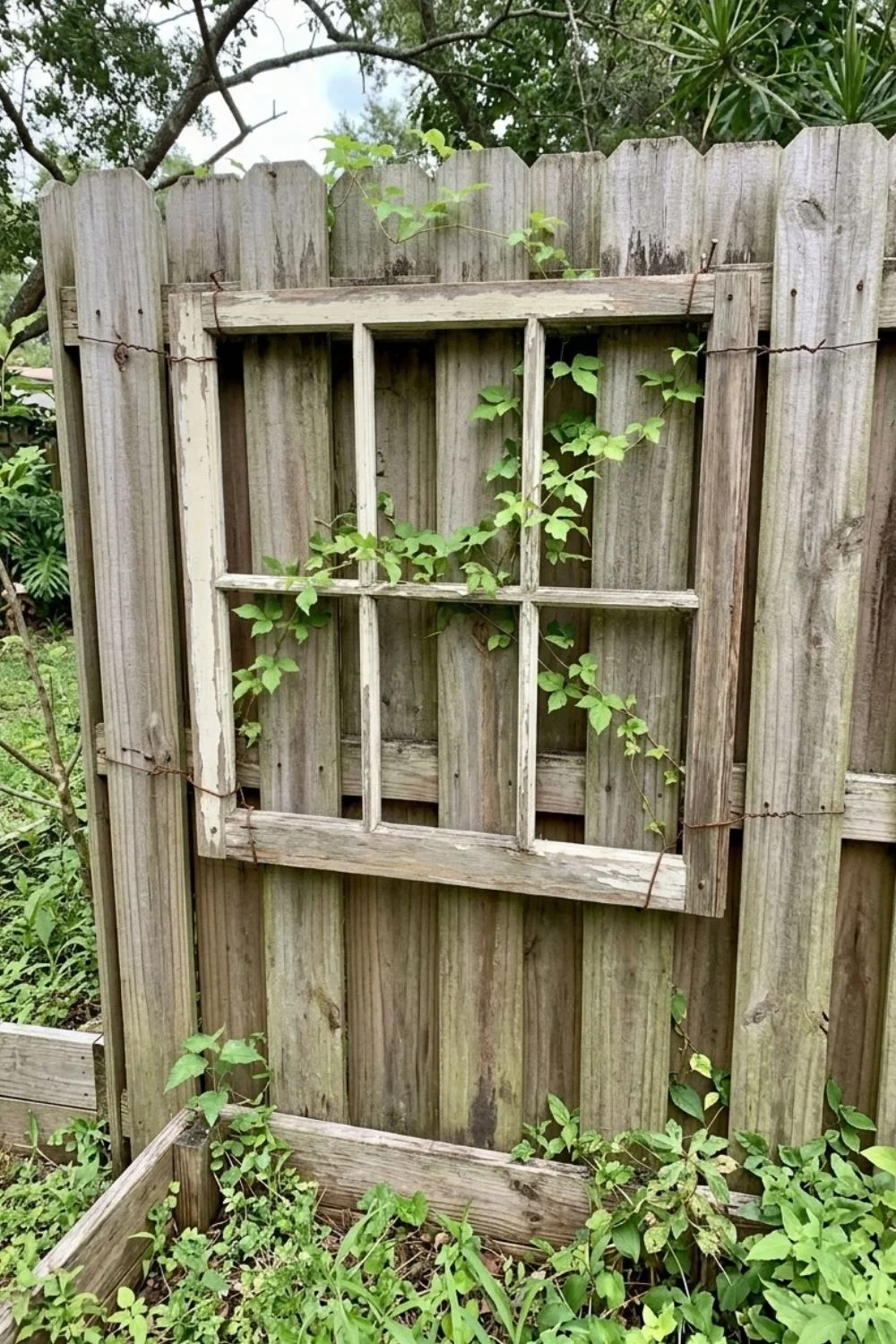
A window frame with all glass removed can become a small wall-style trellis. Add wire or cord across the open sections if vines need more grip. This is a good option for herbs with climbing flowers nearby or lightweight vegetables. Sand rough edges and fasten the frame securely before planting.
14. Pergola-Style Wall Trellis
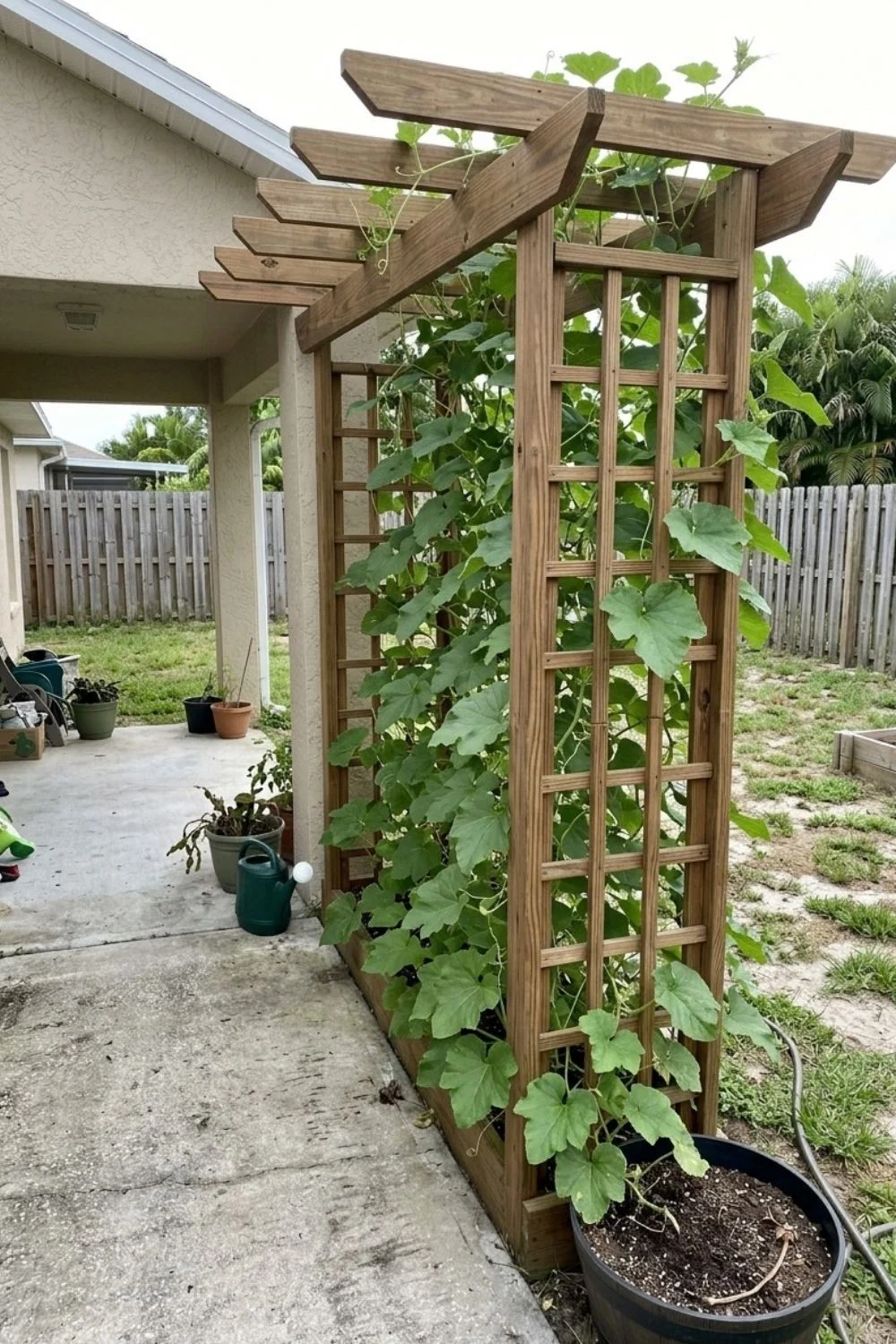
A wall trellis with a small overhead section can support vigorous vines while adding partial shade to a sitting area. In a vegetable garden, use it carefully so the structure does not shade sun-loving crops. Keep vines away from siding, gutters, and roof edges where maintenance becomes difficult.
15. Simple Stake-and-Twine Trellis
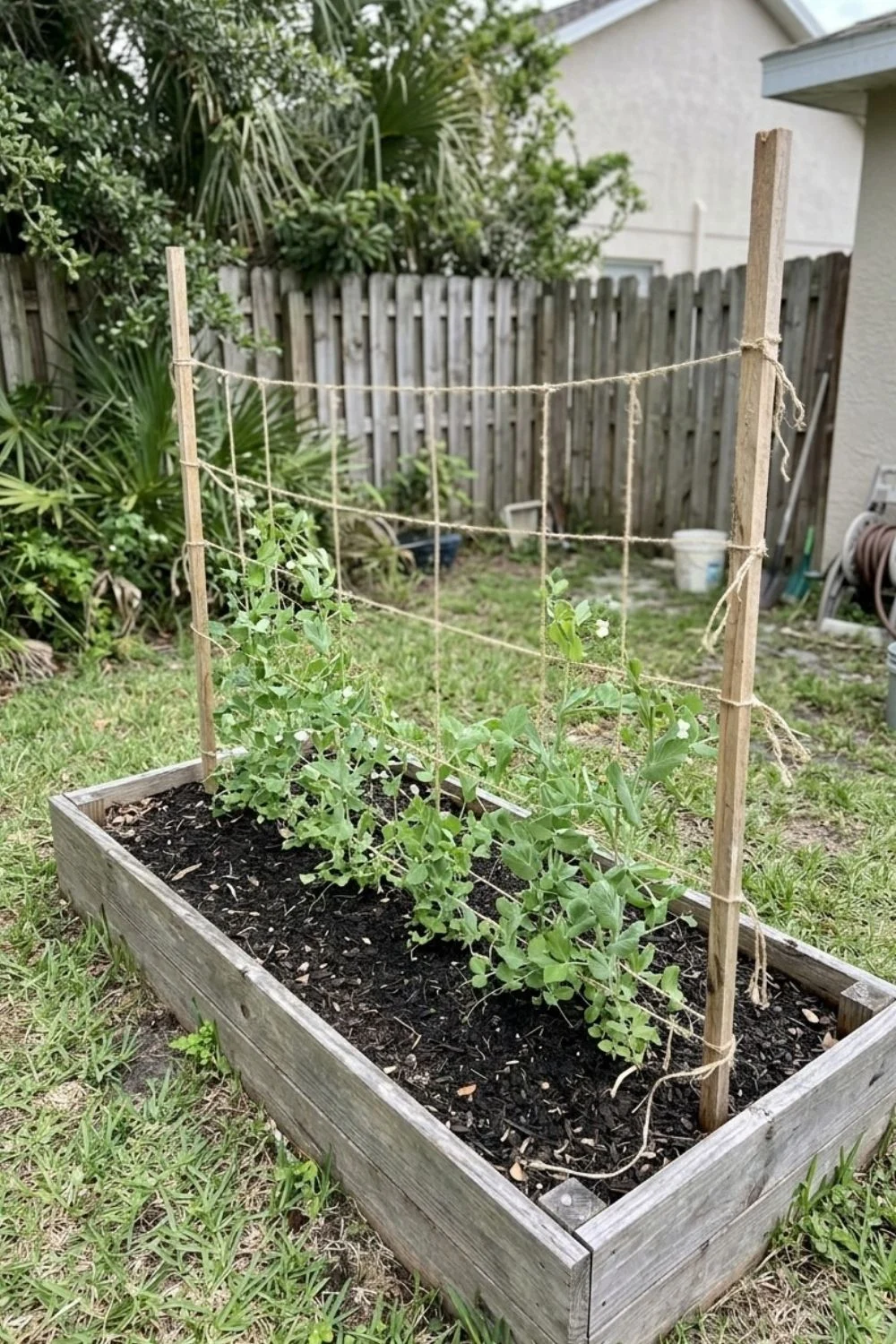
Two or more strong stakes plus garden twine can support rows of peas and beans with very little cost. Add horizontal lines every few inches so young vines can find support quickly. This method is easy to remove after the season and works especially well in a compact vegetable layout.
16. Hanging Chain Trellis
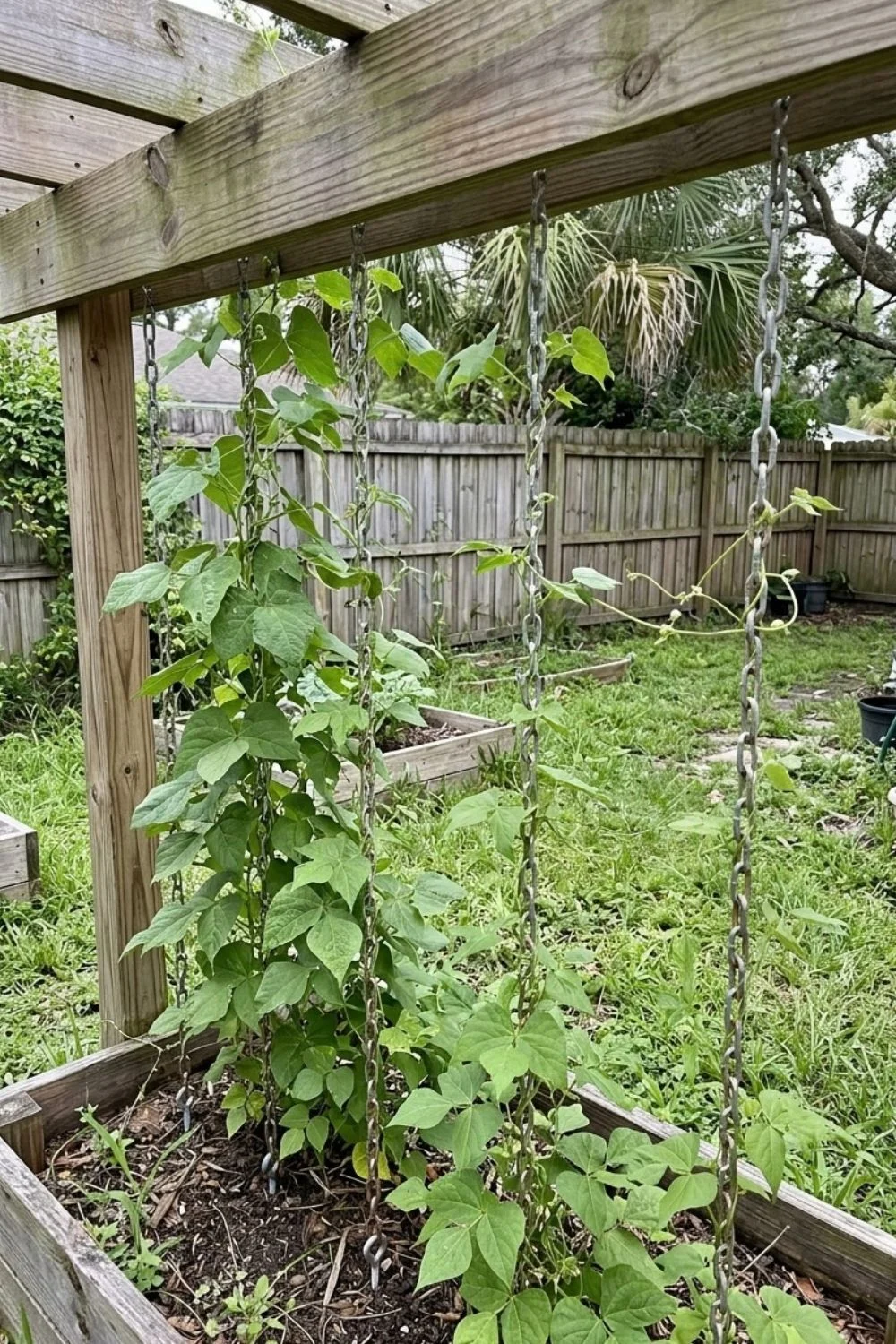
Metal chains hung from a sturdy overhead beam can create narrow vertical supports where ground space is limited. Use only where the structure above can carry the load. Fast-growing vines can climb beside the chains with training. Keep the lower ends anchored so wind does not swing them into nearby plants.
17. Geometric Plywood Trellis
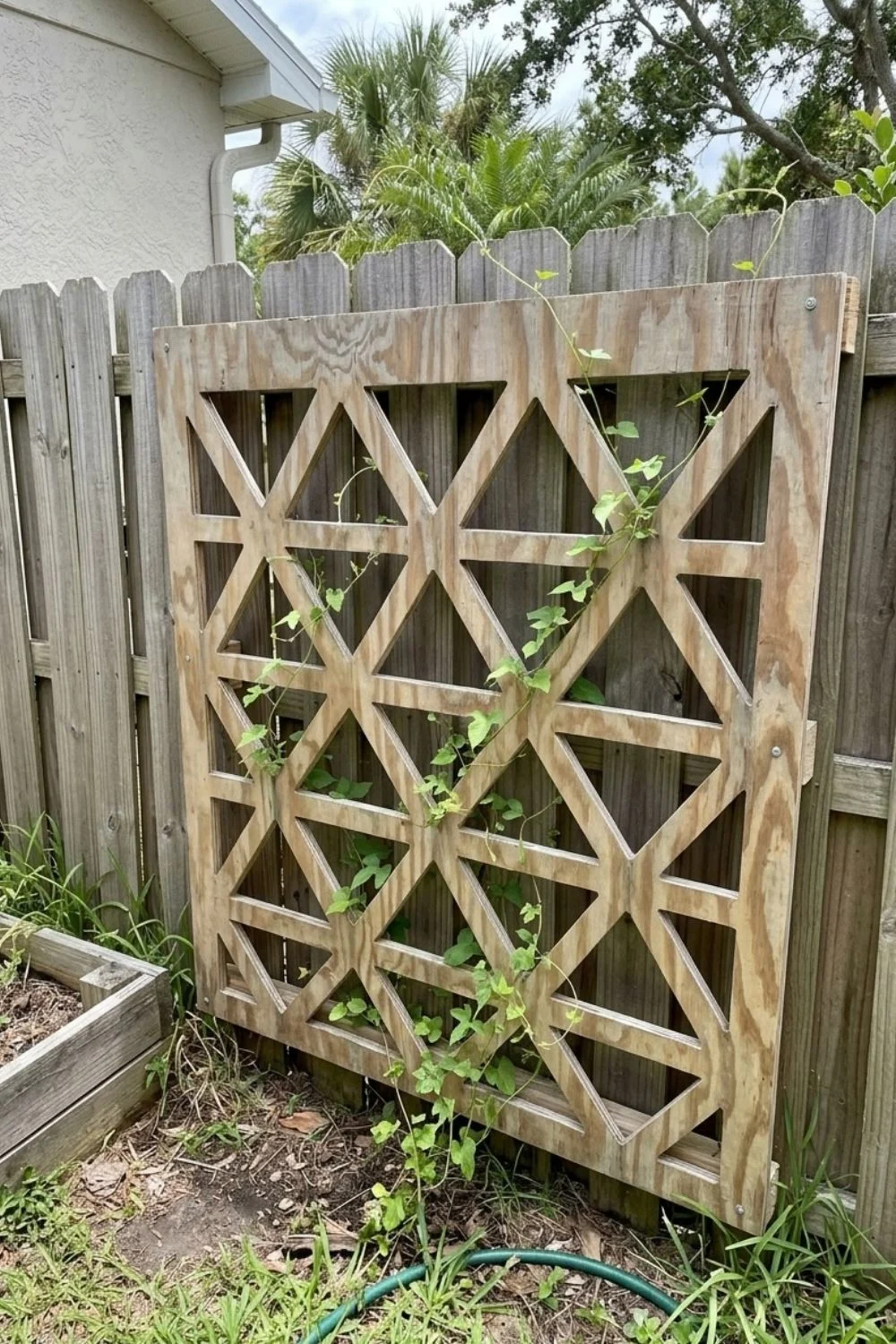
A weather-resistant plywood panel with large cutout shapes can act as both a screen and climbing support. Keep enough open area for airflow and sunlight. Seal exterior-grade wood properly, mount it securely, and use it for lighter crops. It is better as a vertical accent than as support for very heavy squash.
18. Repurposed Crib Rail Trellis
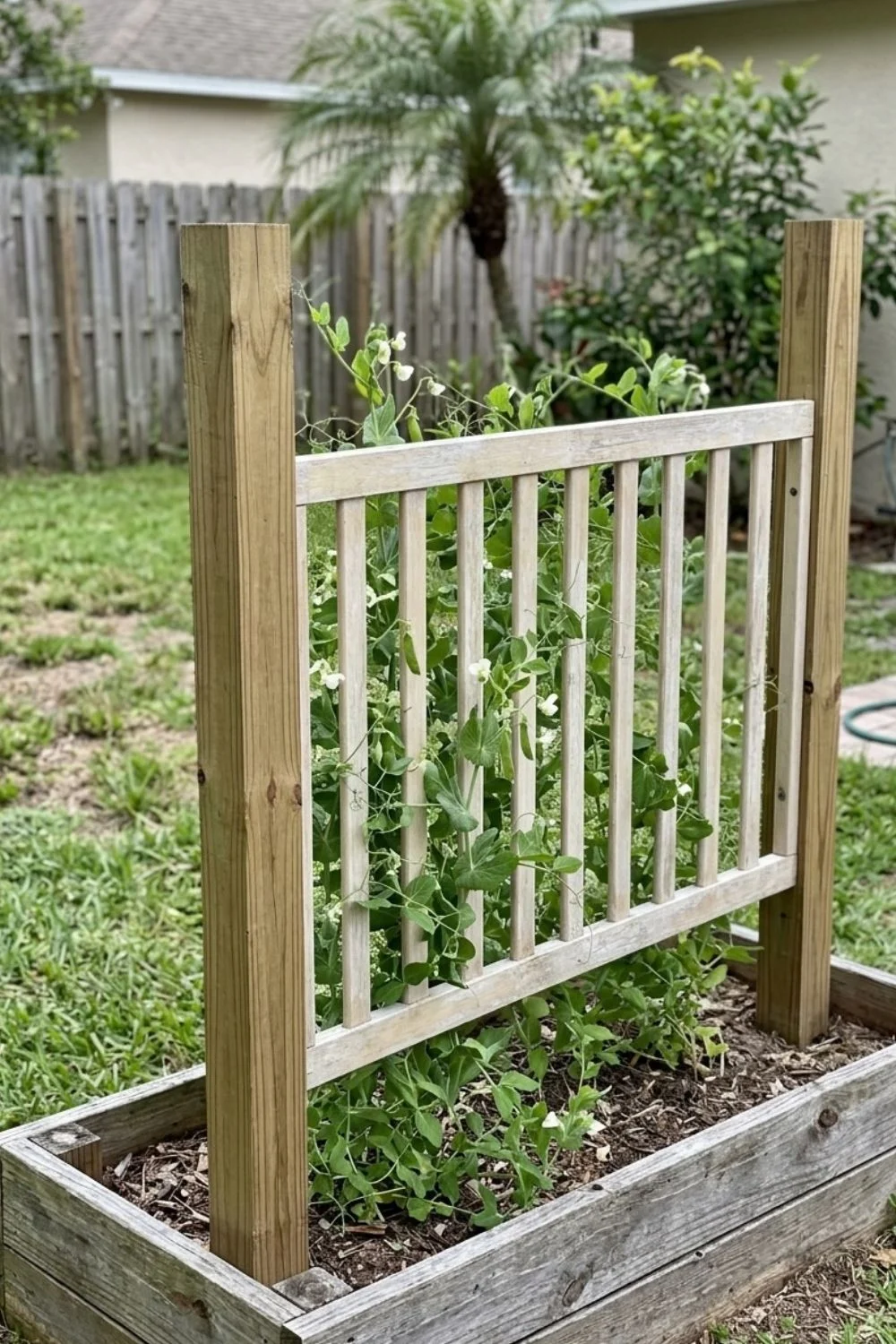
A solid crib rail can provide evenly spaced bars for vines. Only use a piece that is structurally sound and free of unsafe finishes. Anchor it to a wall, fence, or posts. The regular spacing makes it easy to train peas, beans, and cucumbers without building a new grid from scratch.
19. Wood Garden Obelisk
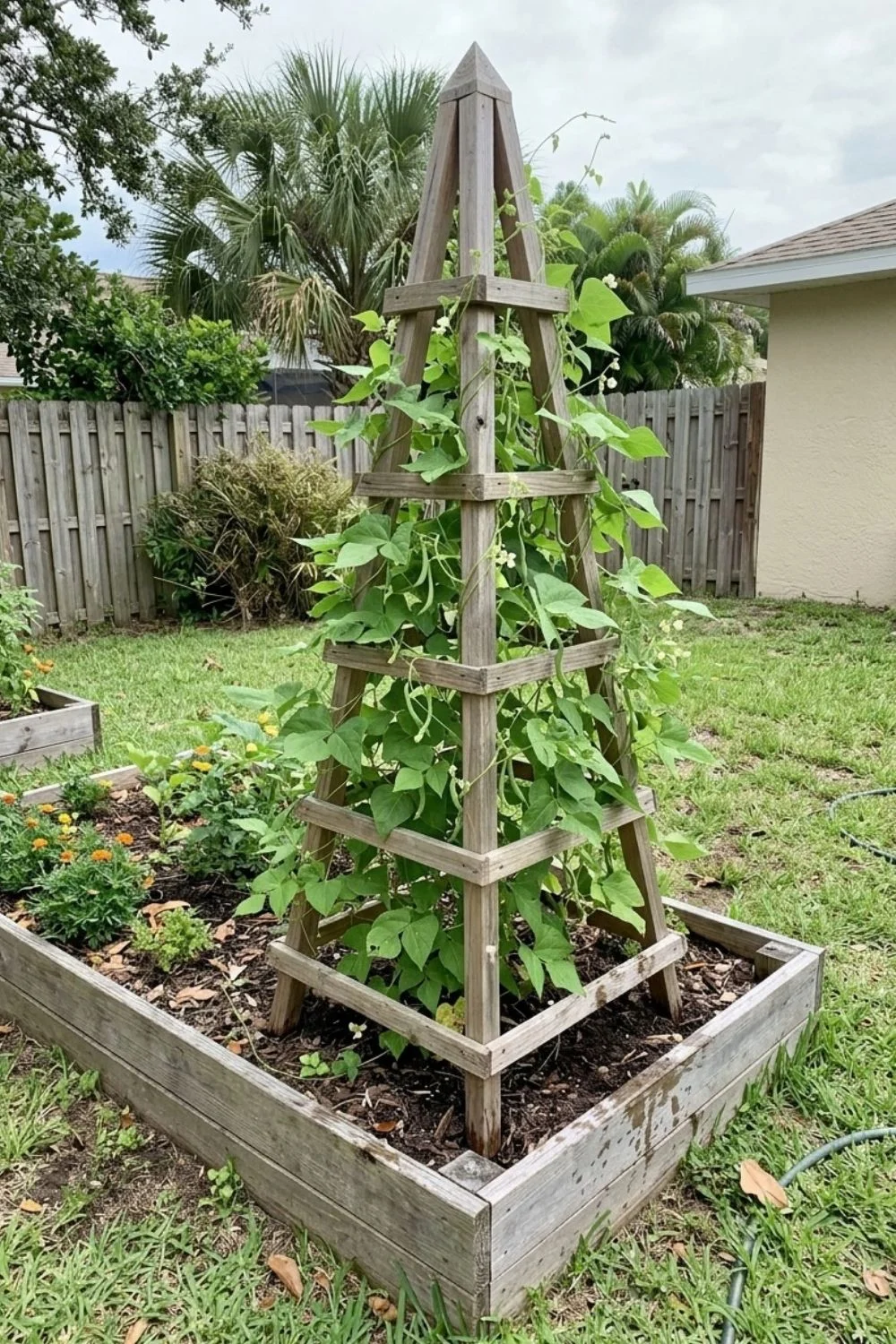
A four-sided wood obelisk works well as a compact support in the center or corner of a bed. It gives plants multiple sides to climb and adds height without a wide footprint. Use it for pole beans, peas, or supported tomatoes. Make the base wide and stable enough for mature plant weight.
20. Cattle Panel Trellis
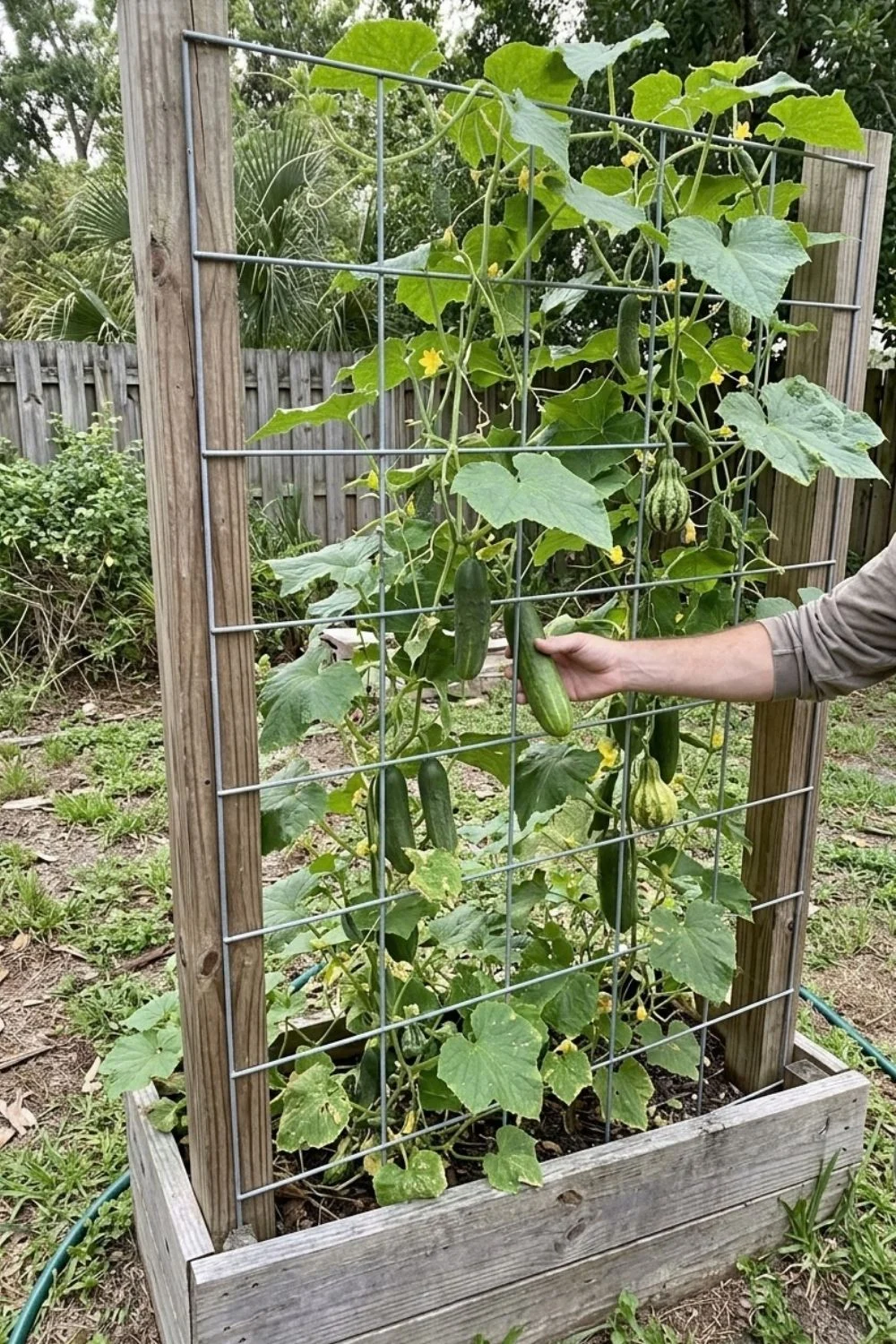
Cattle panels are strong and useful for heavy vines. Use them flat between posts or bend them into an arch. Their wide openings make harvesting easier than with fine mesh. Wear gloves when handling cut metal, cover sharp ends, and anchor the panel well. It is one of the better options for long-term vegetable support.
Tomato Supports and Raised Bed Trellises
Tomatoes do not climb exactly like peas or beans. Indeterminate types usually need ties, clips, cages, or a string system. In a raised bed, keep support hardware inside the bed footprint when possible so paths remain clear. Our small vegetable garden layout guide can help you balance support, paths, and crop spacing.
21. Spiral Trellis
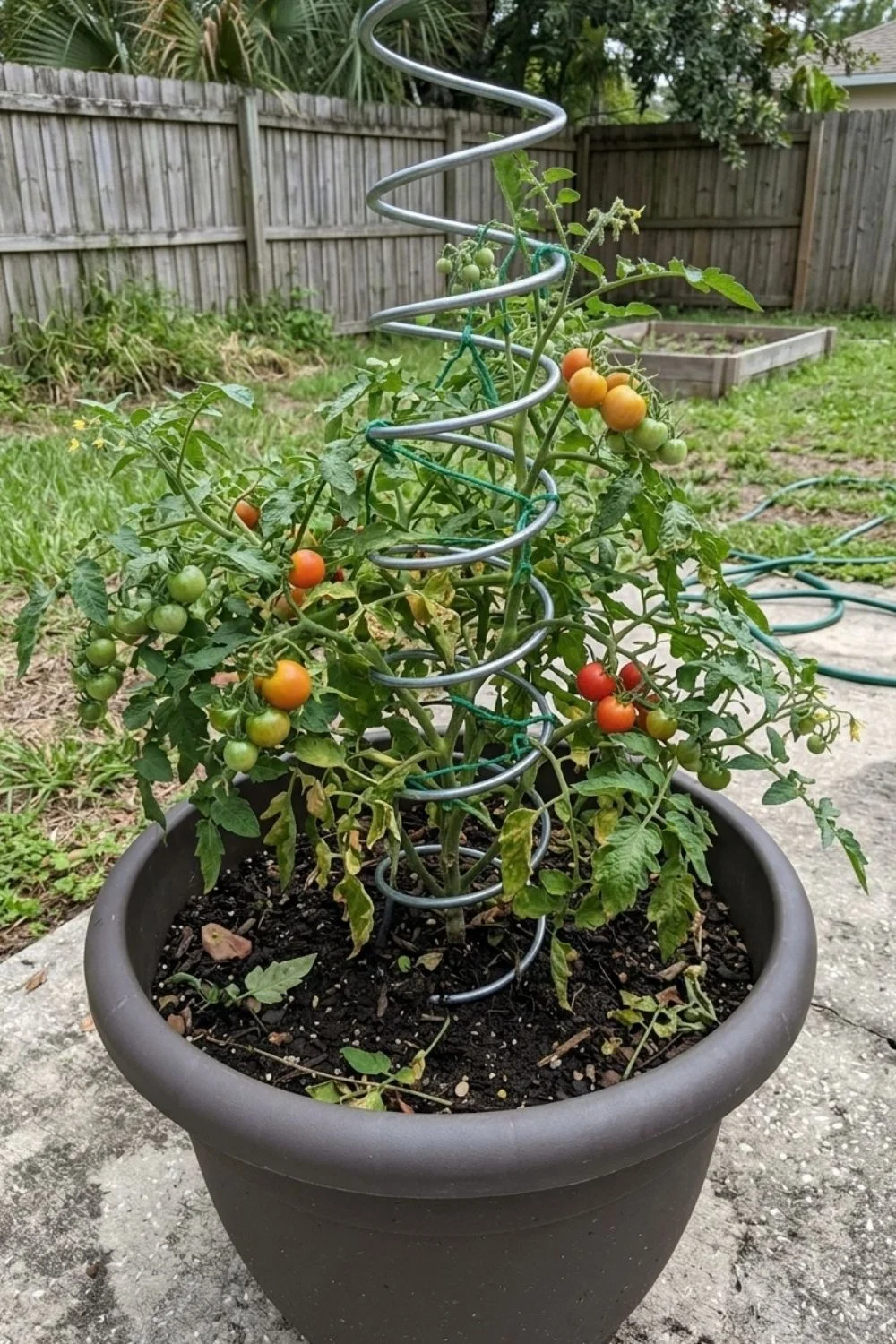
A spiral support fits a container or narrow bed and guides one plant upward. It works best for lightweight vines or a single compact indeterminate tomato that can be tied loosely as it grows. Choose a sturdy gauge so the spiral does not bend under fruit weight.
22. Foldable Screen Trellis
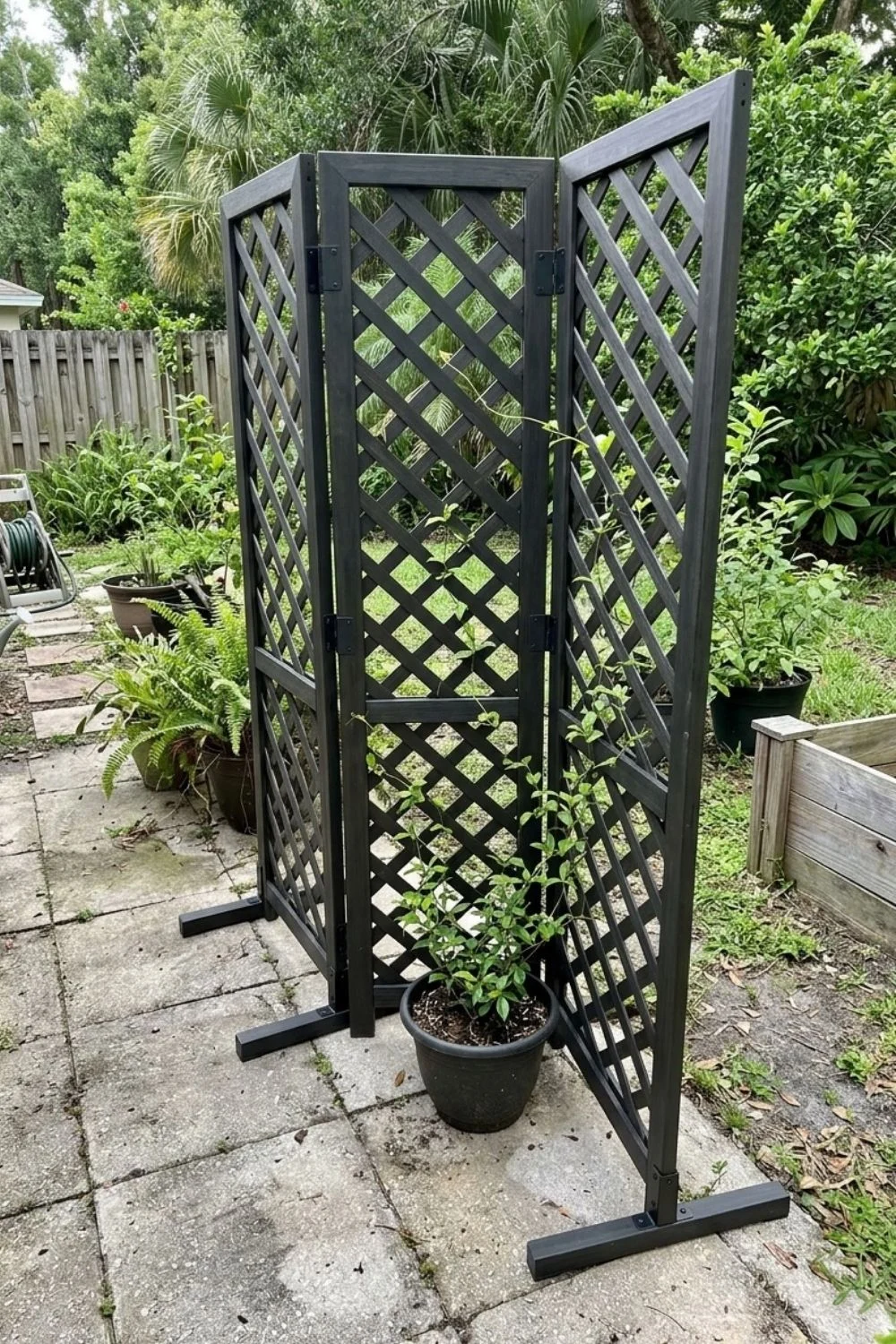
A hinged three-panel screen can stand on its own and change shape as your garden changes. It can support light climbers while also screening a patio or utility area. Anchor it when windy weather is common. Foldable designs are useful for renters because they can be moved instead of permanently attached.
23. Ladder-and-Pot Trellis
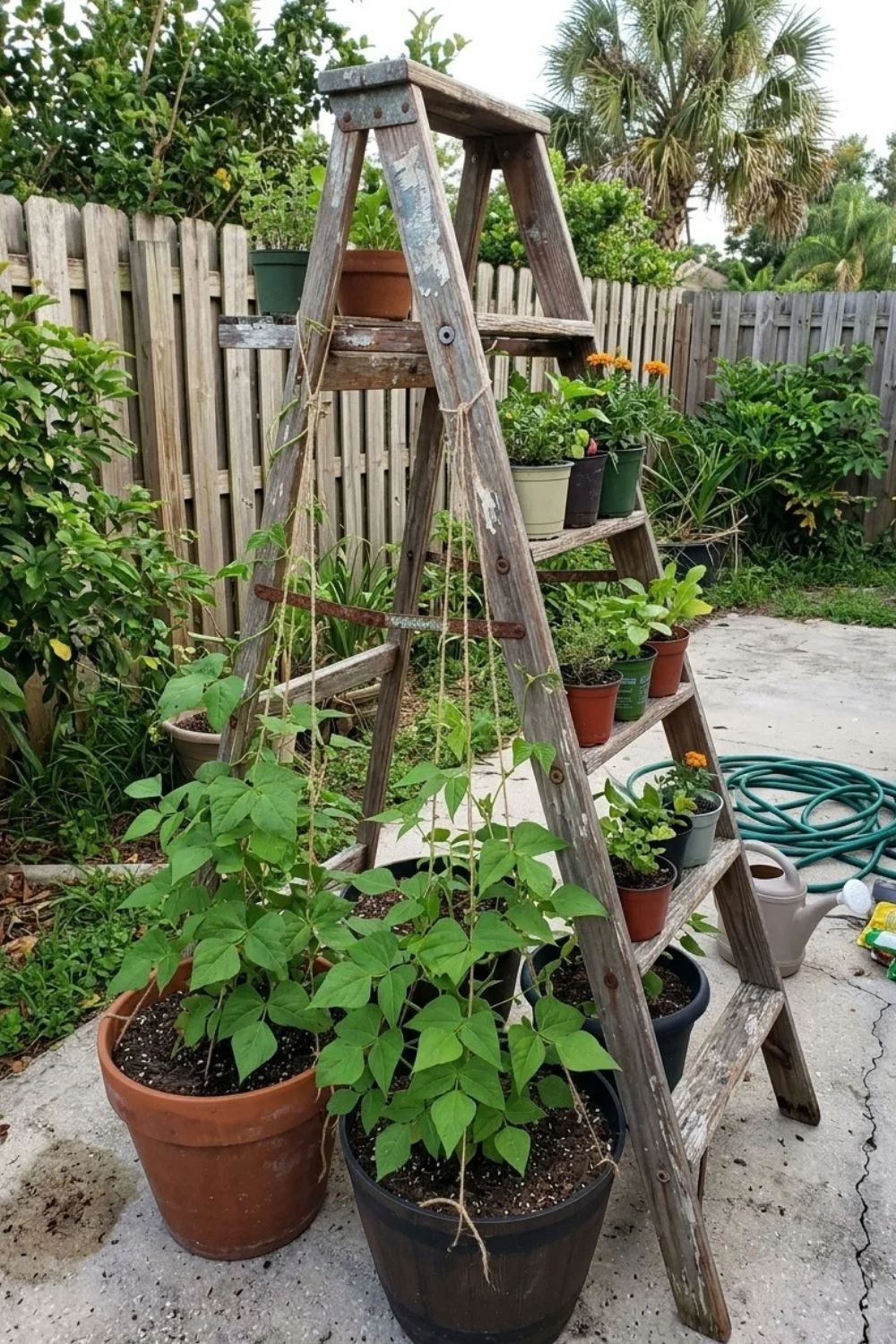
An old ladder can hold containers while strings from the upper rungs guide vines upward. This setup fits patios and other places where digging is limited. Keep heavy pots on lower steps, secure the ladder, and avoid blocking exits. For more container planning, see our container vegetable garden ideas.
24. Rope Net Trellis
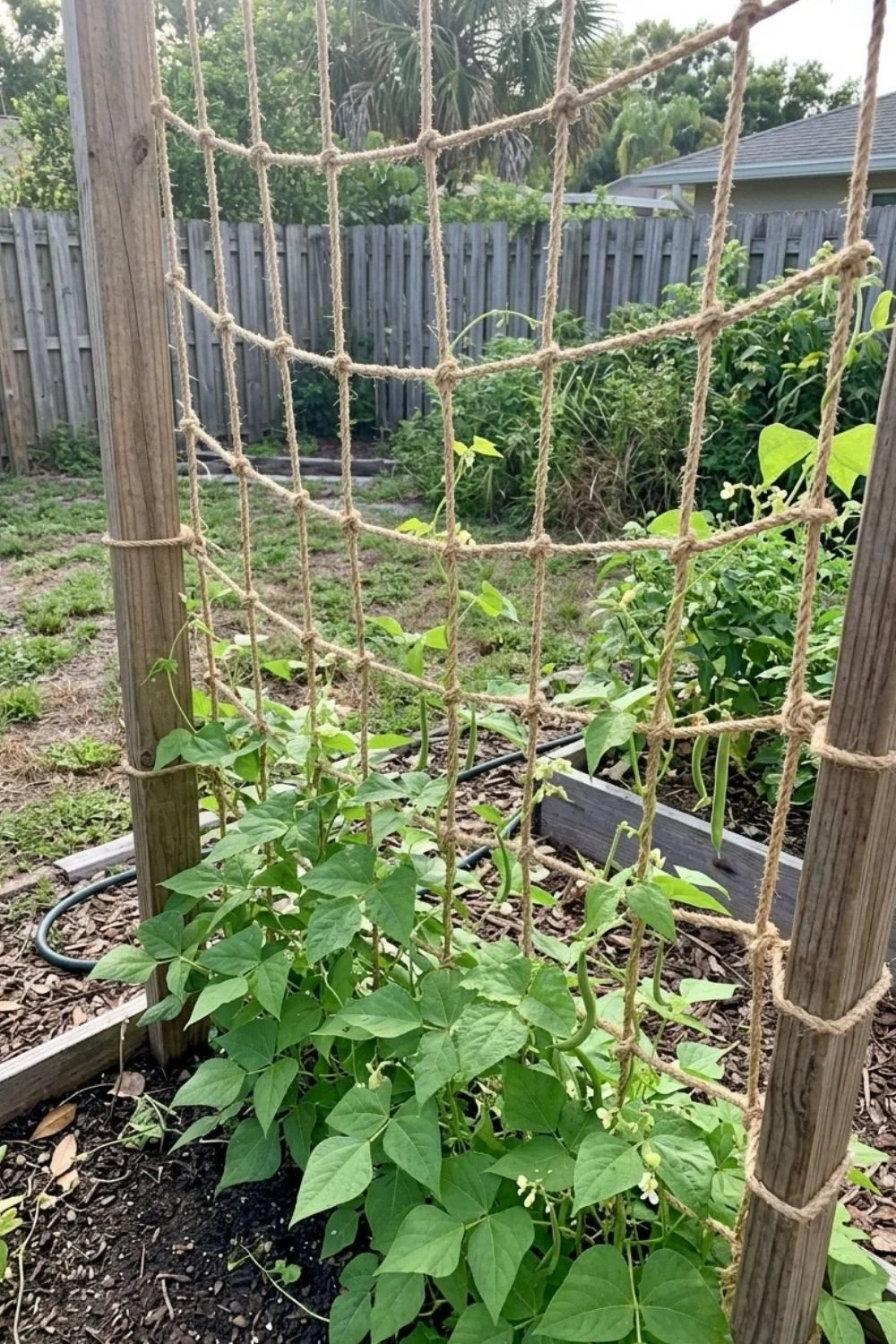
A rope net stretched between posts creates a soft, flexible climbing surface. Use weather-resistant garden rope and tie a consistent grid so vines do not slip through large gaps. It is a good choice for beans and peas. Check knots during the season, especially after storms or heavy growth.
25. A-Frame String Trellis
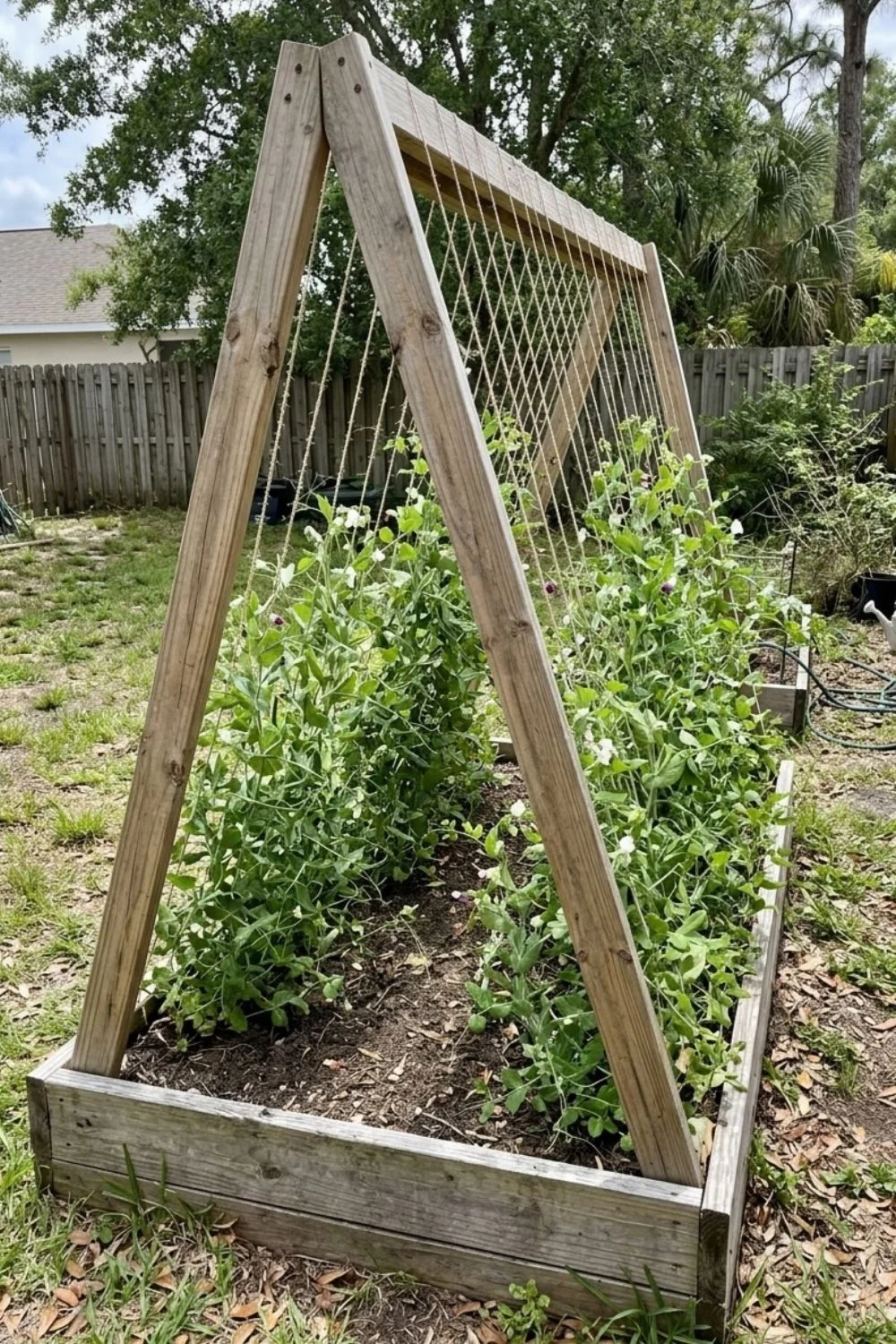
This design combines the stability of an A-frame with lightweight vertical strings. Plants climb the strings while the frame carries the overall load. It works well for peas and pole beans and can be taken apart after harvest. Keep the strings taut and replace frayed cord before each season.
Placement, Sun, and Small-Space Layout
Before installing a trellis, watch the garden for a full sunny day. Mark the direction of the strongest light and place tall supports where they will not shade shorter crops for most of the day. Keep at least one comfortable route to the bed for watering, tying, pruning, and harvest.
26. Painted Branch Trellis
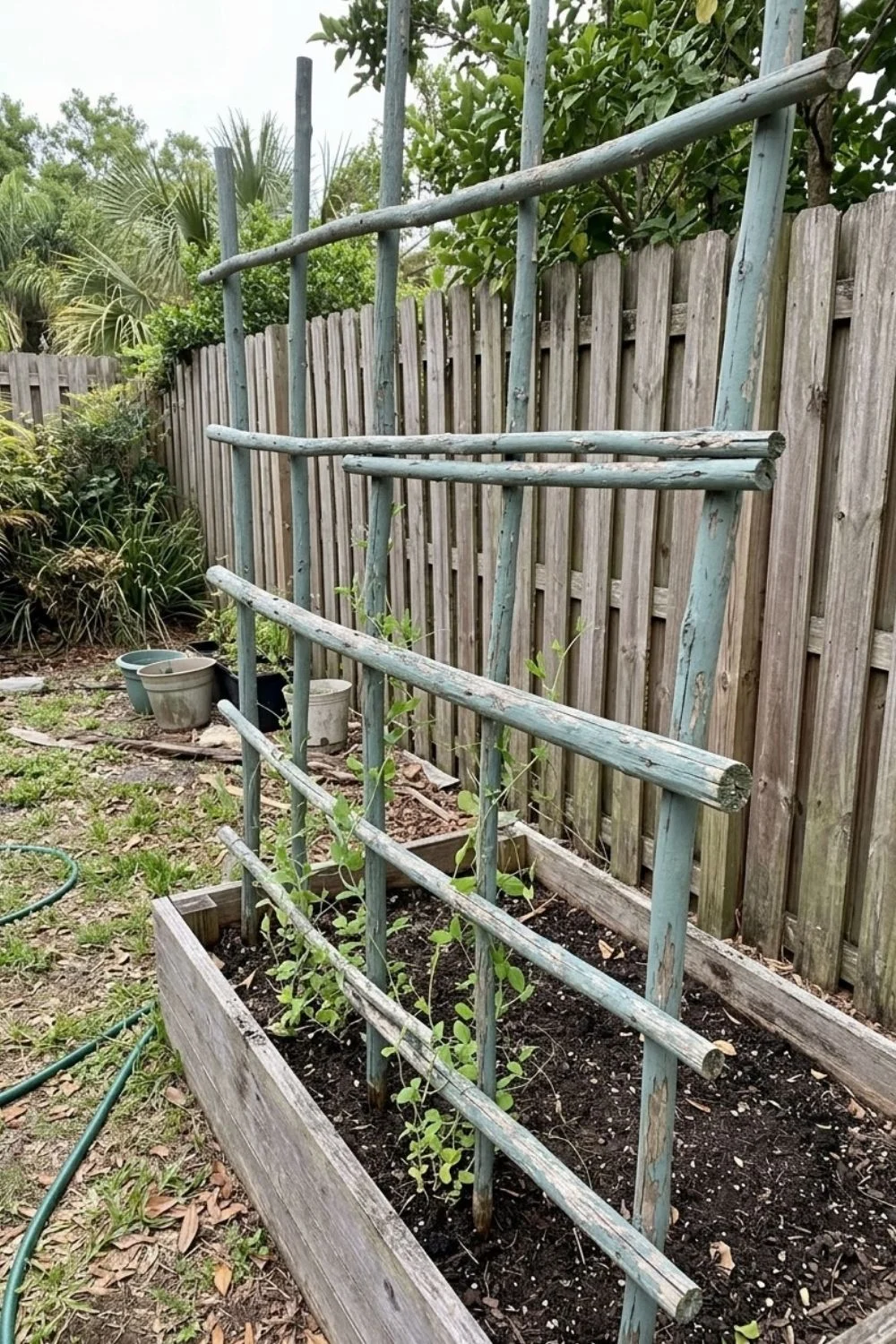
A branch trellis can be painted for a more finished look, but use an exterior coating that is appropriate for the setting and let it cure fully before use. The structure is still best for light climbers. Keep the paint away from edible plant surfaces when possible and replace weak branches as they age.
27. Rebar Tuteur
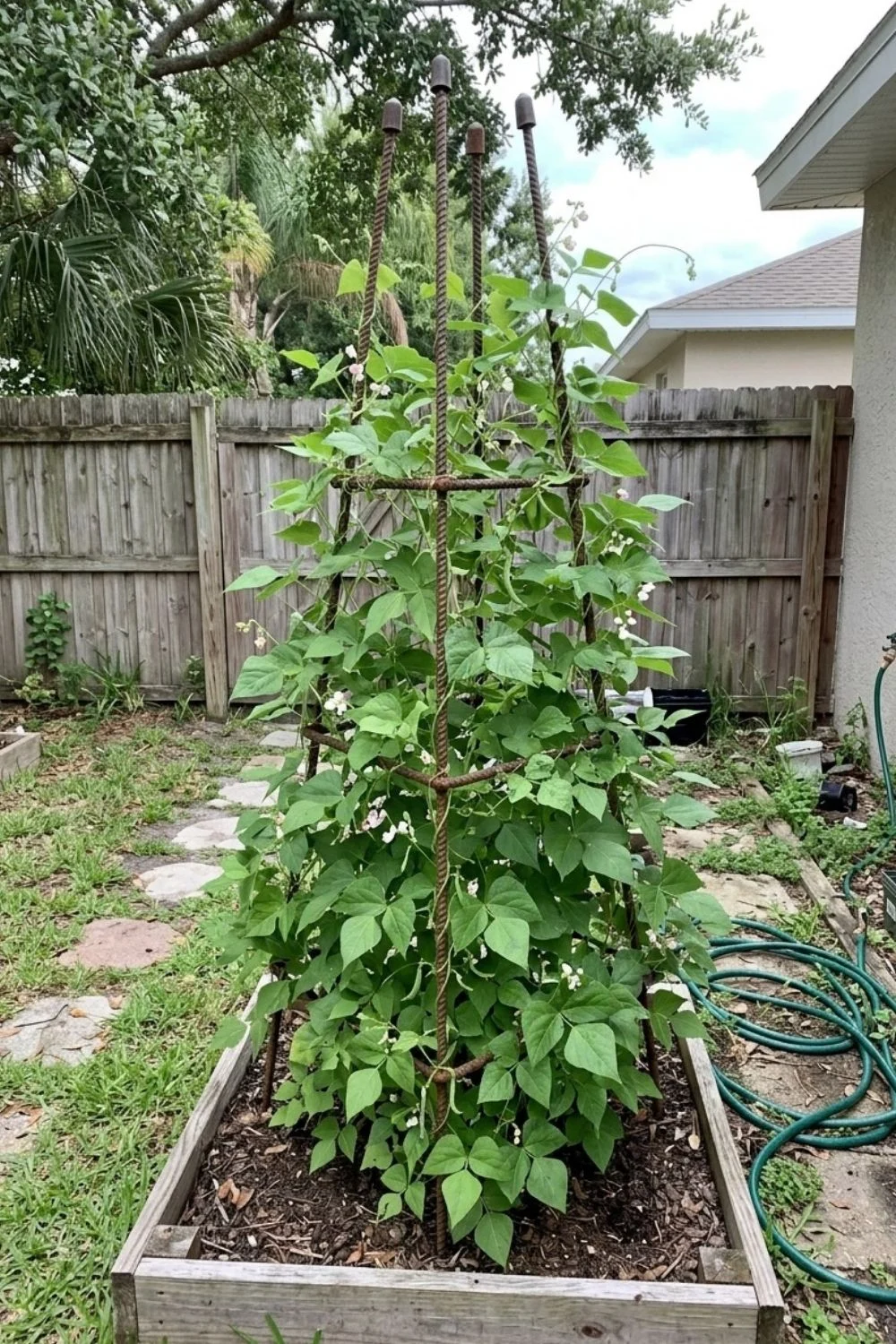
A tall four-sided rebar tuteur can support vigorous vines in a small footprint. Its height makes it useful in a corner or center bed, but it needs deep anchoring. Cap exposed ends and place it where it will not create a hazard near a path. This style works best when you need strong year-round structure.
28. Wall Fan Trellis
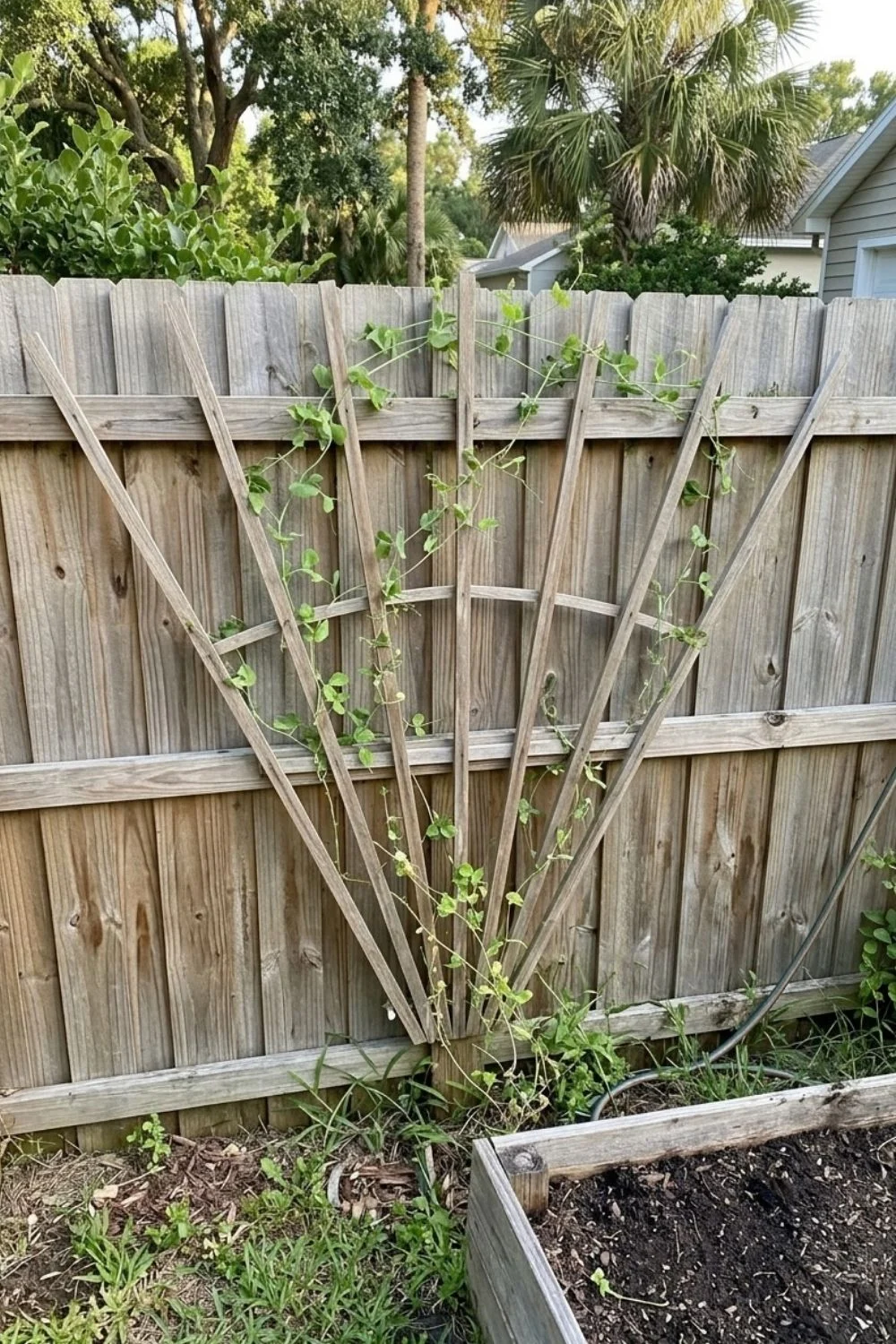
A fan-shaped trellis spreads vines outward instead of straight up. Mount it a few inches from a fence or wall so air can move behind the leaves. It works well for compact flowering vines and some lighter edible climbers. Keep the base accessible so you can water and train new growth.
29. Repurposed Garden Tool Trellis
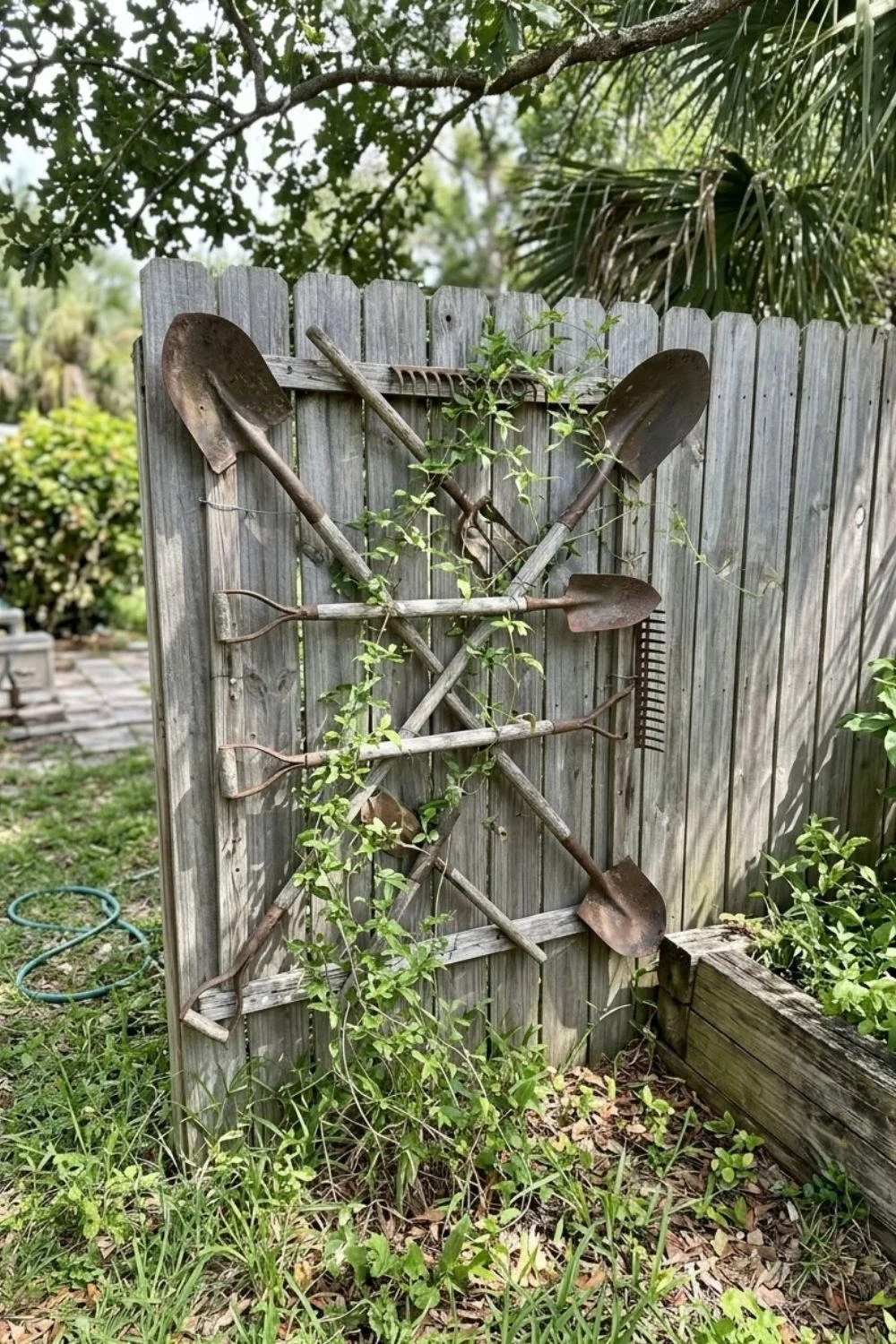
Old rakes or similar tools can become decorative supports when they are clean, safe, and firmly mounted. Use them for light vines rather than heavy crops. Remove sharp or unstable parts and keep tool heads away from paths. This idea is more decorative than structural, so choose the plant accordingly.
30. Minimalist Wire Wall Trellis
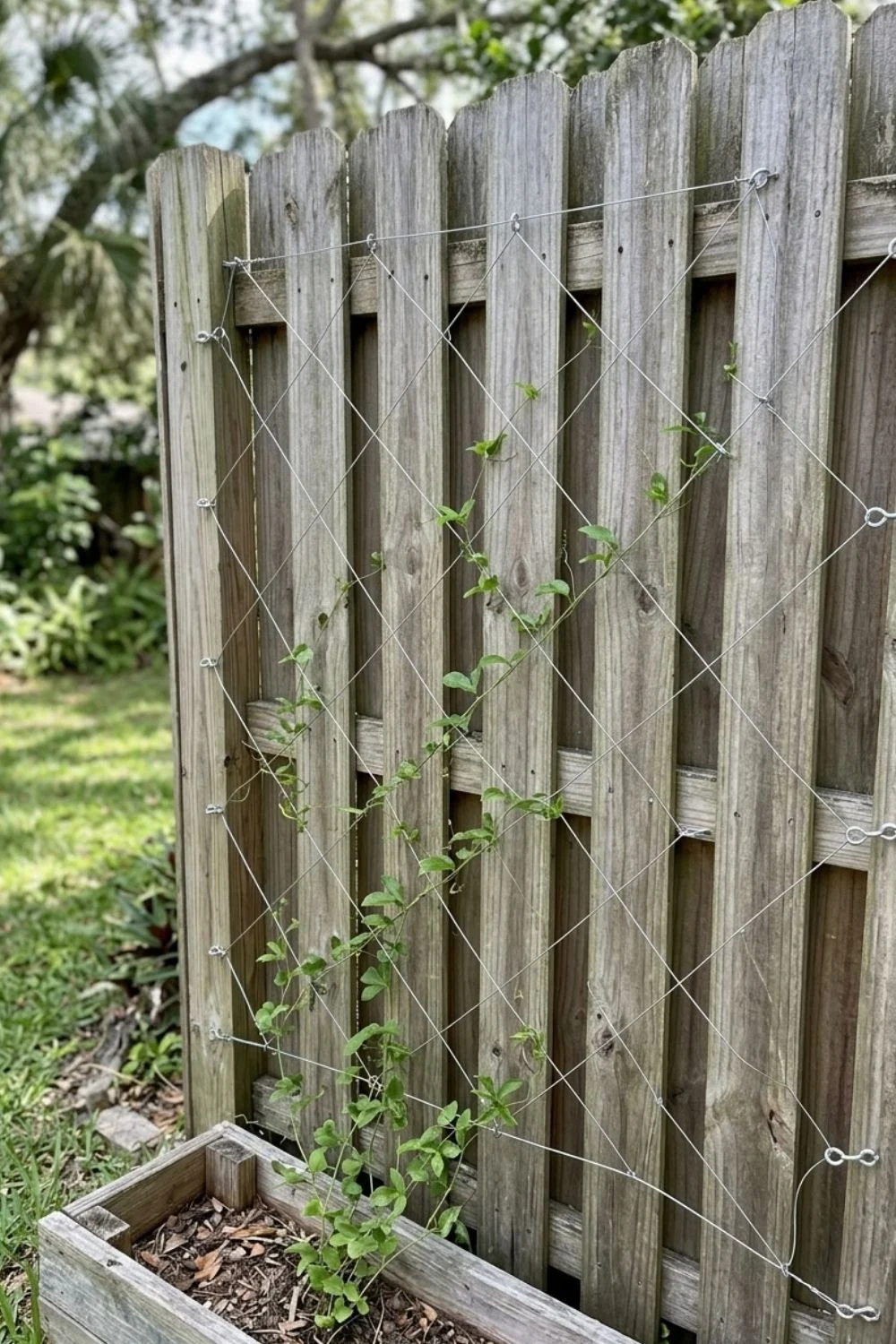
A wire system attached to eye hooks can create an almost invisible trellis on a fence or masonry wall. Use weather-resistant hardware rated for outdoor use. Keep the wire tight but not dangerously exposed along a walking route. It is useful when you want vines to be the main visual feature.
Common Trellis Mistakes
Do not wait until vines are already tangled before adding support. Avoid weak frames for heavy crops, loose netting near paths, structures that block garden access, and tall trellises that shade the rest of the bed. Check ties regularly and loosen any that begin to pinch stems.
Another common mistake is using one trellis style for every crop. A pea plant may need only light netting, while a fruiting cucumber vine or indeterminate tomato can need much stronger support. Match the structure to the mature plant, not the seedling.
Frequently Asked Questions
What vegetables grow best on a trellis?
Pole beans, peas, cucumbers, and many vining squash varieties can use a trellis. Indeterminate tomatoes can also grow vertically but usually need clips or ties instead of climbing on their own.
How tall should a vegetable trellis be?
The right height depends on the crop and your reach. Many small-garden supports are around 5 to 7 feet tall, but a shorter sturdy trellis can be better than a tall weak one. Make sure you can harvest safely without overreaching.
Where should I place a trellis in a raised bed?
Place it where tall vines will not shade shorter crops more than necessary and where you can reach both sides for harvest. The north or back side of a bed often works well, but your actual sun direction should guide the final position.
Can I use a trellis in a container garden?
Yes. Use a container large and heavy enough to keep the support stable. Compact obelisks, ladders, and fan trellises are practical choices for patio containers.
Final Thoughts
The best vegetable garden trellis ideas are the ones that fit your crops, your sunlight, and the way you move through the garden. Start with the simplest support that can safely hold the mature plant. Leave paths open, anchor the frame well, and train vines early. A small garden can feel much larger when the vertical space is planned with the same care as the ground.