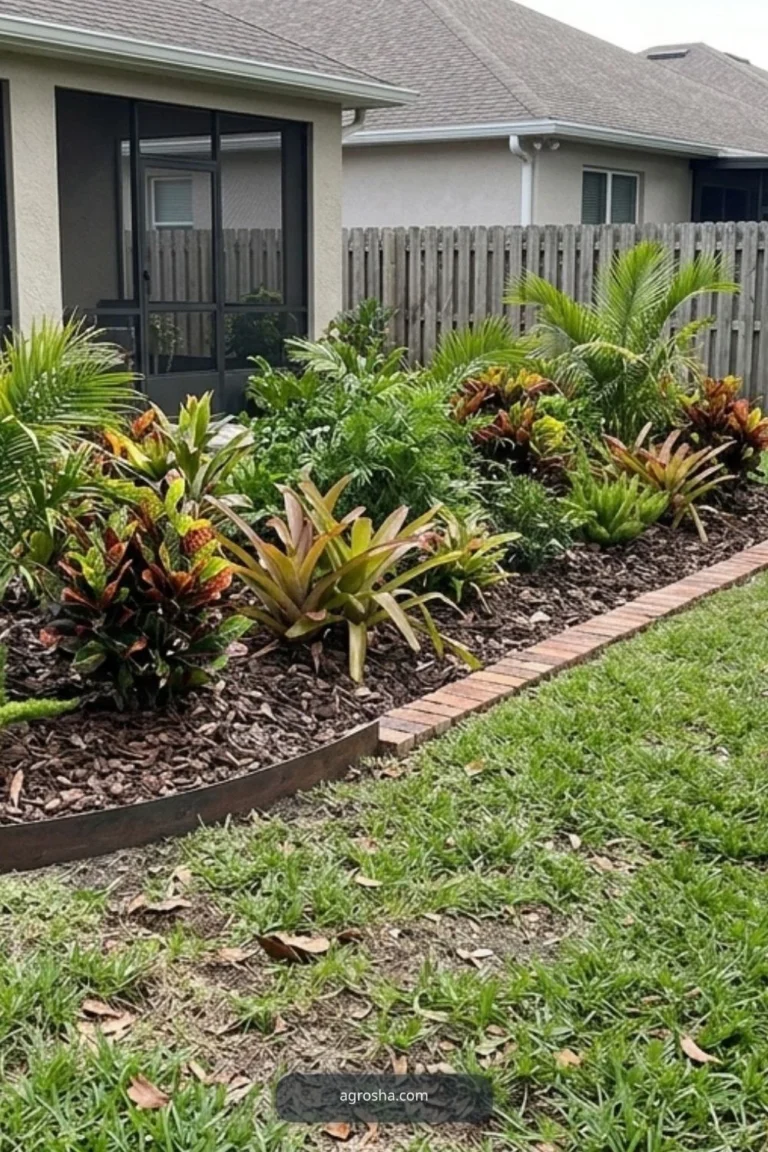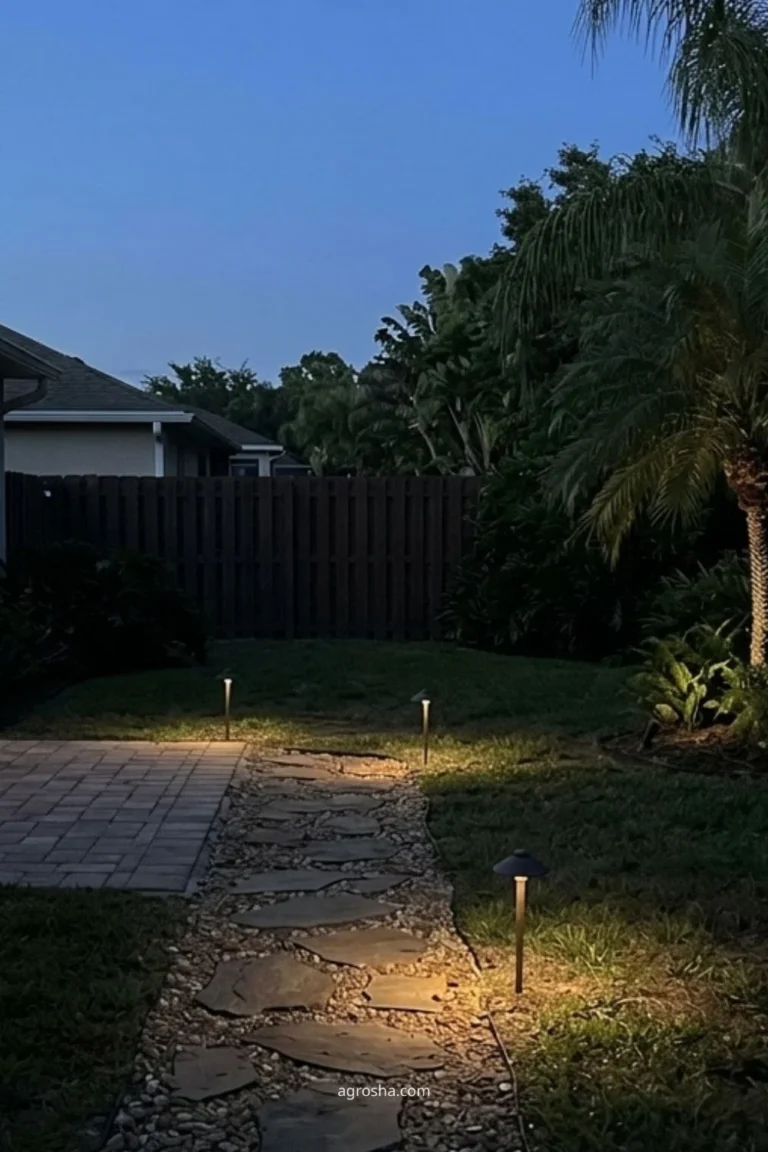
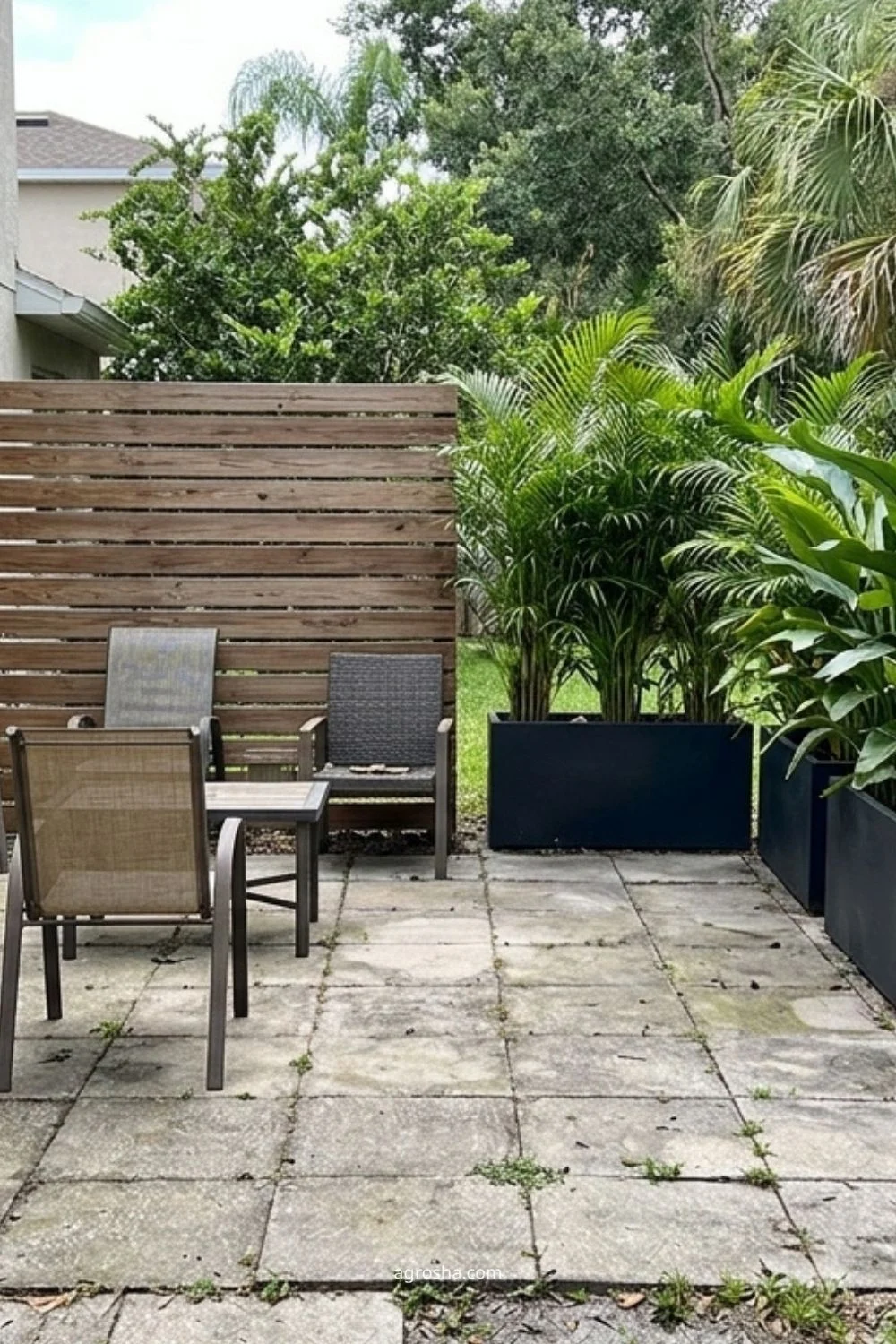
Garden screening ideas can add privacy without making a Florida yard feel closed in. The most effective screen usually blocks one specific sightline—such as a neighbor’s window, a patio edge, or a utility view—while preserving light, airflow, access, and the parts of the yard you still want to see.
Before choosing a screen, stand or sit where privacy matters and identify exactly what needs blocking. Then decide whether you need a permanent structure, living plants, or a flexible patio solution. Florida wind, rain, humidity, and storm preparation should be part of that decision from the start.
30 Garden Screening Ideas for Florida Yards
Wood, Metal, and Fixed Privacy Screens
1. Horizontal Wood Slat Screen
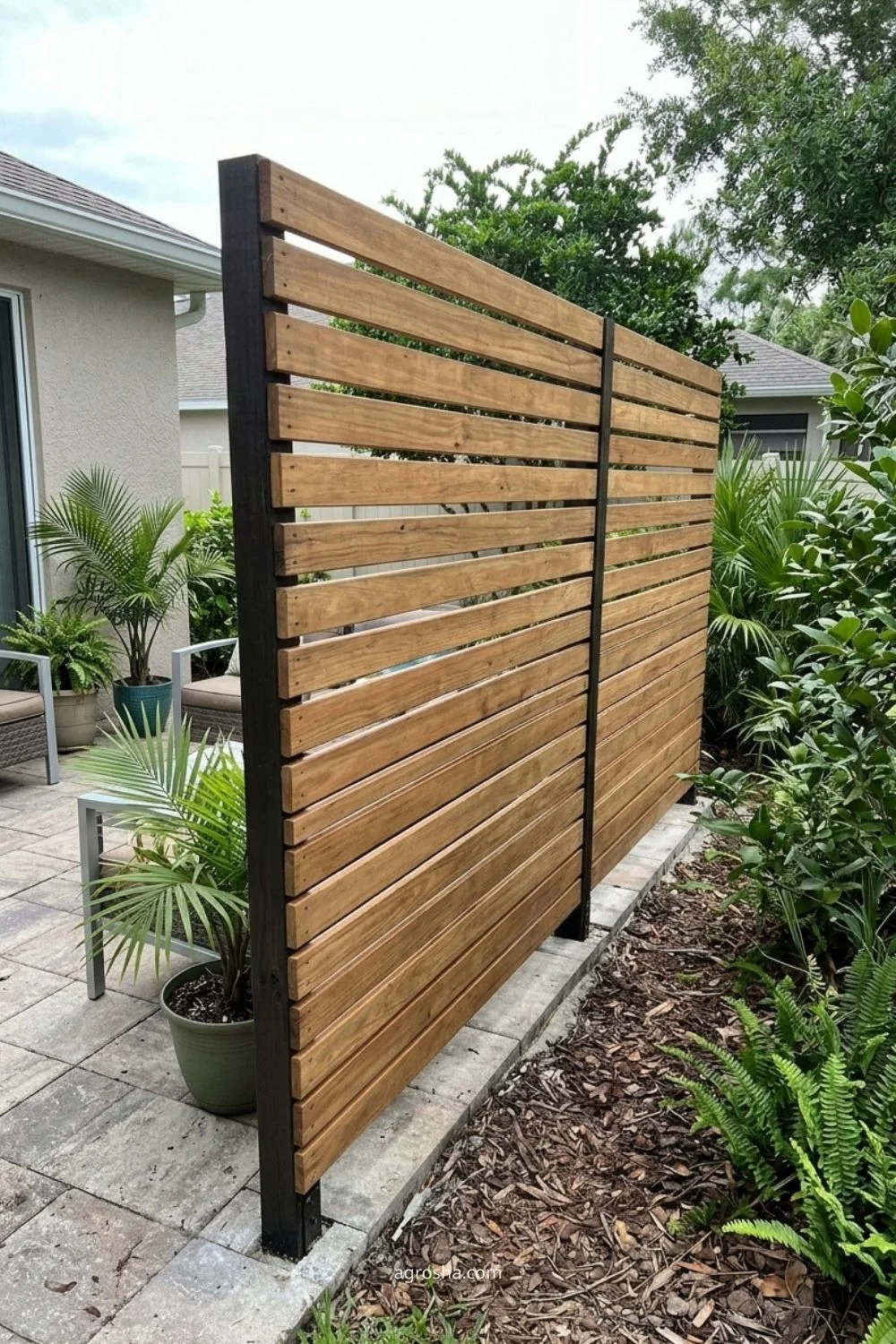
A horizontal slat screen can block a specific view without feeling as heavy as a solid fence. Adjust the gap based on how much privacy you need, but keep airflow in mind for Florida patios. Use exterior-rated wood and sturdy posts that can handle wind.
2. Laser-Cut Metal Panel
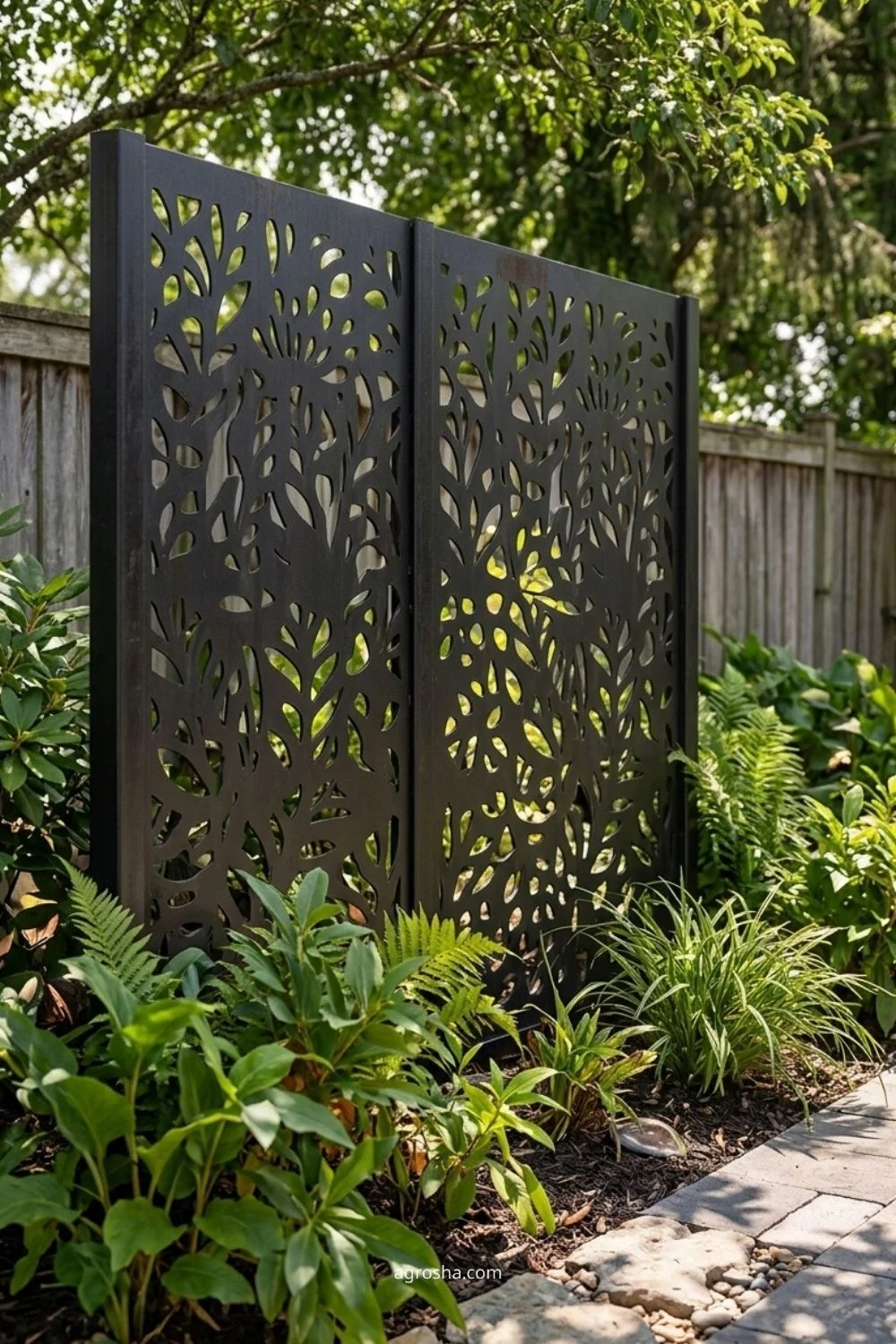
A patterned metal panel can provide partial privacy and cast interesting shadows without needing plants to fill in. Choose powder-coated aluminum or another outdoor-suitable material, keep edges safe, and mount it to a structure designed for the load rather than a weak decorative fence.
3. Frosted Outdoor Panel

A translucent panel can obscure a neighbor’s view while still letting light through. It works well beside a patio or hot tub where a solid wall would feel too dark. Use outdoor-rated material and a frame designed for wind exposure.
4. Corrugated Metal Screen
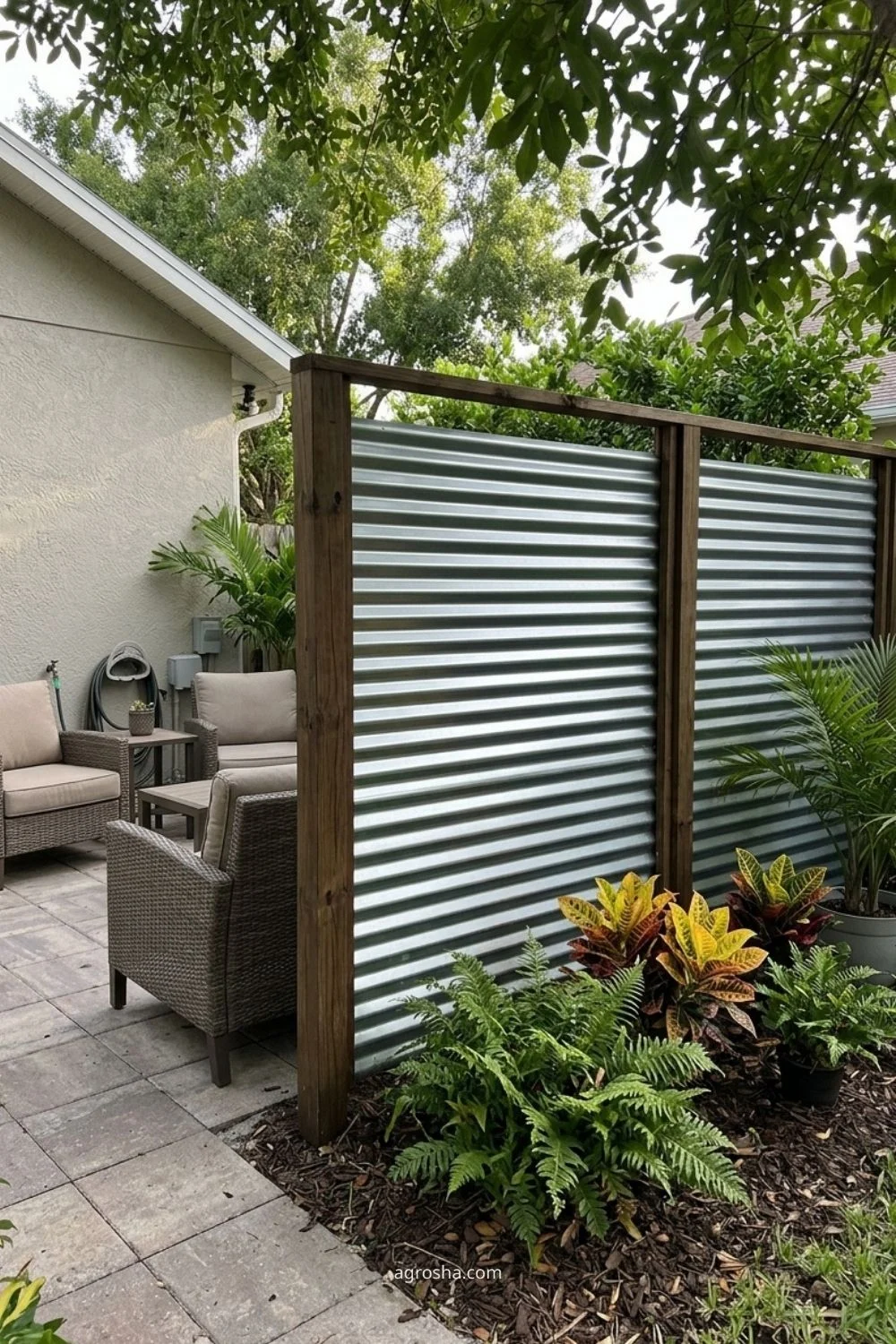
Corrugated metal gives a solid visual barrier with a clean industrial or farmhouse look. Break up a long run with planting so the yard does not feel boxed in. In full Florida sun, lighter finishes may feel less visually heavy than dark metal.
5. Perforated Masonry Screen
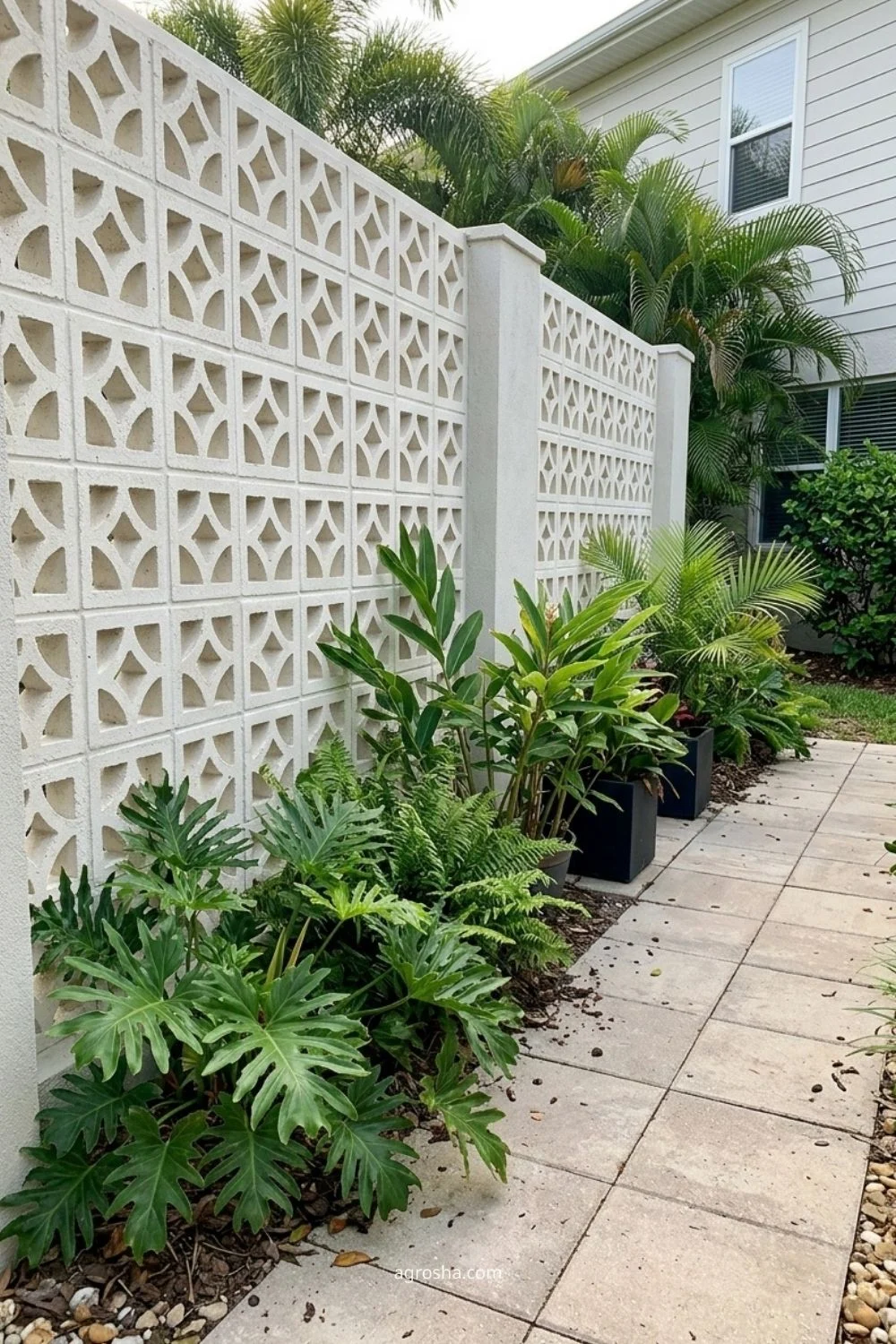
A breeze-block or perforated masonry wall can provide privacy while allowing some air and light. It is more permanent than a freestanding panel, so confirm setbacks, permits, and drainage before construction. Use it as one architectural feature rather than surrounding a small yard.
6. Masonry Columns With Wood Infill
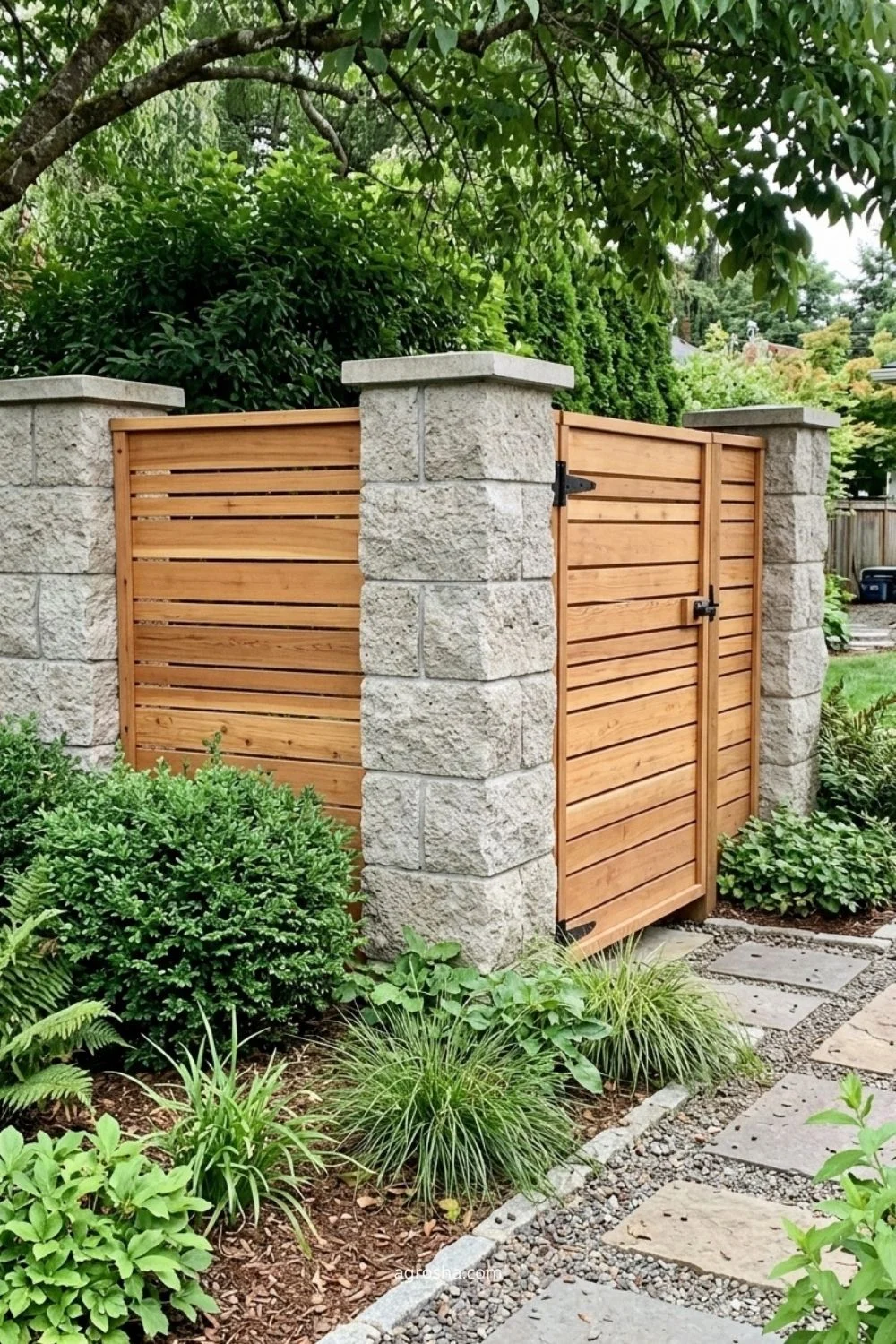
Combining sturdy columns with wood panels can match a home’s architecture and create a substantial boundary. Because this is a permanent structure, plan gates, drainage, and maintenance access first. Keep the design proportional to the property so it does not overwhelm the yard.
Living Privacy With Plants
Living screens take longer to fill in than fixed panels but can feel softer and cooler. The key is mature spacing. Avoid planting a tight wall of oversized shrubs for instant privacy, because that creates pruning and disease problems later. Layer several compatible plants and let each keep a natural form.
7. Evergreen Shrub Layer
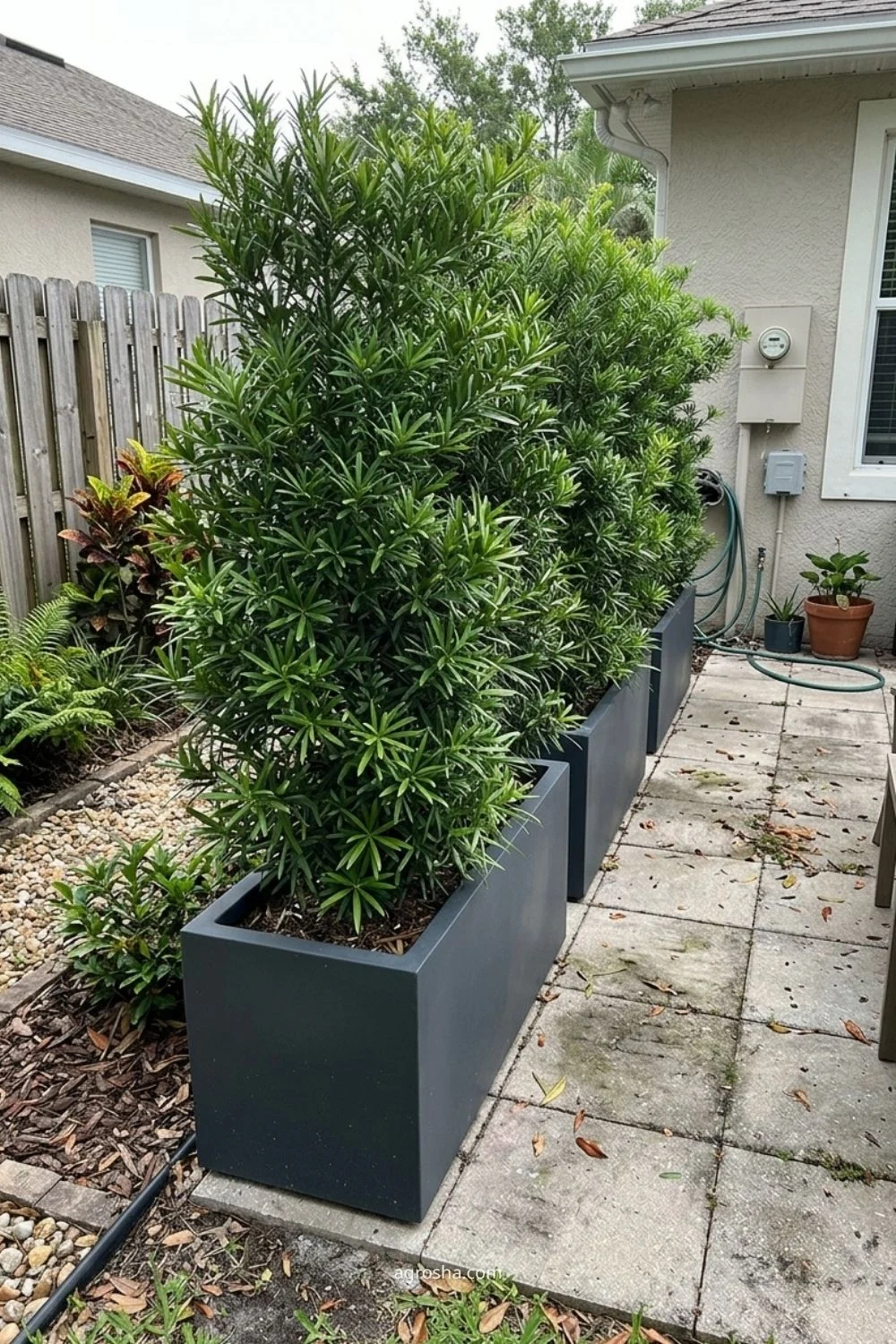
A layered shrub screen usually looks more natural than one tightly clipped hedge. Combine plants of slightly different heights and leave mature spacing so the screen fills in without constant shearing. For more plant-based layouts, see our backyard garden privacy ideas.
8. Tall Ornamental Grasses
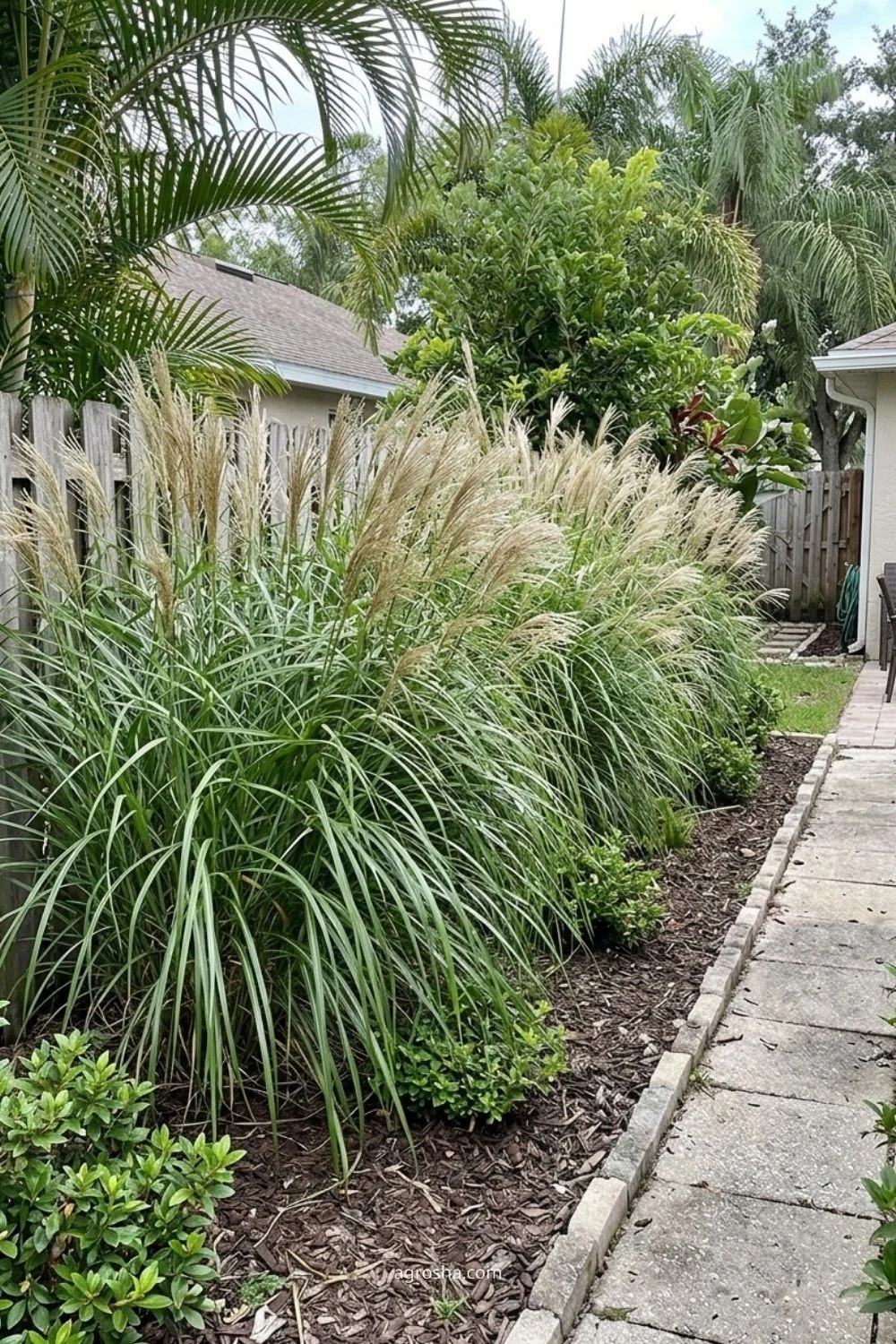
Clumping grasses can soften a patio edge and create filtered privacy with movement. Choose a noninvasive type suited to your Florida region and site moisture. Grasses work best where seasonal changes in density are acceptable rather than where you need a solid year-round wall.
9. Large Planters With Upright Plants
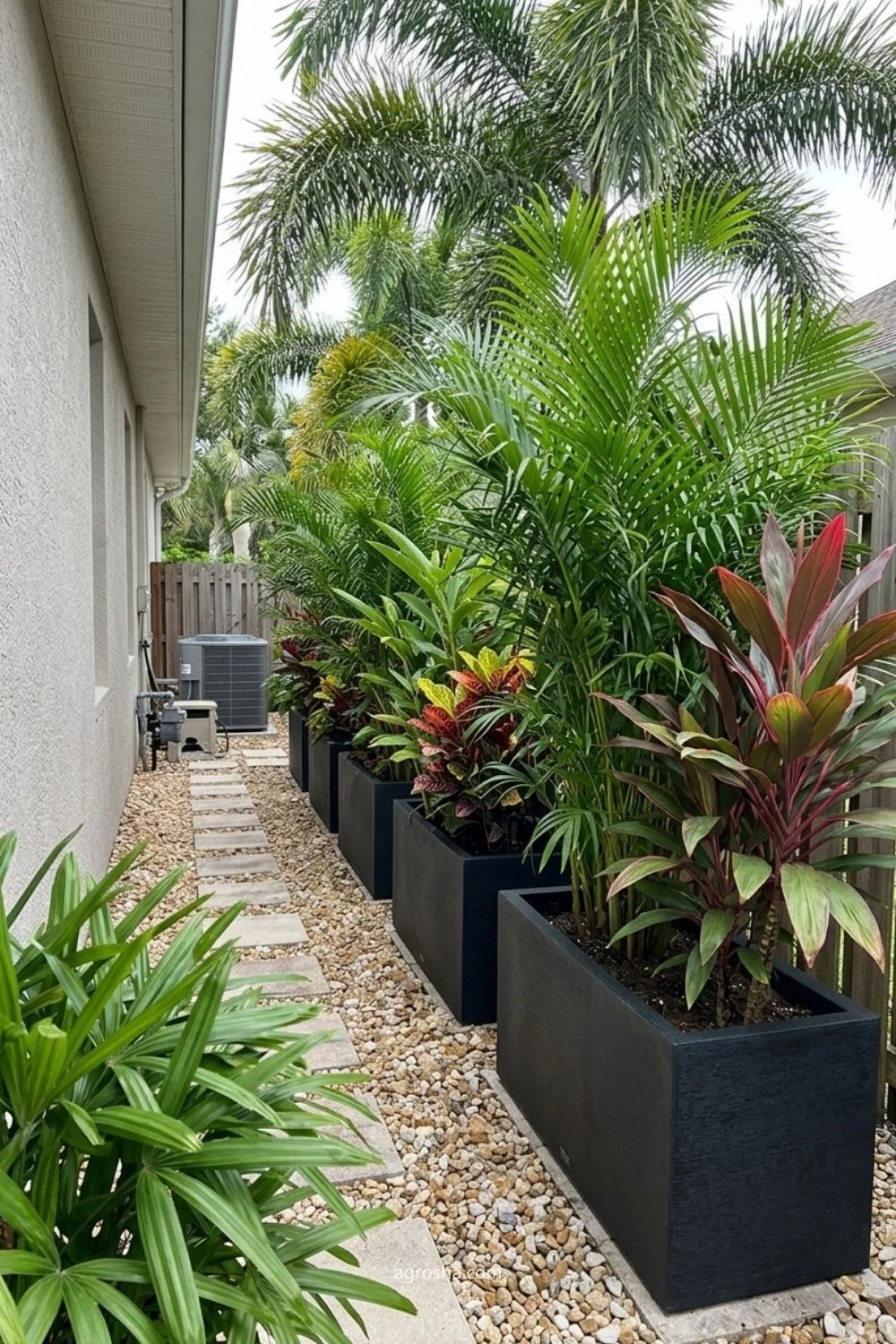
A row of large containers can block one view while staying movable. Use enough soil volume and stable, heavy pots because tall plants catch wind. Our container gardening guide can help with pot scale and drainage.
10. Trellis With One Climbing Vine
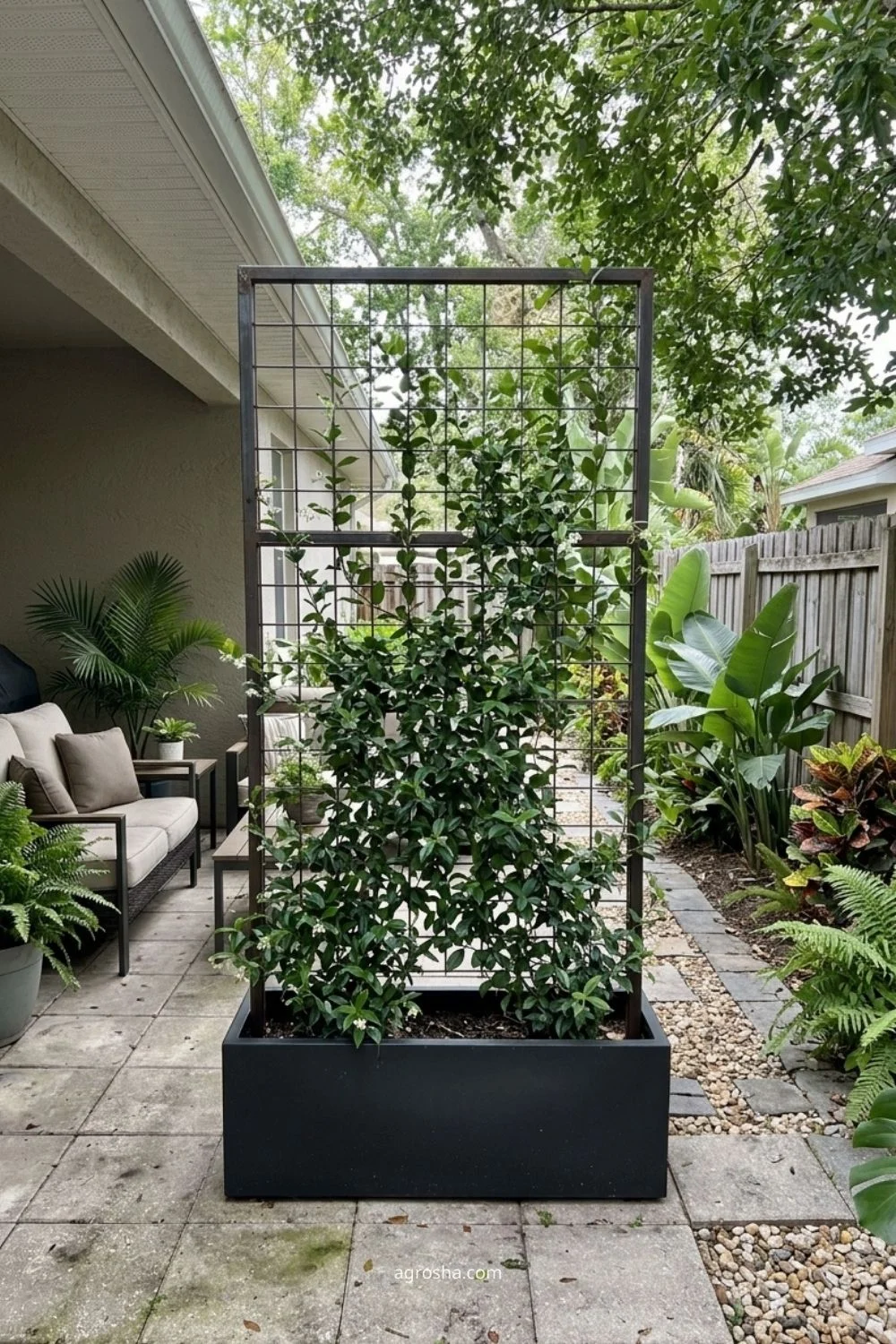
A trellis can become a living screen without taking much ground space. Choose a vine that fits the structure and climate, then prune it so the panel remains accessible. Keep growth away from roof edges, gutters, and weak fence sections.
11. Mixed Shrub-and-Grass Screen
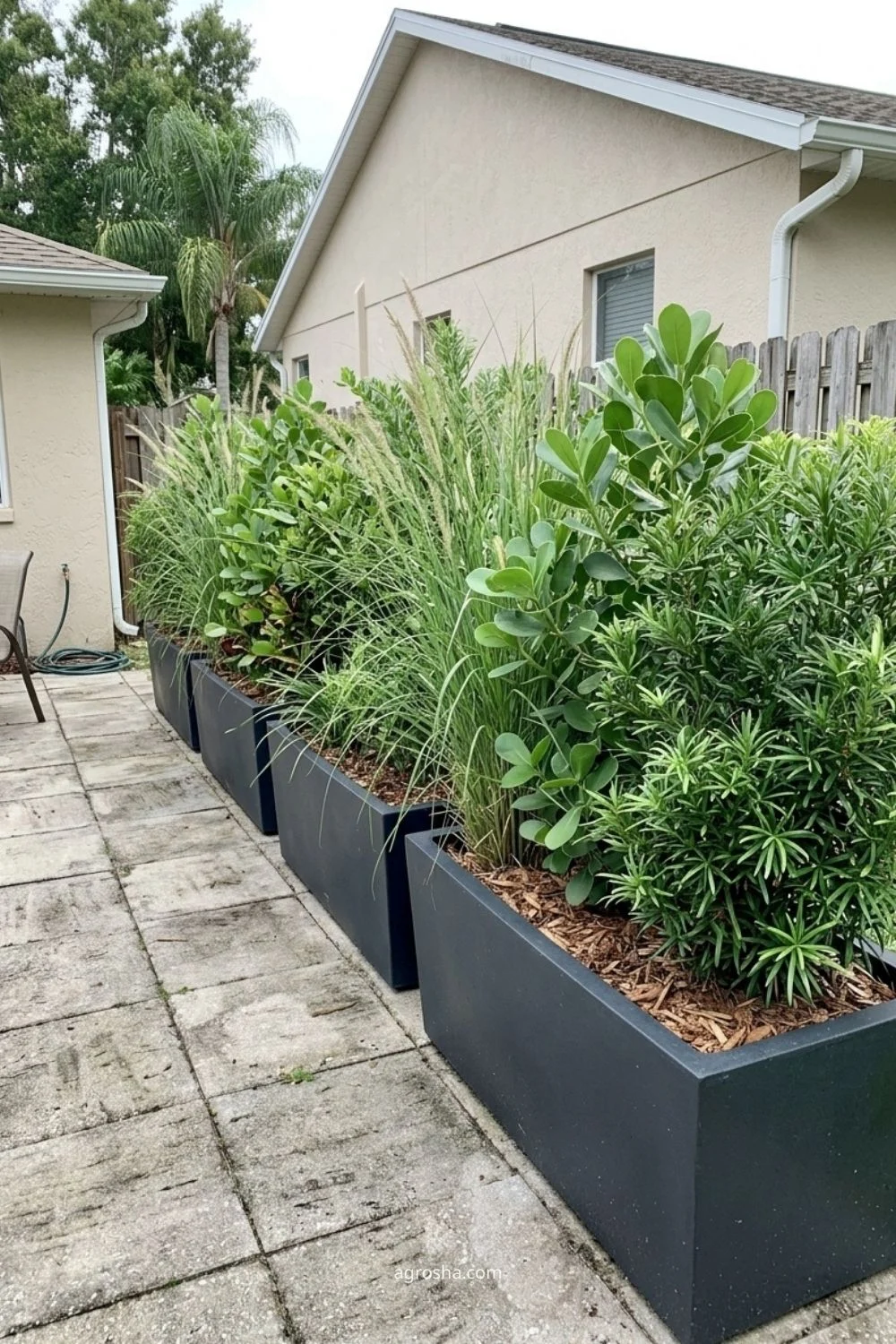
Combine a few medium shrubs with clumping grasses to create depth and reduce the risk of one plant problem opening a large gap. Repeat the same plant groups rather than using many unrelated species. This creates privacy that still feels like a garden.
12. Shaded Privacy Planting
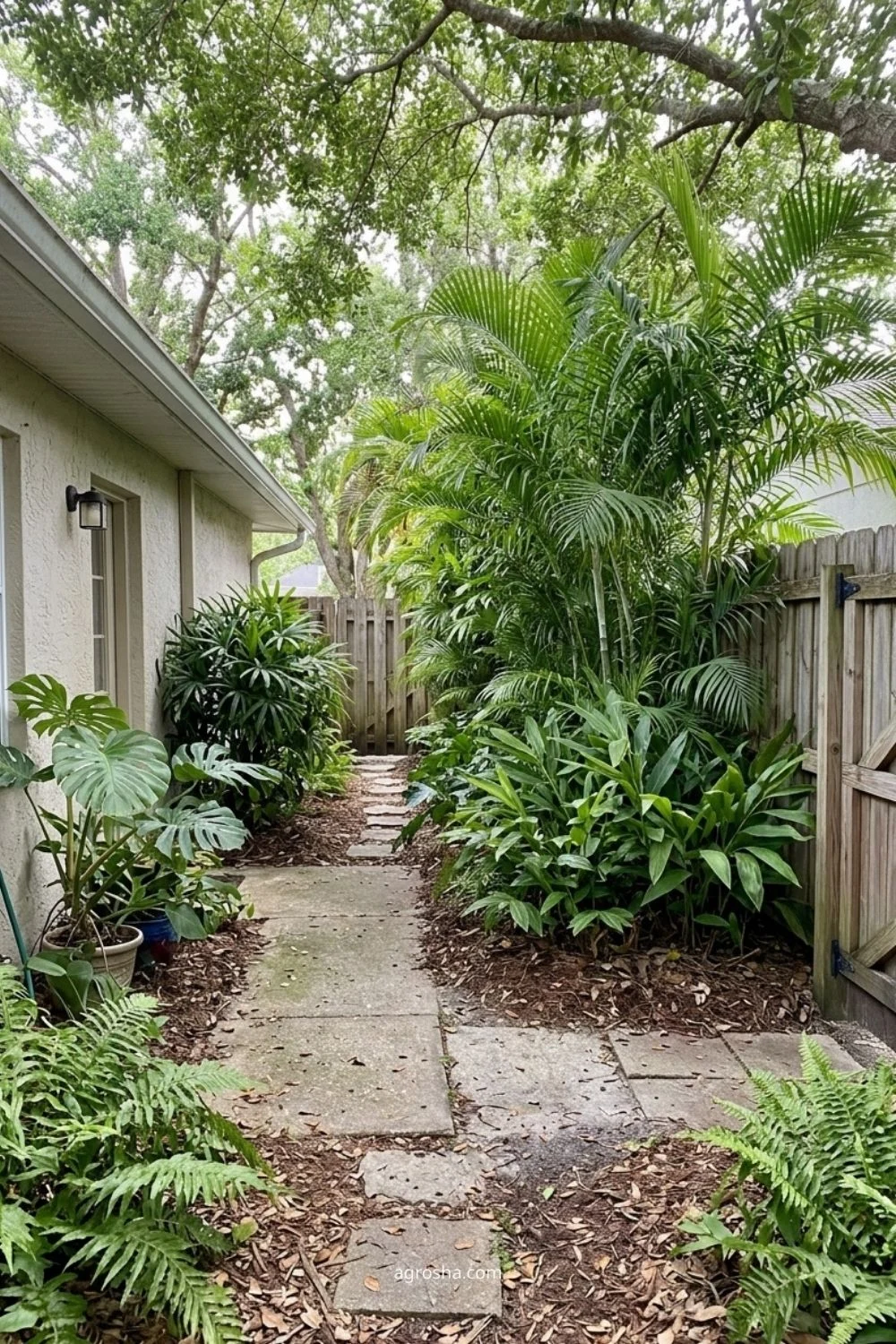
Under trees or on a north-facing boundary, use shade-tolerant shrubs and foliage plants instead of struggling sun-loving hedges. Layer heights and keep roots away from major tree trunks. Our shade garden ideas can help with low-light structure.
Flexible and Patio Privacy Ideas
Temporary screens are valuable when privacy needs change during the day or season. They are also more vulnerable to wind. Choose retractable, hinged, or movable systems that can be secured quickly, and do not rely on a lightweight divider as a permanent storm-ready fence.
13. Retractable Side Awning
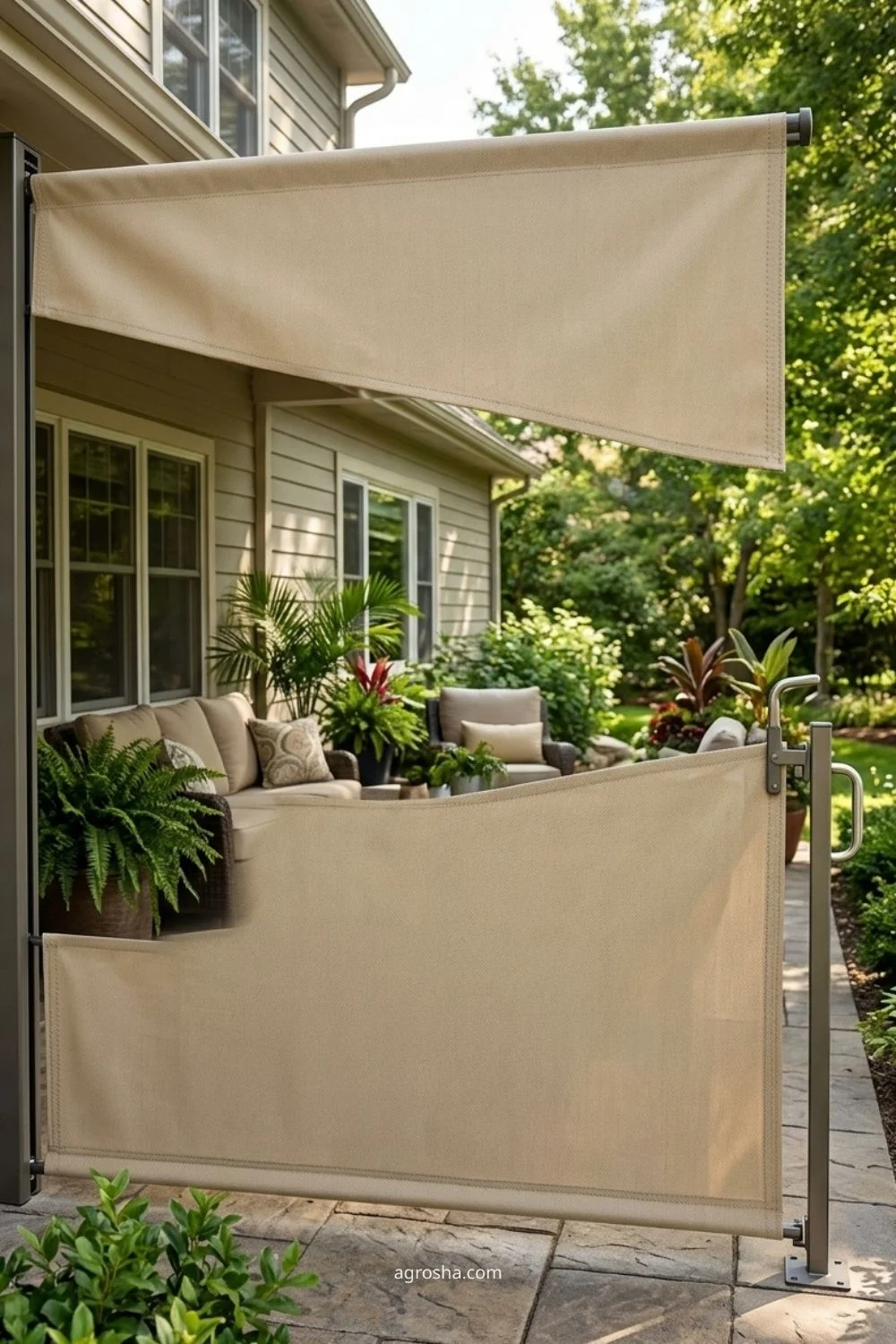
A retractable side screen can block a neighbor or low afternoon sun only when needed. It is useful on patios where permanent walls would feel restrictive. Mount the cassette and receiver to structures capable of handling tension and retract it before severe weather.
14. Outdoor Curtains Under a Pergola
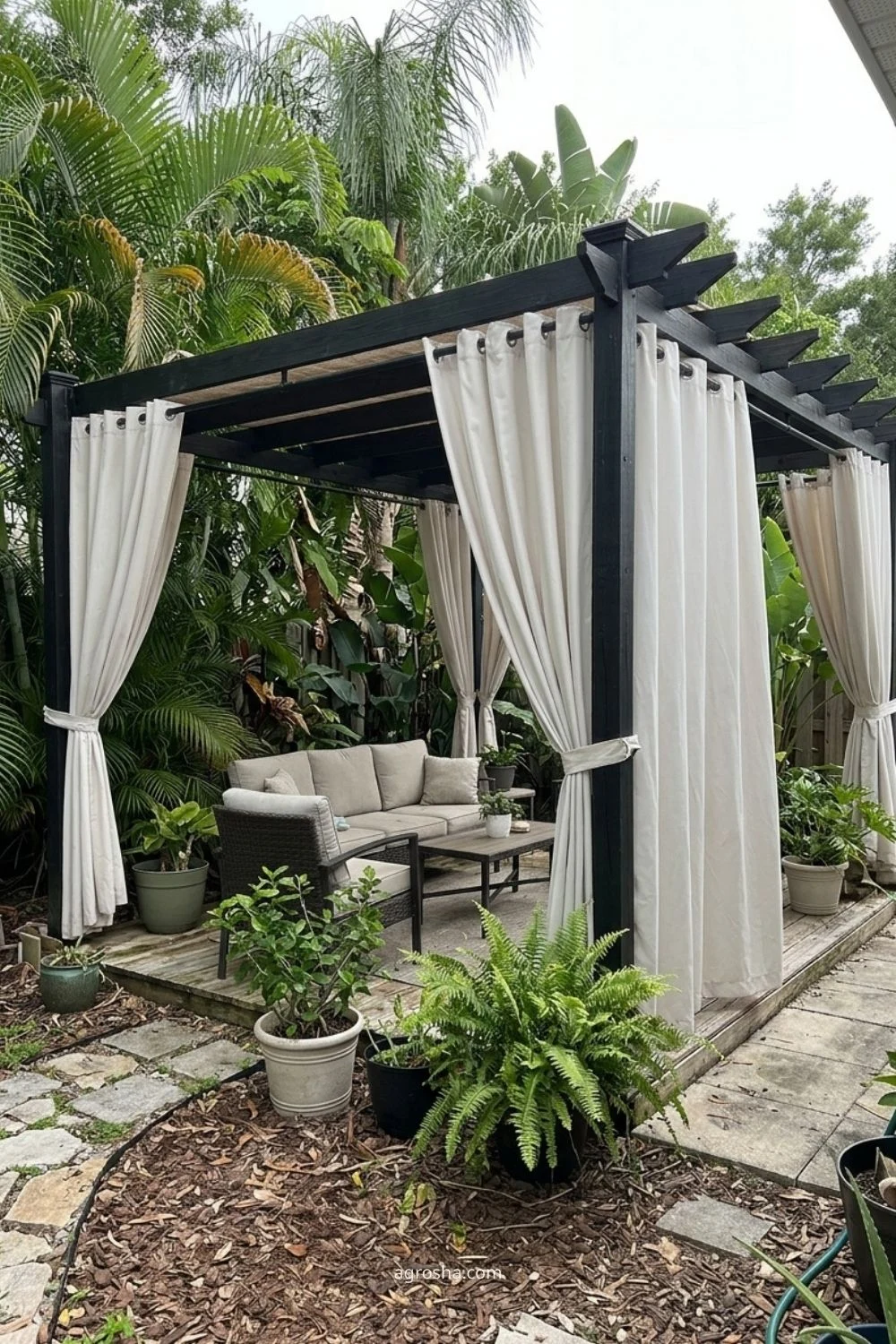
Weather-resistant curtains can create adjustable privacy around a covered patio. Tie them back when open airflow is more important. Use outdoor fabric and hardware, keep the panels off wet ground, and remove or secure them when storms are expected.
15. Freestanding Folding Screen
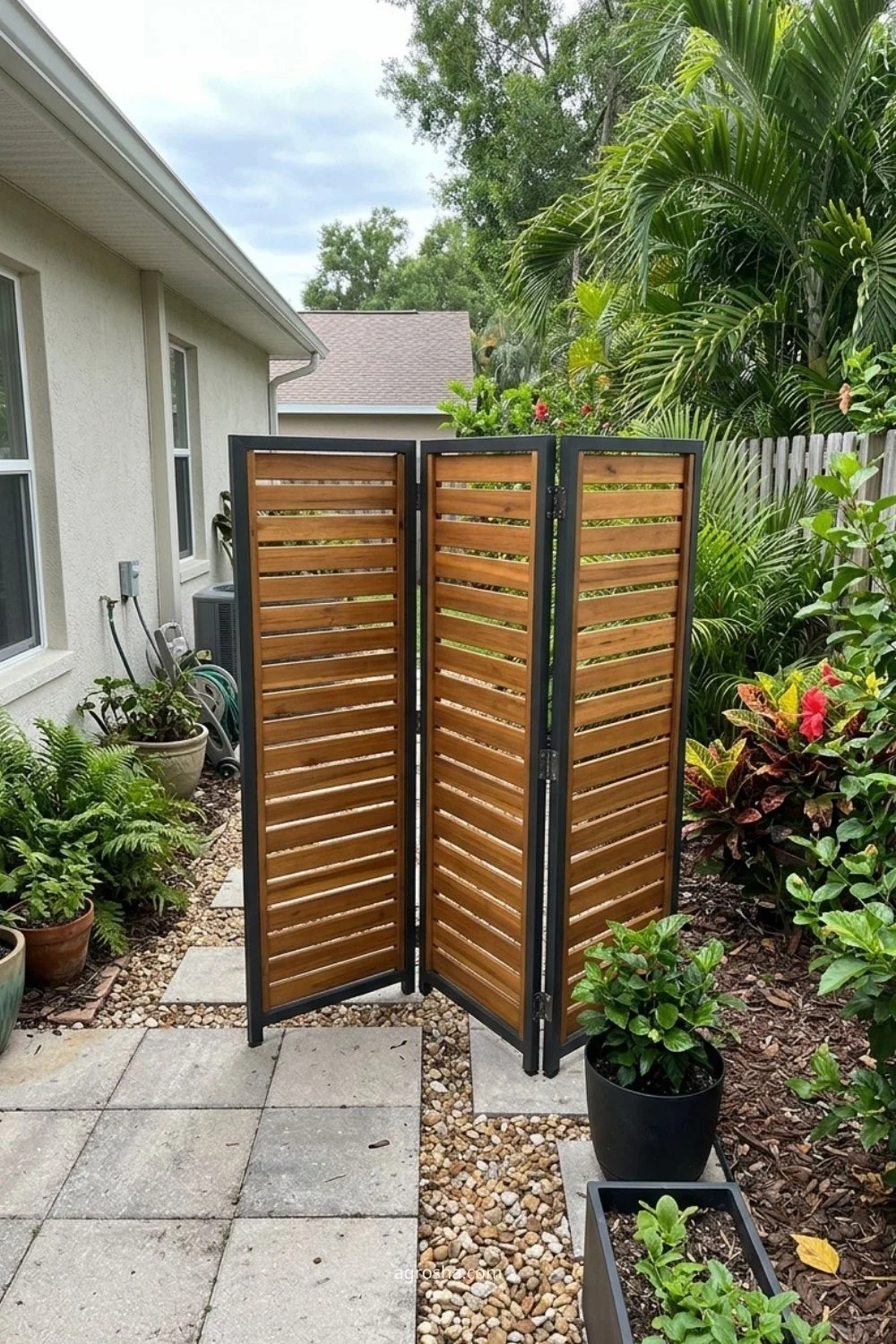
A folding screen can move between dining, seating, and spa areas and store away when not needed. Choose a wide, stable base and a material that will not become a sail in wind. It is best for temporary privacy, not as a permanent property barrier.
16. Planter Box With Built-In Screen
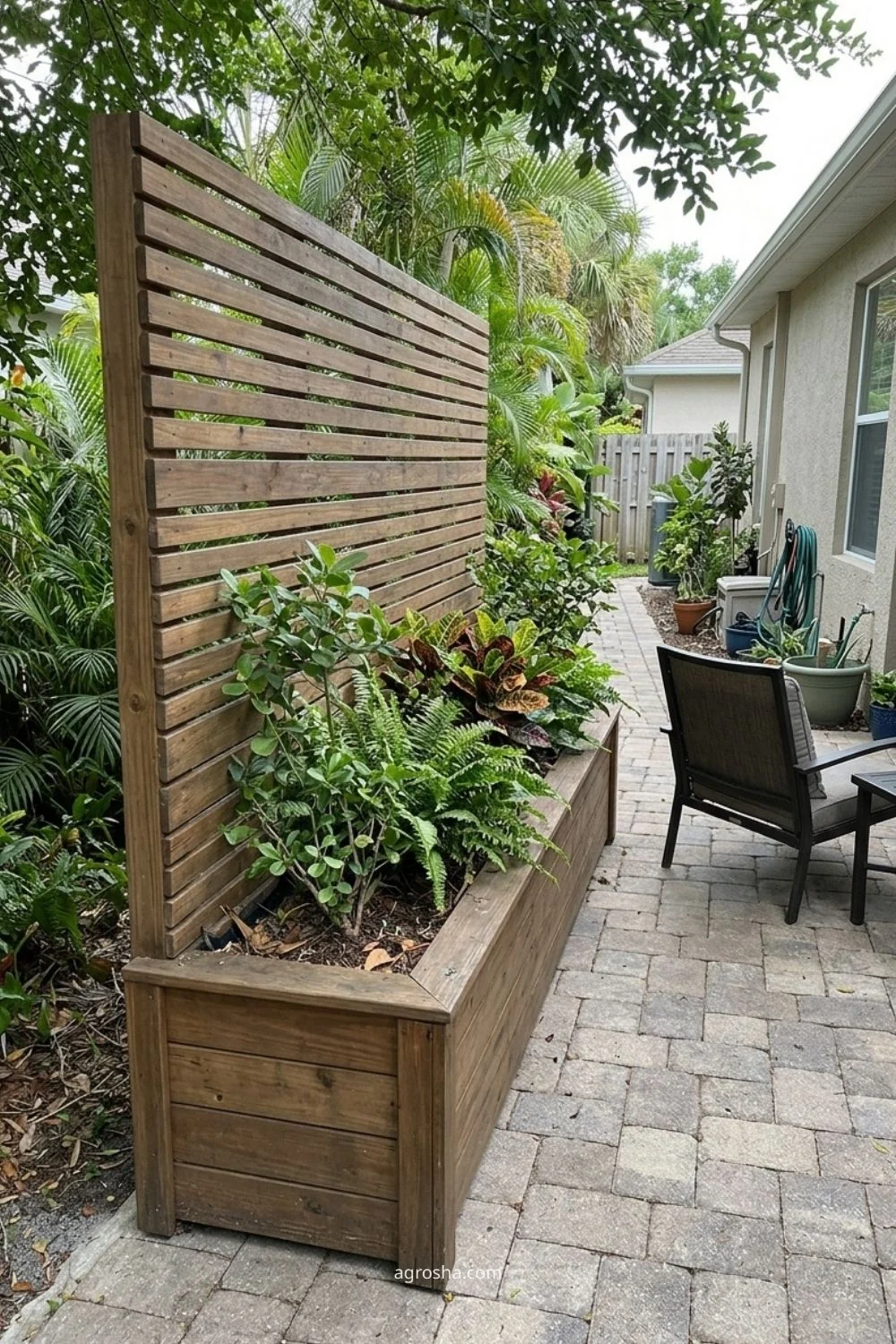
A planter base can stabilize a lattice or slat panel where you cannot dig posts. Keep the planter large enough for the screen height and the plant roots. Add casters only if the finished weight and patio surface can support safe movement.
17. Pivoting Slat Panels

Adjustable vertical or horizontal slats let you control sightlines, sun, and airflow. The hardware needs to be robust enough for outdoor exposure. Use the feature in one focused patio zone rather than as a complicated system across the whole yard.
18. Fabric Sail Used as a Side Screen
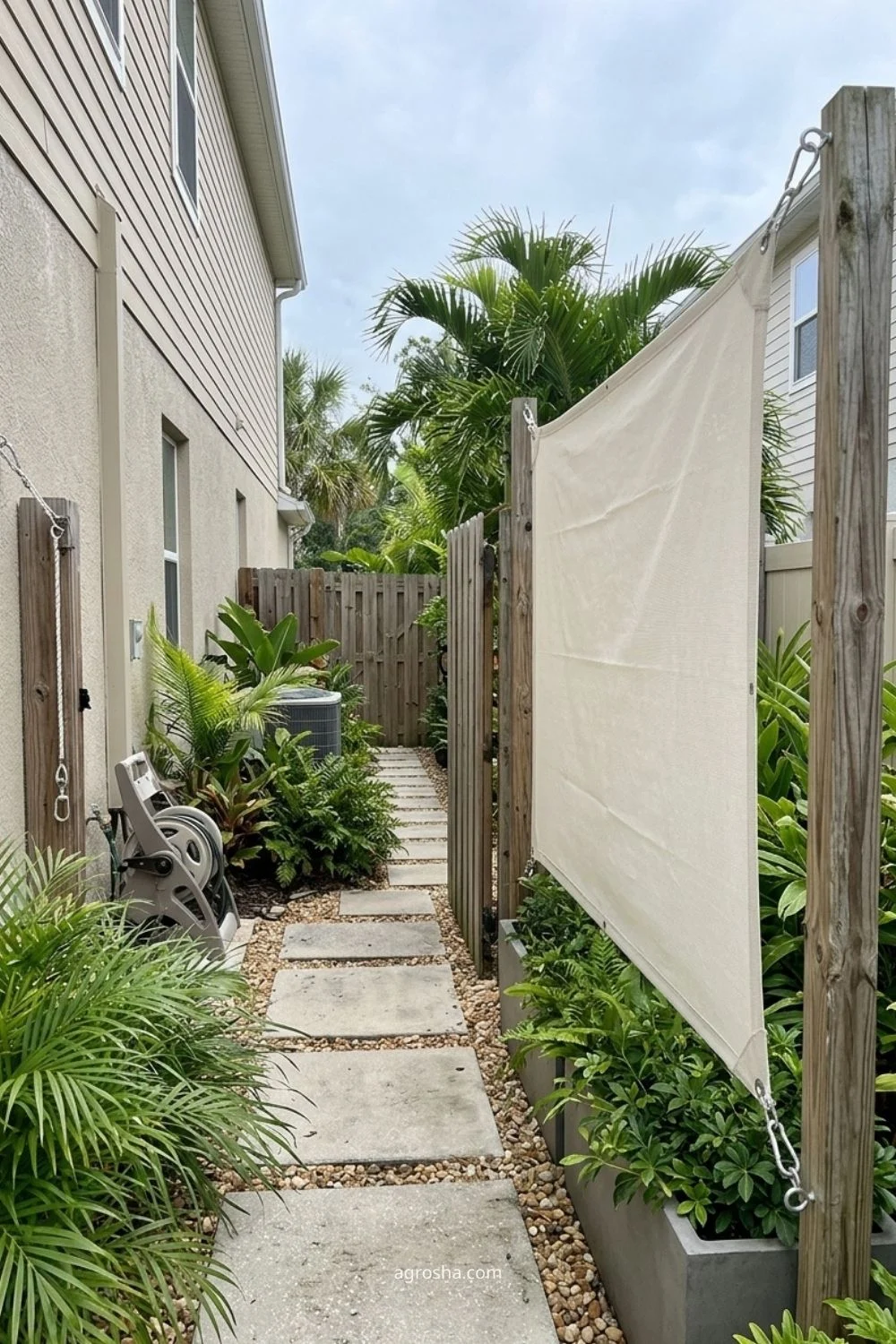
A tensioned fabric sail can block a high or diagonal view while adding shade. The anchor points carry significant load, so use engineered attachment points. This is not a simple decorative cloth solution in a windy Florida yard.
Natural, Rustic, and DIY Privacy Screens
Natural materials can blend beautifully with a garden, but they weather faster than metal or masonry. Expect bamboo rolls, woven panels, shutters, brushwood, and reclaimed wood to need inspection or replacement. Use them where texture and flexibility matter more than decades of service life.
19. Bamboo Roll on an Existing Frame
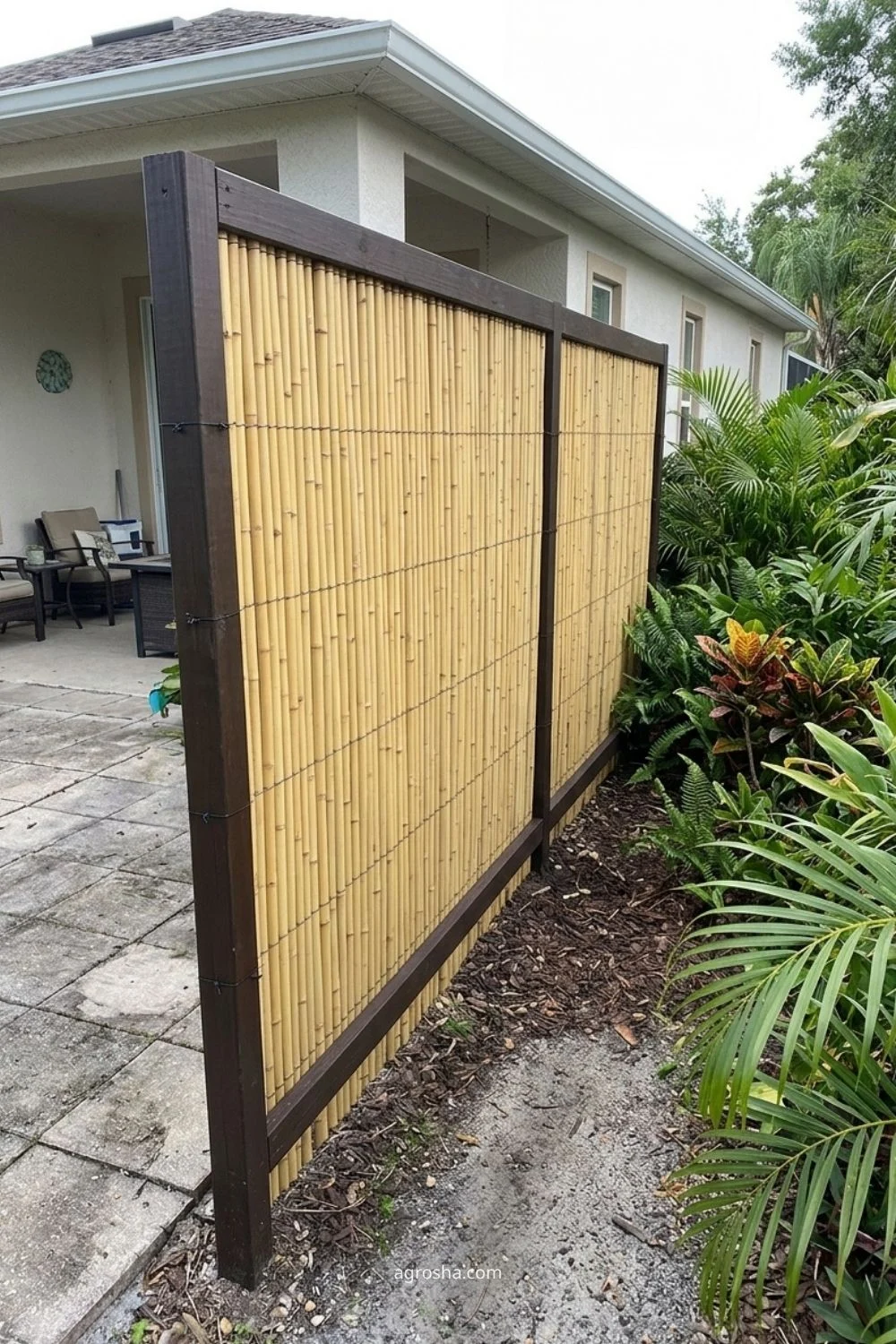
A bamboo-style roll can quickly soften an existing fence or rigid frame. Attach it securely at multiple points and keep it above wet soil where possible. Use it as cladding on a sound structure rather than expecting thin roll fencing to stand alone in wind.
20. Woven Wattle Panel
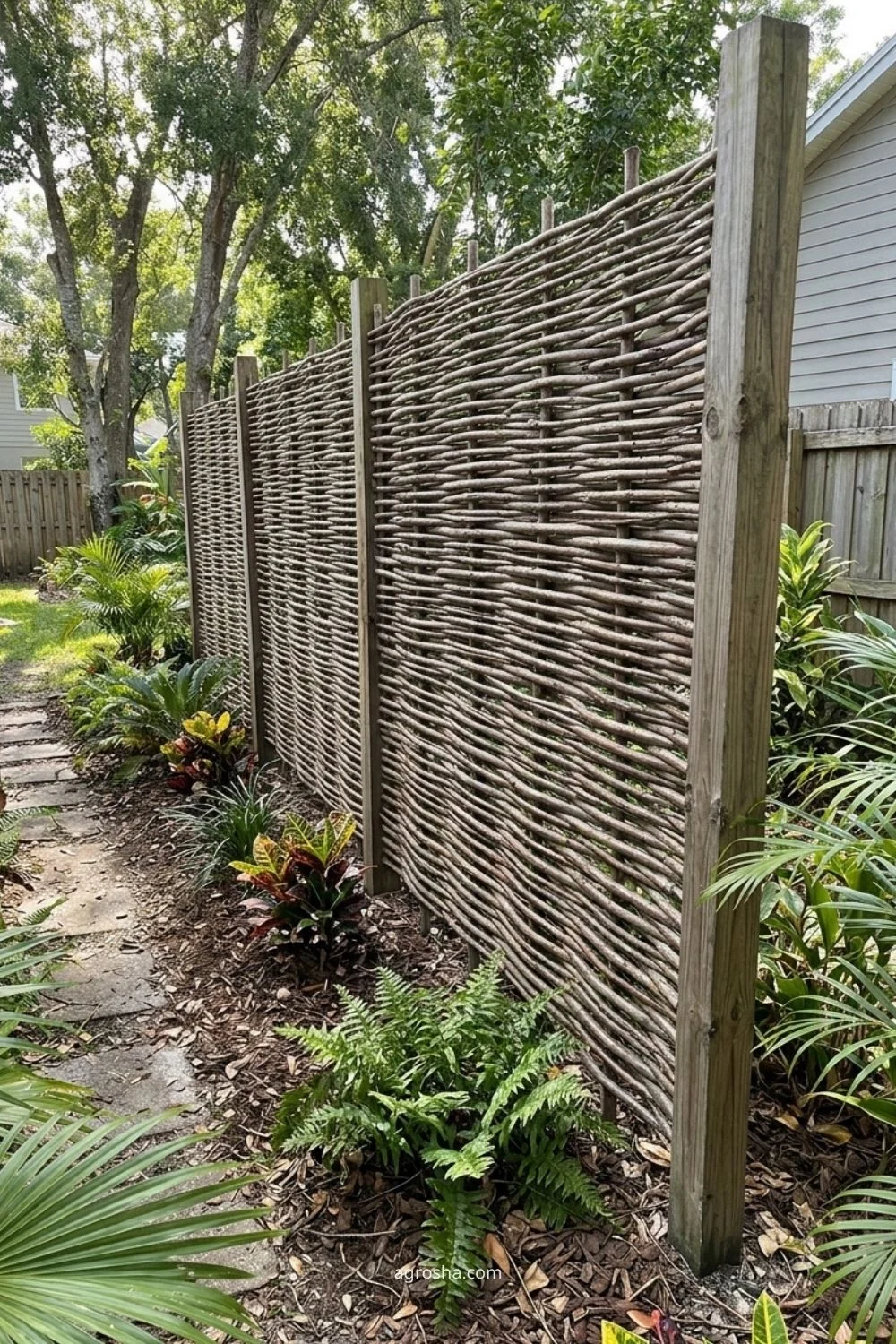
A woven branch panel can add cottage or natural-garden character while screening a low view. Prebuilt panels are easier to control than loosely woven branches on site. Expect natural materials to weather and eventually need replacement.
21. Reclaimed Shutter Screen
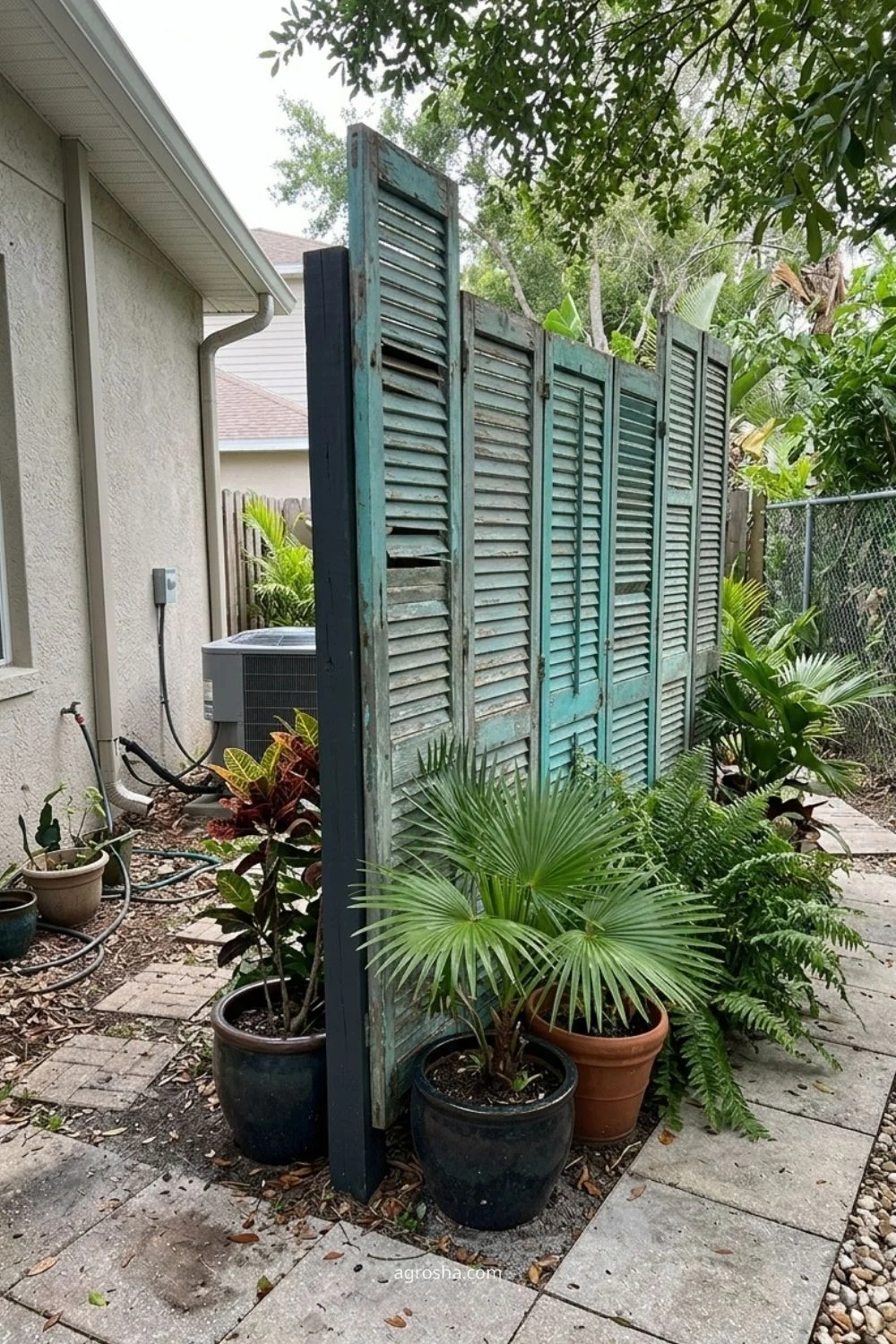
Hinged shutters can form a movable decorative divider if the wood and hardware are still sound. Remove peeling coatings and sharp parts, then secure the panels when open. This works best in a sheltered patio corner, not in an exposed yard.
22. Stacked Firewood Screen
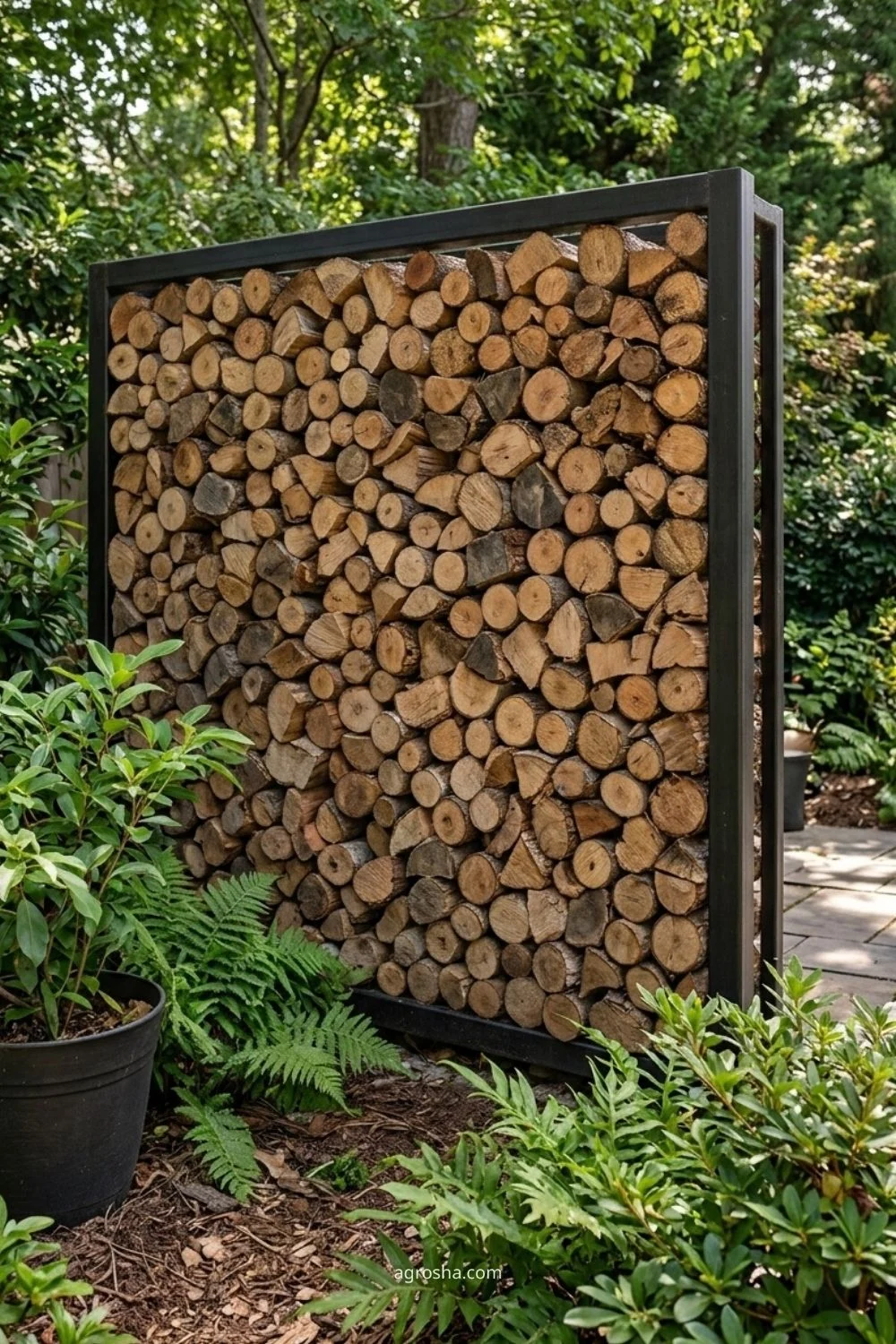
A properly built rack filled with dry firewood can screen a seating area and store fuel at the same time. Keep it away from structures and ignition sources as required, provide airflow around the wood, and use a frame that cannot tip.
23. Brushwood Panel

Dense brushwood or reed-style panels create immediate visual cover and a natural texture. Attach them to a proper frame, expect weathering, and inspect ties after storms. Use them where quick screening matters more than a long service life.
24. Reclaimed Wood Slat Screen
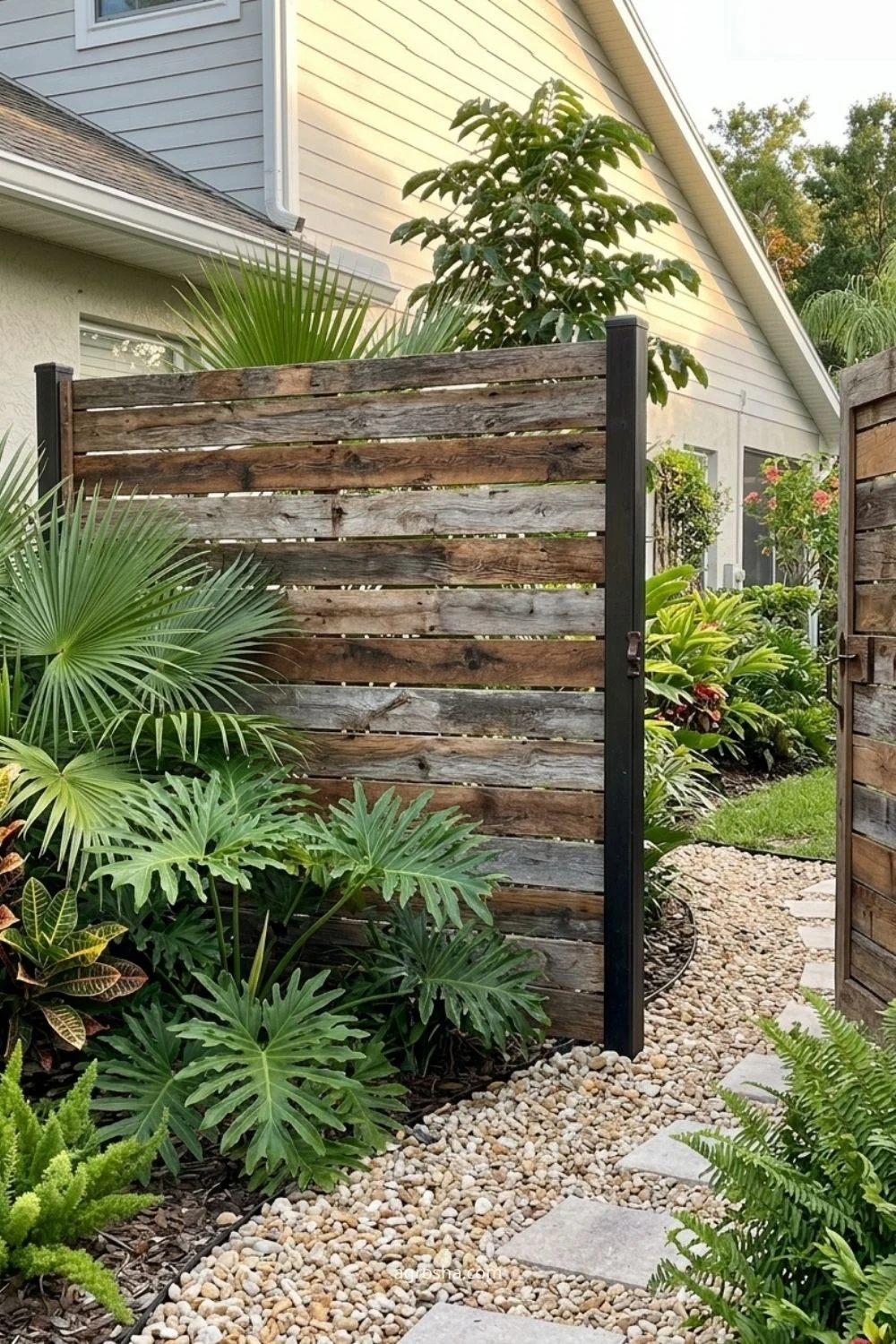
A screen built from safe reclaimed boards can create a personalized backdrop. Use only sound material without unknown coatings or rot, and rebuild the wood into a structurally clear frame. Random boards should still produce an intentional, stable screen.
Modern Privacy and Special Use Cases
Composite, weathering steel, cable systems, block, and large trough planters can create stronger architectural privacy. These solutions work best when the structure matches the house and the sightline problem is specific. Large permanent screens should still preserve drainage, access, and a sense of open space.
25. Composite Board Screen
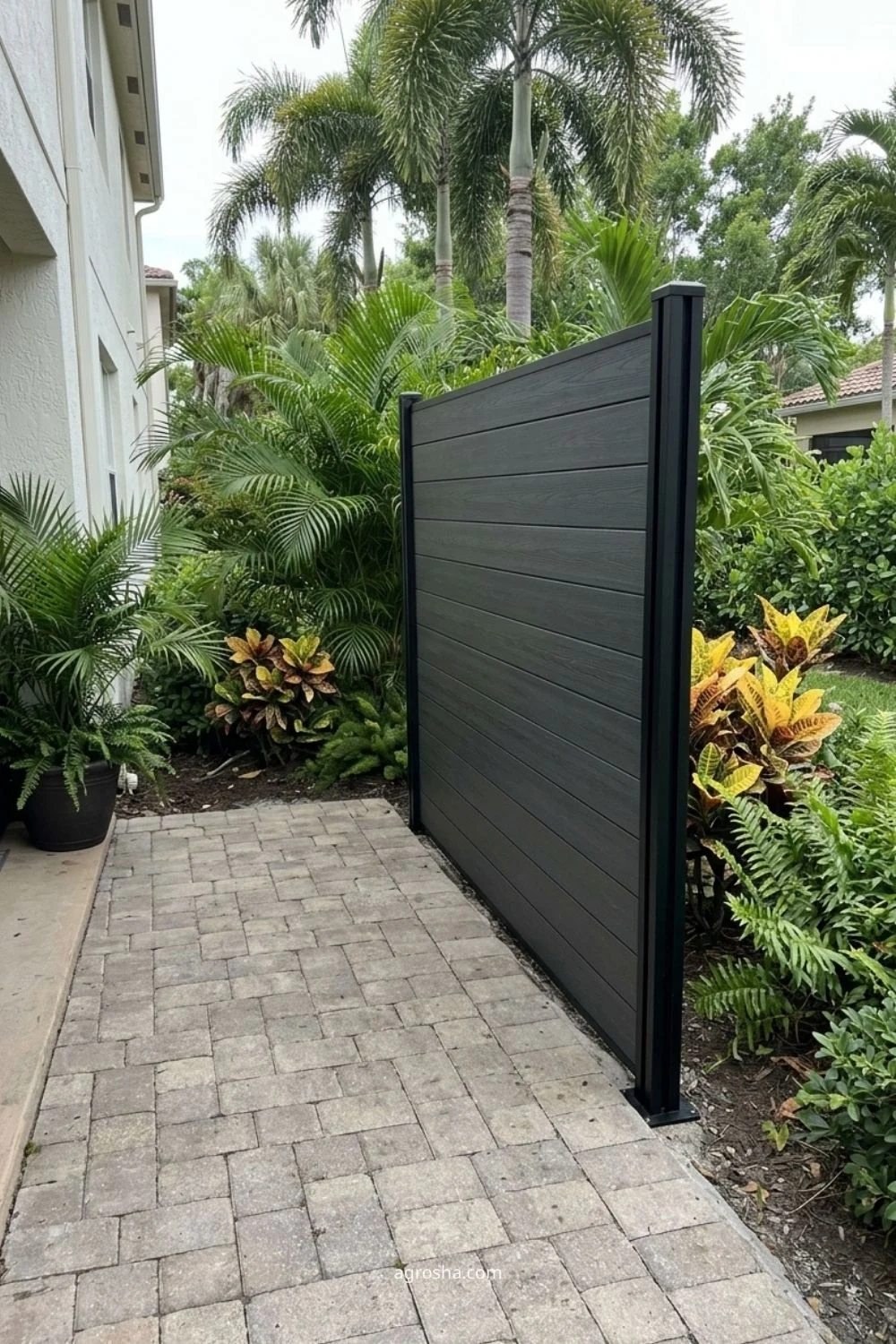
Composite boards resist rot and need less refinishing than many wood screens. Follow the product’s span and fastening requirements because boards can move with temperature. Use a consistent gap pattern so the screen feels clean rather than heavy.
26. Weathering-Steel Plate
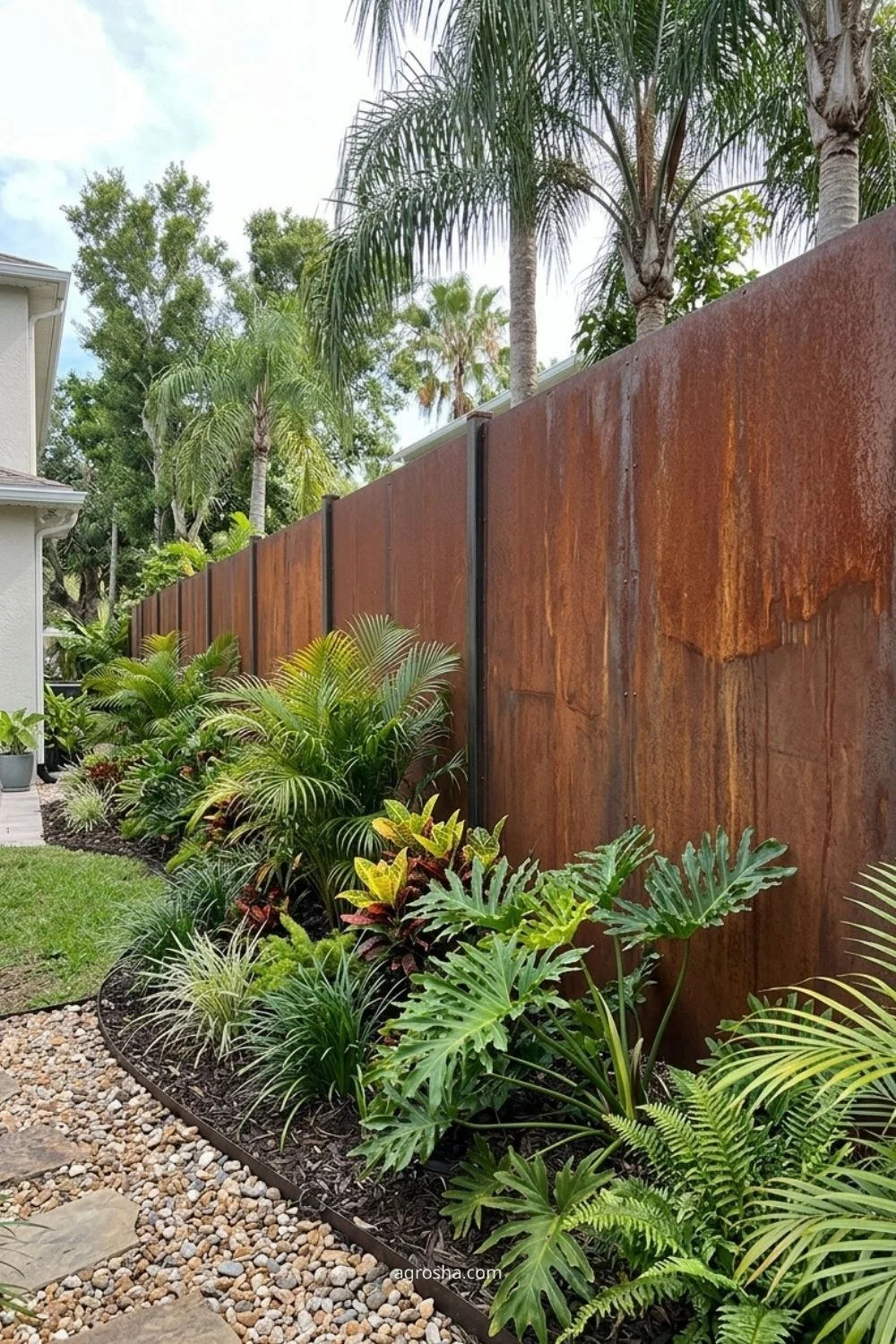
A solid or patterned weathering-steel plate can create a strong focal screen with a warm patina. Plan for runoff staining during weathering and keep the panel clear of narrow paths. It works best as a limited architectural feature.
27. Steel-and-Cable Plant Trellis
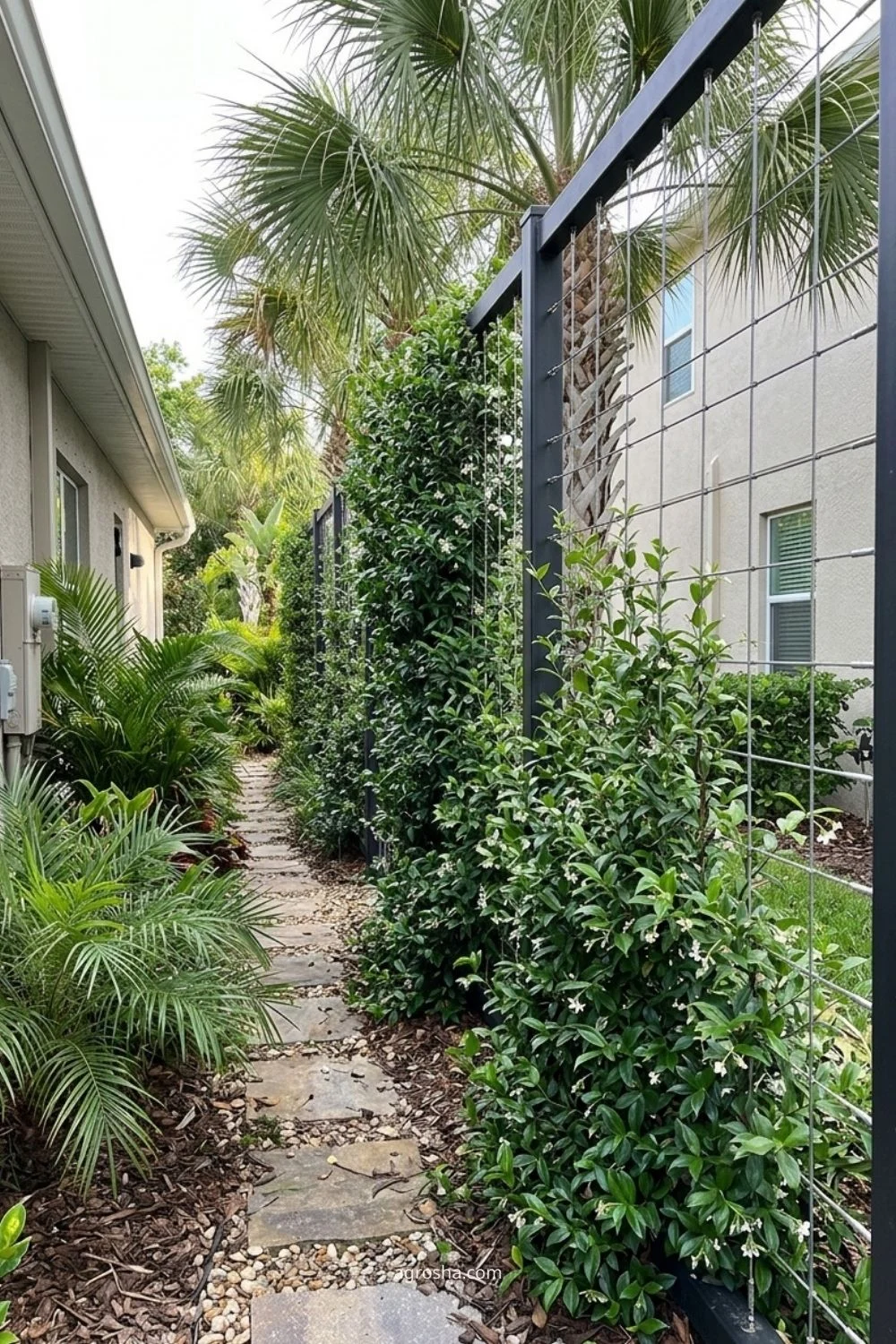
A cable trellis creates a minimal frame for climbing plants while keeping the structure visually light. It needs strong anchors and enough separation from the wall for plant care. Before the vine fills in, privacy will be partial.
28. Painted Cinder-Block Screen
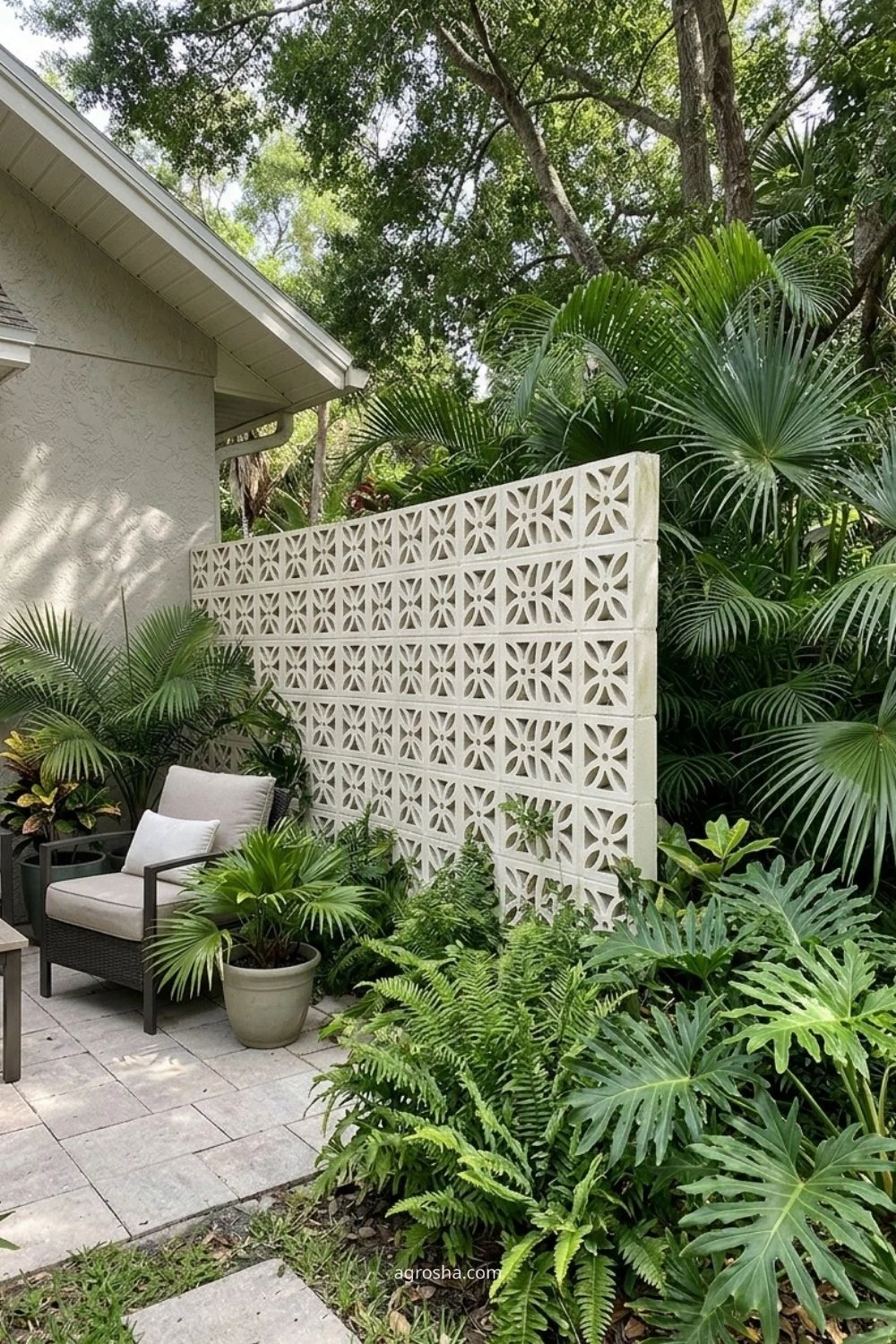
A block wall or open-cell screen can create durable privacy and a simple modern backdrop. Structural walls need proper footings and may require permits. Keep decorative plant pockets modest so irrigation does not stain the entire wall.
29. Movable Trough Planter Screen
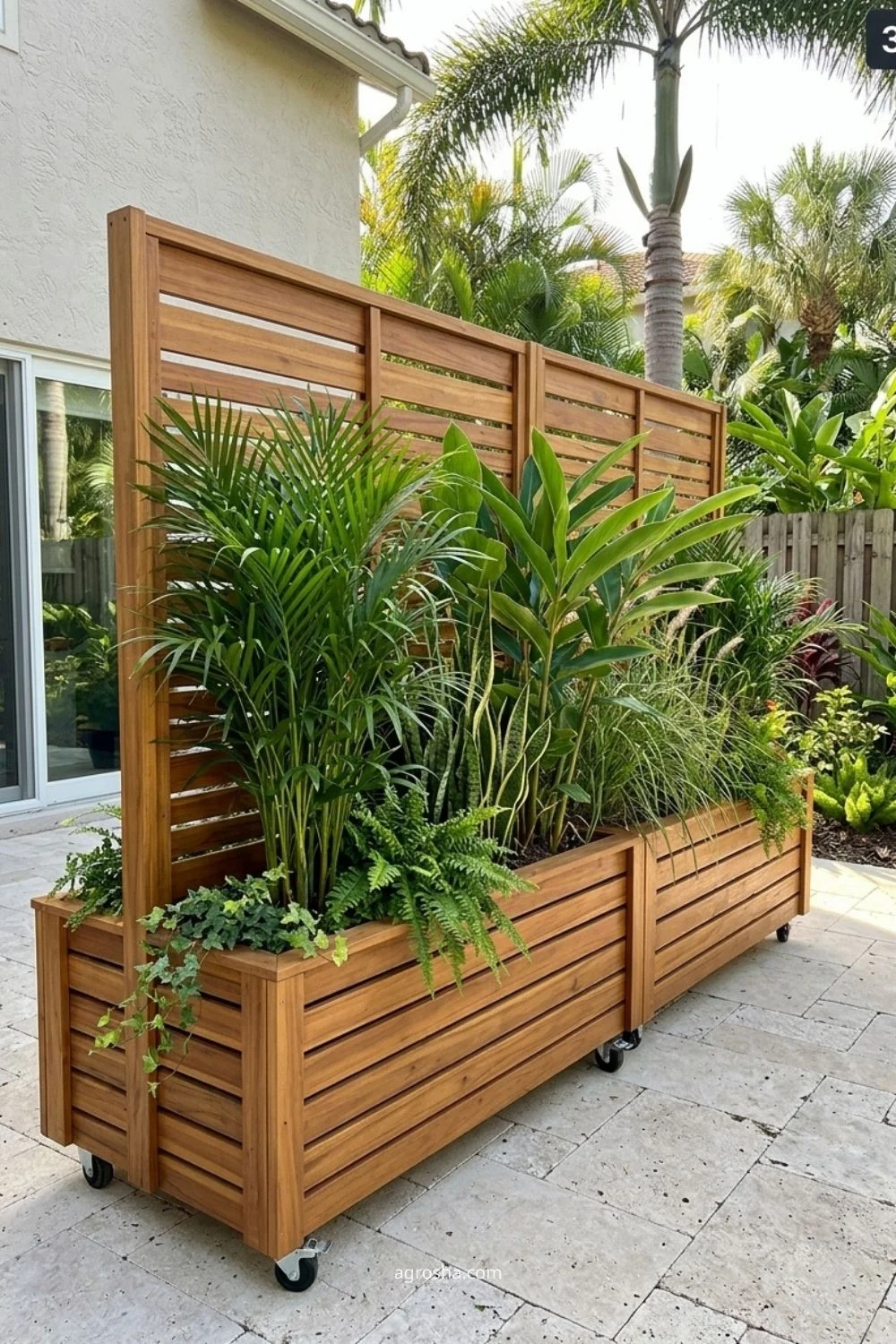
Long galvanized-style planters with tall grasses or shrubs can create a movable visual barrier. The finished containers are extremely heavy, so move them only with equipment or casters designed for the load. Leave irrigation and drainage access.
30. Hinged Multi-Panel Outdoor Divider
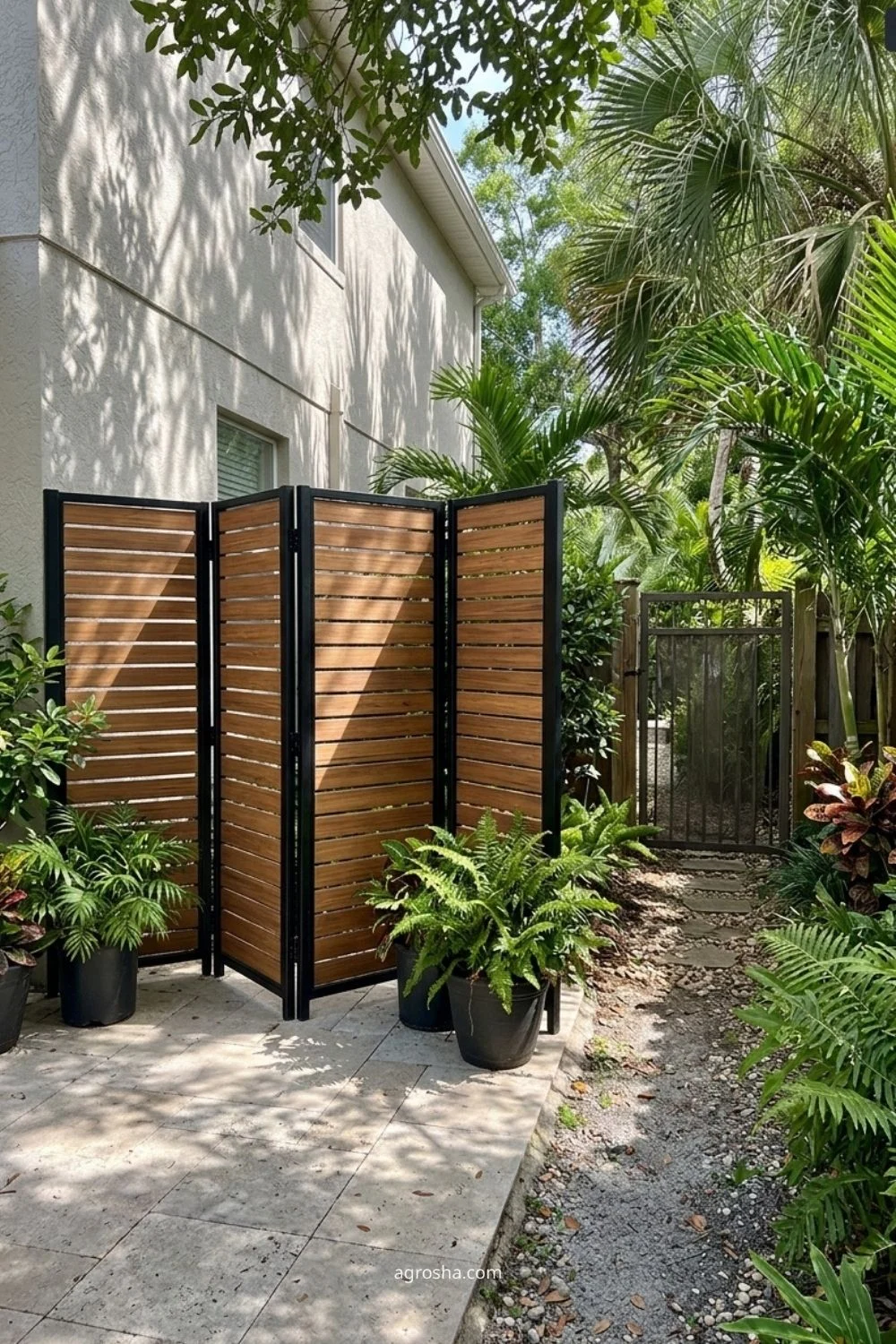
A weather-resistant multi-panel divider is useful when privacy needs change for meals, gatherings, or a spa. Fold and store it during storms and keep the base stable on pavers. It is a flexible solution for one zone, not a substitute for a secure fence where safety or property boundaries matter.
Privacy Without Blocking Light
For a small yard, filtered privacy is often more comfortable than a solid wall. Slats, patterned panels, trellises, layered plants, and partial-height screens can interrupt sightlines while allowing air and daylight to move through the space. Test the view from seated and standing height before building taller than necessary.
Frequently Asked Questions
What is the easiest way to add backyard privacy?
For one targeted view, a freestanding screen or large planter grouping is usually the fastest. For long-term garden privacy, layered shrubs or a trellis with vines can blend more naturally into the yard.
What privacy screen works best in a windy Florida yard?
Permanent structures need posts, footings, fasteners, and materials designed for local wind exposure. Flexible screens, curtains, awnings, and lightweight dividers should be retracted, removed, or secured before severe weather.
Can plants provide year-round privacy?
Yes, if you choose evergreen or persistent foliage plants suited to your Florida region and site. Use multiple layers and mature spacing instead of relying on one fragile hedge line.
How can I add privacy without making a small yard feel smaller?
Block only the problem sightline, keep screen gaps or foliage where possible, and avoid surrounding every side with tall solid barriers. Preserve one open view and use light-filtering materials near seating.
Final Thoughts
Good privacy design is selective. Use the least bulky solution that solves the real view problem, keep maintenance access open, and choose structures or plants that can handle Florida weather. A well-placed screen can make a patio feel private without turning the whole backyard into a closed box.