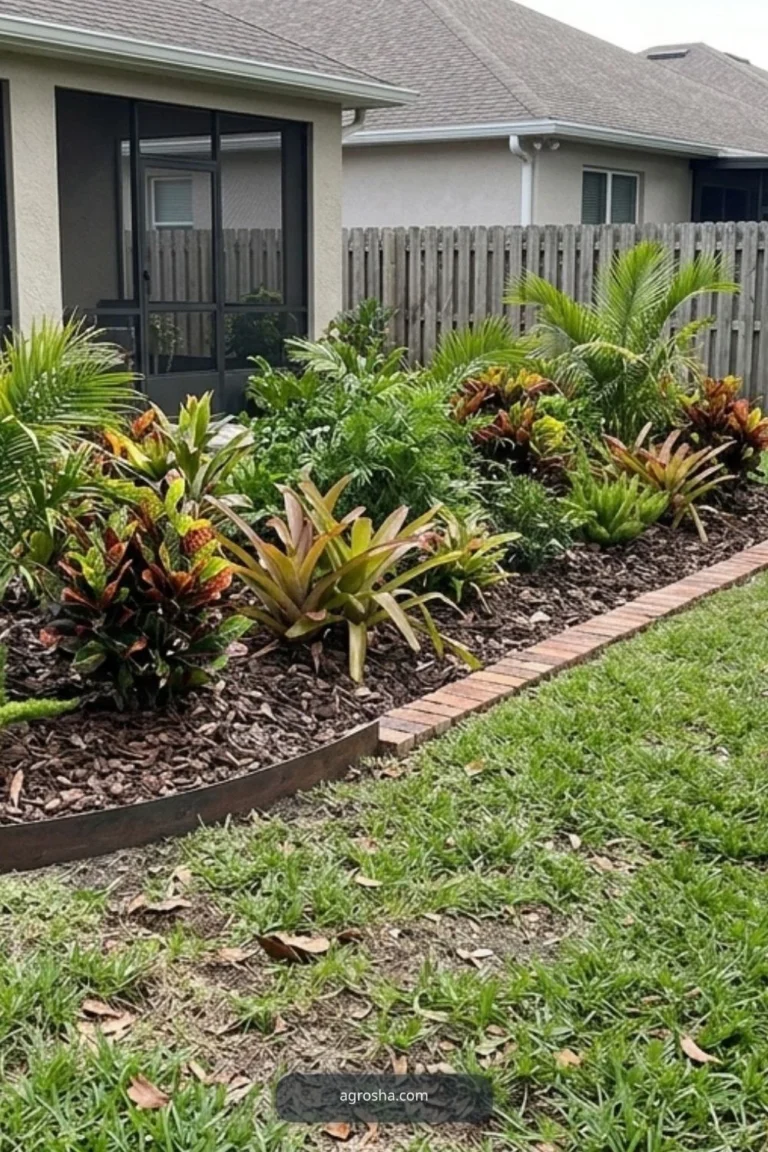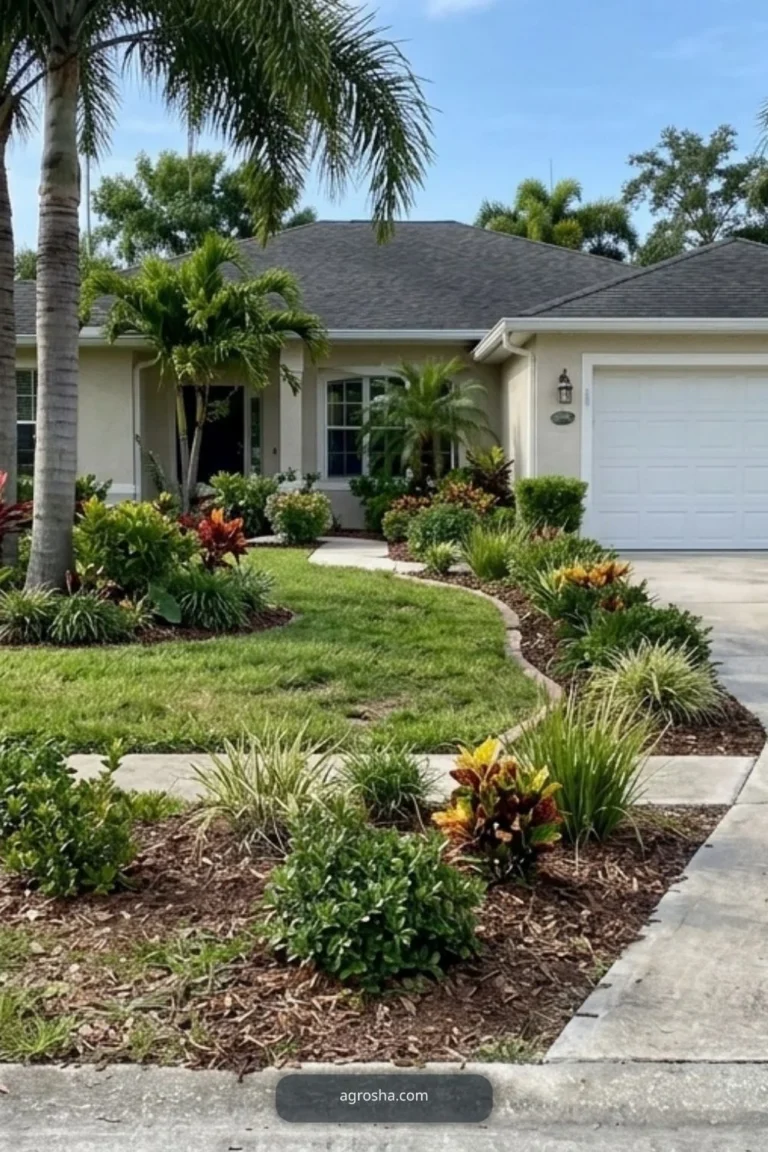

Low maintenance plants for landscaping are not simply plants that can survive with less water. The easiest Florida yards come from choosing plants that match the exact light, drainage, mature size, wind, salt exposure, and water conditions of each part of the property.
That idea is often called “right plant, right place.” It matters in Florida because one yard can have blazing afternoon sun near the driveway, deep shade under an oak, fast-draining sandy soil beside the house, and a wet low spot only a few steps away. Choosing for those differences reduces pruning, replacement, pest problems, and emergency watering.
How to Choose Lower-Maintenance Plants for Your Yard
Start With the Site, Not the Plant Tag
Before shopping, walk the yard in the morning, midday, and late afternoon. Note where rainwater collects and which areas stay dry. In Florida, also consider hurricane wind exposure, coastal salt if relevant, and how close the planting will be to sidewalks, driveways, walls, or irrigation.
1. Match Plants to Your Florida Sun Pattern
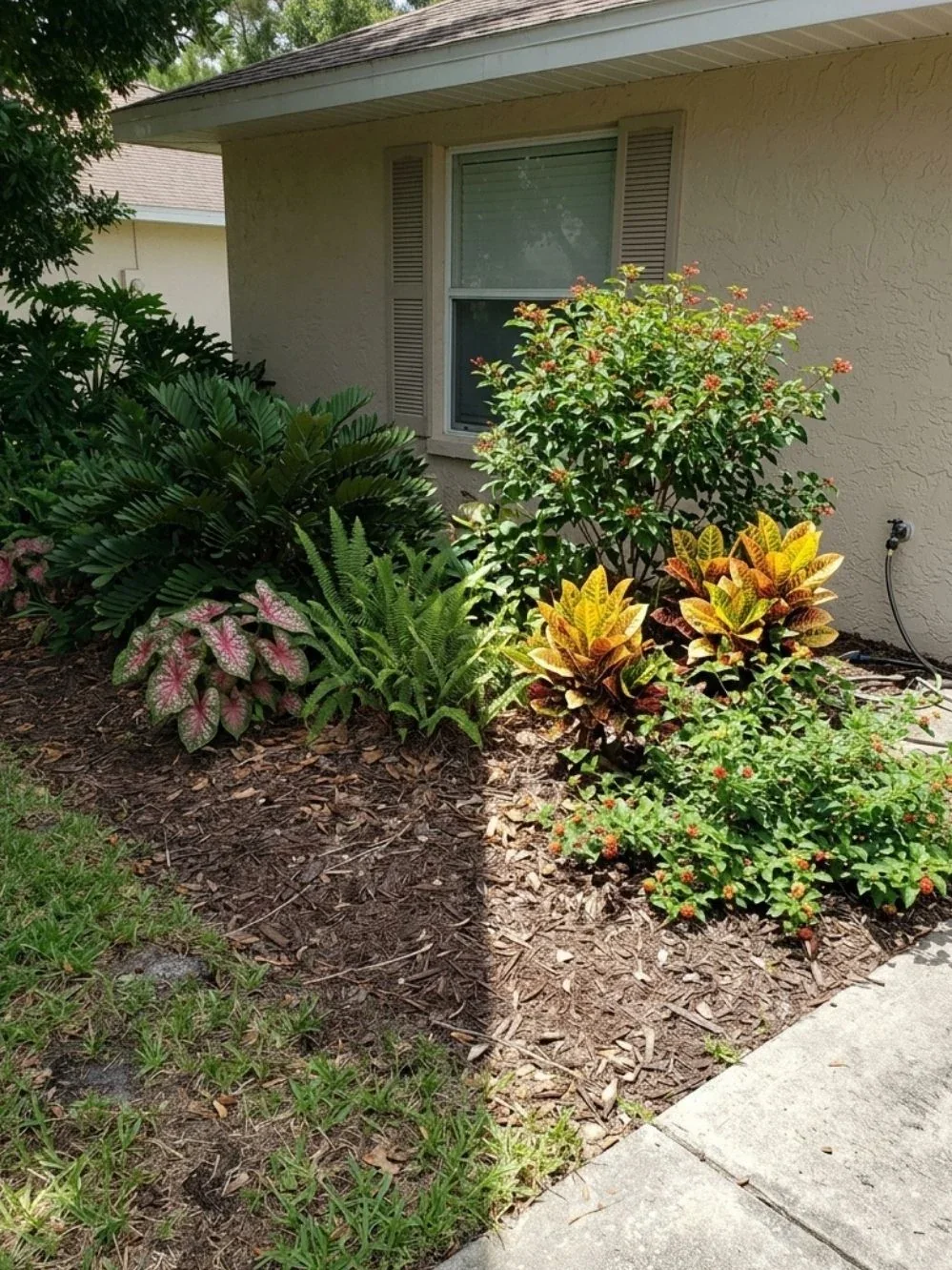
A lower-maintenance landscape starts with light. Full Florida sun can be intense, especially beside pavement and south- or west-facing walls. Use sun-loving plants in those hot zones and save shade-tolerant plants for tree canopies, porches, and the north side of the house. A plant that fits the light usually needs less rescuing later.
2. Group Plants by Water Needs
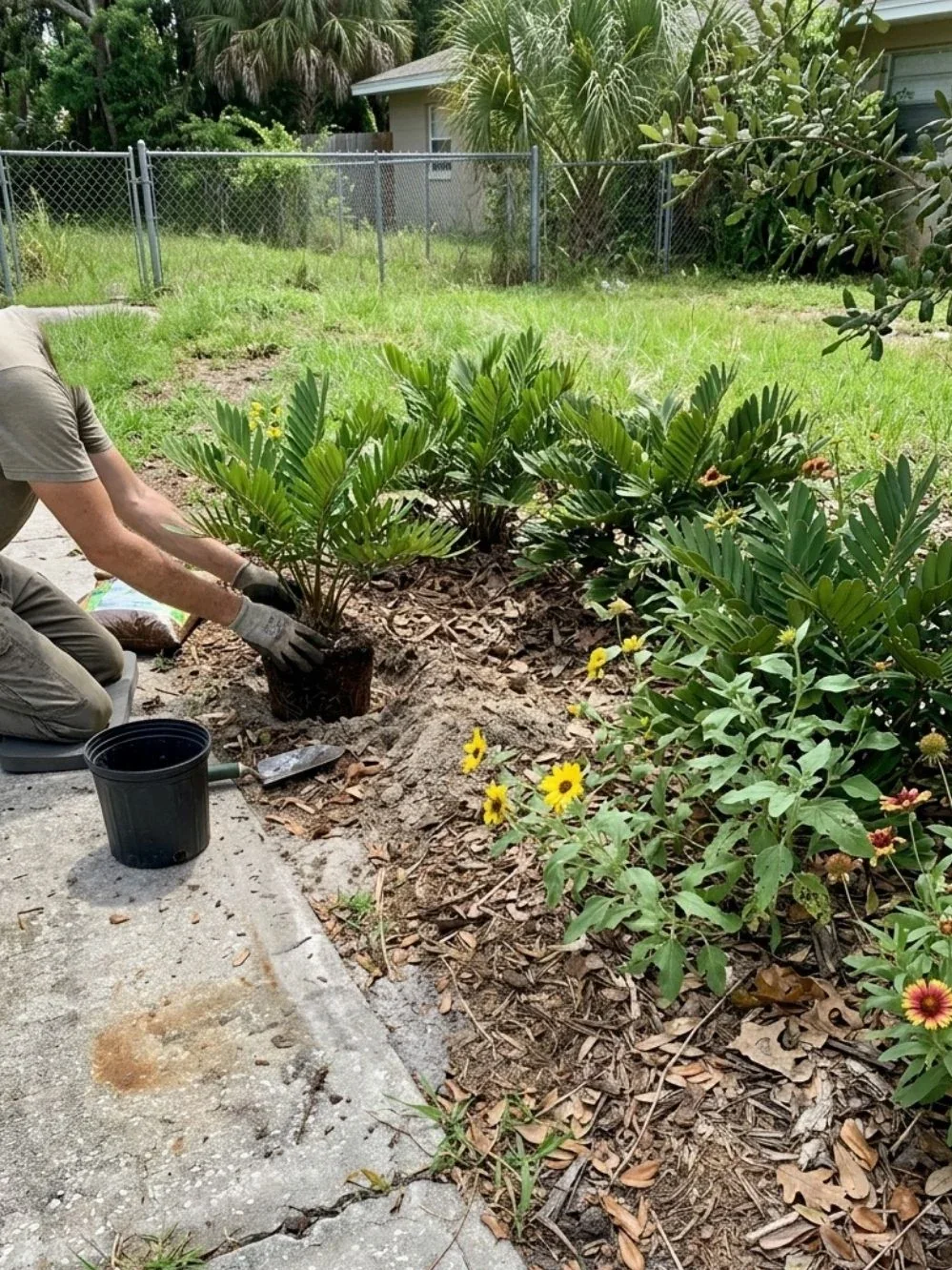
Put plants with similar moisture needs together instead of mixing thirsty plants beside drought-tolerant ones. This makes hand watering and irrigation simpler and reduces the cycle of overwatering one plant while underwatering another. If you are simplifying a whole backyard, pair this approach with our low-maintenance backyard landscaping ideas.
3. Choose for Mature Size
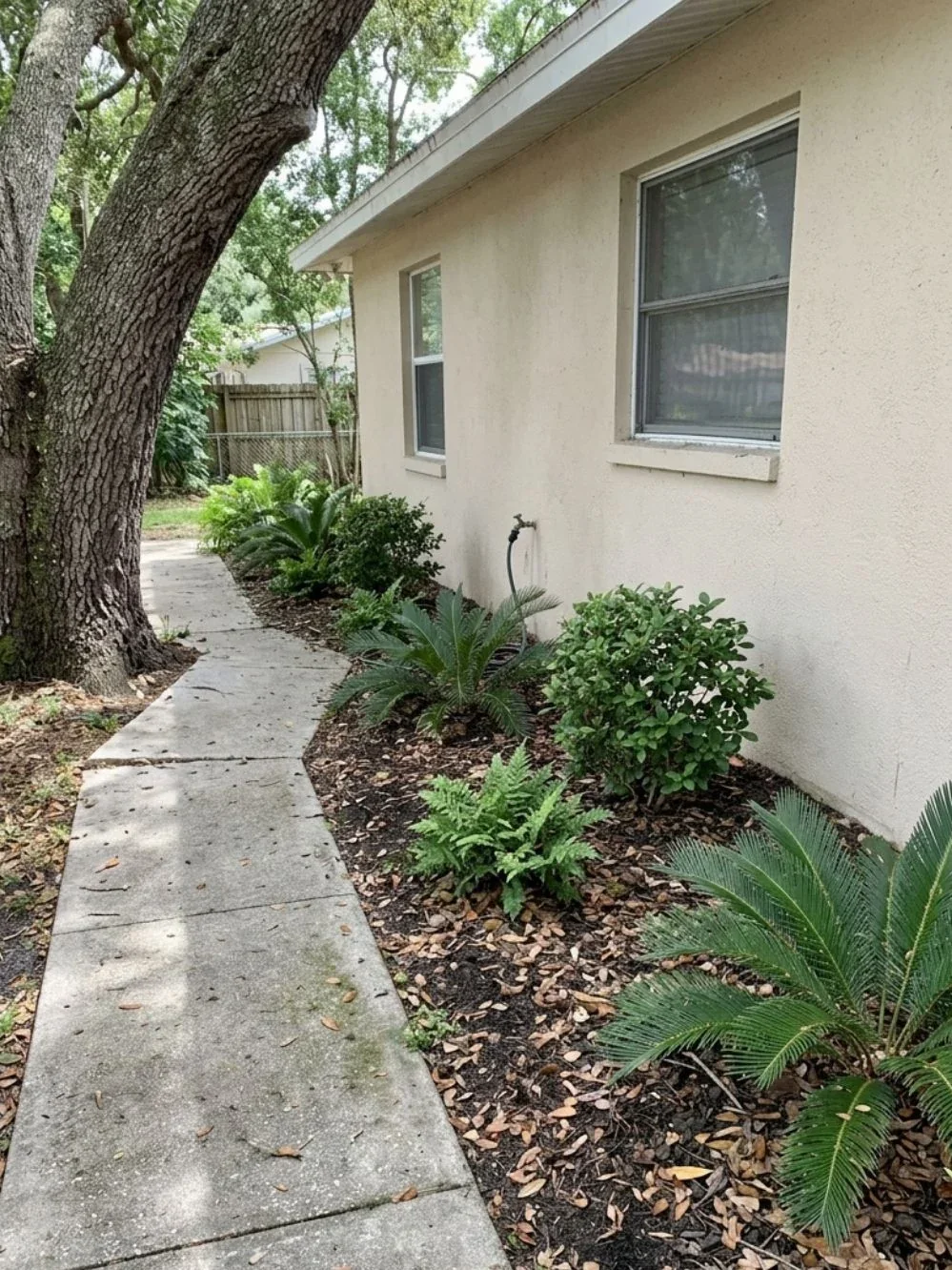
Read the mature height and width before you buy. A small nursery shrub can become a constant pruning job if it is planted under a window or too close to a walkway. Leave enough room for the natural shape. Proper spacing also improves airflow during Florida’s humid months and helps the bed look intentional as plants fill in.
4. Check Drainage After a Florida Rain
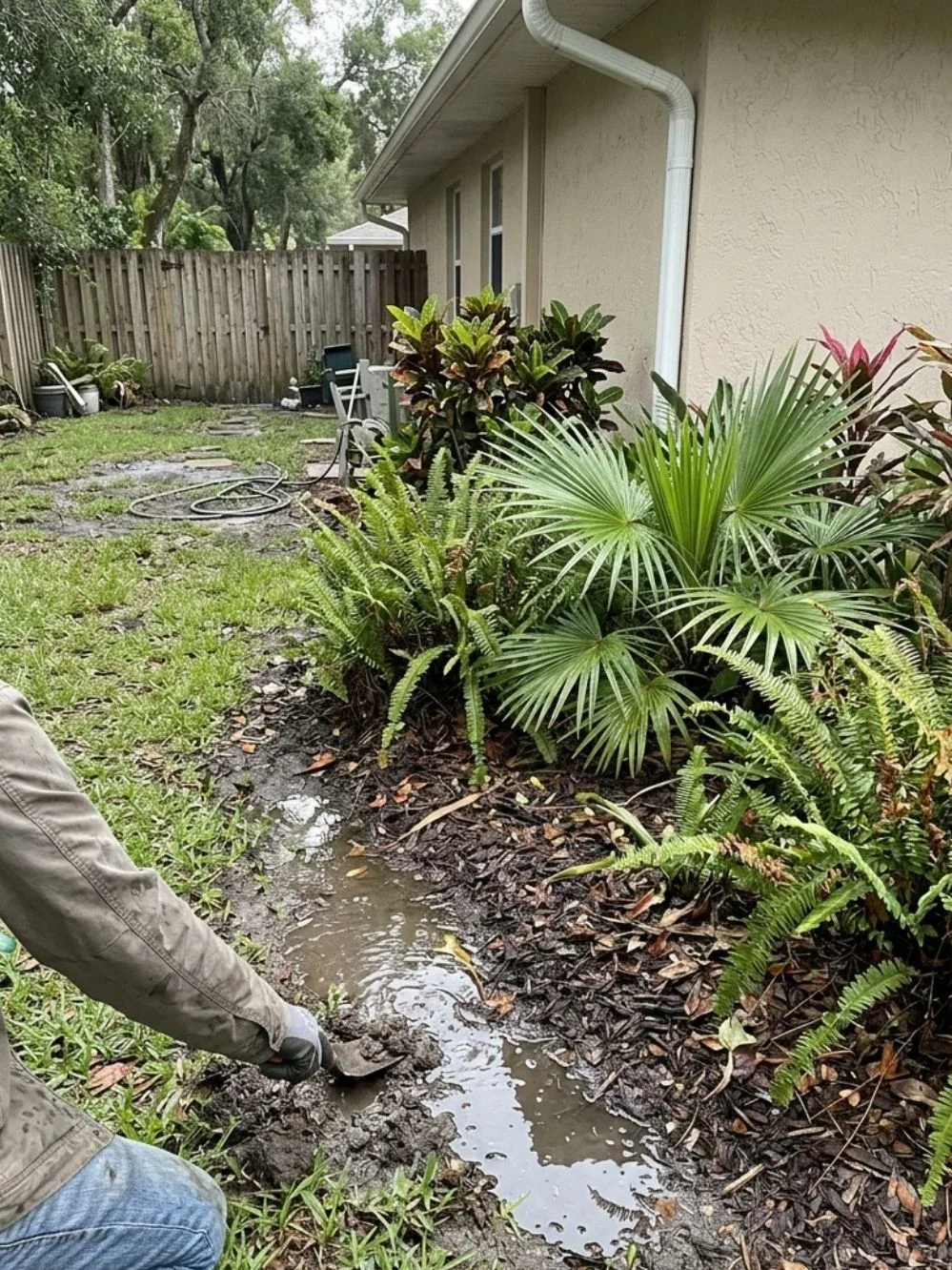
A bed that looks dry most of the week may hold water after a summer storm. Watch where water pools, how quickly it drains, and whether roof runoff hits the area. Use moisture-tolerant plants in low spots and keep drought-tolerant plants on faster-draining ground instead of trying to force one plant palette across the entire yard.
5. Plan for Wind and Storm Exposure

Open corners, lakefront yards, and coastal sites can receive strong wind. Choose sturdy plants and avoid putting brittle, top-heavy shrubs where they will need repeated staking. In exposed areas, a layered planting of lower shrubs and grasses usually handles wind better than a single tall, narrow screen.
Lower-Maintenance Plants for Sunny Florida Beds
6. Use Clumping Ornamental Grasses for Movement

Clumping grasses add height and motion without the weekly shaping that formal hedges often need. Choose a noninvasive type suited to your part of Florida and give it enough space to arch naturally. Pink muhly grass is one familiar Florida-friendly look for sunny, well-drained sites, but local conditions should guide the final choice.
7. Add Coontie in Tough, Dry Spots
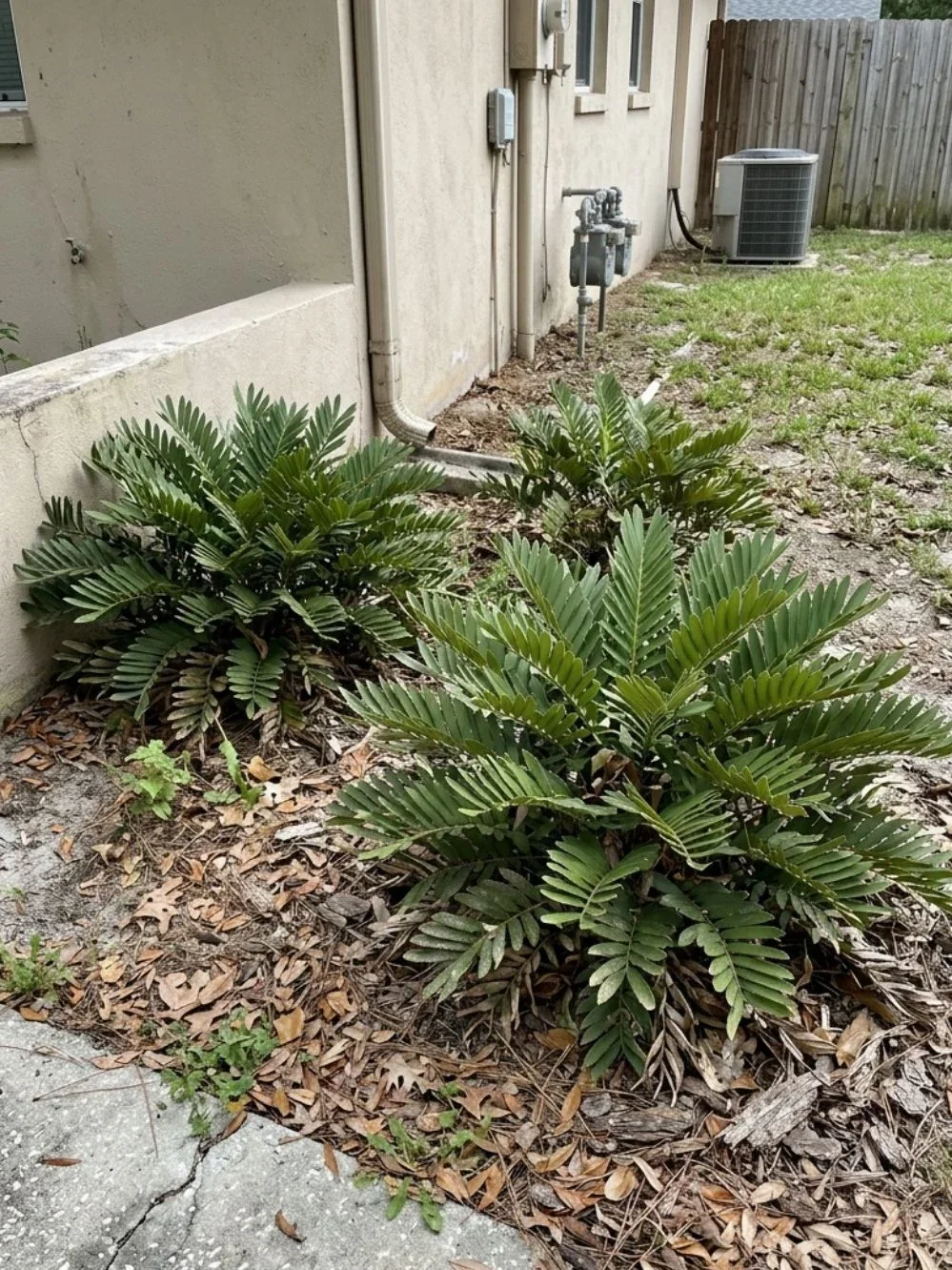
Coontie has a compact, fern-like appearance and can work in sun to partial shade when the site suits it. Its slow, tidy growth makes it useful near walkways, foundations, and mixed beds where you do not want constant clipping. Keep mature size and drainage in mind, and let the plant keep its natural form.
8. Use Dwarf Evergreen Shrubs Where Structure Matters
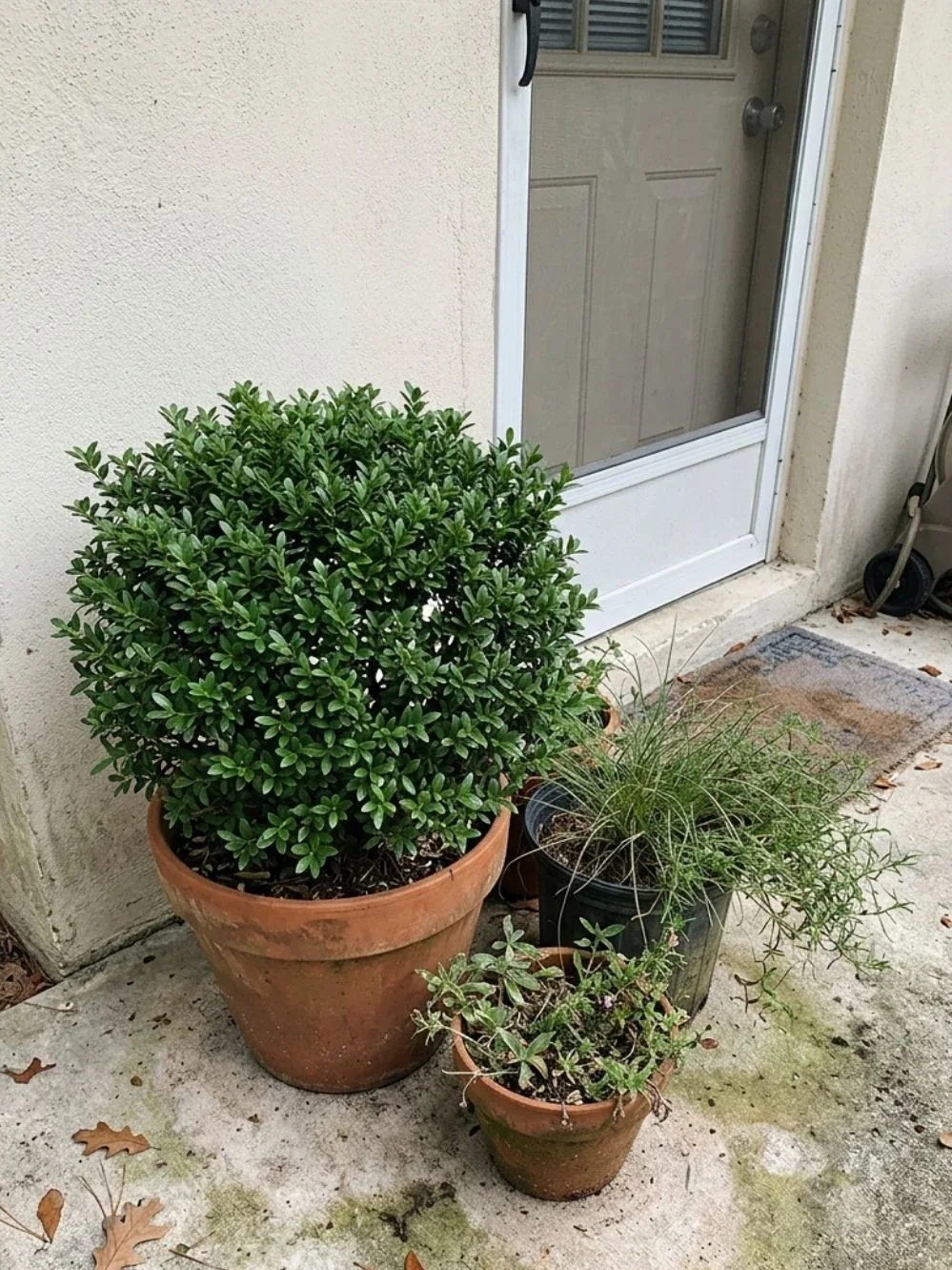
A small evergreen shrub can hold the bed together when flowers are between bloom cycles. Look for a cultivar that naturally stays near the size you need rather than buying a larger shrub and shearing it every month. This is especially useful around entries and along simple foundation beds.
9. Choose Native Flowering Shrubs for Seasonal Color
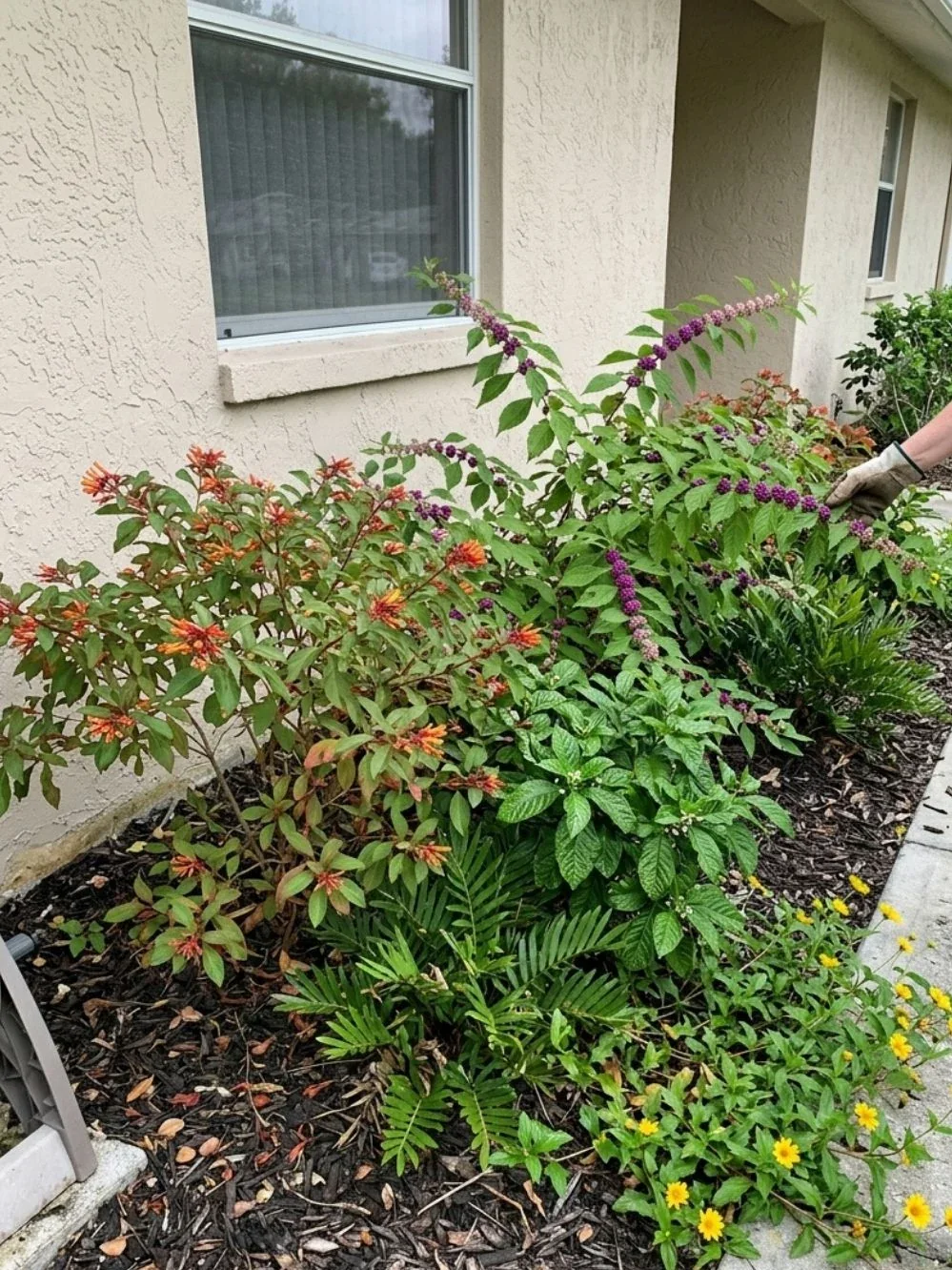
A site-matched native flowering shrub can provide color, wildlife value, and a relaxed Florida look without acting like a high-maintenance annual bed. Beautyberry and firebush are examples often used in Florida landscapes, but mature size and regional cold tolerance matter. Use them where they have room to grow.
10. Use Coreopsis and Similar Easy Flowers in Sunny Pockets
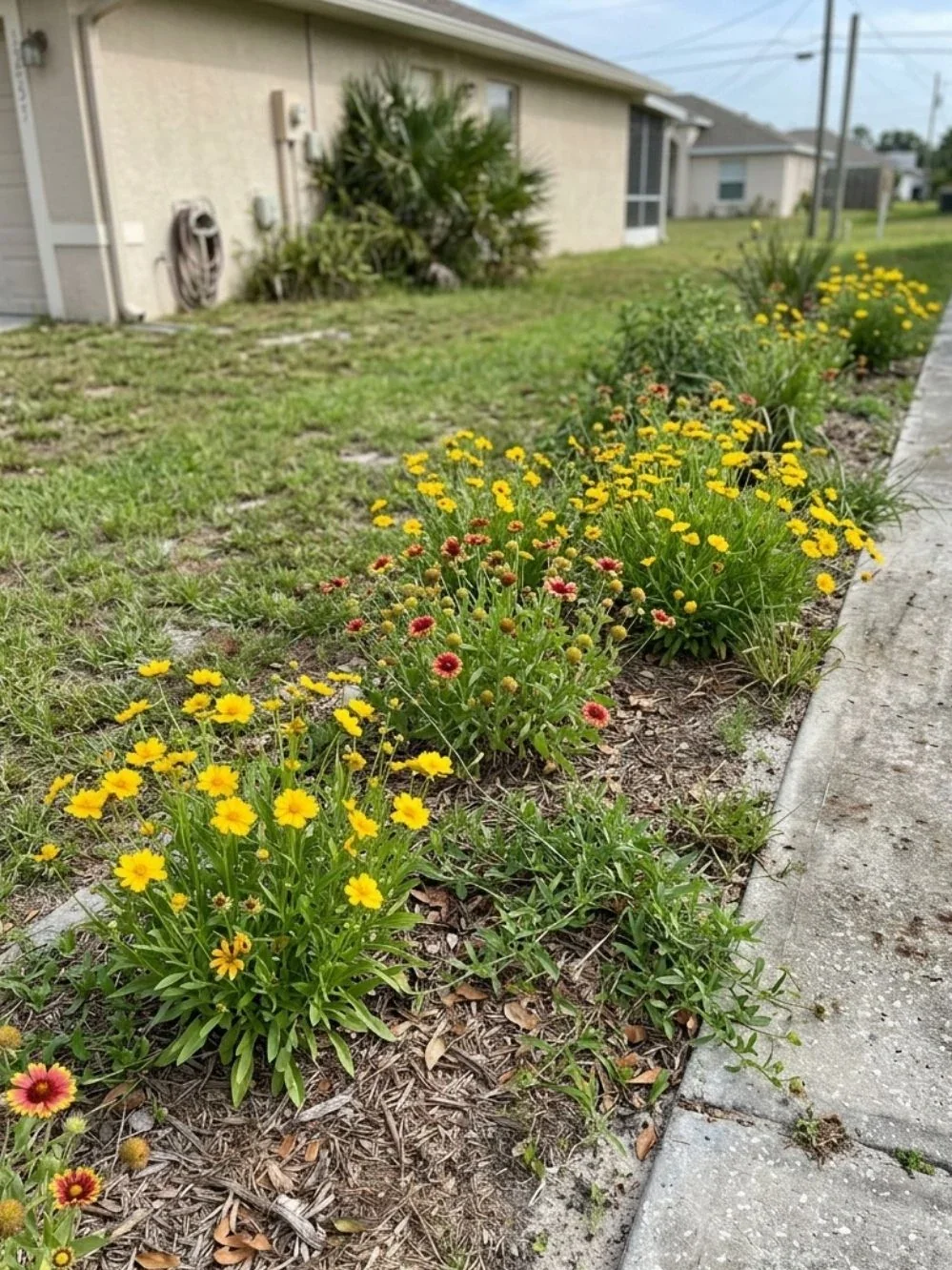
Florida’s state wildflower, coreopsis, can add bright seasonal color in sunny, well-drained areas. It works best as part of a mixed bed rather than as a perfectly clipped border. Let the planting feel a little loose and natural, then use mulch or a clean edge to keep the overall bed organized.
11. Try Low Groundcovers Instead of Narrow Turf Strips
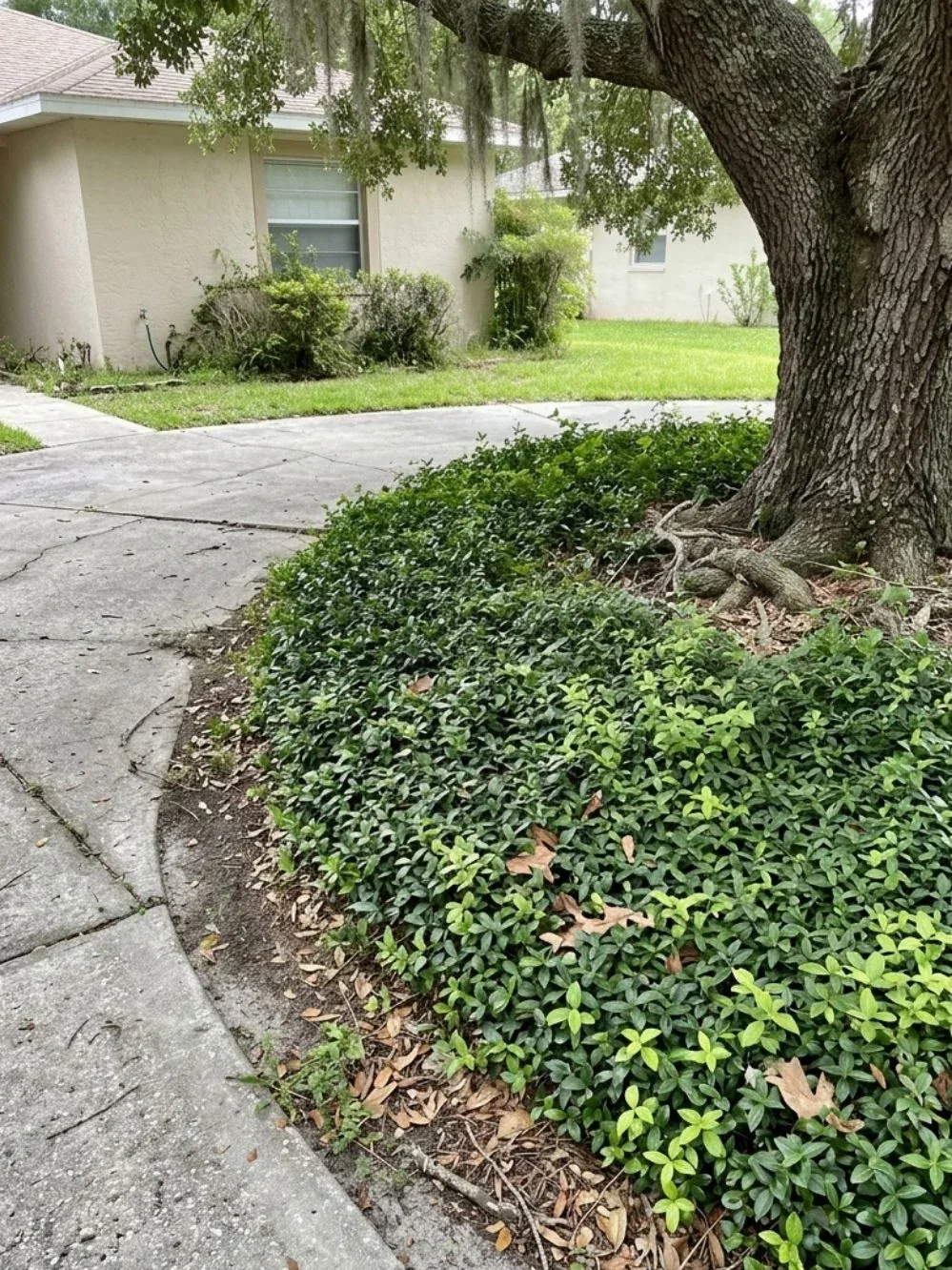
Tiny grass strips beside driveways, fences, and beds are awkward to mow and edge. A low groundcover suited to the light and moisture can remove that chore. Keep the plant inside a defined bed and choose a species that is not invasive in Florida. This works especially well in spots where turf already struggles.
Plants for Partial Shade and Shady Yards
12. Build Around Foliage, Not Constant Flowers
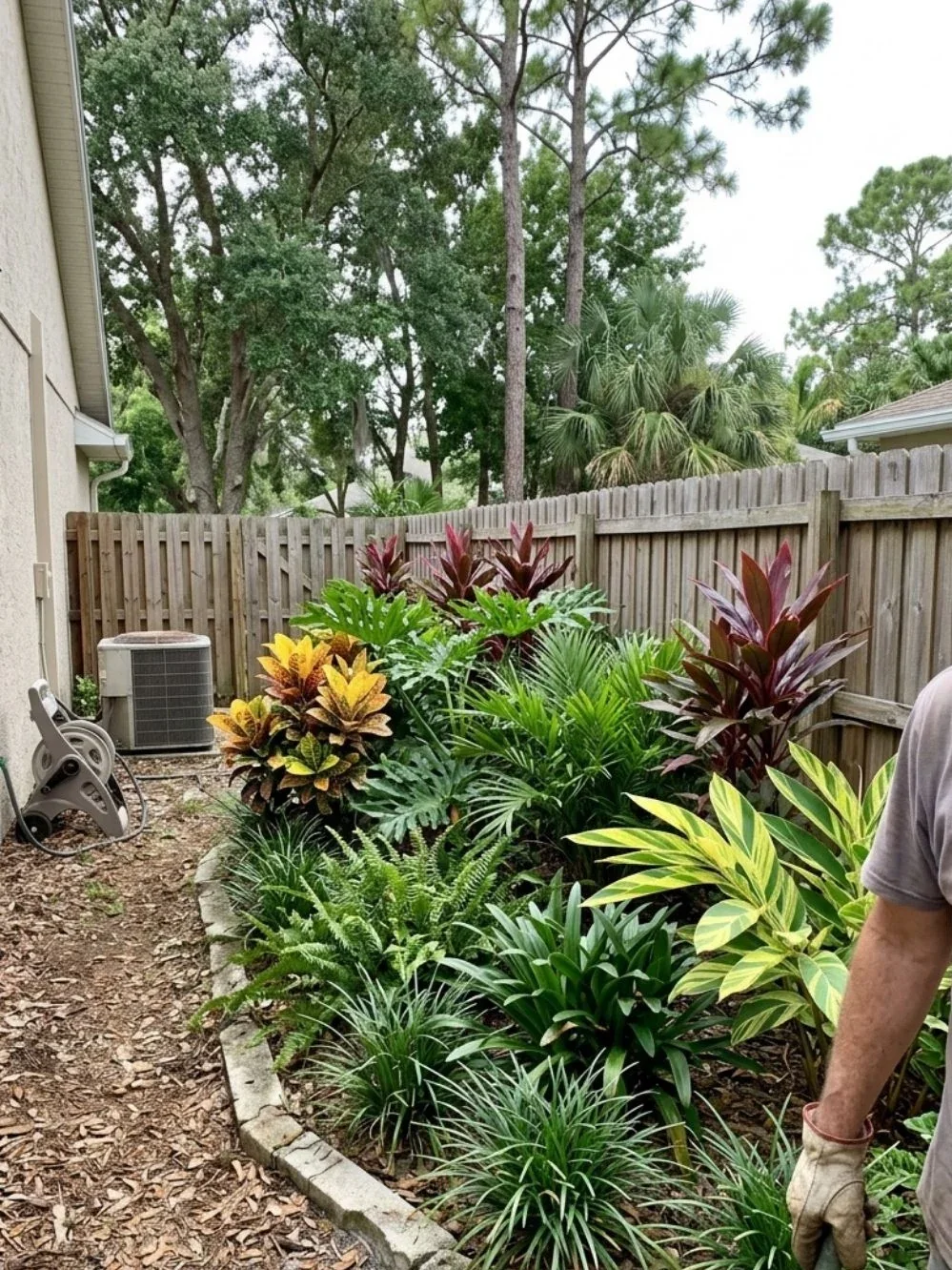
In shade, leaf shape and color often matter more than nonstop blooms. Combine broad leaves, fine textures, and a few lighter green plants to keep the bed interesting. This creates a calmer, more reliable planting than forcing sun-loving flowers into low light. See our shade garden ideas for more low-light layouts.
13. Use Ferns Where Moisture and Shade Match
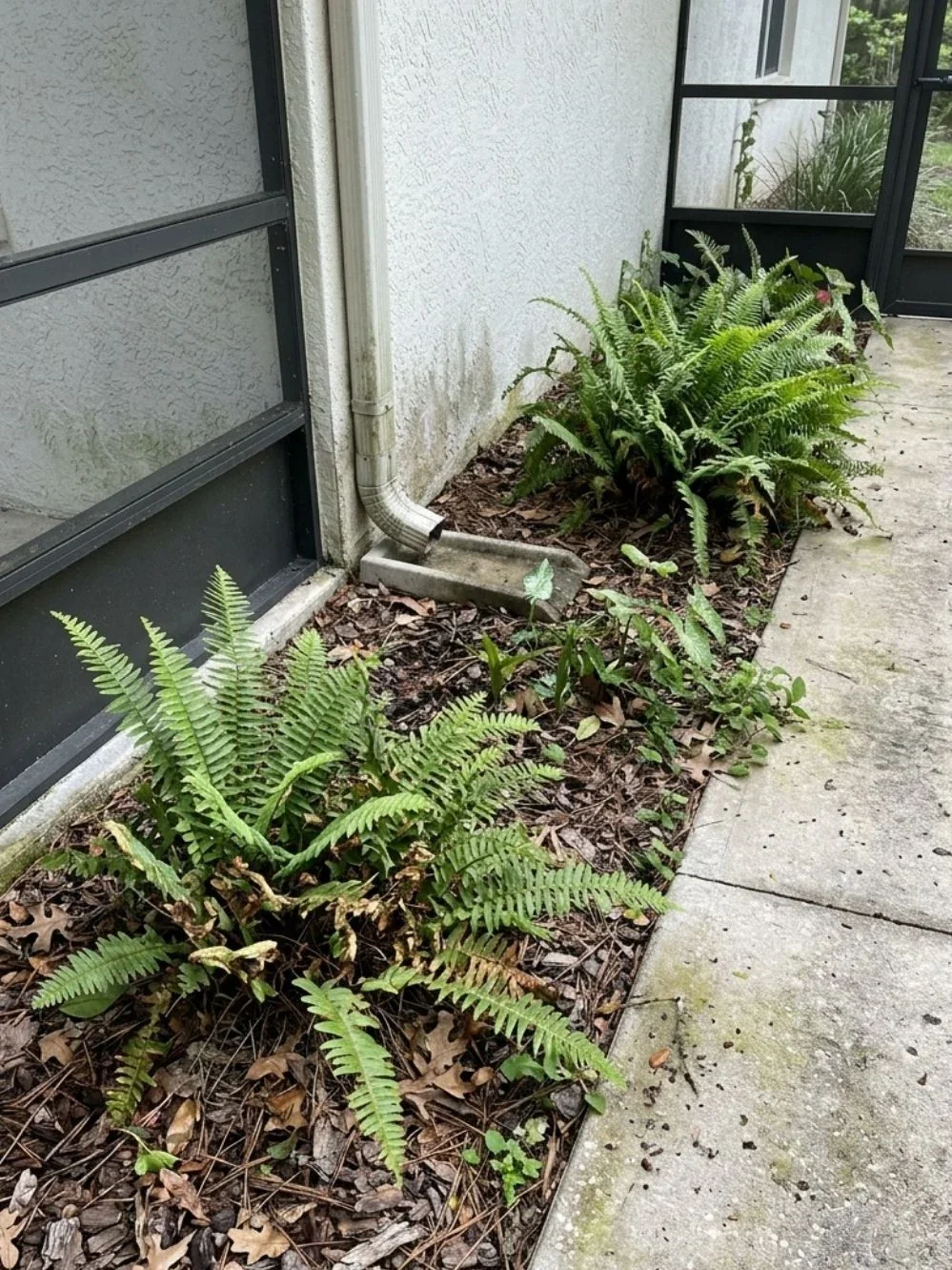
Ferns can make a shaded Florida corner feel full without a lot of pruning. The important part is matching the fern to the actual site. Some tolerate drier shade while others prefer steady moisture. Keep them away from hot reflected sun and give them space so fronds do not constantly spill into paths.
14. Choose Compact Shade Shrubs Near the House
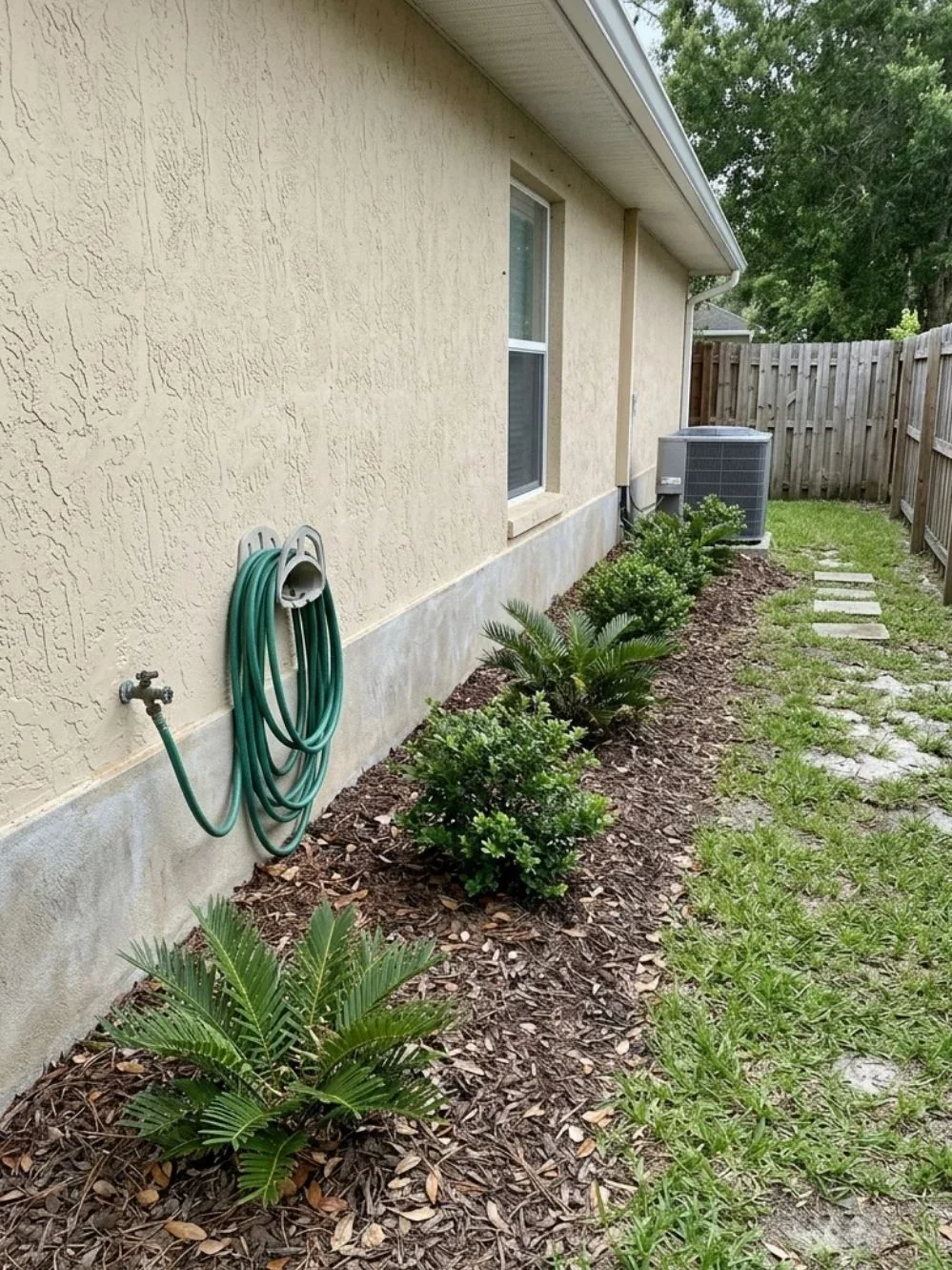
A compact shrub that tolerates shade can soften a blank foundation wall without blocking windows or requiring frequent cuts. Measure the space first and leave a gap from the building for airflow and access. Avoid planting a future eight-foot shrub in a four-foot space just because it looks small at the nursery.
15. Use Wild Coffee or Similar Regional Shrubs in Protected Shade
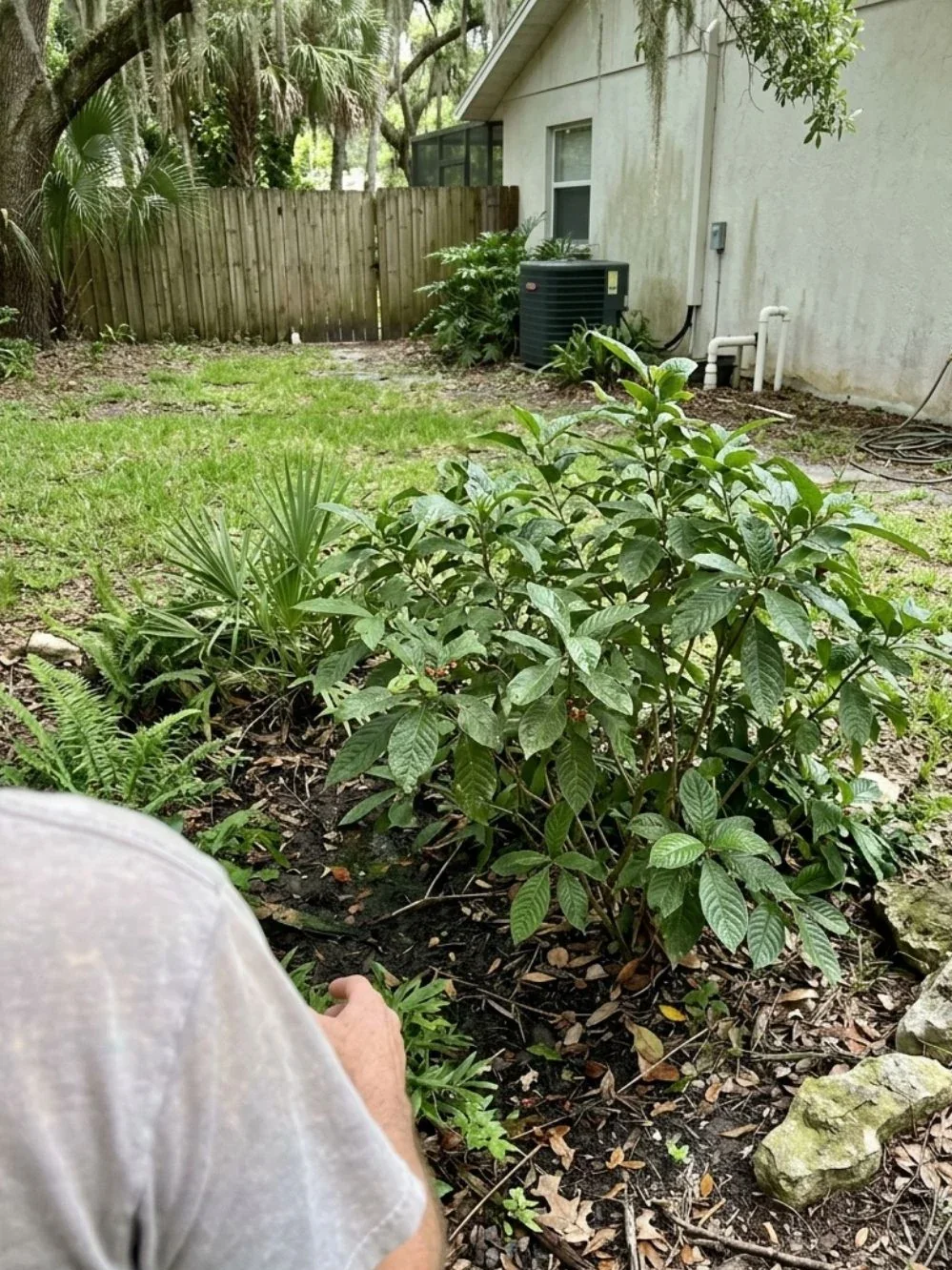
In suitable central and south Florida conditions, wild coffee can provide glossy foliage and a relaxed woodland feel. In colder areas, choose a shrub better matched to local winter temperatures. The larger lesson is to use a plant that already likes the site’s shade, humidity, and soil instead of trying to correct the site every season.
16. Add Native Sedges to Soften Damp Shade
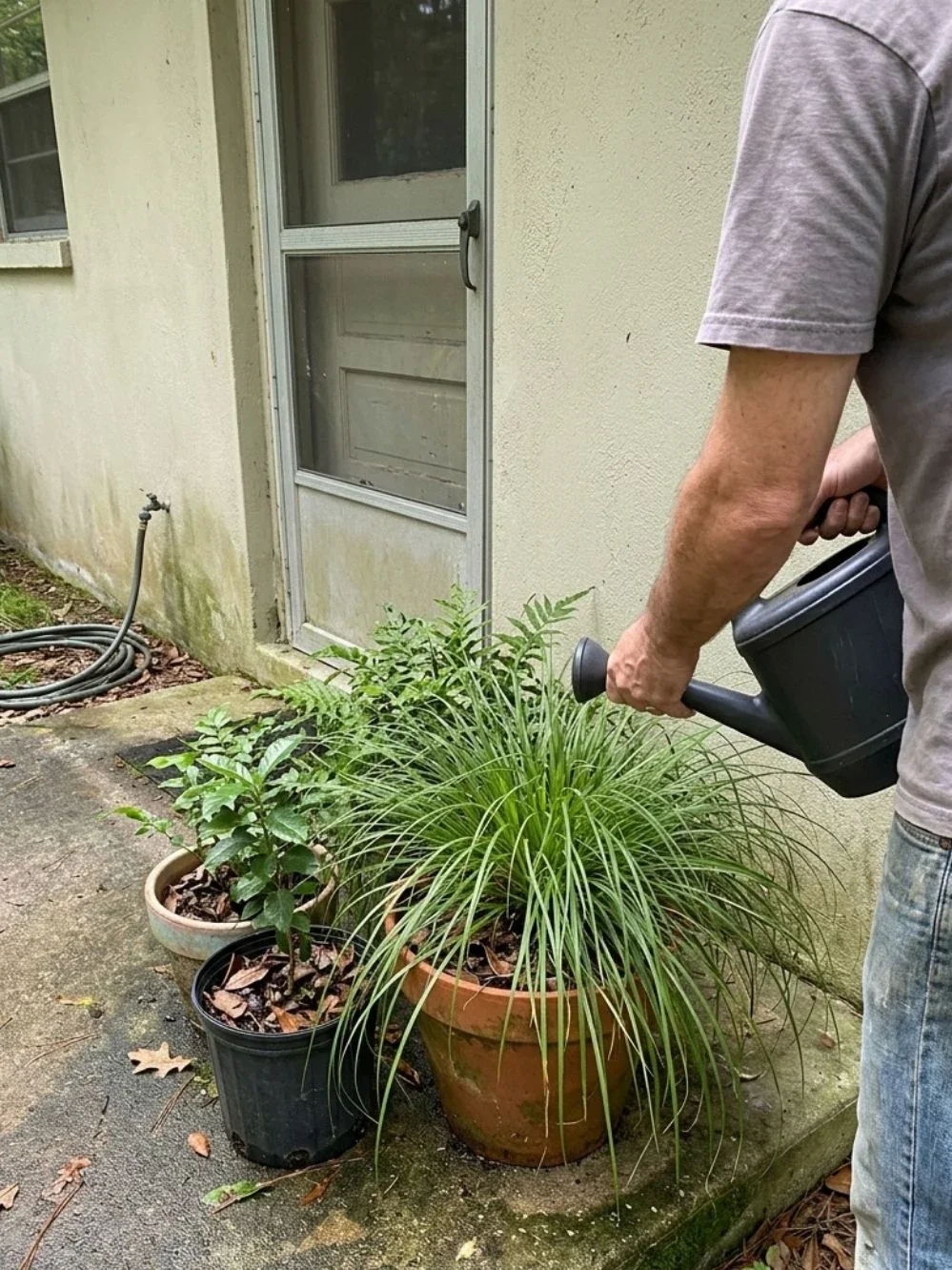
Sedges can fill small shady pockets where turf thins out. Their fine texture works along paths, under trees, or at the edge of a rain garden. Choose a species suited to the site’s moisture level and let it grow in loose clumps. This can reduce mowing while keeping the ground visually covered.
Shrubs, Groundcovers, and Layered Planting
17. Repeat a Few Plants Instead of Buying One of Everything
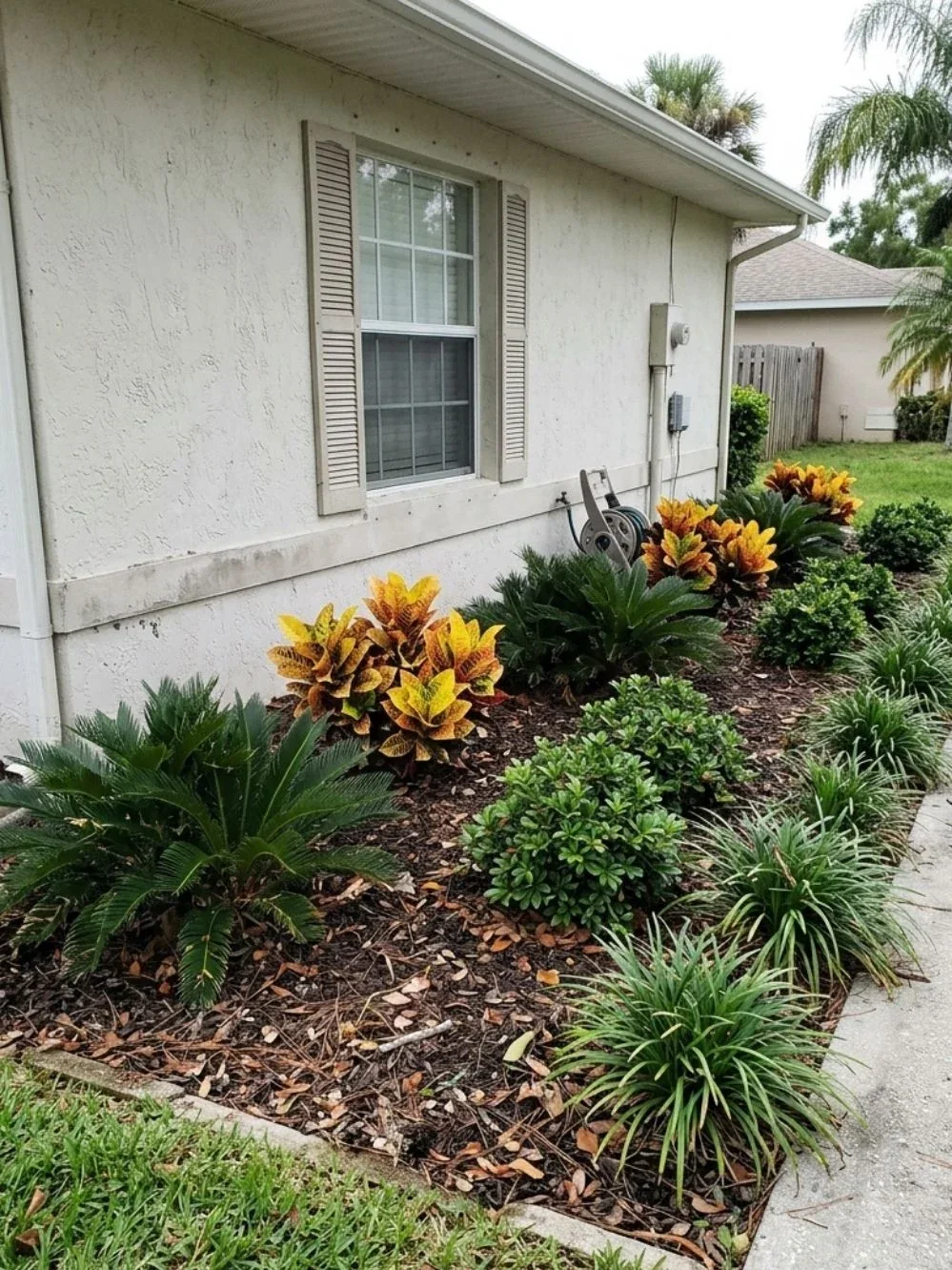
A repeated plant palette looks calmer and is easier to maintain. Use a few dependable shrubs, grasses, and groundcovers several times through the yard. You will learn how those plants behave, watering becomes more predictable, and replacement is easier than in a bed filled with twenty unrelated species.
18. Use One Taller Anchor Plant per Bed
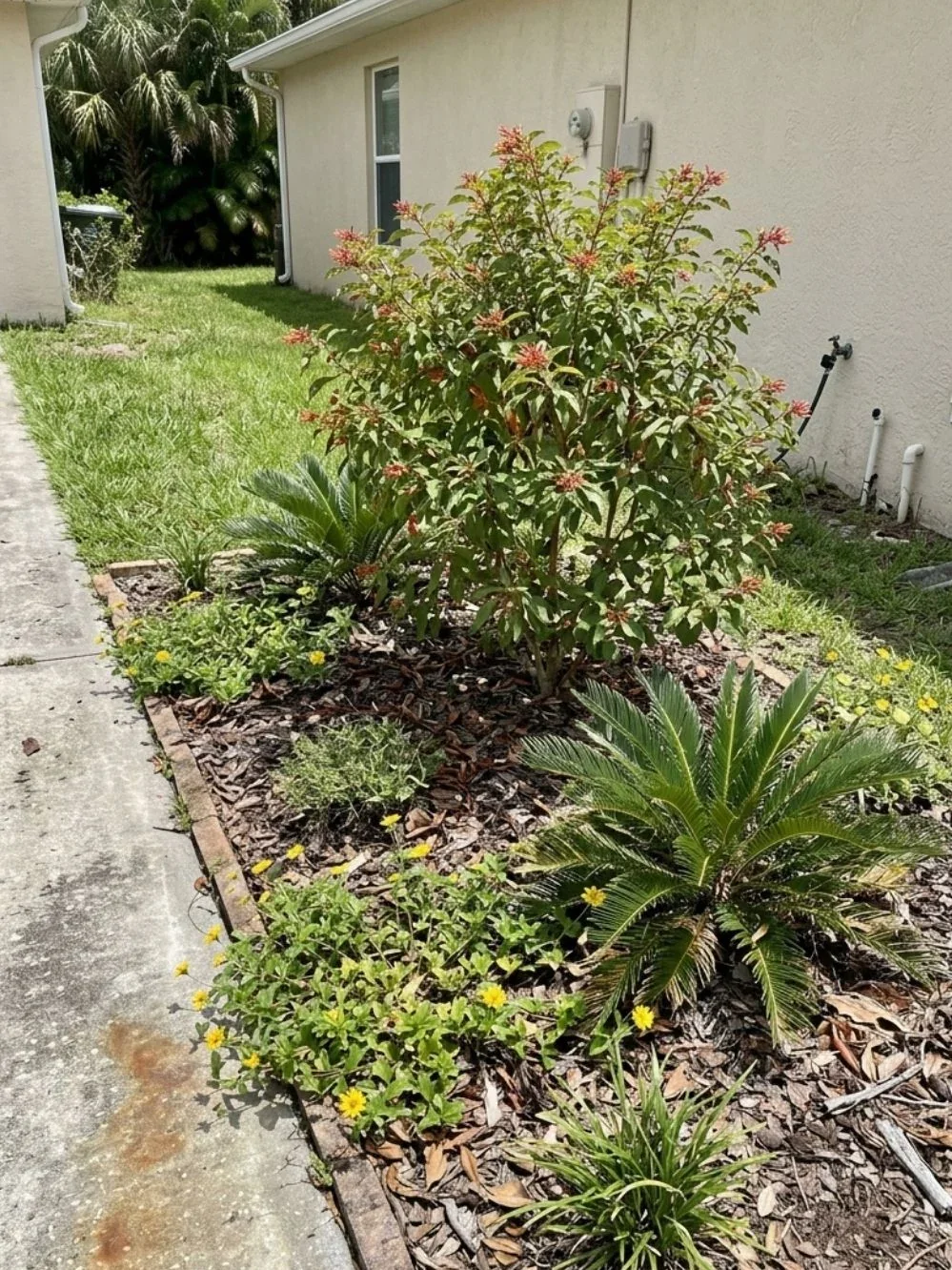
A small tree, palm, or taller shrub can give a bed a clear focal point. Surround it with lower plants instead of filling every square foot with equal-height material. This creates hierarchy and keeps the bed readable from a distance. For front-yard placement, our front yard garden ideas show how to keep the house visible.
19. Layer Shrubs With Low Groundcovers
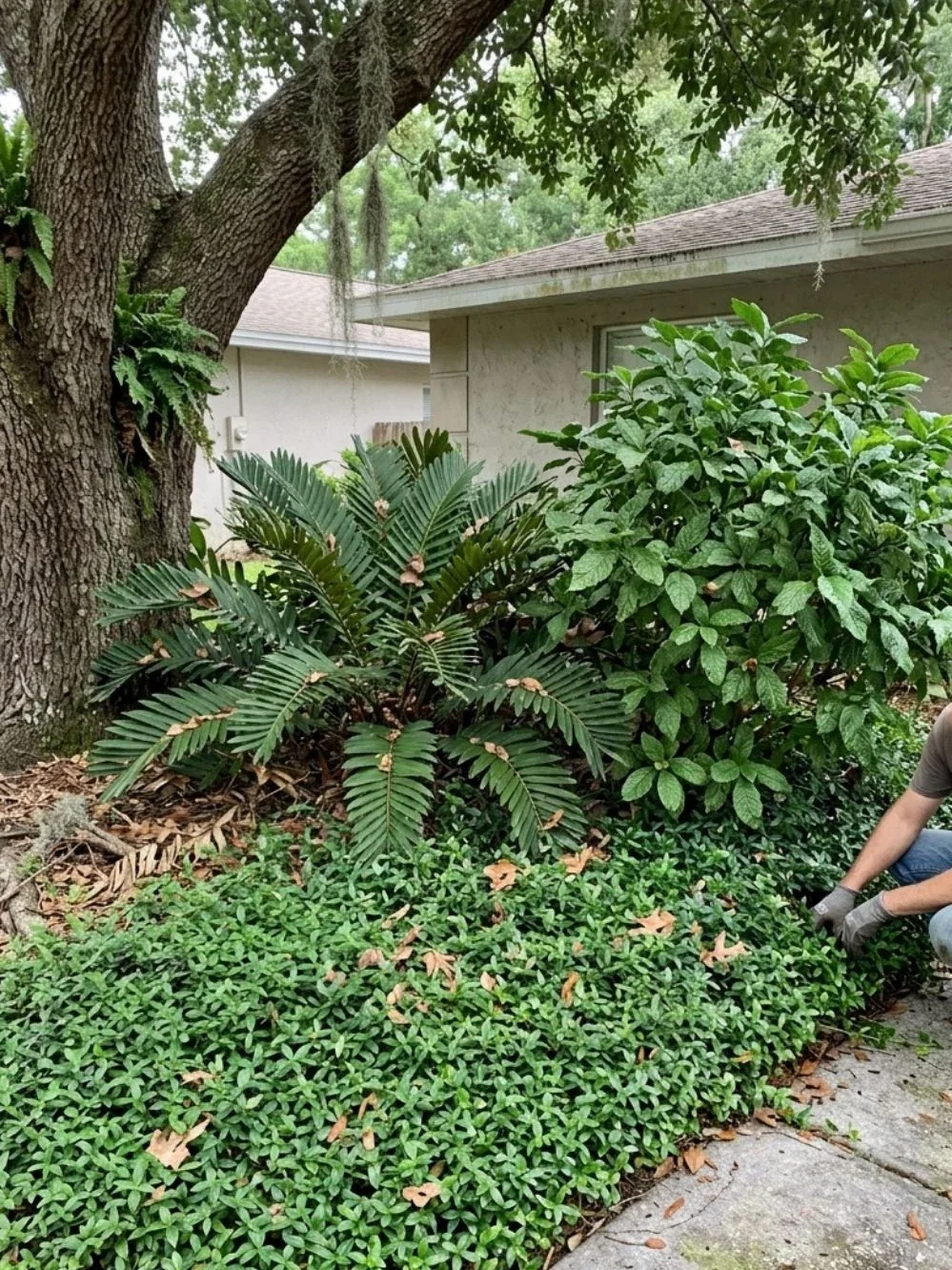
A simple two-layer bed can look finished without needing many plant types. Use a medium-height shrub at the back and a low groundcover at the front, leaving mature spacing between them. Mulch the open soil while plants establish. The result is easier to weed and easier to understand than a crowded mixed border.
20. Let Plants Keep Their Natural Shape
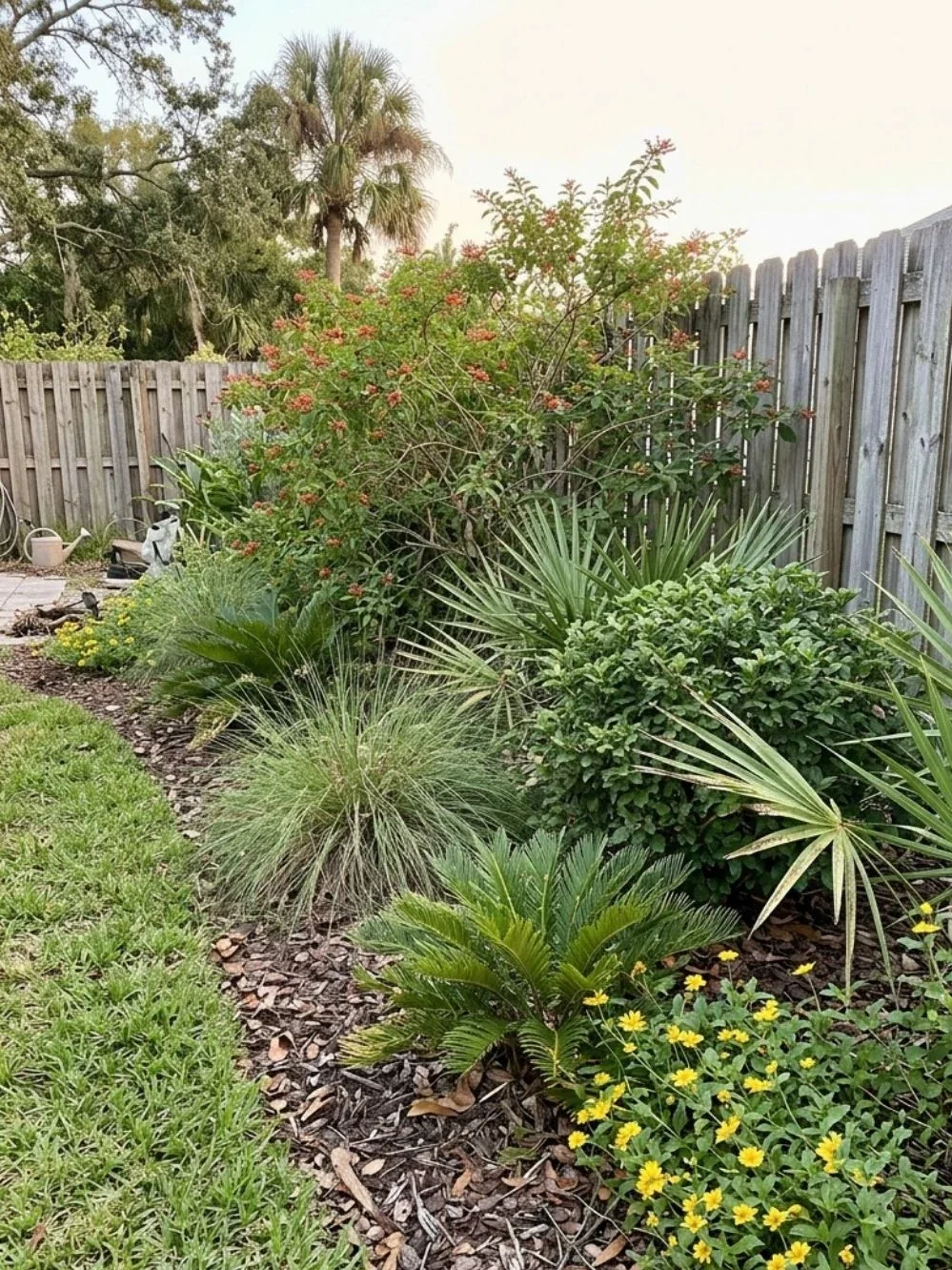
Constantly shearing every shrub into a box creates work and can make the landscape feel stiff. Choose plants whose natural form already fits the design. Light selective pruning is usually easier than monthly shaping, and the plant often looks healthier. This is one of the simplest ways to lower long-term maintenance.
21. Use Mulch to Support the Planting, Not Hide Problems
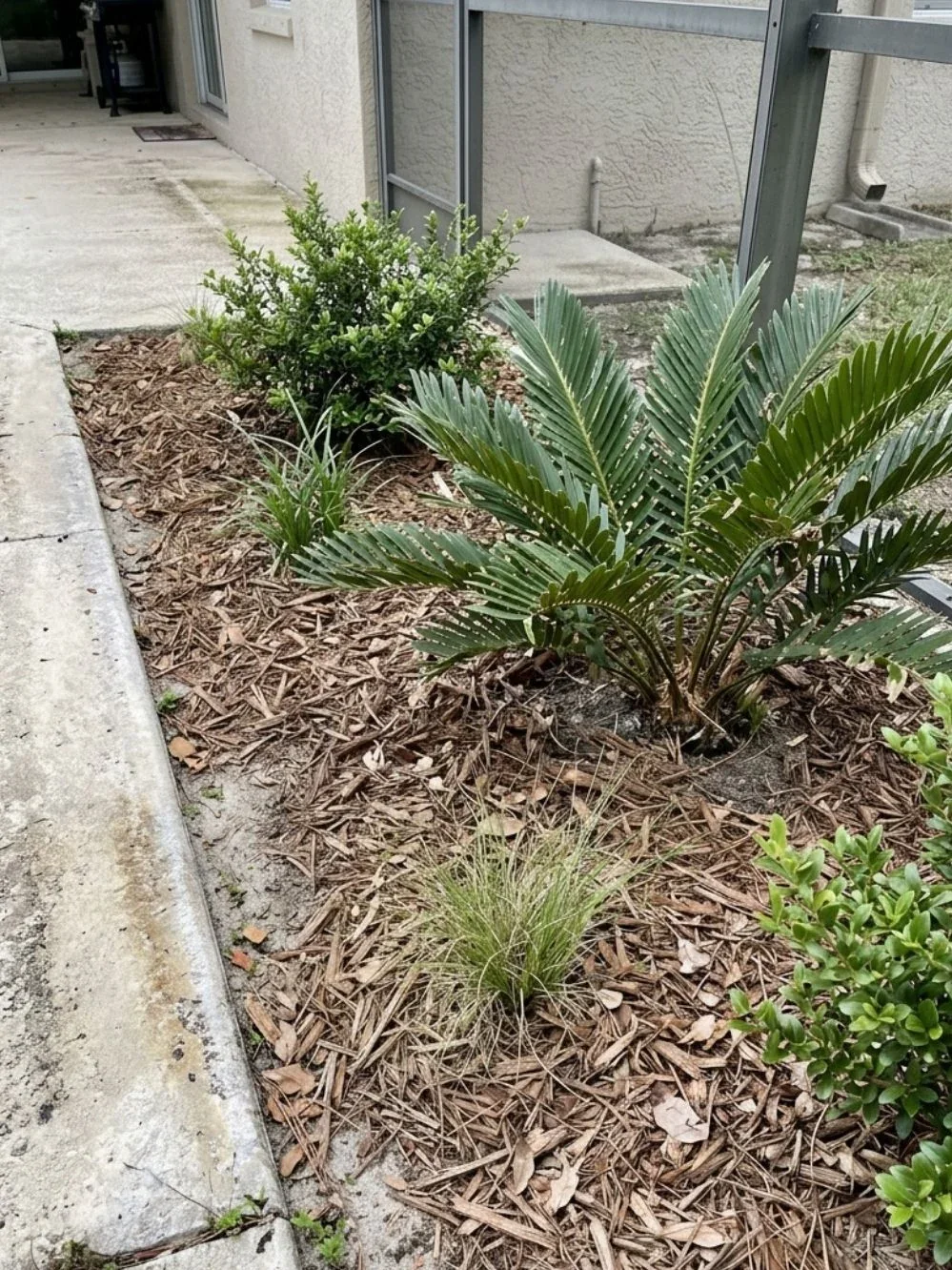
A two- to three-inch mulch layer can help conserve moisture and suppress weeds in Florida planting beds. Keep mulch away from trunks and stems, and do not keep piling fresh layers on top of old mulch until the bed is too deep. Good mulch makes the right plant easier to care for; it cannot fix a plant that is wrong for the site.
Coastal, Wet, and Difficult Areas
22. Choose Salt-Tolerant Plants Near the Coast
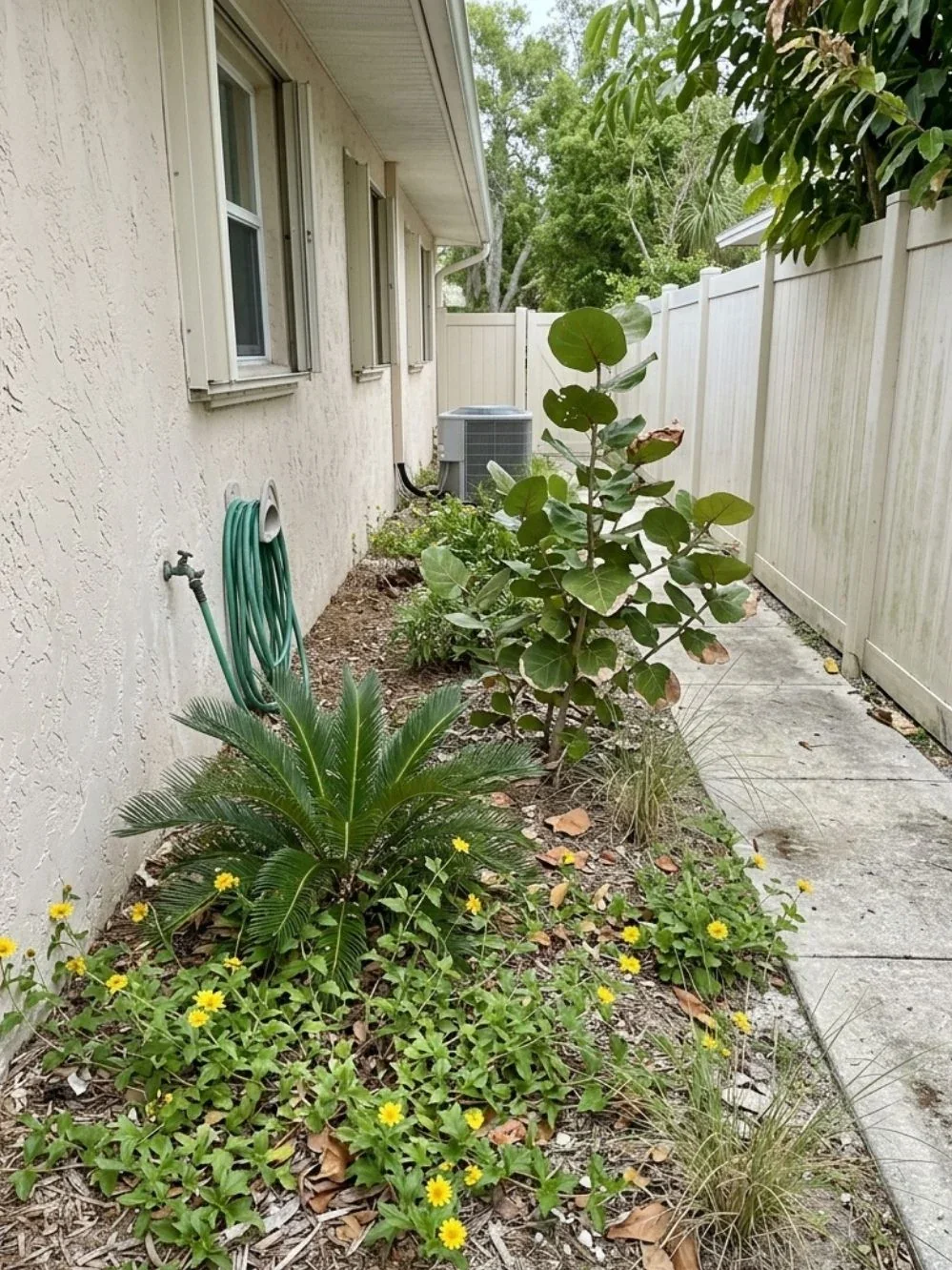
Coastal Florida yards may deal with salt spray, sandy soil, and wind. Use plants rated for those conditions rather than repeatedly replacing sensitive favorites. Keep irrigation, drainage, and mature size in the plan too. A salt-tolerant plant can still fail if it is placed in the wrong light or constantly overwatered.
23. Use Moisture-Tolerant Plants in Rain-Garden Low Spots

If a shallow area regularly receives roof or driveway runoff, a rain-garden style planting may make more sense than trying to keep it dry. Use plants that can handle both wet periods and drier intervals. Keep water moving away from the house foundation and avoid creating a permanent pond unless the site is designed for one.
24. Use Drought-Tolerant Plants Beside Hot Pavement
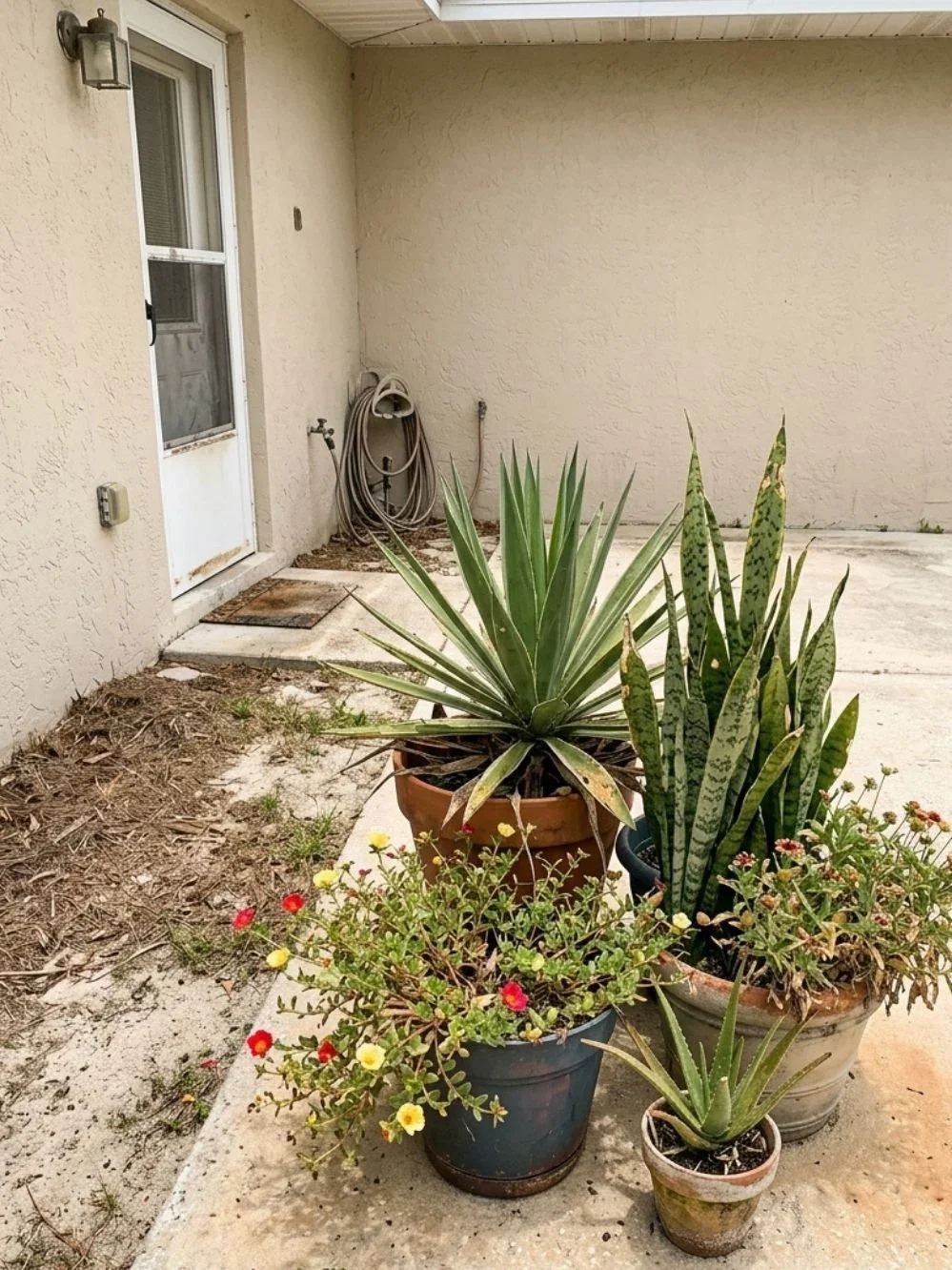
Driveways, patios, and masonry walls reflect heat. Plants in these zones need more than a generic ‘full sun’ label; they should also tolerate heat and faster soil drying. Wider mulch beds and realistic spacing can help. Avoid crowding tender plants against hardscape just to soften the edge quickly.
25. Replace Problem Plants Instead of Repeatedly Treating Them
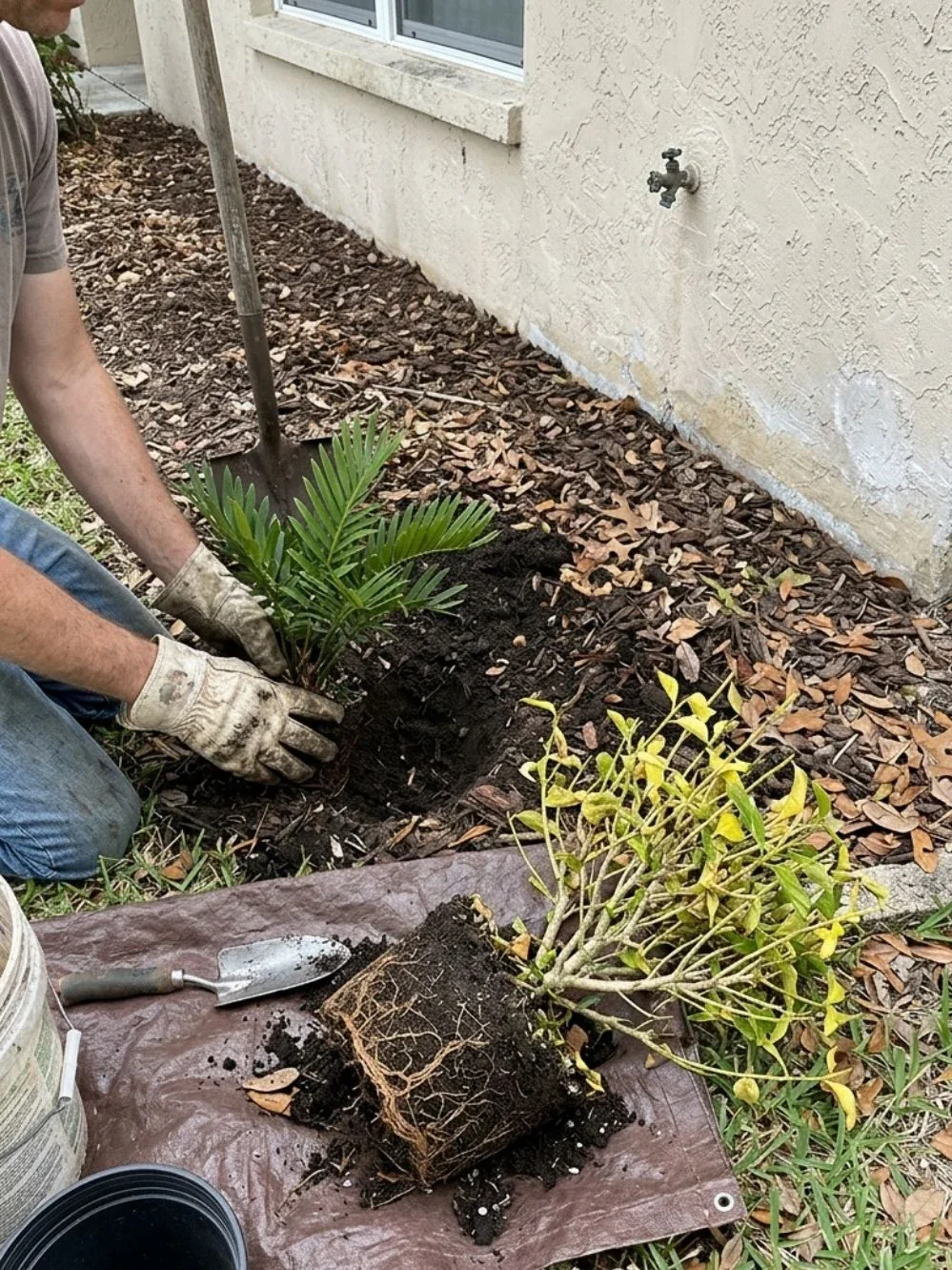
If the same shrub needs constant pest control, pruning, staking, or extra water just to survive, replacement can be the lower-maintenance choice. Choose a plant better matched to the site instead of building the entire maintenance routine around one poor fit. This is practical landscaping, not giving up on the garden.
Containers, Privacy, and Small-Space Planting
26. Use Larger Containers for Easier Water Management

Tiny pots dry out fast in Florida heat. A larger container gives roots more room and usually holds moisture longer between waterings. Choose a plant that fits the finished container size and leave drainage holes clear. Our container gardening guide can help with small-space planning.
27. Build Privacy With Layered Plants, Not One Fragile Hedge
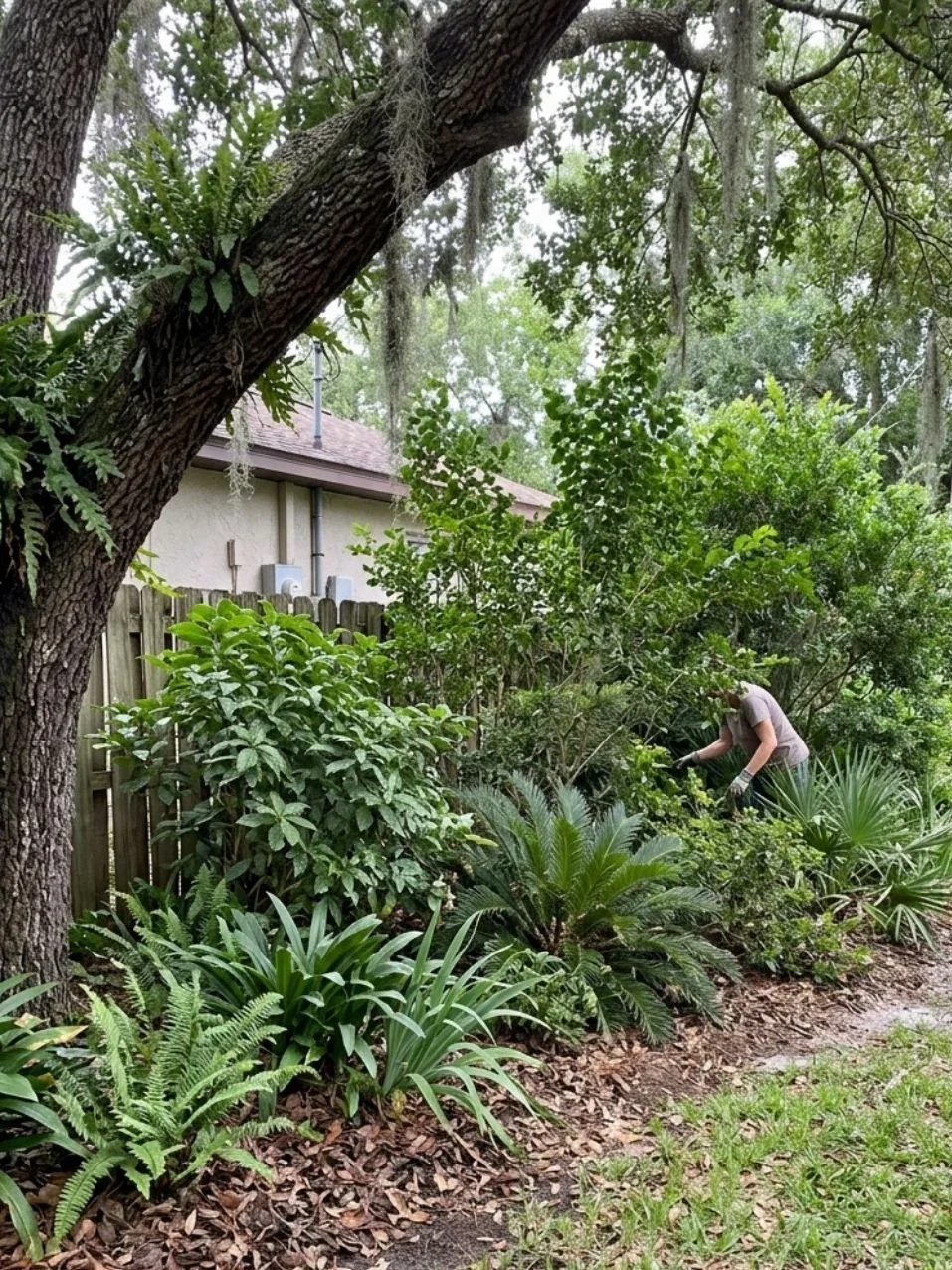
Instead of relying on one narrow hedge to do everything, combine a few medium shrubs with taller accents where privacy matters most. Layering can soften gaps and look more natural. For layout options, see our backyard garden privacy ideas.
28. Keep Entry Plants Below Windows and Away From Walks
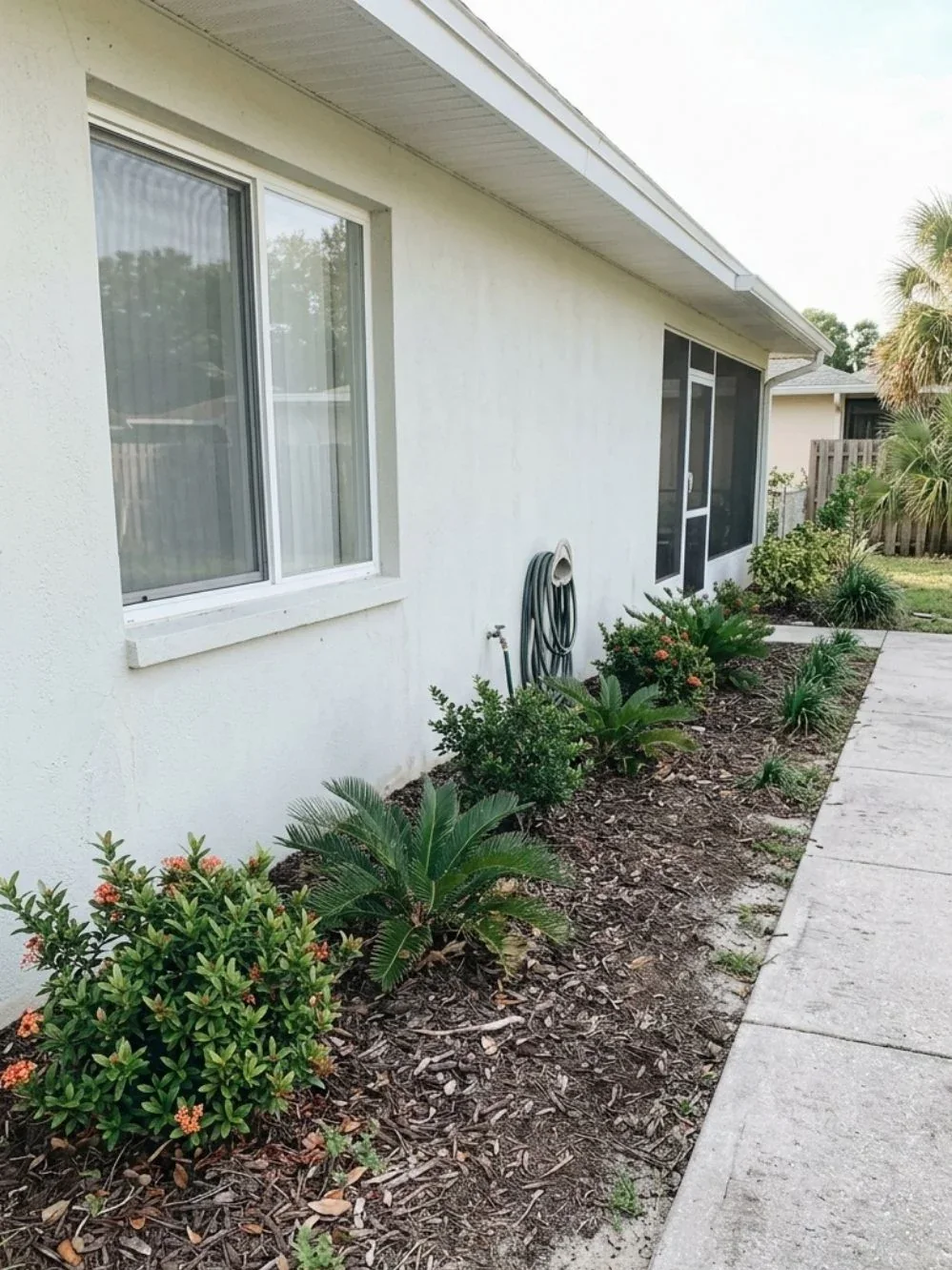
The easiest entry planting is one you do not have to cut back every month. Choose compact shrubs and flowers that stay clear of doors, steps, windows, and utility access. Use one or two repeat colors instead of filling the entrance with high-care seasonal plants.
Reduce Pruning, Replacement, and Weekly Yard Work
29. Buy Fewer Plants and Space Them for the Future
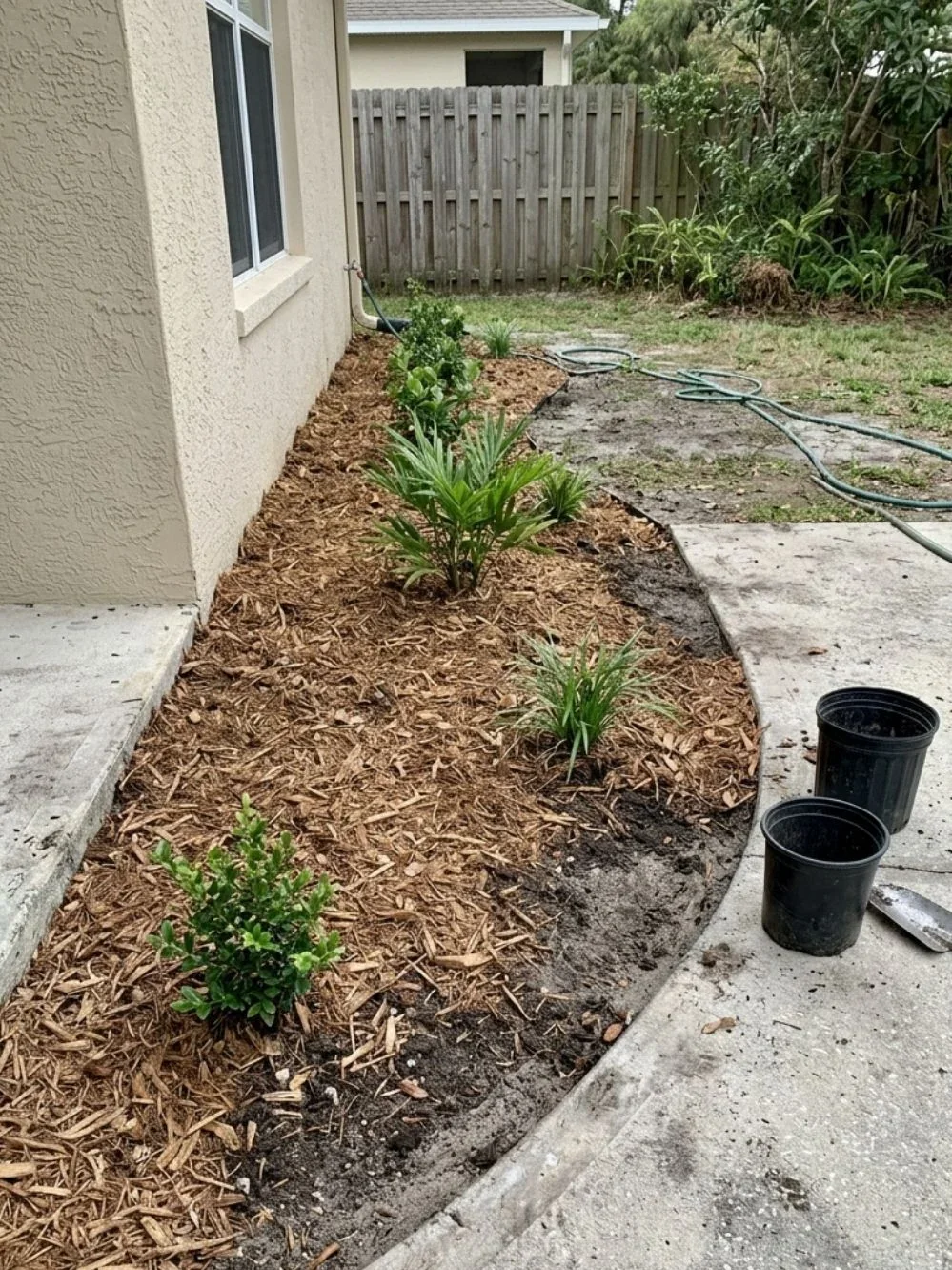
Overplanting makes a new bed look full quickly, but it creates pruning and transplanting work later. Give each plant room to reach mature size and use mulch to cover the temporary open soil. A slightly sparse first year often becomes a better, calmer landscape by year three.
30. Build a Short Plant List You Can Repeat
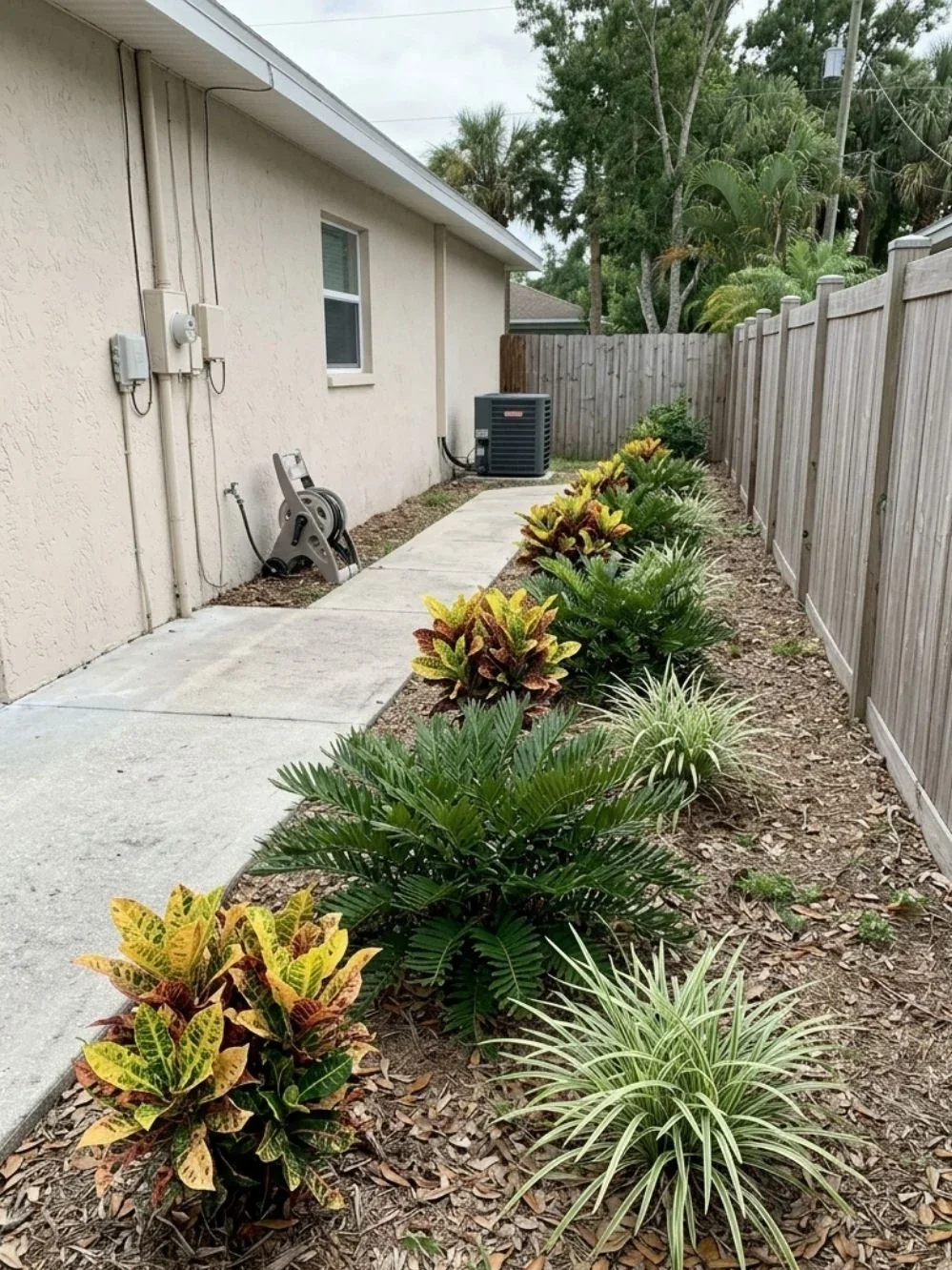
The most maintainable yard is rarely the one with the longest plant list. Pick a small group that performs well in your sun, soil, water, wind, and local Florida climate, then repeat those choices. Keep one or two experimental plants for fun, but let proven plants do most of the work.
A Simple Florida Plant-Selection Checklist
Before you buy, ask: How many hours of direct sun does this spot receive? Does the soil stay wet after rain or dry quickly? How wide and tall will the plant become? Will it block a window or walkway? Does the site receive salt spray or strong wind? Can the plant keep a natural shape without frequent shearing? If those answers fit the site, maintenance usually becomes much easier.
Frequently Asked Questions
What makes a landscaping plant low maintenance in Florida?
A low-maintenance plant is one that fits the site’s light, water, drainage, temperature, wind, and space. It should reach a useful mature size without constant pruning and should not need repeated rescue watering or pest treatment just to look acceptable.
Do native plants always need less care?
Not automatically. Florida native plants can be excellent choices, but they still need to match the specific site. A native wetland plant will not become low maintenance in a hot, dry parking-strip bed. Site fit matters more than the label alone.
Should I use only drought-tolerant plants?
No. Use drought-tolerant plants where the soil and light support them, and moisture-tolerant plants where water naturally collects. Group similar water needs together so irrigation is simpler and more efficient.
How can I reduce pruning?
Choose plants that naturally mature near the height and width you need. Leave enough spacing at planting time and avoid using large shrubs in narrow spaces. Selective pruning is easier than repeatedly shearing an oversized plant into a smaller box.
Final Thoughts
The best low-maintenance Florida landscape is not built from one magic plant list. It comes from matching plants to the real conditions in your yard, repeating dependable choices, spacing them for mature size, and resisting the urge to overplant. Start with the difficult spots first. Once those areas have the right plants, the rest of the landscape becomes much easier to manage.