Mulch vs gravel landscaping is not a simple question of which material looks better. Around Florida garden beds, the choice affects soil temperature, moisture, drainage, weeds, maintenance, cost, and how easy the bed is to change later.
Organic mulch is usually the more plant-friendly surface for active beds because it moderates moisture and gradually breaks down. Gravel can be excellent in dry accent areas, paths, drainage features, and modern designs, but stone can also hold heat and is harder to move once it mixes with soil. The best yard often uses both materials in different places.
Mulch vs Gravel: Quick Comparison
Choose mulch when you want cooler soil, easier planting changes, organic matter, and a softer garden look. Choose gravel when you need a stable mineral surface, a dry path or drainage feature, or a durable accent near hardscape. In either case, keep the material away from plant stems and house siding, preserve drainage, and use edging where movement is a problem.
Mulch and Gravel at a Glance
1. Mulch for Moisture-Hungry Planting Beds

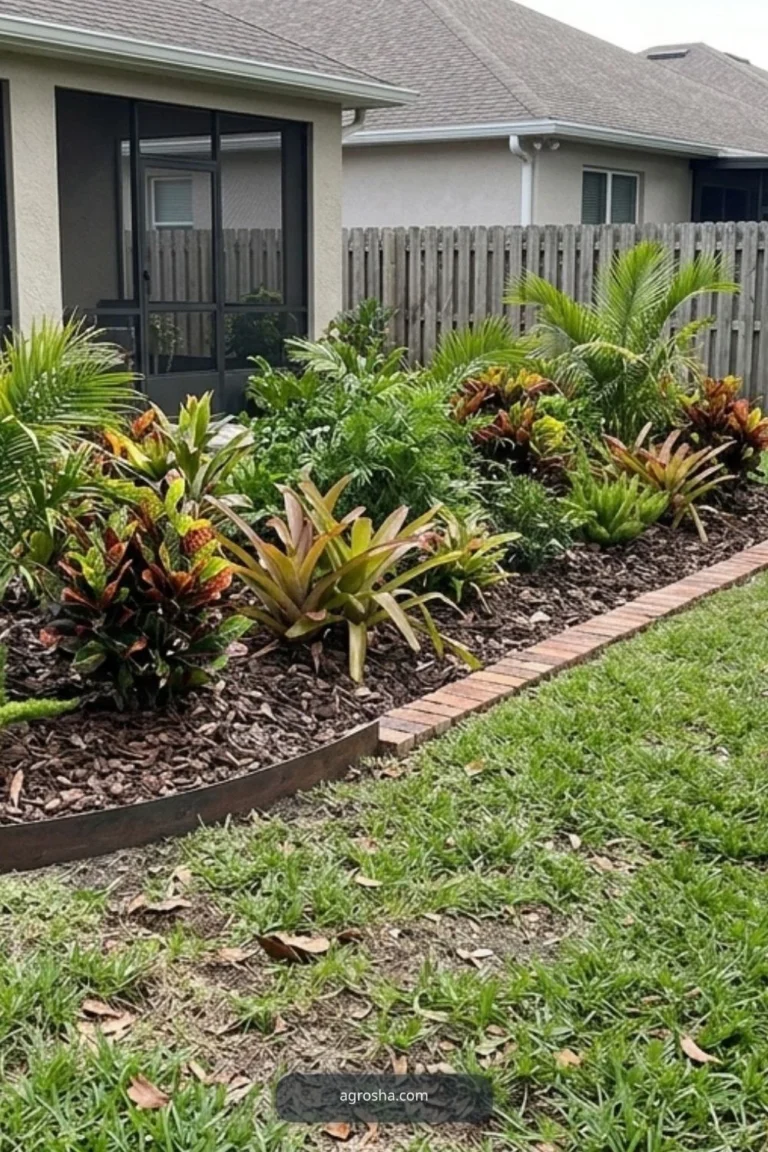
Organic mulch is usually the easier choice around shrubs and perennials that benefit from cooler, more even soil moisture. In Florida heat, a two- to three-inch layer can help slow evaporation and soften the look of a bed. Keep it pulled back from trunks and stems so the crown of the plant stays open.
2. Gravel for Dry, High-Drainage Display Areas

Gravel can work well where the goal is a clean, mineral surface around drought-tolerant plants and the soil already drains quickly. It stays in place better than lightweight mulch in some windy spots, but it can add heat around roots. Use it selectively rather than assuming every sunny Florida bed needs rock.
3. Mulch Under Trees and Large Shrubs
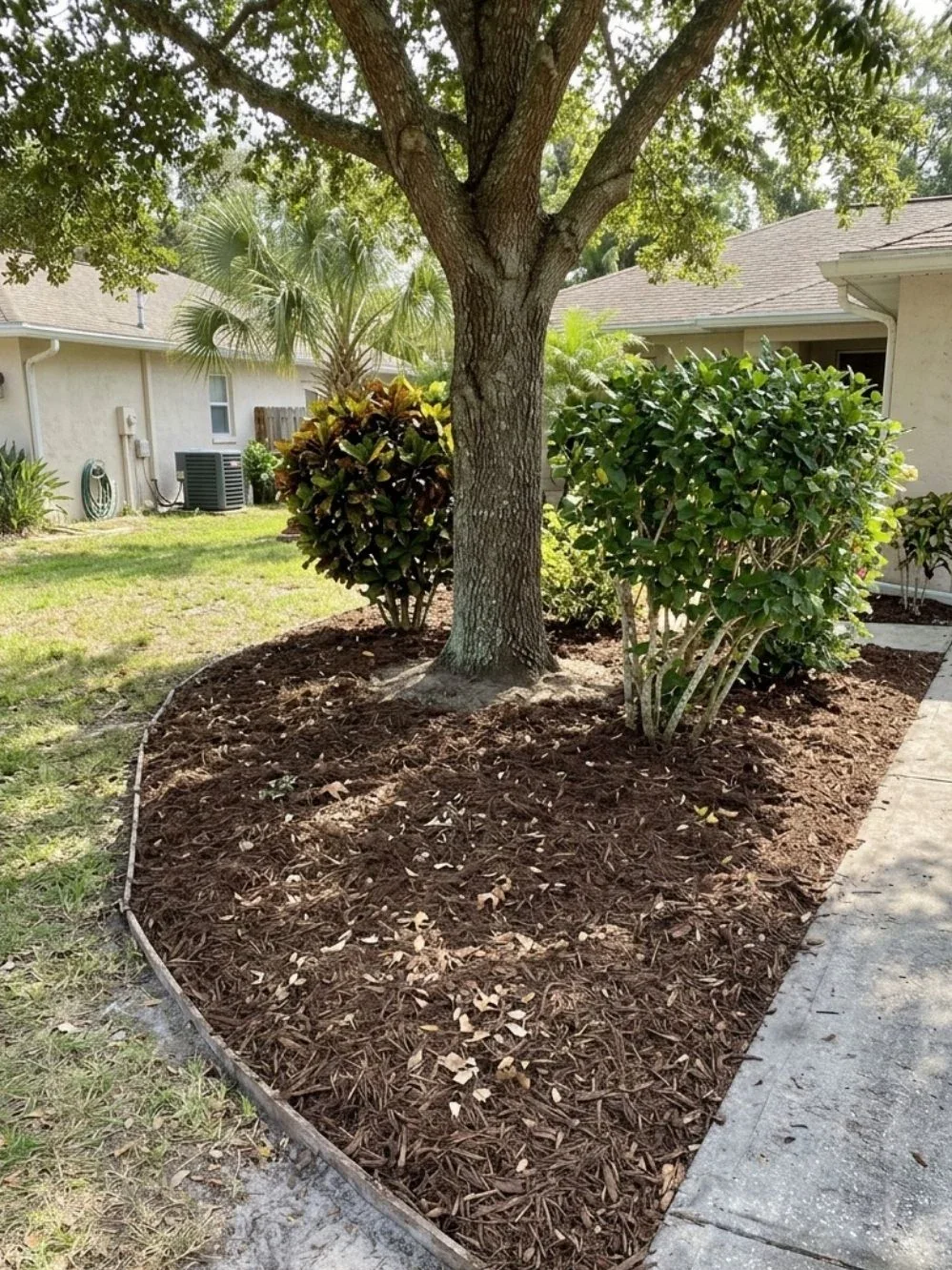
Mulch is generally friendlier beneath trees because it creates a softer surface over the root zone and avoids the heat buildup that dark stone can create. Make the bed wide enough to reduce mower damage and keep mulch off the trunk. A simple mulched tree ring is often easier to maintain than a narrow turf strip.
4. Gravel Beside Modern Hardscape
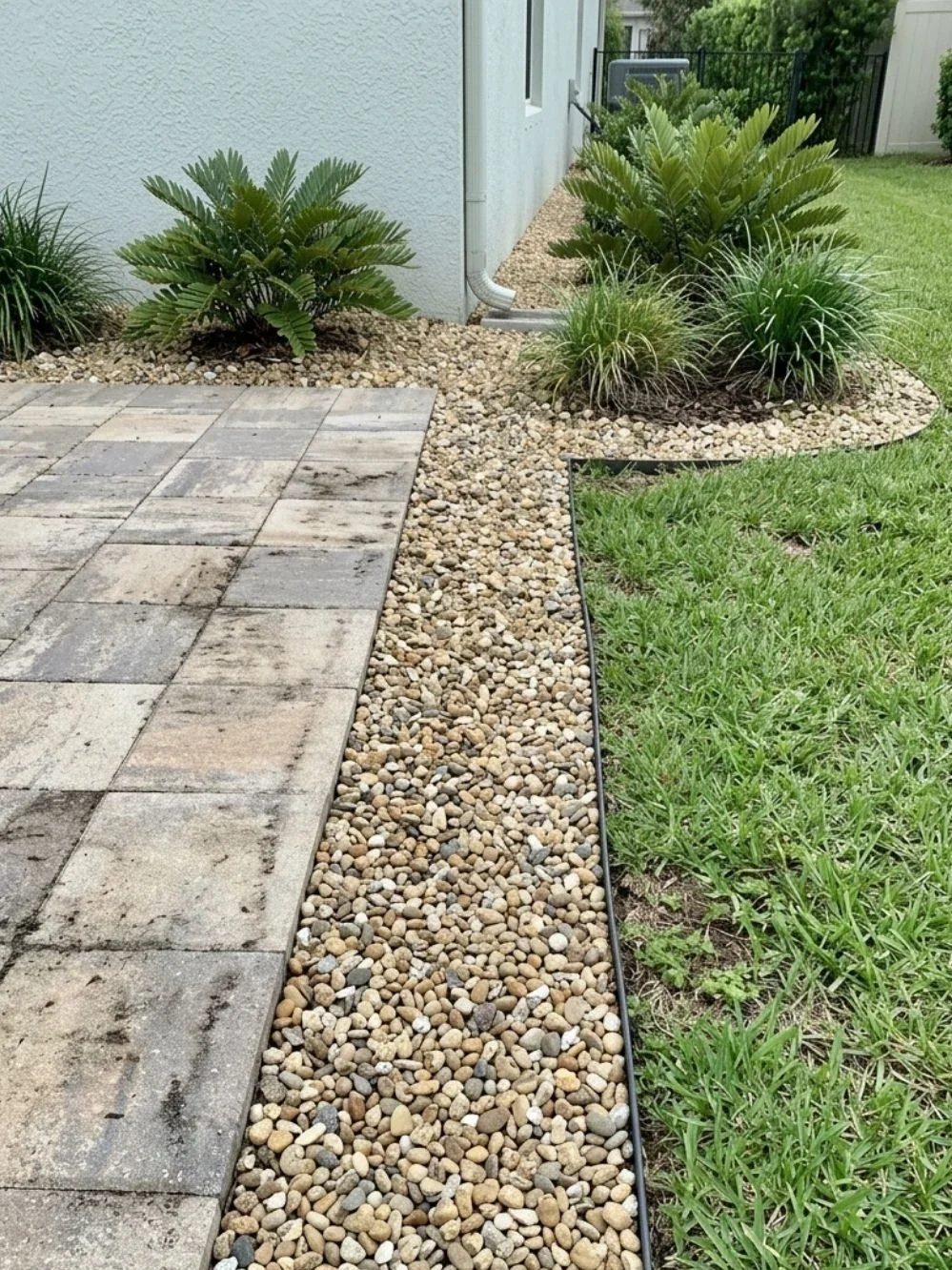
Near concrete pavers, pool decks, or a modern patio, gravel can create a crisp transition and reduce mud splash. Choose a size that will not scatter easily onto walking surfaces. Keep the planting pockets large enough for roots, and do not let decorative stone pile against siding, trunks, or drainage openings.
5. Mulch for Newly Planted Beds
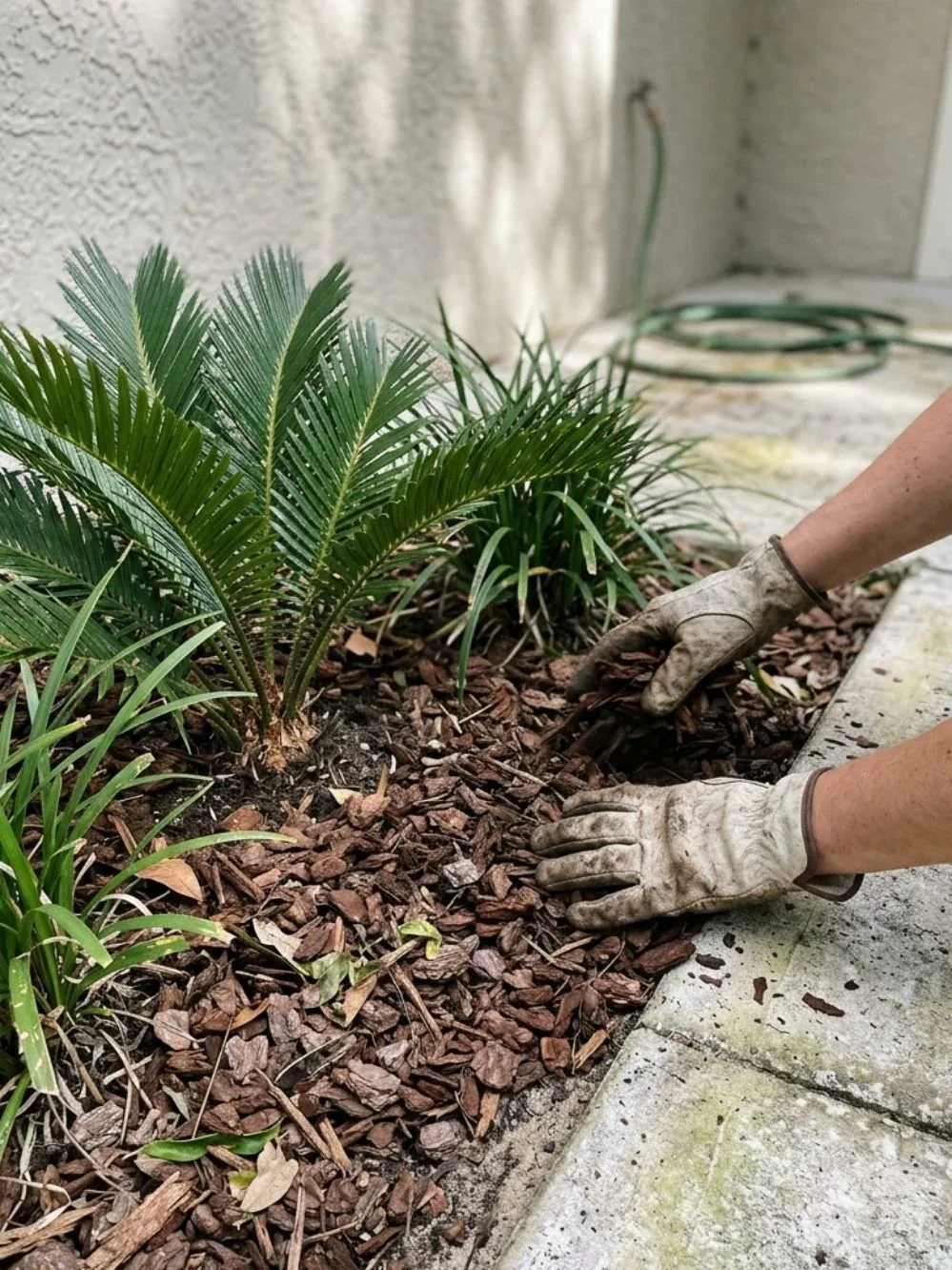
New shrubs and perennials often benefit from organic mulch while roots establish. The mulch helps keep bare soil covered and makes hand weeding easier. Leave breathing room around stems and check irrigation rather than assuming mulch eliminates watering. Our front yard garden ideas use this simple approach around foundation beds.
Where Mulch Usually Works Better
6. Shady Beds Under Mature Trees
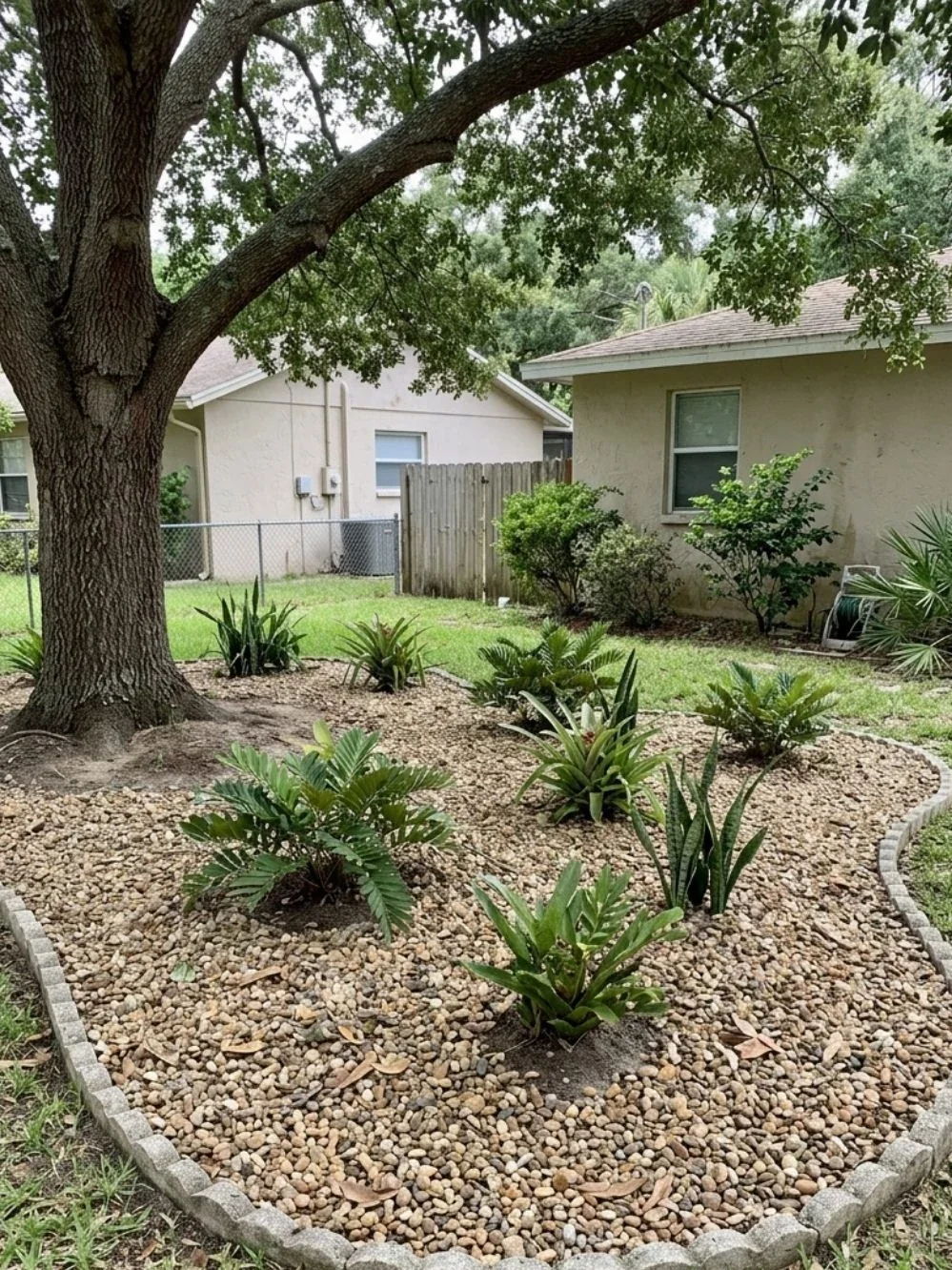
In a shady Florida bed, organic mulch usually looks more natural and does not reflect extra heat into shade plants. It also works well where turf is thin. Avoid burying surface roots or building a volcano around trunks. If the area is deeply shaded, pair the mulch with plants from our shade garden ideas.
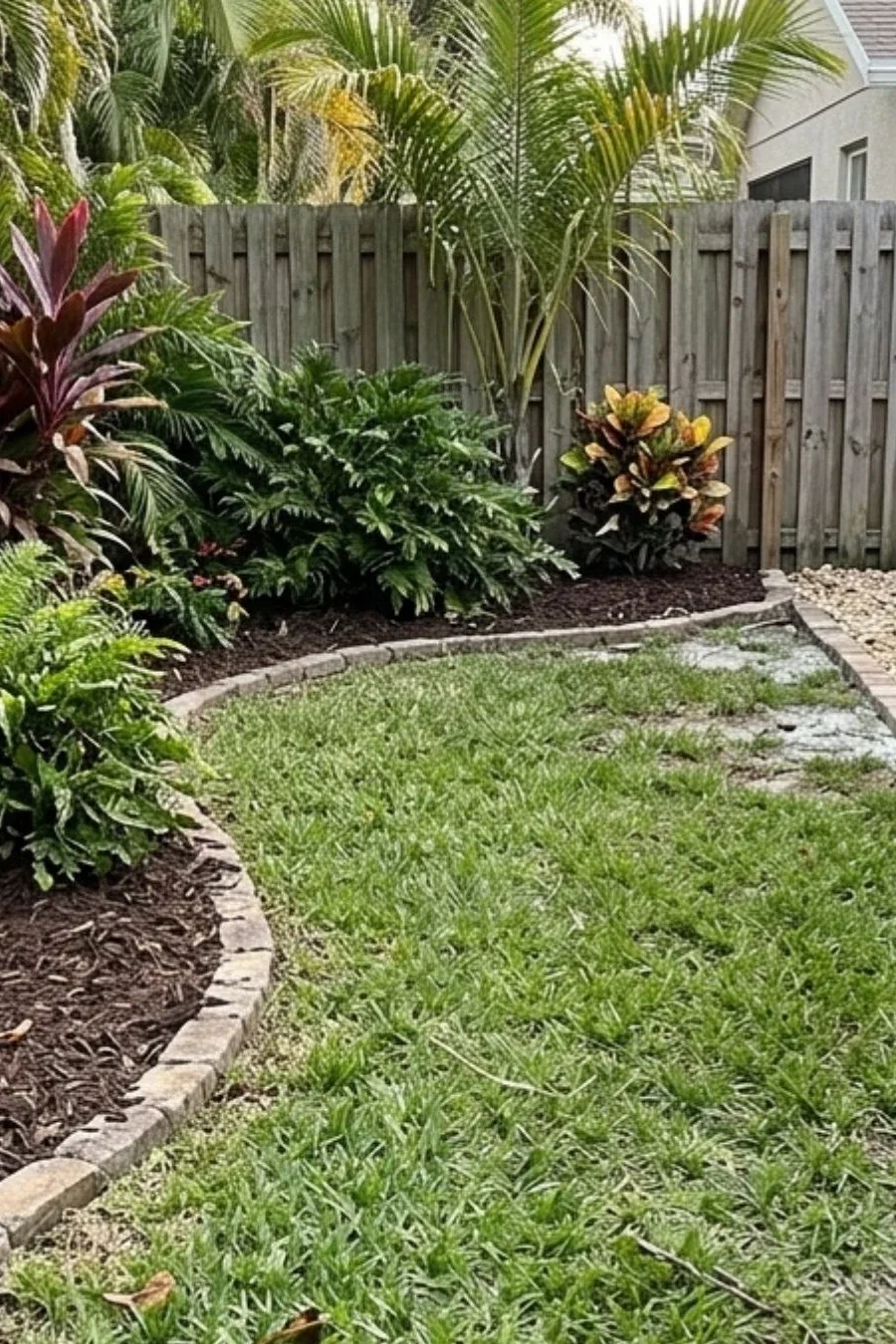
7. Mixed Shrub and Perennial Borders
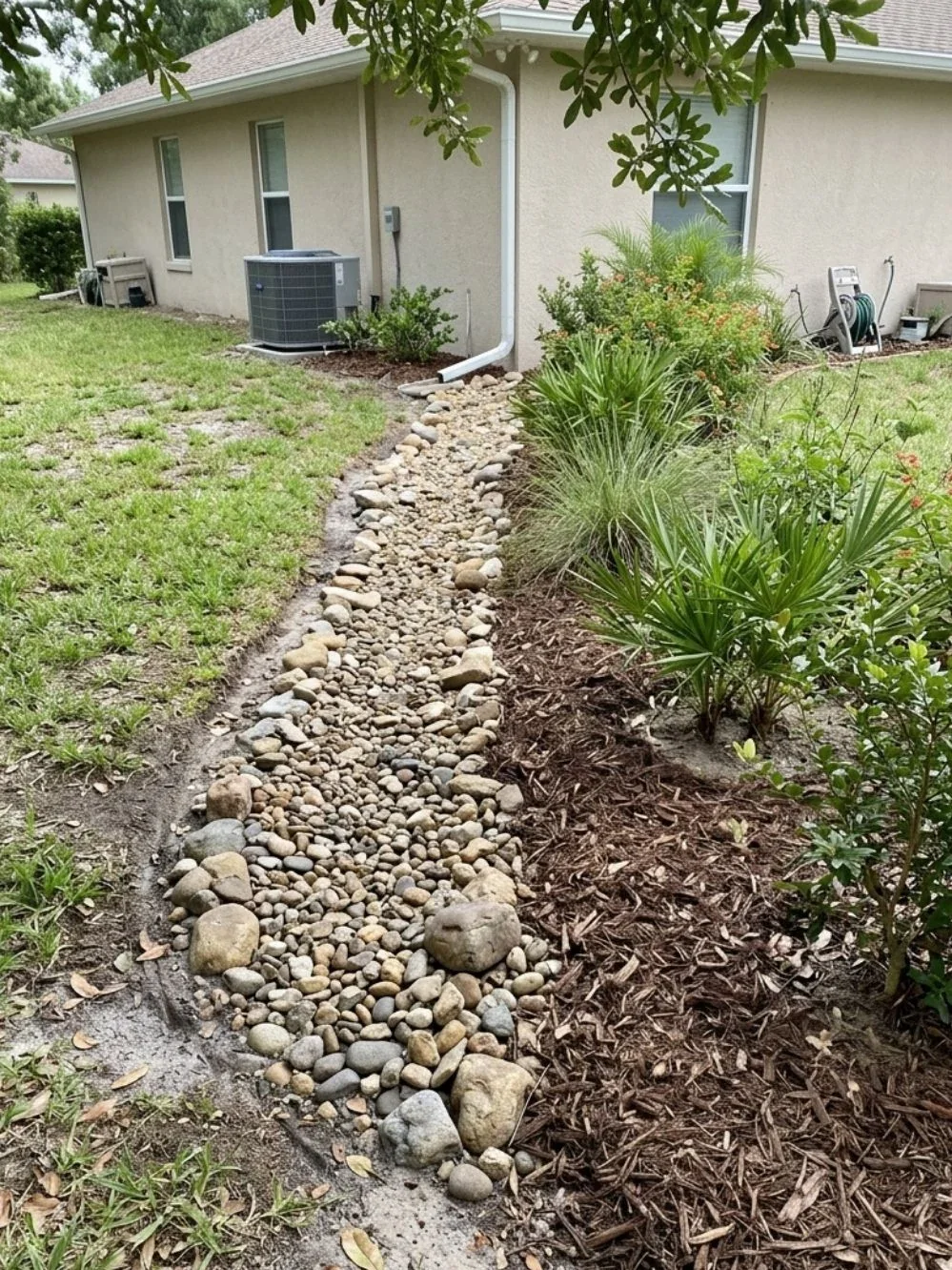
A mixed planting changes over time as plants spread and mature. Mulch is easier to refresh or move when you divide perennials, add a plant, or adjust the bed edge. Gravel can make those changes more laborious because stone mixes with soil and has to be pulled back before digging.
8. Beds That Need Soil Improvement Over Time
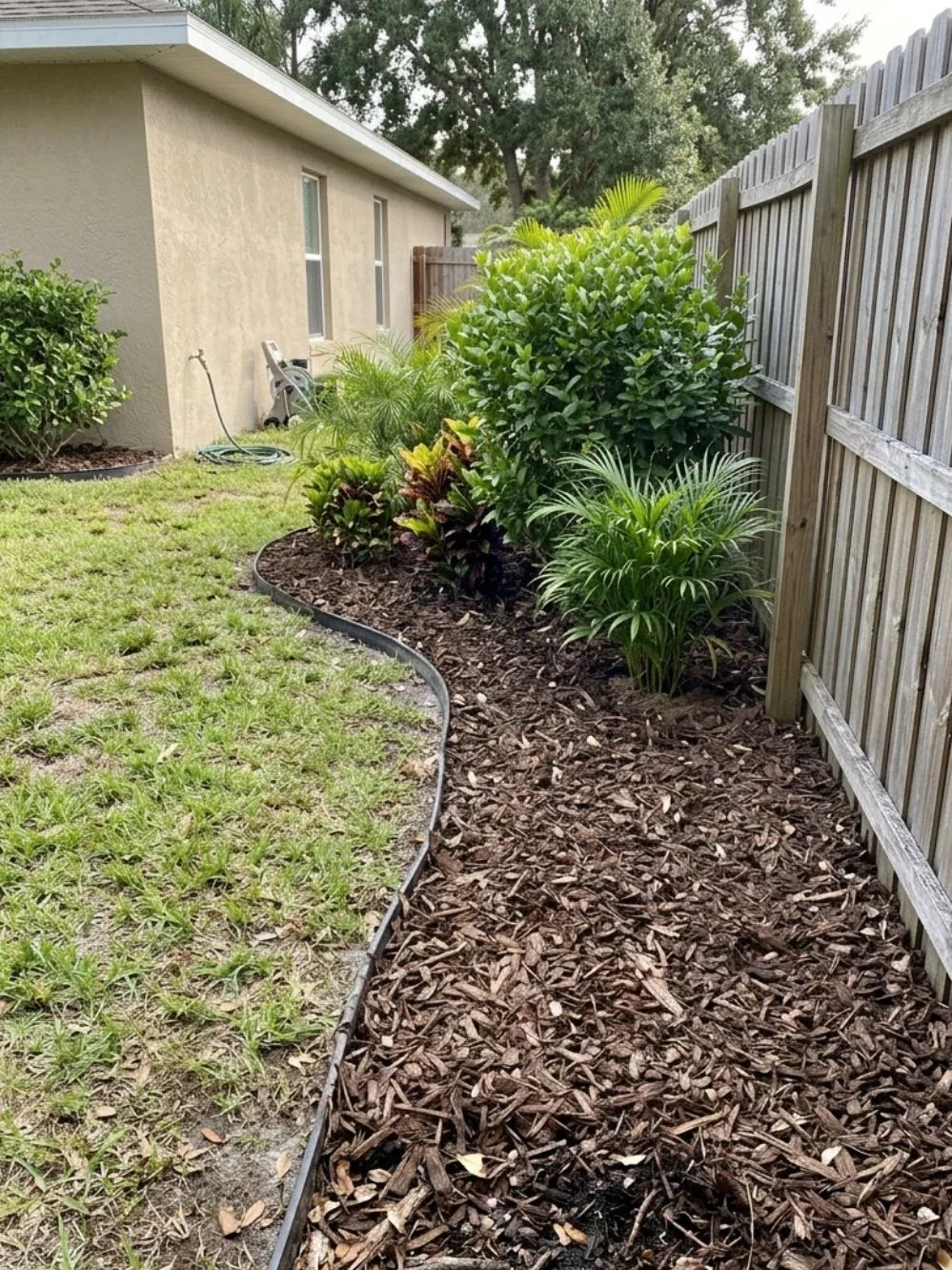
Organic mulch slowly breaks down and adds organic matter near the soil surface. That can be useful in sandy Florida soils where you are trying to build a more forgiving planting bed. It is not a substitute for choosing the right plant, but it supports a soil-focused garden better than a permanent stone layer.
9. Informal Cottage-Style Plantings

Flower-heavy beds usually look more natural with pine bark, pine straw, leaf litter, or another simple organic mulch. The softer surface lets flowers and foliage remain the visual focus. Gravel can work in a Mediterranean or desert-inspired planting, but it may feel too hard around a loose cottage border.
10. Edible Beds and Herb Areas

Mulch is often the practical choice around herbs, vegetables, and edible shrubs because you can move it easily when planting or harvesting. Use a clean material appropriate for the garden and keep it away from plant crowns. For raised-bed planning, see our raised bed gardening guide.
11. Sloped Beds Where Plants Need Cooler Soil
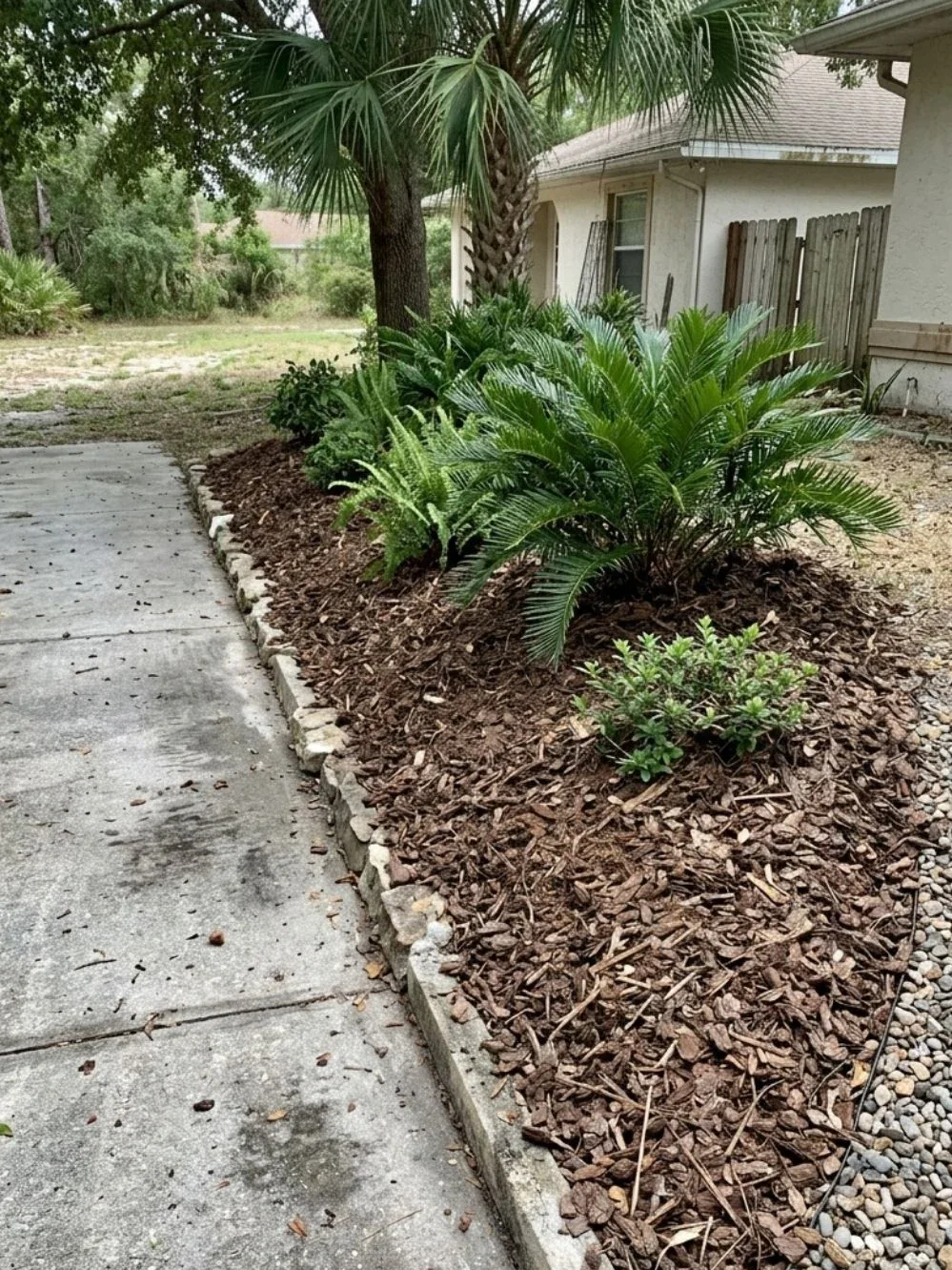
On a moderate planted slope, fibrous or chunky mulch can help cover bare soil while the root systems fill in. Choose a material that will not wash away easily during heavy rain. Gravel may be more stable in some engineered drainage areas, but loose rounded stone can also migrate downhill if the edge is weak.
12. Large Beds Where Budget Matters
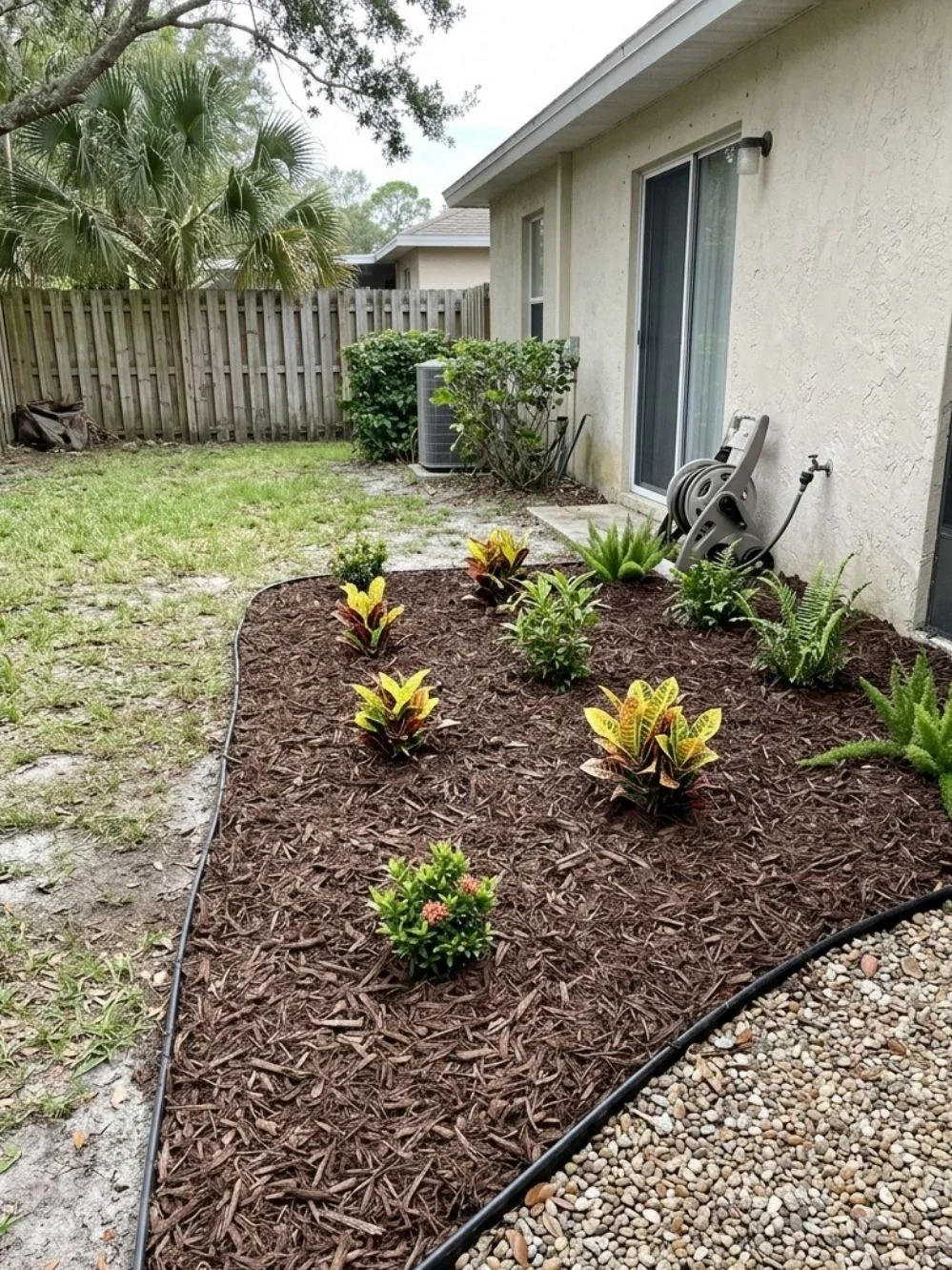
Mulch is often less expensive to install over a large planting area than decorative gravel, especially when you are refreshing an existing bed instead of building a permanent hardscape-style feature. The tradeoff is repeat maintenance: organic mulch settles and needs periodic topping up.
Where Gravel Usually Works Better
13. Narrow Strips Beside Pavers
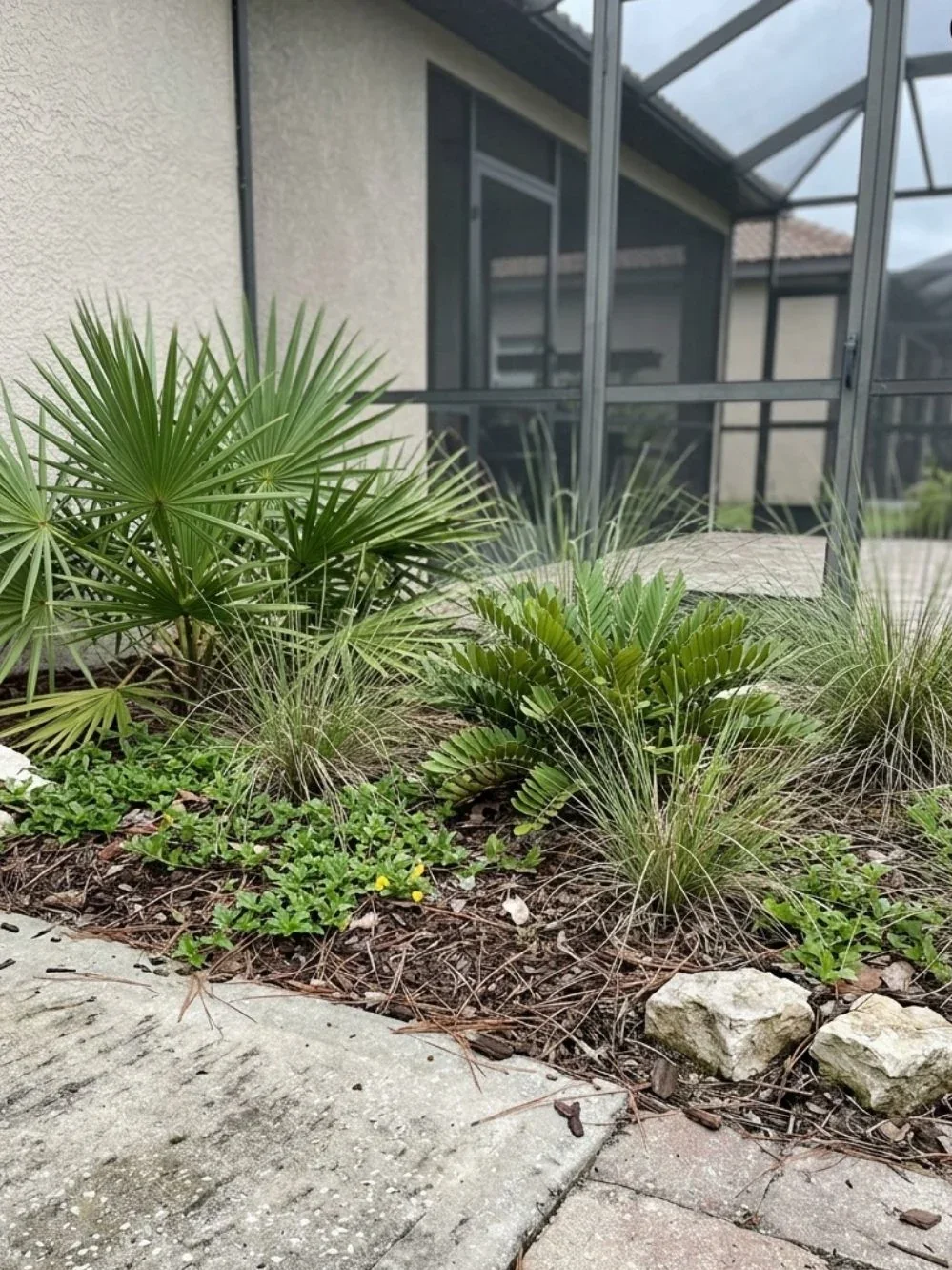
A narrow non-planting strip beside a patio or path can be easier to keep tidy with gravel than with mulch that blows or washes onto the paving. Use edging so stone stays contained. Keep enough clearance for drainage and avoid placing loose rock where bare feet or wheels need a smooth surface.
14. Dry Creek and Drainage Features

Gravel and river stone are natural choices for a dry creek bed because they visually explain the path of water and withstand periodic flow better than loose mulch. The channel still needs proper grading. For routing ideas, compare with our garden pathway ideas and keep runoff away from the house.
15. Succulent and Drought-Tolerant Accent Beds
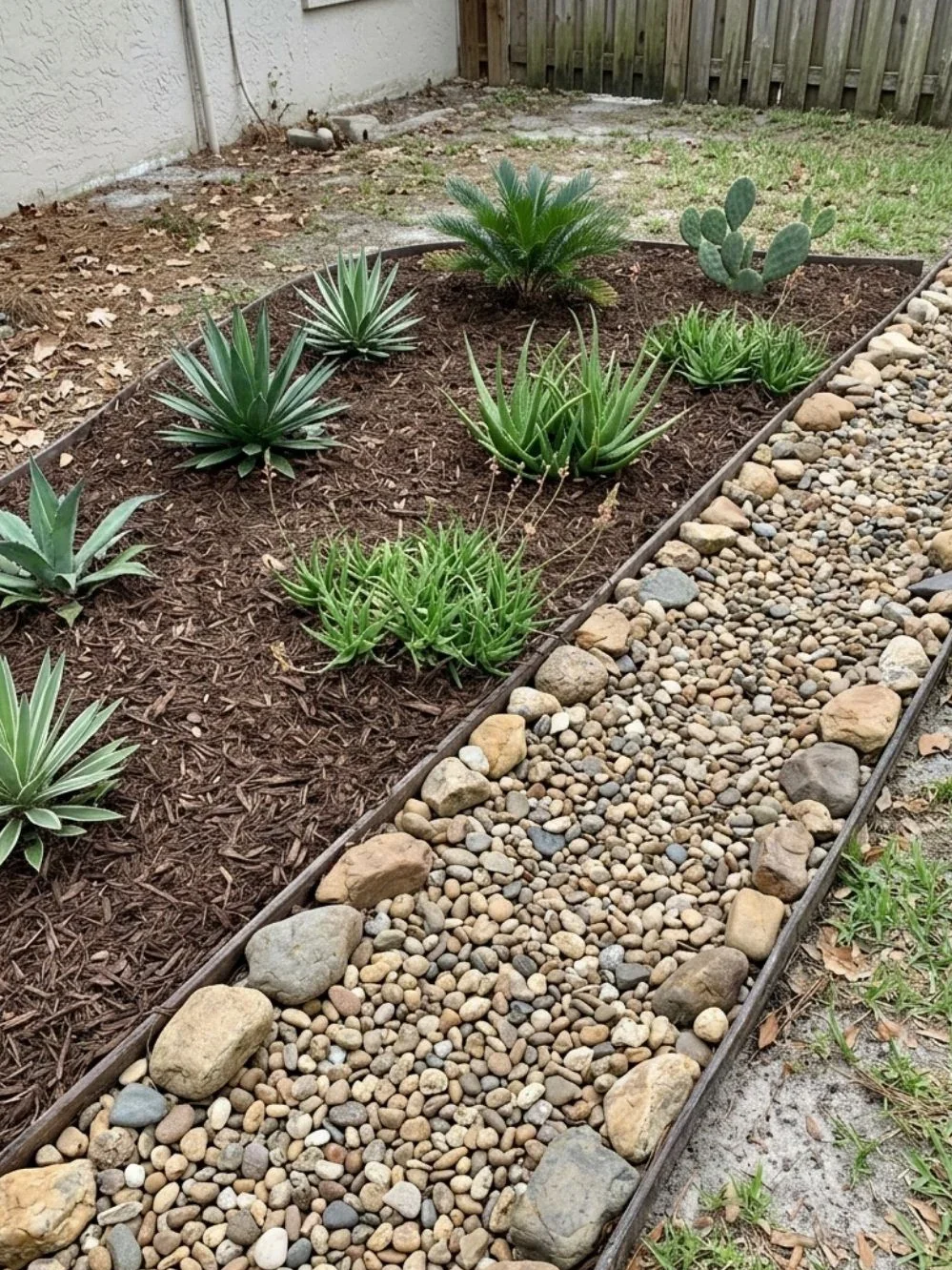
In a sunny, fast-draining bed with plants adapted to dry conditions, gravel can reinforce the design and reduce the need for frequent mulch replacement. Use a light or medium-toned stone where heat is intense and leave breathing space around plant crowns. The plant choice matters more than the rock itself.
16. Utility Zones Around Outdoor Equipment

Gravel can make sense around hose stations, utility boxes, or AC-adjacent service areas where you want a stable, low-plant surface and easy access. Keep required clearances open and avoid blocking drainage. Use the stone as a functional surface rather than turning every utility corner into a decorative bed.
17. Modern Minimalist Front-Yard Accents
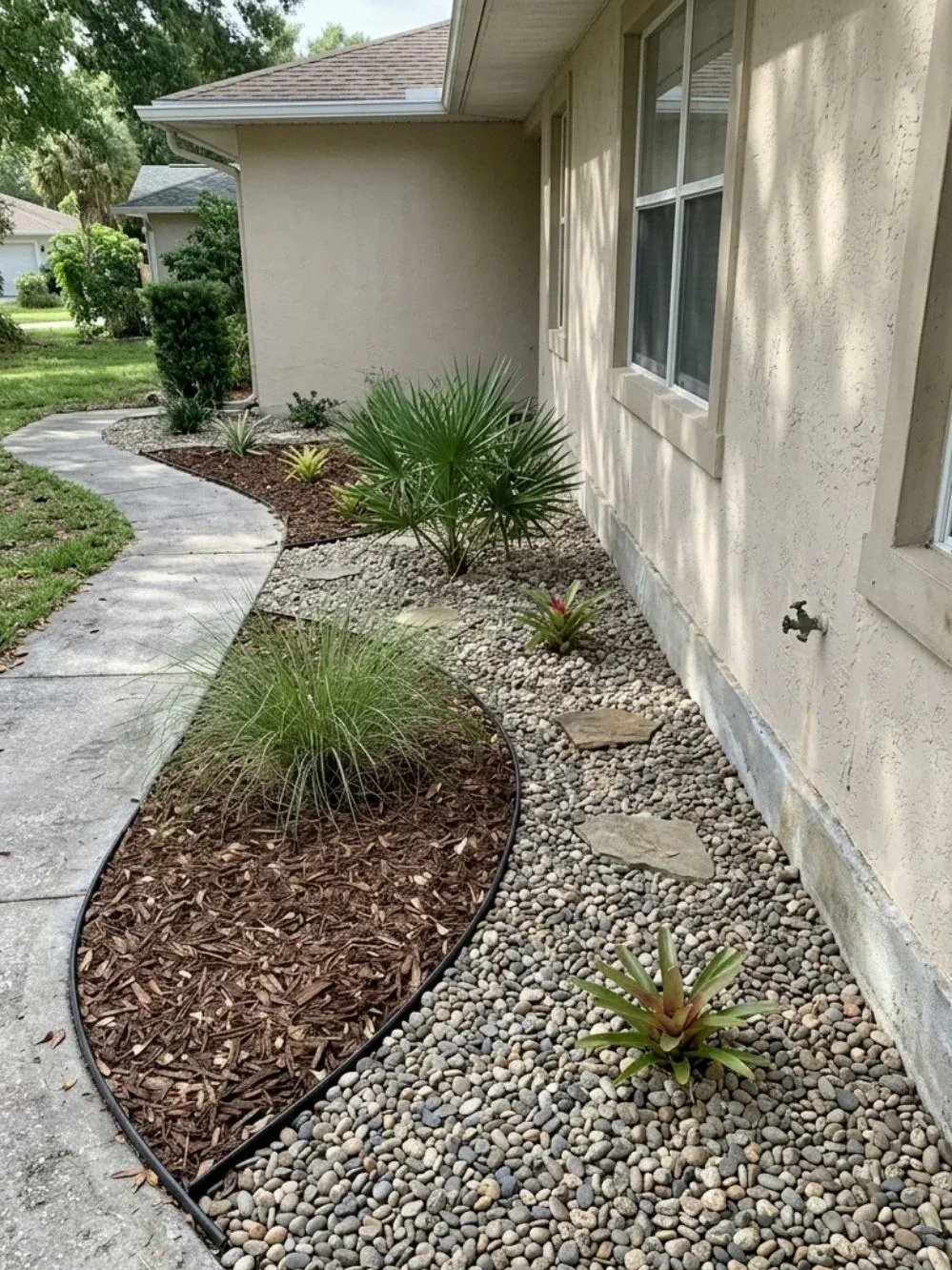
A small gravel panel can add contrast beside a clean walkway, architectural planter, or simple evergreen grouping. It works best as an accent. Too much stone can make a Florida front yard feel hotter and less welcoming. Keep planted areas generous enough to soften the house and provide shade where possible.
18. Areas Where Mulch Repeatedly Washes Away
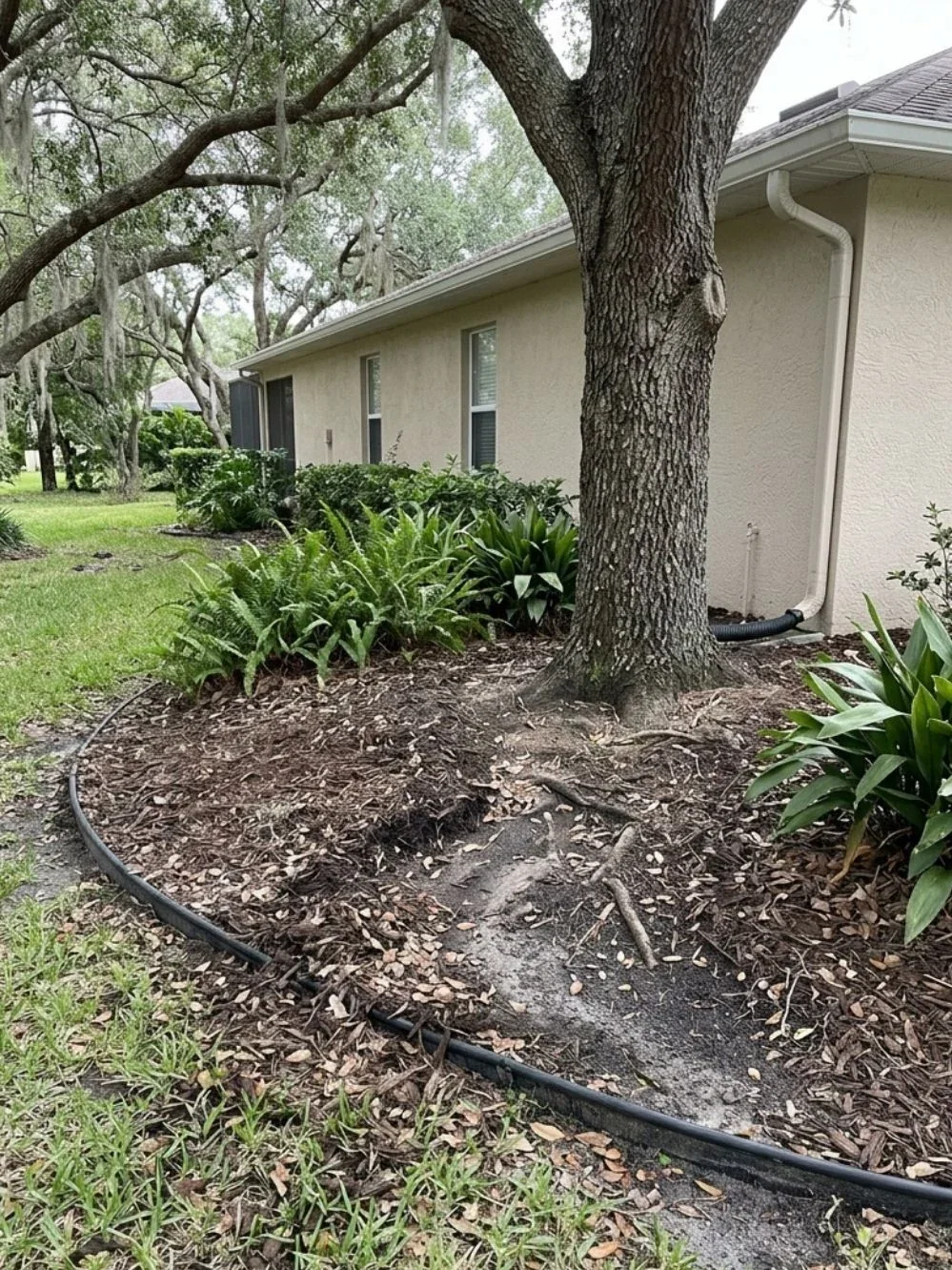
If roof runoff or slope flow constantly pushes lightweight mulch out of a bed, a heavier mineral surface may stay put better. Fix the water problem first when possible. Gravel should not be used to disguise erosion; it should be part of a stable drainage or edge solution.
Mixed Mulch-and-Gravel Designs
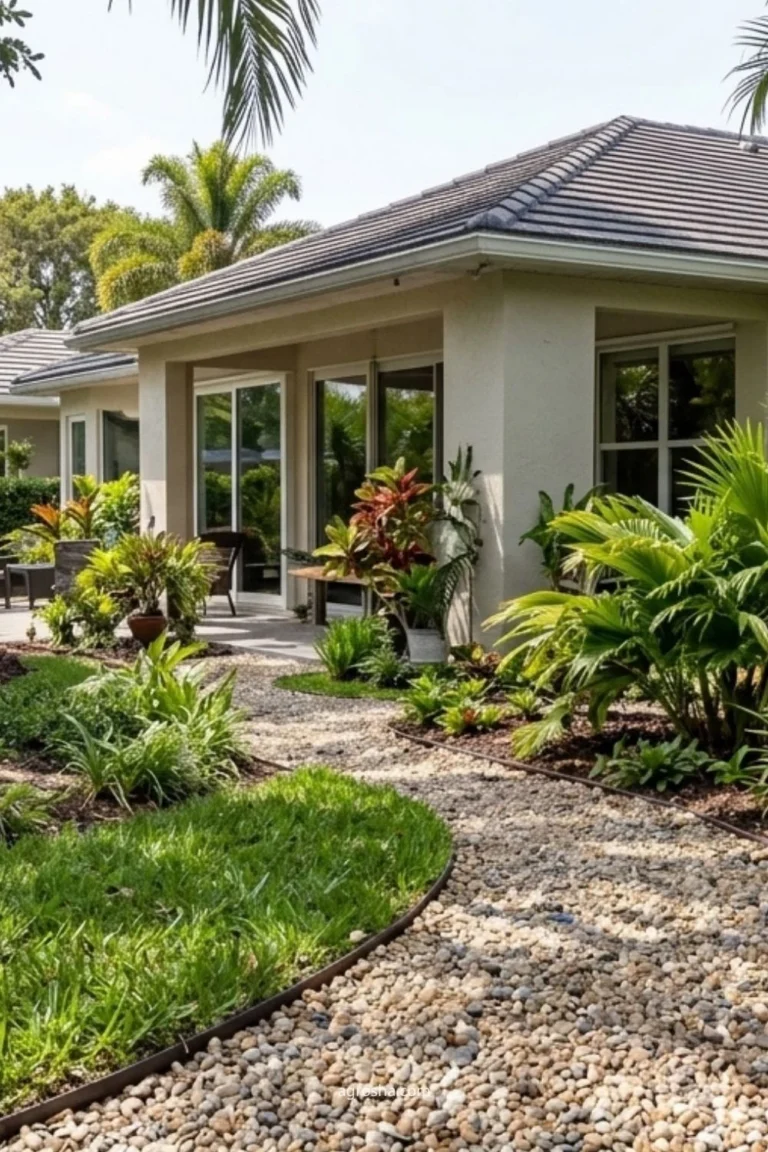
19. Mulch Planting Beds With a Gravel Path
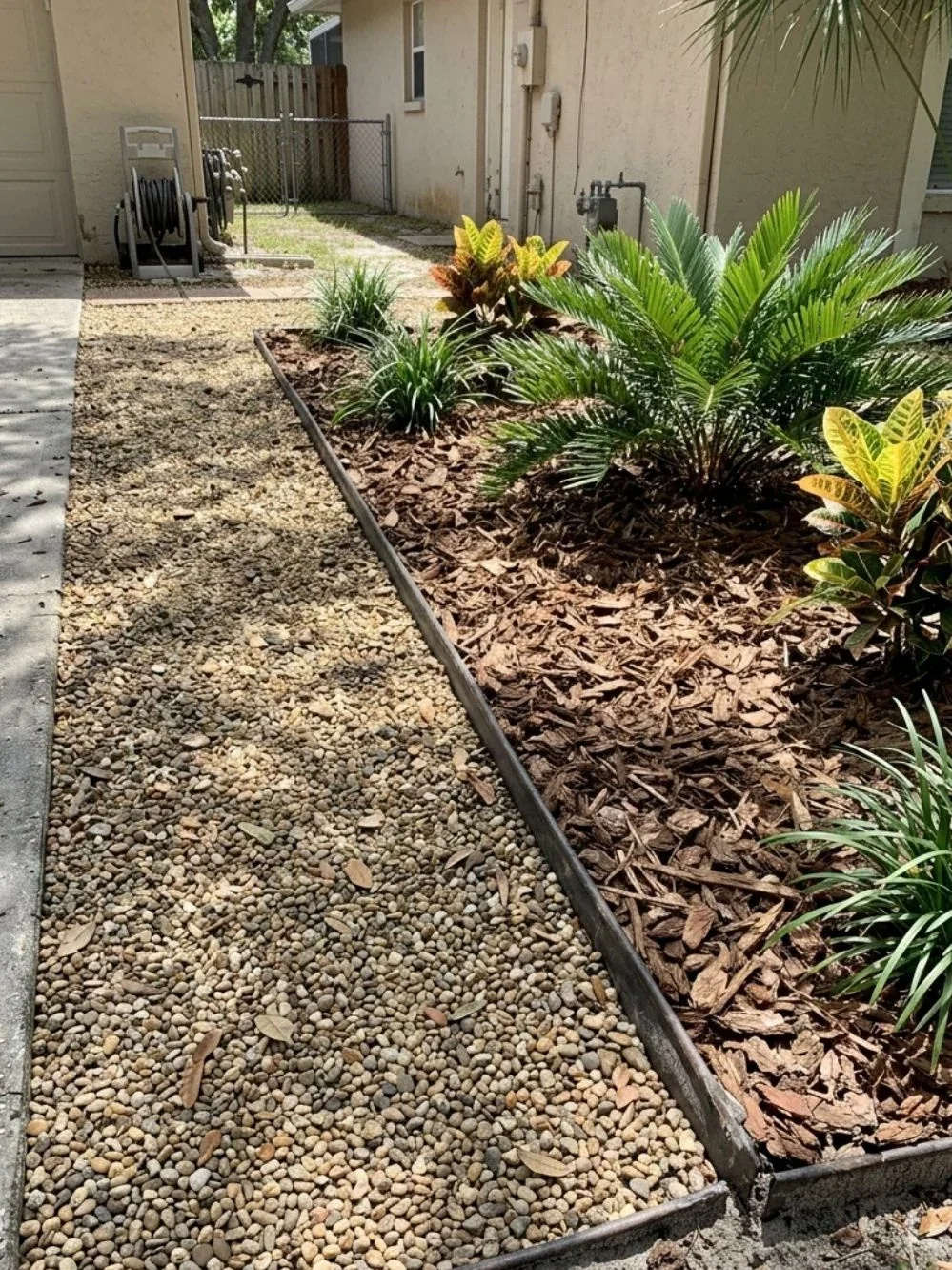
This is one of the easiest combinations to maintain: soft organic mulch around plants, then compacted gravel in the walking zone. Each material does the job it handles best. Use a defined edge so gravel does not migrate into soil and mulch does not cover the path.
20. Gravel Border Around a Mulched Bed
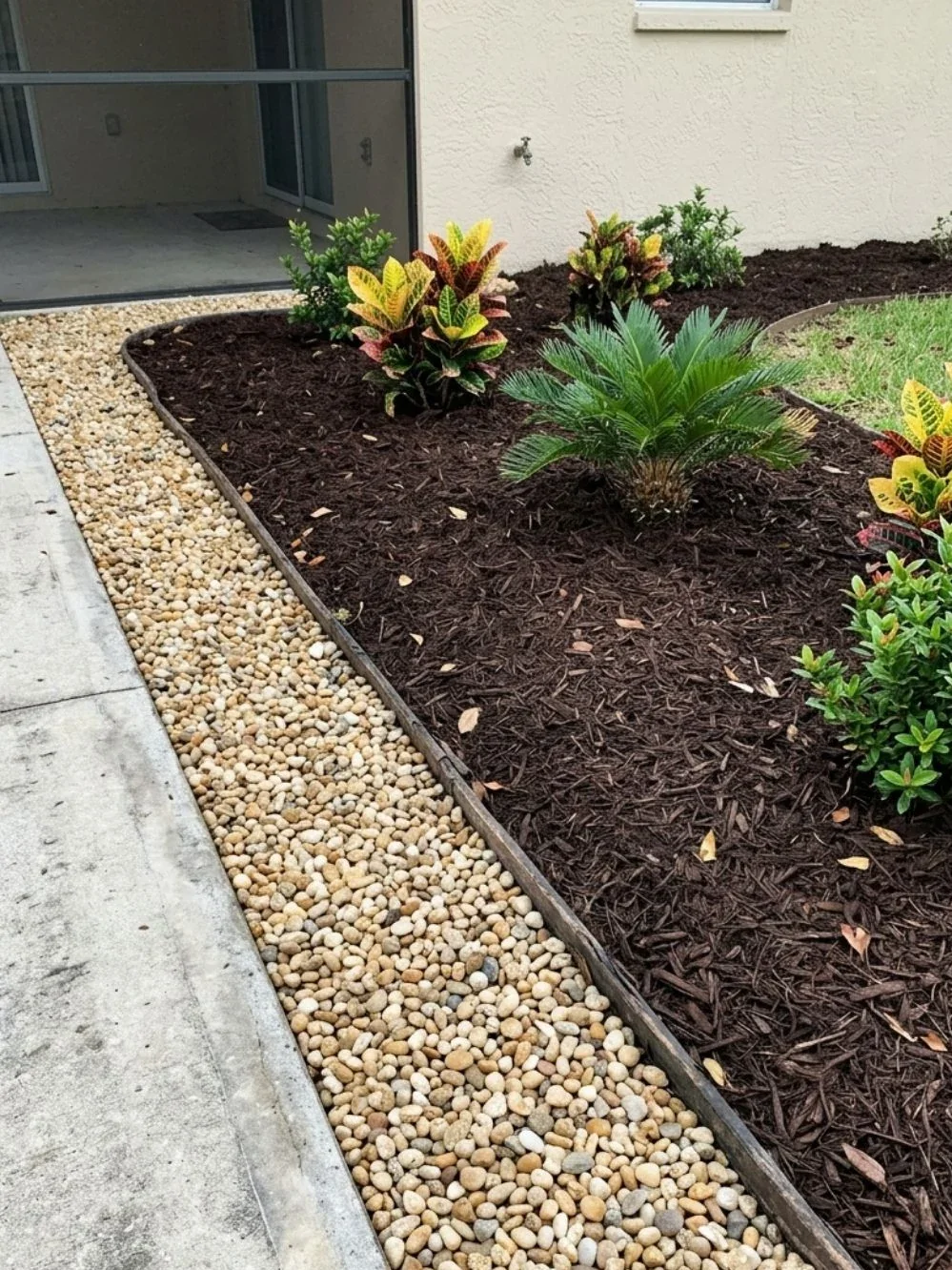
A slim gravel strip can create a visual break between mulch and paving while keeping the planting area cooler and easier to amend. The strip should be wide enough to read as intentional but not so wide that it becomes the dominant landscape material. Clean edging is what makes the combination look finished.
21. Mulch Under Trees With Gravel Near the Patio
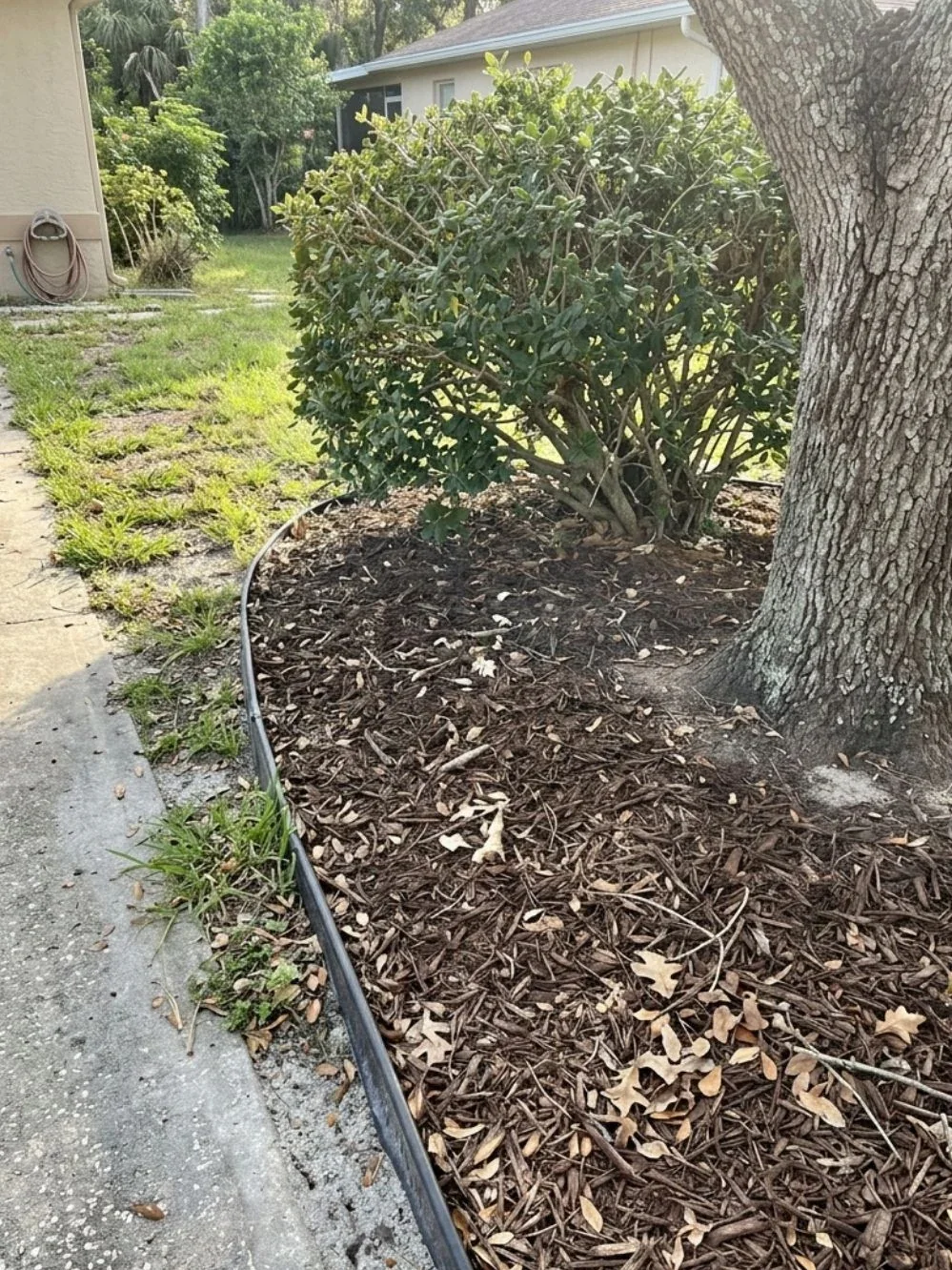
Keep tree and shrub root zones mulched, then use gravel only where you need a dry transition beside seating or a patio. This avoids covering the whole yard in stone while still getting a crisp hardscape edge. It also makes future planting changes easier.
22. Gravel Focal Area Inside a Larger Mulched Landscape

A small gravel island around a sculptural pot, boulder, or drought-tolerant accent can create contrast within a broader organic planting. Use restraint. One clear mineral focal area often looks better than multiple disconnected patches of rock spread across the yard.
23. Mulched Privacy Planting With a Gravel Service Path
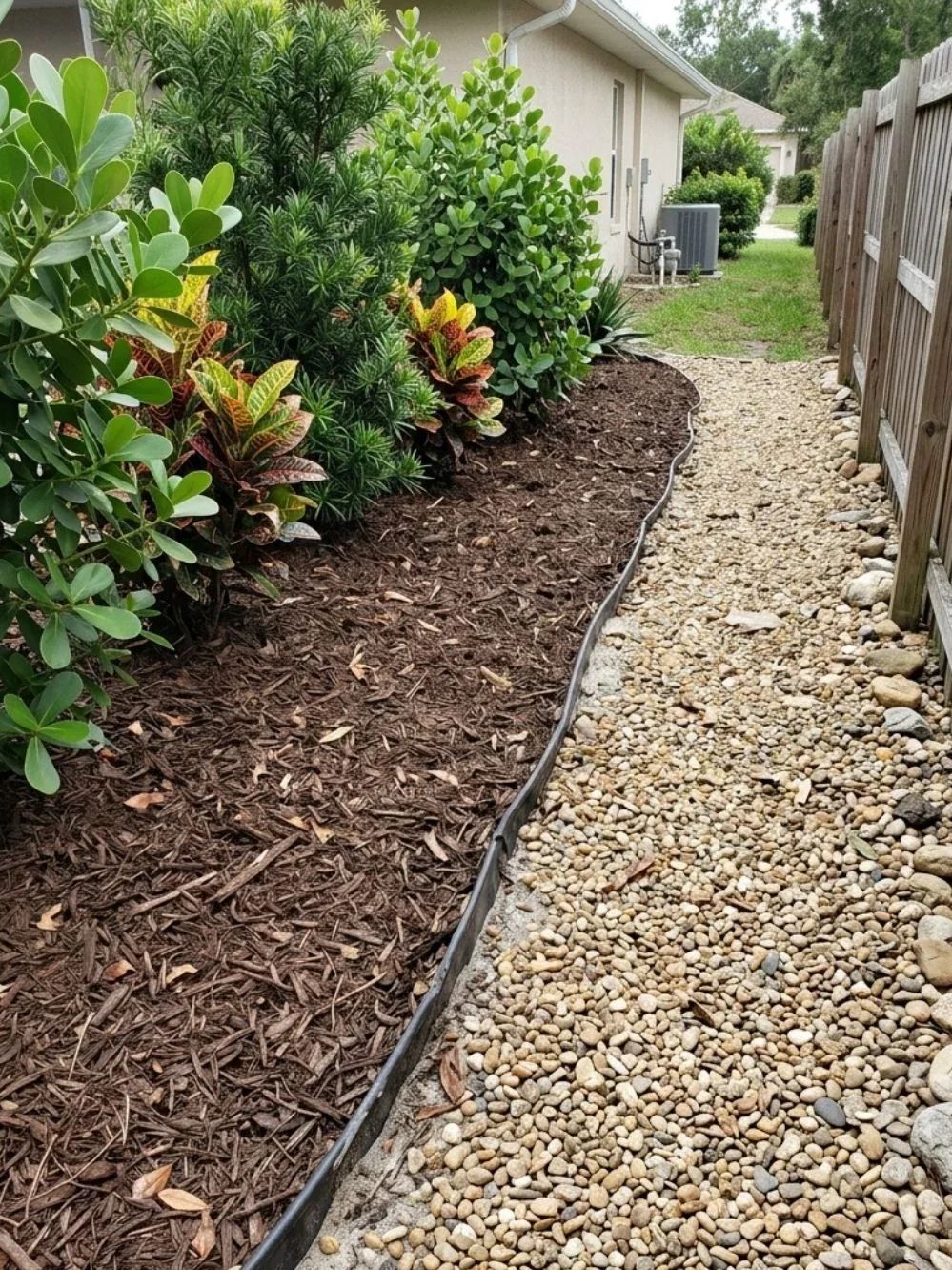
A privacy border needs room for roots and future growth, so mulch works well under the shrubs. A narrow gravel service path behind or beside the screen can provide access for pruning, irrigation checks, and fence maintenance. For layered screening, see our backyard garden privacy ideas.
24. Gravel Seating Zone With Mulched Planting Pockets
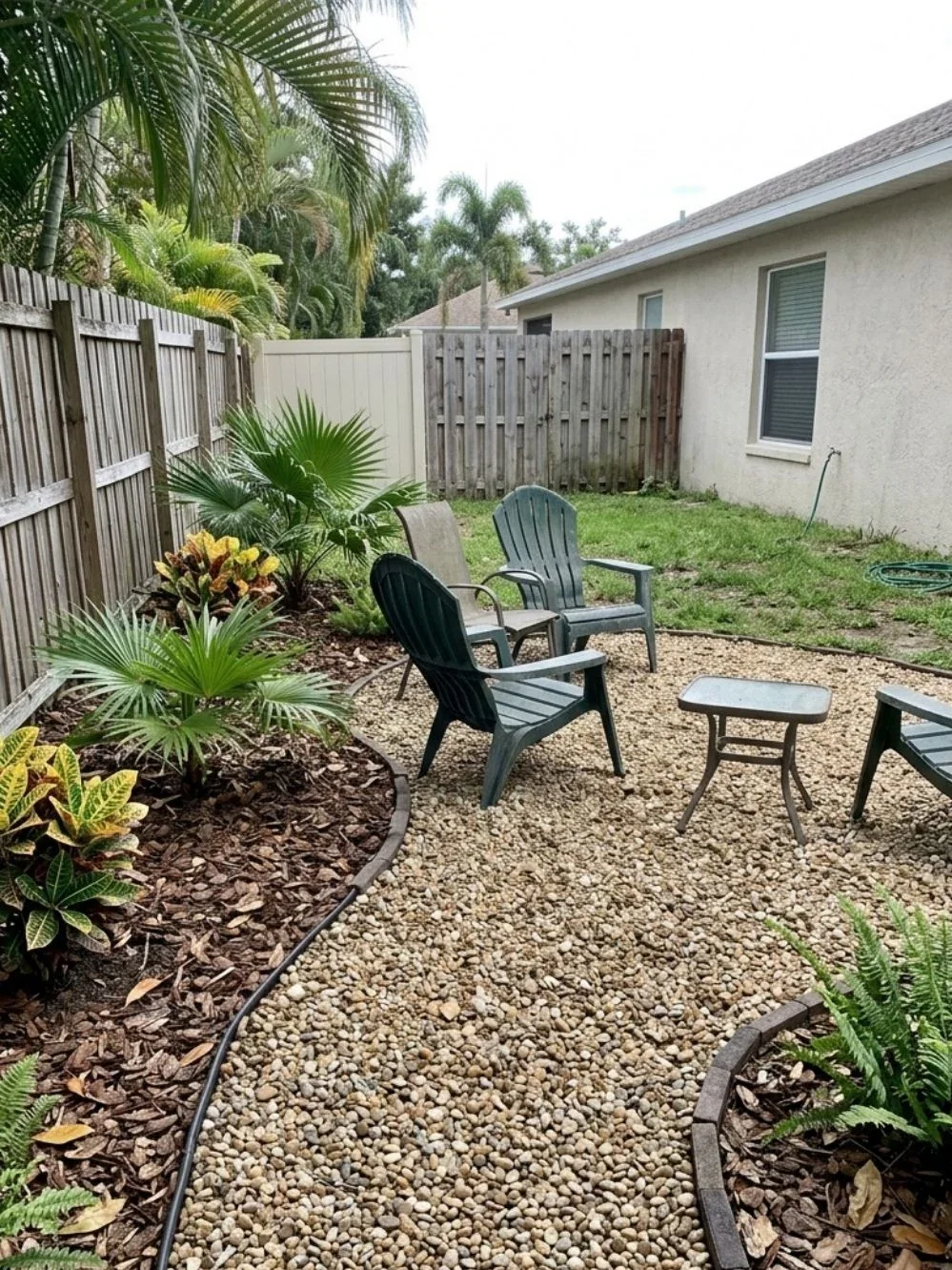
For a small backyard lounge, use compacted gravel under chairs and a table, then bring planting in through mulched pockets at the edges. This keeps furniture stable and reduces the amount of hardscape needed. Choose a gravel size that is comfortable underfoot and contained by edging.
Heat, Weeds, Drainage, and Plant Health
25. Compare Heat Before Choosing Dark Stone
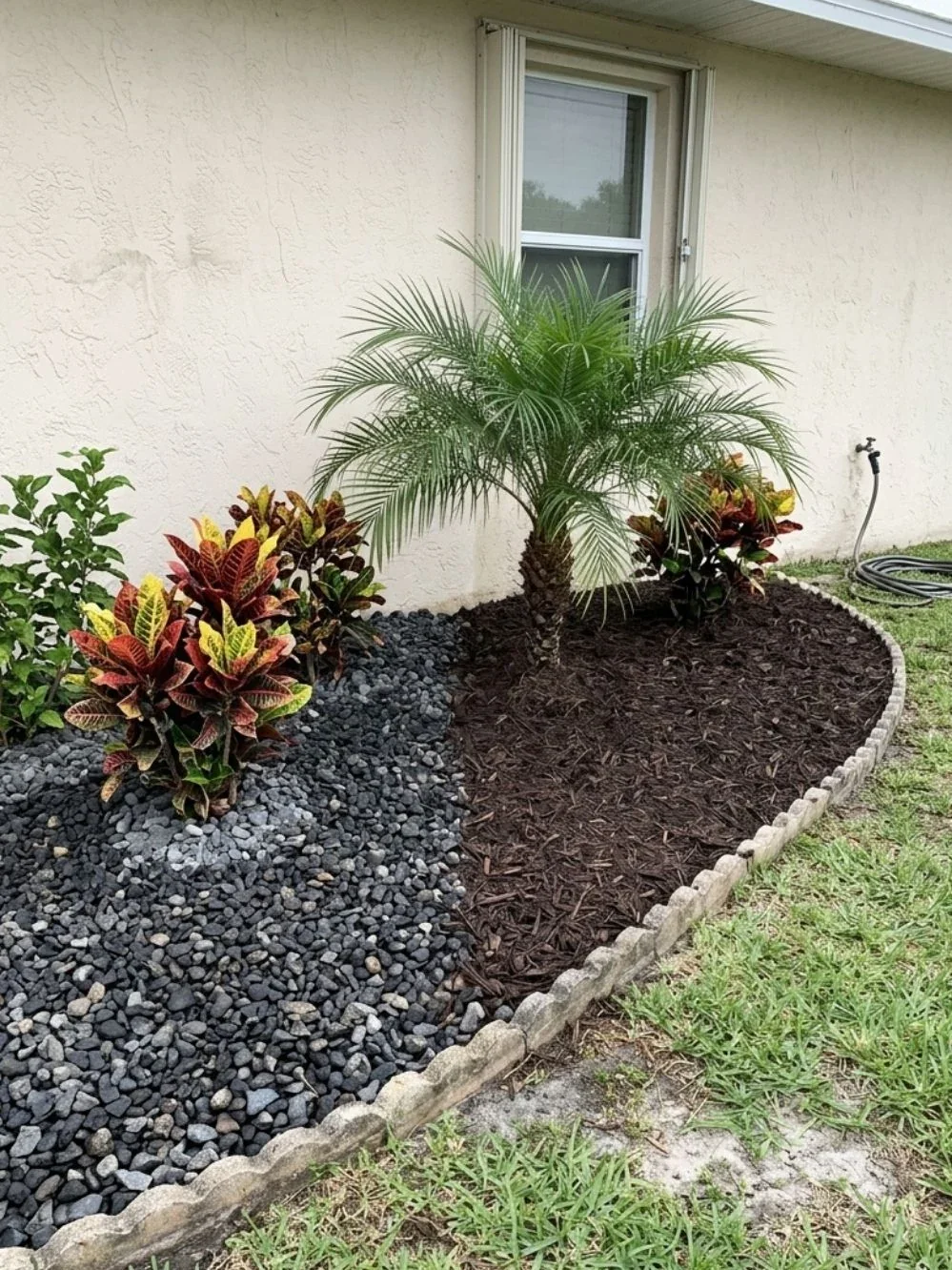
Dark gravel can become very hot in strong Florida sun and can raise the temperature around nearby plants and walls. Organic mulch usually keeps the soil surface cooler. If you prefer stone, test the area at the hottest part of the day and keep heat-sensitive plants away from reflective surfaces.
26. Use a Real Weed Strategy, Not Just a Surface Cover
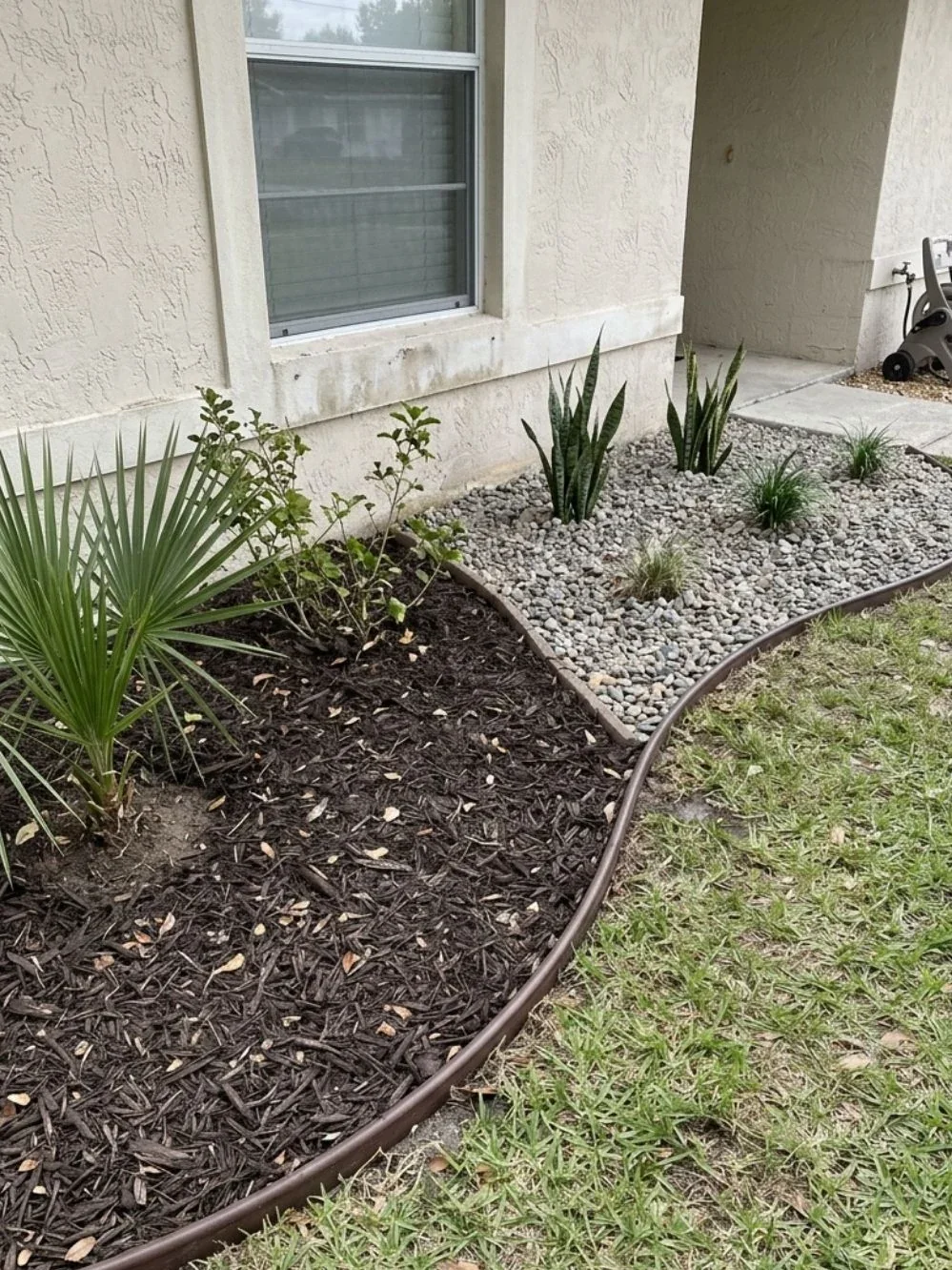
Neither mulch nor gravel permanently stops weeds. Wind-blown seeds can germinate on top of both. Start with a clean bed, remove perennial weeds, use an appropriate depth, and pull new weeds before they seed. Avoid depending on thin plastic sheeting that becomes a maintenance problem as soil and debris collect above it.
27. Protect Drainage Instead of Trapping Water
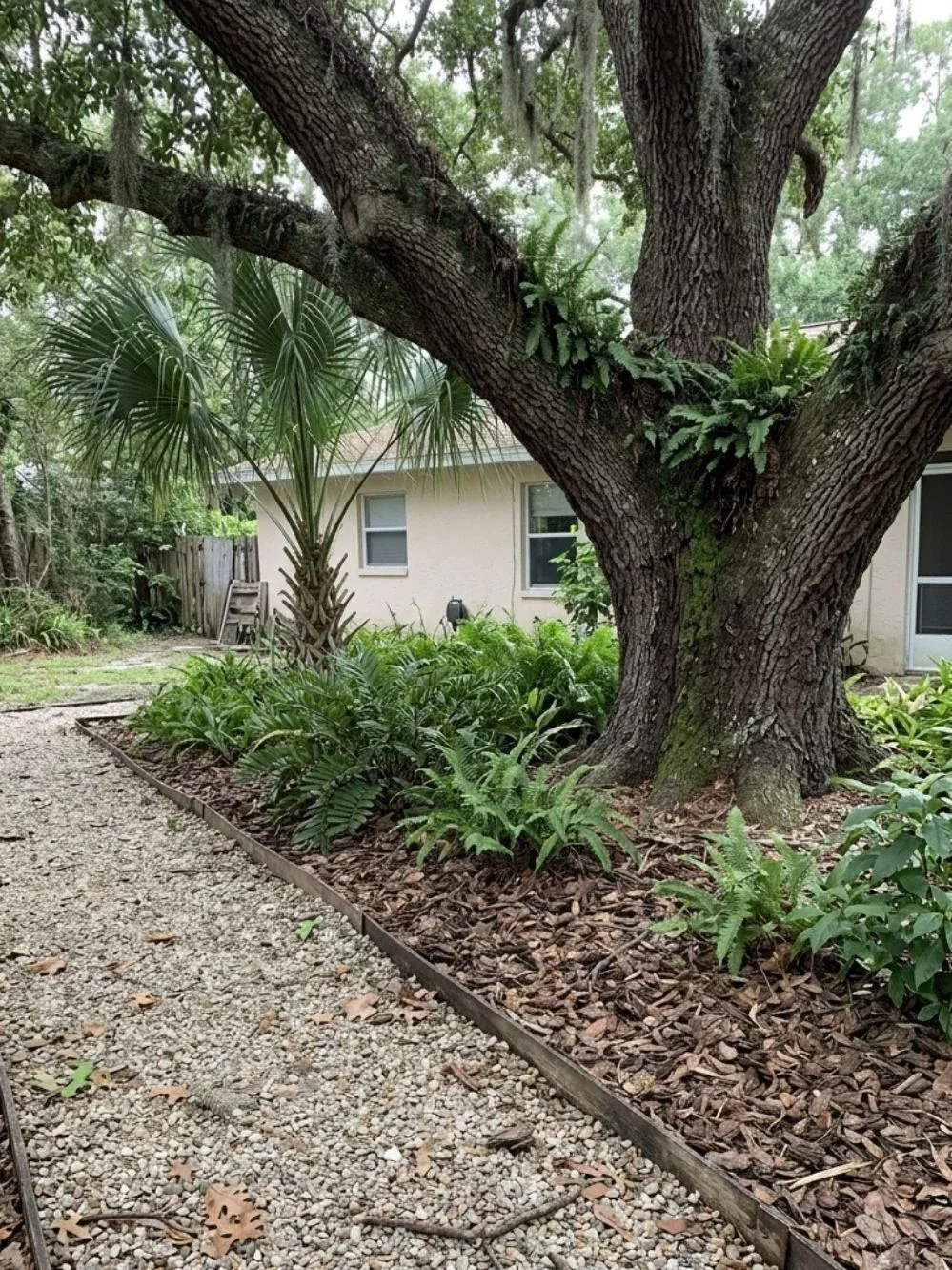
Mulch should not block swales or pile against the foundation, and gravel should not be used to fill a low spot without understanding where water goes. Keep finished grades working away from structures. In a wet area, plant choice and drainage planning matter more than which surface material looks cleaner.
Cost and Maintenance Over Time
28. Mulch Costs Less Up Front but Needs Refreshing
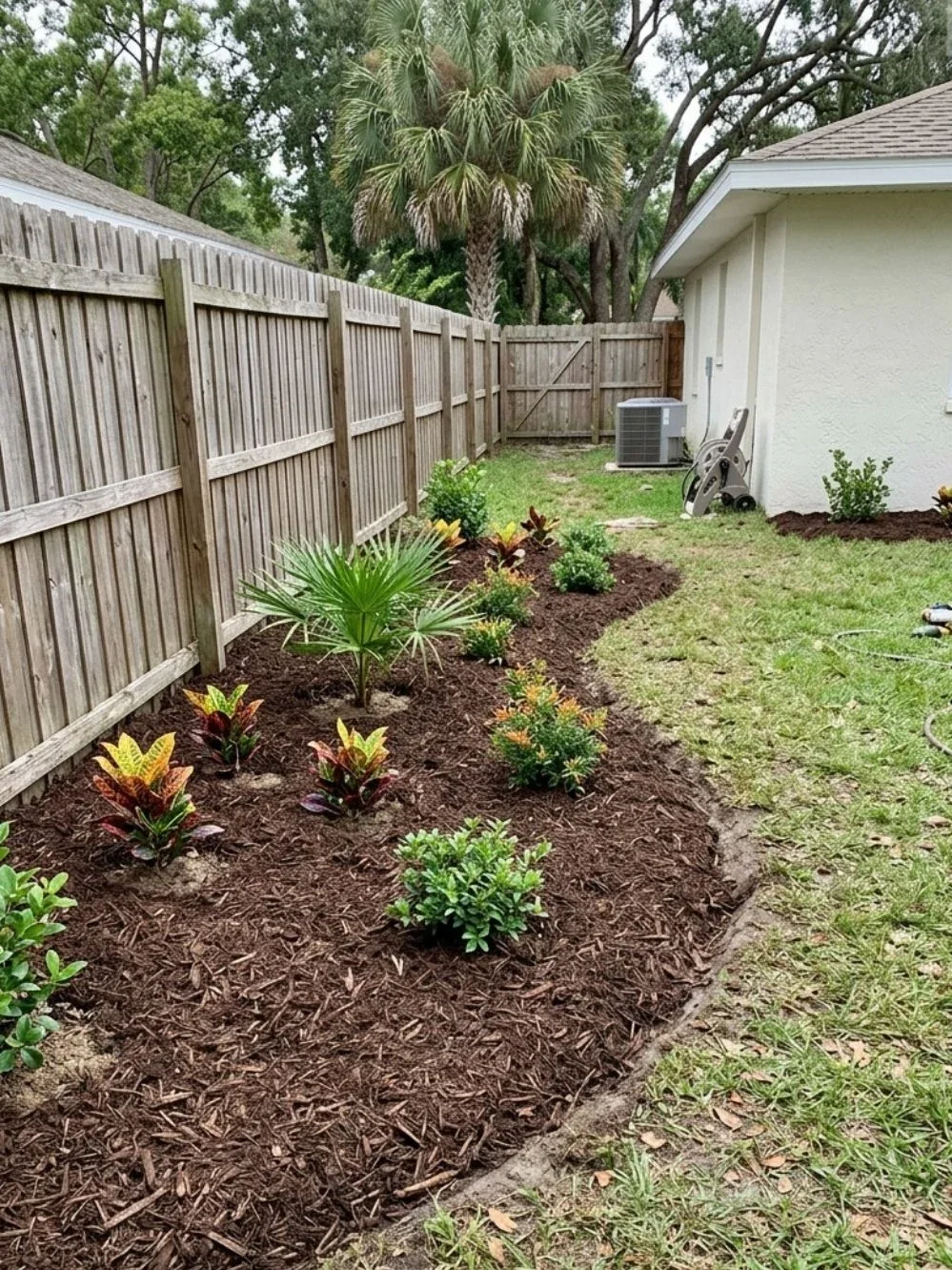
Mulch often has the lower initial material cost, especially for large beds, but it decomposes and settles. Budget for periodic top-ups rather than automatically adding a thick new layer every season. Measure what remains first so the total depth does not become excessive.
29. Gravel Costs More to Install but Is Harder to Change

Decorative stone can last for years, but the initial cost of stone, base preparation, delivery, edging, and labor can be higher. It is also heavier to remove if you redesign the bed. Use gravel where you are confident the layout will stay relatively stable.
30. Choose by Function First, Then by Look
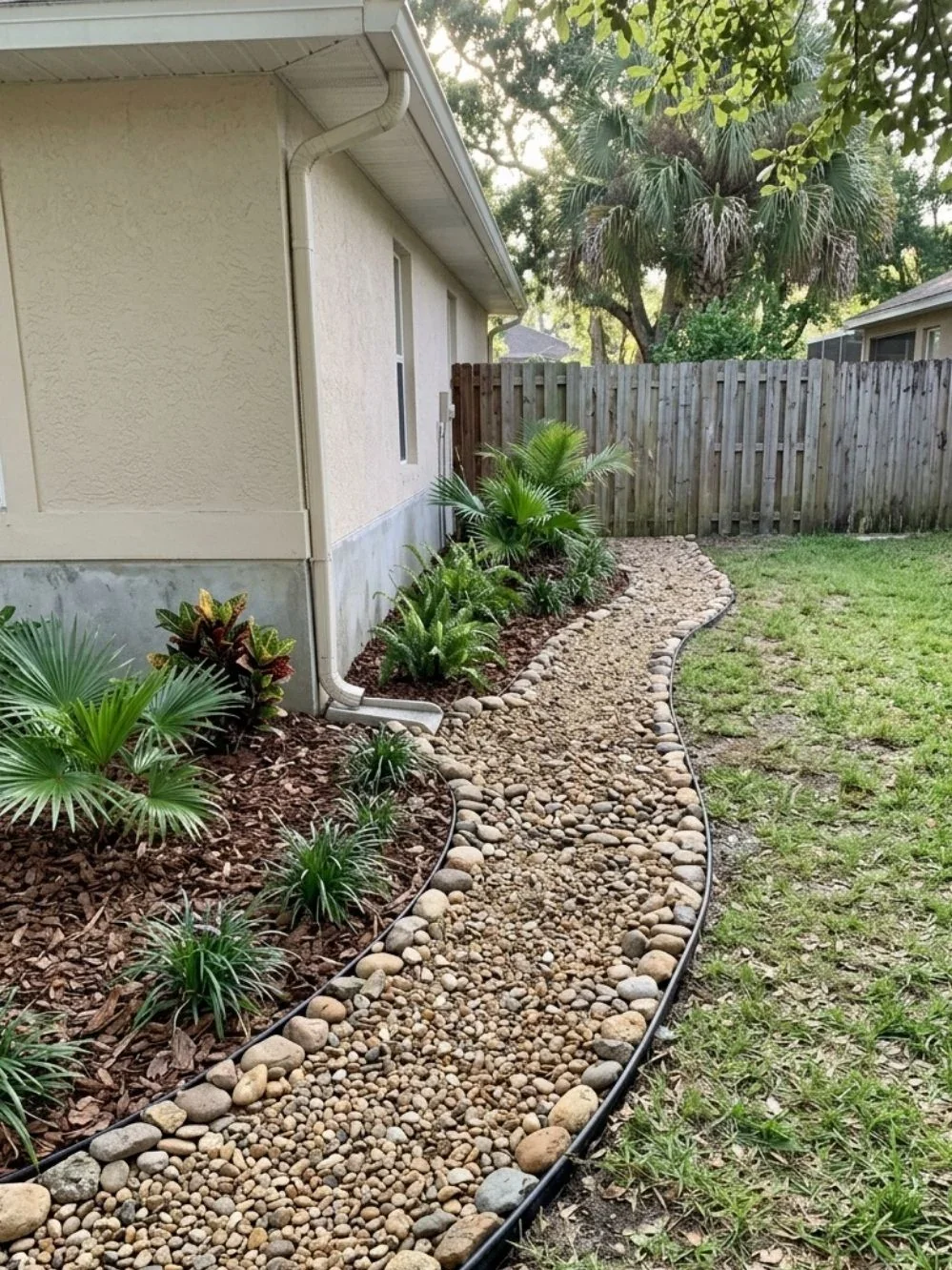
The most practical Florida landscape often uses both materials. Choose mulch where roots, soil improvement, and changing plant beds matter. Choose gravel where drainage, access, or a dry mineral surface is useful. Then make the colors and textures fit the house. Function first usually creates the lower-maintenance result.
Frequently Asked Questions
Is mulch or gravel better for Florida plants?
For most actively planted beds, organic mulch is usually the easier starting point because it helps moderate soil moisture and temperature. Gravel can work well with drought-tolerant plants and in selected hardscape or drainage zones. The site and plant needs should decide.
Does gravel stop weeds better than mulch?
Not permanently. Weed seeds can germinate in dust and organic debris that collect over either surface. Proper bed preparation, adequate material depth, edging, and regular early weed removal matter more than expecting one material to eliminate weeds forever.
How deep should mulch be in a Florida landscape bed?
A two- to three-inch layer is a practical target for many planting beds. Keep it pulled back from trunks, stems, and the base of the house, and check existing depth before adding more.
Can I use gravel around tree trunks?
It is usually better to keep tree root zones in a breathable, plant-friendly bed rather than piling decorative rock against the trunk. If stone is used nearby, leave the trunk flare clear and avoid changing grade over major roots.
Final Thoughts
Mulch and gravel are tools, not competing styles. Use organic mulch where the planting bed needs cooler soil, flexible maintenance, and an easy surface to work in. Use gravel where you need a stable path, dry accent, drainage feature, or durable transition near hardscape. In a Florida yard, the most comfortable result usually comes from balancing plant health, runoff, heat, and long-term maintenance before choosing a color or trend.